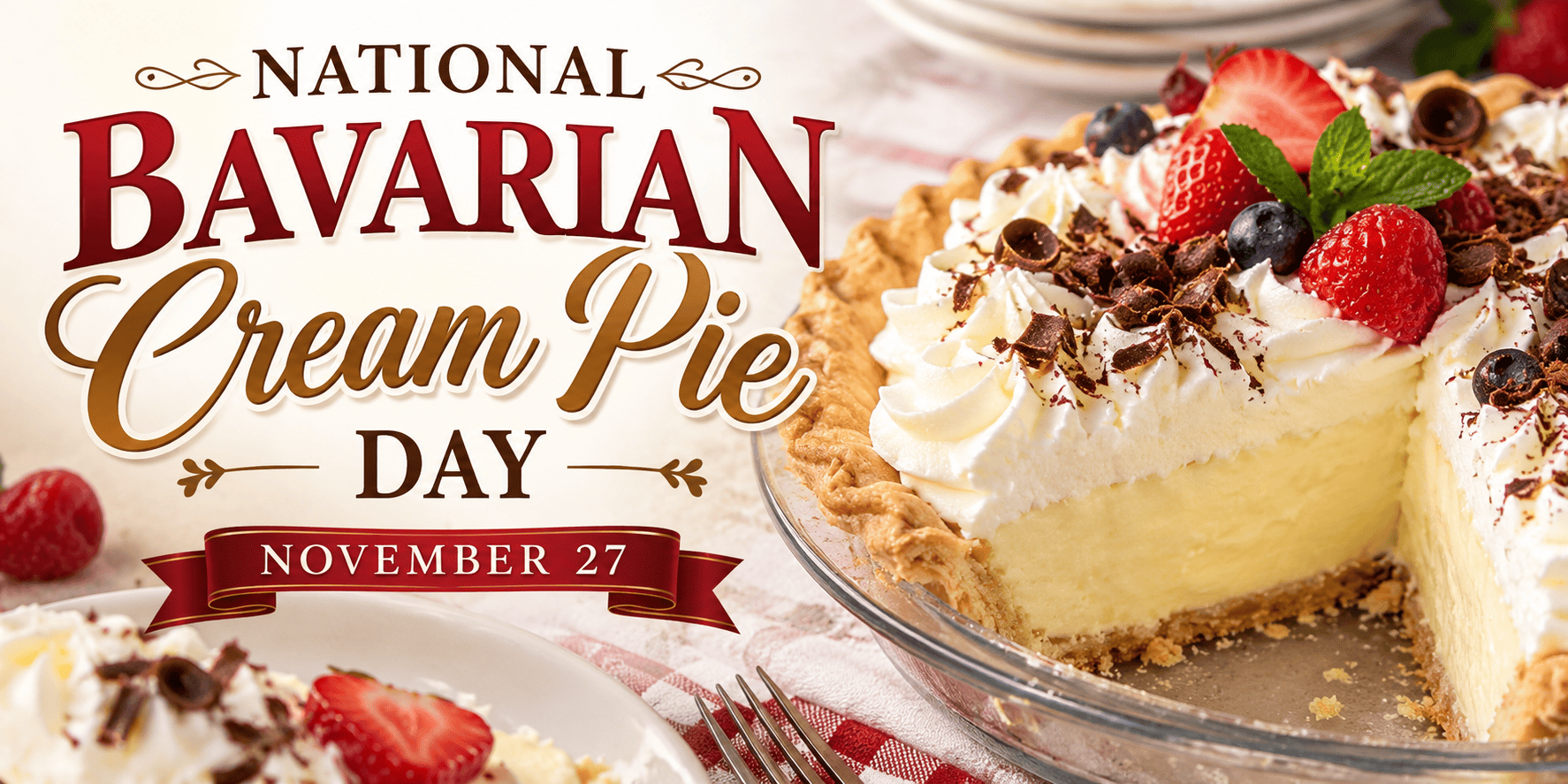
Every year on November 27, dessert lovers across the United States celebrate National Bavarian Cream Pie Day, a delicious occasion dedicated to one of the most elegant and satisfying cream-filled desserts. With its silky texture, rich vanilla flavor, and buttery pie crust, Bavarian cream pie is a dessert that brings together traditional European pastry techniques and classic American baking.
Whether you enjoy a homemade Bavarian cream pie, purchase one from your favorite bakery, or try making this creamy dessert for the first time, National Bavarian Cream Pie Day offers the perfect excuse to indulge in something sweet.
From its European origins to its popularity in American kitchens, Bavarian cream has a fascinating history worth exploring. This special day celebrates not only a beloved dessert but also the craftsmanship and creativity behind traditional pastry making.
What Is National Bavarian Cream Pie Day?
National Bavarian Cream Pie Day is an informal food holiday observed annually on November 27. It celebrates Bavarian cream pie, a dessert made with a smooth, custard-based filling that is traditionally lightened with whipped cream and stabilized with gelatin.
The dessert is typically served in a baked pastry crust or graham cracker crust and chilled until the filling becomes firm enough to slice.
Unlike traditional cream pies that often rely on cornstarch or flour for thickening, authentic Bavarian cream uses gelatin to create a delicate, mousse-like consistency.
The result is a dessert that feels luxurious without being excessively heavy.
Bavarian cream pie can be enjoyed plain or enhanced with chocolate, fresh berries, caramel, or other delicious toppings.
Although National Bavarian Cream Pie Day is not an official federal holiday, it has become part of the growing tradition of celebrating individual foods and desserts throughout the year.
When Is National Bavarian Cream Pie Day?
National Bavarian Cream Pie Day is celebrated every year on November 27.
The observance falls during the Thanksgiving holiday season in the United States, making it an excellent opportunity to introduce a different dessert to family gatherings.
While pumpkin pie, pecan pie, and apple pie often dominate Thanksgiving dessert tables, Bavarian cream pie provides a refreshing alternative.
Its cool, creamy filling offers a pleasant contrast to the warm, heavily spiced desserts commonly associated with late November.
Because it can be prepared ahead of time and refrigerated, Bavarian cream pie is also a convenient choice for holiday entertaining.
The History of Bavarian Cream
The history of Bavarian cream begins with European pastry traditions.
Bavarian cream, known in French as crème bavaroise, is a classic dessert preparation associated with French cuisine.
Despite its name, the exact origins of Bavarian cream remain uncertain.
Some culinary historians connect the dessert to Bavaria, a region in southeastern Germany known for its rich culinary traditions. Others associate its development and refinement with French pastry chefs during the eighteenth and nineteenth centuries.
One theory suggests that French chefs working for European aristocratic households helped popularize the preparation.
However, there is no universally accepted account identifying a single inventor.
By the nineteenth century, Bavarian cream had become an established preparation in European pastry kitchens.
French chefs refined techniques involving custard, gelatin, and whipped cream to create desserts that were both rich and airy.
Bavarian cream was commonly molded into decorative shapes and served as an elegant dessert at formal dinners.
Over time, bakers began incorporating the filling into cakes, pastries, and pies.
As European baking traditions influenced American cooking, Bavarian cream became a popular filling for sophisticated desserts.
Today, Bavarian cream remains an important component of classic pastry making.
What Makes Bavarian Cream Pie Different From Other Cream Pies?
Bavarian cream pie stands apart from many traditional cream pies because of its unique filling.
Most American cream pies use a thick pudding-like custard prepared with ingredients such as milk, sugar, egg yolks, and cornstarch.
Bavarian cream uses a different technique.
The traditional preparation begins with a cooked custard, often flavored with vanilla. Gelatin is added to help the mixture set, and whipped cream is gently folded into the cooled custard.
This creates a filling that is lighter and airier than standard pastry cream.
The texture is somewhere between a delicate mousse and a firm custard.
Another difference is the way Bavarian cream holds its shape.
Because gelatin provides structure, the filling can be molded or sliced without becoming overly dense.
This makes Bavarian cream especially useful for elegant layered desserts and decorative pastries.
How to Make a Classic Bavarian Cream Pie
One of the best ways to celebrate National Bavarian Cream Pie Day is by preparing a homemade version.
Although the dessert may look sophisticated, it can be made with familiar ingredients and a little patience.
Ingredients
For the pie:
-
1 fully baked 9-inch pie crust
-
2 cups whole milk
-
4 large egg yolks
-
½ cup granulated sugar
-
2 teaspoons unflavored powdered gelatin
-
2 tablespoons cold water
-
2 teaspoons vanilla extract
-
1½ cups heavy whipping cream
-
2 tablespoons powdered sugar
-
Pinch of salt
Optional toppings:
-
Fresh strawberries
-
Fresh raspberries
-
Chocolate shavings
-
Whipped cream
-
Caramel sauce
-
Toasted almonds
Instructions
Step 1: Prepare the pie crust
Bake your favorite pie crust according to its instructions and allow it to cool completely.
A traditional pastry crust works beautifully, but a graham cracker crust can also provide a delicious contrast to the creamy filling.
Step 2: Bloom the gelatin
Place the cold water in a small bowl and sprinkle the gelatin evenly over the surface.
Allow it to sit for approximately five minutes.
This gives the gelatin time to absorb the water and soften.
Step 3: Heat the milk
Pour the milk into a medium saucepan and heat over medium-low heat until steaming.
Do not allow the milk to boil.
Step 4: Prepare the egg mixture
In a separate bowl, whisk the egg yolks, granulated sugar, and salt until smooth.
Slowly add a small amount of warm milk while whisking continuously.
This process, known as tempering, helps prevent the eggs from scrambling.
Gradually whisk in the remaining milk.
Step 5: Cook the custard
Return the mixture to the saucepan.
Cook over low heat, stirring constantly, until the custard thickens slightly and reaches 170–175°F.
Avoid boiling the mixture.
Step 6: Add the gelatin and vanilla
Remove the custard from the heat.
Stir in the bloomed gelatin until completely dissolved.
Add the vanilla extract and mix thoroughly.
Allow the custard to cool until it begins to thicken but has not fully set.
Step 7: Whip the cream
In a chilled mixing bowl, beat the heavy whipping cream with the powdered sugar until soft peaks form.
The cream should hold its shape while remaining smooth and fluffy.
Step 8: Combine the filling
Gently fold the whipped cream into the cooled custard in several additions.
Use a spatula and avoid vigorous mixing.
This helps preserve the airy texture that makes Bavarian cream special.
Step 9: Fill the pie crust
Pour the filling into the cooled pie crust.
Smooth the surface with a spatula.
Step 10: Refrigerate
Refrigerate the pie for at least four to six hours, or until completely set.
For the best results, prepare the pie the day before serving.
Step 11: Decorate and serve
Add your favorite toppings just before serving.
Slice with a clean, sharp knife and enjoy.
Popular Bavarian Cream Pie Variations
Although traditional vanilla Bavarian cream pie is delicious on its own, there are many creative ways to customize this classic dessert.
1. Chocolate Bavarian Cream Pie
Chocolate lovers can enjoy a richer variation by incorporating melted chocolate into the warm custard before adding the whipped cream.
The result is a smooth, chocolate-flavored filling that pairs beautifully with a chocolate cookie crust.
2. Strawberry Bavarian Cream Pie
Fresh strawberries add natural sweetness and bright color.
Strawberry puree can be incorporated into the filling, while sliced berries create an attractive topping.
This variation is especially popular during spring and summer.
3. Raspberry Bavarian Cream Pie
Raspberries provide a slightly tart flavor that balances the richness of the cream.
A raspberry sauce or fresh raspberry topping creates a beautiful presentation.
4. Coffee Bavarian Cream Pie
Coffee lovers can add espresso powder to the warm milk for a sophisticated dessert with a rich coffee flavor.
Chocolate shavings make an excellent finishing touch.
5. Caramel Bavarian Cream Pie
A drizzle of caramel sauce adds buttery sweetness to traditional Bavarian cream.
For additional texture, sprinkle toasted pecans or almonds over the top.
6. Coconut Bavarian Cream Pie
Coconut milk and toasted coconut flakes can give Bavarian cream pie a tropical twist.
This version works particularly well with a graham cracker crust.
Interesting Facts About Bavarian Cream
Bavarian cream has several interesting characteristics that make it different from other desserts.
1. Bavarian cream is a classic European pastry preparation.
It has long been associated with French pastry making, even though its name references Bavaria in Germany.
2. Traditional Bavarian cream contains gelatin.
Gelatin helps the dessert maintain its structure while preserving a delicate, creamy texture.
3. Whipped cream creates its airy consistency.
Folding whipped cream into the custard produces the light texture that distinguishes Bavarian cream from ordinary pudding.
4. Bavarian cream can be served without a pie crust.
Traditional versions are often set in molds and served as individual desserts.
5. Vanilla is one of its most traditional flavors.
However, chocolate, coffee, fruit, and other flavorings are also commonly used.
6. Bavarian cream is popular in pastry fillings.
It can be used in cakes, layered desserts, and other sweet creations.
7. Bavarian cream pie is best served chilled.
Refrigeration allows the gelatin to set properly and helps maintain the dessert’s texture.
8. Bavarian cream is not the same as Boston cream.
Boston cream pie traditionally uses a pastry cream filling between layers of sponge cake and is topped with chocolate glaze.
How to Celebrate National Bavarian Cream Pie Day
There are many enjoyable ways to recognize this delicious food holiday.
Bake a Homemade Bavarian Cream Pie
Preparing the dessert from scratch is one of the most rewarding ways to celebrate.
It provides an opportunity to practice classic pastry techniques while creating something delicious for family and friends.
Visit a Local Bakery
Some bakeries offer Bavarian cream desserts, including pastries, doughnuts, and specialty cakes.
Ask whether they make traditional Bavarian cream pie or offer a similar dessert.
Try a New Flavor
If you usually enjoy vanilla Bavarian cream, experiment with chocolate, strawberry, raspberry, or coffee.
A different flavor can transform the dessert into an entirely new experience.
Host a Dessert Gathering
Invite friends or family members to enjoy a selection of homemade desserts.
Serve Bavarian cream pie alongside coffee, tea, or hot chocolate.
Share Your Favorite Recipe
Food traditions often become more meaningful when shared.
Pass along a family recipe or teach someone how to prepare Bavarian cream for the first time.
Introduce Children to Baking
With adult supervision, children can help measure ingredients, prepare toppings, and decorate the finished pie.
It is a fun opportunity to introduce basic kitchen skills and create family memories.
Tips for Making the Perfect Bavarian Cream Pie
Successful Bavarian cream pie depends on careful preparation and attention to temperature.
Avoid overheating the custard. Excessive heat can cause the eggs to curdle and create a grainy texture.
Bloom the gelatin properly. Allowing gelatin to absorb cold water before use helps it dissolve evenly.
Let the custard cool before adding whipped cream. If the custard is too warm, the whipped cream will melt and lose its airy texture.
Do not allow the custard to set completely before folding. The mixture should be cool and slightly thickened but still smooth enough to combine.
Use a fully cooled pie crust. A warm crust can soften the filling and interfere with setting.
Allow enough refrigeration time. Bavarian cream needs several hours to develop the proper consistency.
Add fresh toppings shortly before serving. This helps prevent fruit juices or sauces from affecting the appearance of the dessert.
How to Store Bavarian Cream Pie
Because Bavarian cream pie contains milk, eggs, and whipped cream, proper refrigeration is essential.
Store the pie in the refrigerator at 40°F or below.
Cover it loosely or place it in a suitable airtight container to prevent it from absorbing odors.
For the best quality, enjoy homemade Bavarian cream pie within two to three days.
Do not leave the pie at room temperature for more than two hours, or more than one hour when temperatures exceed 90°F.
Freezing is generally not recommended because the custard and gelatin structure may change during thawing, resulting in a less desirable texture.
Why Bavarian Cream Pie Is Perfect for Holiday Gatherings
National Bavarian Cream Pie Day falls during one of America’s busiest holiday seasons.
Families often gather around Thanksgiving to enjoy traditional meals and homemade desserts.
While familiar pies remain popular, Bavarian cream pie offers something different.
Its chilled filling provides a refreshing contrast to warm holiday dishes.
The dessert also has an elegant appearance that makes it suitable for special occasions.
Fresh berries, chocolate curls, or decorative whipped cream can transform a simple pie into an attractive centerpiece.
Another advantage is convenience.
Because Bavarian cream pie needs time to chill, it can be prepared the day before a gathering.
This allows hosts to focus on other dishes and spend more time with their guests.
Frequently Asked Questions About National Bavarian Cream Pie Day
Is National Bavarian Cream Pie Day a real holiday?
Yes. National Bavarian Cream Pie Day is an informal food observance celebrated annually on November 27. It is not an official federal holiday.
Where did Bavarian cream originate?
Bavarian cream is strongly associated with French pastry traditions, although its name suggests a connection to Bavaria, Germany. Its exact origin remains uncertain.
What does Bavarian cream taste like?
Traditional Bavarian cream has a rich, sweet vanilla flavor with a smooth, airy texture. It is lighter than many standard custard fillings.
Is Bavarian cream the same as custard?
Not exactly. Bavarian cream begins with a custard base, but gelatin and whipped cream are added to create a lighter dessert that holds its shape.
Does Bavarian cream pie need to be refrigerated?
Yes. Because it contains dairy and eggs, Bavarian cream pie must be refrigerated and served chilled.
Can Bavarian cream pie be made ahead of time?
Absolutely. Preparing the pie the day before serving is often ideal because it allows the filling to set completely.
What is the difference between Bavarian cream and pastry cream?
Pastry cream is typically thickened with starch and has a dense, pudding-like consistency. Bavarian cream uses gelatin and folded whipped cream to create a lighter texture.
The Sweet Tradition of National Bavarian Cream Pie Day
National Bavarian Cream Pie Day is more than an excuse to enjoy dessert. It is a celebration of traditional pastry making, culinary creativity, and the simple pleasure of sharing something delicious.
Bavarian cream pie brings together rich custard, fluffy whipped cream, and a delicate crust to create a dessert that feels both comforting and elegant.
Its European pastry heritage and American pie presentation make it an interesting example of how culinary traditions evolve over time.
Whether you choose to bake a classic vanilla version, experiment with chocolate or fruit, or share a slice with someone special, November 27 offers a wonderful opportunity to appreciate this timeless dessert.
As the holiday season brings families and friends together, a homemade Bavarian cream pie can become part of a new tradition.
Sometimes the sweetest moments are not just about the dessert itself, but about the people gathered around the table to enjoy it.
How will you celebrate National Bavarian Cream Pie Day on November 27? Will you enjoy a traditional vanilla Bavarian cream pie, or try a creative flavor of your own?


Leave a Reply