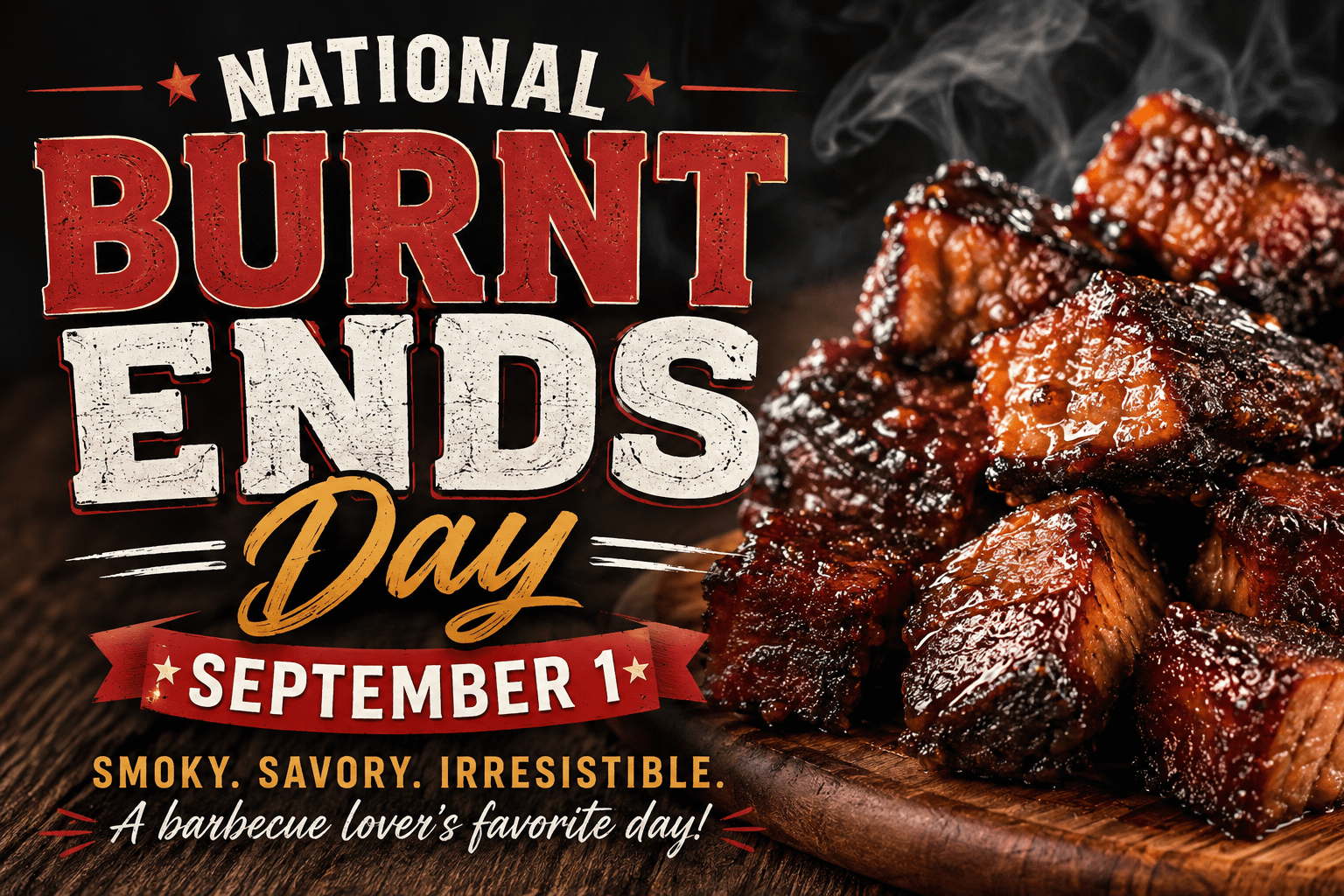
Few foods capture the spirit of American barbecue quite like burnt ends. Smoky, tender, caramelized, and packed with bold flavor, these bite-sized pieces of barbecue have gone from humble leftovers to one of the most sought-after items at barbecue restaurants across the country.
National Burnt Ends Day, celebrated each year on September 1, gives barbecue lovers the perfect excuse to fire up the smoker, visit a favorite barbecue joint, and enjoy a plate piled high with these smoky little treasures.
Whether you prefer traditional beef brisket burnt ends or one of the many modern variations, today is all about appreciating the combination of smoke, seasoning, sauce, and slow cooking that makes burnt ends unforgettable.
What Are Burnt Ends?
Despite their name, burnt ends aren’t supposed to be burned.
Traditional burnt ends come from the point end of a beef brisket, which contains more fat and connective tissue than the flatter portion of the brisket. During a long, slow smoking process, much of that fat renders while the exterior develops a dark, flavorful crust known as bark.
Once the brisket has been smoked, the point can be separated, cut into cubes, seasoned or sauced, and returned to the smoker.
That second round of cooking transforms the cubes into something special.
The outside becomes dark, sticky, smoky, and caramelized while the inside remains rich and tender. A great burnt end gives you several flavors and textures in a single bite: smoky bark, rendered fat, tender beef, savory seasoning, and a touch of sweetness from barbecue sauce.
They’re messy, rich, and completely worth it.
The Kansas City Connection
Burnt ends are closely associated with Kansas City barbecue, one of America’s great regional barbecue traditions.
Kansas City barbecue is famous for using a wide variety of meats, slow smoking, flavorful dry rubs, and thick sauces that often combine sweetness, tanginess, spice, and smoke.
Burnt ends became one of the city’s signature barbecue specialties.
What makes their history particularly interesting is that they weren’t always treated as a premium menu item. The irregular, heavily smoked pieces from the ends of brisket were once considered scraps compared with the neatly sliced portions of meat.
Over time, barbecue lovers realized those pieces were often among the most flavorful parts of the entire brisket.
The scraps became the star.
Today, people may specifically visit a barbecue restaurant because of its burnt ends, and pitmasters carefully prepare them rather than simply treating them as leftovers.
From Leftovers to Barbecue Royalty
The rise of burnt ends is a perfect example of how great food doesn’t always begin as something fancy.
Many famous dishes around the world originated because cooks found creative ways to use inexpensive ingredients, leftovers, or cuts of meat that might otherwise have been ignored.
Barbecue itself has long celebrated this philosophy.
Slow cooking can transform tougher cuts of meat into tender, flavorful meals. Time, smoke, heat, and patience accomplish what quick cooking cannot.
Burnt ends take that idea even further.
The fatty, uneven point of the brisket may not produce the perfectly uniform slices people expect from the flat, but those differences help create incredible flavor.
Instead of throwing away the ends and irregular pieces, barbecue cooks discovered they could chop or cube them, add seasoning and sauce, and cook them again.
The result became more popular than anyone could have imagined.
What Makes Great Burnt Ends?
Making excellent burnt ends requires patience.
Brisket is generally cooked using the barbecue philosophy of “low and slow.” Rather than exposing the meat to intense heat for a short period, pitmasters smoke it at relatively low temperatures for many hours.
During that time, several things happen.
The meat absorbs smoke. Fat begins rendering. Tough connective tissues gradually break down. Seasonings combine with moisture and smoke to create the exterior bark.
When the brisket reaches the appropriate stage, the point is separated and cut into chunks.
The cubes may then receive another layer of seasoning, barbecue sauce, or both before returning to the smoker.
This final cooking period is where the magic happens.
The sauce thickens.
The edges darken.
The fat continues rendering.
The exterior becomes sticky and caramelized.
Inside, the beef should remain tender and juicy.
The goal isn’t simply to create the darkest possible piece of meat. Proper burnt ends balance texture and flavor without becoming dry, bitter, or literally burned.
Beef Brisket Burnt Ends
Traditionalists will usually tell you that real burnt ends begin with brisket.
And there’s a good reason.
The brisket point contains the combination of meat and fat necessary to produce the rich texture associated with classic burnt ends.
Seasoning can be incredibly simple. Some pitmasters rely heavily on salt and black pepper, allowing the beef and smoke to provide most of the flavor.
Others use barbecue rubs containing ingredients such as:
- Salt
- Black pepper
- Paprika
- Garlic powder
- Onion powder
- Brown sugar
- Chili powder
- Cayenne pepper
After cubing the smoked brisket point, barbecue sauce may be added before the meat goes back into the smoker.
Every pitmaster has a slightly different approach.
That’s part of what makes barbecue so interesting.
Pork Belly Burnt Ends
Brisket isn’t the only meat receiving the burnt-end treatment anymore.
Pork belly burnt ends have become extremely popular.
Pork belly contains plenty of fat, making it ideal for slow smoking. The meat is typically cut into cubes, seasoned, smoked, coated with sauce or glaze, and cooked until tender.
Because pork belly is so rich, the finished pieces can almost resemble savory barbecue candy.
Sweet sauces work particularly well with pork belly, especially flavors involving brown sugar, honey, maple, bourbon-style sauces, or spicy-sweet barbecue glazes.
They’re not traditional Kansas City brisket burnt ends, but they’ve earned plenty of fans.
Poor Man’s Burnt Ends
Another popular variation is often called “poor man’s burnt ends.”
Instead of brisket, these are commonly made using chuck roast.
Chuck roast tends to be less expensive and smaller than an entire brisket, making it an approachable option for home cooks who want burnt-end-style barbecue without committing to a large brisket.
The chuck roast is smoked, cubed, seasoned, sauced, and cooked until tender.
While the flavor and texture won’t be identical to brisket point burnt ends, the method can produce a delicious barbecue dish.
What to Serve With Burnt Ends
Burnt ends are incredibly rich, so classic barbecue side dishes are natural companions.
Try serving them with:
Macaroni and cheese for the ultimate comfort-food combination.
Coleslaw to provide a cool, crunchy contrast to the smoky meat.
Baked beans for another sweet and savory barbecue classic.
Cornbread to soak up extra barbecue sauce.
Potato salad for a creamy side that pairs well with smoked meats.
Pickles and onions to add acidity and crunch that cut through the richness of the beef.
Corn on the cob for a simple summer barbecue favorite.
And don’t forget the extra napkins. Burnt ends are not exactly a neat meal—and that’s part of the fun.
Burnt Ends and the Art of American Barbecue
National Burnt Ends Day is also an opportunity to appreciate the broader tradition of American barbecue.
Barbecue isn’t simply meat cooked outdoors.
Across the United States, barbecue represents generations of culinary knowledge, regional traditions, family recipes, competitions, roadside restaurants, backyard gatherings, and communities built around food.
Different regions developed their own specialties.
Kansas City became famous for its diverse meats, burnt ends, and sauces.
Texas developed a legendary reputation for smoked beef brisket.
The Carolinas are famous for pork and distinctive vinegar- or mustard-influenced sauces.
Memphis became known for pork ribs and pulled pork.
Travel from one barbecue region to another and you’ll discover different opinions about meat, wood, seasoning, sauce, temperature, and technique.
Those debates can become surprisingly passionate.
But they also demonstrate how deeply barbecue is woven into American food culture.
The Importance of Smoke
You can’t talk seriously about barbecue without talking about wood.
Different woods can contribute different characteristics to smoked meat.
Popular choices include hickory, oak, pecan, apple, cherry, and mesquite.
Some woods provide stronger smoke flavors, while others are milder or slightly sweeter.
Pitmasters may use a single type of wood or combine several varieties to create a particular smoke profile.
Managing the fire is equally important.
Great barbecue requires more than simply producing lots of smoke. Temperature, airflow, combustion, moisture, and cooking time all influence the finished product.
That’s why barbecue is often described as both an art and a science.
How to Celebrate National Burnt Ends Day
The most obvious way to celebrate is also the best: eat burnt ends.
Visit a local barbecue restaurant and order a plate. If you’ve never tried burnt ends before, September 1 is the perfect opportunity.
You could also make them at home.
If you own a smoker, challenge yourself to prepare traditional brisket burnt ends. Give yourself plenty of time because great barbecue can’t be rushed.
Hosting a backyard barbecue is another great option. Serve burnt ends alongside several traditional sides and invite friends or family to enjoy the meal.
You could even organize a burnt ends tasting featuring different versions:
Traditional brisket burnt ends.
Pork belly burnt ends.
Chuck roast burnt ends.
Sweet barbecue burnt ends.
Spicy burnt ends.
Sauce-free burnt ends emphasizing bark and smoke.
Comparing the different styles makes the celebration even more interesting.
Support a Local Barbecue Restaurant
National Burnt Ends Day is also a great opportunity to support local barbecue restaurants and pitmasters.
Barbecue can be incredibly labor intensive.
A pitmaster may begin preparing meat many hours before customers ever walk through the door. Briskets may smoke overnight, fires must be monitored, meat must rest properly, and batches can sell out quickly.
When you order barbecue from a local restaurant, you’re often supporting people who have spent years mastering their craft.
Ask whether they serve burnt ends and how they prepare them.
You may discover a new favorite barbecue spot.
Fun Facts About Burnt Ends
Burnt ends might look simple, but there’s plenty behind those smoky cubes.
The name refers to the heavily smoked exterior portions of brisket rather than meat that has literally been burned.
Traditional burnt ends are associated most strongly with the brisket point.
The point contains more fat than the brisket flat, helping create the rich texture burnt ends are famous for.
Burnt ends were once viewed as scraps but eventually became a prized barbecue specialty.
Some barbecue restaurants sell out of burnt ends long before the rest of their menu.
Modern pitmasters have expanded the idea to include pork belly, chuck roast, sausage, hot dogs, and even plant-based alternatives.
And despite all those variations, traditional brisket burnt ends remain one of the most iconic foods associated with Kansas City barbecue.
Why Burnt Ends Are So Irresistible
Part of the appeal comes from contrast.
A slice of brisket can be wonderfully tender and smoky, but burnt ends concentrate many of barbecue’s best qualities into individual bites.
You get bark.
You get smoke.
You get rendered fat.
You get seasoning.
You get caramelized sauce.
You get tender beef.
And because each cube has so much exterior surface area, every piece delivers an intense amount of flavor.
That’s why burnt ends can disappear quickly when they’re placed on a table.
People rarely stop at one.
A Food Worth Celebrating
National Burnt Ends Day celebrates more than a delicious plate of smoked beef.
It celebrates ingenuity.
It celebrates patience.
It celebrates barbecue traditions passed from one generation to another.
And it reminds us that sometimes the pieces once considered scraps can become the most treasured part of the meal.
Burnt ends have traveled an impressive culinary journey—from overlooked pieces of brisket to one of America’s most celebrated barbecue specialties.
So on September 1, find your favorite barbecue restaurant, fire up the smoker, or gather some friends around the table.
Order the burnt ends.
Add some mac and cheese, baked beans, coleslaw, and pickles.
Then enjoy one of the smokiest, richest, most satisfying traditions American barbecue has to offer.
Happy National Burnt Ends Day!
What’s your favorite way to enjoy burnt ends—traditional brisket, pork belly, spicy, sweet and sticky, or another style?
Leave a Reply