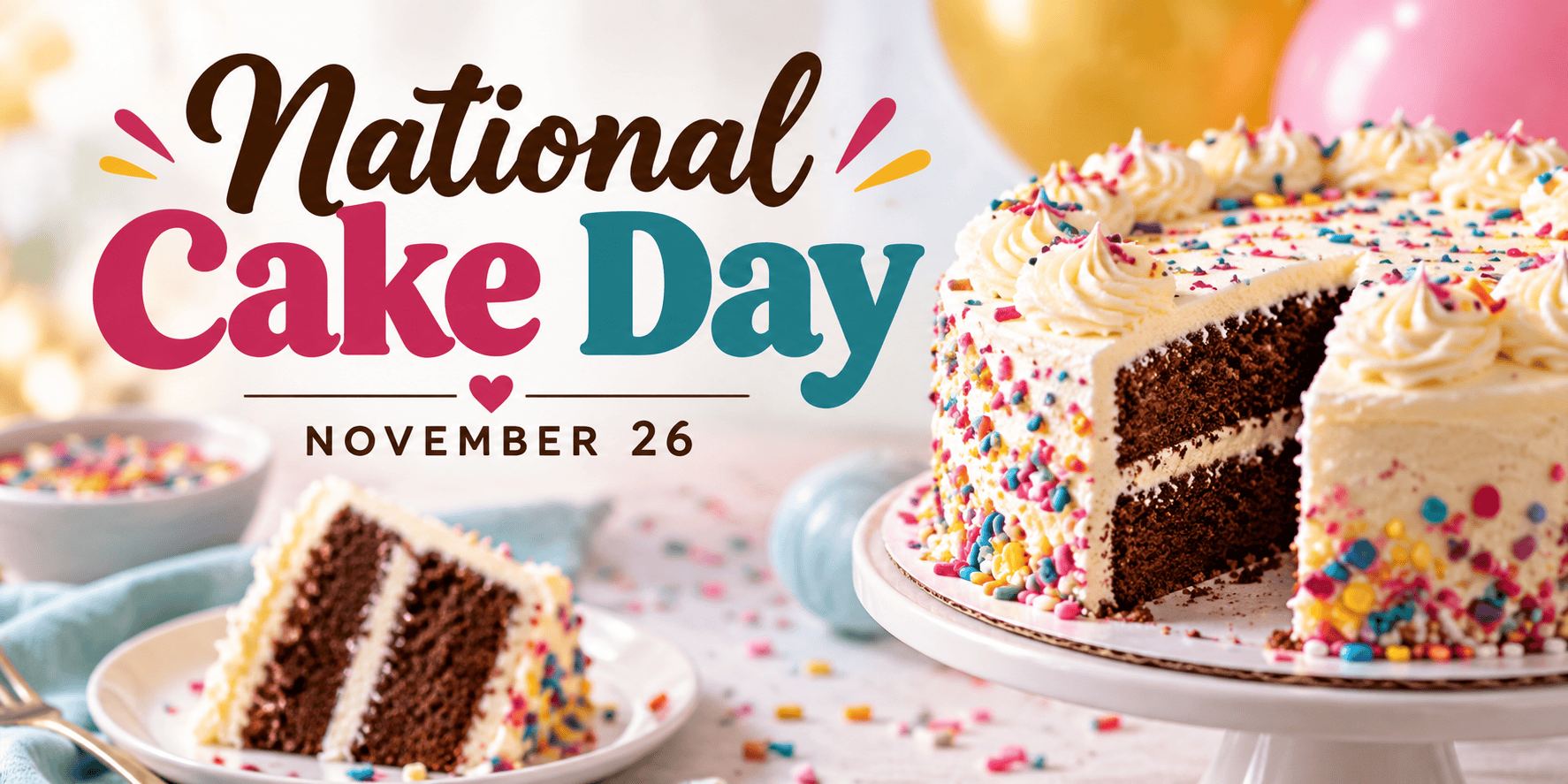
Few desserts bring people together quite like cake. Whether it is a beautifully decorated birthday cake, a rich chocolate layer cake, a homemade pound cake, or a simple slice of vanilla cake with buttercream frosting, cake has a special way of turning ordinary moments into memorable celebrations.
Every year on November 26, National Cake Day gives dessert lovers across the United States an opportunity to celebrate one of the world’s most beloved sweet treats. It is a day dedicated to enjoying delicious cakes, exploring baking traditions, discovering new recipes, and appreciating the happiness that a simple slice of cake can bring.
From birthdays and weddings to holidays and family gatherings, cake has become a symbol of celebration, love, friendship, and togetherness.
National Cake Day is not just about satisfying a sweet tooth. It is also about recognizing the history, creativity, and traditions behind a dessert that has been enjoyed for centuries.
When Is National Cake Day?
National Cake Day is celebrated annually on November 26.
The observance is an informal food holiday rather than an official federal holiday. Its exact origins are not well documented, but it has become a popular occasion for home bakers, bakeries, restaurants, and dessert enthusiasts to celebrate their favorite cakes.
Because National Cake Day falls near Thanksgiving in the United States, it also provides another reason to enjoy homemade desserts during the holiday season.
Whether you prefer chocolate, vanilla, strawberry, carrot, red velvet, or cheesecake, November 26 is the perfect excuse to enjoy a slice of something delicious.
The History of Cake
Cake has a fascinating history that stretches back thousands of years.
Although modern cakes are often light, fluffy, and covered in frosting, the earliest versions were quite different from the desserts we enjoy today.
Ancient Beginnings
The ancient Egyptians are often associated with some of the earliest forms of sweetened baked goods. These early creations were typically made with ingredients such as flour and honey.
Ancient Greeks also prepared honey-sweetened cakes and other baked treats. Some were associated with religious offerings and special occasions.
The Romans developed their own baked sweets using ingredients such as flour, eggs, honey, and nuts.
These early cakes were generally denser and less sweet than modern cakes, but they helped establish traditions that would influence baking for centuries.
Cakes During the Middle Ages
During the Middle Ages, European bakers continued developing recipes using ingredients such as dried fruits, nuts, spices, and honey.
Many cakes resembled sweet breads rather than the soft, fluffy desserts familiar today.
Because sugar and certain baking ingredients were expensive, elaborate cakes were often associated with wealth and special celebrations.
Fruitcakes and other dense baked desserts became popular for holidays and important gatherings.
The Rise of Modern Cakes
Cake baking changed significantly during the 17th, 18th, and 19th centuries.
Improvements in ovens, refined sugar production, and baking equipment made it easier to create lighter and more elaborate cakes.
The development and widespread use of chemical leavening agents, including baking powder, helped bakers produce softer cakes with a more consistent texture.
By the 19th century, many recognizable cake styles had emerged.
Layer cakes, sponge cakes, pound cakes, and decorated celebration cakes became increasingly popular.
During the 20th century, commercially prepared cake mixes made baking more convenient for households across America.
Today, cakes are available in countless flavors, shapes, sizes, and styles.
Why Do We Celebrate National Cake Day?
National Cake Day celebrates more than dessert.
Cake has become closely connected to some of life’s happiest and most meaningful occasions.
Think about the traditions surrounding cake.
A child blowing out birthday candles. A newly married couple cutting their wedding cake. A family gathering around a homemade dessert. Friends surprising someone with their favorite cake.
These moments demonstrate how cake often represents something much greater than the ingredients used to make it.
National Cake Day encourages people to appreciate these traditions while enjoying the creativity and delicious flavors associated with baking.
It is also an opportunity to recognize the talent and dedication of professional bakers, pastry chefs, cake decorators, and home baking enthusiasts.
15 Popular Types of Cake to Enjoy on National Cake Day
One of the best things about cake is the incredible variety available.
From traditional American favorites to internationally inspired desserts, there is something for nearly every taste.
1. Chocolate Cake
Chocolate cake remains one of the most popular dessert choices.
Its rich chocolate flavor, moist texture, and creamy frosting make it a favorite for birthdays, holidays, and special occasions.
2. Vanilla Cake
Vanilla cake is a timeless classic.
Its light flavor pairs beautifully with buttercream, chocolate frosting, fruit fillings, and whipped cream.
3. Red Velvet Cake
Known for its distinctive red color and subtle cocoa flavor, red velvet cake is commonly paired with cream cheese frosting.
It is especially popular for celebrations and special events.
4. Carrot Cake
Carrot cake combines grated carrots with warm spices such as cinnamon and nutmeg.
Many recipes also include walnuts, pecans, or raisins.
Cream cheese frosting is a traditional finishing touch.
5. Strawberry Cake
Strawberry cake offers a sweet, fruity flavor that works beautifully with fresh strawberries, strawberry frosting, or whipped cream.
6. Lemon Cake
Lemon cake delivers a refreshing balance of sweetness and citrus flavor.
It is especially delicious with lemon glaze or lemon buttercream.
7. Pound Cake
Traditional pound cake earned its name from early recipes that used a pound each of butter, sugar, eggs, and flour.
Modern versions often use adjusted proportions while maintaining the dessert’s rich, dense texture.
8. Angel Food Cake
Angel food cake is known for its exceptionally light and airy texture.
Made primarily with whipped egg whites, it is often served with fresh berries or whipped cream.
9. German Chocolate Cake
Despite its name, German chocolate cake is an American creation.
Its name comes from Samuel German, whose name was associated with a type of baking chocolate.
The cake is especially famous for its coconut-pecan frosting.
10. Black Forest Cake
Black Forest cake is a German-inspired dessert featuring chocolate cake, cherries, and whipped cream.
Traditional versions may also include cherry brandy.
11. Pineapple Upside-Down Cake
This nostalgic dessert features pineapple rings and often maraschino cherries baked beneath a buttery cake.
After baking, the cake is inverted to reveal its decorative fruit topping.
12. Coconut Cake
Coconut cake is a popular Southern-style dessert often made with soft cake layers, creamy frosting, and shredded coconut.
13. Funfetti Cake
Funfetti cake features colorful sprinkles mixed into vanilla cake batter.
It is particularly popular for birthdays and children’s celebrations.
14. Coffee Cake
Coffee cake is commonly enjoyed with coffee or tea.
Many American versions feature cinnamon, streusel topping, or a sweet crumb layer.
Despite its name, coffee cake does not necessarily contain coffee.
15. Cheesecake
Although cheesecake differs from traditional flour-based cakes, it is commonly included in cake celebrations.
Its rich, creamy filling is often made with cream cheese, eggs, and sugar over a cookie or graham cracker crust.
Popular variations include New York-style cheesecake, strawberry cheesecake, and chocolate cheesecake.
How to Celebrate National Cake Day
There are countless ways to make November 26 a little sweeter.
Bake a Homemade Cake
One of the most enjoyable ways to celebrate is by baking your favorite cake from scratch.
Choose a family recipe or experiment with something new.
Homemade cakes can be especially meaningful because they bring family members together in the kitchen.
Visit a Local Bakery
Support a neighborhood bakery by purchasing a slice of cake or ordering a special dessert.
Local bakeries often offer unique flavors and beautifully decorated cakes that make the occasion memorable.
Host a Cake-Tasting Party
Invite friends or family members to bring different types of cake.
Arrange the desserts on a table and allow everyone to sample several flavors.
You can even vote on favorites, including best chocolate cake, best frosting, and most creative presentation.
Try a New Cake Recipe
National Cake Day is a great opportunity to explore unfamiliar recipes.
Consider trying a lemon blueberry cake, hummingbird cake, Italian cream cake, or classic tres leches cake.
Decorate a Cake
Cake decorating can be a fun creative activity for both adults and children.
Experiment with piping techniques, colorful frosting, fresh fruit, chocolate decorations, and edible sprinkles.
Share Cake With Someone Special
Sometimes the simplest celebration is the most meaningful.
Surprise a friend, neighbor, coworker, or family member with their favorite slice of cake.
A thoughtful gesture can turn an ordinary day into a memorable one.
Fun and Interesting Facts About Cake
Cake has inspired fascinating traditions and innovations throughout history.
The word cake has ancient roots. The English word is commonly traced to the Old Norse word kaka.
Birthday cakes have a long history. Various cultures developed traditions involving cakes and special celebrations, although modern birthday cake customs evolved over time.
Wedding cakes were not always elaborate. Earlier wedding traditions often involved breads or simpler baked goods before elaborate tiered cakes became fashionable.
Pound cake has a memorable name. Its traditional recipe used equal one-pound quantities of four main ingredients.
Cake decorating is an art form. Professional decorators use techniques such as fondant sculpting, sugar flowers, airbrushing, and intricate piping.
Cake mixes transformed home baking. Commercial cake mixes became particularly popular in American kitchens during the mid-20th century.
Not all cakes require baking. Icebox cakes, refrigerator cakes, and certain cheesecakes can be prepared without an oven.
Cakes vary around the world. Different cultures have developed distinctive cakes reflecting local ingredients, customs, and celebrations.
Cake Traditions Around the World
Although National Cake Day is primarily recognized in the United States, cakes are enjoyed in many cultures.
Italy – Tiramisu
Tiramisu is a popular Italian dessert made with coffee-soaked ladyfingers, mascarpone cream, and cocoa powder.
Although not a conventional baked cake, it is frequently served as a layered celebration dessert.
Mexico – Tres Leches Cake
Tres leches cake is a sponge cake soaked in a mixture of three types of milk.
It is especially popular in Mexico and throughout Latin America.
Japan – Japanese Strawberry Shortcake
Japanese strawberry shortcake typically features light sponge cake, whipped cream, and fresh strawberries.
It is a popular choice for birthdays and Christmas celebrations.
France – Opera Cake
Opera cake is an elegant French layered dessert traditionally made with almond sponge cake, coffee buttercream, chocolate ganache, and chocolate glaze.
Germany – Black Forest Cake
Black Forest cake combines chocolate, cherries, and cream into a distinctive layered dessert.
These international favorites demonstrate how cake traditions can reflect different culinary histories while sharing a common purpose: bringing people together through food.
Easy Homemade Vanilla Cake Recipe for National Cake Day
If you want to celebrate with a simple homemade dessert, this classic vanilla cake is an excellent choice.
Recipe details
40–45 min
Prep & bake
12 slices
Servings
Easy
Difficulty
Ingredients
For the cake:
-
2 cups all-purpose flour
-
1½ cups granulated sugar
-
½ cup unsalted butter, softened
-
2 large eggs
-
1 cup milk
-
2 teaspoons vanilla extract
-
2 teaspoons baking powder
-
½ teaspoon salt
For the vanilla buttercream frosting:
-
1 cup unsalted butter, softened
-
3½ cups powdered sugar
-
2 teaspoons vanilla extract
-
2–3 tablespoons milk
-
Pinch of salt
Instructions
-
Preheat the oven to 350°F and grease a 9-by-13-inch baking pan.
-
In a medium bowl, whisk together the flour, baking powder, and salt.
-
In a separate large bowl, cream the butter and sugar until light and fluffy.
-
Add the eggs one at a time, mixing well after each addition.
-
Stir in the vanilla extract.
-
Gradually add the dry ingredients, alternating with the milk, and mix until just combined.
-
Pour the batter into the prepared baking pan and spread evenly.
-
Bake for approximately 28–35 minutes, or until a toothpick inserted into the center comes out clean.
-
Allow the cake to cool completely before frosting.
-
To prepare the buttercream, beat the softened butter until creamy. Gradually add the powdered sugar, vanilla, salt, and enough milk to create a smooth, spreadable consistency.
-
Spread the frosting over the cooled cake, slice, and enjoy.
Tips for Making the Perfect Cake
Use room-temperature ingredients whenever possible to help create a smoother batter.
Measure flour carefully because too much flour can produce a dry, dense cake.
Avoid overmixing once the flour has been added.
Check the cake near the end of the recommended baking time because ovens can vary.
Always allow cakes to cool completely before applying buttercream frosting.
Why Cake Holds a Special Place in Our Memories
One reason cake remains so popular is its connection to personal memories.
Many people remember a favorite birthday cake from childhood, a grandmother’s homemade dessert, or the cake served at an important family celebration.
The smell of vanilla cake baking in the oven can bring back memories of holidays, family kitchens, and moments shared with loved ones.
For some families, baking a traditional cake recipe becomes a way of honoring generations who came before them.
Handwritten recipe cards, familiar ingredients, and treasured baking traditions help preserve those connections.
Cake reminds us that food can carry memories, emotions, and stories from one generation to the next.
National Cake Day and the Holiday Season
Because National Cake Day falls on November 26, it often arrives during the Thanksgiving holiday period.
This makes it an excellent opportunity to explore seasonal cake flavors.
Pumpkin spice cake, apple cinnamon cake, maple pecan cake, cranberry orange cake, and gingerbread cake are all delicious choices for autumn gatherings.
These desserts incorporate flavors commonly associated with cooler weather and holiday celebrations.
Families can also use National Cake Day as an opportunity to begin their holiday baking traditions.
Preparing cakes together can create memories that last long after the final slice has been enjoyed.
Frequently Asked Questions About National Cake Day
What day is National Cake Day?
National Cake Day is celebrated every year on November 26.
Is National Cake Day an official holiday?
No. National Cake Day is an informal food observance and is not a federal holiday in the United States.
Why is National Cake Day celebrated?
The day celebrates cakes, baking traditions, and the enjoyment of sharing desserts with others. Its original founder and precise beginnings are not clearly documented.
What is the most popular cake flavor?
Chocolate and vanilla are among the most widely enjoyed cake flavors. Popularity varies by region, occasion, and personal preference.
Can I celebrate National Cake Day without baking?
Absolutely. You can purchase cake from a bakery, share dessert with friends, try a new flavor, or simply enjoy your favorite slice.
Is cheesecake considered cake?
Cheesecake is technically closer to a custard-style dessert than a traditional flour-based cake, but it is commonly included in cake celebrations.
What is the difference between National Cake Day and National Chocolate Cake Day?
National Cake Day celebrates cakes of all varieties on November 26, while National Chocolate Cake Day specifically celebrates chocolate cake on January 27.
Final Thoughts: Celebrate National Cake Day With Something Sweet
National Cake Day on November 26 is a wonderful reminder that life’s sweetest moments do not always require elaborate celebrations.
Sometimes, all it takes is a homemade dessert, a favorite family recipe, or a slice of cake shared with someone special.
Cake has been part of human celebrations for centuries, evolving from simple honey-sweetened baked goods into the incredible variety of desserts we enjoy today.
Whether you love rich chocolate cake, classic vanilla cake, fruity strawberry cake, or a traditional homemade pound cake, National Cake Day offers an opportunity to appreciate the flavors, traditions, and memories connected to this beloved dessert.
So preheat the oven, visit your favorite bakery, or gather your family around the kitchen table.
After all, every celebration is a little sweeter with cake.
What is your favorite type of cake, and is there a special cake recipe that brings back wonderful memories for you?


Leave a Reply