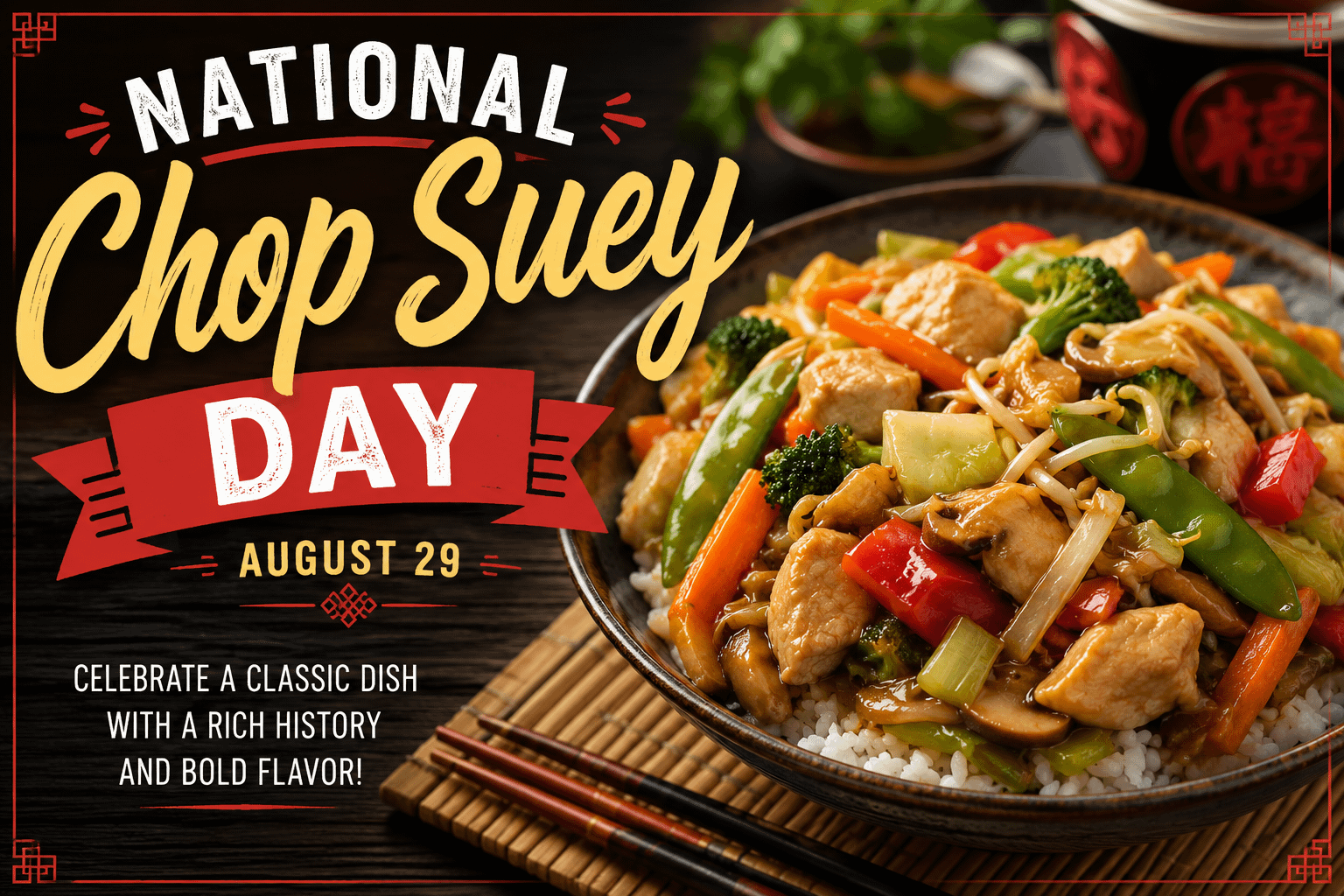
Every year on August 29, food lovers have a delicious reason to celebrate National Chop Suey Day, honoring one of the most recognizable dishes in the story of Chinese American cuisine.
Chop suey is often described as a combination of meat or another protein, assorted vegetables, and a savory sauce, usually served with rice and sometimes paired with noodles. Chicken, pork, beef, shrimp, and tofu can all be used, while celery, onions, bean sprouts, cabbage, mushrooms, carrots, peppers, water chestnuts, and other vegetables make the dish colorful and satisfying.
At first glance, chop suey might seem like a simple stir-fry.
Its story, however, is much bigger.
Chop suey became deeply connected with the development of Chinese American restaurants and the broader history of Chinese immigration in the United States. Over generations, it became a familiar comfort food and helped introduce countless American diners to Chinese American cooking.
National Chop Suey Day gives us an opportunity to enjoy a tasty meal while also appreciating the history, adaptation, creativity, and cultural exchange represented by the dish.
What Is Chop Suey?
There isn’t one universal recipe for chop suey.
That’s actually part of what makes the dish so interesting.
Most versions begin with a protein such as:
- Chicken
- Beef
- Pork
- Shrimp
- Tofu
The protein is combined with vegetables that might include:
- Bean sprouts
- Celery
- Onions
- Cabbage
- Mushrooms
- Carrots
- Bell peppers
- Broccoli
- Snow peas
- Water chestnuts
- Bamboo shoots
Everything is usually brought together with a savory sauce that may contain ingredients such as soy sauce, broth, garlic, ginger, and a thickener such as cornstarch.
The result is a dish filled with contrasting textures.
You might get the crunch of celery, tenderness of chicken, earthiness of mushrooms, sweetness of onions, freshness of bean sprouts, and richness of sauce in the same bite.
Serve it over steamed rice, and you’ve got a hearty meal that can be adjusted almost endlessly.
The Mysterious Origins of Chop Suey
The history of chop suey is surrounded by stories and legends.
Over the years, different tales have claimed that the dish was invented for visiting dignitaries, created for hungry travelers, improvised by restaurant cooks, or developed specifically to satisfy American diners.
Some stories sound convincing.
Others sound more like culinary folklore.
Because many of these origin stories appeared long after chop suey had already become popular, historians have questioned how literally they should be taken.
Rather than pointing to one dramatic moment when someone “invented” chop suey, it is more useful to understand the dish as part of the larger evolution of Chinese American cooking.
Chinese immigrants brought culinary traditions with them to the United States. As communities developed and restaurants opened, cooks worked with locally available ingredients while serving both Chinese and non-Chinese customers.
Recipes naturally changed.
New dishes emerged.
Existing dishes were adapted.
Over time, chop suey became one of the most successful and recognizable results of that culinary exchange.
What Does “Chop Suey” Mean?
The name “chop suey” is commonly linked to Cantonese words referring to assorted or mixed pieces.
It’s an appropriate description.
Chop suey isn’t defined by one particular vegetable or protein. Its identity comes from bringing a collection of ingredients together.
In that sense, the name describes the dish perfectly.
Different pieces.
Different flavors.
Different textures.
One meal.
That flexibility helped chop suey become practical for restaurant kitchens as well as home cooks.
If beef was available, cooks could make beef chop suey.
If chicken was available, chicken chop suey worked just as well.
Extra vegetables could be added.
Ingredients could be changed according to season, price, availability, or preference.
That adaptability remains one of the dish’s greatest strengths.
Chinese Immigration and the American Food Story
To understand why chop suey became important, it’s worth looking at the larger story surrounding Chinese American communities.
Large numbers of Chinese immigrants came to the United States during the 19th century, particularly to the American West.
Chinese workers contributed to mining, agriculture, railroad construction, manufacturing, service industries, and other parts of the growing American economy.
Their lives were not easy.
Chinese immigrants faced intense discrimination, violence, segregation, and exclusionary policies.
Despite those obstacles, Chinese American communities built businesses, neighborhoods, family networks, cultural organizations, and restaurants.
Restaurants became especially significant.
Food provided an economic opportunity for entrepreneurs while also becoming one of the most visible ways Chinese culture entered everyday American life.
Chinese restaurants eventually expanded far beyond established Chinatowns.
As they appeared in cities and towns across the country, more Americans were introduced to Chinese American dishes.
Chop suey became one of the stars.
The Rise of the Chinese American Restaurant
Imagine walking through an American city during the early decades of the 20th century.
Restaurants advertised unfamiliar foods that promised something exciting and different.
For adventurous diners, Chinese restaurants offered an opportunity to experience flavors they might never encounter at home.
Chop suey became particularly appealing.
It contained recognizable ingredients—meat, vegetables, gravy-like sauce, and rice—while still feeling different from typical American meals.
That combination helped make it approachable.
As more people tried chop suey, word spread.
Restaurants promoted it.
Newspapers discussed it.
Cookbooks printed recipes.
Home cooks attempted their own versions.
Eventually, the dish became so familiar that generations of Americans associated chop suey almost automatically with Chinese restaurants.
America’s Chop Suey Craze
There was a period when chop suey was more than popular.
It was a phenomenon.
Restaurants specializing in chop suey became common in major American cities, and the dish became part of popular dining culture.
For many diners, “going out for chop suey” became almost synonymous with going out for Chinese food.
That popularity is important because it helped Chinese American restaurants become established fixtures within the broader restaurant industry.
Chop suey acted as a culinary bridge.
Customers might initially visit for the famous dish, then discover other foods.
Over time, menus expanded and American diners became increasingly familiar with a much wider range of Chinese and Chinese American dishes.
Chop Suey as Cultural Exchange
Food tells stories.
A recipe can reveal where people traveled, what ingredients were available, how communities interacted, and how traditions changed.
Chop suey is a particularly interesting example.
It reflects a meeting between Chinese culinary traditions and American restaurant culture.
Calling it simply “Chinese food” doesn’t tell the entire story.
Calling it purely “American food” doesn’t either.
It belongs to the history of Chinese American cuisine, a tradition with its own identity and history.
That distinction matters.
Chinese American cooking developed through generations of immigrants and their descendants responding creatively to new surroundings while maintaining connections with culinary traditions.
Chop suey became one expression of that experience.
A Dish Built Around Adaptability
One reason chop suey survived for generations is that it doesn’t demand absolute precision.
Many classic dishes require very specific ingredients.
Chop suey welcomes improvisation.
Have leftover chicken?
Use it.
A few carrots sitting in the refrigerator?
Slice them.
Half an onion?
Throw it in.
Some celery that needs to be used?
Perfect.
Mushrooms?
Absolutely.
That makes chop suey particularly useful for reducing food waste.
Instead of allowing small amounts of vegetables to go unused, they can become part of a larger meal.
In many households, that practicality is just as important as flavor.
Chop Suey vs. Chow Mein
Chop suey and chow mein are sometimes confused, especially because both can contain vegetables, meat, and savory sauces.
The biggest general difference is the role of noodles.
Chop suey usually emphasizes the combination of vegetables, protein, and sauce and is frequently served with rice.
Chow mein is centered around noodles, which are combined with vegetables, protein, and seasonings.
However, restaurant traditions vary dramatically depending on location.
A dish called chow mein in one part of the country may look different from chow mein somewhere else.
Regional restaurant traditions developed over decades, creating variations that became local favorites.
Chop Suey vs. Stir-Fry
People may also wonder whether chop suey is simply another name for stir-fry.
Not exactly.
Stir-frying is a cooking technique, while chop suey is a particular style of dish.
Many chop suey recipes use stir-frying as part of their preparation, but countless other foods are stir-fried as well.
Chop suey typically includes assorted vegetables and protein brought together with a sauce.
The finished dish is often somewhat saucier than many simple stir-fried meals.
Why Vegetables Are the Star
Protein may receive top billing, but vegetables are often what give chop suey its personality.
Celery provides crispness.
Bean sprouts bring freshness.
Carrots add sweetness and color.
Mushrooms contribute an earthy richness.
Onions provide aroma.
Cabbage adds substance.
Bell peppers contribute color and crunch.
Water chestnuts offer their unmistakable crisp texture.
Because vegetables cook at different speeds, preparing chop suey can also teach an important cooking lesson: timing matters.
Harder vegetables should usually enter the pan earlier.
Softer vegetables can be added later.
Bean sprouts and other delicate ingredients may only need a brief amount of cooking.
When prepared properly, the vegetables should maintain some texture rather than becoming completely soft.
The Importance of the Sauce
The sauce ties everything together.
Without it, you’ve essentially got cooked vegetables and meat.
With the right sauce, those ingredients become one cohesive dish.
A basic chop suey-style sauce might contain:
- Soy sauce
- Chicken or vegetable broth
- Garlic
- Ginger
- Cornstarch
- A touch of sweetness
- Optional sesame oil or other seasonings
Cornstarch is often used to thicken the liquid, creating the glossy sauce commonly associated with chop suey.
The goal isn’t necessarily to drown the ingredients.
Instead, the sauce should lightly coat everything and bring the flavors together.
Homemade Chicken Chop Suey
National Chop Suey Day is a great excuse to experiment in the kitchen.
For a basic chicken version, gather:
Ingredients
- 1 pound boneless chicken, sliced into bite-sized pieces
- 2 tablespoons cooking oil
- 1 onion, sliced
- 2 celery stalks, sliced
- 1 cup mushrooms, sliced
- 1 carrot, thinly sliced
- 1 bell pepper, sliced
- 1 cup bean sprouts
- 1 cup chicken broth
- 2 tablespoons soy sauce
- 1 teaspoon minced garlic
- 1 teaspoon grated ginger
- 1 tablespoon cornstarch
- 2 tablespoons water
- Cooked rice for serving
Directions
Heat oil in a large skillet or wok.
Add the chicken and cook until browned and cooked through. Remove it temporarily if necessary to prevent overcooking.
Add the firmer vegetables, including carrots, celery, and onions.
Cook briefly before adding mushrooms and peppers.
Return the chicken to the pan.
Add broth, soy sauce, garlic, and ginger.
Combine cornstarch with water in a small bowl until smooth, then gradually stir it into the pan.
Allow the sauce to simmer until it thickens.
Add bean sprouts near the end so they maintain some crunch.
Serve everything over warm rice.
You now have a simple homemade meal worthy of National Chop Suey Day.
Create Your Own Chop Suey Bar
If you’re celebrating with family or friends, turn dinner into an interactive experience.
Prepare several proteins and vegetables and allow everyone to build their preferred combination.
You could offer chicken, shrimp, and tofu alongside bowls of:
- Mushrooms
- Celery
- Carrots
- Peppers
- Broccoli
- Cabbage
- Bean sprouts
- Water chestnuts
- Onions
People can choose their favorites before everything is cooked.
It’s an easy way to get children involved in meal preparation, too.
A child who normally avoids vegetables may be more willing to try them when allowed to choose which ones go into the meal.
Make It Vegetarian
Chop suey doesn’t have to contain meat.
Tofu works beautifully because it absorbs the flavors of the sauce.
You can also simply increase the vegetables.
Try combining mushrooms, broccoli, cabbage, carrots, onions, peppers, snow peas, and water chestnuts.
Serve the vegetable mixture over brown or white rice for a filling meatless dinner.
The flexibility of chop suey means almost everyone can develop a version that fits their preferences.
Turn Leftovers Into Tomorrow’s Dinner
One of the best modern reasons to appreciate chop suey is its potential as a leftover-friendly meal.
Many refrigerators contain small amounts of ingredients that aren’t enough for a full meal on their own.
A little cooked chicken.
Half a bell pepper.
Several mushrooms.
Some broccoli.
A handful of carrots.
An onion.
Put them together, add a savory sauce, and suddenly those leftovers become dinner.
That makes chop suey a reminder that good cooking doesn’t always require expensive or complicated ingredients.
Sometimes creativity matters more.
Visit a Local Chinese American Restaurant
Not interested in cooking?
National Chop Suey Day provides a perfect reason to support a local restaurant.
Check menus at Chinese and Chinese American restaurants in your community and see whether chop suey is offered.
Some restaurants still serve classic versions that reflect decades of local dining traditions.
Ordering from a locally owned restaurant doesn’t just provide a good meal.
It supports the families and businesses that keep culinary traditions alive.
Consider ordering something you’ve never tried alongside your chop suey.
Food holidays can be an excuse to step outside your normal routine and discover a new favorite.
Learn About Chinese American History
Celebrating National Chop Suey Day can go beyond eating.
Spend a little time learning about the history of Chinese Americans and their influence on the United States.
Explore the stories of early Chinese immigrants.
Learn about the development of Chinatowns.
Read about Chinese railroad workers and other laborers.
Discover the history of Chinese American restaurants.
Learn how immigration policies and discrimination affected Chinese communities.
Understanding that history provides greater context for the foods we enjoy today.
A restaurant dish can become a doorway into a much larger American story.
Host a Chinese American Food Night
Another fun celebration idea is to build an entire meal around classic Chinese American restaurant favorites.
Make chop suey the centerpiece and add several complementary dishes.
You might serve:
Chop Suey
with
Fried Rice
plus
Egg Rolls
and perhaps
Wonton Soup
Finish dinner with fortune cookies for a nostalgic restaurant-inspired experience.
Invite friends or family members and turn National Chop Suey Day into an evening of food, conversation, and learning.
Share Your Chop Suey Creation
Food holidays are perfect for social media because everyone has a slightly different interpretation of a dish.
If you make chop suey on August 29, take a picture before everyone digs in.
Share what ingredients you used.
Did you make chicken chop suey?
Beef?
Shrimp?
Vegetarian?
Did you follow a traditional family recipe or create something completely new?
Sharing recipes and food memories is another way culinary traditions continue evolving.
Chop Suey and Food Memories
Food isn’t only about taste.
It’s also about memory.
For some people, chop suey might bring back memories of visiting a neighborhood Chinese restaurant with their parents or grandparents.
Others may remember takeout containers spread across the kitchen table.
Someone else might remember a homemade version prepared by a family member.
Those memories become part of a dish’s history.
The recipe may change, but the feeling associated with the meal can remain for decades.
That’s one reason traditional restaurant dishes continue to matter even as dining trends change.
Why Old-Fashioned Dishes Still Matter
Food trends constantly evolve.
New restaurants appear.
New ingredients become fashionable.
Social media introduces people to foods from around the world.
Menus become more diverse.
But older dishes shouldn’t automatically be forgotten.
Classic Chinese American foods such as chop suey tell part of the history of dining in America.
They show what earlier generations ordered.
They demonstrate how restaurant menus evolved.
They reveal how immigrant communities influenced American culture.
And they remind us that today’s familiar foods were once completely new to many diners.
A Celebration of Creativity
There’s another lesson hidden inside a plate of chop suey.
Great food doesn’t always have to be complicated.
Take simple ingredients.
Prepare them carefully.
Combine different textures.
Add flavorful seasoning.
Serve them together.
That basic formula has created countless beloved meals around the world.
Chop suey celebrates the creativity involved in taking what is available and turning it into something satisfying.
That’s a lesson that applies far beyond cooking.
Interesting Facts About Chop Suey
Here are a few things that make the dish especially interesting:
Its exact origin remains debated.
There are several colorful stories about how chop suey originated, but no single dramatic invention story explains its entire history.
It became closely associated with Chinese American restaurants.
For generations, chop suey was one of the dishes many Americans immediately associated with Chinese dining.
Recipes vary widely.
There is no single mandatory list of vegetables or proteins.
It helped introduce diners to new flavors.
For many Americans in earlier generations, chop suey was among their first experiences with Chinese American cuisine.
It can be economical.
Because cooks can use assorted vegetables and different proteins, chop suey can be adapted according to what is already available.
It’s ideal for experimentation.
Home cooks can adjust the vegetables, protein, sauce, and accompaniments according to personal preference.
Ways to Celebrate National Chop Suey Day
There are plenty of ways to make August 29 delicious.
Order chop suey from a local restaurant.
Support a neighborhood Chinese American business and enjoy its version of this classic.
Cook chop suey at home.
Gather your favorite vegetables and protein and create your own combination.
Use what’s already in your refrigerator.
Turn leftover vegetables and proteins into a new meal.
Try a vegetarian version.
Load the dish with vegetables and tofu.
Cook with your family.
Allow everyone to select the vegetables they want included.
Learn about Chinese American culinary history.
Discover how immigration, restaurants, entrepreneurship, and cultural exchange shaped American dining.
Share your meal.
Post a photo of your chop suey and ask friends how they prefer theirs.
Try another Chinese American classic.
Use the holiday as inspiration to explore something you’ve never ordered before.
More Than Just a Food Holiday
National food days are fun because they give us an excuse to enjoy something delicious.
But sometimes a food holiday can also lead us into history.
National Chop Suey Day is one of those occasions.
Behind this seemingly simple combination of vegetables, protein, sauce, and rice is a story connected to immigration, entrepreneurship, adaptation, discrimination, survival, cultural exchange, and generations of restaurant owners.
Food has an extraordinary ability to cross cultural boundaries.
People may speak different languages or come from completely different backgrounds, yet they can still gather around a table and enjoy the same meal.
Chop suey became part of America’s culinary vocabulary because generations of people cooked it, served it, ordered it, adapted it, and shared it.
Celebrating the People Behind the Food
When celebrating dishes connected to immigrant communities, it’s worth remembering the people behind them.
Restaurants don’t appear by accident.
They are created by people willing to work long hours, take financial risks, prepare meals, serve customers, raise families, and build businesses.
For generations, Chinese American restaurant owners helped shape the way Americans eat.
Their influence extends far beyond chop suey.
Chinese American restaurants became neighborhood institutions throughout the United States, and many families have their own favorite local restaurant that has been part of birthdays, celebrations, takeout nights, family dinners, and ordinary evenings for years.
National Chop Suey Day provides another opportunity to appreciate that contribution.
The Lasting Legacy of Chop Suey
Chop suey may not dominate American Chinese restaurant menus the way it once did, but its historical importance remains.
It helped popularize Chinese American dining.
It became a household name.
It appeared on restaurant menus, in cookbooks, newspapers, advertisements, and home kitchens.
Most importantly, it became part of America’s food story.
The dish reminds us that cuisines constantly evolve.
People move.
Communities change.
Ingredients travel.
Recipes adapt.
Traditions meet.
Something new emerges.
Sometimes that new creation becomes so familiar that future generations forget there was ever a time when it seemed unusual.
Chop suey is a wonderful example of that process.
Happy National Chop Suey Day!
On August 29, celebrate National Chop Suey Day with a plate filled with crunchy vegetables, tender protein, savory sauce, and plenty of rice.
Make it yourself.
Order it from a local restaurant.
Try a version you’ve never tasted before.
Share it with family.
Learn something about Chinese American history while you eat.
Most importantly, appreciate the remarkable way food can connect people, cultures, communities, and generations.
Chop suey isn’t simply a collection of assorted ingredients.
It’s a dish with a place in American culinary history—a reminder that some of our most familiar foods exist because people brought traditions with them, adapted to new surroundings, and created something that generations of others learned to love.
So grab your chopsticks, fork, or spoon and dig in.
Happy National Chop Suey Day!
What’s your favorite kind of chop suey—chicken, beef, pork, shrimp, tofu, or an extra-loaded vegetable version? And do you prefer yours served over rice or with noodles?
Leave a Reply