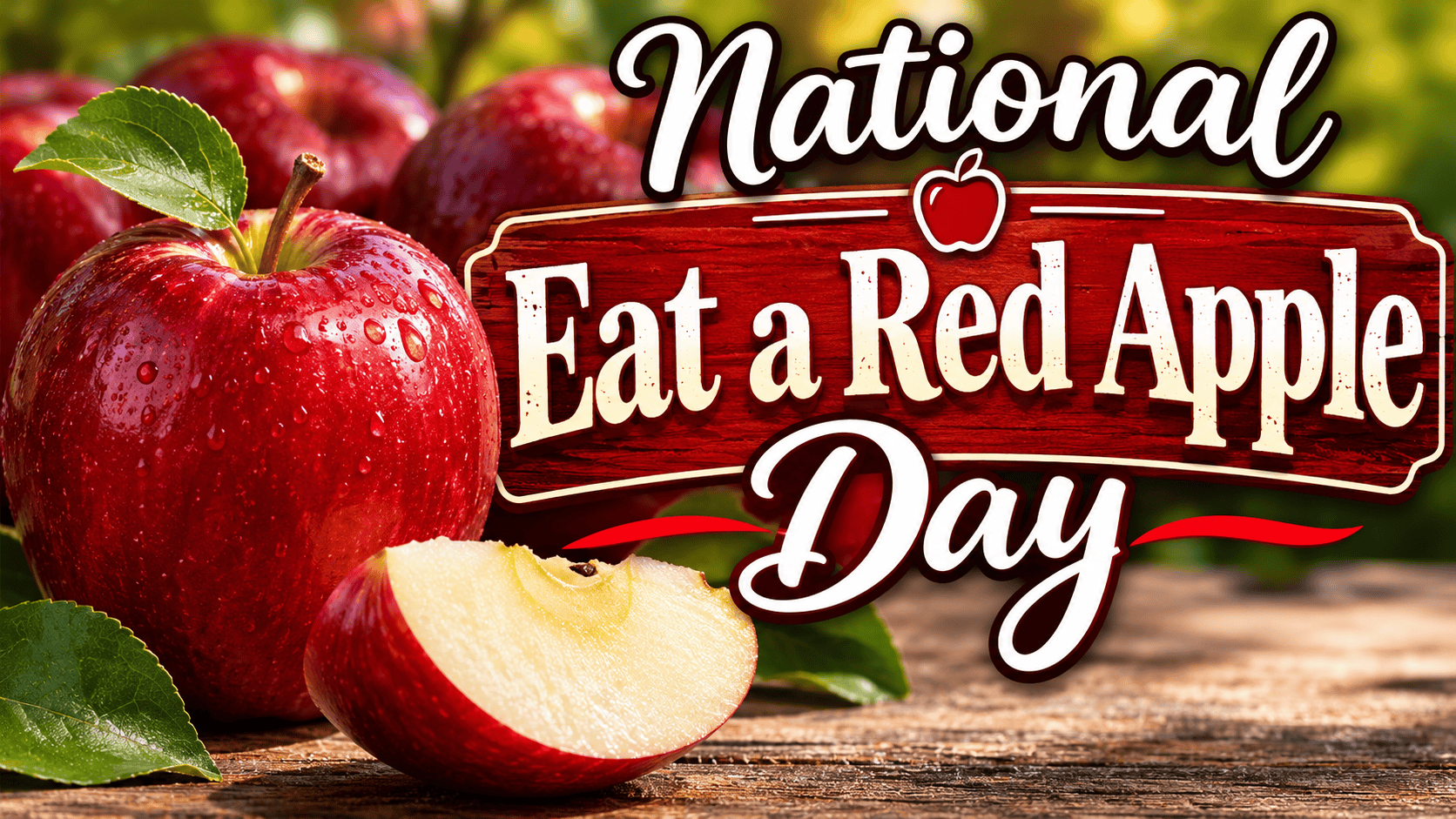
Every year on December 1, National Eat a Red Apple Day encourages people to enjoy one of nature’s simplest, most delicious, and nutritious snacks. Whether you prefer a crisp Red Delicious, a sweet Fuji, or a juicy Gala, this special day celebrates the red apple and its place in our diets, traditions, and everyday lives.
Apples have been enjoyed for thousands of years, appearing in ancient stories, cultural traditions, family recipes, and familiar sayings. They symbolize everything from knowledge and love to health and abundance.
National Eat a Red Apple Day is more than an excuse to enjoy a piece of fruit. It is an opportunity to appreciate healthy eating, learn about the fascinating history of apples, and discover creative ways to incorporate them into meals and snacks.
When Is National Eat a Red Apple Day?
National Eat a Red Apple Day is celebrated annually on December 1.
Unlike holidays requiring elaborate preparations or expensive celebrations, this observance is refreshingly simple. All you need is a fresh red apple and a few moments to enjoy it.
The day arrives at the beginning of December, when many people are preparing for holiday gatherings, shopping for gifts, and enjoying seasonal treats.
Amid the cookies, pies, and other holiday indulgences, eating a fresh apple offers a naturally sweet and nutritious alternative.
The celebration also provides an opportunity to introduce children to healthy eating habits and encourage families to make fruit a regular part of their diets.
The History of National Eat a Red Apple Day
Although the exact origins and founder of National Eat a Red Apple Day are not well documented, the observance reflects humanity’s long relationship with apples.
Apples have been cultivated for thousands of years and are among the world’s most recognizable fruits.
The Ancient Origins of Apples
The domesticated apple, scientifically known as Malus domestica, traces much of its ancestry to wild apple populations in Central Asia, particularly the mountains of present-day Kazakhstan.
Over centuries, travelers, merchants, and farmers carried apples along trade routes, spreading them throughout Asia, Europe, and eventually other parts of the world.
As apples moved into different regions, growers cultivated varieties suited to local climates, tastes, and agricultural conditions.
Ancient civilizations valued apples for their flavor, versatility, and ability to be stored for extended periods.
Apples Arrive in America
European settlers introduced cultivated apple varieties to North America during the colonial period.
Apple orchards gradually became important parts of American agriculture, providing fruit for fresh eating, cooking, drying, and cider production.
One of the most recognizable figures in American apple history is Johnny Appleseed, born John Chapman in 1774.
Chapman traveled through parts of Pennsylvania, Ohio, Indiana, and surrounding regions, establishing apple nurseries and helping spread apple cultivation across the American frontier.
Although popular stories often portray him scattering seeds randomly, he was also a practical nurseryman who established and maintained orchards.
His legacy remains closely connected to American apple-growing traditions.
The Rise of Red Apples
Over time, growers developed and popularized numerous red apple varieties.
The Red Delicious apple became particularly recognizable in American grocery stores because of its deep red color and distinctive shape.
Other popular varieties, including Gala, Fuji, Honeycrisp, and Pink Lady, expanded the choices available to consumers.
Today, red apples remain favorites for fresh snacks, school lunches, baked desserts, and countless recipes.
Why Are Red Apples So Popular?
Red apples offer an appealing combination of sweetness, crunch, convenience, and nutritional value.
Unlike many snacks that require preparation, apples can be washed and enjoyed almost immediately.
Their natural packaging makes them easy to carry in lunchboxes, backpacks, and picnic baskets.
Red apples are also incredibly versatile. They can be eaten fresh, sliced into salads, baked into desserts, or cooked into comforting seasonal dishes.
Another reason for their popularity is the variety of flavors and textures available.
Some red apples are intensely sweet, while others offer a pleasant balance of sweetness and tartness.
This diversity makes it easy to find a variety that suits individual preferences.
The Health Benefits of Eating Red Apples
The familiar saying, “An apple a day keeps the doctor away,” has helped make apples symbols of healthy living.
Although eating apples cannot guarantee good health or prevent every illness, they contain nutrients and beneficial plant compounds that can support a balanced diet.
1. Apples Provide Dietary Fiber
A medium apple with its skin contains approximately four grams of dietary fiber.
Fiber supports healthy digestion, helps maintain regular bowel movements, and contributes to feelings of fullness.
Eating apples with their skins generally provides more fiber than peeling them.
2. Apples Support Heart-Healthy Eating
Apples contain soluble fiber, including pectin, and naturally occurring plant compounds known as polyphenols.
These components may contribute to cardiovascular health when apples are consumed as part of an overall balanced diet.
Replacing less nutritious snacks with whole fruit can also support healthier eating patterns.
3. Apples Contain Antioxidants
Red apple skins contain various polyphenols, including compounds that contribute to their color.
Antioxidants help protect cells from oxidative damage.
The amount and type of these compounds vary depending on the apple variety, growing conditions, and storage methods.
4. Apples Help With Hydration
Apples contain approximately 85% water.
While they do not replace drinking water, their high water content contributes to daily fluid intake.
This makes them a refreshing snack throughout the year.
5. Apples Offer Natural Sweetness
Apples provide natural sugars alongside water, fiber, and other nutrients.
For people looking to reduce their intake of sweets with added sugar, a fresh apple can be a satisfying alternative.
Pairing apple slices with peanut butter, nuts, or plain yogurt can create a more filling snack.
6. Apples Provide Vitamin C
Apples contain modest amounts of vitamin C, an essential nutrient involved in immune function, collagen production, and normal tissue repair.
Although apples are not among the richest sources of vitamin C, they contribute to dietary variety.
Popular Red Apple Varieties to Try
Not all red apples taste the same. Each variety offers its own combination of flavor, texture, and culinary possibilities.
Red Delicious
Red Delicious apples are known for their deep red skin, elongated shape, and sweet flavor.
They are commonly enjoyed fresh, although their softer texture makes them less suitable for some baking applications.
Fuji
Fuji apples are exceptionally sweet, juicy, and crisp.
Originally developed in Japan, they have become popular around the world.
Their firm texture makes them excellent for fresh eating, salads, and certain baked dishes.
Gala
Gala apples feature attractive red-orange striping over a yellow background.
They are mildly sweet, aromatic, and pleasantly crisp.
Their approachable flavor makes them particularly popular with children.
Honeycrisp
Honeycrisp apples are celebrated for their remarkable crunch and juicy texture.
Their balanced sweet-tart flavor makes them excellent for eating fresh.
They also work well in salads and many baked recipes.
Pink Lady
Pink Lady apples, sold under that brand name when they meet specific standards, are known for their pinkish-red coloring, firm texture, and lively sweet-tart flavor.
They are particularly enjoyable for people who prefer apples with a little acidity.
Fun Facts About Red Apples
Apples have an interesting history filled with science, agriculture, and cultural traditions.
-
There are thousands of named apple varieties worldwide.
-
Apples belong to the rose family, Rosaceae.
-
Apple trees typically take several years to begin producing significant fruit.
-
Apple seeds do not reliably produce trees identical to their parent variety, so commercial apple trees are usually propagated by grafting.
-
Apples float in water because approximately one-quarter of their volume consists of air spaces.
-
Apple skins contain much of the fruit’s fiber and many of its polyphenols.
-
China is the world’s largest apple-producing country.
-
Apples can be stored for months under carefully controlled commercial conditions.
-
The science of growing apples is called pomology, a branch of horticulture concerned with fruit cultivation.
These facts demonstrate that the everyday apple has a surprisingly fascinating background.
How to Celebrate National Eat a Red Apple Day
Celebrating National Eat a Red Apple Day does not require complicated activities.
A few simple ideas can make December 1 enjoyable for individuals, families, and classrooms.
Enjoy a Fresh Red Apple
The easiest way to celebrate is to wash and eat your favorite red apple.
Take a moment to appreciate its flavor, texture, and natural sweetness.
Try a New Apple Variety
Instead of purchasing your usual favorite, explore a variety you have never tasted.
Compare sweetness, crispness, juiciness, and tartness.
You might discover a new favorite.
Prepare a Healthy Apple Snack
Slice a red apple and serve it with peanut butter, almond butter, yogurt, or a small portion of cheese.
These combinations offer different flavors and textures while creating a satisfying snack.
Bake Something Delicious
Use red apples to prepare homemade apple crisp, baked apples, apple muffins, or a traditional apple pie.
The aroma of cinnamon and baked apples can make the kitchen feel especially welcoming during December.
Teach Children About Apples
National Eat a Red Apple Day provides an excellent opportunity to introduce children to agriculture and nutrition.
Discuss how apples grow, why different varieties have different flavors, and how orchards produce fruit.
Children can also participate in age-appropriate cooking activities.
Support Local Apple Growers
When available, purchase apples from local orchards, farmers markets, or regional growers.
Supporting local agriculture helps maintain connections between communities and the people who produce their food.
Easy Red Apple Recipes to Enjoy
Red apples can be transformed into delicious dishes without requiring complicated ingredients.
Cinnamon Baked Apples
Ingredients:
-
2 medium red apples
-
1 teaspoon ground cinnamon
-
1 tablespoon maple syrup
-
1 tablespoon chopped walnuts
-
1 teaspoon butter
Instructions:
-
Preheat the oven to 350°F.
-
Wash the apples and carefully remove their cores, leaving the bottoms intact.
-
Place the apples in a small baking dish.
-
Combine cinnamon, maple syrup, walnuts, and butter.
-
Divide the mixture between the apples.
-
Add a small amount of water to the bottom of the dish.
-
Bake for approximately 25–35 minutes, or until tender.
Serve warm for a comforting seasonal treat.
Fresh Red Apple and Walnut Salad
Ingredients:
-
2 crisp red apples, chopped
-
4 cups mixed salad greens
-
¼ cup chopped walnuts
-
¼ cup dried cranberries
-
2 tablespoons crumbled feta cheese
-
2 tablespoons olive oil
-
1 tablespoon lemon juice
Instructions:
-
Wash and chop the apples.
-
Place the salad greens in a large bowl.
-
Add the apples, walnuts, cranberries, and feta.
-
Whisk together the olive oil and lemon juice.
-
Drizzle the dressing over the salad.
-
Toss gently and serve immediately.
This colorful salad works well as a light lunch or holiday side dish.
Apple Cinnamon Yogurt Bowl
Ingredients:
-
1 red apple, diced
-
¾ cup plain Greek yogurt
-
¼ teaspoon ground cinnamon
-
1 tablespoon chopped pecans
-
1 teaspoon honey, optional
Instructions:
-
Spoon the yogurt into a bowl.
-
Add the diced apple.
-
Sprinkle with cinnamon.
-
Top with chopped pecans.
-
Drizzle with honey if additional sweetness is desired.
This simple recipe makes a convenient breakfast or afternoon snack.
The Symbolism of Red Apples Throughout History
Apples have appeared in myths, folklore, literature, and religious traditions for centuries.
In Greek mythology, golden apples were associated with beauty, desire, and immortality.
In European folklore, apples frequently represented love, fertility, and abundance.
Apples also became associated with education, particularly through the tradition of giving an apple to a teacher.
In Christian art, the apple is sometimes used to represent the forbidden fruit in the Garden of Eden, although the biblical text does not identify that fruit as an apple.
The red apple’s striking appearance has made it a familiar symbol in artwork, storytelling, and popular culture.
These associations have helped transform a common fruit into a meaningful cultural image.
How to Choose and Store Fresh Red Apples
Selecting and storing apples properly can help preserve their flavor and texture.
When shopping for red apples, look for fruit that feels firm and heavy for its size.
Avoid apples with significant bruising, soft spots, or visible decay.
Some natural color variation is normal, depending on the variety.
For the best storage life, keep whole apples in the refrigerator’s produce drawer.
Apples generally remain crisp longer under refrigeration than at room temperature.
Wash apples thoroughly under running water before eating or preparing them. Soap and household detergents are not recommended for washing produce.
For cut apples, a little lemon juice can help slow browning.
Refrigerate cut apples promptly and keep them in a covered container.
Why National Eat a Red Apple Day Matters
At first glance, a holiday dedicated to eating a red apple might seem insignificant.
However, its message is meaningful.
Healthy habits do not always require dramatic changes or expensive products.
Sometimes, making a better food choice begins with something as simple as reaching for a piece of fresh fruit.
National Eat a Red Apple Day reminds us to appreciate nutritious foods that are readily available and easy to enjoy.
It also highlights the importance of agriculture, food traditions, and the farmers who help bring fresh produce to our tables.
For families, the observance can become an opportunity to share a healthy snack, prepare a recipe together, or teach children about where their food comes from.
Small traditions often create lasting memories.
Frequently Asked Questions About National Eat a Red Apple Day
When is National Eat a Red Apple Day celebrated?
National Eat a Red Apple Day is observed every year on December 1.
What is the purpose of National Eat a Red Apple Day?
The day encourages people to enjoy red apples, appreciate their nutritional value, and learn more about their history and cultural significance.
Are red apples healthier than green apples?
Both red and green apples can be nutritious choices. Their nutrient and polyphenol profiles vary by variety, but neither color is universally healthier.
Should you eat the skin of a red apple?
Apple skin contains dietary fiber and beneficial plant compounds. Eating a thoroughly washed apple with its skin is a good way to enjoy these nutrients.
Can red apples be used for baking?
Yes. Firmer varieties such as Fuji, Honeycrisp, and Pink Lady can work well in baked recipes. Softer varieties may break down more quickly during cooking.
How many apples should you eat each day?
There is no specific daily apple requirement. One medium apple can contribute to recommended daily fruit intake as part of a varied, balanced diet.
Why are some apples red?
Red apples develop their coloring primarily from natural pigments called anthocyanins. The intensity of the color depends on genetics, sunlight, temperature, and growing conditions.
Final Thoughts: Celebrate the Simple Goodness of Red Apples
National Eat a Red Apple Day, celebrated every December 1, reminds us that some of life’s most enjoyable things are also the simplest.
A crisp, juicy red apple offers natural sweetness, satisfying texture, and valuable nutrients without requiring elaborate preparation.
Whether you enjoy one fresh, add slices to your breakfast, prepare a homemade dessert, or share apples with your family, there are countless ways to participate.
The day also offers a chance to appreciate the long history of apple cultivation and the agricultural traditions that continue to bring this beloved fruit to our tables.
As December begins and the holiday season approaches, consider taking a moment to enjoy something fresh and wholesome.
This National Eat a Red Apple Day, pick your favorite red apple, take a satisfying bite, and celebrate one of nature’s most timeless treats.
Because sometimes, the simplest choices can bring a little more sweetness to everyday life.



Leave a Reply