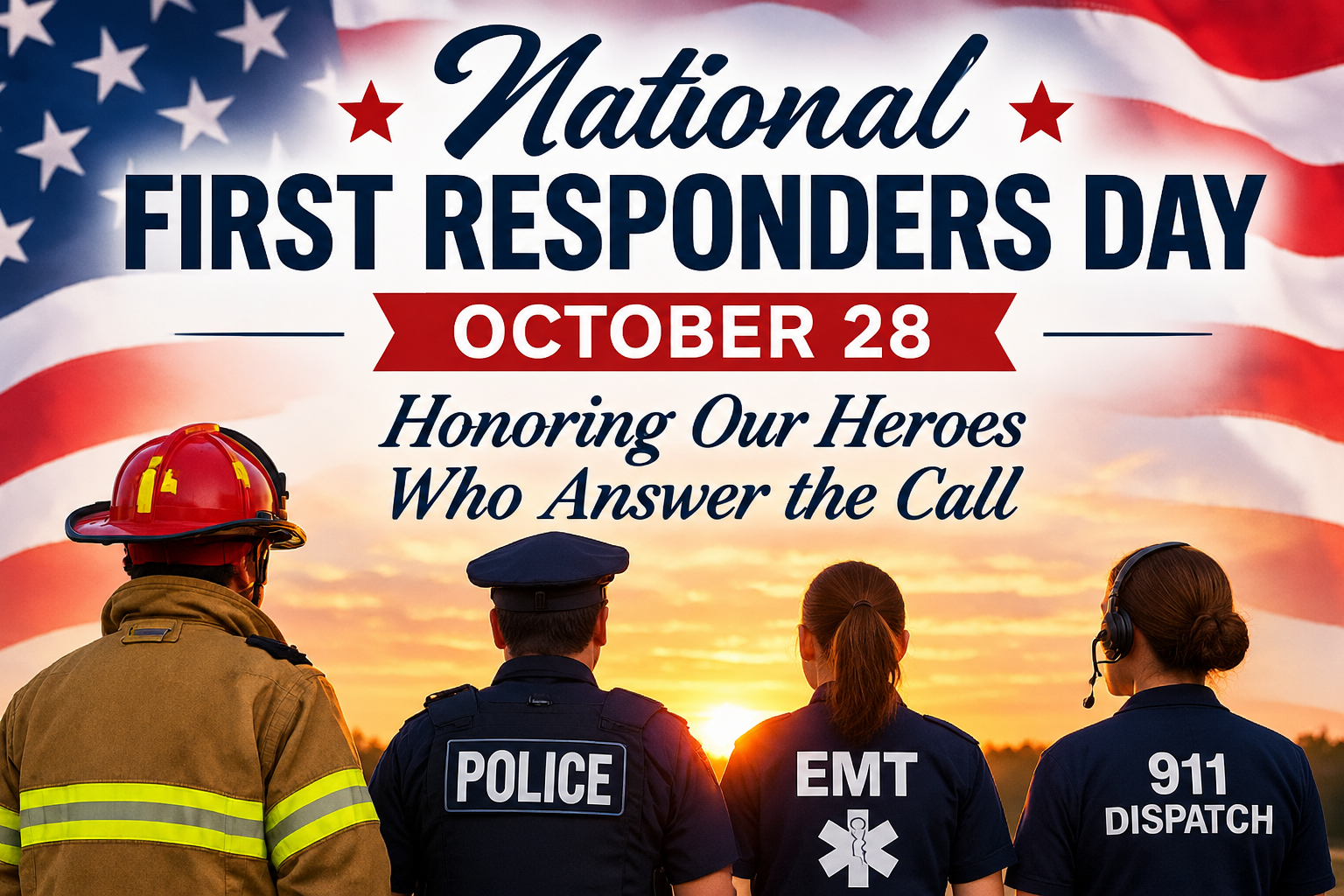
Every day, while most of us go about our normal routines, there are extraordinary individuals standing ready to respond when emergencies strike. They are the men and women who run toward danger when others are running away. They are the voices of reassurance during moments of panic, the hands that provide lifesaving care, and the courageous individuals who put the safety of others before their own.
October 28 is National First Responders Day, a day dedicated to recognizing and honoring the firefighters, police officers, emergency medical technicians (EMTs), paramedics, emergency dispatchers, and other emergency personnel who serve our communities.
These dedicated professionals are often the first to arrive during some of life’s most frightening and unpredictable moments. Whether responding to a house fire, a serious car accident, a medical emergency, or a natural disaster, first responders provide hope, assistance, and protection when people need it most.
National First Responders Day reminds us that behind every uniform is a human being with a family, responsibilities, dreams, and challenges of their own.
Today, we recognize their courage, acknowledge their sacrifices, and express our gratitude for the countless lives they touch.
What Is National First Responders Day?
National First Responders Day is observed annually on October 28 in the United States.
The day recognizes the individuals who provide immediate assistance during emergencies, often working under dangerous, stressful, and unpredictable circumstances.
First responders play a critical role in protecting lives, maintaining public safety, and helping communities recover from unexpected tragedies.
Their responsibilities extend far beyond responding to emergency calls. They also educate the public, participate in disaster preparedness, support community outreach programs, and provide comfort to individuals experiencing some of the most difficult moments of their lives.
For many first responders, their profession is more than a job. It is a commitment to serving others.
They may miss birthdays, holidays, family dinners, and important milestones because emergencies do not follow a convenient schedule.
National First Responders Day gives communities an opportunity to recognize that dedication and show appreciation for those who answer the call.
The History of National First Responders Day
National First Responders Day gained official federal recognition in 2017 when the United States Senate passed a resolution designating October 28 as a day to honor first responders.
The recognition reflected growing awareness of the essential role emergency personnel play in communities throughout the country.
First responders have always been vital to public safety, but major national tragedies and natural disasters have highlighted the extraordinary risks they face.
Events such as the September 11 terrorist attacks, devastating hurricanes, widespread wildfires, floods, and other emergencies have demonstrated the courage and commitment of emergency personnel.
During these events, first responders often continue working despite exhaustion, dangerous conditions, and uncertainty about their own safety.
The annual observance provides an opportunity to recognize not only those who have made the ultimate sacrifice but also the individuals who continue serving their communities every day.
It is important to understand that National First Responders Day is a national observance rather than a federal public holiday.
However, its significance extends far beyond an official designation.
It is a reminder that appreciation for first responders should not be limited to one day each year.
Who Are Our First Responders?
When people hear the words first responder, they often think of firefighters, police officers, or ambulance crews.
While these professionals are central to emergency response, the first responder community includes many individuals whose contributions are equally important.
Firefighters: Courage in the Face of Danger
Firefighters are among the most recognizable emergency responders.
They enter burning buildings, rescue individuals trapped in dangerous situations, respond to vehicle accidents, and assist during natural disasters.
Their work requires extensive training, physical endurance, teamwork, and the ability to make critical decisions under extreme pressure.
Firefighters also provide emergency medical assistance, conduct fire prevention education, and help communities prepare for emergencies.
Whether responding to a residential fire or battling a massive wildfire, firefighters demonstrate extraordinary dedication.
Their willingness to risk their safety to protect others represents one of the most powerful examples of public service.
Police Officers: Protecting Communities
Police officers respond to emergencies, investigate crimes, assist people in dangerous situations, and work to maintain public safety.
Their responsibilities can include responding to domestic disturbances, traffic accidents, missing-person reports, and incidents involving individuals experiencing mental health crises.
Officers frequently encounter unpredictable situations that require judgment, communication, compassion, and restraint.
Effective policing involves more than enforcing laws. It also requires building community trust, protecting individual rights, treating people fairly, and helping residents feel safe.
National First Responders Day provides an opportunity to recognize officers who serve with professionalism, integrity, and dedication.
EMTs and Paramedics: Providing Lifesaving Care
Emergency medical technicians and paramedics are often the difference between life and death during medical emergencies.
They respond to heart attacks, strokes, serious injuries, breathing difficulties, and countless other situations requiring immediate medical attention.
Their ability to assess patients, provide emergency treatment, and transport individuals safely to hospitals is essential.
EMTs and paramedics frequently work in challenging environments, including busy highways, private residences, disaster zones, and public spaces.
They must remain focused while patients and families are frightened, overwhelmed, or grieving.
Beyond medical treatment, they often provide something equally important: reassurance.
A calm voice, a compassionate explanation, or a comforting hand can make a tremendous difference during an emergency.
Emergency Dispatchers: The First Voice of Hope
Emergency dispatchers are sometimes overlooked when discussing first responders.
Yet they are often the first individuals people communicate with during a crisis.
When someone calls 911, dispatchers must quickly gather information, determine the nature of the emergency, provide instructions when appropriate, and coordinate the necessary response.
They may guide callers through CPR, help frightened individuals remain calm, or provide critical information to responding personnel.
Dispatchers often hear distressing situations unfold without being physically present to help.
Their work requires patience, emotional resilience, communication skills, and the ability to remain composed under pressure.
Although their formal classification varies by jurisdiction, their role in emergency response is essential.
Search and Rescue Teams: Bringing People Home
Search and rescue personnel help locate and assist people who are missing, injured, stranded, or trapped.
These teams may include trained volunteers, firefighters, law enforcement officers, medical professionals, and specialized rescue workers.
They operate in mountains, forests, waterways, collapsed structures, and disaster-affected communities.
Search and rescue operations can last for hours or days, often under physically demanding conditions.
Their mission is simple but incredibly meaningful: locate people in danger and bring them to safety whenever possible.
For families waiting for news about a missing loved one, these teams can represent hope during an incredibly frightening experience.
The Sacrifices First Responders Make
The public often sees the heroic moments associated with emergency response.
What is less visible are the personal sacrifices made behind the scenes.
First responders frequently work long shifts, overnight schedules, weekends, and holidays.
They may leave family gatherings unexpectedly or miss important events because someone else needs immediate assistance.
They also face physical risks, including exposure to hazardous environments, serious injuries, infectious diseases, and dangerous situations.
However, not every sacrifice is physical.
Many first responders carry emotional memories from the emergencies they have witnessed.
They may encounter devastating accidents, injured children, grieving families, or situations where even their best efforts cannot prevent a tragic outcome.
These experiences can remain with them long after their shifts end.
Some emergency personnel experience anxiety, depression, burnout, sleep disturbances, or post-traumatic stress symptoms associated with repeated exposure to difficult events.
Recognizing their service means acknowledging these challenges and supporting access to appropriate mental health resources.
True appreciation involves caring about the people behind the uniforms, not just celebrating the work they perform.
The Emotional Weight of Being a First Responder
Imagine beginning a normal workday without knowing what you will encounter.
One moment, you may be assisting someone with a minor injury.
The next, you may be responding to a life-threatening emergency.
First responders must often transition between vastly different situations while maintaining their composure.
They are expected to think clearly, make rapid decisions, and provide support to others even when circumstances are emotionally overwhelming.
For many, the most difficult part of the job is not the danger they face personally.
It is witnessing the suffering of others.
They may see families experience heartbreaking losses, encounter individuals struggling with addiction or mental illness, or respond to emergencies involving children.
The emotional impact of these experiences should never be underestimated.
Although resilience is an important part of emergency response, first responders are still human.
They deserve opportunities to process difficult experiences, receive confidential support, and seek professional help without shame or unnecessary barriers.
Communities can support first responder wellness by encouraging peer support programs, mental health education, reasonable recovery time, and access to qualified counselors.
Strength does not mean being unaffected by tragedy.
Sometimes strength means recognizing when support is needed.
First Responders and Families Experiencing Tragedy
One of the most meaningful aspects of emergency response is the compassion first responders provide to families experiencing unimaginable circumstances.
During serious accidents, medical emergencies, and sudden deaths, emergency personnel are often present during the moments that forever change someone’s life.
They may be the first people to offer assistance, explain what is happening, or remain beside a frightened family member.
When a family is overwhelmed by shock, confusion, or grief, even a small act of kindness can have a lasting impact.
A first responder may not remember every person they encounter throughout their career.
But a family may remember that responder for the rest of their lives.
They may remember the calm voice that offered reassurance, the individual who stayed with them, or the compassion shown when words were difficult to find.
Of course, not every emergency ends the way everyone hopes.
Despite extensive training, modern equipment, and extraordinary effort, some tragedies cannot be prevented.
Those outcomes can affect both families and the responders involved.
National First Responders Day reminds us to recognize the humanity on both sides of an emergency.
It also reminds us that compassion matters, especially during life’s most painful moments.
Why First Responders Deserve Our Appreciation
It is easy to take emergency services for granted until we need them.
We assume that when we call 911, someone will answer.
We expect firefighters to respond when buildings catch fire.
We trust that ambulances will arrive when medical emergencies occur.
We rely on emergency personnel to provide assistance during disasters, accidents, and dangerous situations.
Yet behind these expectations are individuals who dedicate years to training, preparation, and public service.
Their work requires constant learning as emergency procedures, technology, and community needs evolve.
They must also maintain the ability to work together under pressure.
A successful emergency response often depends on cooperation among dispatchers, firefighters, law enforcement personnel, medical teams, hospitals, and other agencies.
Every role matters.
Recognizing first responders means appreciating the teamwork, preparation, and dedication that make emergency services possible.
It also means remembering that respect and accountability can coexist. Supporting first responders includes encouraging safe working conditions, ethical service, appropriate training, and strong relationships with the communities they serve.
How to Celebrate National First Responders Day
There are many meaningful ways to recognize first responders on October 28.
You do not need to organize a major event or spend money to make a difference.
Sometimes the simplest expressions of appreciation carry the greatest meaning.
Say Thank You
A sincere thank-you can remind first responders that their efforts are appreciated.
If you encounter an emergency responder during a community event or another appropriate setting, consider expressing your gratitude.
A few kind words may mean more than you realize.
Write a Letter of Appreciation
Consider sending a handwritten card or letter to a local fire department, police department, ambulance service, or emergency communications center.
Explain why their service matters to your community.
You can also encourage children to create thank-you cards as a way of teaching appreciation for public service.
Support First Responder Charities
Many nonprofit organizations provide assistance to injured first responders, surviving family members, and emergency personnel experiencing financial or emotional hardship.
Consider supporting a reputable organization whose mission aligns with your values.
Before donating, review its programs and financial transparency.
Recognize Emergency Dispatchers
Dispatchers rarely receive the same public attention as responders working in the field.
Take time to recognize the individuals answering emergency calls and coordinating assistance.
Their work is an essential part of the emergency response system.
Teach Children About Emergency Preparedness
National First Responders Day is an excellent opportunity to discuss emergency safety with children.
Teach them how and when to call 911, how to communicate their location, and why emergency numbers should only be used for genuine emergencies.
Families can also review evacuation plans, emergency contacts, and basic safety procedures.
Share a Message of Appreciation
Use social media or community newsletters to recognize local emergency personnel.
Highlight the importance of their work and encourage others to express gratitude.
Avoid sharing private information or photographs of emergency scenes without appropriate permission.
Support First Responder Mental Health
One of the most meaningful ways to honor emergency personnel is to advocate for their well-being.
Support initiatives that provide confidential counseling, peer assistance, stress management resources, and healthy workplace environments.
Appreciation should extend beyond public ceremonies and symbolic gestures.
It should include meaningful support for those who spend their careers helping others.
The Importance of Supporting First Responder Families
Behind many first responders are families who also make sacrifices.
Spouses, partners, children, parents, and loved ones may experience the uncertainty that comes with emergency service.
They may spend holidays apart, adjust to unpredictable schedules, or worry when a loved one responds to a dangerous situation.
Families can also feel the emotional effects of demanding work schedules and difficult emergency calls.
Supporting first responders means recognizing the people who support them at home.
Communities can help by offering family-inclusive appreciation events, providing resources for emergency personnel households, and supporting families during times of hardship.
When a first responder is injured or killed in the line of duty, surviving family members may face enormous emotional and financial challenges.
Compassionate community support can make a meaningful difference during those difficult times.
National First Responders Day is an opportunity to recognize these families and acknowledge their contributions.
Honoring First Responders Who Made the Ultimate Sacrifice
Not every first responder returns home after a shift.
Throughout history, emergency personnel have lost their lives while attempting to protect and rescue others.
Their sacrifices remind us of the risks associated with emergency response.
Firefighters have died battling dangerous fires.
Law enforcement officers have lost their lives while responding to emergencies.
Emergency medical personnel have faced fatal hazards while providing lifesaving assistance.
Rescue workers have died attempting to reach people trapped in dangerous environments.
These individuals deserve to be remembered with dignity and respect.
Their families deserve continued compassion and support.
Honoring fallen first responders is not only about remembering how they died.
It is also about recognizing how they lived, the people they loved, and the communities they served.
Their service represents a lasting legacy of courage, commitment, and compassion.
The Everyday Heroes We Sometimes Overlook
Not every act of heroism makes the evening news.
Sometimes heroism happens quietly.
It happens when a paramedic comforts an elderly patient who is frightened and alone.
It happens when a firefighter takes extra time to reassure a child after a house fire.
It happens when a dispatcher patiently guides someone through a medical emergency.
It happens when a police officer helps reunite a missing person with their family.
It happens when rescue volunteers continue searching despite exhaustion and difficult conditions.
These moments may never receive public recognition.
Yet they matter deeply to the individuals whose lives are affected.
We often associate heroism with dramatic rescues and extraordinary circumstances.
But compassion, patience, and dedication can be heroic too.
First responders demonstrate these qualities in ways that may go unnoticed by the broader public.
National First Responders Day gives us an opportunity to recognize both the extraordinary rescues and the everyday acts of service.
How Communities Can Better Support First Responders
Appreciation is important, but meaningful support requires ongoing action.
Communities can strengthen emergency services by advocating for appropriate staffing, reliable equipment, effective training, and safe working conditions.
Emergency personnel need resources that allow them to perform their responsibilities effectively.
Communities can also encourage cooperation between residents and emergency agencies.
Public education programs, emergency preparedness workshops, and community outreach events help strengthen trust and communication.
Another important area is mental health.
Emergency personnel should have access to support systems that recognize the unique emotional demands of their professions.
Creating an environment where individuals can seek assistance without unnecessary stigma benefits both responders and the people they serve.
Finally, communities should remember that emergency services depend on many professionals working together.
Administrative personnel, trainers, emergency managers, maintenance workers, and support staff also contribute to effective emergency response.
Although not all of these individuals are classified as first responders, their work helps emergency teams serve the public.
Supporting emergency services means recognizing the entire system that makes lifesaving assistance possible.
A Reminder That Heroes Are Human Too
First responders are often described as heroes, and many have performed truly heroic acts.
However, it is important to remember that they are human beings first.
They experience fear, exhaustion, frustration, sadness, and uncertainty.
They have families who depend on them and personal challenges that may not be visible to the public.
They deserve respect, compassion, appropriate rest, and access to support when needed.
Recognizing their humanity does not diminish their courage.
It makes their service even more meaningful.
Courage is not the absence of fear.
It is the willingness to act responsibly despite fear.
Compassion is not the absence of emotional pain.
It is the ability to care for others even when circumstances are difficult.
And dedication is not about being invincible.
It is about consistently showing up, preparing carefully, and doing the best possible job under demanding conditions.
These are qualities worth recognizing every day.
A Message to Our First Responders
To every firefighter, police officer, EMT, paramedic, dispatcher, rescue worker, and emergency professional who dedicates their time to helping others:
Thank you.
Thank you for the long hours, the missed celebrations, and the sacrifices that often go unnoticed.
Thank you for answering emergency calls when others are frightened and uncertain.
Thank you for the lives you have helped save, the families you have comforted, and the communities you have supported.
Thank you for the patience you show during difficult situations and the compassion you offer to people experiencing their worst days.
Thank you for continuing to serve even when the work becomes exhausting.
Your dedication matters.
Your compassion matters.
Your well-being matters.
And your service deserves recognition not only on October 28 but throughout the entire year.
Final Thoughts: Honoring Those Who Answer the Call
National First Responders Day is more than an annual observance.
It is an opportunity to recognize the people who provide assistance during some of life’s most challenging moments.
First responders enter situations filled with uncertainty, danger, and emotional intensity because others need help.
Their work touches individuals, families, and entire communities.
Sometimes their efforts save lives.
Sometimes they prevent situations from becoming worse.
And sometimes, when tragedy cannot be avoided, their greatest contribution is the compassion they show to those who are suffering.
We may never fully understand the sacrifices involved in emergency service unless we have experienced that responsibility ourselves.
But we can choose to recognize it.
We can express gratitude, support emergency personnel and their families, advocate for their well-being, and remember those who lost their lives in service.
On October 28, let us honor the courage, compassion, and dedication of our nation’s first responders.
And let us remember that behind every emergency call is someone willing to answer.
Someone willing to help.
Someone whose actions may change another person’s life forever.
To all first responders: Thank you for your service, your sacrifice, and your commitment to protecting others.
Have you ever experienced a moment when a first responder made a meaningful difference in your life or the life of someone you love? Consider sharing your story of gratitude and appreciation.


Leave a Reply