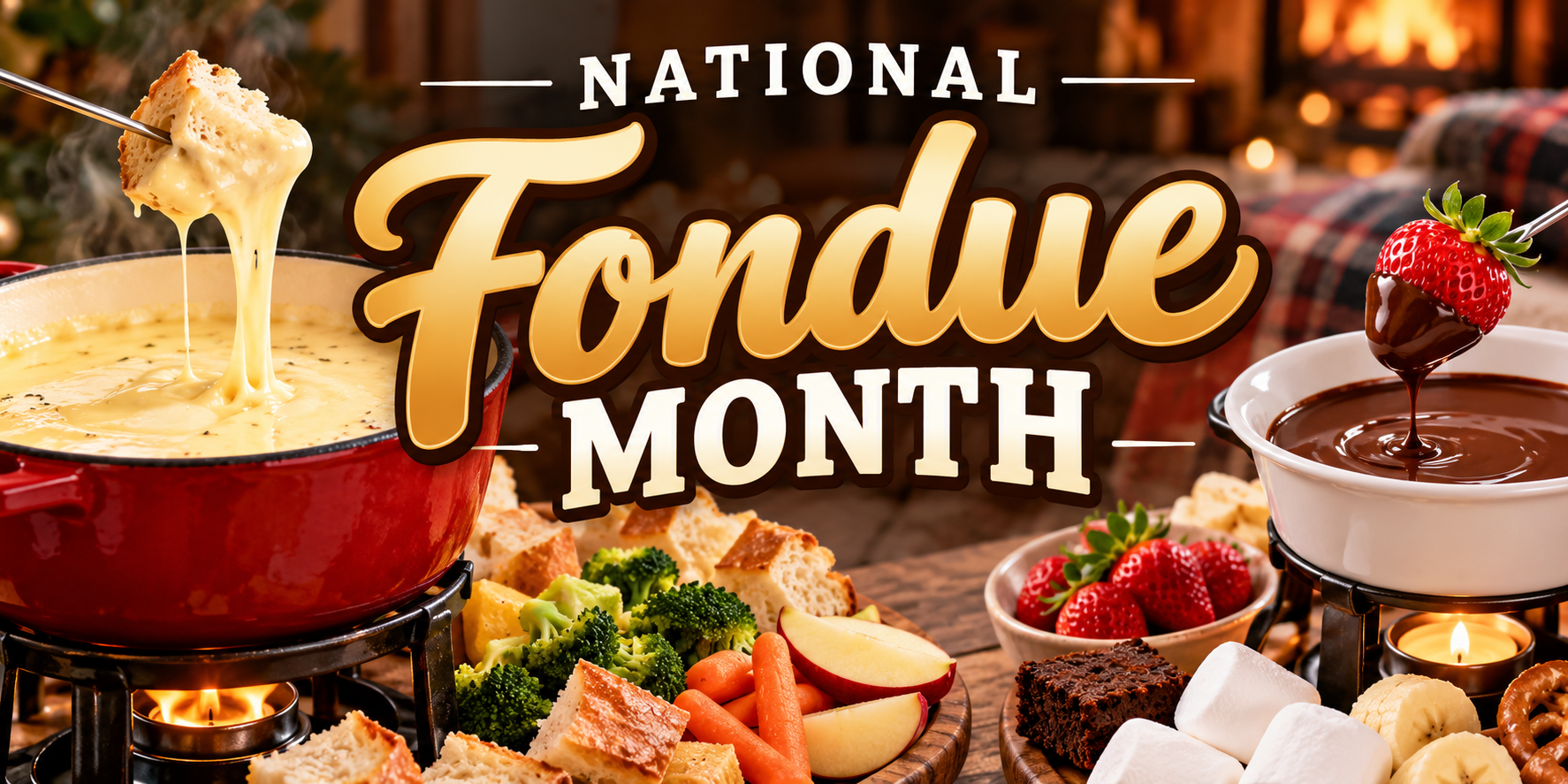
November is National Fondue Month, a delicious celebration of one of the most interactive, comforting, and enjoyable dining traditions in the world. Whether you love dipping crusty bread into melted cheese, fresh strawberries into warm chocolate, or tender vegetables into flavorful broth, fondue offers something for almost everyone.
Fondue is more than just a meal. It is an experience that brings people together around the table, encourages conversation, and transforms ordinary ingredients into something memorable.
During National Fondue Month, food lovers have the perfect opportunity to explore the history of fondue, discover different varieties, experiment with homemade recipes, and create meaningful memories with family and friends.
From its humble beginnings in the Swiss Alps to its popularity at dinner parties around the world, fondue has earned its place as a timeless culinary favorite.
What Is National Fondue Month?
National Fondue Month is celebrated throughout November, recognizing the rich history, versatility, and social traditions surrounding fondue.
The word fondue comes from the French word fondre, meaning “to melt.” Traditionally, fondue refers to a Swiss dish made with melted cheese and wine, served in a communal pot and enjoyed by dipping pieces of bread into the mixture.
Over time, the concept expanded to include chocolate fondue, hot oil fondue, broth fondue, and creative variations featuring different ingredients.
Today, fondue is enjoyed as an appetizer, main course, dessert, or centerpiece of an entire dining experience.
November is an especially fitting time to celebrate fondue because cooler weather encourages warm, comforting meals and gatherings with loved ones.
As Thanksgiving approaches and families begin planning holiday celebrations, fondue provides a fun alternative to traditional meals and appetizers.
The History of Fondue: From Switzerland to the World
Fondue has a fascinating history that stretches back centuries.
The Origins of Swiss Cheese Fondue
Cheese fondue is closely associated with Switzerland, particularly the Alpine regions where cheese production has long been an important part of everyday life.
During colder months, families relied on preserved foods such as cheese and bread. Melting cheese with wine created a warm, satisfying meal that made practical use of available ingredients.
Early written references to cheese preparations resembling modern fondue date back several centuries, although the exact origins of the dish remain debated.
By the eighteenth and nineteenth centuries, recipes for melted cheese dishes had become increasingly recognizable.
Eventually, cheese fondue became strongly associated with Swiss national identity.
Fondue Becomes a Swiss Tradition
During the twentieth century, Swiss cheese organizations promoted fondue as a traditional national dish.
These campaigns helped popularize the idea of gathering around a communal pot of melted cheese.
The dish became a symbol of hospitality, togetherness, and Swiss culinary heritage.
Traditional Swiss fondue often features Gruyère and Vacherin Fribourgeois cheeses, although other combinations are common.
Fondue Arrives in America
Fondue gained widespread popularity in the United States during the 1960s and 1970s.
It became a fashionable choice for dinner parties, romantic evenings, and special celebrations.
Fondue sets appeared in homes across the country, and hosts embraced the novelty of preparing food directly at the dining table.
Although its popularity fluctuated over the following decades, fondue never disappeared.
Today, it continues to attract attention because of its nostalgic charm, versatility, and ability to make dining more interactive.
Why Fondue Is More Than Just Food
One of the greatest things about fondue is the experience it creates.
Unlike meals where everyone receives a separate plate and eats independently, fondue encourages people to participate in a shared activity.
Guests gather around a central pot, select their favorite ingredients, and enjoy the process of dipping and tasting.
This naturally creates opportunities for conversation, laughter, and connection.
Fondue Encourages Quality Time
In a world where meals are often rushed, fondue invites everyone to slow down.
There is no need to hurry through the experience.
People can take their time, experiment with different flavors, and enjoy one another’s company.
Fondue Makes Ordinary Meals Special
A simple combination of bread and cheese can become an exciting dining experience when presented as fondue.
Likewise, fresh fruit and melted chocolate can transform an ordinary dessert into a memorable treat.
Fondue Is Perfect for Celebrations
Fondue works beautifully for birthdays, anniversaries, date nights, family gatherings, and holiday parties.
Its interactive nature makes guests feel involved rather than simply served.
The Four Main Types of Fondue
Although cheese fondue is the most famous variety, several different styles have become popular.
1. Cheese Fondue
Best for: Appetizers, cozy dinners, and holiday gatherings.
Cheese fondue typically combines melted cheese with wine, garlic, and seasonings.
Popular dipping foods include crusty bread, steamed broccoli, roasted potatoes, cauliflower, apple slices, and pretzels.
The result is a rich, creamy dish that delivers warmth and comfort in every bite.
2. Chocolate Fondue
Best for: Desserts, romantic evenings, and family celebrations.
Chocolate fondue combines melted chocolate with cream or another suitable liquid to create a smooth dipping sauce.
Popular dipping foods include strawberries, bananas, marshmallows, pound cake, pineapple, pretzels, and cookies.
Chocolate fondue is especially popular because it is easy to customize.
You can use dark chocolate, milk chocolate, white chocolate, or a combination of different varieties.
3. Oil Fondue
Best for: Interactive dinners and special occasions.
Oil fondue, often associated with fondue bourguignonne, involves cooking small pieces of food in hot oil at the table.
Guests typically prepare individual portions of meat and serve them with dipping sauces.
Because hot oil creates a significant burn and fire hazard, this style requires appropriate equipment, careful temperature control, and close supervision.
4. Broth Fondue
Best for: Savory meals and customizable dining experiences.
Broth fondue involves cooking thinly sliced meats, seafood, vegetables, and other ingredients in a pot of simmering seasoned broth.
It offers a flavorful alternative to oil fondue.
Popular broth ingredients include chicken stock, vegetable stock, garlic, ginger, mushrooms, and herbs.
Guests can customize their dipping sauces and seasonings to suit their preferences.
How to Make Classic Swiss Cheese Fondue at Home
One of the best ways to celebrate National Fondue Month is by preparing homemade cheese fondue.
This classic recipe is rich, creamy, and surprisingly simple.
Classic Swiss Cheese Fondue Recipe
Prep time
15 minutes
Cook time
15 minutes
Total time
30 minutes
Ingredients
-
8 ounces Gruyère cheese, shredded
-
8 ounces Emmental cheese, shredded
-
1 cup dry white wine
-
1 garlic clove, halved
-
1 tablespoon cornstarch
-
1 tablespoon lemon juice
-
1 teaspoon Dijon mustard (optional)
-
A pinch of freshly grated nutmeg
-
Black pepper to taste
-
Cubed crusty French bread for dipping
Instructions
-
Rub the inside of a fondue pot or heavy saucepan with the cut sides of the garlic clove.
-
Pour the white wine and lemon juice into the pot and heat gently until steaming.
-
Toss the shredded cheeses with the cornstarch.
-
Gradually add the cheese to the warm wine, stirring continuously until melted.
-
Continue stirring over low heat until the mixture becomes smooth and creamy.
-
Add the mustard, nutmeg, and black pepper.
-
Transfer the mixture to a fondue pot and maintain gentle warmth.
-
Serve immediately with cubed bread and your favorite dipping ingredients.
Tips for Perfect Cheese Fondue
Always shred cheese from a block when possible, as freshly shredded cheese generally melts more smoothly than varieties containing anti-caking ingredients.
Avoid overheating the mixture because excessive heat can cause the cheese to separate.
Add cheese gradually rather than all at once.
If the fondue becomes too thick, stir in a small amount of warm wine.
For a nonalcoholic variation, try low-sodium vegetable broth with a little lemon juice, understanding that the flavor and texture will differ from traditional fondue.
Easy Chocolate Fondue Recipe
Chocolate fondue is one of the simplest and most enjoyable desserts you can prepare at home.
It requires only a few ingredients and provides endless opportunities for customization.
Homemade Chocolate Fondue
Prep time
5 minutes
Cook time
10 minutes
Total time
15 minutes
Ingredients
-
12 ounces semisweet chocolate, chopped
-
¾ cup heavy cream
-
1 teaspoon vanilla extract
-
A pinch of salt
-
Fresh strawberries
-
Banana slices
-
Marshmallows
-
Pound cake cubes
-
Pretzels
Instructions
-
Pour the heavy cream into a small saucepan.
-
Heat over medium-low heat until steaming, without allowing it to boil.
-
Remove the saucepan from the heat.
-
Add the chopped chocolate and allow it to sit for approximately two minutes.
-
Stir gently until the chocolate becomes smooth.
-
Add the vanilla extract and salt.
-
Transfer to a fondue pot set to a low warming temperature.
-
Serve with fruit, marshmallows, cake, and other dipping treats.
Chocolate Fondue Variations
For a richer dessert, use dark chocolate with a higher cocoa percentage.
For a sweeter experience, substitute milk chocolate.
White chocolate fondue pairs beautifully with strawberries, raspberries, and shortbread cookies.
You can also add a small amount of peppermint extract, orange zest, cinnamon, or espresso powder for additional flavor.
The Best Foods to Dip in Fondue
Choosing the right dipping ingredients can make your fondue experience even more enjoyable.
Different textures and flavors create interesting combinations.
| Cheese fondue | Chocolate fondue |
|---|---|
| French bread | Strawberries |
| Pretzel bites | Bananas |
| Roasted potatoes | Marshmallows |
| Steamed broccoli | Pound cake |
| Cauliflower | Pineapple |
| Apple slices | Brownie bites |
| Cooked sausage | Shortbread cookies |
| Roasted mushrooms | Rice crispy treats |
Try combining sweet and savory flavors.
For example, apple slices dipped in cheese fondue provide a delicious contrast between sweetness and saltiness.
Likewise, salty pretzels dipped in chocolate create a satisfying balance of flavors.
10 Fun Ways to Celebrate National Fondue Month
National Fondue Month offers plenty of opportunities to experiment with food and bring people together.
-
Host a fondue night. Invite friends or family over for an evening featuring cheese, chocolate, or broth fondue.
-
Try a new cheese combination. Experiment with Gruyère, fontina, cheddar, or other melting cheeses.
-
Plan a romantic fondue date. Create a cozy atmosphere with candles, soft music, and chocolate-covered strawberries.
-
Organize a family fondue dinner. Allow everyone to choose their favorite dipping ingredients and participate with appropriate supervision.
-
Create a dessert fondue bar. Offer different chocolates, fresh fruits, cakes, and cookies.
-
Explore international fondue traditions. Learn about Swiss cheese fondue, French-influenced oil fondue, and Asian hot-pot cooking traditions.
-
Experiment with healthier dipping options. Include fresh vegetables, fruit, lean proteins, and whole-grain bread.
-
Host a fondue potluck. Ask guests to bring dipping ingredients or sauces while the host prepares the fondue.
-
Teach children about fondue. Share its history and let younger family members help prepare cold dipping ingredients while adults handle hot equipment.
-
Make fondue a holiday tradition. Add a fondue course to Thanksgiving weekend, Christmas gatherings, or New Year’s celebrations.
Fondue Around the World
Although fondue originated in European culinary traditions, similar communal dining experiences exist around the world.
Switzerland
Switzerland remains the country most closely associated with cheese fondue.
Traditional versions frequently feature Gruyère, Vacherin Fribourgeois, or other regional cheeses.
Fondue is often enjoyed during colder months and shared among family members or friends.
France
France has its own fondue traditions, particularly in Alpine regions.
Fondue savoyarde commonly features cheeses such as Comté, Beaufort, and Emmental.
Fondue bourguignonne, despite its name, is strongly associated with Swiss dining traditions and involves cooking meat in hot oil.
China
Chinese hot pot is not the same dish as Swiss fondue, but it shares the tradition of communal tabletop cooking.
Participants cook vegetables, meat, seafood, and noodles in simmering broth.
Japan
Japanese shabu-shabu offers another example of interactive dining.
Thinly sliced meat and vegetables are cooked briefly in hot broth and served with flavorful dipping sauces.
These traditions demonstrate how sharing food around a communal cooking vessel can bring people together across different cultures.
The Healthier Side of Fondue
Fondue is often considered an indulgent meal, especially when cheese or chocolate is involved.
However, there are ways to enjoy it as part of a balanced diet.
Include More Vegetables
Broccoli, cauliflower, carrots, mushrooms, and bell peppers provide vitamins, minerals, and fiber.
They also add color and variety to a fondue spread.
Choose Lean Proteins
For broth fondue, consider chicken breast, lean beef, shrimp, or tofu.
Use a food thermometer to ensure raw proteins reach safe internal temperatures, and keep raw foods separate from ready-to-eat dipping ingredients.
Practice Portion Awareness
Fondue is rich and satisfying, making it easy to consume more than intended.
Serving smaller portions and eating slowly can help you enjoy the experience without feeling overly full.
Use Fresh Fruit for Dessert
Strawberries, bananas, apples, pineapple, and raspberries pair beautifully with chocolate fondue.
Fruit adds fiber and nutrients while offering natural sweetness.
Experiment With Broth Fondue
Broth-based fondue can be a lighter alternative to hot oil cooking, depending on the ingredients and sauces selected.
Fondue Safety Tips Everyone Should Know
Because fondue often involves hot liquids, melted cheese, chocolate, or oil, safety should always be a priority.
Keep fondue equipment on a stable, heat-resistant surface away from table edges.
Use the appropriate heat source recommended by the equipment manufacturer.
Never leave heated fondue pots unattended.
For oil fondue, avoid overfilling the pot, keep ingredients dry to reduce splattering, and never use water to extinguish an oil fire.
Children should always be supervised around heated fondue equipment.
When preparing raw meat or seafood, use separate utensils and plates for uncooked and cooked foods to prevent cross-contamination.
A safe fondue experience allows everyone to relax and enjoy the meal.
Why Fondue Is Perfect for the Holiday Season
November marks the beginning of one of the busiest gathering seasons of the year.
Between Thanksgiving preparations, family visits, holiday shopping, and seasonal celebrations, finding meaningful ways to spend time together becomes especially important.
Fondue provides an opportunity to create a relaxed and welcoming environment.
Instead of preparing a complicated multi-course dinner, hosts can arrange a selection of dipping ingredients and allow guests to participate in the experience.
Cheese fondue makes an excellent appetizer for a holiday party.
Chocolate fondue creates an entertaining dessert station.
Broth fondue can serve as the centerpiece of a special dinner.
Fondue also encourages guests to remain at the table longer, creating opportunities for conversation and connection.
Sometimes the most memorable moments are not about elaborate meals but about the people gathered around them.
The Social Tradition Behind Sharing Fondue
One of the most interesting aspects of fondue is its communal nature.
Traditionally, everyone dips food into the same central pot using long fondue forks.
In some Swiss fondue traditions, playful customs surround accidentally dropping bread into the cheese.
Depending on the group, someone who loses their bread might be expected to perform a funny task or contribute something to the gathering.
These customs vary, but they reflect the lighthearted spirit associated with fondue.
Modern fondue gatherings can introduce their own traditions.
Families might share favorite memories, discuss what they are grateful for, or tell stories while enjoying the meal.
Friends might organize fondue tasting competitions or experiment with unusual dipping combinations.
Couples might make fondue part of an annual anniversary celebration.
The possibilities are limited only by imagination.
Frequently Asked Questions About National Fondue Month
When Is National Fondue Month Celebrated?
National Fondue Month is observed throughout November, making it a great time to enjoy warm, comforting fondue dishes.
What Is the Most Popular Type of Fondue?
Cheese fondue is the traditional and most historically recognized variety, while chocolate fondue is also widely enjoyed, particularly as a dessert.
What Cheese Is Best for Fondue?
Gruyère is one of the most popular choices because of its flavor and melting qualities.
Emmental, Vacherin Fribourgeois, fontina, and Comté are also excellent options.
Can You Make Fondue Without a Fondue Pot?
Yes. A heavy saucepan can be used to prepare cheese or chocolate fondue.
However, a fondue pot or suitable warming device helps maintain the proper serving temperature.
Can Fondue Be Made Ahead of Time?
Some fondue preparations can be made in advance and reheated gently.
Cheese fondue is generally best served fresh because reheating may affect its texture.
Chocolate fondue can often be reheated slowly with a little additional cream.
Is Fondue Suitable for Vegetarians?
Cheese and chocolate fondue can be vegetarian depending on the ingredients used. Some cheeses contain animal-derived rennet, so check the label if necessary.
Vegetable broth fondue can also provide an excellent vegetarian option.
Is Fondue Only for Special Occasions?
Not at all.
Fondue can be enjoyed on an ordinary weeknight, during a quiet evening at home, or whenever you want to make a meal feel more interactive.
Making Memories One Dip at a Time
Food has a remarkable ability to bring people together.
Certain meals remind us of family traditions, childhood celebrations, romantic evenings, or gatherings with people we love.
Fondue creates an atmosphere where these memories can develop naturally.
The act of sharing a meal encourages people to slow down and appreciate the moment.
For families, fondue can become a tradition passed from one generation to the next.
For friends, it offers a reason to reconnect.
For couples, it creates an intimate dining experience without requiring an expensive restaurant reservation.
Even when enjoyed alone, preparing a favorite fondue recipe can provide a comforting opportunity to relax and appreciate a simple pleasure.
The true beauty of fondue is not simply the melted cheese or chocolate.
It is the experience surrounding the food.
Final Thoughts: Celebrate National Fondue Month This November
National Fondue Month is a wonderful reminder that some of life’s greatest pleasures come from simple experiences shared with others.
Whether you prefer traditional Swiss cheese fondue, decadent chocolate fondue, savory broth fondue, or creative modern variations, November offers the perfect opportunity to explore this timeless culinary tradition.
You do not need expensive ingredients or elaborate preparations to enjoy fondue.
A few quality ingredients, a suitable pot, and your favorite dipping foods are enough to create something special.
More importantly, fondue reminds us of the value of slowing down, enjoying good food, and making time for meaningful connections.
This November, consider gathering your family or friends around a warm pot of fondue and creating a new tradition.
Because sometimes the best memories begin with something as simple as sharing a delicious meal.
What is your favorite type of fondue: melted cheese with crusty bread, rich chocolate with fresh strawberries, or a savory broth filled with your favorite ingredients?

Leave a Reply