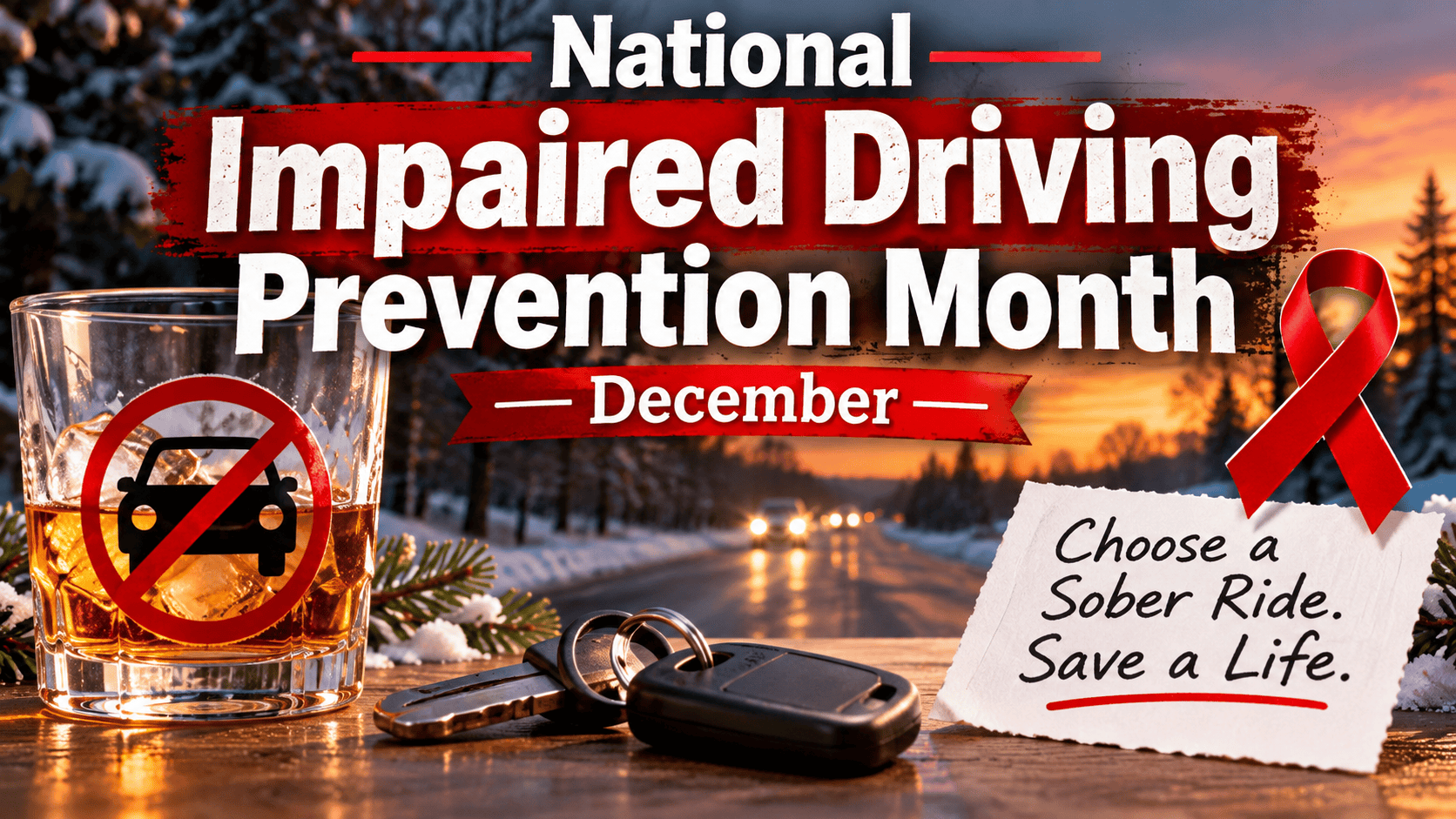
Every December, communities across the United States observe National Impaired Driving Prevention Month, a time dedicated to raising awareness about the dangers of driving under the influence of alcohol, drugs, and other substances that affect a person’s ability to operate a vehicle safely.
The holiday season is often filled with celebrations, family gatherings, office parties, and opportunities to reconnect with loved ones. Unfortunately, it is also a time when impaired driving can turn what should be joyful occasions into heartbreaking tragedies.
National Impaired Driving Prevention Month reminds us that every decision behind the wheel matters. Choosing not to drive while impaired is more than following the law. It is an act of responsibility, compassion, and respect for human life.
A single poor decision can change lives forever. A single responsible decision can save them.
What Is National Impaired Driving Prevention Month?
National Impaired Driving Prevention Month is observed annually throughout December in the United States. The campaign encourages individuals, families, communities, and organizations to recognize the dangers of impaired driving and take steps to prevent avoidable crashes, injuries, and deaths.
The observance focuses on educating the public about the risks associated with driving under the influence of alcohol, recreational drugs, prescription medications, and other substances that interfere with judgment, coordination, and reaction time.
It also emphasizes the importance of planning ahead, recognizing impairment, and making responsible transportation choices.
The central message is simple: If you are impaired, do not drive.
This message becomes especially important during December, when holiday celebrations and increased travel can create additional opportunities for dangerous driving decisions.
The History of National Impaired Driving Prevention Month
The roots of National Impaired Driving Prevention Month are connected to decades of efforts to reduce alcohol-related traffic deaths and injuries.
During the 1980s, organizations such as Mothers Against Drunk Driving (MADD) helped bring national attention to the devastating consequences of impaired driving.
Families who had lost loved ones to drunk driving became powerful advocates for stronger laws, public education, and accountability.
Their efforts helped transform public attitudes toward impaired driving, changing it from something too often tolerated into a serious public safety concern.
December became an important month for prevention campaigns because of the increased number of holiday celebrations and gatherings where alcohol may be consumed.
Over time, the national observance expanded its focus beyond alcohol to include other forms of impairment, including illegal drugs, prescription medications, and combinations of substances.
Today, National Impaired Driving Prevention Month continues to encourage safer choices, greater awareness, and community involvement.
Why Impaired Driving Prevention Matters
Impaired driving remains one of the most serious preventable threats on American roads.
According to the National Highway Traffic Safety Administration (NHTSA), 12,429 people died in alcohol-impaired driving traffic crashes in the United States in 2023.
That represents thousands of families whose lives were forever changed by crashes involving drivers with blood alcohol concentrations of 0.08 or higher.
Behind every statistic is a human being.
A mother or father who never returns home.
A son or daughter whose future is suddenly taken away.
A husband or wife who loses the person they planned to spend their life with.
A friend whose absence leaves an empty place at every gathering.
The consequences of impaired driving extend far beyond the individuals involved in a crash. Families, friendships, neighborhoods, and entire communities can experience the lasting effects of these tragedies.
Unlike many unexpected dangers, impaired driving is preventable.
Choosing a designated driver, arranging a ride, or staying where you are can make the difference between a safe evening and a lifetime of regret.
What Counts as Impaired Driving?
Many people associate impaired driving exclusively with alcohol. However, impairment can occur for several reasons.
Understanding these different forms of impairment is essential for preventing dangerous situations.
1. Alcohol-Impaired Driving
Alcohol affects the brain’s ability to process information, make decisions, and coordinate movement.
Even relatively small amounts can interfere with driving skills.
Common effects include:
-
Slower reaction times.
-
Reduced concentration.
-
Poor judgment.
-
Difficulty maintaining lane position.
-
Impaired coordination.
-
Reduced ability to recognize hazards.
A person does not have to feel drunk to experience alcohol-related driving impairment.
2. Drug-Impaired Driving
Driving under the influence of drugs can be just as dangerous as driving under the influence of alcohol.
Substances that may impair driving include marijuana, opioids, sedatives, and certain stimulants.
Different drugs affect driving abilities in different ways.
Some slow reaction times and reduce alertness. Others affect perception, judgment, coordination, or decision-making.
Combining drugs with alcohol can increase impairment and create unpredictable effects.
3. Prescription Medication Impairment
Prescription medications can sometimes interfere with safe driving, even when taken exactly as directed.
Certain medications used for pain, anxiety, allergies, sleep disorders, and other medical conditions may cause drowsiness, dizziness, blurred vision, or slowed reactions.
Drivers should understand how their medications affect them and follow guidance from healthcare professionals.
Taking a medication legally does not automatically mean it is safe to drive while experiencing its effects.
4. Over-the-Counter Medication Impairment
Some common nonprescription medications can also affect driving.
Cold medicines, sleep aids, and certain antihistamines may cause drowsiness or reduce alertness.
Reading warning labels and understanding potential side effects can help prevent dangerous driving situations.
Why December Is Especially Important
December brings a combination of circumstances that make impaired driving prevention particularly important.
Holiday parties, family gatherings, New Year’s Eve celebrations, and seasonal events often involve alcohol.
At the same time, millions of Americans travel to visit family and friends.
Long drives, unfamiliar roads, nighttime travel, and winter weather can create additional driving challenges.
When impairment is added to these conditions, the risk of serious crashes increases.
National Impaired Driving Prevention Month encourages everyone to make transportation plans before celebrations begin.
A responsible holiday gathering should end with every guest arriving home safely.
The greatest gift we can give our loved ones is the opportunity to celebrate another holiday together.
Warning Signs of an Impaired Driver
Recognizing potentially impaired driving can help motorists respond appropriately and protect themselves.
Possible warning signs include:
-
Weaving between lanes.
-
Driving unusually slowly or inconsistently.
-
Sudden braking without an obvious reason.
-
Making wide or dangerous turns.
-
Failing to obey traffic signals.
-
Driving without headlights at night.
-
Following other vehicles too closely.
-
Nearly striking objects or other vehicles.
-
Driving on the wrong side of the road.
These behaviors do not always indicate substance impairment, but they can signal a dangerous driving situation.
If you encounter a driver behaving dangerously, maintain a safe distance and avoid attempting to confront or stop the vehicle.
When it is safe to do so, report the situation to law enforcement. In an immediate emergency, call 911.
How to Prevent Impaired Driving
Preventing impaired driving begins with planning and personal responsibility.
Fortunately, there are several practical steps everyone can take to reduce the risk.
Plan Your Transportation Before Drinking
If you plan to consume alcohol, decide how you will get home before the celebration begins.
Arrange for a sober designated driver, use a rideshare service, or consider public transportation when available.
Planning ahead removes the temptation to make a dangerous decision later.
Never Assume You Are Safe to Drive
Feeling alert or believing you have only consumed a small amount of alcohol does not guarantee that you can drive safely.
Impairment can begin before obvious signs of intoxication appear.
Coffee, cold showers, fresh air, and food do not quickly reverse alcohol impairment. Only time allows the body to process alcohol.
Help Friends Make Safe Choices
If someone you know has been drinking or using impairing substances, encourage them not to drive.
Offer to help arrange transportation or provide a safe place to stay.
Approach the situation calmly and respectfully.
Preventing one dangerous trip could save multiple lives.
Be a Responsible Party Host
Anyone hosting a holiday gathering can help reduce impaired driving risks.
Provide nonalcoholic beverages, encourage designated drivers, and help guests arrange safe transportation.
Avoid pressuring anyone to drink.
A successful celebration is one where everyone can enjoy themselves and return home safely.
Understand Medication Warnings
Before driving while taking a new medication, read the warning label and discuss potential effects with a pharmacist or healthcare professional.
Never assume a medication is harmless simply because it was prescribed or purchased without a prescription.
The Emotional Impact of Impaired Driving
One of the most heartbreaking aspects of impaired driving is the lasting emotional damage it can cause.
When someone dies in an impaired driving crash, the consequences do not end when the emergency vehicles leave.
For the families left behind, the tragedy becomes part of everyday life.
There are birthdays without celebrations, holidays with empty chairs, and milestones that will never be shared.
Parents may spend the rest of their lives grieving a child.
Children may grow up without a mother or father.
Spouses may struggle to rebuild their lives after losing their partners.
Survivors can experience physical injuries, emotional trauma, anxiety, financial hardship, and lasting changes to their quality of life.
The grief caused by a preventable death can be especially complicated because families may struggle with questions about how the tragedy could have been avoided.
No awareness campaign can erase the pain of losing someone.
However, prevention efforts can help protect other families from experiencing similar heartbreak.
Every life saved from impaired driving represents a family spared an unimaginable loss.
How Parents Can Teach Teenagers About Impaired Driving
Education about impaired driving should begin before young people receive their driver’s licenses.
Parents and caregivers play an important role in helping teenagers understand the responsibilities that come with driving.
Conversations should include the dangers of alcohol and drug impairment, peer pressure, responsible decision-making, and the importance of never riding with an impaired driver.
Teenagers should know they can contact a trusted adult if they ever feel unsafe or need transportation.
Creating an environment where young people can ask for help without fear of an immediate angry reaction may encourage them to make safer choices.
Parents can also lead by example.
Children and teenagers notice how adults handle alcohol, transportation, and personal responsibility.
Demonstrating safe driving habits reinforces the message that protecting lives is more important than convenience.
The Role of Communities in Preventing Impaired Driving
Impaired driving prevention is not solely an individual responsibility.
Communities can work together to create safer roads and encourage responsible behavior.
Schools can provide educational programs about the risks of impaired driving.
Local businesses can promote designated-driver initiatives and safe transportation options.
Restaurants and entertainment venues can help customers find alternatives to driving while impaired.
Law enforcement agencies can support prevention through public education and traffic safety enforcement.
Community organizations can share personal stories, distribute educational materials, and support families affected by impaired driving.
When prevention becomes a shared priority, safer decisions become easier to encourage and support.
How to Observe National Impaired Driving Prevention Month
There are many meaningful ways to participate in National Impaired Driving Prevention Month throughout December.
Share Awareness Messages
Use social media, community newsletters, or personal conversations to remind others about the importance of sober driving.
A simple reminder may encourage someone to make a safer transportation plan.
Encourage Designated Drivers
Promote the importance of choosing a sober driver before attending holiday celebrations.
Recognize individuals who volunteer to help friends and family travel safely.
Support Victims and Their Families
Consider supporting organizations that provide assistance, education, and advocacy for people affected by impaired driving crashes.
Compassion and understanding can make a meaningful difference for grieving families and survivors.
Talk With Young Drivers
Take time to discuss impaired driving with teenagers and young adults.
Explain the risks without relying solely on fear.
Encourage responsible choices, honest communication, and planning ahead.
Make a Personal Commitment
Commit to never driving while impaired and never knowingly riding with an impaired driver.
Encourage friends and family members to make the same commitment.
Personal accountability is one of the most powerful tools in preventing tragedy.
The Importance of Remembering Victims
National Impaired Driving Prevention Month is also an opportunity to remember those whose lives have been lost or permanently changed by impaired driving.
Every victim had a story.
They had dreams, relationships, responsibilities, and people who loved them.
Their lives mattered long before they became part of a traffic safety statistic.
Remembering victims helps keep the human consequences of impaired driving at the center of prevention efforts.
Families may choose to honor loved ones through candlelight vigils, memorial gatherings, community awareness events, or acts of kindness.
Others may share their experiences to encourage responsible driving decisions.
These acts of remembrance can transform personal grief into meaningful advocacy.
While nothing can replace someone who has died, their memory can continue to inspire efforts to protect others.
Why One Decision Can Change Everything
Every driver makes countless decisions during a single trip.
Most are ordinary choices involving speed, direction, distance, and awareness.
But deciding whether to drive while impaired carries consequences that can extend far beyond one journey.
A person might believe the destination is close enough to reach safely.
They might assume they are still capable of driving.
They might convince themselves that nothing bad will happen.
Unfortunately, crashes do not depend on what someone intended to happen.
They can occur in seconds and leave consequences that last generations.
The decision to hand over the keys, call for a ride, or remain somewhere safe may seem inconvenient in the moment.
But that inconvenience is insignificant compared with the potential cost of a preventable tragedy.
No celebration, appointment, or destination is worth risking a human life.
Frequently Asked Questions About National Impaired Driving Prevention Month
When Is National Impaired Driving Prevention Month Observed?
National Impaired Driving Prevention Month is observed every December in the United States.
What Is the Purpose of National Impaired Driving Prevention Month?
Its purpose is to raise awareness about the dangers of driving under the influence of alcohol, drugs, and impairing medications while encouraging responsible transportation choices.
Can Prescription Medications Cause Impaired Driving?
Yes. Certain prescription medications can cause drowsiness, dizziness, slower reactions, and other effects that interfere with safe driving.
Is Driving After Using Marijuana Dangerous?
Yes. Marijuana can affect coordination, reaction time, perception, and judgment, making driving more dangerous.
What Should You Do If a Friend Is Too Impaired to Drive?
Encourage the person not to drive, help arrange safe transportation, or offer a safe place to stay. Avoid allowing an impaired person to get behind the wheel.
How Can Families Participate in National Impaired Driving Prevention Month?
Families can discuss safe driving, share prevention messages, support victims, and commit to making responsible transportation decisions.
Final Thoughts: Make the Choice That Saves Lives
National Impaired Driving Prevention Month reminds us that road safety is about more than traffic laws and statistics.
It is about protecting the people who matter most.
Every driver shares the road with someone’s child, parent, spouse, sibling, or friend.
Every person deserves the opportunity to arrive home safely.
During December, as families gather to celebrate the holidays and prepare for a new year, we should remember that the most meaningful celebrations are the ones that do not end in preventable tragedy.
Choosing not to drive while impaired is a simple decision with extraordinary importance.
It protects strangers we may never meet.
It protects the people waiting for us at home.
And it protects families from experiencing a loss that could have been prevented.
This December, make a commitment to drive sober, plan ahead, and encourage others to do the same.
Because no destination is worth a life, no celebration is worth a tragedy, and no family should have to lose someone because of an impaired driving decision.
Drive sober. Drive responsibly. Help everyone make it home.



Leave a Reply