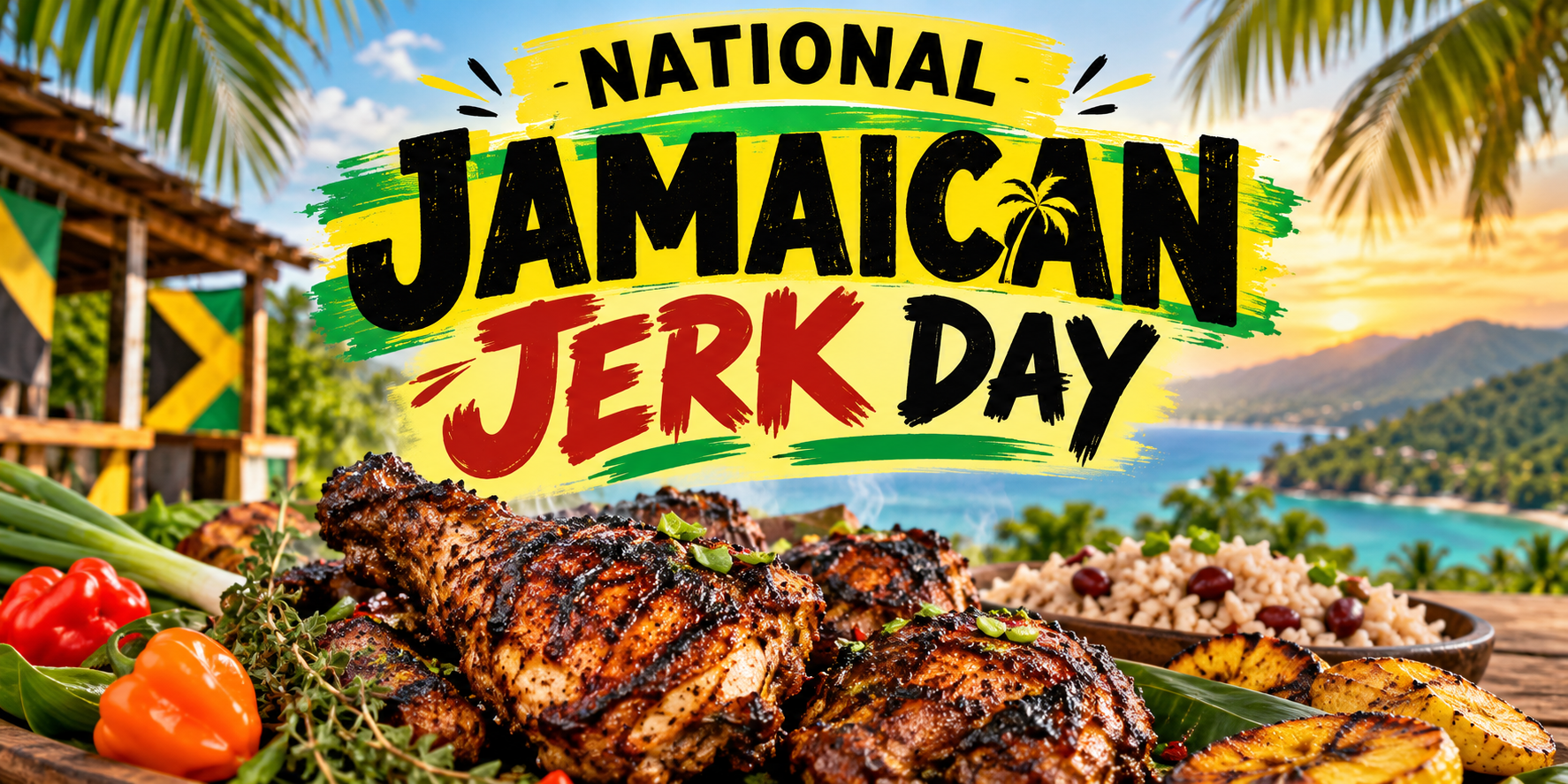
Few culinary traditions capture the spirit of a nation quite like Jamaican jerk. With its fiery spices, smoky aroma, tender meats, and unforgettable flavors, jerk cooking has become one of Jamaica’s most celebrated contributions to the culinary world.
National Jamaican Jerk Day, observed on the fourth Sunday in October, celebrates more than a delicious style of cooking. It recognizes the history, creativity, resilience, and cultural traditions that have made Jamaican jerk an internationally beloved culinary experience.
From roadside jerk stands in Jamaica to Caribbean restaurants across the United States, jerk cooking brings people together through food, tradition, and community.
Whether you enjoy traditional jerk chicken, spicy jerk pork, grilled seafood, or a modern plant-based variation, National Jamaican Jerk Day offers the perfect opportunity to discover the remarkable flavors of Jamaica.
What Is National Jamaican Jerk Day?
National Jamaican Jerk Day is a food and cultural celebration dedicated to Jamaica’s traditional jerk cooking techniques, seasonings, and culinary heritage.
The observance encourages people to appreciate the distinctive combination of spices, herbs, smoke, and slow cooking that makes authentic Jamaican jerk so special.
Unlike many food holidays that focus on a single dish, National Jamaican Jerk Day recognizes an entire cooking tradition.
Jerk is more than a seasoning blend. It is a method of preparing and cooking food that has been passed down through generations.
The celebration also highlights the importance of preserving Jamaican culinary traditions while introducing new audiences to the flavors and cultural stories behind them.
When Is National Jamaican Jerk Day Celebrated?
National Jamaican Jerk Day is celebrated on the fourth Sunday of October.
2026 OBSERVANCE
OCTOBER
25
SUNDAY
National Jamaican Jerk Day 2026
A celebration of Jamaican cuisine, history, and culinary traditions.
Because the celebration falls on a Sunday, it provides a wonderful opportunity to gather with friends and family for a Caribbean-inspired meal.
The History of Jamaican Jerk Cooking
To appreciate National Jamaican Jerk Day, it is important to understand the history behind this remarkable culinary tradition.
Jerk cooking has deep roots in Jamaica’s history, shaped by Indigenous food preservation practices and the knowledge of Africans who escaped enslavement.
The Indigenous Roots of Jerk Cooking
Long before European colonization, the Indigenous Taíno people inhabited Jamaica and other Caribbean islands.
They used methods of smoking, drying, and preserving meat that helped food last longer in the tropical climate.
These early techniques contributed to the development of Caribbean cooking traditions.
The use of smoke and controlled heat became especially important in preparing meats while enhancing their flavors.
The Influence of the Jamaican Maroons
During the period of slavery in Jamaica, Africans who escaped enslavement established independent communities in the island’s mountainous regions.
These communities became known as the Maroons.
The Maroons developed and refined methods of seasoning, smoking, and cooking meat using ingredients available in Jamaica’s natural environment.
Their cooking practices helped shape the jerk tradition recognized today.
Wild game, including wild pigs, was among the meats prepared using these methods.
The techniques were practical, allowing food to be cooked and preserved while developing rich, smoky flavors.
Over time, jerk cooking evolved into a defining element of Jamaican cuisine.
From Jamaican Tradition to International Favorite
As Jamaican communities expanded around the world, they brought their culinary traditions with them.
Jerk chicken and jerk pork became popular in Caribbean neighborhoods throughout the United States, Canada, and the United Kingdom.
Restaurants, food festivals, and home cooks helped introduce jerk seasoning to new audiences.
Today, Jamaican jerk is recognized internationally for its unique combination of heat, sweetness, spice, and smoke.
Despite its worldwide popularity, authentic jerk cooking remains deeply connected to Jamaican identity and heritage.
What Makes Jamaican Jerk So Special?
Jamaican jerk is famous for its bold and complex flavor profile.
Unlike ordinary grilled meat, authentic jerk combines a carefully balanced mixture of seasonings with distinctive cooking techniques.
The result is a combination of spicy, savory, smoky, aromatic, and slightly sweet flavors.
Scotch Bonnet Peppers
One of the most important ingredients in traditional Jamaican jerk seasoning is the Scotch bonnet pepper.
These peppers are known for their intense heat and fruity flavor.
They contribute much of the signature spiciness associated with Jamaican jerk.
Scotch bonnet peppers are extremely hot, so cooks should handle them carefully and adjust the amount according to personal preference.
Allspice
Allspice, known in Jamaica as pimento, is another essential ingredient.
Despite its name, allspice is not a mixture of several spices.
It comes from the dried berries of the pimento tree.
Its flavor combines notes reminiscent of cinnamon, cloves, and nutmeg.
Allspice gives jerk seasoning much of its warm, distinctive character.
Fresh Herbs and Aromatics
Traditional jerk seasoning frequently includes thyme, scallions, garlic, and ginger.
These ingredients provide depth and freshness while complementing the stronger flavors of Scotch bonnet peppers and allspice.
Traditional Smoking Techniques
Authentic jerk cooking often involves smoking meat over wood, traditionally including pimento wood.
This technique produces a distinctive smoky flavor that cannot be completely replicated by ordinary seasoning alone.
The combination of spices, smoke, and careful cooking makes Jamaican jerk a truly memorable culinary experience.
Traditional Jamaican Jerk Seasoning Ingredients
Although recipes vary between families, restaurants, and regions, many Jamaican jerk seasoning blends include:
-
Scotch bonnet peppers
-
Ground allspice
-
Fresh thyme
-
Scallions
-
Garlic
-
Ginger
-
Onion
-
Black pepper
-
Cinnamon
-
Nutmeg
-
Brown sugar
-
Salt
-
Lime juice
-
Soy sauce or another savory seasoning ingredient
Not every traditional recipe includes every ingredient, and some cooks use additional herbs and spices.
The secret to great jerk seasoning is achieving the right balance between heat, sweetness, aromatics, and savory flavors.
Popular Jamaican Jerk Dishes
Jamaican jerk cooking is incredibly versatile.
Although chicken and pork remain the most recognized preparations, the seasoning works beautifully with many different foods.
1. Jamaican Jerk Chicken
Jerk chicken is perhaps the most internationally recognized Jamaican jerk dish.
Chicken is marinated in a spicy seasoning mixture and traditionally cooked over smoky heat.
The result is juicy, flavorful meat with a beautifully seasoned exterior.
Jerk chicken is commonly served with rice and peas, fried plantains, or festival bread.
2. Jamaican Jerk Pork
Jerk pork has a particularly strong connection to the historical development of Jamaican jerk cooking.
Pork is marinated with aromatic seasonings and cooked until tender.
The smoky flavor complements the richness of the meat.
3. Jamaican Jerk Shrimp
Jerk shrimp offers a delicious seafood variation.
The shrimp absorbs the spicy seasoning quickly and cooks in just a few minutes.
It pairs wonderfully with coconut rice, grilled vegetables, or a fresh tropical salsa.
4. Jamaican Jerk Fish
Fish is another excellent choice for jerk seasoning.
Firm varieties of fish can be grilled or roasted with a jerk marinade.
Fresh lime juice and tropical fruits provide a refreshing contrast to the spicy flavors.
5. Jamaican Jerk Wings
Jerk chicken wings are a popular party food.
They combine the convenience of traditional chicken wings with the unmistakable flavors of Jamaica.
These wings can be grilled, baked, or prepared in an air fryer.
6. Jamaican Jerk Tofu
For people who prefer plant-based meals, tofu can be marinated in jerk seasoning and grilled or baked.
Its mild flavor allows the herbs and spices to stand out.
7. Jamaican Jerk Vegetables
Bell peppers, mushrooms, zucchini, cauliflower, and sweet potatoes can all be prepared with jerk seasoning.
Grilling enhances their natural sweetness while creating a flavorful, smoky finish.
How to Make Jamaican Jerk Chicken at Home
One of the best ways to celebrate National Jamaican Jerk Day is by preparing a homemade Jamaican-inspired jerk chicken dinner.
This recipe uses familiar ingredients while capturing many of the bold flavors associated with jerk cooking.
Homemade Jamaican Jerk Chicken Recipe
Preparation: 20 minutes | Marinating: 4–24 hours | Cooking: 35–45 minutes | Servings: 4–6
Ingredients
For the chicken:
-
3 pounds bone-in chicken thighs or drumsticks
-
2 tablespoons olive oil
-
2 tablespoons lime juice
For the jerk marinade:
-
4 scallions, chopped
-
4 garlic cloves
-
1 tablespoon fresh grated ginger
-
1 Scotch bonnet pepper, seeded if desired
-
2 tablespoons fresh thyme leaves
-
2 teaspoons ground allspice
-
1 teaspoon ground cinnamon
-
1/4 teaspoon ground nutmeg
-
1 teaspoon black pepper
-
1 teaspoon salt
-
2 tablespoons brown sugar
-
2 tablespoons soy sauce
-
2 tablespoons lime juice
-
1 tablespoon apple cider vinegar
Instructions
Step 1: Prepare the marinade
Combine the scallions, garlic, ginger, Scotch bonnet pepper, thyme, allspice, cinnamon, nutmeg, black pepper, salt, brown sugar, soy sauce, lime juice, and vinegar in a blender or food processor.
Blend until a thick marinade forms.
Step 2: Prepare the chicken
Pat the chicken dry with paper towels.
Place it in a large bowl or resealable food-safe bag.
Add the olive oil and lime juice.
Step 3: Marinate the chicken
Coat the chicken thoroughly with the jerk marinade.
Cover and refrigerate for at least four hours.
For deeper flavor, refrigerate overnight.
Do not reuse marinade that has touched raw chicken unless it has been thoroughly boiled.
Step 4: Preheat the grill
Preheat the grill to medium heat, approximately 350–375°F.
Set up an indirect cooking area to help prevent the seasoning from burning.
Step 5: Cook the chicken
Place the chicken on the grill and cook for approximately 35–45 minutes, turning occasionally.
Cooking time depends on the size of the chicken pieces and the grill temperature.
The chicken must reach an internal temperature of at least 165°F.
Step 6: Rest and serve
Allow the chicken to rest for approximately five minutes before serving.
Serve with traditional Jamaican side dishes for a delicious Caribbean-inspired meal.
Tips for Making Better Jerk Chicken
For the best results, allow the chicken to marinate overnight.
Use fresh thyme whenever possible.
Adjust the amount of Scotch bonnet pepper to control the heat.
Cook over indirect heat when necessary to prevent burning.
For additional smoky flavor, use a smoker or suitable smoking wood.
Most importantly, remember that jerk cooking is about developing layers of flavor rather than simply making food extremely spicy.
Traditional Jamaican Side Dishes to Serve With Jerk
A Jamaican jerk meal becomes even more enjoyable when paired with traditional Caribbean side dishes.
Rice and Peas
Despite its name, Jamaican rice and peas is commonly made with rice and kidney beans or gungo peas.
Coconut milk, thyme, scallions, and other seasonings give the dish its distinctive flavor.
It is one of the most popular accompaniments to jerk chicken and pork.
Fried Plantains
Fried plantains provide a wonderful contrast to spicy jerk seasoning.
Their natural sweetness balances the heat of Scotch bonnet peppers.
Jamaican Festival
Festival is a slightly sweet fried dough often served alongside jerk dishes and fried fish.
Its soft interior and lightly crisp exterior make it a favorite accompaniment.
Jamaican Coleslaw
A refreshing cabbage slaw provides crunch and helps balance the richness of grilled meat.
Coconut Rice
Coconut rice offers a creamy, mildly sweet flavor that complements spicy jerk dishes.
Grilled Corn
Grilled corn adds sweetness and smoky flavor to a Caribbean-inspired meal.
How to Celebrate National Jamaican Jerk Day
National Jamaican Jerk Day offers numerous ways to enjoy Jamaican food while learning more about the country’s cultural heritage.
Prepare a homemade jerk meal. Experiment with traditional seasonings and cooking methods. Try making jerk chicken, pork, seafood, or vegetables.
Support a Jamaican restaurant. Visit a Jamaican-owned restaurant or Caribbean food business. Supporting authentic Jamaican cooking helps preserve and celebrate important culinary traditions.
Host a Jamaican-inspired dinner. Invite friends and family to enjoy a meal featuring jerk chicken, rice and peas, plantains, and other Caribbean favorites.
Learn about Jamaican history. Explore the contributions of Indigenous Jamaicans and Maroon communities to the development of jerk cooking.
Try something new. If you usually eat jerk chicken, consider jerk shrimp, jerk fish, or a plant-based alternative.
Celebrate Jamaican music. Reggae, ska, dancehall, and other Jamaican musical traditions can provide a wonderful atmosphere for a celebration.
Share the experience. Introduce friends and family to Jamaican jerk and explain the cultural history behind the food.
Interesting Facts About Jamaican Jerk
Jamaican jerk has a fascinating history filled with traditions and culinary innovations.
1. Jerk is both a seasoning style and a cooking technique.
2. Scotch bonnet peppers are among the most recognizable ingredients in traditional jerk seasoning.
3. Allspice is also known as pimento in Jamaica.
4. Traditional jerk cooking frequently uses smoke to develop flavor.
5. Jamaican Maroon communities played an important role in shaping jerk cooking traditions.
6. Jerk pork has strong historical roots in Jamaica.
7. Jerk chicken has become popular in restaurants around the world.
8. The flavor of jerk seasoning combines heat, sweetness, savory ingredients, and aromatic spices.
9. Jerk seasoning can be used with vegetables, seafood, and plant-based proteins.
10. Jamaican jerk is an important expression of the island’s cultural heritage and culinary identity.
Why Jamaican Jerk Is More Than Just Food
Food has always played an important role in preserving culture.
Recipes carry memories, traditions, and stories from one generation to the next.
Jamaican jerk is a powerful example of this connection.
Its history reflects the experiences of people who adapted to challenging circumstances while preserving their knowledge, creativity, and cultural identity.
For many Jamaican families, preparing jerk is about more than producing a delicious meal.
It can represent family gatherings, celebrations, community traditions, and memories of home.
The aromas of thyme, allspice, Scotch bonnet peppers, and smoky meat can bring back memories of childhood, family celebrations, and shared meals.
As Jamaican communities have established homes around the world, jerk cooking has helped maintain connections to the island.
It has also introduced people from different backgrounds to Jamaican culture.
National Jamaican Jerk Day celebrates these connections and reminds us that food can bring people together across generations and cultures.
The Global Popularity of Jamaican Jerk
Jamaican jerk has become one of the most recognizable Caribbean culinary traditions.
Restaurants across North America, Europe, and other regions feature jerk-inspired dishes on their menus.
Food trucks and street vendors have also helped make jerk chicken accessible to new audiences.
Modern chefs experiment with jerk seasoning in tacos, sandwiches, burgers, pasta, and rice bowls.
While these creations introduce exciting new possibilities, traditional Jamaican jerk cooking remains the foundation of the cuisine.
The worldwide popularity of jerk demonstrates how a regional culinary tradition can influence food culture far beyond its place of origin.
It also creates opportunities for Jamaican chefs, restaurant owners, and food entrepreneurs to share their heritage with the world.
Bringing People Together Through Jamaican Food
One of the most meaningful aspects of National Jamaican Jerk Day is its ability to bring people together.
Food creates opportunities for conversation, connection, and shared experiences.
A family gathering around a grill can become a cherished memory.
Friends discovering Jamaican jerk for the first time may develop a new appreciation for Caribbean cuisine.
Children learning traditional recipes from parents or grandparents can gain a stronger connection to their family’s cultural heritage.
These moments demonstrate that the value of food extends far beyond taste.
Cooking and sharing meals can strengthen relationships, preserve traditions, and create a sense of belonging.
National Jamaican Jerk Day provides an opportunity to celebrate these experiences while honoring the people who have kept Jamaican culinary traditions alive.
Frequently Asked Questions About National Jamaican Jerk Day
When is National Jamaican Jerk Day in 2026?
National Jamaican Jerk Day falls on Sunday, October 25, 2026, the fourth Sunday of October.
What is Jamaican jerk?
Jamaican jerk is a traditional cooking style that uses a distinctive combination of spices, herbs, peppers, and often smoke to prepare flavorful meats and other foods.
Is Jamaican jerk always spicy?
Traditional Jamaican jerk frequently contains Scotch bonnet peppers, which provide significant heat.
However, the level of spiciness can be adjusted by changing the quantity of peppers.
What is the most popular Jamaican jerk dish?
Jerk chicken is one of the most internationally recognized Jamaican jerk dishes, although jerk pork also has deep traditional roots.
Can Jamaican jerk seasoning be used on vegetables?
Yes. Jerk seasoning works well with cauliflower, mushrooms, peppers, zucchini, sweet potatoes, and many other vegetables.
What makes authentic Jamaican jerk different from ordinary barbecue?
Authentic Jamaican jerk uses a distinctive seasoning profile and traditional cooking methods, often involving smoking over wood.
Its combination of allspice, Scotch bonnet peppers, thyme, and other ingredients creates a flavor that differs from many conventional barbecue styles.
What should you serve with jerk chicken?
Popular accompaniments include rice and peas, fried plantains, festival bread, cabbage slaw, and coconut rice.
Final Thoughts: Celebrating Jamaica One Flavorful Bite at a Time
National Jamaican Jerk Day is much more than another food holiday.
It is a celebration of Jamaican culture, culinary creativity, historical resilience, and the traditions that connect generations.
From its historical roots to its worldwide popularity, Jamaican jerk represents a remarkable culinary journey.
The distinctive flavors of Scotch bonnet peppers, allspice, thyme, and smoke have transformed a traditional cooking method into an internationally recognized symbol of Jamaican cuisine.
Whether you celebrate by preparing homemade jerk chicken, visiting a Jamaican restaurant, or learning about the history of this beloved tradition, the day provides an opportunity to appreciate the people and culture behind the food.
On October 25, 2026, gather your friends and family, enjoy the incredible flavors of Jamaica, and celebrate a culinary heritage that continues to inspire food lovers around the world.
Happy National Jamaican Jerk Day!
Have you ever tried authentic Jamaican jerk chicken or pork, and what is your favorite Jamaican dish?

Leave a Reply