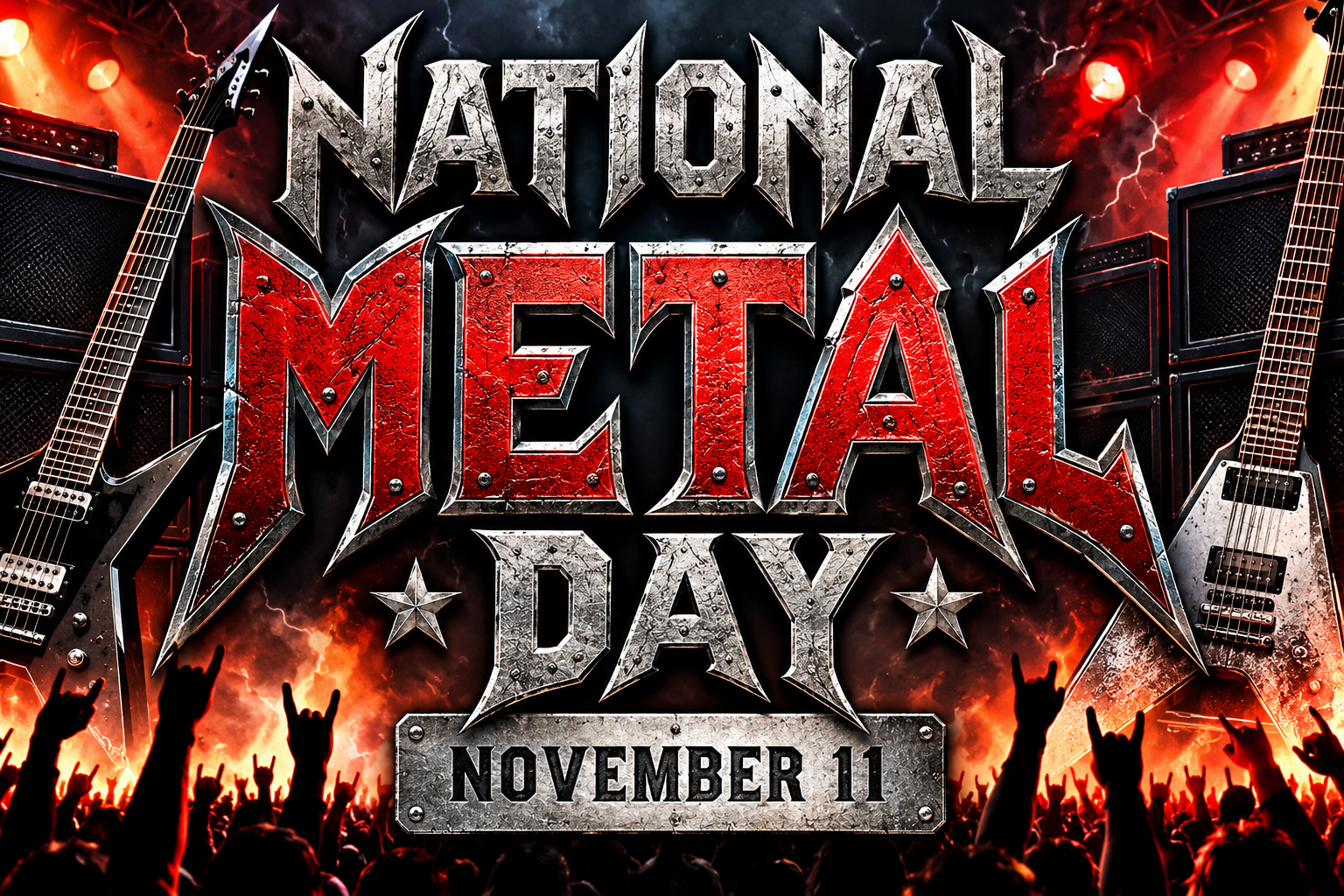
Every year on November 11, music lovers, rock enthusiasts, and devoted metalheads come together to celebrate National Metal Day, a day dedicated to the powerful sounds, electrifying guitar riffs, thunderous drums, and unforgettable energy of heavy metal music.
From legendary bands that helped shape the genre to modern artists pushing musical boundaries, National Metal Day honors a style of music that has influenced generations and created a passionate worldwide community.
Whether you grew up listening to Black Sabbath, Metallica, Iron Maiden, or Judas Priest, or you’re discovering heavy metal for the first time, November 11 is the perfect opportunity to turn up the volume and celebrate the music that refuses to be ignored.
The History of National Metal Day
National Metal Day is celebrated on November 11, a date made famous by the classic 1984 mockumentary This Is Spinal Tap.
In one of the movie’s most memorable scenes, guitarist Nigel Tufnel proudly demonstrates an amplifier with volume controls that go to 11 instead of the traditional 10. The joke became a legendary reference in rock music culture, inspiring the expression “turn it up to eleven.”
The date 11/11 became a natural choice for celebrating heavy metal’s larger-than-life attitude.
In 2011, VH1 Classic helped popularize National Metal Day with special programming dedicated to heavy metal music, legendary performers, and the genre’s lasting cultural influence.
Since then, November 11 has become an informal celebration for metal fans who appreciate loud guitars, powerful vocals, musical creativity, and the rebellious spirit associated with the genre.
The Birth of Heavy Metal Music
Heavy metal emerged during the late 1960s and early 1970s, drawing inspiration from blues rock, psychedelic rock, and hard rock.
Bands began experimenting with heavier guitar distortion, darker musical themes, dramatic performances, and powerful rhythms.
Among the most influential pioneers were:
-
Black Sabbath: Widely recognized as one of the founding bands of heavy metal, known for dark guitar riffs and groundbreaking songs.
-
Led Zeppelin: Helped establish the powerful guitar-driven sound that influenced generations of hard rock and metal musicians.
-
Deep Purple: Combined hard rock energy with impressive musicianship and unforgettable guitar performances.
-
Judas Priest: Helped define the classic heavy metal sound and its distinctive leather-and-studs image.
-
Iron Maiden: Became famous for intricate compositions, storytelling, and energetic live performances.
As heavy metal evolved, it developed into a diverse musical movement with countless styles, influences, and dedicated followers.
The Evolution of Heavy Metal
One of the most remarkable things about heavy metal is its ability to evolve while maintaining its powerful musical identity.
Over the decades, musicians have developed numerous subgenres, each offering a different interpretation of heavy music.
Traditional Heavy Metal
Characterized by soaring vocals, memorable guitar riffs, and powerful rhythms, traditional heavy metal helped establish the genre’s foundation.
Thrash Metal
Bands such as Metallica, Slayer, Megadeth, and Anthrax helped popularize thrash metal with faster tempos, aggressive guitar playing, and intense musical arrangements.
Death Metal
Known for extreme musical intensity, growled vocals, and complex instrumentation, death metal expanded the boundaries of heavy music.
Power Metal
Featuring melodic compositions, dramatic vocals, and themes of fantasy, mythology, and adventure, power metal emphasizes musical grandeur.
Progressive Metal
Combining heavy metal with complex song structures, unusual time signatures, and technical musicianship, progressive metal challenges traditional musical conventions.
Nu Metal
Emerging prominently during the 1990s, nu metal blended heavy guitars with influences from hip-hop, alternative rock, and other contemporary styles.
These different sounds demonstrate that heavy metal is not simply one type of music but an expansive and constantly evolving artistic movement.
Why Heavy Metal Matters
Heavy metal is more than loud music. For millions of fans, it represents creativity, individuality, emotional expression, and community.
The genre has provided an outlet for exploring difficult subjects, expressing frustration, questioning social expectations, and celebrating personal strength.
Many listeners appreciate heavy metal because of its honesty and intensity. Its music often addresses subjects that other genres may avoid, including personal struggles, injustice, history, mythology, and the complexities of human emotions.
Heavy metal also brings people together.
Concerts and festivals unite fans from different backgrounds, generations, and cultures through a shared appreciation for music.
Despite its sometimes intimidating image, the metal community is often celebrated by its members for loyalty, friendship, and a strong sense of belonging.
Legendary Heavy Metal Bands That Changed Music
Throughout music history, numerous bands have helped shape heavy metal and introduce it to new audiences.
Black Sabbath helped establish the genre’s dark and powerful musical foundations.
Metallica brought thrash metal to a massive international audience with albums such as Master of Puppets and Metallica, commonly known as The Black Album.
Iron Maiden became one of the most recognizable names in heavy metal through elaborate stage performances and enduring songs.
Judas Priest influenced generations of musicians with twin-guitar arrangements and Rob Halford’s distinctive vocals.
Motörhead combined the speed and aggression of punk rock with heavy metal’s raw musical power.
Pantera helped define groove metal with crushing guitar riffs and aggressive rhythms.
Slipknot introduced a distinctive combination of heavy instrumentation, theatrical imagery, and intense live performances to a new generation.
Each contributed to the evolution of heavy metal and helped expand its cultural influence.
Interesting Facts About Heavy Metal Music
Heavy metal has a fascinating history filled with surprising stories and unforgettable moments.
1. The phrase “heavy metal” predates the musical genre.
The expression appeared in literature and other contexts before becoming widely associated with hard rock music during the late 1960s and early 1970s.
2. Birmingham, England, played a major role in heavy metal’s beginnings.
The industrial city was home to Black Sabbath, whose dark and heavy sound helped establish the genre.
3. Heavy metal is popular worldwide.
Metal bands and fans can be found across Europe, Asia, North America, South America, Africa, and beyond.
4. Metal musicians often demonstrate exceptional technical skills.
Many songs feature complex guitar solos, rapid drumming, intricate bass lines, and demanding vocal performances.
5. Heavy metal has influenced fashion and popular culture.
Leather jackets, band shirts, patches, distinctive hairstyles, and elaborate concert imagery have become recognizable parts of metal culture.
6. The number 11 has special meaning for metal fans.
Thanks to This Is Spinal Tap, turning the volume up to eleven has become a humorous symbol of taking rock music to the extreme.
How to Celebrate National Metal Day
There are plenty of ways to enjoy National Metal Day, whether you’re a lifelong metalhead or someone curious about the genre.
Turn Up Your Favorite Metal Songs
Create a playlist featuring your favorite heavy metal bands and enjoy the music that helped define the genre.
Discover a New Band
Explore a metal subgenre you’ve never listened to before. You might discover a new favorite artist.
Watch a Classic Metal Concert
Enjoy recordings of legendary performances and experience the energy that makes heavy metal concerts unforgettable.
Wear Your Favorite Band Shirt
Show your appreciation for the music by wearing merchandise from a favorite metal band.
Learn About Heavy Metal History
Research influential musicians, classic albums, and important moments in the genre’s development.
Support Local Musicians
Attend a local rock or metal performance, purchase music from independent artists, or share their work with friends.
Celebrate With Fellow Metal Fans
Host a listening party, discuss favorite albums, or introduce someone to the music that means so much to you.
The Lasting Influence of Heavy Metal
More than five decades after its emergence, heavy metal continues to influence music, fashion, entertainment, and popular culture.
Its impact can be heard in hard rock, alternative music, punk, industrial music, and numerous modern genres.
Metal musicians continue experimenting with new sounds, combining traditional techniques with modern production and influences from around the world.
Perhaps the genre’s greatest achievement is its ability to connect people through powerful musical experiences.
For some, heavy metal represents freedom. For others, it provides motivation, comfort, excitement, or a sense of belonging.
Whatever the reason, the passion surrounding heavy metal has helped it remain a lasting force in music.
Final Thoughts: Turn It Up to Eleven!
National Metal Day is a celebration of musical creativity, powerful performances, legendary artists, and the dedicated fans who keep heavy metal alive.
From the early days of Black Sabbath to the countless metal bands performing around the world today, the genre has demonstrated that music can be bold, emotional, innovative, and unforgettable.
November 11 reminds us that heavy metal is not simply about volume. It is about passion, expression, individuality, and the freedom to enjoy music that speaks to you.
So grab your favorite band shirt, put on a classic metal album, and celebrate the musicians who helped create one of the most influential movements in rock history.
Happy National Metal Day! Keep the music loud, the guitars heavy, and the spirit of rock and roll alive!


Leave a Reply