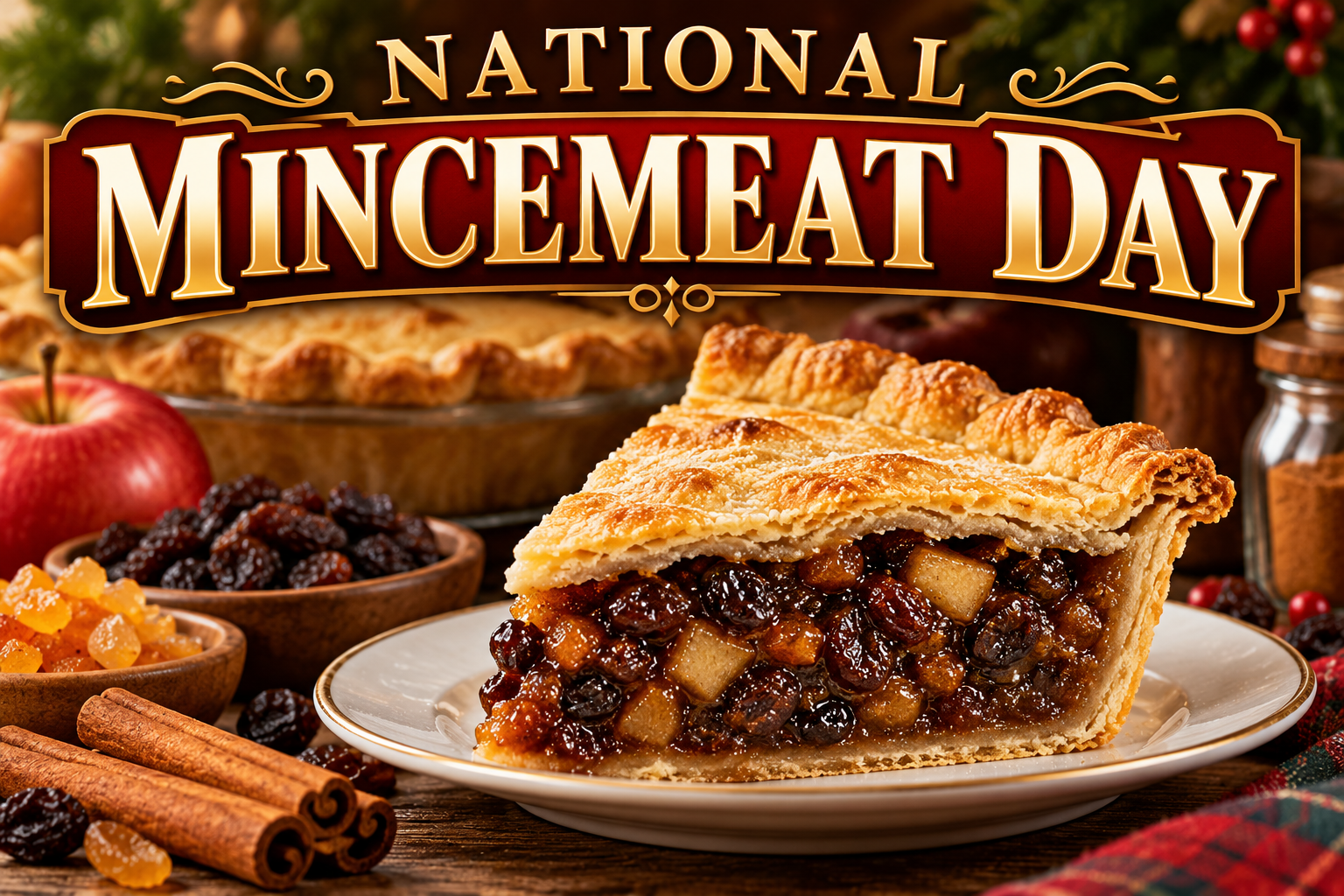
Every year on October 26, food lovers and baking enthusiasts celebrate National Mincemeat Day, a delicious occasion dedicated to one of the most traditional and historically fascinating fillings in the culinary world. Although the name might sound unusual to those unfamiliar with it, mincemeat has a rich history that stretches back centuries.
From traditional British Christmas pies to modern fruit-filled desserts, mincemeat has evolved from a savory mixture containing actual meat into a sweet, spiced combination of dried fruits, apples, citrus, and warming spices.
National Mincemeat Day is an opportunity to rediscover this classic ingredient, learn about its fascinating origins, and perhaps introduce a new generation to a dessert that has been enjoyed for hundreds of years.
What Is National Mincemeat Day?
National Mincemeat Day is an informal food holiday observed annually on October 26 in the United States. The day celebrates mincemeat, a traditional mixture commonly associated with pies, tarts, and holiday baking.
Despite its name, modern mincemeat often contains no actual meat. Instead, it typically features ingredients such as raisins, currants, apples, candied citrus peel, sugar, and spices.
Historically, however, mincemeat was quite different. Early versions included finely chopped meat mixed with dried fruits and spices, creating a combination of savory and sweet flavors.
Today, mincemeat is particularly popular during the Christmas season in Britain, where small mince pies remain a beloved holiday tradition.
National Mincemeat Day gives everyone a chance to appreciate this unique food and the culinary history behind it.
The History of Mincemeat
The history of mincemeat reaches back to medieval England, when cooks frequently combined meat with fruits, sugar, and spices.
During the Middle Ages, spices such as cinnamon, cloves, and nutmeg were valuable ingredients that demonstrated wealth and sophistication. Wealthier households incorporated these spices into elaborate dishes, including meat pies.
Early mincemeat recipes commonly featured beef or mutton, dried fruits, and aromatic seasonings. These combinations reflected medieval tastes, which did not always separate sweet and savory foods the way modern Western cooking often does.
Over time, mincemeat recipes began to change.
By the 18th and 19th centuries, sweeter versions had become increasingly popular. Although meat remained part of many traditional recipes, fruit gradually became the dominant ingredient.
Eventually, many recipes eliminated meat entirely, producing the sweet filling familiar to modern bakers.
Today, mincemeat remains closely connected to British culinary heritage and Christmas celebrations.
Why Is It Called Mincemeat?
One of the most interesting aspects of mincemeat is its unusual name.
The word originally referred to meat that had been finely chopped, or minced, before being combined with other ingredients.
Unlike modern ground meat, historical mincemeat often involved hand-chopped pieces of meat mixed with fruit, spices, and sometimes alcohol.
As recipes evolved, the name remained even when meat disappeared from the ingredient list.
This explains why someone purchasing a jar of modern mincemeat might discover a sweet fruit mixture rather than a savory meat filling.
However, not every modern mincemeat product is vegetarian. Some traditional recipes still contain beef suet, a type of animal fat, so checking ingredients is important.
Traditional Ingredients Found in Mincemeat
Modern mincemeat is known for its rich combination of flavors and textures.
Common ingredients include:
-
Raisins: Provide natural sweetness and a chewy texture.
-
Currants: Add concentrated fruit flavor.
-
Apples: Contribute moisture and mild tartness.
-
Candied citrus peel: Introduces bright orange and lemon notes.
-
Brown sugar: Creates a deep, caramel-like sweetness.
-
Cinnamon: Adds warmth and familiar holiday flavor.
-
Nutmeg: Provides an earthy, aromatic taste.
-
Cloves: Contribute a distinctive spicy character.
-
Suet or vegetable fat: Adds richness to traditional recipes.
-
Brandy or rum: Sometimes used for additional flavor and preservation.
Each ingredient contributes to the distinctive taste that makes mincemeat such a recognizable holiday filling.
How to Celebrate National Mincemeat Day
There are several enjoyable ways to celebrate National Mincemeat Day, whether you already love mincemeat or are trying it for the first time.
1. Bake a Traditional Mincemeat Pie
One of the most authentic ways to celebrate is by baking a homemade mincemeat pie.
Use a buttery pastry crust and fill it with a rich combination of dried fruits, apples, citrus, and spices.
Serve it warm with vanilla ice cream, whipped cream, or custard.
2. Try British Mince Pies
British mince pies are small, individual pastries traditionally enjoyed during the Christmas season.
Their sweet filling and flaky crust make them perfect for holiday gatherings or afternoon tea.
3. Make Homemade Mincemeat
Preparing your own mincemeat allows you to customize the ingredients.
You can experiment with different dried fruits, adjust the sweetness, or create a completely vegetarian version.
4. Learn About British Holiday Traditions
Explore how mince pies became associated with Christmas celebrations in Britain.
Understanding their history adds another layer of appreciation to this traditional food.
5. Share Mincemeat With Someone New
Many people have never tasted mincemeat.
National Mincemeat Day provides a wonderful opportunity to introduce friends or family members to something different.
Easy Homemade Mincemeat Recipe
If you want to celebrate National Mincemeat Day at home, this simple meat-free recipe is an excellent place to begin.
Preparation time: 15 minutes
Cooking time: 25–30 minutes
Yield: Approximately 3 cups
Ingredients
-
2 cups raisins
-
1 cup dried currants
-
1 large apple, peeled and finely chopped
-
½ cup brown sugar
-
½ cup orange juice
-
¼ cup candied orange peel
-
2 tablespoons lemon juice
-
2 tablespoons unsalted butter
-
1 teaspoon ground cinnamon
-
½ teaspoon ground nutmeg
-
¼ teaspoon ground cloves
-
½ teaspoon vanilla extract
Instructions
-
Combine the raisins, currants, chopped apple, brown sugar, orange juice, candied orange peel, and lemon juice in a medium saucepan.
-
Add the butter, cinnamon, nutmeg, and cloves.
-
Cook over low heat, stirring occasionally, for approximately 25–30 minutes until the fruit softens and the mixture thickens.
-
Remove from heat and stir in the vanilla extract.
-
Allow the mixture to cool completely.
-
Use immediately as a pie filling or transfer to an airtight container and refrigerate.
For best flavor, allow the mixture to rest overnight in the refrigerator before using it in baked goods.
Refrigerate promptly and use within three to four days, or freeze for longer storage. This recipe is not intended for shelf-stable canning.
Five Delicious Ways to Use Mincemeat
Although traditional pies are the most familiar use for mincemeat, this flavorful filling can be incorporated into numerous desserts.
1. Mincemeat Hand Pies
Fill small circles of pastry dough with mincemeat, fold them over, and bake until golden brown.
These portable treats are perfect for parties and holiday gatherings.
2. Mincemeat Thumbprint Cookies
Add a spoonful of mincemeat to the center of buttery thumbprint cookies before baking.
The combination of sweet fruit and tender cookies creates a delicious seasonal treat.
3. Mincemeat Muffins
Fold a small amount of mincemeat into your favorite muffin batter.
The dried fruits and spices add extra moisture and flavor.
4. Mincemeat Puff Pastry Tarts
Use store-bought puff pastry to create quick individual tarts filled with mincemeat.
Finish with a light dusting of powdered sugar.
5. Mincemeat Apple Crumble
Combine mincemeat with sliced apples and top with a buttery oat crumble.
Bake until the fruit is tender and the topping becomes golden and crisp.
Interesting Facts About Mincemeat
Mincemeat has a fascinating history filled with unusual traditions and culinary changes.
1. Mincemeat originally contained real meat. Early recipes frequently included beef or mutton alongside dried fruits and spices.
2. Mince pies have medieval roots. Their predecessors were often larger and more savory than the small sweet pastries enjoyed today.
3. Spices were once luxury ingredients. Cinnamon, cloves, and nutmeg were expensive imports that made spiced dishes particularly desirable.
4. Modern mincemeat can be vegetarian. Many contemporary recipes use vegetable fats or butter instead of meat and suet.
5. Mince pies are strongly associated with Christmas in Britain. They are a familiar feature of seasonal baking, gatherings, and holiday hospitality.
6. Mincemeat can be used in more than pies. Cookies, muffins, pastries, and crumbles can all feature the traditional filling.
7. The name has survived centuries of recipe changes. Even after meat disappeared from many recipes, the word mincemeat remained.
8. Homemade mincemeat can develop a richer flavor after resting. Allowing the ingredients to mingle helps the spices and fruit flavors blend.
The Connection Between Mincemeat and Christmas
For many families in Britain, mince pies are as closely connected to Christmas as gingerbread cookies and fruitcake are in other holiday traditions.
During the Christmas season, bakeries and grocery stores offer countless variations of mince pies.
Some feature traditional shortcrust pastry, while others use puff pastry, decorative pastry stars, or modern flavor combinations.
Mince pies are also associated with the custom of leaving treats for Father Christmas on Christmas Eve.
The tradition of serving these small pastries reflects the importance of food, family, and shared celebrations during the holiday season.
Although National Mincemeat Day takes place in October, its timing offers an opportunity to begin thinking about traditional holiday baking before November and December arrive.
Is Mincemeat Healthy?
Mincemeat contains several ingredients that can contribute nutrients to the diet.
Dried fruits provide fiber and minerals, while apples contribute additional fiber and natural fruit flavor.
Spices such as cinnamon and cloves contain plant compounds that have been studied for their antioxidant properties.
However, traditional mincemeat can also contain considerable amounts of added sugar and fat.
The nutritional value depends on the recipe and serving size.
Homemade versions allow you to reduce added sugar, increase the proportion of fruit, and select ingredients that match your dietary preferences.
As with most desserts, mincemeat is best enjoyed as part of a balanced diet.
Why Traditional Foods Still Matter
National Mincemeat Day is about more than celebrating a particular dessert.
Traditional foods connect generations through shared memories, cultural identity, and family customs.
A recipe passed down through a family can tell a story about where people came from, how they celebrated important occasions, and which flavors brought them together.
Mincemeat represents centuries of culinary evolution.
What began as a savory medieval dish eventually transformed into a sweet holiday favorite, yet its connection to history remains.
Preserving traditional recipes does not mean refusing to change them. Instead, it means appreciating their origins while allowing new generations to create their own variations.
Whether prepared using an old family recipe or a modern meat-free version, mincemeat continues to represent the comforting traditions of home baking.
Final Thoughts on National Mincemeat Day
National Mincemeat Day, celebrated every October 26, reminds us that even the most unusual-sounding foods can have remarkable histories.
From medieval meat pies to the sweet, spiced fruit fillings enjoyed today, mincemeat has undergone centuries of transformation while maintaining its place in traditional baking.
Whether you bake a homemade pie, prepare a batch of British mince pies, experiment with a new dessert, or simply learn something about its history, there are plenty of ways to participate.
Sometimes the best food celebrations are those that encourage us to discover something unfamiliar while appreciating traditions that have stood the test of time.
Have you ever tried mincemeat pie, or would National Mincemeat Day be your first opportunity to taste this traditional dessert?


Leave a Reply