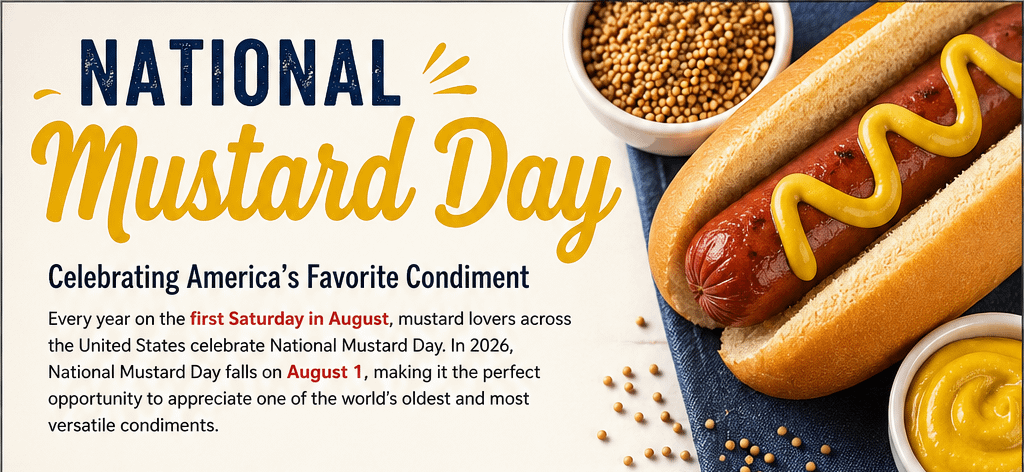
Every year on the first Saturday in August, food lovers across the United States celebrate National Mustard Day. In 2026, the celebration falls on August 1, giving everyone a reason to squeeze a little extra mustard onto their favorite meals.
From backyard barbecues and baseball games to gourmet restaurants and international cuisine, mustard has become one of the world’s most beloved condiments. Its bold flavor, remarkable history, and incredible versatility have helped it remain a kitchen staple for thousands of years.
Whether your favorite is classic yellow mustard, spicy brown, Dijon, whole-grain, honey mustard, or a unique artisan blend, National Mustard Day is the perfect time to discover new flavors, experiment with recipes, and appreciate one of humanity’s oldest seasonings.
What Is National Mustard Day?
National Mustard Day is an annual celebration dedicated to everything mustard. The day encourages people to enjoy different varieties, learn about mustard’s fascinating history, support local food producers, and experiment with recipes featuring this surprisingly versatile ingredient.
Unlike many food holidays that focus on desserts or indulgent treats, National Mustard Day celebrates an ingredient that enhances countless dishes without overwhelming them. Mustard adds flavor, depth, acidity, and complexity while remaining relatively low in calories.
Restaurants, delis, food festivals, gourmet shops, and home cooks often join the celebration by featuring mustard-inspired menus, tasting events, recipe contests, and grilling demonstrations.
A Condiment with Ancient Origins
Mustard is far older than most people realize.
Archaeologists have found evidence that mustard seeds were used more than 5,000 years ago, making mustard one of the oldest known spices still enjoyed today.
Ancient civilizations quickly recognized the value of mustard seeds because they were:
- Easy to grow
- Easy to preserve
- Highly flavorful
- Useful for cooking
- Valued for medicinal purposes
Mustard in Ancient Egypt
Mustard seeds have been discovered inside Egyptian tombs, including burial sites of pharaohs. Egyptians often chewed mustard seeds alongside meat to enhance flavor and aid digestion.
Mustard in Ancient Greece
The Greeks appreciated mustard not only as a food but also as a medicinal herb. Early physicians believed mustard could help with respiratory ailments, circulation, and digestion.
The Romans Perfect Prepared Mustard
The Romans transformed mustard into something much closer to what we enjoy today.
They mixed crushed mustard seeds with freshly pressed grape juice called must, creating a spicy paste known as mustum ardens, meaning “burning must.”
Over time, those words evolved into the English word mustard.
Roman soldiers and traders spread mustard recipes throughout Europe, helping establish its popularity for centuries to come.
Mustard During the Middle Ages
During the Middle Ages, mustard became one of Europe’s most popular condiments.
Because refrigeration didn’t exist, mustard helped improve the flavor of preserved meats while adding brightness to rich dishes.
French monasteries began producing high-quality mustard, eventually leading to the famous mustard-making traditions of Dijon, France.
By the 13th century, mustard had become an important commercial product throughout Europe.
Entire guilds of mustard makers formed to ensure quality standards, and recipes became treasured family secrets passed from generation to generation.
The Birth of Modern Mustard
As international trade expanded, mustard recipes evolved.
Different countries developed their own signature styles.
American Yellow Mustard
Bright yellow mustard became popular in the United States during the early 1900s.
Its distinctive color comes from turmeric rather than the mustard seeds themselves.
Today it remains the classic choice for:
- Hot dogs
- Burgers
- Corn dogs
- Soft pretzels
- Sandwiches
Dijon Mustard
Dijon mustard offers a smoother texture and stronger flavor.
Instead of vinegar alone, traditional Dijon recipes often include white wine or verjuice, giving it a refined taste that works beautifully in gourmet cooking.
English Mustard
English mustard is known for its intense heat.
Prepared from finely ground mustard powder, it delivers a powerful kick that pairs especially well with roast beef and hearty meats.
German Mustards
Germany produces hundreds of mustard varieties ranging from sweet Bavarian mustard to spicy versions served alongside bratwurst and schnitzel.
The National Mustard Museum
One of the biggest supporters of National Mustard Day is the National Mustard Museum located in Middleton, Wisconsin.
Founded in 1991 by Barry Levenson, the museum celebrates everything related to mustard.
Visitors can explore:
- Thousands of mustard jars
- Historic advertisements
- Vintage mustard tins
- International mustard collections
- Cooking exhibits
- Mustard-themed souvenirs
The museum has become a popular destination for food enthusiasts from around the world and continues to host National Mustard Day celebrations every year.
The Science Behind Mustard’s Flavor
Mustard seeds don’t actually taste very spicy when dry.
The heat develops only after the seeds are crushed and mixed with liquid.
This reaction activates natural compounds that create mustard’s signature sharpness.
Several factors influence how spicy mustard becomes:
- Seed variety
- Temperature
- Vinegar
- Water
- Preparation time
- Aging process
Brown and black mustard seeds generally produce much hotter mustard than yellow seeds.
Different Types of Mustard
One of the reasons mustard remains so popular is the enormous variety available today.
Yellow Mustard
The classic American favorite.
Flavor profile:
- Mild
- Tangy
- Slightly sweet
Best with:
- Burgers
- Hot dogs
- French fries
- Corn dogs
- Chicken sandwiches
Dijon Mustard
Rich and sophisticated.
Perfect for:
- Salad dressings
- Chicken dishes
- Cream sauces
- Marinades
- Gourmet sandwiches
Spicy Brown Mustard
Bold and slightly coarse.
Excellent with:
- Pastrami
- Corned beef
- Bratwurst
- Pretzels
- Reuben sandwiches
Whole Grain Mustard
Containing partially crushed mustard seeds, this variety adds both flavor and texture.
Ideal for:
- Cheese boards
- Steak
- Pork loin
- Roasted vegetables
- Vinaigrettes
Honey Mustard
A blend of mustard and honey creates the perfect balance between sweet and tangy.
Popular uses include:
- Chicken tenders
- Salads
- Wraps
- Sandwiches
- Vegetable platters
Beer Mustard
Craft breweries and artisan producers often create mustard using local beers.
The result is a rich, malty flavor that’s perfect with grilled sausages.
Horseradish Mustard
Combining two bold ingredients creates an extra spicy condiment ideal for roast beef, smoked meats, and seafood.
Health Benefits of Mustard
While mustard is best known for flavor, it also offers several nutritional advantages.
Mustard seeds naturally contain:
- Selenium
- Magnesium
- Calcium
- Potassium
- Phosphorus
- Iron
- Omega-3 fatty acids
- Antioxidants
- Plant compounds called glucosinolates
Prepared mustard is typically:
- Low in calories
- Low in fat
- Low in sugar
- Full of flavor
Using mustard instead of high-calorie sauces or mayonnaise can be an easy way to reduce calories while keeping meals flavorful.
As always, people watching their sodium intake should compare labels since prepared mustards vary between brands.
Surprising Uses for Mustard
Most people think of mustard only as a sandwich condiment, but it can do much more.
Salad Dressings
Mustard acts as a natural emulsifier, helping oil and vinegar blend smoothly.
Marinades
The acidity helps tenderize meat while adding depth of flavor.
Cheese Sauces
Many macaroni and cheese recipes include Dijon mustard to enhance richness.
Deviled Eggs
A small amount of mustard brightens the filling and balances the richness of egg yolks.
Potato Salad
Classic potato salad wouldn’t be the same without mustard adding tang and color.
Glazes
Honey mustard glazes work wonderfully on:
- Ham
- Salmon
- Pork chops
- Chicken
Homemade Barbecue Sauce
Many barbecue sauces rely on mustard as one of their foundational ingredients.
Fun Facts About Mustard
- Mustard is one of the oldest spices still in common use.
- There are more than 40 species of mustard plants.
- Mustard seeds can remain viable for many years when stored properly.
- Canada is one of the world’s largest producers of mustard seed.
- Thousands of mustard varieties are sold around the globe.
- Yellow mustard gets its bright color from turmeric.
- Ancient physicians once used mustard in traditional remedies.
- Some gourmet mustards contain ingredients like bourbon, whiskey, maple syrup, champagne, garlic, truffles, herbs, figs, cranberries, or smoked peppers.
Creative Ways to Celebrate National Mustard Day
Host a Mustard Tasting Party
Buy several different varieties and compare:
- Aroma
- Texture
- Heat
- Sweetness
- Acidity
- Overall flavor
Invite friends to vote for their favorites.
Fire Up the Grill
Celebrate with:
- Hamburgers
- Hot dogs
- Bratwurst
- Sausages
- Chicken
- Grilled vegetables
Offer multiple mustard varieties for guests to sample.
Make Homemade Mustard
Creating homemade mustard is surprisingly simple.
Basic ingredients include:
- Mustard seeds
- Vinegar
- Water
- Salt
- Honey or sugar (optional)
- Herbs and spices
Homemade mustard can be customized with garlic, beer, wine, maple syrup, or smoked paprika.
Try International Recipes
Explore dishes from around the world featuring mustard, including:
- German sausages
- French vinaigrettes
- Indian mustard curries
- Southern potato salad
- Carolina-style barbecue
Visit a Farmers Market
Many local food artisans create handcrafted mustards with unique regional ingredients.
Supporting small businesses is a delicious way to celebrate the holiday.
Why Mustard Has Endured for Thousands of Years
Very few foods have remained popular across multiple civilizations.
Mustard has survived because it offers the perfect combination of:
- Bold flavor
- Long shelf life
- Versatility
- Affordability
- Simplicity
It complements countless cuisines without overpowering the main dish.
Whether spread on a sandwich, whisked into a dressing, stirred into a sauce, or served alongside grilled meats, mustard continues to prove why it has stood the test of time.
Final Thoughts
National Mustard Day is about much more than a squeeze bottle at a summer cookout. It’s a celebration of history, flavor, culinary creativity, and one of the world’s oldest and most versatile condiments.
From ancient civilizations to modern gourmet kitchens, mustard has remained a favorite ingredient because of its ability to elevate ordinary meals into memorable ones. Whether you’re a lifelong fan of classic yellow mustard or enjoy exploring artisan varieties with unique flavors, today is the perfect opportunity to appreciate everything this remarkable condiment has to offer.
So gather your friends and family, fire up the grill, sample a few new mustard varieties, and celebrate National Mustard Day with great food and even better company. Happy National Mustard Day!
Read More Holidays & National Days
Leave a Reply