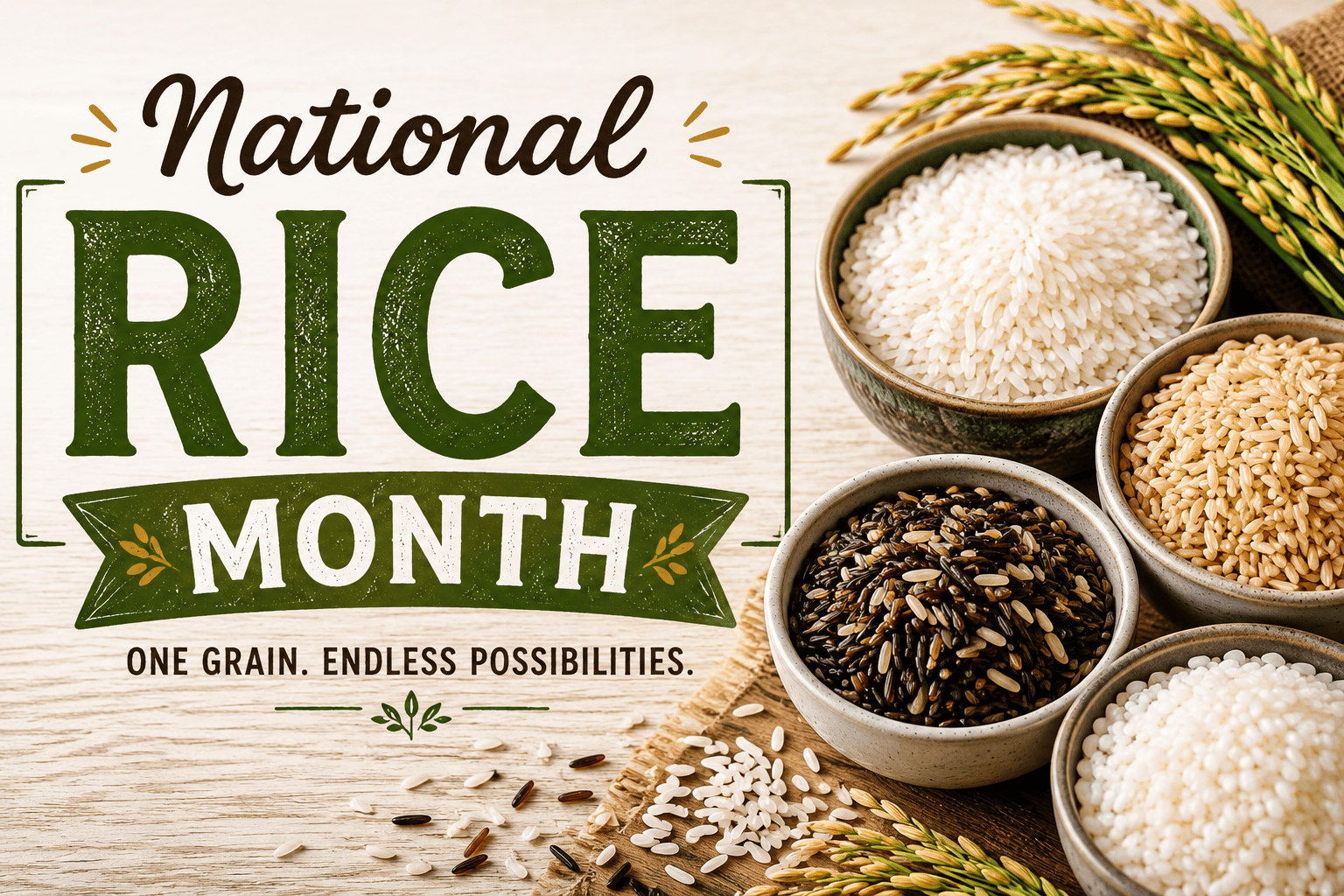
Every September, National Rice Month celebrates a food that has earned a permanent place on tables around the world. From a simple bowl of steamed rice to colorful stir-fries, creamy risottos, hearty casseroles, spicy jambalaya, sushi, rice pudding, and countless other dishes, rice is one of the most adaptable ingredients in the kitchen.
National Rice Month is also an opportunity to recognize the American farmers, millers, processors, cooks, restaurants, and families who help take rice from the field to the dinner table.
Whether you prefer white, brown, wild, jasmine, basmati, arborio, or another variety, September is a great time to appreciate just how much can be done with this humble grain.
What Is National Rice Month?
National Rice Month is observed throughout September as a celebration of rice and the people involved in producing it.
The observance encourages people to learn more about rice grown in the United States, experiment with different varieties, discover new recipes, and appreciate the agricultural work behind a food many of us take for granted.
Rice may appear simple, but its story stretches across thousands of years and numerous cultures.
For generations, rice has served as an affordable and adaptable staple capable of accompanying everything from vegetables and seafood to chicken, beef, beans, curries, and soups.
Rice Has an Incredible History
Rice is one of humanity’s oldest cultivated foods.
Its history reaches back thousands of years, particularly in Asia, where rice became central to agriculture, cuisine, trade, and cultural traditions. Over centuries, rice cultivation spread throughout different parts of the world.
Eventually, rice also became an important American crop.
Today, rice is grown commercially in several U.S. states, particularly in areas with climates and agricultural conditions suited to rice production. American-grown rice makes its way into grocery stores, restaurants, food-service operations, packaged foods, and kitchens across the country.
National Rice Month gives consumers an opportunity to think about everything that happens before a bag of rice reaches the supermarket shelf.
Behind every harvest are farmers making decisions about planting, irrigation, weather, equipment, harvesting, storage, milling, transportation, and countless other parts of agriculture.
Why Rice Is So Popular
Few foods are as versatile as rice.
One reason rice has remained popular for generations is its ability to work with an enormous variety of flavors.
Rice can be savory.
Rice can be sweet.
It can become the centerpiece of a meal or quietly support everything around it.
You can serve rice alongside grilled chicken, use it underneath a curry, combine it with beans, toss it into a stir-fry, stuff it into vegetables, add it to soup, transform leftover rice into fried rice, or turn it into dessert.
Rice can also take on the flavors of herbs, spices, sauces, broths, vegetables, meats, and seafood.
That versatility makes it particularly useful for home cooks.
Different Types of Rice to Explore
National Rice Month is a perfect excuse to move beyond your usual variety and try something different.
Long-grain white rice is a familiar everyday choice. When properly prepared, the grains tend to remain relatively separate and fluffy, making it useful for side dishes, bowls, casseroles, and many other recipes.
Brown rice retains more of the grain’s outer layers than white rice, giving it a nuttier flavor, chewier texture, and different nutritional profile.
Jasmine rice is known for its fragrant aroma and soft texture. It is commonly paired with Southeast Asian-inspired dishes, curries, stir-fries, and grilled meats.
Basmati rice has long, slender grains and a distinctive aroma. It is especially popular in South Asian and Middle Eastern cooking.
Arborio rice is famous for its use in risotto. Its starchiness helps create the creamy consistency associated with the dish.
There are also red, black, and other specialty rice varieties worth discovering.
And then there is wild rice. Despite its name, wild rice is technically the seed of an aquatic grass rather than the same type of grain as conventional rice. Its chewy texture and earthy flavor, however, make it a popular addition to rice blends, soups, stuffing, and side dishes.
Rice Around the World
One of the best things about rice is seeing how different cultures have transformed the same basic ingredient into completely different culinary traditions.
Think about dishes such as:
- Spanish paella
- Italian risotto
- Japanese sushi
- Indian biryani
- Chinese fried rice
- Louisiana jambalaya
- Caribbean rice and peas
- Mexican-style rice
- Korean bibimbap
- Middle Eastern rice pilafs
- Rice pudding and other rice-based desserts
These dishes demonstrate why rice has endured for generations.
Give different cooks rice, vegetables, seasonings, and local ingredients, and they can create meals that taste completely different from one another.
The Beauty of Rice Bowls
One modern way to celebrate National Rice Month is by creating your own rice bowls.
Start with your favorite rice and build from there.
Add grilled chicken, steak, shrimp, salmon, tofu, beans, or another protein. Include vegetables such as broccoli, peppers, onions, carrots, corn, spinach, cucumber, or avocado.
Then finish everything with a flavorful sauce.
You can create a teriyaki bowl one evening, a taco-inspired rice bowl the next, and a Mediterranean-inspired bowl later in the week.
The possibilities are nearly endless.
Rice bowls are also useful for meal preparation because individual ingredients can often be prepared ahead of time and combined when you’re ready to eat.
Don’t Forget About Leftover Rice
National Rice Month can also inspire us to waste less food.
Cooked rice left from dinner may become the beginning of tomorrow’s meal when it has been cooled and stored safely.
Fried rice is one of the classic examples.
Combine chilled rice with vegetables, egg, seasonings, and your choice of protein, and yesterday’s side dish becomes an entirely different meal.
Leftover rice can also be incorporated into soups, casseroles, stuffed peppers, rice salads, and other dishes.
Just remember that cooked rice should be handled and refrigerated properly because improper storage can allow harmful bacteria to grow.
Rice Can Be Budget-Friendly
Rice has another major advantage: it can help stretch a meal.
Families have long combined rice with beans, vegetables, eggs, chicken, and other ingredients to create satisfying dishes without relying exclusively on expensive ingredients.
A relatively small amount of meat can sometimes be stretched across several servings when combined with rice and vegetables.
Rice can also be purchased dry and stored for future meals, making certain varieties convenient pantry staples.
Having rice available means you are rarely far away from the foundation of a meal.
Ways to Celebrate National Rice Month
Celebrating doesn’t have to be complicated.
Cook a rice dish you’ve never made before. Try a different rice variety. Prepare homemade fried rice. Make jambalaya for dinner. Experiment with risotto. Build a family rice-bowl bar where everyone chooses their own toppings.
You could even choose a different international rice dish each week throughout September.
National Rice Month can also be an opportunity to look for U.S.-grown rice at the grocery store and learn more about where your food comes from.
Parents can turn the month into a simple educational activity by teaching children about farming, agriculture, world cuisines, and how rice travels from a field to their dinner plate.
Try a Rice Recipe Challenge
For a little extra fun, challenge yourself to prepare several completely different rice dishes during September.
For example:
Week One: Chicken and vegetable fried rice
Week Two: Homemade jambalaya
Week Three: Creamy mushroom risotto
Week Four: Chicken teriyaki rice bowls
Finish the month with something sweet, such as cinnamon rice pudding.
By the end of September, you may discover a new family favorite.
Appreciating the Farmers Behind the Food
National Rice Month isn’t only about recipes.
It is also about agriculture.
Farmers work throughout the growing season to produce crops that eventually become the foods we purchase every day. Weather, water availability, soil conditions, equipment, costs, and countless other factors can affect each year’s harvest.
It’s easy to see a bag of rice on a supermarket shelf without considering the work required to put it there.
National Rice Month provides an opportunity to recognize that connection between farms and our dinner tables.
A Grain That Brings People Together
Perhaps one of the most remarkable things about rice is its universality.
A bowl of rice can look completely different depending on where you are in the world, yet the ingredient itself provides a common thread.
It can be part of an elaborate celebration meal or an inexpensive weeknight dinner.
It can accompany spicy curry, smoky barbecue, fresh seafood, beans, vegetables, or sweet cinnamon and milk.
It can be comforting, celebratory, practical, traditional, or adventurous.
That is why something as simple as rice deserves an entire month of recognition.
Celebrate National Rice Month This September
This September, celebrate National Rice Month by adding a little variety to your kitchen.
Try a rice you’ve never tasted. Explore a dish from another culture. Support American agriculture when possible. Turn leftovers into something new. Share a favorite rice recipe with friends or family.
Most importantly, appreciate the remarkable versatility of an ingredient that has fed generations of people around the world.
From the farm to the kitchen and finally to the dinner table, rice proves that sometimes the simplest foods can offer the greatest possibilities.
Happy National Rice Month!
What is your favorite way to eat rice—fried rice, jambalaya, risotto, rice bowls, sushi, rice pudding, or something else?


Leave a Reply