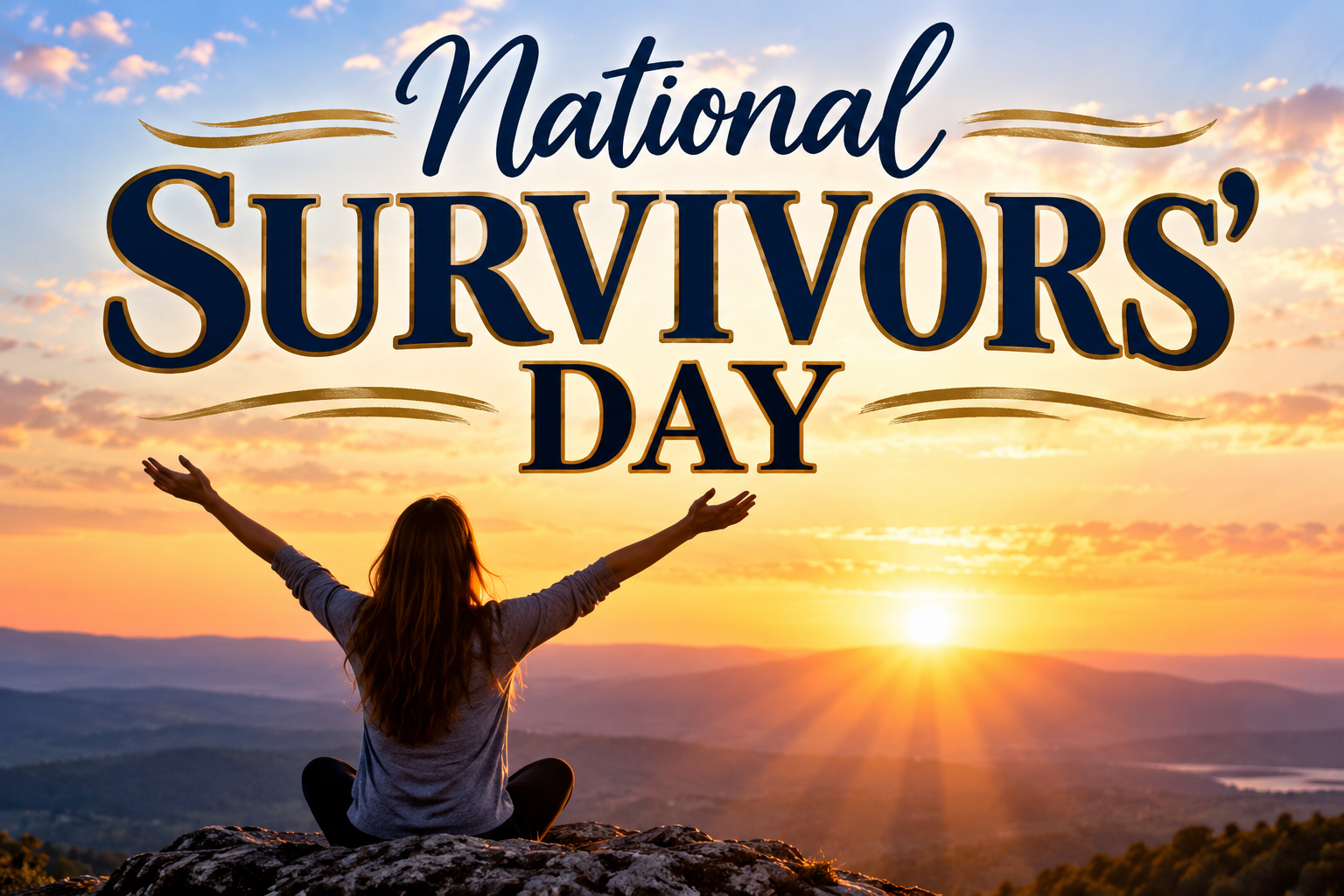
Life has a way of testing us in ways we never imagined. Some battles leave visible scars, while others leave wounds that the world may never see. National Survivors’ Day is a meaningful opportunity to recognize those who have faced life’s most difficult challenges and found the courage to keep moving forward.
Whether someone has survived a serious illness, a traumatic experience, abuse, violence, a devastating loss, or another life-changing hardship, their journey deserves compassion, understanding, and respect.
Survival is more than making it through a difficult moment. It is about learning how to live again, rediscovering hope, and understanding that even after the darkest days, life can still hold moments of beauty.
What Is National Survivors’ Day?
National Survivors’ Day is a name used for observances that honor people who have survived significant hardships. The meaning and date can vary depending on the organization and the survivors being recognized.
Related observances include National Cancer Survivors Day, observed on the first Sunday in June, and International Survivors of Suicide Loss Day, generally observed on the Saturday before American Thanksgiving.
At the heart of these observances is a shared message: Every survivor has a story, every story matters, and no one should have to face their struggles alone.
It is also an opportunity to acknowledge the families, friends, caregivers, advocates, and communities who help survivors navigate their journeys.
The Meaning of Being a Survivor
The word survivor carries tremendous meaning.
For some, survival means overcoming a life-threatening illness. For others, it means escaping an abusive relationship, recovering from a traumatic event, or finding the strength to continue after an unimaginable loss.
Survival does not always look like the inspirational stories we see in movies or read about in books.
Sometimes survival means getting out of bed when the weight of the world feels unbearable.
Sometimes it means attending another medical appointment, asking for help, setting boundaries, or taking the first steps toward rebuilding a life.
And sometimes, survival simply means making it through another day.
There is no single definition of strength, and there is no perfect way to heal.
Every survivor’s experience is different, and each deserves to be respected.
Recognizing the Invisible Battles
One of the most important messages behind National Survivors’ Day is that not every struggle can be seen.
Someone may smile, laugh, go to work, and participate in everyday activities while carrying painful memories or emotional wounds.
Others may be navigating anxiety, grief, fear, or uncertainty long after the original experience has passed.
Survivors often hear phrases such as “You are so strong” or “Everything happens for a reason.”
Although these words may come from a place of kindness, they do not always reflect what a survivor needs to hear.
Sometimes the most meaningful words are much simpler:
“I believe you.”
“I’m here for you.”
“You don’t have to explain.”
“Take all the time you need.”
Supporting survivors begins with listening without judgment and allowing them to share their experiences on their own terms.
Healing Is Not a Straight Line
One of the greatest misconceptions about surviving hardship is that healing follows a predictable path.
In reality, healing can be complicated.
There may be days filled with confidence, happiness, and renewed purpose, followed by moments when old fears or painful memories return.
A familiar song, a particular location, an anniversary, or even an unexpected conversation can bring difficult emotions to the surface.
These experiences do not erase the progress someone has made.
Healing is not about forgetting what happened or pretending that everything is fine.
It is about gradually finding ways to move forward while acknowledging the experiences that have shaped us.
For some survivors, professional counseling, support groups, or community programs become important parts of that journey.
For others, healing may involve reconnecting with loved ones, exploring new interests, practicing self-care, or simply creating a sense of safety and stability.
There is no deadline for recovery.
The Courage to Begin Again
Surviving a difficult experience can change how someone sees the world.
Things that once seemed important may suddenly feel insignificant. Relationships may change. Priorities may shift.
Some survivors discover new passions, develop deeper connections, or become advocates for others facing similar challenges.
Others focus on rebuilding a peaceful, ordinary life.
Both paths are equally meaningful.
Beginning again does not mean returning to the person you were before everything happened.
Sometimes it means discovering who you are now.
It may involve learning to trust again, establishing healthy boundaries, accepting support, or allowing yourself to experience happiness without guilt.
And perhaps one of the most powerful realizations is that a difficult chapter does not have to define the entire story.
What happened to you is part of your journey, but it is not the entirety of who you are.
How to Support the Survivors in Your Life
National Survivors’ Day reminds us that compassion can make an extraordinary difference.
You do not need to have experienced the same hardship to offer meaningful support.
Here are a few ways to show someone you care:
-
Listen without judgment. Give survivors the opportunity to speak openly without interrupting or trying to fix everything.
-
Respect their boundaries. Never pressure someone to share details about an experience they are not ready to discuss.
-
Offer practical assistance. Helping with meals, transportation, errands, or everyday responsibilities can relieve some of the pressure.
-
Remember important dates. Anniversaries and milestones may carry emotional significance. A thoughtful message can remind someone they are not forgotten.
-
Encourage support without forcing it. Professional resources and survivor communities can be valuable, but the decision to seek help should respect the individual’s circumstances.
-
Continue showing up. Support matters long after the initial crisis has passed.
Sometimes the smallest acts of kindness become the moments a survivor remembers most.
Celebrating Life After Survival
National Survivors’ Day is not only about acknowledging pain. It can also be about recognizing life beyond hardship.
It is about the birthdays someone once feared they might never celebrate.
The laughter that returns after months of sadness.
The friendships that grow stronger through adversity.
The peaceful mornings that once seemed impossible.
The courage to pursue dreams that had been placed on hold.
These moments deserve recognition.
However, celebration should never become an expectation. Not every survivor feels grateful for what they endured, and no one should be pressured to find a positive meaning in suffering.
Sometimes the greatest achievement is simply being here.
And that is enough.
A Message to Every Survivor
If you are a survivor, remember that your journey matters.
You do not have to prove your strength to anyone.
You do not have to turn your pain into a lesson, inspire others, or pretend that every day is easy.
You are allowed to have difficult days.
You are allowed to ask for help.
You are allowed to rest.
You are allowed to celebrate your progress, no matter how small it may seem.
And you are allowed to build a future filled with experiences that bring you peace, meaning, and happiness.
Your life is worth more than the hardships you have endured.
Why National Survivors’ Day Matters
Observances dedicated to survivors help create awareness, encourage conversations, and remind communities that support must extend beyond moments of crisis.
They challenge the stigma surrounding trauma, illness, grief, and recovery.
They also encourage us to recognize that courage comes in many forms.
Sometimes courage is standing up and speaking out.
Sometimes it is walking away.
Sometimes it is accepting help.
And sometimes it is quietly choosing to keep going when everything feels overwhelming.
National Survivors’ Day is an opportunity to honor all of these experiences without comparing one person’s suffering to another’s.
Final Thoughts
National Survivors’ Day carries a message of compassion, resilience, and hope.
It reminds us that behind every survivor is a deeply personal story filled with challenges, decisions, emotions, and experiences that others may never fully understand.
Today, we honor those who have survived, those who continue to heal, and those who support them along the way.
We recognize the courage it takes to rebuild, the importance of kindness, and the value of creating communities where survivors feel safe, respected, and heard.
Most importantly, we remember that survival is not the end of someone’s story.
There are still memories to create, relationships to cherish, dreams to pursue, and moments of happiness waiting to be discovered.
To every survivor: Your story matters. Your healing matters. Your future matters. And you deserve a life filled with dignity, compassion, and hope.
National Survivors’ Day reminds us that strength is not always about overcoming everything. Sometimes it is simply about finding the courage to face tomorrow.

Leave a Reply