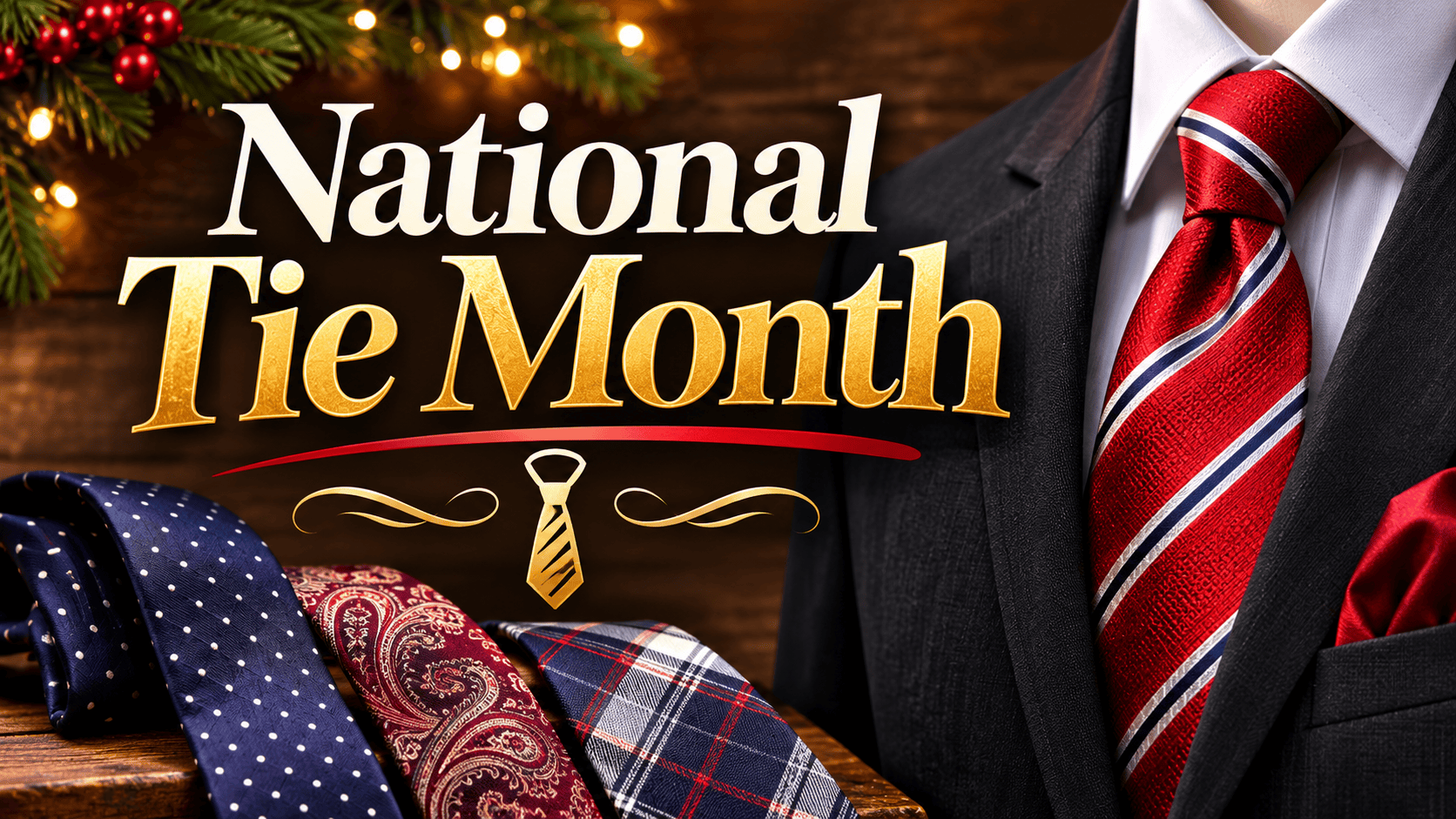
Every December, National Tie Month celebrates one of the most recognizable accessories in men’s fashion: the necktie. Whether worn for business meetings, weddings, religious services, holiday celebrations, or special occasions, ties have long represented professionalism, elegance, individuality, and personal style.
While fashion trends constantly change, the necktie remains a classic accessory that can transform an ordinary outfit into something polished and memorable. From traditional silk ties to colorful holiday patterns, neckties offer countless ways to express personality while maintaining a sense of sophistication.
National Tie Month is an opportunity to appreciate the history of neckties, explore different styles, learn how to tie popular knots, and recognize the role this simple accessory has played in fashion and culture for centuries.
When Is National Tie Month Celebrated?
National Tie Month is observed throughout December, making it especially fitting for the holiday season.
December is filled with occasions when people dress their best, including Christmas gatherings, office parties, formal dinners, weddings, and New Year’s Eve celebrations.
Neckties also make popular holiday gifts because they are practical, versatile, and available in nearly every imaginable color, fabric, and design.
Although the exact origins of National Tie Month are not well documented, the observance provides an opportunity to celebrate a fashion accessory that has remained relevant across generations.
The History of the Necktie
The history of the modern necktie stretches back hundreds of years, with its origins commonly traced to seventeenth-century Europe.
The Croatian Connection
During the Thirty Years’ War in the 1600s, Croatian soldiers serving in Europe wore distinctive pieces of cloth tied around their necks.
These neckcloths attracted attention in France, where they became fashionable among members of the aristocracy.
The French adopted a similar accessory known as the cravate, a word associated with the French term for Croatians.
Over time, the cravat evolved into different forms of neckwear, eventually influencing the development of the modern necktie.
Neckties in the Eighteenth and Nineteenth Centuries
During the eighteenth century, elaborate neckcloths and cravats became important elements of fashionable men’s clothing.
Wealthy gentlemen often wore carefully arranged neckwear made from fine fabrics, including silk and linen.
By the nineteenth century, neckwear had become more practical and recognizable.
As industrialization changed working life and clothing styles, men increasingly favored accessories that were easier to wear and suitable for business environments.
The four-in-hand necktie became especially popular because of its simple design and relatively easy knot.
The Modern Necktie Emerges
The modern necktie took shape during the early twentieth century.
In 1924, American tie maker Jesse Langsdorf patented a method of constructing neckties using fabric cut on the bias, helping ties maintain their shape and hang more naturally.
This construction technique influenced the neckties commonly worn today.
Throughout the twentieth century, ties became standard accessories in business, government, education, and formal social settings.
Although workplace dress codes have become more casual in recent decades, neckties continue to hold an important place in traditional and contemporary fashion.
Why Neckties Remain Popular
Neckties have survived centuries of changing fashion because they offer a combination of tradition, versatility, and personal expression.
A tie can communicate different messages depending on its color, pattern, fabric, and the occasion.
For example, a solid navy tie may create a professional appearance, while a bright patterned tie can suggest creativity and confidence.
Neckties also allow individuals to personalize otherwise simple clothing.
A white shirt and dark suit can look completely different depending on the tie selected.
For many people, wearing a tie is about more than fashion. It represents respect for an occasion, pride in personal appearance, or a connection to family traditions.
Popular Types of Neckties
Neckties come in several styles, each offering a different appearance and purpose.
1. Classic Necktie
The classic necktie is the most familiar style.
It features a long strip of fabric that is tied around the neck and hangs down the front of a shirt.
Classic ties are appropriate for business meetings, weddings, formal dinners, and many other occasions.
They are available in numerous widths, colors, and patterns.
2. Skinny Tie
Skinny ties are narrower than traditional neckties and are often associated with modern, minimalist fashion.
They became especially popular during certain periods of the twentieth century and have experienced several revivals.
Skinny ties often complement slim-fitting suits and contemporary clothing.
3. Bow Tie
The bow tie is a distinctive alternative to the traditional necktie.
It is commonly associated with tuxedos, formal celebrations, and black-tie events.
However, bow ties can also be worn casually with patterned shirts, sweaters, and creative outfits.
Bow ties are available in self-tie, pre-tied, and clip-on designs.
4. Knit Tie
Knit ties have a textured appearance that makes them slightly more casual than traditional silk ties.
They are often made from silk, cotton, wool, or synthetic fibers.
Many knit ties feature straight ends rather than pointed tips.
They work particularly well with casual blazers, sweaters, and business-casual outfits.
5. Novelty Tie
Novelty ties feature playful designs, unusual patterns, or themed decorations.
Popular examples include ties decorated with Christmas trees, snowflakes, animals, sports teams, musical instruments, and humorous messages.
These ties are especially popular during holidays and informal celebrations.
National Tie Month is an ideal time to wear a festive novelty tie.
Popular Necktie Knots Everyone Should Know
Learning how to tie a necktie is a useful skill that can last a lifetime.
Different knots create different appearances, and some work better with certain shirt collars or tie fabrics.
Four-in-Hand Knot
The four-in-hand knot is one of the simplest and most popular necktie knots.
It creates a slightly narrow, asymmetrical shape.
Because it requires relatively few steps, it is an excellent choice for beginners.
It also works well for everyday business attire.
Half-Windsor Knot
The half-Windsor knot creates a balanced, moderately sized triangular shape.
It is suitable for many professional and formal occasions.
This knot works particularly well with medium-width ties and standard dress-shirt collars.
Full Windsor Knot
The full Windsor knot produces a larger, symmetrical triangular shape.
It is often selected for formal occasions or when a more substantial knot is desired.
Because it uses more fabric than simpler knots, it generally works best with ties of suitable length and thickness.
Pratt Knot
The Pratt knot offers a neat, relatively symmetrical appearance without requiring an especially complicated tying process.
It is a versatile option for business and formal settings.
Experimenting with these knots during National Tie Month can help you discover which styles suit your wardrobe.
What Do Different Necktie Colors Represent?
Colors can influence the impression an outfit creates, although their meanings are not universal.
Here are several common associations.
Red ties: Often associated with confidence, energy, and boldness. They can create a strong visual statement.
Blue ties: Frequently connected with professionalism, reliability, and calmness. Navy blue is particularly popular in business settings.
Black ties: Commonly associated with elegance, sophistication, and formal occasions.
Green ties: Can suggest freshness, balance, and individuality. Dark green ties are especially attractive during the holiday season.
Purple ties: Often associated with creativity, distinction, and luxury.
Yellow ties: Can create a cheerful, optimistic appearance and add brightness to neutral clothing.
Patterned ties: Allow wearers to express personality through stripes, dots, paisley designs, geometric patterns, and other decorative elements.
The most important consideration is choosing a tie that complements the outfit and makes the wearer feel comfortable.
How to Choose the Perfect Necktie
Selecting the right necktie involves more than choosing an attractive color.
Several factors can influence how well a tie complements an outfit.
Consider the Occasion
Formal events generally call for more traditional fabrics, colors, and patterns.
Business meetings may favor understated designs, while holiday parties allow greater freedom to experiment.
A brightly decorated Christmas tie might be perfect for a family celebration but less appropriate for a conservative business presentation.
Match the Tie to the Shirt
Solid-colored shirts offer flexibility because they pair well with many tie patterns.
For example, a white dress shirt can complement nearly any tie color.
When wearing a patterned shirt, choosing a tie with a different pattern scale can help create visual balance.
Choose the Right Width
Tie width should generally complement the proportions of the wearer’s jacket, lapels, and body.
A tie that is extremely narrow or unusually wide may look out of place with certain suits.
Traditional medium-width ties remain versatile choices for many wardrobes.
Pay Attention to Fabric
Silk ties are popular because of their smooth texture and elegant appearance.
Wool ties offer warmth and texture, making them attractive during colder months.
Cotton and linen ties are often suitable for more relaxed or warm-weather outfits.
Knit ties provide another option for people who prefer a less formal appearance.
Check the Length
For a conventional look, the tip of a tied necktie should generally reach the belt line.
The correct length depends on the wearer’s height, body proportions, and chosen knot.
How to Celebrate National Tie Month
National Tie Month offers plenty of opportunities to have fun with fashion while appreciating the history of neckwear.
Here are ten ways to participate.
1. Wear a tie more often. Add a necktie to your outfit for work, dinner, church, or a special occasion.
2. Learn a new tie knot. Practice the Windsor, half-Windsor, Pratt, or four-in-hand knot.
3. Organize your tie collection. Sort ties by color, pattern, fabric, or occasion.
4. Give a tie as a gift. Choose a design that reflects someone’s interests or personality.
5. Wear a holiday-themed tie. Celebrate December with Christmas colors, snowflakes, or festive patterns.
6. Teach someone how to tie a tie. Share a useful skill with a child, teenager, friend, or family member.
7. Explore vintage neckties. Visit a thrift store or vintage clothing shop to discover classic designs.
8. Donate professional clothing. Give gently used ties and other business attire to organizations helping people prepare for employment.
9. Try a different style. Experiment with bow ties, knit ties, or patterns you would not normally wear.
10. Share the history of neckties. Use National Tie Month to introduce others to the fascinating origins of this familiar accessory.
Neckties as Meaningful Gifts
One reason National Tie Month fits naturally into December is the tradition of giving neckties as holiday presents.
A tie can be a thoughtful gift when selected with the recipient’s personality and interests in mind.
For someone who works in a professional environment, a high-quality silk tie may be a practical addition to their wardrobe.
For someone who enjoys humor, a novelty tie featuring a favorite hobby or holiday theme may be more appropriate.
Personalized ties can also carry sentimental meaning.
A tie worn at a wedding, graduation, anniversary, or important family celebration may become a treasured keepsake.
In some families, ties are passed down between generations, creating connections between parents, children, and grandparents.
These personal associations can make an ordinary accessory much more meaningful.
The Role of Neckties in Professional Fashion
For much of the twentieth century, neckties were considered essential elements of professional men’s clothing.
Business executives, bankers, attorneys, teachers, and government officials commonly wore ties as part of their everyday attire.
Today, many workplaces have adopted more relaxed dress codes.
Technology companies, creative businesses, and other organizations may allow employees to wear casual clothing rather than traditional suits and ties.
Nevertheless, neckties continue to appear in professional environments where formal presentation remains important.
They are also frequently worn during job interviews, conferences, ceremonies, and significant business events.
The decision to wear a tie often depends on workplace culture, industry expectations, and personal preference.
Neckties in Popular Culture
Neckties have also played a memorable role in movies, television, literature, and popular culture.
Certain characters are instantly recognizable because of their distinctive neckwear.
Brightly colored ties, unusual patterns, and signature bow ties can become important parts of a character’s identity.
In comedy, exaggerated or humorous ties often help establish personality.
In dramatic settings, carefully selected neckwear can reinforce a character’s authority, sophistication, or attention to detail.
Neckties have also appeared in fashion movements that challenge traditional expectations.
Musicians, artists, and designers have frequently reimagined ties as accessories for people of different genders and personal styles.
This flexibility has helped neckwear remain culturally relevant even as fashion conventions have changed.
How to Properly Care for Neckties
Proper care can help extend the life of a favorite tie.
Unlike many everyday clothing items, neckties often require special attention because of their construction and delicate fabrics.
Untie your tie after wearing it. Leaving a tie knotted for long periods may create permanent creases.
Store ties carefully. Hanging or loosely rolling ties can help preserve their shape.
Avoid pulling knots too tightly. Excessive tension may damage delicate fabrics.
Address stains promptly. Follow the care instructions for the specific material rather than assuming every tie can be washed.
Use professional cleaning when appropriate. Some silk and specialty ties require careful treatment.
Keep ties away from excessive heat and moisture. Proper storage helps protect the fabric and internal structure.
A well-maintained tie can remain part of a wardrobe for many years.
Interesting Facts About Neckties
The necktie has a surprisingly rich history.
-
Modern necktie traditions are closely connected to Croatian neckcloths worn during the seventeenth century.
-
The word cravat has historical connections to the French name for Croatians.
-
Neckties have been made from silk, wool, cotton, linen, polyester, and numerous other materials.
-
Tie widths and patterns have changed dramatically across different fashion eras.
-
Bow ties remain traditional accessories for many formal black-tie occasions.
-
Some collectors seek rare, vintage, designer, or historically significant neckties.
-
Neckties have been used to express school affiliations, club membership, military traditions, and organizational identity.
-
Holiday-themed ties are particularly popular during December celebrations.
These details demonstrate how a relatively simple piece of fabric became an enduring symbol of fashion and tradition.
Why National Tie Month Matters
At first glance, National Tie Month might seem like a lighthearted celebration of an everyday fashion accessory.
However, neckties can represent much more than clothing.
For some people, wearing a tie symbolizes professionalism and pride in their appearance.
For others, it brings back memories of weddings, graduations, holidays, religious services, and important family occasions.
A father teaching his son how to tie a necktie can become a meaningful family memory.
A favorite tie belonging to a parent or grandparent may eventually become a treasured reminder of someone loved.
Even a simple holiday tie can represent years of family gatherings, laughter, and traditions.
These connections help explain why neckties continue to hold sentimental value despite changing fashion trends.
National Tie Month encourages people to appreciate both the practical and personal significance of this timeless accessory.
Frequently Asked Questions About National Tie Month
What month is National Tie Month?
National Tie Month is observed throughout December each year.
What is the purpose of National Tie Month?
The observance celebrates the history, fashion, versatility, and cultural significance of neckties.
Who invented the necktie?
The modern necktie developed over centuries rather than being invented by one person. Its historical roots are commonly associated with Croatian neckcloths worn during the seventeenth century.
What is the easiest necktie knot to learn?
The four-in-hand knot is generally considered one of the easiest knots for beginners because it requires relatively few steps.
Are neckties still fashionable?
Yes. Although casual clothing has become more common in many workplaces, neckties remain popular for formal events, professional occasions, weddings, and personal fashion.
Can women wear neckties?
Absolutely. Neckties can be worn by anyone and have appeared in women’s fashion for generations.
Why are neckties popular Christmas gifts?
Neckties are practical, available in many styles and price ranges, and can be selected to reflect the recipient’s personality or interests.
Final Thoughts: Celebrating National Tie Month
National Tie Month is a celebration of an accessory that has connected fashion, history, professionalism, and personal expression for centuries.
From the early cravats of Europe to the modern silk ties worn at weddings and business meetings, neckwear has continually adapted to changing styles while preserving its traditional appeal.
December provides the perfect opportunity to rediscover a favorite tie, experiment with a new knot, give a thoughtful gift, or share the history of this classic accessory.
But perhaps the most meaningful aspect of National Tie Month is recognizing that clothing can hold memories.
A tie worn for an important milestone, received from someone special, or passed down through a family can represent moments that remain meaningful long after the occasion has ended.
This December, celebrate National Tie Month by wearing your favorite tie with confidence, appreciating its history, and remembering that personal style is often about the memories and meaning behind what we wear.


Leave a Reply