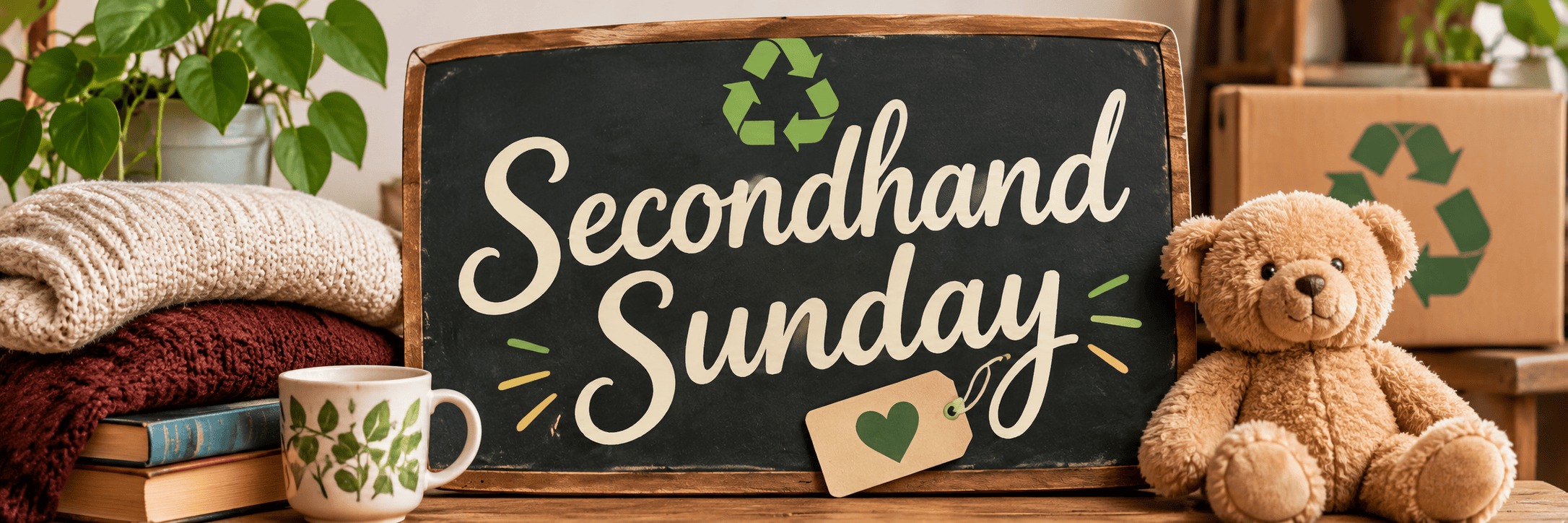
Secondhand Sunday is a celebration of sustainability, generosity, community, and the simple idea that something you no longer need could be exactly what someone else is looking for. Observed on the Sunday after Thanksgiving, this special day encourages people to give away, exchange, donate, and reuse secondhand items instead of automatically buying something new.
During a holiday shopping season often dominated by Black Friday and Cyber Monday, Secondhand Sunday offers a refreshing alternative. It reminds us that meaningful gifts, useful household items, and unexpected treasures do not always have to come with a brand-new price tag.
Whether you are cleaning out your closets, passing along children’s toys, donating furniture, or discovering something special at a thrift store, Secondhand Sunday provides an opportunity to reduce waste, save money, and strengthen connections within your community.
When Is Secondhand Sunday in 2026?
Secondhand Sunday falls on November 29, 2026, the Sunday immediately following Thanksgiving in the United States.
The observance takes place during one of the busiest shopping weekends of the year, providing an alternative to the traditional focus on purchasing new products.
Although Secondhand Sunday is celebrated on a particular date, its message extends throughout the year. Reusing, sharing, repairing, and donating everyday items can become habits that benefit households, communities, and the environment.
What Is Secondhand Sunday?
Secondhand Sunday is an annual initiative that encourages people to participate in the circular economy by keeping usable goods in circulation rather than allowing them to become waste.
Instead of throwing away clothing, furniture, electronics, books, toys, or household decorations, individuals are encouraged to find new owners for items that still have value.
The concept is simple: one person’s unwanted item may be another person’s treasure.
Secondhand Sunday encourages several meaningful activities, including donating gently used belongings, organizing neighborhood exchanges, shopping secondhand, giving pre-loved gifts, and supporting local thrift stores.
The goal is not to discourage every new purchase. Rather, it is to help people recognize that many products already exist and can continue serving a purpose long after their original owners no longer need them.
The History of Secondhand Sunday
Secondhand Sunday is a relatively recent addition to the holiday shopping calendar.
The modern initiative gained attention through efforts by the resale marketplace Poshmark, which introduced Secondhand Sunday in 2022 as a way to encourage secondhand shopping during the Thanksgiving holiday weekend.
The campaign promoted the idea that shoppers could participate in holiday gift-giving while reducing unnecessary consumption and supporting a more sustainable retail economy.
By placing the observance between Black Friday and Cyber Monday, the initiative created an opportunity to reconsider traditional holiday shopping habits.
Rather than focusing exclusively on discounts for new merchandise, Secondhand Sunday encourages shoppers to explore existing goods that may be affordable, unique, and environmentally responsible.
The observance also reflects a much older tradition.
For generations, families have passed clothing between siblings, donated furniture to neighbors, exchanged books, and handed down treasured belongings.
Thrift stores, flea markets, garage sales, and community donation programs existed long before Secondhand Sunday received its modern name.
The holiday brings renewed attention to these familiar practices and highlights their importance in a world increasingly concerned about waste and overconsumption.
Why Secondhand Sunday Matters
Secondhand Sunday is about more than finding bargains. It encourages a different way of thinking about ownership, consumption, and the value of everyday belongings.
1. Reducing Waste
Millions of usable products are discarded each year, including clothing, furniture, household goods, and electronics.
When people choose to donate or reuse items instead of throwing them away, they can help reduce the amount of material entering landfills.
Extending the useful life of products can also reduce demand for manufacturing replacements, although the environmental benefits depend on the type of product and whether a secondhand purchase truly replaces a new one.
2. Saving Money
Buying secondhand can make everyday necessities and holiday gifts more affordable.
Families working within limited budgets may find quality clothing, kitchen supplies, furniture, books, and toys at significantly lower prices than comparable new products.
Secondhand shopping can also help people stretch their holiday budgets without sacrificing thoughtful gift-giving.
3. Supporting Local Communities
Many thrift stores and donation centers support charitable organizations, employment programs, and community assistance initiatives.
Donating usable items can help organizations provide affordable goods or raise funds for important services.
Community exchanges also create opportunities for neighbors to help one another directly.
4. Encouraging Responsible Consumption
Secondhand Sunday encourages people to pause before purchasing something new.
It invites practical questions: Do I already own something that serves this purpose? Could I borrow it? Could I repair what I have? Is there a secondhand version available?
These small decisions can contribute to more thoughtful spending habits.
5. Giving Items a Second Life
A bookshelf that no longer fits one home might become an important addition to another.
Children’s clothing that has been outgrown may still have years of use remaining.
A collection of books gathering dust could inspire an entirely new generation of readers.
Secondhand Sunday recognizes that an item’s usefulness does not necessarily end when its first owner is finished with it.
10 Meaningful Ways to Celebrate Secondhand Sunday
Participating in Secondhand Sunday does not require spending money. In fact, some of the most meaningful activities involve generosity rather than shopping.
1. Donate Gently Used Clothing
Go through your closet and identify clothing that no longer fits or that you rarely wear.
Clean, wearable clothing can be donated to thrift stores, shelters, clothing closets, or community organizations that accept those items.
2. Organize a Neighborhood Swap
Invite friends, relatives, or neighbors to exchange items they no longer need.
Books, kitchen supplies, decorations, toys, and clothing are all possible exchange items.
Everyone has an opportunity to discover something useful without making a new purchase.
3. Shop at a Local Thrift Store
Visit a thrift shop, consignment store, or secondhand bookstore.
Look for practical necessities, unique gifts, vintage decorations, or items that can be repaired or restored.
4. Give a Thoughtful Secondhand Gift
A meaningful gift does not have to be brand-new.
A vintage cookbook for someone who loves cooking, a carefully selected book for an avid reader, or a collectible related to someone’s favorite hobby can make a memorable present.
Choose items in good condition and consider whether the recipient would appreciate receiving something pre-loved.
5. Donate Children’s Toys
Children often outgrow toys long before those toys lose their usefulness.
Sort through gently used toys and donate appropriate items to organizations that accept them.
Check for recalls, missing pieces, damage, and age-related safety concerns before passing toys along.
6. Pass Along Furniture
Furniture can often remain useful for decades when properly maintained.
Instead of discarding an unwanted table, chair, dresser, or bookshelf, consider offering it to someone who could use it.
7. Start a Community Free Table
With permission from the property owner or organizer, create a designated area where people can leave useful items for others to take.
Clearly explain which items are accepted and arrange for anything remaining to be collected afterward.
8. Repair Something Instead of Replacing It
A loose chair leg, missing button, or scratched piece of furniture does not always mean an item needs replacing.
Use Secondhand Sunday as motivation to repair something you already own.
9. Share Books With Others
Books are especially well suited for reuse.
Consider exchanging books with friends, donating them to a community organization, or participating in a neighborhood book-sharing program.
10. Teach Children About Reusing
Help children understand that an item’s value is not determined by whether it is new.
Encourage them to select toys or books they no longer use and discuss how those belongings might make someone else happy.
Secondhand Sunday and the Holiday Shopping Season
The timing of Secondhand Sunday is particularly meaningful.
Thanksgiving encourages gratitude, while Black Friday and Cyber Monday place significant attention on shopping and consumer spending.
Secondhand Sunday offers an opportunity to connect gratitude with generosity.
Instead of immediately thinking about what we need to purchase next, we can consider what we already have and how those belongings might benefit someone else.
This approach can also help reduce financial pressure during the holidays.
Families do not need to compete over expensive gifts or feel obligated to purchase everything new.
A carefully chosen secondhand present, handmade gift, or meaningful family keepsake may carry more emotional significance than an expensive product.
The value of a gift often comes from the thought behind it rather than the amount spent.
The Environmental Benefits of Buying Secondhand
Manufacturing new products typically requires raw materials, energy, water, transportation, and packaging.
Choosing secondhand products can extend their useful lives and, when those purchases replace new ones, reduce the demand for additional production.
Clothing provides an especially familiar example.
Producing textiles involves growing or manufacturing fibers, processing materials, dyeing fabrics, sewing garments, and transporting finished products.
Keeping usable clothing in circulation longer can help reduce the need for replacement garments.
Furniture presents another opportunity.
Many tables, chairs, cabinets, and bookshelves can be restored, refinished, or repaired instead of discarded.
Electronics may also be reused, although buyers should carefully evaluate their condition, safety, compatibility, and remaining lifespan.
The environmental impact of secondhand shopping is not identical for every product. Transportation, repairs, energy efficiency, and purchasing behavior all influence the outcome.
Nevertheless, extending product life and avoiding unnecessary waste are important principles of sustainable consumption.
How Secondhand Sunday Can Help Families Save Money
For households managing tight budgets, secondhand shopping can be an effective financial strategy.
Children frequently outgrow clothing, shoes, and recreational equipment. Purchasing appropriate secondhand alternatives may help families meet changing needs without repeatedly paying full retail prices.
College students and people moving into their first homes can often find affordable furniture, dishes, lamps, and other household essentials.
Holiday decorations, books, sporting equipment, and special-occasion clothing may also be available at lower prices.
However, saving money requires thoughtful shopping.
A low price does not automatically make an item a good purchase.
Before buying something secondhand, consider its condition, usefulness, expected lifespan, and whether you genuinely need it.
The greatest savings often come from avoiding unnecessary purchases altogether.
What Items Should You Avoid Buying Secondhand?
Although many products are excellent candidates for reuse, certain items require additional caution.
Used car seats should only be considered when their complete history is known, they have not been involved in a crash that requires replacement, and they meet all manufacturer and safety requirements.
Cribs and other infant sleep products should meet current safety standards and should not be subject to recalls.
Mattresses and upholstered furniture should be carefully inspected for pests, moisture damage, and sanitation concerns.
Electrical appliances should be checked for damaged cords, missing safety features, and other hazards.
Used helmets may have sustained damage that is not visible, making their protective performance uncertain.
Whenever possible, check product recalls and manufacturer recommendations before purchasing or donating safety-sensitive items.
Responsible reuse means ensuring that an item is not only affordable but also appropriate and safe for its next owner.
How to Organize a Secondhand Sunday Community Event
Community participation can make Secondhand Sunday especially rewarding.
A neighborhood exchange can be organized by a group of friends, a school, a community organization, or a local volunteer group.
Begin by selecting an accessible location and establishing clear guidelines about acceptable items.
Encourage participants to bring clean, functional belongings in reasonably good condition.
Arrange items by category so visitors can easily find clothing, books, toys, household supplies, and decorations.
Volunteers can help organize donations, answer questions, and maintain a welcoming environment.
Consider partnering with a local charitable organization that may be willing to accept suitable leftover items.
A successful event does not need to be large.
Even a small gathering where ten families exchange belongings can prevent usable products from being discarded and help participants find things they need.
The Emotional Value of Passing Things Along
Not every secondhand item is simply an object.
Some belongings carry memories of important moments, family traditions, friendships, and people we love.
A favorite book may remind someone of childhood. A piece of furniture may have been part of family gatherings for years. A holiday decoration may hold memories of celebrations shared with loved ones.
Passing these belongings to another person can sometimes provide comfort because the items continue to be appreciated and used.
At the same time, parting with meaningful possessions can be emotionally difficult.
There is no obligation to donate something simply because it is no longer used regularly.
Some belongings deserve to be kept because of the memories they represent.
Secondhand Sunday is about making thoughtful choices, not pressuring people to give away possessions they treasure.
When someone does decide to pass along a meaningful item, sharing its story can make the gift even more special.
How to Make Secondhand Living a Year-Round Habit
The principles behind Secondhand Sunday can be practiced throughout the year.
Before purchasing something new, consider whether a secondhand alternative would meet your needs.
Before discarding something, ask whether it could be repaired, donated, exchanged, or offered to another person.
Create a designated donation box at home and periodically review belongings you no longer use.
Explore local thrift stores, community exchanges, and secondhand marketplaces when you need household essentials.
Encourage family members to care for their belongings so those items remain useful longer.
Most importantly, remember that sustainability does not require perfection.
Small, consistent decisions can be more realistic and meaningful than attempting to change every shopping habit overnight.
Interesting Facts About Secondhand Shopping
The practice of reusing and exchanging goods has existed for centuries, long before modern thrift stores and online resale platforms.
Vintage clothing and furniture often appeal to shoppers because they offer designs, craftsmanship, or styles that may be difficult to find in new products.
Secondhand bookstores allow individual copies of books to reach multiple readers over many years.
Many nonprofit thrift stores use revenue from donated merchandise to help fund charitable activities, although programs and practices vary by organization.
Repairing and reusing belongings are important parts of a circular economy, which aims to keep materials and products useful for as long as practical.
Secondhand shopping is not limited to people seeking lower prices. It also attracts collectors, sustainability-minded consumers, vintage enthusiasts, and individuals looking for unique products.
The True Meaning of Secondhand Sunday
At its heart, Secondhand Sunday is about recognizing value where others might overlook it.
A used coat can still provide warmth.
An old book can still teach something new.
A dining table can still bring people together.
A toy can still make a child smile.
Something does not lose its purpose simply because it has already been owned.
This observance reminds us that generosity does not always require money, that sustainability can begin with everyday decisions, and that helping another person may be as simple as sharing something we no longer need.
In a world that frequently encourages us to replace, upgrade, and purchase more, Secondhand Sunday offers a different message.
Appreciate what you have. Take care of what you own. Share what you can. Recognize the possibilities in what already exists.
Final Thoughts: Celebrate Secondhand Sunday on November 29, 2026
Secondhand Sunday is an opportunity to make a positive difference through small, thoughtful actions.
Whether you donate a bag of clothing, purchase a secondhand holiday gift, organize a neighborhood exchange, or repair something instead of replacing it, your participation can help extend the life of useful belongings.
The day also encourages kindness, gratitude, and a greater appreciation for the resources already available to us.
You do not have to spend money to celebrate. Sometimes the most meaningful contribution is giving something useful to someone who needs it.
This Secondhand Sunday, remember that what no longer serves one person may become something valuable in another person’s life.
What is the most meaningful secondhand item you have ever received, purchased, or passed along to someone else?


Leave a Reply