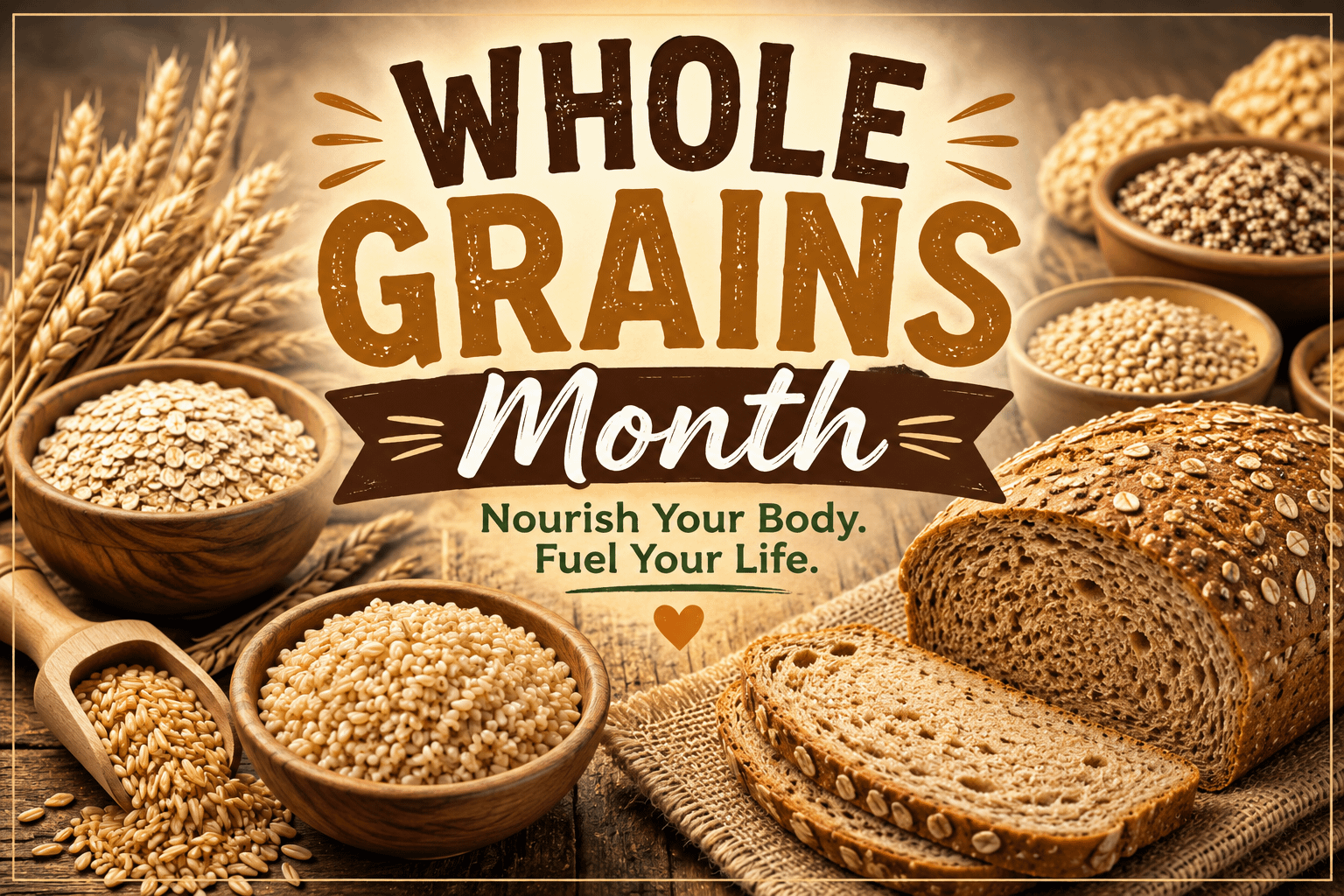
September is Whole Grains Month, a time dedicated to celebrating nutritious, flavorful, and versatile whole grains. From oatmeal at breakfast to brown rice at dinner, whole grains can be an easy addition to everyday meals.
Whole Grains Month is also an opportunity to learn what makes a grain “whole,” discover different varieties, and experiment with simple ways to incorporate more whole-grain foods into your routine.
What Are Whole Grains?
A whole grain contains all three major parts of the original grain kernel: the bran, germ, and endosperm.
The bran is the fiber-rich outer layer. The germ contains nutrients and is the part of the seed capable of producing a new plant. The endosperm is the largest portion and primarily contains carbohydrates along with some protein.
When grains are refined, portions of the bran and germ are removed. This can change the grain’s texture and shelf life, but it also removes some naturally occurring fiber and nutrients.
Whole grains retain the complete kernel, making them an important source of dietary fiber and a variety of nutrients.
Popular Whole Grains to Try
Whole grains aren’t limited to whole-wheat bread. There is a surprisingly large variety available, including:
- Whole wheat
- Oats and oatmeal
- Brown rice
- Barley
- Quinoa
- Bulgur
- Buckwheat
- Millet
- Sorghum
- Rye
- Wild rice
- Corn
- Farro
Each brings its own flavor and texture to the table. Some are chewy and hearty, while others are mild enough to blend easily into familiar recipes.
Whole Grains Month is a great excuse to choose one you’ve never tried before.
Why Whole Grains Matter
One of the biggest nutritional advantages of many whole-grain foods is their fiber content. Dietary fiber is an important part of a balanced eating pattern and can help support digestive health.
Whole grains can also provide nutrients such as B vitamins, iron, magnesium, and selenium, although the exact nutritional profile varies depending on the grain.
Because of their versatility, whole grains can fit into breakfast, lunch, dinner, snacks, and even desserts.
The goal doesn’t have to be completely changing the way you eat. Small substitutions can make incorporating whole grains much easier.
Simple Ways to Eat More Whole Grains
Start with foods you already enjoy.
Instead of white rice, occasionally prepare brown rice. Try whole-wheat bread for a sandwich. Make oatmeal for breakfast. Add barley to soup or use quinoa as the base of a grain bowl.
You could also mix whole and refined grains while adjusting to new flavors. For example, combine brown and white rice or mix whole-grain pasta with your usual pasta.
When shopping, read ingredient labels rather than relying entirely on the color or appearance of a product. A darker loaf of bread isn’t automatically whole grain. Look for ingredients such as whole wheat, whole oats, brown rice, or another clearly identified whole grain near the beginning of the ingredient list.
Start Your Morning With Whole Grains
Breakfast may be one of the easiest meals for adding whole grains.
A warm bowl of oatmeal can be topped with bananas, berries, apples, cinnamon, nuts, or seeds. Overnight oats offer a convenient alternative for busy mornings.
Whole-grain toast can become the foundation for eggs, avocado, nut butter, or fresh fruit.
You can even make pancakes, waffles, and muffins using whole-grain ingredients.
A few small changes can turn a familiar breakfast into an opportunity to enjoy more whole grains.
Build a Whole-Grain Lunch
Whole grains can make lunches hearty and satisfying.
Try a grain bowl made with brown rice, quinoa, barley, or farro. Add vegetables, beans, chicken, fish, tofu, or another favorite protein and finish it with a flavorful dressing.
Whole-grain tortillas can be used for wraps, while whole-grain bread provides an easy option for sandwiches.
Leftover grains from dinner can also become the beginning of the next day’s lunch, making meal preparation easier.
Bring Whole Grains to the Dinner Table
Whole grains can complement countless dinner recipes.
Brown rice works with stir-fries, chicken dishes, seafood, beans, curries, and vegetables. Barley can add texture to soups and stews. Quinoa works well in salads, stuffed vegetables, and bowls.
Whole-wheat pasta is another simple substitution for traditional refined pasta.
You don’t necessarily need a special “whole-grain recipe.” Often, you can simply replace one ingredient in a meal you already make.
Experiment With Different Flavors
Whole Grains Month can also be about culinary exploration.
Try a Mediterranean-inspired farro salad with tomatoes, cucumber, herbs, and feta. Prepare quinoa with roasted vegetables. Make barley mushroom soup. Experiment with buckwheat pancakes or cook brown rice with herbs and spices.
Whole grains aren’t meant to be boring.
Their nutty flavors and interesting textures can bring something completely different to everyday meals.
Make It a Family Challenge
Turn Whole Grains Month into a household challenge.
Choose a different whole grain to try each week during September. One week could feature oats, followed by brown rice, quinoa, and barley.
Let everyone help choose a recipe.
Children can participate by selecting toppings for oatmeal, helping assemble grain bowls, or choosing vegetables to add to a whole-grain dish.
By the end of the month, your family may discover a new favorite.
Don’t Forget About Snacks
Whole grains can make their way into snack time, too.
Popcorn is a whole grain when prepared from whole kernels. Whole-grain crackers, cereals, and homemade snack mixes can provide additional possibilities.
As with any packaged food, check the nutrition and ingredient labels since products marketed as containing whole grains can vary considerably in added sugar, sodium, and other ingredients.
Celebrate Whole Grains Month One Meal at a Time
Whole Grains Month doesn’t require a complete kitchen makeover.
Try oatmeal tomorrow morning. Choose whole-grain bread for your next sandwich. Make brown rice with dinner. Experiment with quinoa over the weekend.
Then try something completely unfamiliar.
Healthy eating habits are often built through small decisions repeated over time. Whole Grains Month provides a simple reminder that nutritious foods can also be flavorful, comforting, and incredibly versatile.
Whether you’re enjoying a warm bowl of oatmeal, a colorful quinoa salad, a hearty barley soup, or freshly popped popcorn, there are plenty of delicious ways to celebrate.
What is your favorite whole grain, and what is your favorite way to prepare it?
Leave a Reply