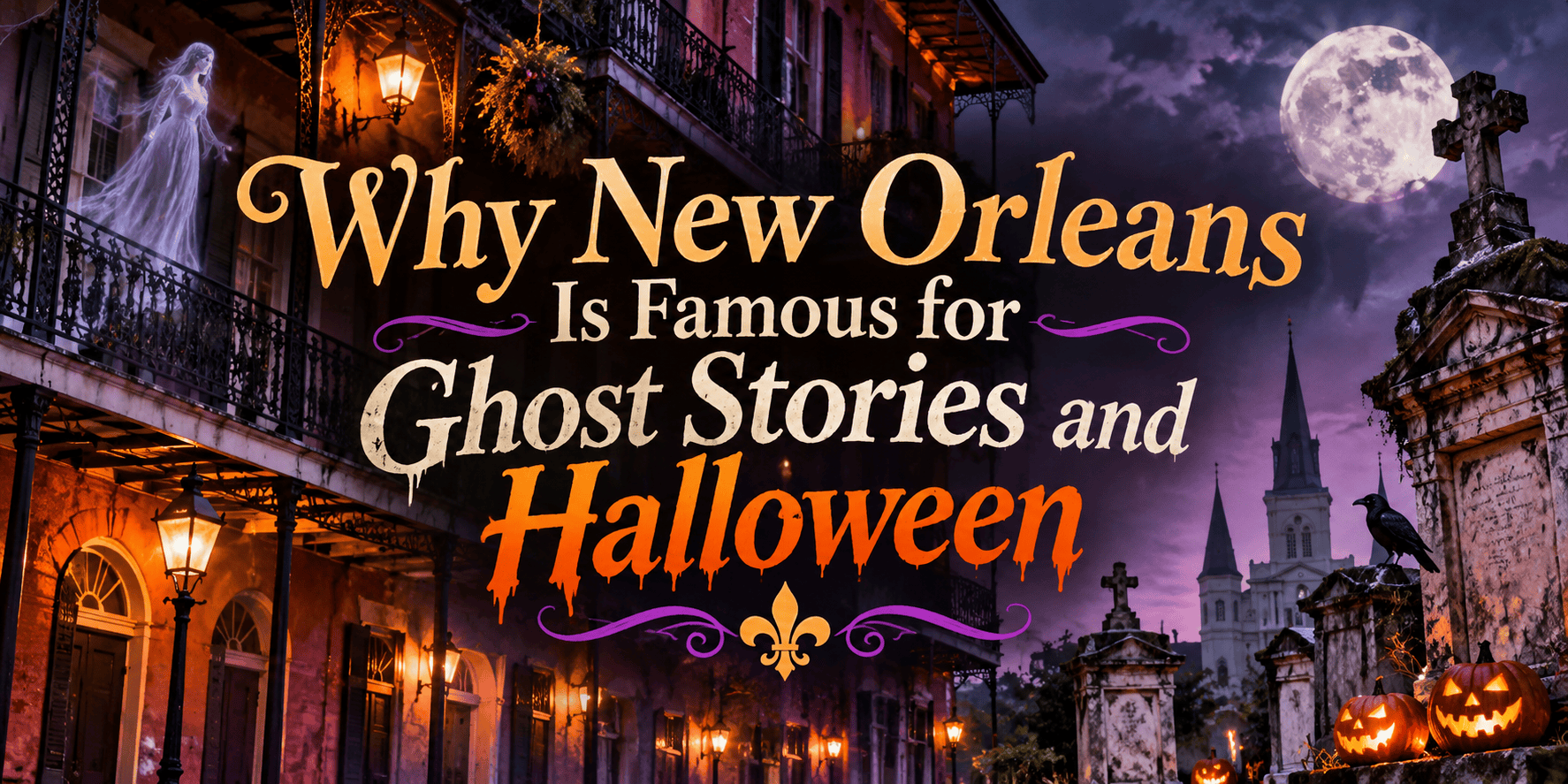
New Orleans, Louisiana, is one of the most mysterious and atmospheric cities in America. Known for its historic cemeteries, haunted mansions, voodoo traditions, ghostly legends, and centuries-old architecture, the city has earned a reputation as one of the most haunted destinations in the United States.
While many cities celebrate Halloween with costumes, haunted houses, and spooky decorations, New Orleans offers something different. Its supernatural reputation is deeply connected to its history, cultural traditions, religious practices, and generations of storytelling.
From the shadowy streets of the French Quarter to the above-ground tombs of its famous cemeteries, New Orleans has become a place where history and legend seem to exist side by side.
But why is New Orleans so famous for ghost stories and Halloween? The answer begins with its unusual past.
The Mysterious History of New Orleans
Founded by the French in 1718, New Orleans developed into a cultural crossroads influenced by French, Spanish, African, Caribbean, and later American traditions.
Throughout its history, the city experienced devastating fires, epidemics, hurricanes, slavery, warfare, and periods of significant social change.
These events left behind powerful stories of tragedy, survival, love, betrayal, and death.
During the eighteenth and nineteenth centuries, yellow fever outbreaks killed thousands of residents. Families sometimes lost multiple loved ones within a short period, and entire neighborhoods experienced widespread mourning.
The city’s history of suffering and resilience contributed to a rich tradition of supernatural storytelling.
As generations passed, stories about unexplained footsteps, mysterious figures, and spirits wandering through old buildings became part of New Orleans folklore.
Today, these legends are shared through books, ghost tours, local traditions, and Halloween celebrations.
Why the French Quarter Is Considered Haunted
The French Quarter is the historic heart of New Orleans and one of the city’s most famous destinations for ghost stories.
Its narrow streets, wrought-iron balconies, hidden courtyards, and centuries-old buildings create an atmosphere that feels almost untouched by time.
Many structures date to the eighteenth and nineteenth centuries, and some have been associated with stories of tragic deaths, unexplained noises, and mysterious apparitions.
Visitors walking along Royal Street, Bourbon Street, and nearby historic streets often encounter buildings with their own supernatural legends.
Some stories describe shadowy figures appearing in windows. Others involve footsteps echoing through empty hallways or strange sounds coming from locked rooms.
Although these accounts are part of local folklore rather than scientifically established paranormal events, they contribute to the French Quarter’s enduring reputation.
During Halloween, the neighborhood becomes especially lively as visitors gather for ghost tours, costume parties, and nighttime celebrations.
The Legend of the LaLaurie Mansion
One of the most notorious buildings associated with New Orleans ghost stories is the LaLaurie Mansion.
Located on Royal Street in the French Quarter, the mansion is connected to the disturbing history of Madame Delphine LaLaurie, a wealthy socialite who lived in New Orleans during the early nineteenth century.
In 1834, a fire at her residence exposed evidence of horrific abuse of enslaved people.
The discovery caused public outrage, and LaLaurie fled New Orleans.
Over time, the building became the subject of numerous supernatural legends.
Some stories claim that screams can be heard inside the mansion, while others describe unexplained movements and ghostly figures.
Many of the more sensational details associated with the mansion developed through later retellings and cannot be independently verified.
Nevertheless, the building remains one of the most recognizable locations on New Orleans ghost tours.
Its reputation demonstrates how historical tragedy can become intertwined with supernatural folklore.
Why New Orleans Has Above-Ground Cemeteries
One of the most recognizable features of New Orleans is its historic above-ground cemeteries.
Unlike many American burial grounds, where graves are located beneath the earth, several New Orleans cemeteries contain elaborate stone tombs, family vaults, and mausoleums.
These burial traditions developed through a combination of European cultural influences, local environmental conditions, and established religious practices.
The city’s high water table and challenging burial conditions helped make above-ground tombs a practical option in many locations.
Over time, these cemeteries became architectural landmarks.
Some of the most famous include St. Louis Cemetery No. 1, Lafayette Cemetery No. 1, and St. Louis Cemetery No. 2.
Rows of aging tombs, narrow pathways, and weathered monuments create a distinctive appearance.
Because of their unusual design, New Orleans cemeteries have frequently appeared in ghost stories, films, and television productions.
They are sometimes called “Cities of the Dead.”
During Halloween, their history and atmosphere attract particular interest from visitors fascinated by the supernatural.
However, these cemeteries are also sacred resting places that deserve respect, and access to some is restricted.
The Legend of Marie Laveau, the Voodoo Queen
Few historical figures are more closely associated with the supernatural reputation of New Orleans than Marie Laveau.
Born around the beginning of the nineteenth century, Laveau became one of the city’s best-known practitioners of Louisiana Voodoo.
She was also known for her connections within the community and her role as a religious and spiritual figure.
Louisiana Voodoo developed through the interaction of West and Central African religious traditions, Catholic practices, and other cultural influences.
It is a spiritual tradition, not simply a collection of frightening rituals or supernatural entertainment.
However, popular books, movies, and ghost stories have often portrayed Voodoo through exaggerated or misleading stereotypes.
Following Laveau’s death in 1881, legends about her influence continued to grow.
Some stories claim that her spirit still watches over New Orleans.
Others describe visitors seeking blessings or favors at the tomb traditionally associated with her in St. Louis Cemetery No. 1.
Although these supernatural claims are folklore, Marie Laveau remains an important figure in the city’s cultural and religious history.
Her story contributes to the mysterious image of New Orleans while also reflecting the city’s complex African American heritage.
The Ghost Stories of the Old Ursuline Convent
The Old Ursuline Convent is among the oldest surviving buildings in New Orleans.
Completed in the eighteenth century, the convent is associated with the city’s early Catholic history.
Over the years, supernatural legends developed around the building.
One of the best-known involves the mysterious “Casket Girls.”
According to popular folklore, young French women arrived in colonial Louisiana carrying unusual coffin-shaped trunks.
Later versions of the legend transformed these women into supernatural figures and connected their belongings to stories about vampires.
The historical inspiration came from women who traveled to French colonial Louisiana, sometimes carrying small luggage chests known as cassettes.
The vampire stories are later fictional embellishments rather than documented historical events.
Nevertheless, the legend has become a favorite subject of New Orleans supernatural tours.
The convent’s old architecture and association with the city’s colonial past make it an ideal setting for eerie storytelling.
Why Vampires Are Associated With New Orleans
Although vampires are traditionally connected with European folklore, New Orleans has become one of America’s most recognizable vampire-themed cities.
Its association with vampires grew through Gothic literature, popular fiction, and entertainment.
One major influence was author Anne Rice, whose novel Interview with the Vampire, published in 1976, helped establish New Orleans as an iconic setting for modern vampire stories.
Rice’s fictional vampires inhabited a world of historic mansions, dark streets, immortality, and supernatural mystery.
The city’s architecture and cultural atmosphere provided a memorable backdrop.
Over time, vampire-themed tours, shops, events, and Halloween attractions became part of New Orleans tourism.
Today, visitors can explore vampire legends alongside traditional ghost stories.
The connection is primarily literary and cultural, but it has become a major part of the city’s Halloween identity.
Why Ghost Tours Are So Popular in New Orleans
Ghost tours have become one of New Orleans’ signature tourist experiences.
These guided walks often take visitors through the French Quarter after sunset, stopping outside historic buildings and locations associated with supernatural legends.
Tour guides tell stories about haunted hotels, mysterious deaths, unsolved crimes, and historical tragedies.
Some tours focus on ghosts, while others explore vampires, cemeteries, or Louisiana Voodoo.
The popularity of these experiences comes from the combination of real history and dramatic storytelling.
Unlike temporary haunted attractions, New Orleans offers centuries-old locations that provide authentic historical settings.
Visitors can stand outside buildings where significant events actually occurred while hearing the legends that later developed around them.
Halloween brings additional interest, but ghost tours operate throughout much of the year.
This year-round fascination helps explain why New Orleans is widely recognized as a destination for supernatural tourism.
The Role of Jazz, Funeral Traditions, and Spirituality
New Orleans also has a distinctive relationship with death and remembrance.
One of its best-known cultural traditions is the jazz funeral.
Rooted in African American community practices and brass-band traditions, jazz funerals often combine solemn music, religious observance, and more celebratory music following the burial.
The tradition reflects a complex approach to mourning, remembrance, community, and honoring the deceased.
For some visitors, the city’s visible relationship with death adds to its mysterious reputation.
However, these funeral traditions are not Halloween performances or ghostly rituals.
They are meaningful cultural and spiritual practices.
Their presence helps distinguish New Orleans from places where death is discussed primarily through horror stories and seasonal entertainment.
In New Orleans, remembrance and celebration can exist together.
How Halloween Became a Major Celebration in New Orleans
Halloween fits naturally into New Orleans’ longstanding traditions of costumes, music, parades, and elaborate public celebrations.
The city is already famous for Mardi Gras, when residents and visitors embrace masquerade, artistic expression, and festive gatherings.
Halloween offers another opportunity for creativity.
During October, neighborhoods, entertainment venues, and local businesses host costume contests, themed parties, haunted attractions, and special events.
The French Quarter becomes a major gathering place for adults celebrating Halloween.
Elaborate costumes are particularly popular, with participants dressing as vampires, witches, ghosts, skeletons, historical figures, and characters from popular culture.
Some costumes are humorous, while others feature impressive theatrical makeup and intricate designs.
New Orleans’ established nightlife scene also contributes to the holiday’s popularity.
Music, restaurants, bars, and historic streets create a distinctive Halloween atmosphere.
The Krewe of Boo Halloween Parade
One of the city’s best-known Halloween traditions is the Krewe of Boo parade.
This Halloween-themed parade brings decorated floats, costumed participants, music, and festive crowds into the streets of New Orleans.
Its style draws inspiration from the city’s famous Mardi Gras parade culture.
Rather than focusing only on frightening imagery, the celebration combines spooky themes with the creativity and spectacle associated with New Orleans.
Parade participants often wear elaborate costumes, and decorated floats feature Halloween-inspired designs.
The event has helped establish Halloween as an important part of the city’s annual celebration calendar.
It also demonstrates how New Orleans blends its established cultural traditions with seasonal entertainment.
Haunted Hotels and Historic Buildings
New Orleans is home to numerous historic hotels, restaurants, and buildings associated with ghost legends.
Some are located in former residences, while others occupy structures that have served different purposes over the centuries.
The Bourbon Orleans Hotel, for example, is frequently mentioned in local ghost stories.
The building’s history includes its use as a ballroom and later as a convent and school.
Legends associated with the property describe mysterious figures and unexplained activity.
Other historic properties have developed similar reputations.
Stories of unusual sounds, moving objects, and apparitions are often shared by visitors and tour guides.
These accounts are difficult to verify, but they have become part of the city’s tourism identity.
The appeal comes partly from staying in or visiting a building with a long and sometimes dramatic history.
Why New Orleans Looks Like a City From a Ghost Story
Architecture plays an important role in New Orleans’ supernatural reputation.
Many American cities have replaced older structures with modern buildings, but New Orleans has preserved substantial portions of its historic neighborhoods.
The French Quarter contains narrow streets, enclosed courtyards, ornate balconies, and buildings with centuries of history.
At night, dim lighting and shadows can make these locations feel particularly mysterious.
Spanish colonial architecture, French influences, and nineteenth-century buildings contribute to the city’s distinctive visual identity.
Even without supernatural stories, these surroundings provide an atmosphere well suited to Gothic fiction and Halloween celebrations.
Old cemeteries, weathered statues, and historic churches add to the effect.
This combination of preserved architecture and storytelling helps make New Orleans memorable to visitors.
The Influence of Books, Movies, and Television
Popular entertainment has strengthened New Orleans’ reputation as a haunted city.
Writers and filmmakers frequently use the city as a setting for supernatural mysteries, vampire stories, and Gothic horror.
Anne Rice’s vampire novels were especially influential in connecting the city with modern vampire fiction.
Other productions have explored New Orleans through stories involving ghosts, witchcraft, mysterious families, and supernatural events.
The city’s distinctive architecture and cultural history make it visually recognizable.
As audiences encounter fictional versions of New Orleans, many become interested in visiting the real locations.
This creates a connection between entertainment, tourism, and local folklore.
Halloween provides an especially popular time to experience that atmosphere firsthand.
Is New Orleans Really One of the Most Haunted Cities in America?
New Orleans is frequently described as one of America’s most haunted cities.
However, there is no scientific method for ranking cities by the number of ghosts they contain, and supernatural activity has not been established through reliable scientific evidence.
Its haunted reputation is better understood through its history, architecture, folklore, and tourism culture.
The city has experienced centuries of dramatic events, and its residents have preserved many stories connected to those experiences.
Ghost tours and entertainment have introduced these legends to audiences around the world.
Whether visitors believe in ghosts or simply enjoy historical mysteries, New Orleans provides an unusually rich collection of stories.
Its reputation is therefore a cultural phenomenon rather than proof of paranormal activity.
Why Halloween in New Orleans Feels Different
Halloween in New Orleans is unlike Halloween in many other American cities.
Its appeal is not limited to haunted attractions or temporary decorations.
The city’s history, music, architecture, and storytelling traditions contribute to the atmosphere throughout the year.
Visitors can spend the afternoon exploring historic streets, learning about cemetery traditions, or discovering the history of Louisiana Voodoo.
After dark, they can join ghost tours, attend costume events, or experience the French Quarter’s nightlife.
The combination of historical landmarks and seasonal celebrations makes the experience distinctive.
For people who enjoy ghost stories, Halloween history, or Gothic settings, New Orleans offers a memorable destination.
The Lasting Connection Between New Orleans and the Supernatural
New Orleans’ connection to ghost stories has developed over generations.
Historical tragedies inspired stories that were passed down through families and communities.
Religious and spiritual traditions contributed to the city’s complex cultural identity.
Writers transformed its streets and buildings into settings for supernatural fiction.
Tourism introduced these legends to new audiences.
Halloween celebrations then brought many of these elements together through costumes, parades, storytelling, and entertainment.
The result is a city where supernatural folklore has become closely connected to local identity.
Although many of its ghost stories are legends rather than documented events, they remain an important part of how New Orleans is imagined and experienced.
Final Thoughts
New Orleans is famous for ghost stories and Halloween because few American cities combine such a distinctive history, preserved architecture, spiritual heritage, and tradition of storytelling.
Its haunted mansions, above-ground cemeteries, French Quarter legends, vampire fiction, and historic neighborhoods have helped create an enduring supernatural reputation.
At the same time, the city’s Halloween celebrations reflect its love of music, costumes, parades, and community gatherings.
What makes New Orleans especially fascinating is the way its documented history and imaginative folklore exist alongside one another.
Every old building has a past. Every cemetery contains generations of memories. Every legend offers another glimpse into the city’s cultural imagination.
Whether the ghosts are real or simply part of the stories people continue to tell, New Orleans has earned its place as one of America’s most famous destinations for Halloween and supernatural folklore.
Would you visit New Orleans during Halloween for its haunted history and ghost tours, or would you rather explore its mysterious streets during the quieter months of the year?
Leave a Reply