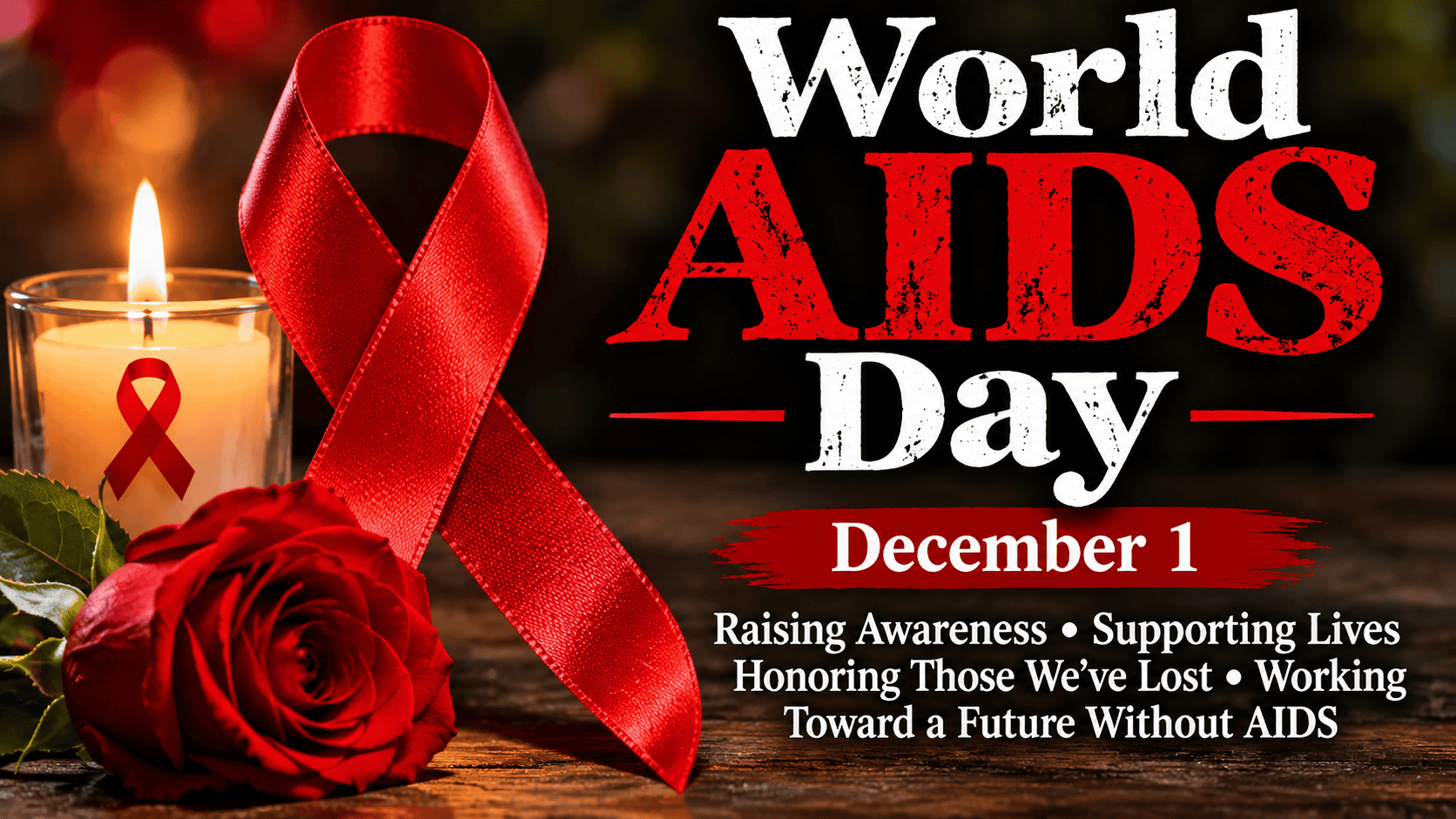
World AIDS Day is more than a date on the calendar. It is a reminder of the millions of lives affected by HIV, the progress made through medical research, and the work that remains to ensure everyone has access to prevention, treatment, education, and compassionate care.
For many families, this day carries deeply personal meaning. It represents loved ones who are no longer here, individuals who continue to live with HIV, and communities that have fought for decades against fear, discrimination, and misinformation.
It is also a day of hope.
Thanks to advances in medicine, HIV is no longer the diagnosis it once was. People living with HIV who receive effective treatment can live long, healthy lives. Yet awareness, early testing, prevention, and equal access to healthcare remain essential.
World AIDS Day reminds us that knowledge saves lives, compassion makes a difference, and no one should face HIV alone.
When Is World AIDS Day?
World AIDS Day is observed annually on December 1.
The observance began in 1988, making it one of the first international health awareness days dedicated to a global epidemic.
Since its establishment, World AIDS Day has helped bring attention to the medical, social, and emotional challenges associated with HIV and AIDS.
Each year, organizations, healthcare professionals, advocates, and communities organize events to promote education, encourage HIV testing, remember those who have died, and support people living with the virus.
Although December 1 provides an opportunity for global recognition, the mission behind World AIDS Day continues throughout the year.
The History of World AIDS Day
World AIDS Day was established in 1988 by James W. Bunn and Thomas Netter, public information officers working with the World Health Organization’s Global Programme on AIDS.
During the early years of the HIV/AIDS epidemic, misinformation and fear were widespread.
Many people did not understand how HIV was transmitted, effective treatments were not yet available, and individuals diagnosed with the virus frequently experienced severe discrimination.
Families lost loved ones, communities faced overwhelming grief, and healthcare systems struggled to respond to a rapidly growing public health crisis.
World AIDS Day was created to bring international attention to the epidemic and encourage governments, organizations, and individuals to take action.
Over the following decades, the observance became an important symbol of global solidarity.
Medical discoveries transformed HIV treatment, public education helped correct misconceptions, and advocacy movements fought for access to lifesaving medications.
Today, World AIDS Day continues to recognize this history while encouraging further progress toward ending AIDS as a public health threat.
Understanding the Difference Between HIV and AIDS
Although HIV and AIDS are often mentioned together, they are not the same condition.
What Is HIV?
HIV stands for Human Immunodeficiency Virus.
It attacks the immune system, particularly CD4 cells, which help the body fight infections.
Without treatment, HIV can gradually weaken the immune system and make a person more vulnerable to serious illnesses.
HIV is transmitted through certain bodily fluids, including blood, semen, vaginal fluids, rectal fluids, and breast milk.
Common transmission routes include sexual contact without effective prevention, sharing injection equipment, and transmission during pregnancy, childbirth, or breastfeeding when preventive measures are not used.
HIV is not transmitted through hugging, shaking hands, sharing meals, casual contact, or using the same bathroom.
What Is AIDS?
AIDS stands for Acquired Immunodeficiency Syndrome.
It is the most advanced stage of HIV infection, occurring when the immune system becomes severely damaged or certain serious infections or illnesses develop.
Not everyone living with HIV develops AIDS.
With early diagnosis, consistent medical care, and effective antiretroviral treatment, most people living with HIV can prevent the disease from progressing to AIDS.
Understanding this distinction helps reduce fear and encourages people to seek testing and treatment without shame.
Why World AIDS Day Is Important
World AIDS Day remains important because HIV continues to affect people and communities worldwide.
Despite tremendous medical progress, barriers to prevention and treatment still exist.
Some individuals lack affordable healthcare, while others avoid testing because they fear discrimination or judgment.
Misinformation can also prevent people from understanding how HIV spreads and how effectively it can be managed.
World AIDS Day addresses these challenges by promoting several important goals.
Raising Awareness
Education helps people understand HIV transmission, prevention, testing, and treatment.
Accurate information reduces unnecessary fear and encourages healthier decisions.
Encouraging HIV Testing
Many people living with HIV may not know they have the virus.
Testing allows individuals to understand their status and receive appropriate medical care.
Early diagnosis can improve long-term health outcomes and reduce the likelihood of transmission.
Fighting Stigma and Discrimination
People living with HIV deserve dignity, respect, and equal opportunities.
Stigma can create isolation and discourage individuals from seeking healthcare.
World AIDS Day encourages communities to replace judgment with understanding.
Remembering Those Who Have Died
Millions of people have died from AIDS-related illnesses since the epidemic began.
World AIDS Day provides an opportunity to honor their lives, recognize their contributions, and support the families and friends who continue to grieve.
Supporting Continued Research
Scientific research has transformed HIV from a frequently fatal infection into a manageable chronic condition for many people with access to treatment.
Continued research remains essential for improving prevention, developing new treatments, and pursuing a cure.
The Meaning Behind the Red Ribbon
One of the most recognizable symbols associated with World AIDS Day is the red ribbon.
The red ribbon represents awareness, compassion, remembrance, and solidarity with people living with HIV and those affected by AIDS.
It was created in 1991 by artists associated with the Visual AIDS Artists Caucus in New York.
The color red was chosen to symbolize love, passion, and the urgency of the epidemic.
Wearing a red ribbon is a simple but meaningful way to show support.
It communicates that people living with HIV should not be forgotten, judged, or excluded.
The ribbon also honors those who lost their lives during the epidemic and reminds us that the fight against HIV continues.
How HIV Treatment Has Changed Lives
One of the greatest achievements in the history of HIV research has been the development of antiretroviral therapy.
Antiretroviral therapy, commonly called ART, uses medications to prevent HIV from multiplying in the body.
When taken as prescribed, these medications can reduce the amount of virus in the blood to an undetectable level.
This allows the immune system to remain healthier and greatly reduces the risk of developing serious HIV-related illnesses.
An especially important scientific finding is known as Undetectable = Untransmittable, or U=U.
People living with HIV who maintain an undetectable viral load through effective treatment do not sexually transmit HIV to their partners.
This discovery has helped transform public understanding of HIV and has provided reassurance to individuals, couples, and families.
Although there is currently no widely available cure for HIV, modern treatments allow many people to pursue careers, build relationships, raise families, and enjoy long, fulfilling lives.
Access to these treatments remains one of the most important priorities in global HIV prevention and care.
HIV Prevention and the Importance of Education
Preventing HIV requires accurate information, accessible healthcare, and practical prevention strategies.
Several methods can significantly reduce the risk of transmission.
Regular HIV testing: Knowing your HIV status helps you make informed healthcare decisions.
Condom use: Using condoms correctly and consistently can reduce the risk of HIV and other sexually transmitted infections.
Pre-exposure prophylaxis (PrEP): PrEP is medication taken by HIV-negative individuals to reduce their risk of acquiring HIV.
Post-exposure prophylaxis (PEP): PEP is emergency medication that can help prevent HIV infection after a possible exposure. It must be started within 72 hours, and sooner is better.
Avoiding shared injection equipment: Using sterile needles and syringes helps prevent transmission through blood.
HIV treatment: Effective treatment protects the health of people living with HIV and prevents sexual transmission when viral suppression is maintained.
Education should be provided without fear, embarrassment, or judgment.
When individuals understand their options, they are better equipped to protect themselves and others.
Remembering Those Lost to AIDS
For many people, World AIDS Day is deeply connected to remembrance.
Behind every statistic is a person who had dreams, relationships, talents, and a life that mattered.
Some were parents. Others were children, siblings, partners, friends, artists, teachers, healthcare workers, and community leaders.
Their lives cannot be reduced to a diagnosis.
During the earliest years of the epidemic, countless families experienced devastating losses while also confronting social stigma and misunderstanding.
Some individuals died without receiving the compassion or medical care they deserved.
Others were separated from loved ones because of fear and discrimination.
World AIDS Day gives communities an opportunity to acknowledge these painful chapters of history.
Candlelight vigils, memorial services, storytelling events, and moments of silence help preserve the memories of those who have died.
Remembering is not simply about looking backward.
It is about recognizing the value of every life and ensuring that future generations understand the human cost of the epidemic.
Breaking the Stigma Surrounding HIV
One of the most persistent challenges surrounding HIV is stigma.
Despite decades of scientific progress, some people living with HIV still experience discrimination in workplaces, relationships, healthcare settings, and communities.
Stigma often develops from misinformation, fear, and outdated beliefs.
It can affect emotional well-being, discourage testing, and create barriers to medical treatment.
Reducing stigma begins with everyday actions.
Use respectful language when discussing HIV.
Avoid making assumptions about someone’s health or personal history.
Respect medical privacy.
Challenge misinformation when you encounter it.
Most importantly, remember that a person’s HIV status does not determine their character, worth, or ability to contribute to society.
Compassion should never depend on someone’s diagnosis.
Every individual deserves to be treated with humanity.
How to Observe World AIDS Day
There are many meaningful ways to participate in World AIDS Day, whether individually or as part of a community.
1. Wear a Red Ribbon
Wearing a red ribbon demonstrates solidarity with people living with HIV and honors those who have died from AIDS-related illnesses.
2. Learn About HIV and AIDS
Take time to understand the difference between HIV and AIDS, modern treatment options, and effective prevention methods.
Accurate knowledge helps challenge harmful myths.
3. Encourage HIV Testing
Promote the importance of routine testing and knowing one’s status.
Testing should be viewed as a responsible healthcare decision rather than something associated with shame.
4. Support HIV/AIDS Organizations
Consider supporting reputable organizations that provide education, testing, treatment assistance, research funding, and services for affected communities.
5. Attend a Community Event
Many communities organize educational programs, memorial gatherings, health fairs, and awareness campaigns.
Participating can help strengthen local support networks.
6. Remember Loved Ones
Light a candle, share a memory, or take a moment of silence for someone whose life was lost to AIDS-related illness.
Every life deserves remembrance.
7. Share Accurate Information
Use social media or personal conversations to promote facts about HIV prevention, treatment, and the importance of ending discrimination.
Even one informed conversation can make a difference.
The Role of Communities in Ending HIV
Ending the HIV epidemic requires more than medical discoveries.
It also requires communities willing to support people who face barriers to healthcare, education, and treatment.
Schools can promote age-appropriate health education.
Healthcare providers can create welcoming environments where patients feel comfortable asking questions and receiving care.
Families can offer understanding rather than judgment.
Employers can support fair treatment and protect employees from discrimination.
Faith communities and local organizations can provide emotional support, resources, and compassionate outreach.
When communities work together, they help create an environment where people are more likely to seek testing, begin treatment, and remain connected to care.
Public health progress becomes stronger when it is supported by human kindness.
Looking Toward a Future Without AIDS
The global response to HIV has achieved remarkable progress, but the work is not finished.
Scientists continue exploring new prevention methods, long-acting medications, vaccines, and potential cures.
Public health organizations continue working to expand testing and treatment, especially in underserved communities.
Advocates continue challenging laws, policies, and social attitudes that create barriers to care.
The goal of ending AIDS as a public health threat is ambitious, but continued scientific advances and equitable access to healthcare can bring the world closer to achieving it.
Success will require sustained investment, political commitment, education, and compassion.
It will also require recognizing that every person affected by HIV deserves access to lifesaving care.
A healthier future is possible when progress reaches everyone.
Frequently Asked Questions About World AIDS Day
When is World AIDS Day celebrated?
World AIDS Day is observed every year on December 1.
When was the first World AIDS Day?
The first World AIDS Day took place on December 1, 1988.
What color represents World AIDS Day?
Red is the official awareness color, represented by the red ribbon.
Can HIV be cured?
There is currently no widely available cure for HIV. Rare cases of remission or cure have occurred following specialized medical procedures, but these are not routine treatments. Effective medication can control HIV and allow people to live long, healthy lives.
Can people living with HIV have healthy relationships?
Yes. People living with HIV can have healthy relationships, marriages, and families. Effective treatment that maintains an undetectable viral load prevents sexual transmission of HIV.
Why is World AIDS Day still necessary?
World AIDS Day remains necessary because HIV continues to affect millions of people, and inequalities in prevention, treatment, and healthcare access persist.
What is the main message of World AIDS Day?
The central message is one of awareness, remembrance, prevention, solidarity, and commitment to ending HIV-related stigma and AIDS as a public health threat.
Final Thoughts: A Day of Remembrance, Compassion, and Hope
World AIDS Day reminds us that behind every diagnosis is a human being deserving of dignity, love, respect, and the opportunity to live a healthy life.
It is a day to honor those who have died, recognize the strength of people living with HIV, and appreciate the researchers, healthcare workers, advocates, and communities who continue working toward a better future.
The history of HIV/AIDS contains tremendous suffering, but it also tells a story of resilience, scientific progress, courage, and compassion.
Every conversation that replaces misinformation with truth matters.
Every effort to reduce stigma matters.
Every person who receives testing, treatment, and support matters.
And every life lost deserves to be remembered.
This December 1, let World AIDS Day be more than an observance. Let it be a reminder to lead with compassion, share knowledge, honor lives, and stand together for a future where HIV no longer creates preventable suffering or discrimination.
Because awareness creates understanding, understanding encourages compassion, and compassion helps build a world where no one is left behind.

Leave a Reply