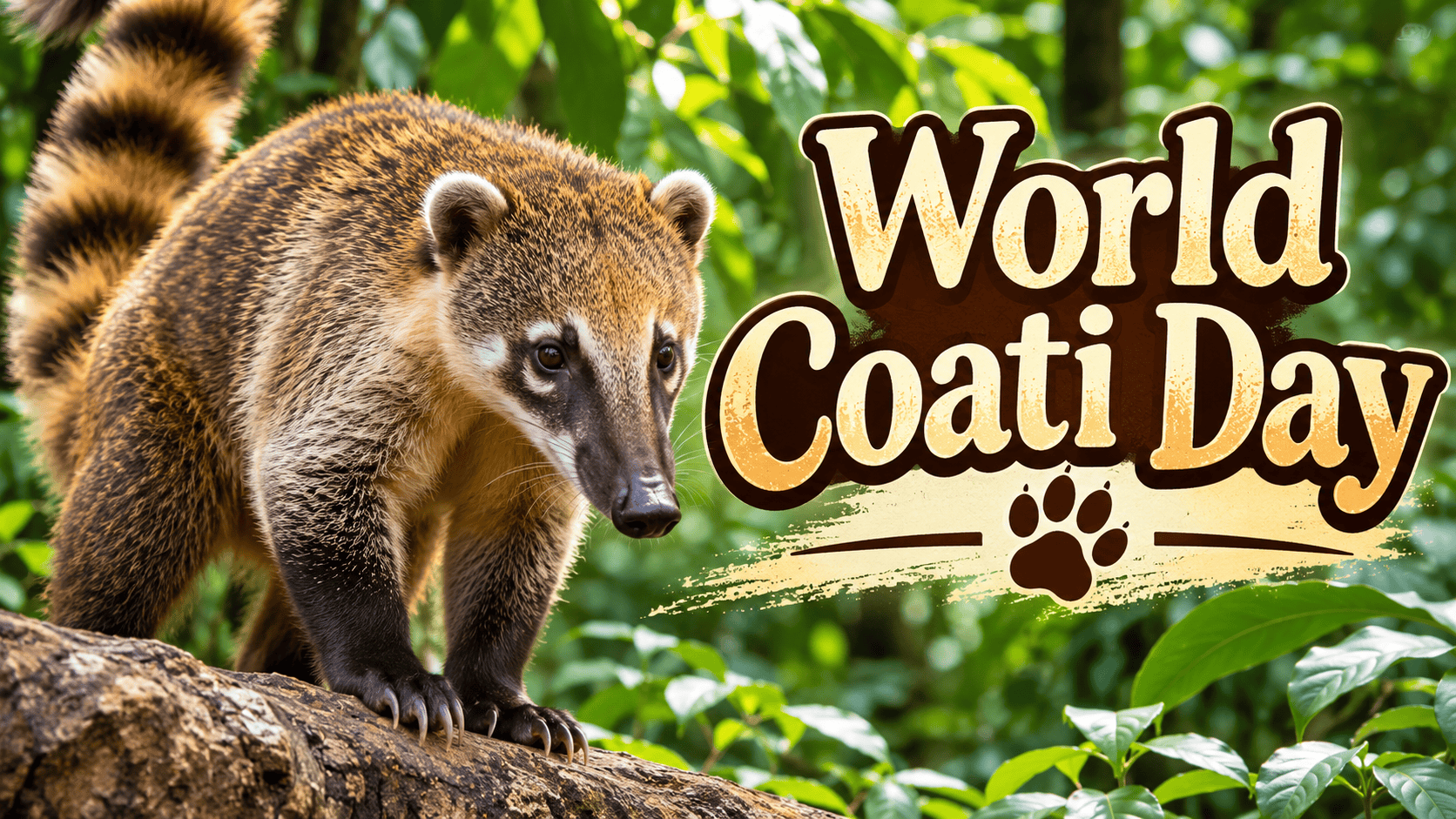
Every animal plays an important role in maintaining the balance of our planet’s ecosystems. Some animals receive worldwide attention because of their beauty, strength, or endangered status, while others quietly contribute to the natural world without receiving much recognition. World Coati Day is an opportunity to shine a spotlight on one of these remarkable creatures: the coati.
With their long, flexible noses, distinctive ringed tails, playful personalities, and impressive climbing abilities, coatis are among the most fascinating mammals found throughout the Americas. Although they resemble raccoons, coatis have their own unique characteristics, behaviors, and ecological importance.
World Coati Day encourages wildlife enthusiasts, conservationists, educators, and animal lovers to learn more about these intelligent mammals and the importance of protecting their natural habitats.
Whether you have encountered a coati in the wild, seen one at a wildlife sanctuary, or are discovering these animals for the first time, this celebration offers a wonderful opportunity to appreciate the diversity of life on Earth.
What Is World Coati Day?
World Coati Day is a wildlife awareness observance dedicated to celebrating coatis and encouraging greater understanding of their behavior, habitats, and conservation needs.
Coatis are often overlooked compared with more familiar wildlife species. However, they contribute to healthy ecosystems through their feeding habits, movements, and interactions with other animals.
The observance provides an opportunity to educate people about these unusual mammals while encouraging responsible wildlife appreciation.
World Coati Day also highlights the challenges that coatis face, including habitat destruction, road accidents, human-wildlife conflicts, and environmental changes.
By learning more about coatis, people can develop a greater appreciation for the importance of protecting wildlife and preserving biodiversity.
When Is World Coati Day Celebrated?
World Coati Day is commonly listed as being observed on December 3 each year.
The occasion focuses on wildlife education, habitat preservation, and appreciation for these curious members of the raccoon family.
Unlike major international observances established by organizations such as the United Nations, World Coati Day is a relatively informal awareness event. Its exact origins and founding organization are not widely documented.
Nevertheless, the occasion provides an opportunity for wildlife organizations, educators, and nature enthusiasts to introduce more people to these remarkable animals.
What Is a Coati?
A coati is a medium-sized mammal belonging to the family Procyonidae, which also includes raccoons, kinkajous, and several other related species.
Coatis are recognizable by their elongated snouts, sharp claws, long tails, and highly flexible bodies.
Their noses are particularly interesting because they can move in different directions, helping coatis investigate their surroundings and search for food.
Coatis are generally active during daylight hours, making them easier to observe than many nocturnal mammals.
They are also intelligent, adaptable animals capable of living in several different environments.
Physical Characteristics of Coatis
Coatis have several distinctive physical features that make them easy to recognize.
Long, flexible snouts: Their extended noses help them investigate soil, leaf litter, and other places where insects and small animals may be hiding.
Ringed tails: Many coatis have long tails marked with alternating dark and light bands. They frequently hold their tails upright while walking.
Strong claws: Their claws help them dig for food and climb trees.
Flexible ankles: Coatis can rotate their hind feet, allowing them to climb down trees headfirst.
Thick fur: Depending on the species, their coats may appear reddish-brown, gray, dark brown, or nearly black.
Expressive faces: Their pointed snouts, small rounded ears, and curious expressions give them a distinctive appearance.
Adult coatis commonly measure approximately 13 to 27 inches in body length, excluding their tails, although measurements vary by species.
Their tails can be nearly as long as their bodies.
Where Do Coatis Live?
Coatis are native to the Americas and inhabit a wide geographical range.
Different species can be found in Mexico, Central America, South America, and parts of the southwestern United States.
Their habitats include tropical rainforests, dry forests, mountain forests, scrublands, and other wooded environments.
Coatis are particularly adaptable and may occupy different elevations depending on the species and available resources.
Coatis in the United States
The white-nosed coati is the species most commonly associated with the United States.
These animals occur primarily in parts of Arizona and New Mexico, especially in suitable mountainous and wooded habitats near the Mexican border.
Their presence in the United States represents the northern edge of their broader geographical range.
Although sightings are uncommon in many areas, wildlife enthusiasts sometimes encounter coatis while hiking or exploring natural landscapes.
Anyone observing a coati in the wild should maintain a respectful distance and avoid feeding or disturbing the animal.
Different Types of Coatis
Several species of coatis exist, each with distinctive characteristics and geographical distributions.
1. White-Nosed Coati
The white-nosed coati is found primarily in Mexico, Central America, and the southwestern United States, with its range extending into northwestern South America.
It is recognizable by lighter markings around its nose and face.
White-nosed coatis are excellent climbers and spend considerable time searching for food on the ground.
2. South American Coati
The South American coati is widespread across much of South America.
It inhabits forests and other suitable environments and is known for its adaptable feeding behavior.
Like other coatis, it has a long snout and a tail that helps with balance and communication.
3. Mountain Coatis
Mountain coatis are smaller relatives that inhabit high-elevation forests in parts of the northern Andes.
They are generally less familiar to the public than white-nosed and South American coatis.
Mountain coatis are adapted to cooler mountainous environments and are sometimes classified separately from the larger coati species.
Their specialized habitats make them particularly vulnerable to environmental changes.
What Do Coatis Eat?
Coatis are omnivores, meaning they consume both plant and animal matter.
Their varied diet allows them to survive in environments where food availability changes throughout the year.
Common foods include:
-
Fruits and berries
-
Insects and insect larvae
-
Spiders and other invertebrates
-
Small reptiles
-
Eggs
-
Small vertebrates
-
Seeds and other plant materials
Coatis spend much of their active time searching for food.
Using their flexible noses and sharp claws, they investigate fallen leaves, rotting logs, and loose soil.
Their excellent sense of smell helps them locate hidden food sources.
By eating insects and dispersing seeds through their consumption of fruit, coatis contribute to the ecological processes that support healthy forests.
The Fascinating Social Lives of Coatis
One of the most interesting aspects of coati behavior is their social structure.
Female coatis and their young commonly live in groups known as bands.
These groups may contain several individuals or more than 20 animals, depending on the species, habitat, and available resources.
Living together provides several advantages.
Group members can help detect predators, share information about food sources, and provide social interaction.
Young coatis learn important survival skills by observing and interacting with other members of their group.
Adult males, however, generally lead more solitary lives outside the breeding season.
This difference between male and female social behavior makes coatis particularly interesting to wildlife researchers.
10 Fascinating Facts About Coatis
Coatis possess remarkable abilities that distinguish them from many other mammals.
1. Coatis Are Related to Raccoons
Although they look different, coatis and raccoons belong to the same mammalian family.
Both animals are intelligent, adaptable, and skilled at finding food in different environments.
2. Their Noses Are Extremely Flexible
A coati’s elongated snout can move while the animal investigates its surroundings.
This flexibility helps it locate insects and other food hidden beneath leaves or soil.
3. Coatis Can Climb Down Trees Headfirst
Unlike many mammals that struggle to descend trees, coatis have flexible ankle joints that allow their hind feet to rotate.
This adaptation makes them excellent climbers.
4. Their Tails Help Them Balance
Coatis use their long tails for balance while climbing and navigating uneven terrain.
They also frequently carry their tails upright while moving in groups.
5. Female Coatis Live in Social Groups
Female coatis and their offspring form social bands that help provide protection and opportunities for learning.
6. Adult Males Are Usually Solitary
Mature males typically spend much of their time alone, joining female groups primarily during the breeding season.
7. Coatis Are Mostly Active During the Day
Unlike many raccoons, coatis are primarily diurnal, meaning they are generally active during daylight hours.
8. They Have an Excellent Sense of Smell
Their sensitive noses help them discover insects, fruits, and other food sources.
9. Coatis Are Important Seed Dispersers
When coatis consume fruits, they can transport seeds away from parent plants, contributing to forest regeneration.
10. Coatis Are Curious and Intelligent
Their exploratory behavior and adaptability make them fascinating animals to observe and study.
Why Are Coatis Important to the Environment?
Coatis contribute to the health of ecosystems in several ways.
Their feeding habits influence insect populations, seed dispersal, and interactions among different wildlife species.
When coatis eat fruit and move through forests, they may spread seeds to new locations.
This process helps plants reproduce and contributes to forest regeneration.
Their consumption of insects and other small animals also influences local food webs.
Additionally, coatis serve as prey for larger predators, including jaguars, pumas, and certain large birds of prey.
These relationships demonstrate how even relatively unfamiliar animals contribute to the complex balance of nature.
Protecting coatis means protecting the ecological systems that depend on biodiversity.
Threats Facing Coatis
Although some coati species remain relatively widespread, they face several environmental challenges.
Habitat Loss
Deforestation, agricultural expansion, and urban development can reduce the natural habitats available to coatis.
As forests disappear or become fragmented, wildlife populations may struggle to find adequate food, shelter, and safe movement corridors.
Road Accidents
Roads passing through wildlife habitats create dangerous obstacles for coatis and many other animals.
Vehicle collisions can cause injuries and deaths, particularly in areas where natural habitats intersect with expanding communities.
Human-Wildlife Conflicts
Coatis sometimes approach human settlements, campsites, and tourist destinations in search of food.
When people feed wild coatis, the animals may become accustomed to human presence and begin approaching people more frequently.
This behavior can increase the risk of bites, injuries, and other conflicts.
Illegal Wildlife Trade
Wild animals may be captured for the exotic pet trade, creating welfare and conservation concerns.
Coatis have complex social, behavioral, and environmental needs that make them unsuitable as ordinary household pets.
Climate Change
Changes in temperature, rainfall, and vegetation can affect the habitats and food resources available to coatis.
Species occupying specialized environments, particularly mountain habitats, may face additional challenges as conditions change.
How to Celebrate World Coati Day
World Coati Day offers several meaningful ways to appreciate wildlife and encourage conservation.
Learn More About Coatis
Spend time researching the different species of coatis, their natural behaviors, and their ecological importance.
Understanding unfamiliar wildlife helps develop a broader appreciation for biodiversity.
Share Interesting Coati Facts
Introduce friends, family members, and social media followers to these remarkable mammals.
Sharing educational information can help more people understand why wildlife protection matters.
Support Wildlife Conservation
Consider supporting reputable organizations that protect forests, preserve wildlife habitats, and promote responsible conservation practices.
Habitat protection benefits coatis as well as countless other species.
Teach Children About Wildlife
World Coati Day provides an excellent opportunity for parents and educators to introduce children to lesser-known animals.
Activities might include wildlife research projects, animal drawings, educational discussions, or nature documentaries.
Practice Responsible Wildlife Tourism
If you visit an area where coatis live, observe them from a safe distance.
Never feed wild coatis or attempt to touch them.
Respecting their natural behavior helps protect both animals and people.
Protect Natural Habitats
Supporting habitat restoration, responsible land use, and environmental education can contribute to wildlife conservation.
Even small actions can encourage a greater appreciation for the natural world.
Can Coatis Be Kept as Pets?
Coatis may appear playful and appealing, but they are wild animals with specialized needs.
They require significant space, environmental enrichment, appropriate nutrition, and opportunities to express natural behaviors.
Their sharp claws and teeth can also cause serious injuries.
Coatis may become destructive or aggressive when stressed, frightened, or improperly housed.
Laws governing the ownership of coatis vary by location, and keeping them may be restricted or prohibited.
For these reasons, coatis are best appreciated in their natural habitats or through reputable wildlife conservation and educational facilities.
The Importance of Protecting Lesser-Known Wildlife
Conservation discussions often focus on familiar animals such as elephants, tigers, pandas, and whales.
While these species deserve protection, thousands of lesser-known animals also play essential roles in maintaining healthy ecosystems.
Coatis are an excellent example.
Their contributions to seed dispersal, food webs, and forest ecology may receive little public attention, yet they remain important parts of the environments they inhabit.
World Coati Day reminds us that protecting biodiversity requires looking beyond the most recognizable animals.
Every species contributes something unique to the natural world.
By learning about unfamiliar wildlife, people can develop a deeper understanding of how ecosystems function and why habitat conservation matters.
Frequently Asked Questions About World Coati Day
When is World Coati Day?
World Coati Day is commonly observed on December 3 each year.
What is the purpose of World Coati Day?
The occasion encourages awareness of coatis, their ecological importance, and the need to protect wildlife habitats.
Are coatis related to raccoons?
Yes. Coatis and raccoons belong to the family Procyonidae.
Are coatis dangerous?
Wild coatis generally prefer to avoid threatening encounters, but they can bite or scratch when frightened, cornered, or approached too closely.
Where can coatis be found?
Coatis inhabit parts of North, Central, and South America, depending on the species.
What do coatis eat?
Coatis are omnivores that consume fruits, insects, eggs, small animals, and other available foods.
Are coatis endangered?
Conservation status varies by species. Some coatis are relatively widespread, while certain mountain coatis face greater conservation concerns.
Why do coatis hold their tails upright?
Their upright tails can help group members remain visible to one another while moving through vegetation. Their tails also assist with balance.
Final Thoughts: Celebrating Wildlife on World Coati Day
World Coati Day is more than a celebration of an unusual and fascinating animal. It is a reminder of the incredible diversity of life that exists throughout our planet.
From their flexible noses and impressive climbing abilities to their complex social behaviors and ecological importance, coatis demonstrate how remarkable the natural world can be.
Although they may not receive the same attention as larger or more famous wildlife species, coatis deserve appreciation and protection.
Their survival depends on healthy habitats, responsible human behavior, and continued conservation efforts.
By learning about coatis, sharing knowledge, and supporting wildlife preservation, we can help create a future where these curious mammals continue to thrive.
This World Coati Day, take a moment to celebrate one of nature’s most curious creatures and remember that every animal, no matter how familiar or unfamiliar, has a place in the natural world.


Leave a Reply