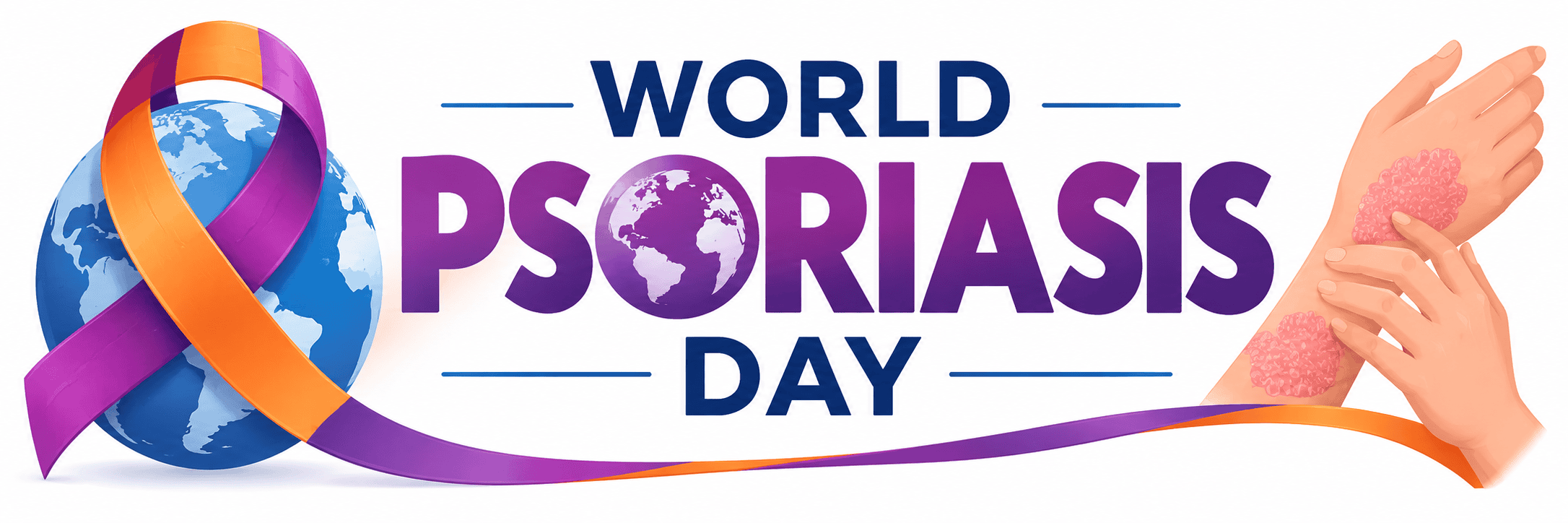
Every year on October 29, people around the world recognize World Psoriasis Day, an international observance dedicated to raising awareness about psoriasis, supporting those affected by the condition, and advocating for better healthcare, treatment, and understanding.
For millions of people, psoriasis is more than a visible skin condition. It is a lifelong inflammatory disease that can affect physical health, emotional well-being, relationships, confidence, and everyday activities.
World Psoriasis Day reminds us that no one should feel ashamed of their skin or face discrimination because of a medical condition they cannot control.
It is a day to educate, encourage compassion, challenge misconceptions, and remind people living with psoriasis that they deserve understanding, respect, and access to appropriate care.
When Is World Psoriasis Day?
World Psoriasis Day is observed annually on October 29.
The observance was established in 2004 through the efforts of the International Federation of Psoriasis Associations (IFPA) and the global psoriasis community.
Its purpose is to bring attention to psoriasis and psoriatic arthritis while encouraging governments, healthcare organizations, communities, and individuals to recognize the challenges associated with these conditions.
World Psoriasis Day also highlights the importance of research, early diagnosis, access to effective treatment, and improved quality of life.
Although awareness has increased over the years, misconceptions about psoriasis continue to affect people living with the disease.
Education remains one of the most powerful ways to change that.
What Is Psoriasis?
Psoriasis is a chronic, immune-mediated inflammatory disease that causes skin cells to build up more quickly than normal.
This accelerated process can produce thickened, inflamed patches of skin covered with scales. These patches may itch, burn, crack, or become painful.
Psoriasis can develop anywhere on the body, although it frequently affects the scalp, elbows, knees, lower back, hands, and feet.
The appearance of psoriasis varies depending on skin tone and the type of psoriasis involved.
On lighter skin, affected areas may appear pink or red with silvery-white scales. On darker skin, patches may appear violet, purple, brown, or darker than the surrounding skin.
One of the most important facts to understand is that psoriasis is not contagious.
You cannot catch psoriasis by touching someone, hugging them, shaking their hand, or sharing everyday spaces.
Despite this medical fact, people with psoriasis sometimes experience unnecessary avoidance, judgment, and social isolation.
World Psoriasis Day works to replace those misunderstandings with accurate information and compassion.
Understanding the Different Types of Psoriasis
Psoriasis does not affect everyone in the same way. Several types exist, and each can produce different symptoms and challenges.
Plaque Psoriasis
Plaque psoriasis is the most common form of the disease.
It produces raised, inflamed, scaly patches that may become itchy, dry, or painful.
These patches commonly develop on the elbows, knees, scalp, and lower back, although they can appear elsewhere.
Guttate Psoriasis
Guttate psoriasis often produces numerous small, drop-shaped spots across the skin.
It may appear suddenly, particularly in children and young adults, and can sometimes develop following infections such as strep throat.
Inverse Psoriasis
Inverse psoriasis affects areas where skin folds together, including the armpits, groin, and beneath the breasts.
Unlike plaque psoriasis, affected areas often appear smooth and inflamed rather than heavily scaled.
Friction and sweating may make symptoms worse.
Pustular Psoriasis
Pustular psoriasis causes pus-filled bumps that are not caused by an infection.
Some forms affect localized areas, while generalized pustular psoriasis can become a serious medical emergency requiring urgent treatment.
Erythrodermic Psoriasis
Erythrodermic psoriasis is a rare but potentially life-threatening form of the disease.
It can cause widespread inflammation, severe skin shedding, and problems regulating body temperature and fluid balance.
Immediate medical attention is necessary when this condition is suspected.
What Causes Psoriasis?
Psoriasis develops through a combination of immune-system activity, genetic susceptibility, and environmental influences.
Researchers have identified connections between psoriasis and inflammatory processes that cause skin cells to reproduce too rapidly.
Having family members with psoriasis can increase a person’s likelihood of developing the condition, although it can also occur without a known family history.
Certain factors may trigger symptoms or worsen existing psoriasis.
Common triggers include:
- Emotional or physical stress
- Certain infections
- Skin injuries, including cuts and sunburn
- Cold or dry weather
- Smoking
- Heavy alcohol consumption
- Certain medications
Not everyone experiences the same triggers, and psoriasis symptoms may change over time.
Understanding personal triggers can help individuals work with healthcare professionals to manage their condition more effectively.
Psoriasis Is More Than a Skin Condition
One of the central messages of World Psoriasis Day is that psoriasis affects much more than the surface of the skin.
For some individuals, symptoms are relatively mild. For others, psoriasis can interfere significantly with daily life.
Persistent itching may disrupt sleep. Painful cracks in the skin can make movement uncomfortable. Visible patches may affect confidence and social interactions.
People living with psoriasis may also experience periods when their symptoms improve, followed by unexpected flare-ups.
This unpredictability can make everyday planning difficult.
In addition, psoriasis is associated with certain other health conditions, including cardiovascular disease, metabolic conditions, and inflammatory arthritis.
These associations do not mean everyone with psoriasis will develop additional medical problems, but they highlight the importance of comprehensive healthcare.
The Connection Between Psoriasis and Psoriatic Arthritis
Psoriatic arthritis is an inflammatory condition that can affect some people living with psoriasis.
It may cause joint pain, stiffness, swelling, and fatigue.
The condition can affect fingers, toes, knees, ankles, the spine, and other joints.
Some people develop psoriasis before experiencing joint symptoms, while others develop arthritis first.
Early recognition is especially important because untreated psoriatic arthritis can lead to permanent joint damage.
People with psoriasis who experience persistent joint pain, swollen fingers or toes, or prolonged morning stiffness should discuss these symptoms with a healthcare professional.
World Psoriasis Day encourages greater awareness of this connection so individuals can seek evaluation and treatment before serious complications develop.
The Emotional Impact of Living With Psoriasis
The emotional effects of psoriasis are sometimes overlooked.
Visible skin conditions can attract unwanted attention, uncomfortable questions, and hurtful assumptions.
Some individuals become self-conscious about wearing certain clothing, swimming, participating in social activities, or entering relationships.
Others may feel frustrated when symptoms continue despite their efforts to manage them.
Living with a chronic condition can also create anxiety about future flare-ups, medical expenses, and treatment effectiveness.
Research has shown that people living with psoriasis experience increased rates of depression and anxiety.
These emotional challenges deserve the same compassion and attention as physical symptoms.
No one should be made to feel less attractive, less capable, or less worthy because of the appearance of their skin.
A person’s value is not determined by a medical diagnosis.
Why World Psoriasis Day Matters
World Psoriasis Day provides an opportunity to address problems that often remain hidden behind the visible symptoms of the disease.
Raising Public Awareness
Accurate education helps people understand that psoriasis is an immune-mediated condition rather than a consequence of poor hygiene.
Greater awareness can reduce fear, judgment, and misinformation.
Fighting Discrimination
People with psoriasis may encounter unfair treatment in workplaces, schools, relationships, and public settings.
World Psoriasis Day encourages communities to challenge discrimination and treat individuals with dignity.
Improving Access to Healthcare
Effective psoriasis treatment is not equally accessible everywhere.
Some individuals face high medication costs, limited specialist availability, or barriers to receiving advanced therapies.
Advocacy efforts seek to improve access to appropriate medical care.
Supporting Medical Research
Continued research helps scientists better understand the immune processes involved in psoriasis and develop new treatment options.
Medical advances have already improved disease management for many patients.
Encouraging Emotional Support
Living with a chronic condition can feel isolating.
World Psoriasis Day reminds people that support groups, healthcare professionals, friends, and family members can provide valuable encouragement.
How Is Psoriasis Treated?
Although there is currently no cure for psoriasis, several treatments can reduce symptoms, control inflammation, and improve quality of life.
Treatment depends on the type, severity, affected areas, medical history, and individual needs of each patient.
Topical treatments include medicated creams, ointments, and other products applied directly to affected skin. These may contain corticosteroids, vitamin D analogues, or other prescribed ingredients.
Phototherapy uses carefully controlled ultraviolet light under medical supervision to help manage inflammation and skin-cell growth.
Systemic medications work throughout the body and may be prescribed for moderate to severe disease.
Biologic therapies target specific immune pathways involved in psoriasis. These medications have significantly expanded treatment options for many people with more severe symptoms.
Treatment decisions should be made with qualified healthcare professionals because medications have different benefits, risks, and monitoring requirements.
Individuals should not discontinue prescribed treatment or make major medication changes without medical guidance.
Everyday Ways to Help Manage Psoriasis
Alongside medical treatment, certain daily habits may help people manage symptoms and improve comfort.
Keeping the skin moisturized can reduce dryness and help protect the skin barrier.
Gentle cleansing and avoiding harsh skincare products may also reduce irritation.
Managing stress through relaxation, exercise, adequate sleep, or enjoyable activities can be beneficial, particularly for individuals who notice stress-related flare-ups.
Avoiding smoking and limiting alcohol consumption may support overall health.
Protecting the skin from injuries and sunburn is also important because skin damage can trigger new psoriasis patches in some people.
Most importantly, individuals should remember that managing psoriasis is not about achieving perfect skin.
It is about improving comfort, reducing inflammation, protecting long-term health, and maintaining quality of life.
How to Support Someone Living With Psoriasis
Support does not always require grand gestures.
Sometimes the most meaningful thing a person can offer is understanding.
Avoid making assumptions about someone’s hygiene or health based on their appearance.
Do not stare at visible patches or ask intrusive questions.
If someone chooses to discuss their psoriasis, listen without judgment.
Recognize that chronic conditions can be exhausting, even when symptoms are not immediately visible.
Encourage loved ones to seek medical support when needed, but avoid offering unsolicited miracle cures or suggesting that their condition is simply the result of poor lifestyle choices.
Above all, treat people living with psoriasis the same way you would want to be treated.
Respect, kindness, and acceptance can make a meaningful difference.
How to Observe World Psoriasis Day
There are several meaningful ways individuals and communities can participate in World Psoriasis Day on October 29.
Learn about psoriasis. Take time to understand the symptoms, causes, and challenges associated with the disease.
Share accurate information. Help correct the misconception that psoriasis is contagious.
Support someone affected. Reach out to a friend or family member living with psoriasis and offer encouragement without judgment.
Raise awareness online. Share educational messages using hashtags such as #WorldPsoriasisDay and #PsoriasisAwareness.
Support advocacy organizations. Learn about groups working to improve treatment access, medical research, and patient rights.
Encourage early diagnosis. Remind people experiencing persistent skin symptoms or unexplained joint inflammation that medical evaluation can help.
Even a simple conversation can help challenge stigma and build understanding.
The Importance of Acceptance and Self-Confidence
For people living with psoriasis, learning to accept their condition can be an ongoing journey.
There may be days when symptoms are manageable and confidence comes naturally.
There may also be days when discomfort, frustration, or unwanted attention makes everyday life more difficult.
Both experiences are valid.
Having psoriasis does not make someone less beautiful, less deserving of love, or less capable of living a fulfilling life.
Skin conditions do not define personality, intelligence, kindness, strength, or character.
Self-acceptance does not mean pretending that psoriasis is easy.
It means recognizing that a chronic medical condition does not determine a person’s worth.
World Psoriasis Day offers an opportunity to celebrate resilience while acknowledging the genuine challenges people face.
A Message to Everyone Living With Psoriasis
If you are living with psoriasis, remember that you are more than your symptoms.
You are more than the patches on your skin, the treatments you require, or the difficult days you experience.
You deserve to feel comfortable in your own body.
You deserve relationships built on respect rather than judgment.
You deserve healthcare that takes both your physical symptoms and emotional well-being seriously.
And you deserve to participate fully in life without feeling that you must hide your skin from the world.
Your condition may be part of your story, but it does not define your entire story.
Final Thoughts: World Psoriasis Day Is About More Than Awareness
World Psoriasis Day, observed every October 29, reminds us that awareness is only the beginning.
True progress comes when education leads to understanding, understanding leads to compassion, and compassion leads to meaningful change.
For millions of people living with psoriasis, that change may mean better access to treatment, fewer misconceptions, stronger emotional support, or simply feeling comfortable being themselves.
Everyone has a role in creating a more informed and accepting world.
By challenging stigma, supporting research, and treating others with dignity, we can help ensure that people living with psoriasis are seen for who they are rather than the condition they have.
On World Psoriasis Day, let us remember one simple truth: A person’s skin does not define their worth, and no one should have to face a chronic illness without understanding, compassion, and support.
How can we help create a world where people living with visible health conditions feel accepted, respected, and supported every day of the year?


Leave a Reply