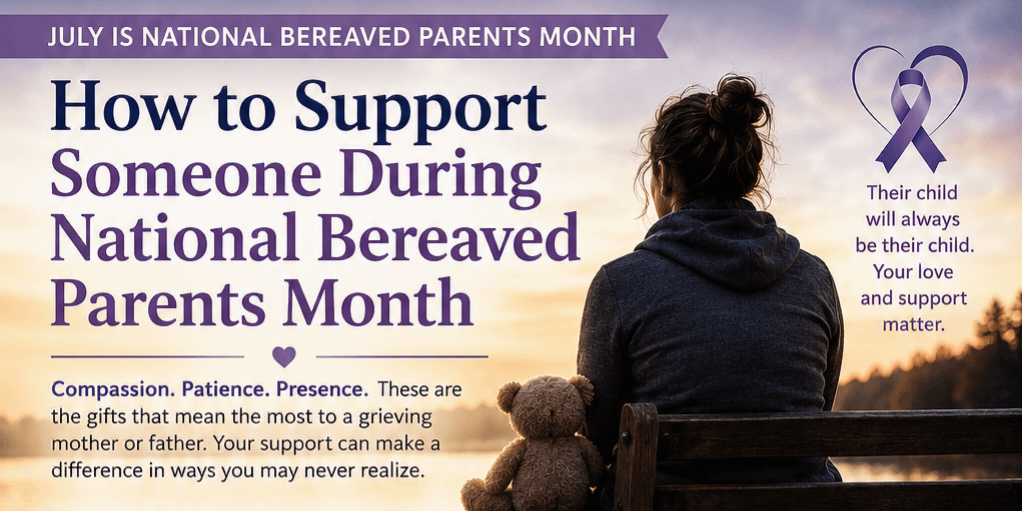
Every July, National Bereaved Parents Month shines a light on one of life’s most profound and often misunderstood losses—the death of a child. While awareness is important, what grieving parents need most is not simply recognition. They need compassion, patience, and people who are willing to walk beside them without trying to fix their pain.
There is no timeline for losing a son or daughter. Whether the loss happened weeks ago or decades ago, a bereaved parent carries that love and grief every single day. National Bereaved Parents Month offers all of us an opportunity to reach out, acknowledge their child, and remind them they are not alone.
Understanding the Reality of Child Loss
The death of a child changes every part of a parent’s life.
Dreams are altered.
Traditions feel incomplete.
Birthdays become bittersweet.
Holidays often bring more pain than celebration.
Many bereaved parents continue working, smiling, and helping others while carrying an invisible weight that few people ever truly see.
One of the greatest misconceptions about grief is that it eventually disappears. In reality, grief changes over time, but love never ends. Parents don’t “move on” from their children—they learn to move forward while carrying them in their hearts.
Why National Bereaved Parents Month Matters
This month serves several important purposes:
- Raises awareness about child loss.
- Encourages compassionate conversations.
- Educates others about the grieving process.
- Honors the lives of children who are deeply loved and deeply missed.
- Reminds bereaved parents they are seen.
Sometimes simply knowing someone remembers can provide comfort during an incredibly difficult journey.
The Best Ways to Support a Bereaved Parent
1. Say Their Child’s Name
Many people avoid mentioning the child because they fear causing sadness.
The truth is, parents are already thinking about their child.
Hearing their child’s name often brings comfort because it reminds them that others remember too.
Simple statements can mean everything:
- “I’ve been thinking about Paul today.”
- “I remember how much he loved helping people.”
- “She had such a beautiful smile.”
Love deserves to be remembered.
2. Don’t Avoid Them
Grieving parents often experience unexpected loneliness.
Friends disappear.
Conversations become awkward.
Invitations stop coming.
Sometimes people simply don’t know what to say, so they say nothing at all.
Presence is far more valuable than perfect words.
A simple message saying,
“I’m thinking about you today.”
can mean more than you realize.
3. Listen More Than You Speak
Many people instinctively try to solve grief.
They offer advice.
They compare losses.
They encourage parents to “stay strong.”
Instead, give them permission to talk.
Allow silence.
Allow tears.
Allow memories.
Sometimes listening is the greatest gift you can offer.
4. Avoid Harmful Phrases
Although usually well-intentioned, certain comments can deepen someone’s pain.
Avoid saying:
- “Everything happens for a reason.”
- “They’re in a better place.”
- “At least you have other children.”
- “You’ll get over it.”
- “You need to move on.”
Instead try:
- “I’m so sorry.”
- “I can’t imagine how hard this is.”
- “I’m here for you.”
- “You don’t have to go through this alone.”
Simple honesty is powerful.
5. Remember Important Dates
Grief intensifies around:
- Birthdays
- Angelversaries
- Holidays
- Mother’s Day
- Father’s Day
- Family celebrations
Mark these dates on your calendar.
Send a message.
Mail a card.
Drop off flowers.
These small gestures tell parents that their child has not been forgotten.
6. Offer Practical Help
Grief is emotionally exhausting.
Instead of saying:
“Let me know if you need anything.”
Offer something specific.
Examples include:
- Bringing dinner.
- Mowing the lawn.
- Walking the dog.
- Babysitting siblings.
- Running errands.
- Delivering groceries.
Practical support removes stress during overwhelming moments.
7. Respect Their Way of Grieving
Every parent grieves differently.
Some openly cry.
Some stay quiet.
Some volunteer.
Some write.
Some start foundations.
Some keep every belonging exactly where it was.
There is no right way.
Support should never come with expectations.
8. Keep Showing Up
Support often fades after the funeral.
Yet grief continues long afterward.
Check in months later.
Check in years later.
One text can remind someone they have not been forgotten.
Consistency speaks louder than grand gestures.
Supporting Fathers
Bereaved fathers are often overlooked.
Society frequently expects men to remain strong, provide stability, and suppress emotion.
Many fathers cry in private.
Many feel isolated because few people ask how they are doing.
During National Bereaved Parents Month, remember fathers too.
Ask how they are coping.
Invite them to talk.
Respect if they don’t.
Simply knowing someone cares can make a tremendous difference.
Supporting Mothers
Mothers often experience intense emotional, physical, and spiritual grief.
Many feel pressure to hide their pain so others will be comfortable.
Allow mothers to share memories.
Celebrate their child’s life.
Recognize that motherhood never ends, even after loss.
A mother whose child has died is still a mother.
If You Don’t Know What to Say
You don’t need perfect words.
Try these:
- “I’m thinking of you today.”
- “I remember your child.”
- “Would you like to tell me about them?”
- “I’m here whenever you need me.”
- “You are not alone.”
Sometimes the smallest sentence carries the greatest comfort.
Ways Communities Can Help
Churches, workplaces, schools, and organizations can also participate by:
- Hosting remembrance events.
- Sharing educational resources.
- Creating memory walls.
- Lighting candles in honor of children.
- Supporting local grief organizations.
- Encouraging conversations about child loss.
Awareness creates compassion.
Compassion creates healing.
What Bereaved Parents Often Wish Others Knew
Many grieving parents share similar hopes:
- Don’t forget our child.
- Don’t avoid us because you’re uncomfortable.
- Let us laugh without guilt.
- Let us cry without judgment.
- Don’t expect grief to have an expiration date.
- Continue remembering our child long after everyone else has moved on.
These wishes cost nothing to honor but mean everything to those living with loss.
A Final Thought
National Bereaved Parents Month is about more than awareness—it is about love that never ends.
Every bereaved parent carries two stories: one filled with unimaginable heartbreak and another filled with immeasurable love. Supporting them does not require perfect words or grand gestures. It requires kindness, patience, empathy, and the willingness to simply be present.
If someone in your life has lost a child, let this month be a reminder to reach out. Send a message. Share a memory. Say their child’s name. Offer your time. Listen without judgment.
You may never fully understand their pain, but your compassion can help lighten the burden they carry.
Because while grief may last a lifetime, no parent should have to walk that journey alone.
A Father’s Guide to Surviving the Loss of a Child
Leave a Reply