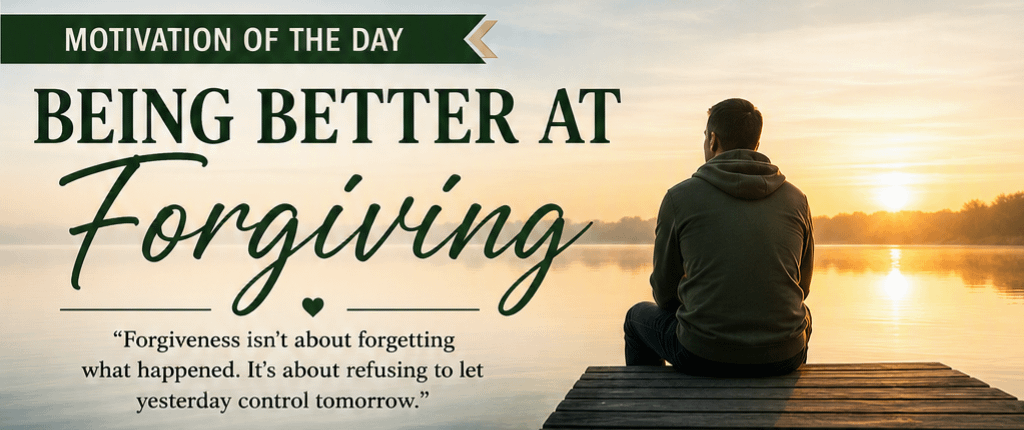
“Forgiveness isn’t about forgetting what happened. It’s about refusing to let yesterday control tomorrow.”
Forgiveness is one of the hardest things we are ever asked to do. When someone hurts us, betrays our trust, or causes lasting pain, every part of us wants justice, answers, or even revenge. Holding on to that pain can feel like a way of protecting ourselves from being hurt again.
But the truth is, unforgiveness often hurts us far more than the person who wronged us.
Learning to forgive doesn’t happen overnight. It is a decision we make again and again, sometimes every single day. It is a journey of choosing peace over bitterness and freedom over resentment.
What Forgiveness Really Means
Many people misunderstand forgiveness. They think forgiving someone means saying what they did was acceptable or pretending the hurt never happened.
It doesn’t.
Forgiveness means releasing the burden of carrying anger and resentment. It means refusing to allow someone else’s actions to continue stealing your joy, your peace, and your future.
You can forgive someone while still setting healthy boundaries. You can forgive without restoring a broken relationship. Forgiveness is about healing your heart—not excusing harmful behavior.
Why Forgiveness Is So Difficult
Pain leaves scars.
When we’ve been deeply hurt, our minds replay conversations, moments, and memories over and over. We ask ourselves:
- Why did this happen?
- Why me?
- Could I have prevented it?
- Will I ever trust again?
These questions are normal.
But if we stay trapped in them forever, we become prisoners of our own pain.
Forgiveness breaks those chains.
The Cost of Holding On
Bitterness feels powerful at first, but over time it becomes exhausting.
Unforgiveness can lead to:
- Constant anger
- Anxiety
- Depression
- Stress
- Broken relationships
- Difficulty trusting others
- Emotional exhaustion
Every day spent carrying resentment is another day spent carrying unnecessary weight.
Imagine walking around with a heavy backpack filled with rocks. At first you might manage it, but eventually it wears you down.
Forgiveness allows you to finally put the backpack down.
Forgiveness Is an Act of Strength
Some people believe forgiving makes them weak.
The opposite is true.
Anyone can stay angry.
It takes incredible courage to let go of bitterness.
It takes strength to say:
“I’m not going to let what happened define the rest of my life.”
Forgiveness isn’t surrender.
It’s victory.
Start with Yourself
One of the hardest people to forgive is often ourselves.
We replay mistakes.
We regret choices.
We carry guilt for years.
Maybe you wish you had said something differently.
Maybe you wish you had spent more time with someone you loved.
Maybe you blame yourself for things that were never within your control.
Healing begins when you extend the same grace to yourself that you would offer someone you love.
None of us are perfect.
We all make mistakes.
Learn from them—but don’t live inside them forever.
Forgiveness Doesn’t Erase the Lesson
Forgiving someone doesn’t mean becoming naïve.
Sometimes forgiveness teaches us wisdom.
It teaches us to recognize unhealthy behavior.
It teaches us to value honesty.
It teaches us stronger boundaries.
It teaches us who deserves access to our lives.
You can forgive while still protecting your peace.
Small Steps Lead to Big Healing
If forgiveness feels impossible today, don’t force it.
Take one small step.
Pray.
Talk to someone you trust.
Write your feelings down.
Allow yourself to grieve.
Healing rarely comes all at once.
It comes one decision at a time.
A Daily Choice
Forgiveness isn’t always a single moment.
Sometimes you’ll wake up tomorrow feeling angry again.
That’s okay.
Choose forgiveness again.
And the next day.
And the next.
Eventually what once controlled your life begins to lose its grip.
The Freedom Waiting on the Other Side
The greatest gift of forgiveness isn’t given to the other person.
It’s given to you.
You breathe easier.
You sleep better.
You smile more.
You begin living again.
Your past no longer owns your future.
That is freedom.
Today’s Challenge
Think of one person—or even yourself—that you’ve struggled to forgive.
You don’t have to solve everything today.
Simply make the decision to begin.
Say:
“I choose healing over hatred.”
“I choose peace over bitterness.”
“I choose freedom over resentment.”
Those words may be the first step toward changing your life.
Final Thoughts
Life is too short to spend it carrying yesterday’s pain into tomorrow’s opportunities.
Forgiveness doesn’t erase the past, but it does make room for a brighter future.
When you forgive, you reclaim your peace.
When you forgive, you grow stronger.
When you forgive, you choose hope.
And sometimes, the strongest thing you’ll ever do isn’t holding on—
It’s finally letting go.
Read More Of Inspiration & Motivation
Leave a Reply