Sometimes the reason you are not making progress is not because you are incapable of reaching your goal. It is not because you lack determination, talent, or strength. And it does not necessarily mean you should give up.
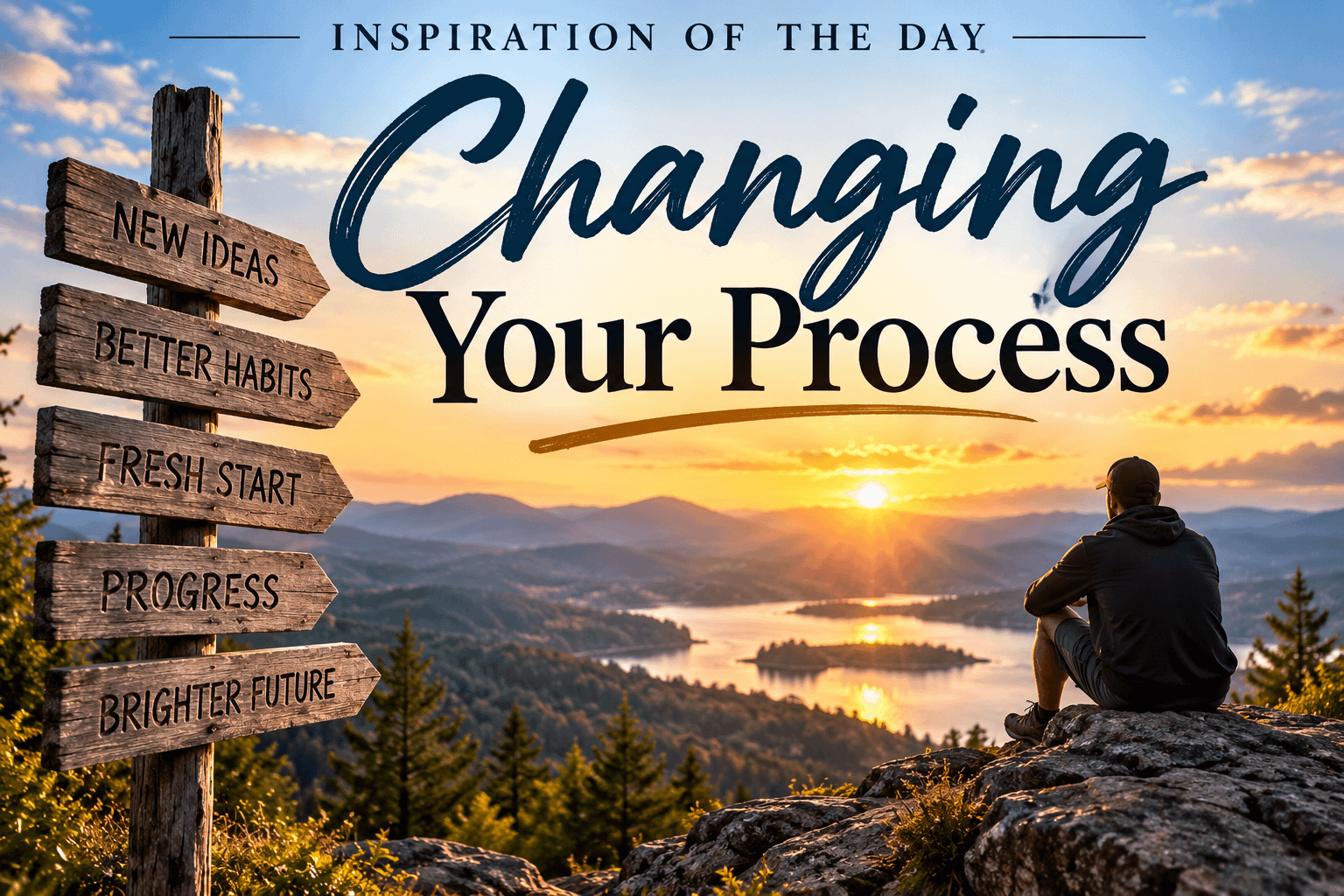
Sometimes, you simply need to change your process.
We often become so committed to the way we planned to accomplish something that we forget there may be another path. We tell ourselves that if we just work harder, push longer, or keep repeating the same routine, eventually everything will work.
Persistence matters. But persistence without reflection can leave you walking in circles.
There comes a point when you have to ask yourself an important question:
Is what I am doing actually moving me toward where I want to go?
If the answer is no, changing your approach is not failure.
It is growth.
Your Goal and Your Process Are Not the Same Thing
There is an important difference between giving up on a goal and changing how you pursue it.
Imagine you are driving somewhere and discover that the road ahead is closed. You would not sit there staring at the barricade because that was the road you originally planned to take.
You would find another route.
The destination has not changed.
Only the way you are getting there has changed.
Life works the same way.
You may have a dream for your career, relationships, health, finances, personal growth, creative work, or future. You may know exactly where you would like to be.
But the original path may not work.
That does not automatically mean the dream is impossible.
It might mean you need another route.
Stop Confusing Change With Failure
Many people remain stuck because changing direction feels like admitting they were wrong.
We become emotionally attached to our plans.
We think:
I already invested so much time into this.
I should have figured this out by now.
If I change direction, people might think I failed.
But staying committed to something that clearly is not working simply because you have already invested time in it can cost you even more time.
There is wisdom in being able to say:
This isn’t working. I’m going to try something different.
That sentence does not make you weak.
It means you are paying attention.
Some of the greatest breakthroughs in life happen after someone finally stops forcing an approach that isn’t producing results.
Pay Attention to What Life Is Teaching You
Every attempt teaches you something.
Even unsuccessful attempts contain information.
You learn what works.
You learn what doesn’t.
You discover your strengths.
You uncover weaknesses.
You recognize habits that are holding you back.
You begin understanding what deserves more of your attention and what deserves less.
Instead of viewing a setback as proof that you cannot succeed, ask:
What is this teaching me about my process?
Maybe you need more preparation.
Maybe you need additional knowledge.
Maybe you need help.
Maybe your schedule needs to change.
Maybe you are trying to accomplish too much at once.
Maybe you need better boundaries.
Maybe you need to stop comparing your progress with everyone else’s.
Maybe the goal needs to be broken into smaller pieces.
Or perhaps you have simply discovered one method that doesn’t work.
That knowledge has value.
Work Smarter, Not Just Harder
Hard work is important, but effort alone does not guarantee progress.
You can spend hours pushing against a locked door when an unlocked door is only a few feet away.
Sometimes we become proud of how hard we are working without asking whether our effort is being directed toward the right things.
Being exhausted is not the same as being productive.
Being busy is not the same as moving forward.
You don’t always need to do more.
Sometimes you need to do things differently.
Look at your daily routine.
Which actions actually produce results?
Which habits move you closer to your goals?
Which activities consume your time without giving much back?
Changing your process may mean eliminating unnecessary work rather than adding more.
Small Changes Can Create Big Results
Changing your process doesn’t always require completely rebuilding your life.
Sometimes one small adjustment changes everything.
Wake up thirty minutes earlier.
Write down tomorrow’s priorities before going to bed.
Turn your phone off while working.
Exercise for ten minutes instead of waiting until you have an hour.
Save a small amount consistently instead of waiting until you can save a large amount.
Ask someone for advice instead of struggling alone.
Spend twenty minutes learning something every day.
Break one overwhelming project into five manageable tasks.
Small changes may not look impressive at first.
But repeated consistently, they compound.
A tiny improvement today can become a completely different life over time.
Don’t Be Afraid to Start Again
Starting over can feel discouraging.
You might look at everything you have already done and wonder whether changing direction means all that work was wasted.
It wasn’t.
You are not starting again as the same person who began the first time.
You are starting with experience.
You know more now.
You have made mistakes and survived them.
You have learned lessons you could not have understood before trying.
You know what you don’t want.
You know what doesn’t work.
And hopefully, you understand yourself a little better.
Starting again with experience is very different from starting from nothing.
Your Process Should Grow With You
The process that worked for you five years ago may not work today.
Your life changes.
Your responsibilities change.
Your priorities change.
You change.
What once motivated you may no longer motivate you.
What once fit your schedule may now be unrealistic.
What once felt important may no longer matter.
That is normal.
Growth requires adjustment.
You are allowed to create a new routine for the person you are becoming rather than continuing to live according to a system created for the person you used to be.
Learn to Experiment
Instead of believing every decision has to be permanent, treat some changes like experiments.
Try a new routine for two weeks.
Test a different approach.
Change the order in which you complete your tasks.
Try working at a different time.
Ask for feedback.
Measure what happens.
Then adjust again.
This removes some of the pressure.
You don’t have to know the perfect process before beginning.
You simply need to find something slightly better than what isn’t working now.
Progress often comes through a cycle:
Try. Learn. Adjust. Repeat.
Eventually, those adjustments begin producing results.
Stop Comparing Your Process to Someone Else’s
One of the easiest ways to become discouraged is to compare your journey with someone else’s.
You see their results but rarely see everything behind them.
You don’t know how long they struggled.
You don’t know how many mistakes they made.
You don’t know what resources, opportunities, support, or circumstances they had.
Most importantly, their process was designed for their life—not yours.
You can learn from other people without copying everything they do.
Take what helps.
Leave what doesn’t.
Build a process that fits your circumstances, responsibilities, strengths, weaknesses, and goals.
Your path does not need to look like anyone else’s to be successful.
Give Yourself Permission to Change Your Mind
There is nothing wrong with realizing that something you once wanted is no longer right for you.
Sometimes changing your process eventually reveals that the destination itself needs reconsideration.
That is not always quitting.
Sometimes it is maturity.
We make decisions based on the person we are and the information we have at a particular moment.
Years later, we may see things differently.
You are allowed to grow beyond an old plan.
You are allowed to develop new dreams.
You are allowed to discover a different version of happiness.
You are allowed to say, “I thought this was what I wanted, but I’ve learned something different.”
Life is not a contract requiring you to remain exactly who you once were.
When Life Changes the Plan for You
Sometimes we choose to change our process.
Other times, life makes the choice for us.
Something happens that changes everything.
A relationship ends.
A job disappears.
A business struggles.
A dream falls apart.
Someone we love is no longer beside us.
The future we imagined suddenly becomes impossible.
Those moments can leave us standing in a life we never expected to live.
There may be no returning to the old plan.
That can be incredibly painful.
But eventually, survival asks us to begin creating another way forward.
Not because what happened didn’t matter.
Not because we forget the life we wanted.
But because we are still here.
Changing your process during those seasons may mean redefining progress entirely.
Some days, progress might mean accomplishing something big.
Other days, progress might simply mean getting out of bed, taking care of yourself, answering one message, going outside, praying, talking to someone, or making it through another difficult day.
Both count.
You Don’t Have to Have Everything Figured Out
We often delay change because we want guarantees.
We want to know:
What if the new approach doesn’t work either?
It might not.
But then you will learn something else.
Very few people discover the right path on their first attempt.
Life involves adjustments.
You move forward.
You discover something.
You change direction.
You learn.
You try again.
You become wiser.
And eventually you look behind you and realize that what once seemed like a series of wrong turns actually taught you how to find your way.
Keep the Vision, Change the Strategy
There are moments when you need to remind yourself why you started.
Maybe the dream still matters.
Maybe the destination is still worth reaching.
Maybe you simply need a better strategy.
Don’t abandon something meaningful only because your first plan didn’t work.
Change the schedule.
Change the routine.
Change the strategy.
Change your environment.
Ask for help.
Learn something new.
Slow down.
Simplify.
Start smaller.
Try again.
There are countless ways to move toward the same destination.
Today’s Inspiration
If you feel stuck today, don’t immediately assume you are failing.
Take an honest look at your process.
Ask yourself:
What is working?
What isn’t working?
What could I do differently?
Then change one thing.
You don’t have to transform your entire life today.
Just make one adjustment.
One better decision.
One different approach.
One small step in another direction.
Then see where it takes you.
You may discover that the breakthrough you have been waiting for doesn’t require you to work harder.
It requires you to work differently.
Remember:
Changing your process doesn’t mean abandoning your dream. Sometimes changing the process is exactly how you finally reach it.
What is one thing in your life that isn’t working right now—and what could you change about your process today?