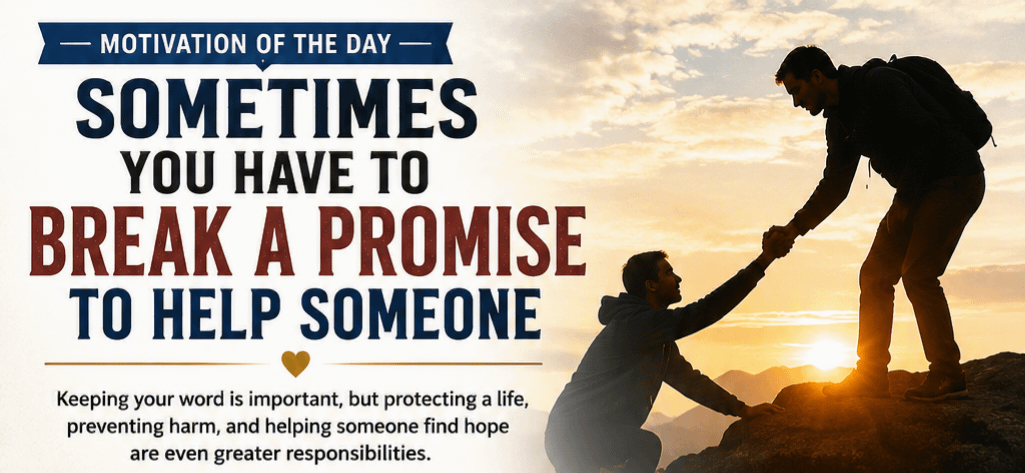
We grow up believing that a promise should never be broken. We are taught that our word is our bond and that integrity means doing exactly what we said we would do. Most of the time, that is true. Keeping your promises builds trust, strengthens relationships, and reflects good character.
But life is rarely black and white.
There are moments when keeping a promise may actually cause harm, while breaking it could save someone from pain, danger, or even death. In those rare situations, compassion should take precedence over pride. Sometimes, doing the right thing means breaking a promise because another person’s well-being matters more than keeping your word exactly as you gave it.
The Difference Between Loyalty and Blind Loyalty
Loyalty is one of the greatest qualities a person can possess. It means standing beside those you care about through difficult times. However, blind loyalty can become destructive when it prevents you from doing what is morally right.
Imagine someone asks you to promise never to tell anyone about their struggles. Later, you discover they are considering hurting themselves. Keeping that promise could have devastating consequences. Breaking it to get them help may feel like betrayal in the moment, but it is actually an act of love.
Sometimes true loyalty means protecting someone—even if they are angry with you afterward.
When Silence Causes Harm
People often ask others to keep painful secrets. Some secrets involve addiction, abuse, dangerous behavior, or serious mental health struggles.
If keeping a promise allows someone to continue suffering alone, it may no longer be a promise worth keeping.
Helping someone receive counseling, medical care, or support from trusted family members may require breaking your silence. While that decision is never easy, saving a life or preventing tragedy is far more important than protecting a secret.
The goal should never be to expose someone for embarrassment or gossip. The goal is to bring them toward healing.
Integrity Includes Doing What Is Right
Many people believe integrity means never changing your mind.
Real integrity is deeper than that.
Integrity means acting according to your values, even when the decision is difficult. If your values include kindness, compassion, justice, and protecting others, then there may be times when breaking a promise is actually the most ethical choice.
Ask yourself:
- Will keeping this promise hurt someone?
- Am I protecting a person or protecting a problem?
- Am I acting out of fear, or out of genuine concern for someone’s well-being?
- Would I regret staying silent if something terrible happened?
Those questions can help reveal the difference between selfishness and responsibility.
Courage Sometimes Looks Uncomfortable
Breaking a promise can damage a relationship in the short term.
The other person may become angry, disappointed, or feel betrayed. You may even question yourself afterward.
But courage is not choosing the easy path.
Courage is making the difficult decision when you know it is necessary. It is accepting that someone may misunderstand your motives today because you care about their future more than their temporary approval.
Years later, many people who were helped during their darkest moments admit they are grateful someone refused to keep a harmful secret.
Choose Compassion Over Comfort
There is a significant difference between breaking a promise for personal gain and breaking one to protect another person.
One is selfish.
The other is sacrificial.
Your motivation matters.
If your decision is rooted in genuine love, concern, and the desire to prevent harm, you are acting from compassion rather than convenience.
Sometimes helping someone requires risking your own reputation, your comfort, or even the relationship itself.
That sacrifice may be one of the greatest gifts you ever give.
Learn to Make Better Promises
One way to avoid impossible situations is to be careful before making promises.
Instead of saying:
“I promise I’ll never tell anyone.”
Consider saying:
“I’ll keep this private unless I believe you’re in danger or someone else could be harmed.”
That kind of promise is both honest and responsible. It protects trust while also leaving room to do what is right if circumstances change.
Motivation of the Day
Sometimes the hardest choices are the ones made out of love. Keeping your word is important, but protecting a life, preventing harm, and helping someone find hope are even greater responsibilities. If you are ever forced to choose between a promise and someone’s safety, choose compassion. A broken promise can often be repaired. A lost life or missed opportunity to help cannot.
Remember: H.E.L.P.
When you’re faced with a difficult promise, remember H.E.L.P.:
- H – Honor what is right, even when it is difficult.
- E – Encourage someone to seek the help they need.
- L – Love people enough to protect them, even if it costs you.
- P – Put their well-being before your comfort.
Sometimes the greatest act of integrity is having the courage to break a promise for the right reason.
Read More Of Inspiration & Motivation
Leave a Reply