Blog

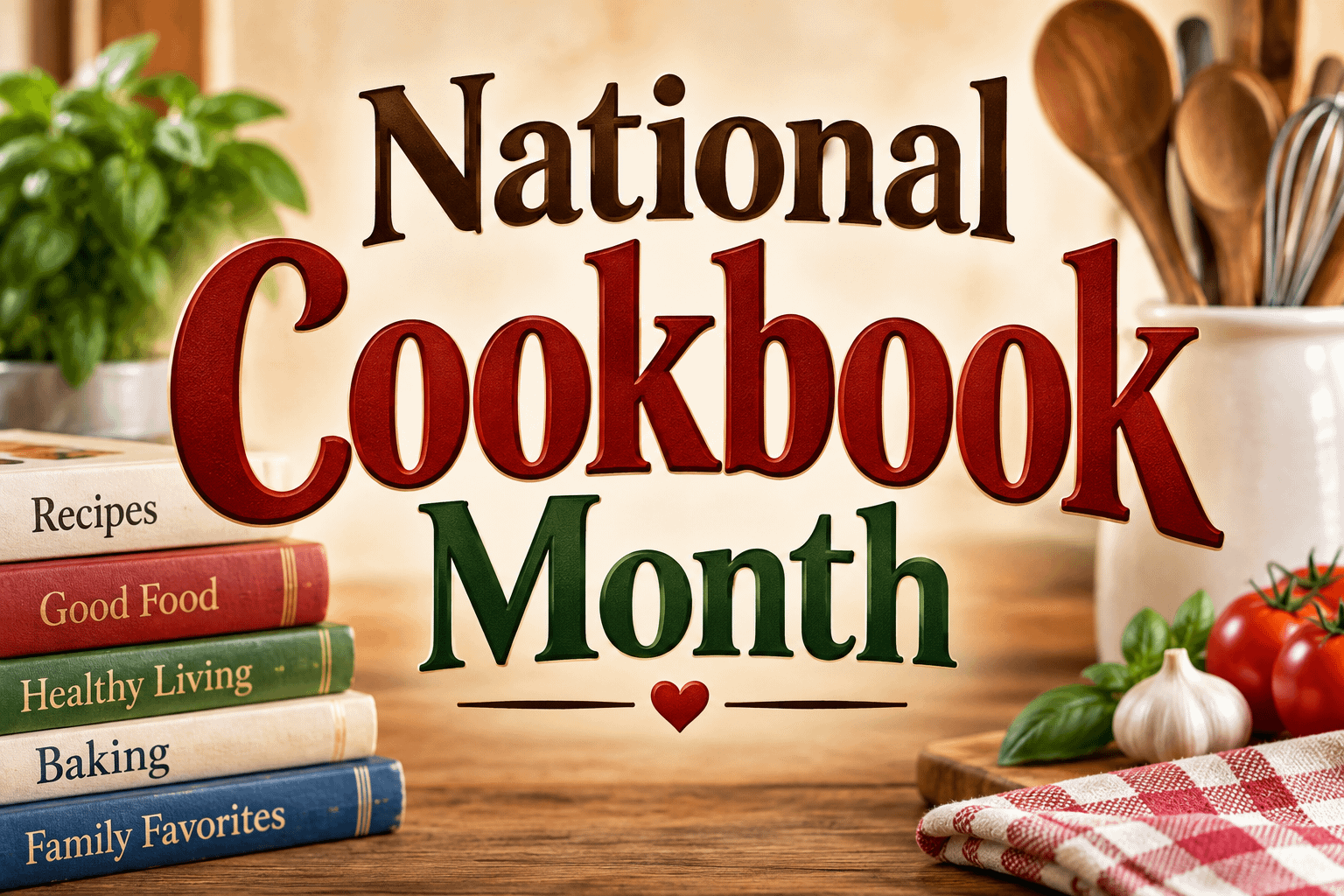
  • National Cookbook Month: Celebrating the Recipes, Stories, and Traditions We Love

    National Cookbook Month: Celebrating the Recipes, Stories, and Traditions We Love

    Every October, National Cookbook Month gives us an opportunity to celebrate something that has been part of kitchens for generations: the cookbook.

    Cookbooks are much more than collections of recipes. They are records of traditions, family memories, cultures, creativity, and the foods that bring people together. A cookbook sitting on a kitchen shelf might contain a recipe for tonight’s dinner, but it can also hold a connection to another generation, another country, or another chapter of our lives.

    In an age when almost any recipe can be found online within seconds, cookbooks continue to have a special place in our homes. There is something different about opening a favorite cookbook, turning its pages, seeing handwritten notes in the margins, and returning to recipes that have become part of your family’s story.

    National Cookbook Month is a perfect time to rediscover those books, try something new, preserve family recipes, and remember why cooking has always been about more than simply putting food on the table.

    Why Cookbooks Still Matter

    Technology has completely changed how we find recipes.

    Today, you can search for almost anything you want to cook and instantly discover countless versions. Videos can demonstrate techniques step by step, while apps can help organize shopping lists and meal plans.

    Yet cookbooks haven’t disappeared.

    Part of their appeal is the experience they provide. A thoughtfully created cookbook isn’t simply a random collection of recipes. It can take you through a cuisine, cooking technique, region, season, family tradition, or culinary philosophy.

    Cookbooks encourage exploration.

    You might purchase one because you’re interested in learning how to make homemade bread and eventually discover dozens of recipes you never would have searched for individually. You might open a cookbook looking for dinner and find a dessert that becomes a family favorite.

    Sometimes discovery happens because you weren’t searching for anything at all.

    You simply turned the page.

    Cookbooks Tell Stories

    Some of the most memorable cookbooks don’t begin and end with ingredients and instructions.

    They tell stories.

    A recipe might explain how a dish was prepared by someone’s grandmother every Christmas. Another might describe a meal traditionally served during a cultural celebration. Others may explain how certain ingredients became important within a particular region.

    Food and storytelling have always been connected.

    Think about some of your own strongest memories.

    Chances are, food is connected to many of them.

    Birthday cakes.

    Thanksgiving dinners.

    Sunday breakfasts.

    Summer barbecues.

    Holiday cookies.

    Pizza nights.

    Meals shared around the table after a long day.

    Certain foods can immediately transport us back to a particular moment. Sometimes all it takes is the smell of something cooking.

    Cookbooks help preserve those connections.

    The Family Cookbook May Be the Most Valuable One

    Not every cookbook has to come from a bookstore.

    Some of the most meaningful cookbooks are handwritten.

    Maybe your grandmother had a box filled with recipe cards. Perhaps your father had a special barbecue sauce recipe that he never measured exactly. Maybe your mother made a casserole everyone loved but never wrote down the instructions.

    These recipes are pieces of family history.

    Unfortunately, they can easily disappear.

    Someone passes away. A recipe card gets lost. A notebook gets misplaced. Years later, everyone remembers the meal but nobody remembers exactly how it was made.

    National Cookbook Month is a wonderful reminder to preserve those recipes while you still can.

    Ask relatives about the dishes they remember.

    Write down the ingredients.

    Record the techniques.

    Ask where the recipe came from.

    Include the stories behind it.

    You could eventually create your own family cookbook containing recipes from parents, grandparents, siblings, children, aunts, uncles, cousins, and friends.

    Imagine handing that collection to the next generation.

    It becomes much more than a cookbook.

    It becomes part of your family’s history.

    The Handwritten Notes Make It Better

    Anyone who has inherited an old cookbook knows how meaningful handwritten notes can become.

    “Add more garlic.”

    “Paul loves this one.”

    “Made for Christmas 1998.”

    “Use Grandma’s pie crust.”

    “Double the sauce.”

    Those little notes might seem insignificant when they’re written, but years later they can become priceless reminders of the people who once stood in the kitchen preparing those meals.

    A stained page can tell a story too.

    When a cookbook automatically opens to the same battered page because the binding has been stretched from years of use, you know you’ve found one of the favorites.

    Perfect cookbooks look beautiful on shelves.

    Well-used cookbooks tell stories.

    Cookbooks Connect Us With Different Cultures

    Food is one of the easiest ways to experience another culture.

    A cookbook can introduce someone to ingredients, techniques, traditions, and flavors they may never have encountered before.

    Italian pasta dishes.

    Mexican mole.

    Japanese ramen.

    Indian curries.

    French pastries.

    Nicaraguan nacatamales.

    Korean barbecue.

    Greek moussaka.

    Southern American comfort food.

    Caribbean dishes filled with spice and tropical ingredients.

    Every cuisine has a history.

    Learning about the food of another culture can encourage curiosity about the people and traditions behind it.

    Instead of simply preparing a recipe, take some time to learn where the dish originated and why certain ingredients are traditionally used.

    Dinner can become an opportunity to learn about the world.

    Cookbooks Help New Cooks Build Confidence

    For someone learning to cook, the kitchen can feel intimidating.

    Terms such as sauté, blanch, fold, braise, reduce, proof, and deglaze might sound confusing at first.

    A good beginner cookbook can make those techniques approachable.

    Cooking becomes easier when you understand the fundamentals.

    How hot should the pan be?

    How do you know chicken is safely cooked?

    Why should meat rest before slicing?

    What happens when bread dough rises?

    Why do baking measurements need to be accurate?

    Once someone understands the basic techniques, recipes stop feeling like complicated instructions.

    They become possibilities.

    That confidence can eventually lead to experimentation.

    Maybe you add another spice.

    Maybe you substitute an ingredient.

    Maybe you combine ideas from two different recipes.

    Eventually, you aren’t simply following recipes anymore.

    You’re cooking.

    Cooking Together Creates Memories

    National Cookbook Month can also be an excuse to get everyone into the kitchen.

    Choose a recipe together and make it as a family.

    Children can participate by measuring ingredients, mixing batter, decorating cookies, assembling pizzas, or helping choose what everyone will make.

    It doesn’t have to look perfect.

    The flour might end up everywhere.

    Someone might accidentally add too much of something.

    Dinner might take twice as long as expected.

    That’s okay.

    Sometimes the imperfect cooking experiences become the memories everyone laughs about years later.

    The meal eventually disappears.

    The memory can remain forever.

    Rediscover Your Forgotten Cookbooks

    Many people have cookbooks sitting on shelves that haven’t been opened in years.

    National Cookbook Month is the perfect excuse to pull them out.

    Look through your collection and choose one cookbook you haven’t used recently.

    Flip through the pages without searching for anything specific.

    Mark three recipes that look interesting.

    Then challenge yourself to make at least one.

    You may rediscover an old favorite or find something completely new.

    You can also make it a monthly challenge: choose four recipes you’ve never made and prepare one each week during October.

    By the end of the month, you may have discovered something that becomes part of your regular rotation.

    Start Your Own Cookbook

    You don’t have to be a professional chef to create a cookbook.

    Start collecting the recipes you already make.

    Your cookbook could include sections such as:

    Breakfast

    Pancakes, breakfast casseroles, omelets, biscuits, French toast, breakfast sandwiches, and family favorites.

    Appetizers

    Dips, wings, sliders, nachos, cheese boards, and party snacks.

    Main Dishes

    Chicken, beef, pork, seafood, pasta, casseroles, pizza, and slow-cooker meals.

    Side Dishes

    Potatoes, vegetables, rice, salads, bread, and comfort-food favorites.

    Desserts

    Cakes, pies, cookies, brownies, cheesecakes, cobblers, and homemade treats.

    Drinks

    Coffee drinks, punches, mocktails, smoothies, and family beverage recipes.

    Then add the personal details.

    Who introduced you to the recipe?

    When do you usually make it?

    What modifications have you discovered?

    Who loves it most?

    What memory is connected to it?

    Those details transform a recipe collection into something personal.

    Have a Cookbook Swap

    Another fun way to celebrate National Cookbook Month is by organizing a cookbook exchange.

    Ask friends, relatives, coworkers, or neighbors to bring cookbooks they no longer use.

    Everyone can exchange them and go home with something different.

    You could also create a recipe swap.

    Instead of exchanging entire books, ask everyone to bring copies of one favorite recipe.

    At the end, everyone leaves with a small collection of recipes recommended by people they know.

    You might even turn those recipes into a community cookbook.

    Schools, churches, sports teams, nonprofit organizations, and community groups have used cookbooks for generations as fundraising projects.

    Everyone contributes a recipe, and the finished book becomes a reflection of the community itself.

    Visit a Used Bookstore

    Used bookstores and thrift stores can be treasure chests for cookbook lovers.

    You might discover cookbooks published decades ago that show how dramatically cooking has changed.

    Vintage cookbooks can contain fascinating recipes, advertisements, illustrations, and cooking techniques.

    Sometimes you’ll even discover handwritten notes from the previous owner.

    It’s almost like receiving a small piece of someone else’s kitchen history.

    Cook One Recipe Outside Your Comfort Zone

    We naturally return to familiar foods.

    National Cookbook Month is a good opportunity to change that.

    Choose something you’ve never made before.

    Bake bread from scratch.

    Make homemade pasta.

    Try a curry.

    Prepare fresh salsa.

    Bake a pie.

    Learn how to make soup without using a canned base.

    Cook a dish from another country.

    Attempt a dessert you’ve always assumed was too complicated.

    It doesn’t have to be perfect.

    Cooking is a skill, and skills improve through practice.

    Even a recipe that doesn’t turn out exactly as expected teaches you something.

    Give a Cookbook as a Gift

    Cookbooks can also make thoughtful gifts, especially when chosen around someone’s interests.

    Someone who loves grilling might appreciate a barbecue cookbook.

    A new college student might benefit from simple recipes using inexpensive ingredients.

    Someone trying to cook more meals at home might enjoy a weeknight dinner cookbook.

    A baker might love a book dedicated entirely to bread, cakes, or cookies.

    But you can make the gift even more meaningful.

    Write a message inside the cover.

    Mention a few recipes you think they’ll enjoy.

    Better yet, create a small homemade cookbook filled with recipes that have personal meaning.

    That kind of gift can’t easily be replaced.

    Food Has a Way of Bringing People Back Together

    Life gets busy.

    People work different schedules. Families live in different cities. Children grow up. Traditions change.

    Yet food has an incredible ability to bring people back together.

    Someone announces they’re making Grandma’s famous recipe, and suddenly everyone remembers sitting around the same table years ago.

    Someone bakes the cookies that were always made at Christmas, and the smell brings back memories before anyone takes the first bite.

    Recipes survive because people continue making them.

    Every time we prepare a dish passed down from someone we love, we’re continuing a small part of their story.

    That may be one of the greatest reasons cookbooks matter.

    They help memories survive.

    Celebrate National Cookbook Month This October

    National Cookbook Month doesn’t require an elaborate celebration.

    Simply cook something.

    Open an old cookbook.

    Buy a new one.

    Visit the library.

    Ask a relative for a family recipe.

    Teach your children how to prepare one of your favorite meals.

    Write down the recipe everyone always asks you to make.

    Try food from another culture.

    Start creating your own cookbook.

    Most importantly, spend some time around the table with people who matter to you.

    Because eventually the recipes we remember most aren’t always the fanciest ones.

    They’re the meals connected to people, places, laughter, celebrations, ordinary evenings, holidays, and moments we wish we could experience one more time.

    A cookbook preserves instructions for making food.

    But sometimes it preserves something much bigger.

    It preserves a piece of our lives.

    What recipe would you want your family to continue making for generations?
  • National Cookie Month: Celebrating the Sweet Treat That Brings People Together

    National Cookie Month: Celebrating the Sweet Treat That Brings People Together

    October is filled with changing leaves, cooler weather, pumpkin flavors, and the excitement of Halloween, but there is another delicious reason to celebrate the month: National Cookie Month.

    Cookies are one of those simple treats that can instantly bring back memories. The smell of chocolate chip cookies baking in the oven can remind us of childhood. A plate of decorated sugar cookies can bring back memories of holidays with family. A warm oatmeal cookie might remind us of something a parent or grandparent used to make.

    Cookies aren’t simply desserts. They are often connected to people, traditions, celebrations, and moments we remember long after the last crumb disappears.

    National Cookie Month gives us an entire month to appreciate those little baked treats while experimenting with new recipes, revisiting family favorites, and perhaps sharing a batch with someone who could use a little sweetness in their day.

    Why Cookies Are So Special

    There are plenty of desserts to choose from, but cookies have something uniquely comforting about them.

    Part of their appeal is simplicity.

    You don’t need a birthday, anniversary, or holiday to enjoy a cookie. Cookies can be packed into a lunch, served with coffee, brought to a party, given as a gift, or enjoyed warm from the oven late at night.

    They’re also incredibly versatile.

    Cookies can be soft, chewy, crunchy, crispy, thick, thin, frosted, filled, dipped, or covered in chocolate. They can feature nuts, fruit, spices, caramel, peanut butter, coconut, oats, or almost anything else a baker can imagine.

    There really is a cookie for almost everyone.

    The Chocolate Chip Cookie Remains a Classic

    Few cookies are as recognizable as the chocolate chip cookie.

    The combination is wonderfully simple: buttery cookie dough filled with pieces of chocolate. Yet changing just a few ingredients or baking techniques can produce dramatically different cookies.

    Some people want their chocolate chip cookies thin and crispy around the edges. Others want them thick, soft, and almost underbaked in the center.

    Then there are all the variations.

    You can add walnuts, pecans, peanut butter chips, white chocolate, dark chocolate, caramel pieces, coconut, or even a little sea salt on top.

    And perhaps the best way to eat one is still the simplest: warm from the oven while the chocolate is melted.

    Sugar Cookies Bring Out Our Creativity

    Sugar cookies demonstrate that cookies can be as much about creativity as flavor.

    A basic sugar cookie can become something completely different depending on its shape and decoration.

    During Halloween, they might become pumpkins, ghosts, or bats.

    During Christmas, they transform into trees, snowflakes, stockings, and gingerbread-style figures.

    For birthdays, weddings, baby showers, graduations, and other celebrations, decorated cookies can be personalized for practically any occasion.

    Decorating cookies can also become an activity that brings families together.

    Set out bowls of frosting, sprinkles, candies, and other decorations and let everyone create their own masterpiece.

    They might not all look perfect.

    That’s part of the fun.

    Peanut Butter Cookies

    Peanut butter cookies deserve their own place during National Cookie Month.

    Their rich, nutty flavor and soft texture have made them a favorite for generations.

    One of their most recognizable features is the crisscross pattern traditionally pressed into the dough with a fork before baking.

    Peanut butter cookies can also be combined with chocolate chips, chocolate candies, chopped peanuts, or a chocolate candy pressed into the center.

    For anyone who loves the combination of chocolate and peanut butter, there are almost endless possibilities.

    Oatmeal Cookies

    Oatmeal cookies sometimes don’t receive the attention they deserve.

    A great oatmeal cookie is hearty, chewy, slightly spiced, and wonderfully comforting.

    Raisins are the traditional addition, although they certainly aren’t mandatory.

    Try oatmeal cookies with chocolate chips, dried cranberries, walnuts, pecans, coconut, or butterscotch chips.

    A touch of cinnamon can make them especially appealing during the cooler days of October.

    Snickerdoodles

    Sometimes simplicity creates the best desserts.

    Snickerdoodles are a perfect example.

    These soft cookies coated in cinnamon and sugar don’t require elaborate decorations or dozens of ingredients to be delicious.

    The cinnamon aroma filling the kitchen while they bake is almost as enjoyable as eating them.

    Pair a warm snickerdoodle with coffee, hot chocolate, apple cider, or cold milk for a classic fall treat.

    Cookies From Around the World

    National Cookie Month can also become an opportunity to explore cookie traditions beyond the recipes we normally make.

    Different cultures have developed their own versions of cookies and small baked sweets.

    Italian biscotti are twice-baked and famously enjoyable alongside coffee.

    French macarons combine delicate almond-based shells with flavorful fillings.

    Mexican wedding cookies are rich, buttery treats often made with nuts and coated generously in powdered sugar.

    Scottish shortbread highlights the beauty of simple ingredients, traditionally relying heavily on butter, sugar, and flour.

    Ginger cookies and spice cookies appear in numerous forms throughout Europe and other parts of the world.

    Exploring international cookie recipes can turn National Cookie Month into a delicious culinary adventure.

    Create a Cookie of the Week Tradition

    Since National Cookie Month lasts throughout October, why limit the celebration to a single day?

    Choose a different cookie to make every week.

    One week could feature chocolate chip cookies.

    The next might be peanut butter.

    Then oatmeal, snickerdoodles, sugar cookies, or something you’ve never made before.

    By the end of October, you might discover a new family favorite.

    You could even let different members of the household choose each week’s cookie.

    Have a Cookie Bake-Off

    A friendly cookie competition can make National Cookie Month even more entertaining.

    Invite friends, relatives, coworkers, or neighbors to make their best cookie recipe.

    Everyone brings a batch, and participants sample the different creations.

    Instead of declaring only one winner, create several fun categories such as most creative, best presentation, best classic cookie, most unusual flavor, or people’s favorite.

    The real prize is having a table filled with cookies.

    Build the Ultimate Cookie Platter

    Cookie platters aren’t just for Christmas.

    Create one specifically for National Cookie Month.

    Include several flavors and textures so there’s something for everyone.

    You might combine chocolate chip cookies, peanut butter cookies, snickerdoodles, oatmeal cookies, sugar cookies, shortbread, sandwich cookies, and chocolate cookies.

    Add small pieces of chocolate, fruit, or other bite-sized sweets to complete the platter.

    It can become an easy dessert centerpiece for a family gathering or party.

    Cookies Make Wonderful Gifts

    Sometimes the simplest gifts are the ones people appreciate most.

    A homemade batch of cookies doesn’t need expensive packaging.

    Place them in a small box, reusable container, decorative bag, or jar and include a handwritten message.

    Give them to a neighbor.

    Bring some to a coworker.

    Surprise a friend.

    Thank someone who has helped you.

    Bring cookies to a family gathering.

    Small acts of kindness can have a bigger impact than we realize.

    A plate of cookies might seem insignificant, but what someone often remembers isn’t the dessert itself.

    They remember that somebody thought about them.

    Bake With Your Children or Grandchildren

    Some of the best childhood memories are created in kitchens.

    Children can help measure ingredients, mix dough, cut shapes, decorate cookies, or carefully place chocolate chips and candies on top.

    Yes, there will probably be flour on the counter.

    There might be frosting everywhere.

    The cookies may not look anything like the picture in the recipe.

    But years later, nobody is going to remember whether every cookie was perfectly shaped.

    They’ll remember spending time together.

    That’s what makes traditions meaningful.

    Start a Family Cookie Recipe Collection

    National Cookie Month is also a great time to preserve family recipes.

    Many families have recipes that have been passed down through generations, sometimes written on aging index cards or pieces of paper tucked inside old cookbooks.

    Those recipes represent more than ingredients.

    They represent family history.

    Write them down.

    Take photographs.

    Record who originally made them.

    Include stories connected to the recipes.

    Eventually, you could create a small family cookbook filled with cookie recipes and memories.

    Future generations may treasure it.

    Host a Cookie Exchange

    Cookie exchanges are usually associated with the holidays, but there’s no reason to wait until December.

    Invite several people to participate.

    Each person makes one type of cookie and brings enough to share. Everyone leaves with a variety of cookies without having to bake every recipe themselves.

    It’s simple, social, and delicious.

    You may also discover recipes you would never have tried otherwise.

    Try Creating Your Own Cookie

    If you enjoy experimenting in the kitchen, National Cookie Month is the perfect excuse to invent something.

    Start with a basic cookie dough and experiment with different additions.

    Try combinations such as chocolate and caramel, cranberry and white chocolate, maple and pecan, cinnamon and apple, peanut butter and dark chocolate, coconut and chocolate, or pumpkin and warm spices.

    Some experiments might be amazing.

    Others might never be made again.

    That’s part of cooking.

    Every great recipe began with somebody trying something.

    Don’t Forget the Perfect Drink

    Cookies become even better when paired with the right beverage.

    Milk is the obvious classic.

    But coffee and cookies are another wonderful combination, particularly with biscotti, shortbread, or chocolate cookies.

    During October, warm drinks can make the experience even more comforting.

    Try cookies with hot chocolate, chai, tea, apple cider, or a seasonal coffee.

    Then find a comfortable place and enjoy a few quiet minutes.

    Sometimes happiness really can be that simple.

    More Than Just Something Sweet

    Food has an incredible ability to connect us with memories.

    A certain recipe can instantly remind us of someone.

    The smell of cookies baking might take us back decades.

    We remember sitting at a kitchen table.

    We remember coming home from school.

    We remember holidays.

    We remember grandparents, parents, children, siblings, friends, and people who may no longer be sitting beside us.

    That’s one of the beautiful things about food traditions.

    Recipes allow memories to continue.

    Making someone’s favorite cookie can become a small way of remembering them and keeping a tradition alive.

    Celebrate National Cookie Month Your Way

    There isn’t a wrong way to celebrate National Cookie Month.

    Bake your favorite recipe.

    Try something completely new.

    Visit a local bakery.

    Host a cookie exchange.

    Make cookies with your family.

    Deliver a batch to someone who needs encouragement.

    Preserve an old family recipe.

    Enjoy a cookie with your morning coffee.

    Or simply buy your favorite cookies and enjoy them without feeling obligated to turn the occasion into something complicated.

    National Cookie Month is supposed to be fun.

    A Month Filled With Sweet Memories

    Cookies are small desserts, but they often carry surprisingly big memories.

    They appear at birthdays, holidays, school events, weddings, family gatherings, celebrations, and quiet evenings at home.

    They can remind us of childhood.

    They can preserve family traditions.

    They can become simple gifts of kindness.

    And they can give us an excuse to gather around the kitchen table with people we care about.

    This October, celebrate National Cookie Month by enjoying an old favorite or discovering something completely new.

    Bake a batch.

    Share a few.

    Save a recipe.

    Create a memory.

    Because sometimes one of life’s simplest pleasures is a warm cookie, a favorite drink, and someone you love sitting nearby.

    What’s the one cookie you could eat again and again and never get tired of?

  • National Seafood Month: Celebrating the Flavors and Traditions of the Sea

    National Seafood Month: Celebrating the Flavors and Traditions of the Sea

    Every October, seafood lovers have an entire month dedicated to celebrating the incredible variety of foods that come from our oceans, rivers, lakes, and coastal communities. National Seafood Month is an opportunity to enjoy favorite seafood dishes, experiment with new recipes, learn more about where our seafood comes from, and appreciate the people who work hard to bring it to our tables.

    From grilled salmon and buttery shrimp to crab cakes, fish tacos, clam chowder, oysters, scallops, lobster, and countless regional specialties, seafood is connected to culinary traditions around the world.

    National Seafood Month isn’t simply about eating more seafood. It can also be a time to learn about responsible seafood choices, support fishing communities, explore different cooking methods, and discover just how versatile seafood can be.

    What Is National Seafood Month?

    National Seafood Month is observed throughout October in the United States as a celebration of seafood and the industries and communities connected to it.

    For generations, fishing has provided food, employment, and traditions for communities across the country. Coastal areas may immediately come to mind, but seafood is also important in communities surrounding rivers, lakes, bays, and other waterways.

    Seafood can travel from fishing boats, aquaculture operations, docks, and processing facilities through distributors, restaurants, markets, and grocery stores before eventually reaching our plates.

    National Seafood Month gives us an opportunity to recognize that entire journey.

    It is also the perfect excuse to put something different on the dinner table.

    A World of Seafood to Explore

    One of the best things about seafood is its incredible variety.

    Fish alone offers seemingly endless possibilities. Salmon can be baked, grilled, smoked, poached, or pan-seared. Cod can become fish tacos or crispy fish sandwiches. Tuna can be grilled as a steak, added to salads, or incorporated into countless other dishes.

    Then there are shellfish.

    Shrimp is one of the most versatile options available. It can be grilled on skewers, tossed into pasta, added to fried rice, served in tacos, cooked into gumbo, or simply sautéed with garlic and butter.

    Crab can become crab cakes, crab sandwiches, seafood boils, dips, salads, or pasta dishes.

    Lobster is often associated with special occasions, but it can appear in everything from traditional lobster rolls to macaroni and cheese.

    Scallops develop a beautiful caramelized crust when properly seared.

    Clams and mussels can be steamed in flavorful broths.

    Oysters can be enjoyed in numerous preparations depending on regional traditions and personal preference.

    National Seafood Month provides plenty of reasons to explore something you haven’t tried before.

    Seafood and American Food Traditions

    Seafood has played an important role in American food culture for generations.

    Different regions have developed their own seafood traditions based largely on what was available locally.

    New England is famous for dishes such as clam chowder and lobster rolls.

    Maryland is closely associated with blue crab and crab cakes.

    Louisiana’s culinary traditions include crawfish, shrimp, oysters, gumbo, étouffée, and seafood boils.

    The Pacific Northwest is known for salmon, Dungeness crab, oysters, and other seafood harvested from its coastal waters.

    California has its own rich seafood traditions, including fish tacos, grilled seafood, cioppino, and dishes influenced by the many cultures that have shaped the state’s food scene.

    The Gulf Coast brings another collection of traditions involving shrimp, oysters, crab, and fresh fish.

    Every region tells part of the larger story of American seafood.

    The Nutritional Side of Seafood

    Seafood can also be part of a nutritious eating pattern.

    Many varieties of fish provide protein along with important nutrients. Certain fish, particularly fatty fish such as salmon, sardines, trout, and mackerel, are known for providing omega-3 fatty acids.

    Different seafood varieties have different nutritional profiles, which is another reason variety can be useful.

    Preparation matters too.

    Grilled, baked, broiled, steamed, or poached seafood can provide very different nutritional results than heavily breaded or fried preparations.

    That doesn’t mean you can’t enjoy fried seafood occasionally. National Seafood Month can include both nutritious everyday meals and indulgent favorites.

    Balance and variety can allow you to enjoy both.

    Try Something New During National Seafood Month

    If you usually order the same seafood every time, October can be your excuse to branch out.

    Someone who always orders shrimp might try scallops.

    A salmon lover might experiment with trout.

    Someone who usually eats fried fish might try grilled fish with lemon, garlic, herbs, and vegetables.

    You could also experiment with different cuisines.

    Seafood appears prominently in cuisines throughout the world.

    Try a Mediterranean-inspired grilled fish dish with olive oil, lemon, tomatoes, and herbs.

    Make Mexican-style fish or shrimp tacos.

    Prepare an Italian seafood pasta.

    Explore Japanese seafood dishes.

    Try Caribbean-inspired grilled fish with tropical flavors.

    Make a Cajun seafood dish.

    The possibilities are nearly endless.

    Easy Seafood Dinner Ideas

    You don’t need restaurant-level cooking skills to prepare a delicious seafood dinner at home.

    A few simple ingredients can create an impressive meal.

    Try garlic butter shrimp served over rice or pasta.

    Bake salmon with lemon, garlic, black pepper, and herbs.

    Make fish tacos topped with cabbage, lime, salsa, and a creamy sauce.

    Prepare shrimp fried rice using leftover rice and vegetables.

    Create a seafood pasta with shrimp and scallops.

    Make homemade crab cakes.

    Cook a pot of clam chowder.

    Prepare grilled shrimp skewers with peppers and onions.

    Make crispy fish sandwiches with homemade coleslaw.

    Or prepare a seafood boil filled with shrimp, corn, potatoes, sausage, and your favorite seasonings.

    Sometimes the simplest preparations are the best because they allow the seafood itself to remain the star.

    Supporting Fishing Communities

    National Seafood Month is also an opportunity to recognize the people behind the food.

    Commercial fishing can be physically demanding and unpredictable work. Fishermen and women may spend long hours on the water while dealing with changing weather, equipment challenges, regulations, seasonal conditions, and fluctuating markets.

    The seafood industry also includes many people who aren’t necessarily on fishing boats.

    Processors, dock workers, distributors, aquaculture workers, seafood market employees, truck drivers, chefs, restaurant employees, scientists, regulators, and many others contribute to getting seafood from the water to consumers.

    When you enjoy a seafood dinner, there may be an entire network of people behind that meal.

    National Seafood Month gives us an opportunity to appreciate their work.

    Learning About Sustainable Seafood

    Another important part of the modern seafood conversation involves sustainability.

    Fish populations and marine environments can face pressures from overfishing, habitat changes, pollution, climate conditions, and other challenges.

    Responsible fisheries management and aquaculture practices can help maintain seafood resources while supporting the communities that depend on them.

    Consumers can participate by learning more about where seafood comes from and asking questions when purchasing it.

    You might ask where a particular fish was caught or raised.

    You can learn about seasonal seafood in your area.

    You can also explore information from reputable seafood sustainability and fisheries organizations when deciding what to purchase.

    National Seafood Month is a good reminder that enjoying seafood and caring about the future of aquatic ecosystems can go together.

    Visit a Local Seafood Restaurant

    October is also a great time to support restaurants that specialize in seafood.

    Instead of ordering your usual meal, look for something you’ve never tried.

    Ask about the restaurant’s specialties.

    Try the catch of the day.

    Visit a seafood market and ask employees what they recommend.

    Local restaurants and seafood markets can sometimes introduce you to varieties you may have overlooked at the grocery store.

    You may discover a new favorite.

    Have a Seafood Night at Home

    National Seafood Month can also become a fun family tradition.

    Choose one evening in October and make it seafood night.

    Let everyone choose a dish.

    You might create a seafood taco bar with grilled fish and shrimp alongside tortillas, cabbage, salsa, avocado, lime, cheese, and different sauces.

    Another option is a seafood boil where everyone gathers around the table and shares shrimp, potatoes, corn, and other ingredients.

    You could even make seafood night educational by learning about the species you’re eating, where it comes from, and how people traditionally prepare it.

    Food has a wonderful way of bringing people together.

    Seafood Doesn’t Have to Be Complicated

    Some people avoid cooking seafood because they’re afraid of ruining it.

    That’s understandable. Seafood can cook quickly, and certain varieties become dry or tough when overcooked.

    But seafood doesn’t have to be intimidating.

    Start with simple recipes.

    Use a thermometer when appropriate and follow reliable food-safety guidance for the specific seafood you’re preparing. Keep raw seafood properly refrigerated, avoid cross-contamination, and follow current recommendations for safe handling and cooking.

    Once you’ve successfully cooked a few seafood dishes, you’ll probably become much more comfortable experimenting.

    Celebrate the People, Places, and Flavors Behind Seafood

    National Seafood Month can mean something different to everyone.

    For one person, it might mean enjoying a bowl of clam chowder on a cool October evening.

    For another, it might mean grilling salmon for the family.

    Someone else might celebrate with shrimp tacos, crab cakes, sushi, fish and chips, oysters, seafood pasta, or a giant seafood boil surrounded by friends.

    Others may use the month to learn about sustainable fishing, discover local seafood businesses, or try cooking fish for the first time.

    There is no single way to celebrate.

    The beauty of seafood is its diversity.

    Different waters produce different ingredients. Different cultures transform those ingredients in different ways. Generations of families, fishermen, cooks, and communities have created traditions around the food provided by the water.

    Make October Delicious

    National Seafood Month gives us 31 days to appreciate one of the world’s most diverse categories of food.

    Order something you’ve never tried.

    Cook a seafood recipe at home.

    Support a local seafood restaurant or market.

    Learn about the fishing communities behind your meal.

    Experiment with a new cooking method.

    Discover seafood traditions from another part of the country or world.

    Most importantly, gather around the table with people you care about and enjoy good food together.

    Because sometimes celebrating a national month doesn’t require anything complicated.

    Sometimes all you need is a plate of delicious food, good conversation, and an appreciation for where that meal came from.

    What’s your favorite seafood dish—and what seafood would you like to try for the first time?

  • National Sudden Infant Death Syndrome Awareness Month: Remembering, Supporting, and Protecting

    National Sudden Infant Death Syndrome Awareness Month: Remembering, Supporting, and Protecting

    Every October, National Sudden Infant Death Syndrome Awareness Month brings attention to one of the most heartbreaking experiences a family can endure: the sudden and unexpected death of a baby.

    Sudden Infant Death Syndrome, commonly known as SIDS, is the sudden death of an infant younger than one year that remains unexplained even after a thorough investigation. For parents and families affected by SIDS, the loss can leave behind overwhelming grief and questions that may never receive complete answers.

    National SIDS Awareness Month is a time to remember the babies whose lives ended far too soon, support grieving parents and families, educate caregivers about safer infant sleep practices, and continue efforts to better understand and reduce sleep-related infant deaths.

    Most importantly, it is a time for compassion.

    Behind every statistic is a baby who was deeply loved. Behind every loss is a family whose world changed forever.

    What Is Sudden Infant Death Syndrome?

    SIDS generally occurs while an infant is sleeping and is sometimes referred to as “crib death.” However, that term can be misleading because SIDS is not necessarily caused by a crib.

    SIDS is one category within the broader term Sudden Unexpected Infant Death, or SUID. SUID describes the sudden and unexpected death of an infant younger than one year in which the cause is not immediately apparent.

    Some sudden unexpected infant deaths are eventually attributed to accidental suffocation or strangulation in a sleeping environment, infection, metabolic disorders, cardiac conditions, or other identifiable causes. When an extensive investigation cannot determine why the infant died, the death may be classified as SIDS.

    Researchers have learned a great deal about infant sleep safety and factors associated with increased or decreased risk, but SIDS remains complex.

    There is no single action that can guarantee SIDS will never happen.

    That distinction matters, particularly when speaking with grieving parents. Awareness should never become blame.

    Why October Matters

    Awareness months provide an opportunity to bring subjects that are often difficult to discuss into the open.

    SIDS is especially difficult because it involves the death of a baby who may have appeared healthy shortly before dying. Parents may put their child to sleep expecting another ordinary night and suddenly find themselves living through an unimaginable tragedy.

    October gives communities an opportunity to talk about infant safety while also acknowledging the emotional devastation surrounding infant loss.

    Education can help caregivers learn evidence-based recommendations for safer sleep environments. Awareness can encourage research. Public conversations can remind grieving families that their babies are remembered.

    National SIDS Awareness Month also takes place during Pregnancy and Infant Loss Awareness Month, making October an important period for recognizing families grieving miscarriages, stillbirths, neonatal deaths, SIDS, and other forms of infant loss.

    Different circumstances surround every loss, but every child matters.

    Creating a Safer Sleep Environment

    One of the most important parts of SIDS awareness is helping parents and caregivers understand current safer-sleep recommendations.

    The American Academy of Pediatrics recommends placing infants on their backs for every sleep until they reach one year of age.

    Babies should sleep on a firm, flat, non-inclined sleep surface intended for infant sleep. The sleeping area should remain free from soft objects and loose bedding.

    That means keeping items such as pillows, blankets, bumper pads, stuffed animals, and similar soft materials out of an infant’s sleep space.

    Room-sharing without bed-sharing is also recommended. Keeping the baby’s sleep space in the parents’ room can make feeding, comforting, and monitoring easier while providing the infant with a separate sleeping surface.

    Parents and caregivers should also avoid exposing infants to cigarette smoke, nicotine, marijuana, and other substances.

    Breastfeeding, when possible and desired, is associated with a reduced risk of SIDS. Offering a pacifier at nap time and bedtime may also reduce risk once feeding is well established when applicable.

    Parents should discuss questions about their baby’s individual circumstances with their pediatrician or another qualified healthcare professional.

    Safe Sleep Is Everyone’s Responsibility

    Infant sleep safety is not something only parents need to understand.

    Grandparents, babysitters, relatives, daycare providers, friends, and anyone else caring for an infant should know the family’s safe-sleep routine.

    Sometimes older generations were taught recommendations that differ significantly from today’s guidance. For example, parents decades ago may have been instructed to place babies on their stomachs.

    Medical recommendations changed as researchers gathered stronger evidence.

    That means conversations about safe sleep should focus on education rather than criticism.

    Parents can clearly explain their expectations to anyone watching their child:

    Place the baby on their back.

    Use the approved sleep space.

    Keep blankets, pillows, stuffed animals, and other soft objects outside the baby’s sleeping area.

    Following the same routine every time a baby sleeps—including naps—helps create consistency among caregivers.

    The Grief of Losing a Baby

    While education is essential during SIDS Awareness Month, we cannot forget the families already living with the consequences of infant loss.

    Losing a child changes a parent forever.

    There may be shock, disbelief, anger, sadness, guilt, loneliness, confusion, and countless questions.

    Parents may replay their final moments with their baby repeatedly.

    They may wonder whether they missed something.

    They may ask themselves what they could have done differently.

    They may search desperately for an explanation.

    When a death remains unexplained, those unanswered questions can become another painful part of grief.

    This is why compassion is so important.

    A grieving parent does not need someone searching for a reason to blame them. They need people willing to acknowledge their child’s life and their loss.

    Sometimes the most meaningful words are simply:

    “I remember your baby.”

    “I’m here for you.”

    “You can talk about your child with me.”

    Parents May Grieve Differently

    There is no universal way to grieve the death of a child.

    Some parents talk openly about their baby.

    Others become quiet.

    Some cry frequently.

    Others rarely cry in front of people.

    Some want to look at photographs and share memories.

    Others may need time before they can do that.

    Mothers and fathers may also express grief differently from one another. One parent may need conversation while another copes by working, staying busy, exercising, praying, writing, or spending time alone.

    Different expressions of grief do not mean one parent loved the child more than another.

    Grief is personal.

    Families need permission to mourn in the ways that help them survive their loss.

    Remembering the Babies

    One fear many bereaved parents carry is that their child will eventually be forgotten.

    When someone dies after decades of life, there may be thousands of stories people can share about them.

    When a baby dies, the number of memories may be much smaller—but the love is not.

    A short life can leave a permanent impact.

    During National SIDS Awareness Month, families may choose to honor their babies by lighting candles, displaying photographs, creating memorial keepsakes, planting trees or flowers, participating in remembrance walks, donating to research organizations, supporting another grieving family, or simply saying their child’s name.

    There is no correct way to remember a baby.

    What matters is acknowledging that the baby’s life mattered.

    Supporting a Family After Infant Loss

    Many people want to support grieving parents but are afraid they will say the wrong thing.

    That fear can sometimes cause friends and relatives to disappear precisely when parents need support most.

    You do not need perfect words.

    You need compassion.

    Listen without trying to fix grief.

    Say the baby’s name if the parents are comfortable hearing it.

    Remember important dates.

    Check in months later—not only during the first few weeks after the death.

    Offer practical assistance such as bringing dinner, helping with household responsibilities, or simply sitting with someone who does not want to be alone.

    Avoid statements intended to explain the tragedy.

    Sometimes there is no explanation that will make the loss feel acceptable.

    Presence can mean more than answers.

    Grief Does Not Have an Expiration Date

    One of the greatest misconceptions about grief is that people eventually “get over” losing someone they love.

    Parents may learn how to carry their grief, but that does not mean the love disappears.

    Birthdays can remain difficult.

    The anniversary of the child’s death can remain painful.

    Holidays can feel different.

    Seeing children who would be approximately the same age may trigger unexpected emotions years later.

    Milestones the child never reached can become reminders of the future the family imagined.

    Grief can return unexpectedly through a song, photograph, smell, location, dream, or memory.

    Families should never be pressured to follow someone else’s timetable for healing.

    Turning Awareness Into Compassion

    Awareness should accomplish more than placing a ribbon on social media for a month.

    It should change how we care for one another.

    It should encourage parents and caregivers to learn safer sleep recommendations.

    It should motivate communities to make reliable infant-safety information accessible.

    It should encourage continued medical research into unexplained infant deaths.

    And it should remind grieving families that their children have not been forgotten.

    Sometimes awareness means education.

    Sometimes awareness means prevention.

    Sometimes awareness means research.

    And sometimes awareness simply means sitting beside someone whose heart has been shattered and allowing them to talk about the baby they still love.

    Every Baby Deserves to Be Remembered

    National Sudden Infant Death Syndrome Awareness Month carries both hope and heartbreak.

    There is hope that continued research and education can help reduce infant deaths.

    There is hope that more parents and caregivers will understand safer sleep practices.

    There is hope that families experiencing infant loss will find stronger support systems.

    But there is also remembrance.

    We remember the babies who should have had more birthdays.

    We remember the parents who imagined first steps, first words, first days of school, graduations, and futures that never arrived.

    We remember families who woke up one morning and discovered that life would never again be what it had been before.

    Their children existed.

    Their children were loved.

    Their children mattered.

    And their children deserve to be remembered.

    During National Sudden Infant Death Syndrome Awareness Month, may we educate without blaming, support without judging, listen without trying to fix, and remember without being afraid to speak the names of children who are deeply missed.

    For every parent carrying the memory of a baby they can no longer hold, love remains.

    And sometimes remembrance is one of the most powerful ways we can continue that love.

    How can we create communities where grieving parents feel safe talking about their babies and know their children will always be remembered?

  • Spinach Lovers Month: Celebrating a Leafy Green Packed With Flavor and Nutrition

    Spinach Lovers Month: Celebrating a Leafy Green Packed With Flavor and Nutrition

    Spinach may not always be the first food people get excited about, but this humble leafy green deserves some appreciation. Spinach Lovers Month is an opportunity to celebrate spinach, discover new ways to prepare it, and remember that nutritious foods don’t have to be boring.

    Whether you enjoy spinach tossed into a fresh salad, blended into a smoothie, folded into an omelet, baked into a casserole, mixed with pasta, or sautéed with garlic, there are countless ways to make it part of your meals.

    For longtime spinach lovers, this month is an excuse to eat even more of it. For everyone else, it might be the perfect opportunity to give spinach another chance.

    Why Celebrate Spinach?

    Spinach is one of those ingredients that can quietly transform a meal. A handful can be added to eggs, soups, sandwiches, pasta dishes, pizzas, and countless other recipes without requiring much extra preparation.

    It can be eaten raw or cooked, served as the main ingredient or used as a supporting ingredient.

    That’s part of what makes spinach so useful in the kitchen.

    Fresh baby spinach can create the foundation for a salad. Frozen spinach can be incorporated into dips and casseroles. Mature spinach leaves can be sautéed and served alongside meat, seafood, potatoes, rice, and other dishes.

    You can even blend spinach into fruit smoothies when you want to add leafy greens without making them the dominant flavor.

    Spinach Lovers Month celebrates all of those possibilities.

    A Little History of Spinach

    Spinach has a history stretching back many centuries. It is generally believed to have originated in ancient Persia before spreading into other parts of Asia, the Mediterranean region, and eventually Europe.

    Over time, spinach became an important ingredient in cuisines around the world.

    It later became especially recognizable in American popular culture thanks to Popeye the Sailor, the cartoon character famously associated with eating spinach and becoming incredibly strong.

    While eating a can of spinach won’t instantly give someone Popeye-sized muscles, the character helped create a lasting association between spinach and healthy eating.

    Today, spinach remains widely available in grocery stores and farmers markets in fresh, frozen, and canned varieties.

    What Makes Spinach Nutritious?

    One reason spinach receives so much attention is its nutrient profile.

    Spinach provides several important vitamins and minerals, including vitamin A precursors such as beta-carotene, vitamin C, vitamin K, folate, iron, magnesium, and potassium.

    It also contains fiber and a variety of naturally occurring plant compounds.

    Like many leafy green vegetables, spinach is relatively low in calories while still providing valuable nutrients.

    That makes it an easy vegetable to incorporate into a balanced diet.

    However, no single food is a miracle food. Good nutrition comes from an overall eating pattern containing a variety of vegetables, fruits, whole grains, proteins, healthy fats, and other nutrient-rich foods.

    Spinach can simply be one delicious part of that bigger picture.

    Fresh Spinach vs. Cooked Spinach

    One of the great things about spinach is that both raw and cooked preparations have something to offer.

    Raw spinach works wonderfully in salads, wraps, sandwiches, and smoothies. Its mild flavor makes it easy to combine with stronger ingredients.

    Cooked spinach becomes considerably softer and decreases dramatically in volume. Anyone who has put an entire bag of spinach into a skillet has probably wondered where it all went a few minutes later.

    Cooking also changes the availability of certain nutrients and plant compounds. Rather than worrying about whether raw or cooked spinach is “better,” consider enjoying it both ways.

    Variety is one of the easiest ways to keep healthy foods interesting.

    10 Delicious Ways to Enjoy Spinach

    If Spinach Lovers Month inspires you to eat more spinach, you certainly don’t have to settle for plain leaves.

    1. Spinach and Cheese Omelet

    Add fresh spinach to scrambled eggs or an omelet along with your favorite cheese. Mushrooms, onions, tomatoes, peppers, and breakfast meats can also be added.

    2. Garlic Sautéed Spinach

    Heat a little olive oil in a skillet, add minced garlic, and then add fresh spinach. Cook just until the leaves wilt. Finish with black pepper and a squeeze of lemon.

    3. Spinach Smoothie

    Blend a handful of baby spinach with banana, berries, pineapple, mango, yogurt, or your favorite smoothie ingredients.

    4. Spinach and Strawberry Salad

    Combine fresh spinach with sliced strawberries, nuts, cheese, and your favorite vinaigrette for a sweet and savory salad.

    5. Spinach Pasta

    Add spinach to creamy pasta, tomato-based pasta, lasagna, stuffed shells, ravioli, or baked pasta dishes.

    6. Spinach Pizza

    Spinach works wonderfully as a pizza topping, particularly when paired with mushrooms, garlic, tomatoes, chicken, feta, ricotta, or mozzarella.

    7. Spinach Dip

    Warm spinach and artichoke dip is a classic appetizer. Serve it with toasted bread, crackers, pita chips, or vegetables.

    8. Spinach Quesadillas

    Combine sautéed spinach with melted cheese inside a toasted tortilla. Chicken, mushrooms, peppers, and onions can make the quesadilla even heartier.

    9. Spinach Soup

    Fresh or frozen spinach can easily be added to vegetable, chicken, bean, lentil, and creamy soups.

    10. Spinach Breakfast Sandwich

    Layer eggs, spinach, cheese, and your favorite breakfast ingredients onto an English muffin, bagel, biscuit, or toast.

    Spinach Is Surprisingly Versatile

    People who say they don’t like spinach may simply not have found their favorite preparation yet.

    The difference between raw spinach and cooked spinach can be dramatic.

    Someone who doesn’t enjoy a bowl of raw spinach might love spinach baked with cheese. Someone who dislikes cooked spinach might enjoy baby spinach mixed with strawberries and a sweet vinaigrette.

    The ingredients surrounding spinach matter too.

    Garlic gives it a savory punch. Lemon adds brightness. Cheese adds richness. Berries add sweetness. Nuts provide crunch. Eggs make it breakfast-friendly.

    Experimenting is part of the fun.

    Add Spinach to Foods You Already Love

    Eating more vegetables doesn’t necessarily require completely changing the foods you eat.

    Sometimes it’s easier to start with familiar meals.

    Making scrambled eggs? Add spinach.

    Cooking spaghetti? Stir spinach into the sauce.

    Making homemade pizza? Add a layer of spinach.

    Preparing soup? Toss in a handful.

    Making a sandwich? Replace or combine lettuce with baby spinach.

    Cooking chicken Alfredo? Stir some spinach into the pasta.

    Preparing tacos or quesadillas? Add sautéed spinach.

    Small additions can introduce more variety without turning dinner into something completely unfamiliar.

    Try Growing Your Own Spinach

    Spinach Lovers Month can also inspire a little gardening.

    Spinach is generally considered a cool-season crop and can be grown in gardens or containers under suitable conditions.

    Growing vegetables yourself creates a different connection with food. Watching tiny seeds become plants and eventually harvesting something you can eat can be incredibly satisfying.

    Children can get involved too.

    A small container garden can become an easy way to teach kids where food comes from while encouraging them to taste something they’ve helped grow.

    Get Children Involved in the Kitchen

    Spinach doesn’t always have the greatest reputation among children.

    Instead of forcing it onto the plate, consider letting kids participate in preparing it.

    They can help wash spinach leaves, assemble salads, add spinach to pizza, place ingredients inside wraps, or help build smoothies.

    You can even create a “green smoothie challenge” where everyone chooses fruits to combine with spinach.

    Food often becomes more interesting when children participate in making it.

    Have a Spinach Recipe Challenge

    Another fun way to celebrate Spinach Lovers Month is to challenge yourself to make a new spinach recipe every week.

    You could try:

    • Spinach and feta stuffed chicken
    • Creamed spinach
    • Spinach lasagna
    • Spinach and mushroom omelets
    • Strawberry spinach salad
    • Spinach pesto
    • Spinach artichoke dip
    • Spinach quesadillas
    • Spinach soup
    • Spinach and ricotta stuffed shells

    By the end of the month, you may discover a recipe that becomes a permanent addition to your meal rotation.

    Don’t Forget Frozen Spinach

    Fresh spinach gets much of the attention, but frozen spinach deserves a place in the kitchen too.

    It can be especially convenient for recipes where spinach will eventually be cooked anyway.

    Keep a package in the freezer and you always have spinach available for casseroles, dips, soups, pasta dishes, sauces, eggs, and other meals.

    Because frozen vegetables can be stored much longer than fresh ones, they can also help reduce food waste.

    The important thing is choosing the form that works best for the recipe you’re preparing.

    Celebrate With a Spinach-Themed Dinner

    Want to go all-in for Spinach Lovers Month?

    Create an entire dinner featuring spinach.

    Start with spinach and artichoke dip.

    Follow it with a strawberry spinach salad.

    Serve spinach-and-cheese stuffed chicken alongside garlic sautéed spinach.

    Add creamy spinach pasta as another side.

    You could even blend spinach into a fruit smoothie to accompany the meal.

    It might sound like a lot of spinach, but that’s exactly the point.

    Spinach Doesn’t Have to Be Boring

    Vegetables sometimes suffer from the misconception that healthy foods must be bland.

    Spinach proves otherwise.

    It can be creamy, cheesy, garlicky, spicy, tangy, savory, or even slightly sweet depending on how it’s prepared.

    Instead of simply boiling spinach and placing it on a plate, experiment with herbs, spices, cheeses, sauces, citrus, nuts, fruits, and other ingredients.

    Food should provide nourishment, but enjoying what you eat matters too.

    A Month to Try Something New

    Spinach Lovers Month isn’t really about eating spinach every day.

    It’s about appreciating a simple vegetable that can be used in an incredible number of ways.

    Try a new salad.

    Make spinach dip for friends.

    Add spinach to breakfast.

    Experiment with a smoothie.

    Cook a spinach pasta dish.

    Plant some spinach.

    Or finally try that spinach recipe you’ve saved but never made.

    You might discover that you enjoy spinach much more than you thought.

    Celebrating Spinach Lovers Month

    Sometimes the simplest foods deserve their own celebration.

    Spinach has traveled through centuries of culinary history to become one of the world’s most recognizable leafy greens. It can be eaten fresh, sautéed, baked, blended, stuffed, simmered, or mixed into practically every meal of the day.

    Spinach Lovers Month gives us a reason to appreciate that versatility while experimenting with healthier and more colorful meals.

    So grab a handful of spinach and make something delicious.

    You don’t need Popeye’s oversized forearms to become a spinach lover.

    You just need the right recipe.

    What’s your favorite way to eat spinach—fresh in a salad, cooked with garlic, blended into a smoothie, piled onto pizza, or turned into a creamy spinach dip?

  • National Book Month: Celebrating the Stories That Educate, Inspire, and Connect Us

    National Book Month: Celebrating the Stories That Educate, Inspire, and Connect Us

    Every October, National Book Month gives us an opportunity to celebrate something that has shaped humanity for generations: books.

    Books entertain us, educate us, challenge our thinking, preserve history, introduce us to people and places we may never otherwise encounter, and sometimes help us through the most difficult chapters of our own lives.

    A book can be an adventure, a teacher, an escape, a source of comfort, or simply a quiet companion at the end of a long day.

    National Book Month is about more than encouraging people to read. It is a celebration of authors, storytellers, libraries, bookstores, publishers, educators, and readers—and of the remarkable ability of written words to connect one human being with another.

    What Is National Book Month?

    National Book Month is observed during October as a celebration of books and reading.

    It is a wonderful time to rediscover the joy of reading, explore authors you have never read before, visit a library or bookstore, introduce children to new stories, or finally open that book that has been sitting on your shelf.

    For people who already love reading, October provides another reason to make books part of their daily routine.

    For those who haven’t read much lately, National Book Month can be an invitation to begin again.

    Reading doesn’t have to mean finishing a massive novel every week. Ten or fifteen minutes a day can be enough to rediscover how enjoyable reading can be.

    The important thing is simply to open a book and begin.

    Books Allow Us to Experience Another World

    One of the greatest things about reading is its ability to transport us somewhere else.

    You can sit in your living room and suddenly find yourself exploring another country, traveling through history, solving a mystery, experiencing an imaginary world, or seeing life through the eyes of someone completely different from you.

    Movies and television can accomplish something similar, but reading asks us to participate differently.

    The author provides the words, but our imagination helps build the world.

    We picture the characters.

    We imagine their voices.

    We create the scenery.

    We experience the story in our own way.

    That personal connection is one reason the same book can mean something completely different to two people.

    Books Help Us Understand Other People

    Reading also allows us to experience perspectives beyond our own.

    A memoir can show us what someone else endured.

    Historical writing can help us understand events that occurred long before we were born.

    Fiction can place us inside the thoughts and experiences of characters whose lives may be completely different from ours.

    Books don’t automatically provide every answer, but they can encourage curiosity.

    They can make us ask questions.

    They can introduce us to cultures, experiences, struggles, and ideas we haven’t encountered personally.

    Sometimes understanding begins with simply being willing to hear another person’s story.

    Books give those stories somewhere to live.

    Books Preserve Our History

    Long before any of us were born, people were documenting their experiences.

    They recorded discoveries, wars, journeys, inventions, beliefs, tragedies, victories, traditions, and ordinary daily life.

    Those written records allow later generations to learn from the past.

    Without books and other forms of written documentation, enormous pieces of human history would disappear.

    Books preserve more than major historical events, too.

    They preserve individual lives.

    Biographies and memoirs tell us about people who lived before us. Family histories preserve stories that might otherwise be forgotten. Journals and personal writings can reveal what everyday life was actually like during another era.

    Writing gives memories a chance to survive beyond the people who originally experienced them.

    Reading Can Be a Quiet Escape

    Life can become overwhelming.

    There are responsibilities, deadlines, financial pressures, relationships, worries, disappointments, grief, and countless other things competing for our attention.

    Sometimes we need a little quiet.

    A book can provide it.

    Reading for even twenty minutes can create a small space where the rest of the world becomes quieter.

    You aren’t ignoring reality.

    You’re simply giving your mind permission to focus on something else for a while.

    For some people, that might mean a mystery novel.

    For someone else, it might be fantasy, romance, history, poetry, faith-based writing, biography, science fiction, or a cookbook.

    There is no single “correct” kind of book to enjoy.

    Read what interests you.

    Books Can Find Us at the Right Moment

    There are books we enjoy and eventually forget.

    Then there are books we remember for years.

    Sometimes it isn’t because the book was considered a masterpiece. It is because we discovered it during exactly the right season of our lives.

    Maybe you were grieving.

    Maybe you were trying to rebuild your life.

    Maybe you were falling in love.

    Maybe you were questioning what you wanted your future to look like.

    Maybe you needed encouragement.

    Then you read a sentence that seemed as though it had been written specifically for you.

    That’s one of the beautiful things about books.

    The author may have written those words years earlier without ever knowing who would eventually read them.

    Yet somehow those words reach another person at exactly the moment they need them.

    Reading Helps Us Keep Learning

    Education doesn’t have to end when we leave school.

    Books make lifelong learning possible.

    You can learn about almost anything through reading.

    History.

    Business.

    Cooking.

    Relationships.

    Science.

    Faith.

    Psychology.

    Personal development.

    Health.

    Travel.

    Art.

    Technology.

    Finances.

    Gardening.

    Sports.

    Leadership.

    You can learn from experts, researchers, historians, entrepreneurs, chefs, teachers, parents, travelers, and ordinary people willing to share what they have experienced.

    You don’t need to become an expert in every subject.

    Sometimes curiosity is enough.

    Pick something you’ve always wondered about and find a book about it.

    You might discover a new interest you never expected.

    The Importance of Libraries

    National Book Month is also a great opportunity to appreciate libraries.

    Libraries are among the most valuable resources available in many communities.

    They provide access to books without requiring people to purchase every title they want to read.

    Modern libraries often provide far more than physical books. Depending on the library system, people may have access to e-books, audiobooks, research databases, computers, educational programs, children’s activities, community events, and other resources.

    For children especially, visiting a library can help transform reading into an adventure.

    Let them explore.

    Allow them to choose books that interest them.

    A child who discovers that reading can be enjoyable may develop a habit that lasts a lifetime.

    Don’t Forget Independent Bookstores

    Libraries deserve support, and so do bookstores.

    Independent bookstores can become gathering places within communities.

    Their shelves often contain books you might never discover through an online recommendation.

    Walking through a bookstore is different from searching for a specific title online.

    You might enter looking for one book and leave carrying something completely unexpected.

    That’s part of the fun.

    During National Book Month, consider visiting a local bookstore, talking with the staff, asking for recommendations, or purchasing a book from a local author.

    Supporting writers and bookstores helps keep storytelling alive.

    Celebrate the Authors Behind the Books

    Every book begins with someone willing to write it.

    Writing a book requires imagination, discipline, patience, vulnerability, research, and persistence.

    Authors may spend months or years developing an idea.

    They write.

    Delete.

    Rewrite.

    Edit.

    Question themselves.

    Start again.

    Then eventually, the manuscript becomes something another person can hold in their hands.

    National Book Month is an opportunity to appreciate that work.

    If you enjoy a book, tell someone about it.

    Recommend it to a friend.

    Leave a thoughtful review.

    Follow the author’s work.

    Small gestures from readers can mean a great deal to writers, especially independent authors trying to introduce their work to new audiences.

    Try Reading Something Different

    Most of us naturally return to things we already know we enjoy.

    If you love thrillers, you probably read more thrillers.

    If you enjoy biographies, you probably look for another biography.

    There’s nothing wrong with that.

    But National Book Month provides a good excuse to step outside your normal reading habits.

    Try poetry if you normally read novels.

    Read a biography about someone you’ve never studied.

    Pick up a cookbook from another culture.

    Explore historical fiction.

    Read a graphic novel.

    Try science fiction.

    Choose a book about a subject you know almost nothing about.

    You don’t have to love everything you read.

    Exploration is part of the experience.

    Audiobooks Count Too

    Some people feel like listening to an audiobook isn’t “really reading.”

    It absolutely counts as experiencing a book.

    Audiobooks can make literature accessible during moments when sitting down with a physical book isn’t practical.

    You can listen while driving, exercising, cooking, cleaning, commuting, or relaxing.

    For people who struggle to find dedicated reading time, audiobooks can make books part of everyday life.

    They can also bring stories alive in a different way, especially when the narrator delivers an outstanding performance.

    The format matters far less than the experience.

    Physical book, e-book, or audiobook—choose whatever works for you.

    Share Books With Someone Else

    Books become even more meaningful when they’re shared.

    If you finish a book you love, give a copy to someone who might appreciate it.

    Recommend books to friends.

    Start a small book club.

    Read with your children.

    Exchange books with coworkers.

    Donate books you no longer need.

    Leave books in community lending libraries.

    Stories have a way of traveling from person to person.

    A book sitting untouched on your shelf might become someone’s favorite book if you pass it along.

    Write Your Own Story

    National Book Month doesn’t only have to be about reading books.

    It can also inspire us to write.

    Many people have thought about writing a book but never started.

    Maybe you have a story from your life.

    Maybe you’ve learned something that could help another person.

    Maybe you’ve imagined characters and stories for years.

    Maybe you want to preserve your family’s history.

    You don’t need to know exactly how the finished book will look before you begin.

    Start with one page.

    Write one memory.

    Describe one character.

    Record one lesson you’ve learned.

    Every book you’ve ever read began with a blank page.

    Someone eventually decided to put the first words on it.

    Your story can begin the same way.

    Simple Ways to Celebrate National Book Month

    There are countless ways to participate throughout October:

    • Read for at least 15–30 minutes each day.
    • Visit your local library.
    • Buy a book from an independent bookstore.
    • Read a book from a genre you’ve never explored.
    • Recommend your favorite book to someone.
    • Donate books to a school, library, shelter, or community organization.
    • Read aloud with your children or grandchildren.
    • Listen to an audiobook during your commute.
    • Start a family reading night.
    • Join a book club.
    • Write a review for an author you enjoy.
    • Read a book written by a local or independent author.
    • Revisit a childhood favorite.
    • Begin writing your own story.

    You don’t have to do everything.

    Choose one or two things and make books a little bigger part of your October.

    The Books We Never Forget

    Think about the books you’ve read throughout your life.

    Chances are there are a few you still remember clearly.

    Maybe someone read them to you when you were young.

    Maybe a teacher introduced you to one.

    Maybe you found a particular book during a difficult period.

    Maybe a story made you laugh when you desperately needed laughter.

    Maybe someone’s words helped you understand grief, love, faith, friendship, forgiveness, or hope differently.

    We often remember books because we remember who we were when we read them.

    That’s what makes reading so personal.

    The pages stay the same, but we change.

    You can even reread a book years later and discover that it feels completely different because you are different.

    Celebrating the Power of the Written Word

    National Book Month reminds us that books remain powerful even in a world filled with screens, notifications, videos, and endless streams of information.

    A book asks us to slow down.

    To concentrate.

    To imagine.

    To listen.

    To learn.

    Sometimes it asks us to reconsider what we thought we knew.

    And sometimes it simply gives us somewhere to escape for a few hours.

    Books can preserve the past, help us understand the present, and encourage us to imagine a different future.

    They carry stories across generations.

    They allow people who may never meet to communicate across time and distance.

    Most importantly, they remind us that everyone’s life contains a story.

    This October, celebrate National Book Month by opening a book.

    Return to an old favorite. Discover a new author. Visit your library. Support a bookstore. Read to a child. Share a meaningful story with someone you love.

    Or perhaps finally begin writing the story you’ve been carrying inside you.

    What book has had the greatest impact on your life, and why does it still stay with you today?

  • Halloween Safety Month: Simple Ways to Keep Halloween Fun, Safe, and Memorable

    Halloween Safety Month: Simple Ways to Keep Halloween Fun, Safe, and Memorable

    October brings cooler evenings, colorful leaves, pumpkins on porches, creative costumes, haunted attractions, and plenty of candy. For children and adults alike, Halloween can be one of the most exciting celebrations of the year.

    But Halloween also brings some situations that require extra attention. Children are walking through neighborhoods after dark, costumes can make it harder to see or move, candles and decorations can create fire hazards, and families may be visiting homes and neighborhoods they do not normally frequent.

    That is why Halloween Safety Month is a good opportunity to remind everyone that a few simple precautions can help make Halloween both fun and safe.

    The goal isn’t to take the excitement out of Halloween. It is to prepare ahead so children, parents, homeowners, drivers, and pets can all enjoy the celebration with fewer unnecessary risks.

    Make Costumes Easy to See

    A great Halloween costume should be fun, but visibility should also be considered.

    Many popular costumes use black or other dark colors, which can make children difficult for motorists to see at night. Reflective tape, glow sticks, light-up accessories, or small flashlights can help make trick-or-treaters more noticeable.

    Costumes should also fit properly. Clothing that drags along the ground can become a tripping hazard, particularly when children are walking up steps, crossing streets, or moving through crowded sidewalks.

    Shoes matter, too. Costume footwear may look impressive, but comfortable, properly fitting shoes are usually a better choice for children who will be walking for an extended period.

    Masks should not obstruct a child’s vision. If a mask makes it difficult to see clearly to the sides or toward the ground, face paint or makeup may be a safer alternative.

    When using face paint, cosmetics, or adhesives, follow the product instructions and use products intended for skin.

    Make Trick-or-Treaters More Visible

    Halloween often means being outside after sunset.

    Give children flashlights, glow sticks, reflective wristbands, or other visible accessories. Reflective material can also be added to costumes, shoes, backpacks, or candy bags.

    Children should be reminded that being able to see a car doesn’t necessarily mean the driver can easily see them.

    Visibility becomes especially important when children are crossing streets, walking near driveways, or moving between parked vehicles.

    Teach Safe Street Crossing

    Excited children can become distracted when they see decorated houses, friends, or the promise of more candy across the street.

    Before trick-or-treating begins, remind children about basic pedestrian safety.

    Cross streets at intersections or designated crossings whenever possible. Look left, right, and left again before crossing. Keep looking while crossing rather than assuming traffic will remain clear.

    Avoid running unexpectedly into the roadway or crossing between parked cars.

    Phones can also become a distraction. Children and adults should pay attention to their surroundings rather than staring at screens while crossing streets.

    A few extra seconds of caution can make a significant difference.

    Younger Children Should Have Adult Supervision

    Young children should generally trick-or-treat with a responsible adult.

    Parents and caregivers can help children safely cross streets, navigate unfamiliar areas, avoid hazards, and keep the group together.

    Before leaving home, families can also establish a route.

    Knowing where you are going can prevent children from wandering too far or ending up in areas where sidewalks, lighting, or traffic conditions are less suitable.

    Older children who are permitted to trick-or-treat without an adult should have clear rules. Parents should know who they are with, where they plan to go, and when they are expected home.

    Children should also have a reliable way to contact a parent or trusted adult if plans change or they need help.

    Drivers Need to Be Extra Alert

    Halloween safety isn’t only the responsibility of trick-or-treaters.

    Drivers play an important role.

    Neighborhoods that normally have very little pedestrian traffic may suddenly be filled with children and families. Drivers should slow down and remain particularly alert around residential streets, intersections, crosswalks, driveways, and parked cars.

    Expect the unexpected.

    A child may become excited, distracted, or separated from a group and suddenly enter the street.

    Avoid distractions behind the wheel and give yourself additional time to react.

    If you are attending a Halloween party where alcohol will be served, plan transportation before the celebration begins. Use a designated sober driver or another safe transportation option.

    Check Candy Before Children Eat It

    For many children, the candy is the highlight of Halloween.

    Parents or caregivers should look through children’s treats before they begin eating them.

    Check for damaged or unusually opened packaging and anything that appears questionable. Homemade treats from unknown sources may also deserve additional consideration.

    Families managing food allergies need to be particularly careful. Candy and other treats may contain common allergens or may have been manufactured in facilities where cross-contact is possible.

    Read labels when available.

    Parents of younger children should also watch for treats that may present choking hazards.

    Consider Children With Food Allergies

    Halloween can be more complicated for children living with food allergies.

    Families handing out treats can help make Halloween more inclusive by offering some non-food choices alongside traditional candy.

    Ideas might include stickers, pencils, temporary tattoos, small toys, glow sticks, or other inexpensive Halloween-themed items.

    Non-food options don’t have to replace candy. They simply provide another choice for children who cannot safely eat certain treats.

    A small gesture can help more children participate in the fun.

    Be Careful With Candles and Decorations

    Halloween decorations create atmosphere, but some can also introduce fire and tripping hazards.

    Traditional candles inside pumpkins should be placed where costumes, decorations, children, and pets cannot easily come into contact with the flame.

    Battery-powered candles or LED lights can provide a similar glowing effect without an open flame.

    Keep exits, walkways, stairs, and sidewalks clear.

    Extension cords should be positioned so people are unlikely to trip over them, and outdoor electrical decorations should be appropriate for outdoor use.

    Before guests or trick-or-treaters arrive, walk from the sidewalk to your front door and look for anything that could cause someone to stumble.

    Keep Your Property Safe for Visitors

    If you are handing out candy, remember that many people may approach your home in low-light conditions.

    Turn on exterior lights.

    Clear leaves, garden hoses, toys, decorations, tools, and other objects from walkways and steps.

    Repair or clearly avoid unstable surfaces whenever possible.

    If your walkway is wet or slippery, take appropriate precautions.

    You may know exactly where every step or uneven section of pavement is located, but a child wearing a costume and walking in the dark does not.

    Don’t Forget About Pets

    Halloween can be stressful for animals.

    Doorbells may ring repeatedly. Strangers wearing masks and costumes may approach the house. Children may shout outside. Doors may be opened frequently.

    Even normally calm pets can become frightened or overstimulated.

    Consider keeping pets in a quiet, secure area away from the front door while trick-or-treaters are visiting.

    Make sure pets have identification in case one accidentally escapes.

    Candy should also be kept away from animals. Chocolate and certain other ingredients commonly found in Halloween treats can be dangerous to pets.

    Wrappers and candy bags can create additional problems if swallowed.

    Halloween is for people; pets don’t need to share the candy.

    Plan for Halloween Parties

    Adults celebrating Halloween should think about safety as well.

    If alcohol is part of the celebration, decide ahead of time how everyone will get home safely.

    Hosts can provide water, food, and nonalcoholic drink options.

    Guests should never feel pressured to drink, and anyone who has been drinking should avoid driving.

    If you’re hosting a party at home, make sure entrances, stairs, and outdoor areas are adequately lit and free from hazards.

    Responsible planning doesn’t make a party less enjoyable. It helps everyone get home safely afterward.

    Think About Fire Safety

    October is also an appropriate time to review household fire safety.

    Check smoke alarms and make sure everyone in the household understands what to do if an alarm sounds.

    Keep decorations away from fireplaces, heaters, candles, bulbs, and other heat sources.

    Some Halloween decorations are made from materials that can burn quickly, so open flames require particular caution.

    When possible, choosing flameless decorations reduces unnecessary risk.

    Create a Family Halloween Plan

    One of the easiest ways to improve Halloween safety is simply to talk about expectations before leaving the house.

    Discuss where you’re going, how long you’ll be out, where streets will be crossed, what to do if someone becomes separated from the group, and who children should contact if they need help.

    Older children should understand their boundaries and curfew.

    Parents can also establish a meeting location in case a group becomes separated.

    Planning may only take a few minutes, but those few minutes can prevent confusion later.

    Remember That Every Child Experiences Halloween Differently

    Halloween can be overwhelming for some children.

    Loud noises, flashing lights, crowds, masks, unfamiliar people, and frightening decorations may be difficult for children with sensory sensitivities or other needs.

    Some children may not say “trick or treat.”

    Some may not make eye contact.

    Some may be uncomfortable wearing a costume.

    Some may need additional time to choose a treat.

    Others may decide they don’t want to approach the door at all.

    Patience and kindness can make Halloween more welcoming.

    There isn’t one “correct” way for a child to participate.

    Safety Doesn’t Have to Take Away the Fun

    Halloween should be filled with costumes, laughter, imagination, decorations, friends, and maybe a little more candy than usual.

    Safety precautions don’t have to turn Halloween into a night of rules.

    Most precautions are simple: slow down, pay attention, improve visibility, supervise children appropriately, check treats, keep walkways clear, protect pets, and make responsible transportation choices.

    Halloween Safety Month gives families and communities an opportunity to think about these things before Halloween night arrives.

    Preparation allows everyone to concentrate on what Halloween is supposed to be about—having fun and making memories.

    A Safer Halloween Starts With All of Us

    Parents cannot control every situation their children encounter, and drivers cannot predict every movement of every pedestrian.

    But everyone can contribute.

    Parents can teach safe habits.

    Children can follow agreed-upon rules.

    Drivers can slow down.

    Homeowners can provide well-lit, clear walkways.

    Party hosts can encourage responsible choices.

    Neighbors can look out for one another.

    And all of us can show a little extra patience on a busy Halloween night.

    Sometimes safety comes down to small decisions made at the right moment.

    Turn on the porch light.

    Put away the phone while crossing the street.

    Add reflective tape to a costume.

    Replace an open flame with an LED candle.

    Slow down when driving through a neighborhood.

    Keep the dog safely inside.

    Check a child’s candy before they eat it.

    None of these actions takes much effort, but together they can help create a safer celebration.

    This Halloween, enjoy the costumes, pumpkins, spooky decorations, parties, laughter, and candy. Make wonderful memories with the people you care about while remembering that the best Halloween is one where everyone makes it home safely.

    What is one Halloween safety rule you always make sure your family follows?

  • National Depression Education and Awareness Month: Understanding Depression, Breaking the Silence, and Finding Hope

    National Depression Education and Awareness Month: Understanding Depression, Breaking the Silence, and Finding Hope

    Every October, National Depression Education and Awareness Month provides an important opportunity to talk openly about depression, mental health, treatment, support, and hope.

    Depression can affect people from every background and walk of life. It does not care about age, career, income, family status, or how strong someone appears on the outside. A person can smile, go to work, take care of a family, laugh with friends, and still be struggling privately.

    That is one of the reasons awareness matters.

    Many people experiencing depression do not necessarily look the way others expect depression to look. Some struggle openly, while others become very good at hiding their pain. They may continue meeting their responsibilities while internally feeling exhausted, hopeless, disconnected, or overwhelmed.

    National Depression Education and Awareness Month reminds us that mental health deserves the same compassion and attention we give physical health.

    It is also a reminder of something equally important:

    There is hope. Help is available. And nobody should have to face depression completely alone.

    What Is Depression?

    Everyone experiences sadness from time to time. Difficult days, disappointment, stress, grief, relationship problems, financial struggles, and other challenges can leave us feeling down.

    Depression is different from simply having a bad day or temporarily feeling sad.

    Clinical depression can involve persistent changes in mood, thinking, energy, motivation, sleep, appetite, concentration, and the ability to experience pleasure. These symptoms can interfere with work, relationships, responsibilities, and everyday life.

    Depression can look different from one person to another.

    Possible symptoms can include:

    • Persistent sadness, emptiness, or hopelessness
    • Losing interest in activities that were once enjoyable
    • Feeling tired or lacking energy
    • Difficulty concentrating or making decisions
    • Changes in sleep
    • Changes in appetite or weight
    • Feelings of guilt or worthlessness
    • Irritability or frustration
    • Withdrawing from friends or family
    • Moving or speaking unusually slowly, or feeling unusually restless
    • Physical aches or discomfort without an obvious explanation
    • Thoughts about death, self-harm, or suicide

    Having one or two of these experiences does not automatically mean someone has depression. Diagnosis should be made by a qualified healthcare professional who can consider the person’s symptoms, duration, medical history, and circumstances.

    But when symptoms persist or begin interfering with daily life, seeking professional support can be an important next step.

    Depression Doesn’t Always Look Like Sadness

    One of the most important lessons during Depression Education and Awareness Month is that depression does not have one appearance.

    Sometimes depression looks like crying.

    Sometimes it looks like silence.

    Sometimes it looks like anger or irritability.

    Sometimes it looks like sleeping all day.

    Sometimes it looks like being unable to sleep.

    Sometimes it looks like withdrawing from everyone.

    And sometimes it looks like someone getting dressed, going to work, making jokes, helping everyone around them, and saying, “I’m fine.”

    That is why we should be careful about assuming we know what another person is experiencing simply because they appear okay.

    People can become extremely skilled at hiding emotional pain.

    A little kindness can matter more than we realize.

    Why People Sometimes Hide Depression

    There are many reasons someone may hesitate to tell others that they are struggling.

    They may fear being judged.

    They may worry that people will see them differently.

    They may believe they should be able to handle everything themselves.

    They may not want to burden their family.

    They may have grown up believing emotional struggles should remain private.

    Others simply may not know how to explain what they are feeling.

    This can be particularly difficult for people who have spent their lives being the person everyone else depends on.

    Admitting, “I’m struggling,” can feel incredibly vulnerable.

    But needing help is not a character flaw.

    Mental health struggles are not evidence that someone lacks strength, faith, gratitude, determination, or love for the people around them.

    Sometimes people are carrying more than others can see.

    Depression and Men

    Mental health conversations involving men deserve particular attention.

    Many boys grow up hearing messages such as:

    “Be strong.”

    “Don’t cry.”

    “Handle it yourself.”

    “Get over it.”

    While resilience is valuable, these messages can sometimes teach men to suppress emotions rather than process them.

    A man experiencing depression may not always describe himself as sad. His struggles might instead appear as irritability, isolation, exhaustion, increased risk-taking, substance use, loss of motivation, or throwing himself completely into work.

    Some men wait until they are in severe emotional distress before reaching out.

    We need to make it easier for men to say:

    “I’m not doing okay right now.”

    Those words should be met with compassion rather than judgment.

    Strength is not pretending pain does not exist.

    Sometimes strength means admitting that you need another person beside you while you work through it.

    Depression, Grief, and Loss

    Depression and grief are not the same thing, although they can overlap.

    Grief is a natural response to losing someone or something deeply meaningful. It can bring intense sadness, anger, guilt, loneliness, exhaustion, confusion, and changes in sleep or appetite.

    For someone grieving the death of a child, spouse, parent, sibling, friend, or another loved one, life can feel permanently divided into “before” and “after.”

    There is no simple timetable for grief.

    Birthdays, anniversaries, holidays, songs, photographs, familiar places, smells, and ordinary moments can suddenly bring memories rushing back.

    Some people gradually learn to carry their grief while rebuilding parts of their lives.

    Others may experience symptoms that warrant additional professional support, including depression.

    A person does not have to choose between honoring someone they lost and taking care of their own mental health.

    Both can exist together.

    Seeking support does not mean forgetting the person you love.

    Sometimes continuing to live, heal, love, and find purpose becomes another way of carrying that love forward.

    The Importance of Checking on People

    One of the simplest things we can do during National Depression Education and Awareness Month is check on people.

    Not only the person who obviously appears to be struggling.

    Check on the strong friend.

    Check on the father who rarely talks about his feelings.

    Check on the mother carrying everyone else’s problems.

    Check on the coworker who suddenly became quiet.

    Check on the person who recently experienced a loss.

    Check on the friend who stopped answering messages.

    Check on the person who always says they’re fine.

    You don’t need perfect words.

    Sometimes something as simple as:

    “I’ve been thinking about you. How are you really doing?”

    can open a door.

    Then listen.

    You don’t necessarily have to fix anything.

    Being present can be powerful.

    What Not to Say

    People usually mean well when trying to comfort someone experiencing depression, but certain statements can unintentionally make the person feel misunderstood.

    Comments such as “Just cheer up,” “Other people have it worse,” “You have so much to be thankful for,” or “Just think positively” can oversimplify a complicated mental health condition.

    Encouragement can be valuable, but encouragement works best when combined with empathy.

    Instead, you might say:

    “I’m here for you.”

    “You don’t have to explain everything right now.”

    “What would help you today?”

    “Would you like me to help you find someone to talk to?”

    “You don’t have to handle this by yourself.”

    Sometimes support begins with listening instead of advising.

    Treatment and Support

    Depression is treatable, and different approaches work for different people.

    Treatment may involve psychotherapy, medication, lifestyle changes, social support, or combinations of these approaches. A healthcare professional can help determine appropriate options based on the individual’s situation.

    Therapy can provide a confidential environment to explore thoughts, emotions, relationships, grief, trauma, stress, and coping strategies.

    Medication can also be helpful for some people and should be discussed with an appropriate healthcare professional.

    Healthy daily habits may complement professional treatment as well. Regular movement, adequate sleep, nutritious meals, time outdoors, maintaining social connections, reducing alcohol or substance use, and developing manageable routines may support overall mental well-being.

    These strategies should not be presented as simple cures for depression.

    Someone with serious depression may need professional care even if they are doing everything they can to maintain healthy habits.

    Small Steps Still Count

    When depression becomes overwhelming, even ordinary responsibilities can feel enormous.

    Getting out of bed can feel difficult.

    Taking a shower can feel difficult.

    Preparing food can feel difficult.

    Answering a message can feel difficult.

    Going outside can feel difficult.

    On those days, small victories deserve recognition.

    Take the shower.

    Drink some water.

    Eat something nourishing.

    Step outside for five minutes.

    Text someone you trust.

    Schedule the appointment.

    Take the next manageable step.

    You do not have to solve your entire life today.

    Sometimes progress is simply making it through the next hour and giving tomorrow another chance.

    There Is No Shame in Asking for Help

    One of the biggest goals of National Depression Education and Awareness Month is reducing stigma.

    We need a culture where asking for mental health support is treated as normally as asking for help with physical health.

    If your back hurts for weeks, you might see a doctor.

    If you cannot breathe properly, you seek medical attention.

    If emotional pain is interfering with your ability to live your life, seeking help should not be considered embarrassing either.

    Therapists, counselors, psychologists, psychiatrists, physicians, support groups, crisis counselors, faith communities, trusted friends, and family members can all potentially become parts of a person’s support network.

    The important thing is not remaining completely isolated.

    When Someone Is in Crisis

    Statements about wanting to die, having no reason to live, feeling like a burden, or believing everyone would be better without them should be taken seriously.

    So should sudden behavioral changes, giving away meaningful possessions, saying goodbye unexpectedly, or other concerning signs.

    If you believe someone may be in immediate danger, stay with them when possible and contact emergency services or an appropriate crisis service.

    In the United States, people experiencing suicidal thoughts, emotional distress, or a mental health crisis can call or text 988 to reach the Suicide & Crisis Lifeline.

    If there is immediate danger or a life-threatening emergency, call 911 or go to the nearest emergency department.

    Reaching out during a crisis can save a life.

    Education Can Change the Conversation

    Awareness months matter because education can replace misconceptions with understanding.

    When people understand depression better, they may become less likely to judge someone experiencing it.

    They may recognize warning signs sooner.

    They may become more comfortable talking about mental health.

    And someone who has been silently struggling may finally realize:

    Maybe I can tell somebody.

    That single decision can become the beginning of change.

    Be the Person Who Makes It Safe to Talk

    You do not need to be a therapist to make a difference in someone’s life.

    You can be the person who listens without judging.

    You can be the friend who checks in twice instead of assuming silence means everything is okay.

    You can be the parent who teaches children that emotions are not weaknesses.

    You can be the coworker who notices when someone seems different.

    You can be the man who tells another man that asking for help is acceptable.

    You can be the person who says:

    “You matter to me, and I’m here.”

    We may never completely know what another person is carrying.

    That is why compassion should never depend on knowing someone’s entire story.

    Hope Doesn’t Always Feel Like Happiness

    When someone is deeply depressed, telling them to “stay positive” may feel impossible.

    Hope can be much smaller than that.

    Hope can be making an appointment.

    Hope can be answering the phone.

    Hope can be getting out of bed.

    Hope can be telling someone the truth.

    Hope can be surviving a terrible day.

    Hope can be deciding that although today hurts, you are willing to see what tomorrow brings.

    Healing rarely happens in a perfectly straight line.

    There may be good days followed by difficult ones.

    There may be progress followed by setbacks.

    That does not erase the progress.

    Keep going.

    National Depression Education and Awareness Month Is About More Than October

    Awareness should not disappear when the month ends.

    Mental health conversations should continue throughout the year.

    We should keep checking on people.

    Keep listening.

    Keep educating ourselves.

    Keep challenging stigma.

    Keep encouraging people to seek professional help when they need it.

    And keep reminding those who are struggling that their lives have value.

    Somebody around you may currently be fighting a battle you know nothing about.

    Your kindness may not solve everything they are facing.

    But it might remind them that they are not invisible.

    And sometimes that reminder matters more than we will ever know.

    This National Depression Education and Awareness Month, make an effort to learn more about depression, check on someone you care about, and create spaces where people can speak honestly about mental health without shame.

    Most importantly, if you are the person struggling, consider reaching out.

    You do not have to have the perfect words.

    You can simply say:

    “I’m having a hard time, and I think I need someone to talk to.”

    That is enough to begin.

    Who is someone in your life you can check on today—not just by asking if they’re okay, but by taking the time to truly listen to the answer?

  • National Pescatarian Month: Celebrating Seafood, Healthy Choices, and a More Flexible Way to Eat

    National Pescatarian Month: Celebrating Seafood, Healthy Choices, and a More Flexible Way to Eat

    National Pescatarian Month is an opportunity to explore a style of eating that combines many of the principles of a vegetarian diet with the nutritional benefits and culinary possibilities of seafood. Whether you already follow a pescatarian lifestyle or you are simply interested in eating more fish, vegetables, fruits, whole grains, and plant-based foods, this month can be a great time to try something different.

    A pescatarian diet generally eliminates meat and poultry while including fish and other seafood. Many pescatarians also eat eggs and dairy products, although individual choices vary.

    One of the biggest attractions of pescatarian eating is flexibility. Instead of approaching food as a long list of restrictions, it can encourage people to discover new ingredients, experiment with seafood, and put more plant foods at the center of their meals.

    What Is a Pescatarian?

    The word “pescatarian” combines the Italian word pesce, meaning fish, with “vegetarian.”

    Someone following a pescatarian diet typically avoids foods such as beef, pork, lamb, chicken, and turkey while continuing to eat seafood.

    Depending on personal preference, a pescatarian diet may include:

    • Fish and shellfish
    • Vegetables
    • Fruits
    • Beans and lentils
    • Whole grains
    • Nuts and seeds
    • Eggs
    • Milk, cheese, and other dairy products
    • Plant-based proteins such as tofu and tempeh

    There isn’t one single way to be pescatarian. Some people eat seafood frequently, while others may have it only a few times a week and eat vegetarian meals the rest of the time.

    Why Celebrate National Pescatarian Month?

    Food observances can provide a reason to step outside your normal routine.

    National Pescatarian Month can be used as a personal challenge to discover new foods and learn more about building balanced meals.

    You don’t necessarily have to become pescatarian permanently to participate. You could spend the month replacing several meat-based meals each week with seafood or vegetarian alternatives.

    Even small changes can introduce you to ingredients and recipes you may continue enjoying long after the month ends.

    Seafood Offers Incredible Variety

    When people hear “fish for dinner,” they sometimes imagine the same piece of grilled salmon every night.

    The seafood world is much bigger than that.

    Depending on availability and personal preferences, pescatarian meals can feature salmon, tuna, cod, halibut, trout, sardines, tilapia, shrimp, crab, scallops, clams, mussels, oysters, and many other varieties.

    Each has a different flavor and texture.

    Seafood can also be prepared in countless ways. It can be grilled, roasted, baked, steamed, poached, sautéed, or added to soups, tacos, salads, sandwiches, pasta dishes, rice bowls, and casseroles.

    That variety can keep a pescatarian menu interesting.

    The Importance of Plant Foods

    Despite the name, being pescatarian doesn’t mean seafood needs to dominate every meal.

    Vegetables, fruits, beans, lentils, whole grains, nuts, and seeds can provide much of the foundation of a well-planned pescatarian diet.

    Imagine a colorful dinner plate containing roasted vegetables, quinoa, chickpeas, avocado, and grilled fish.

    Or consider a Mediterranean-inspired meal with tomatoes, cucumbers, olives, whole grains, herbs, beans, and seafood.

    There are countless combinations.

    The goal doesn’t have to be simply replacing a steak with a piece of fish. National Pescatarian Month can also encourage people to rethink the entire plate.

    Potential Nutritional Benefits

    A thoughtfully planned pescatarian eating pattern can provide a wide variety of nutrients.

    Fish and seafood can supply high-quality protein along with nutrients such as vitamin B12, selenium, iodine, and, depending on the species, vitamin D.

    Fatty fish including salmon, sardines, trout, herring, and mackerel can also provide omega-3 fatty acids.

    Plant foods contribute their own nutritional advantages. Fruits and vegetables provide vitamins, minerals, and other naturally occurring compounds, while beans, lentils, whole grains, nuts, and seeds can contribute fiber and additional nutrients.

    The overall quality of the diet still matters. Simply eliminating meat doesn’t automatically make every meal nutritious.

    A pescatarian diet built around vegetables, fruits, legumes, whole grains, seafood, and minimally processed foods is very different from one dominated by fried foods, refined grains, sweets, and heavily processed products.

    Balance remains important.

    Start With Familiar Meals

    Trying a new eating style doesn’t mean completely changing everything you cook.

    One of the easiest approaches is modifying meals you already enjoy.

    If you normally make beef tacos, try grilled fish or shrimp tacos.

    Instead of chicken Alfredo, experiment with shrimp and vegetable pasta.

    Replace a hamburger with a grilled salmon burger.

    Turn a traditional rice bowl into one featuring salmon, avocado, cucumber, edamame, and vegetables.

    Make pizza topped with vegetables rather than processed meat.

    Small substitutions can make the transition feel much easier.

    Try a Pescatarian Breakfast

    Breakfast doesn’t have to include seafood at all.

    There are plenty of naturally pescatarian breakfast choices.

    Try oatmeal topped with berries, nuts, and seeds. Make avocado toast with an egg. Prepare a vegetable omelet with mushrooms, spinach, peppers, and cheese.

    Greek yogurt with fruit and granola can provide another simple option.

    On weekends, you could experiment with something more elaborate, such as smoked salmon with eggs and whole-grain toast.

    The variety means breakfast rarely needs to feel restrictive.

    Build a Better Lunch

    Lunch is another easy place to experiment.

    A large salad topped with grilled salmon or shrimp can become a satisfying meal. Tuna can be added to sandwiches, wraps, salads, or grain bowls.

    Vegetarian lunches work just as well.

    Consider lentil soup, a hummus wrap, a chickpea salad sandwich, vegetable chili, or a quinoa bowl filled with roasted vegetables.

    Alternating seafood and vegetarian meals can provide plenty of variety throughout the week.

    Make Dinner Interesting

    Dinner is where pescatarian cooking can really shine.

    Try meals such as:

    Grilled salmon with roasted vegetables: Serve salmon alongside asparagus, broccoli, carrots, or Brussels sprouts.

    Shrimp tacos: Add cabbage, avocado, tomatoes, cilantro, lime, and your favorite salsa.

    Seafood pasta: Combine shrimp, scallops, or another favorite seafood with pasta, tomatoes, garlic, herbs, and vegetables.

    Vegetable curry: Make a completely meatless dinner using chickpeas, lentils, tofu, or vegetables.

    Fish bowls: Combine grilled fish with brown rice or quinoa, vegetables, avocado, and a flavorful sauce.

    Mediterranean seafood plate: Pair grilled seafood with tomatoes, cucumbers, olives, hummus, whole grains, and fresh herbs.

    The possibilities go far beyond traditional “fish and vegetables.”

    Don’t Forget Beans and Lentils

    One mistake people can make when exploring pescatarian eating is assuming every lunch and dinner needs seafood.

    It doesn’t.

    Beans and lentils are incredibly versatile ingredients that can help provide protein, fiber, and variety.

    Try black bean tacos, lentil soup, chickpea curry, bean chili, hummus bowls, lentil burgers, or three-bean salads.

    Having vegetarian meals throughout the week can also make pescatarian eating more affordable.

    Experiment With New Flavors

    National Pescatarian Month is a perfect excuse to explore cuisines from around the world.

    Mediterranean cuisine offers countless combinations involving seafood, vegetables, olive oil, grains, beans, herbs, and citrus.

    Japanese-inspired dishes can feature fish, rice, seaweed, vegetables, tofu, and miso.

    Mexican-inspired meals can include fish tacos, shrimp fajitas, black beans, rice, avocado, salsa, and fresh vegetables.

    South and Southeast Asian flavors can transform seafood or vegetables with curry, ginger, garlic, coconut, herbs, and spices.

    Trying different cuisines can prevent your meals from becoming repetitive.

    Choose Seafood Thoughtfully

    Another part of exploring pescatarian eating is learning more about where seafood comes from.

    Fishing and aquaculture practices vary considerably by species and location. People interested in sustainability can look for credible seafood guides or certifications when shopping.

    Food safety matters as well.

    Certain fish contain more mercury than others, and recommended seafood choices or amounts can differ for children, pregnant people, breastfeeding people, and others with specific health considerations.

    Anyone with individual medical or nutritional concerns should seek guidance appropriate to their circumstances.

    Plan Before You Shop

    Meal planning can make National Pescatarian Month much easier.

    Before heading to the grocery store, decide on several meals for the coming week.

    For example, you might plan:

    Monday — vegetable pasta
    Tuesday — grilled salmon and vegetables
    Wednesday — black bean tacos
    Thursday — shrimp rice bowls
    Friday — homemade vegetable pizza
    Saturday — fish tacos
    Sunday — lentil soup and salad

    This approach creates variety without requiring seafood every day.

    Planning can also reduce food waste and unnecessary purchases.

    Keep Your Pantry Ready

    A well-stocked pantry makes quick meals easier.

    Useful ingredients can include canned tuna or salmon, canned beans, lentils, whole-grain pasta, brown rice, quinoa, canned tomatoes, herbs, spices, nuts, seeds, olive oil, and whole-grain bread.

    Frozen seafood and vegetables can also be convenient options.

    With basic ingredients available, you can prepare a meal without relying on takeout every time you’re busy.

    Eating Pescatarian at Restaurants

    Dining out can be relatively simple because many restaurants offer seafood or vegetarian choices.

    Look for grilled fish, seafood pasta, shrimp tacos, vegetable dishes, salads, grain bowls, sushi, soups, and plant-based entrées.

    Don’t be afraid to ask whether a dish contains meat-based broth, bacon, or another ingredient you prefer to avoid.

    How strictly you follow the diet is ultimately a personal decision.

    You Don’t Have to Be Perfect

    Perhaps the most useful lesson of National Pescatarian Month is that healthier eating doesn’t have to depend on perfection.

    Some people may decide to become fully pescatarian.

    Others may simply discover that they enjoy eating seafood twice a week.

    Someone else might decide to make half of their weekly dinners vegetarian.

    All of those experiences can lead to greater awareness of what you’re eating.

    Food habits are often easier to maintain when they’re realistic and enjoyable.

    Make It a 30-Day Food Adventure

    Instead of thinking about National Pescatarian Month as something restrictive, turn it into a culinary challenge.

    Try one seafood you’ve never eaten before.

    Cook one vegetarian dinner each week.

    Experiment with a new grain.

    Try a new vegetable.

    Make homemade fish tacos.

    Prepare a Mediterranean-inspired meal.

    Learn how to cook lentils.

    Try a new seafood recipe.

    Visit a local seafood market or explore the seafood section of your grocery store.

    By the end of the month, you could have several new favorite meals.

    A Month About Exploring What’s Possible

    National Pescatarian Month doesn’t have to be about following rigid rules. It can simply be an invitation to explore a different approach to food.

    Seafood provides tremendous culinary variety. Vegetables, fruits, whole grains, beans, nuts, and seeds provide even more possibilities.

    Together, they can create meals that are colorful, satisfying, flavorful, and diverse.

    Whether you follow a pescatarian lifestyle every day or simply want to eat more seafood and plant-based foods, use the month as an opportunity to experiment.

    Try a recipe you’ve never made.

    Order something different at a restaurant.

    Fill your plate with more vegetables.

    Discover a seafood dish you love.

    And most importantly, find an approach to eating that works for your tastes, lifestyle, nutritional needs, and goals.

    What pescatarian meal would you like to try this month?

  • National Vegetarian Month: Celebrating Plant-Based Foods, Healthy Choices, and New Flavors

    National Vegetarian Month: Celebrating Plant-Based Foods, Healthy Choices, and New Flavors

    Every October, National Vegetarian Month offers an opportunity to discover just how flavorful, satisfying, and creative vegetarian food can be. Whether you have followed a vegetarian diet for years, occasionally enjoy meatless meals, or have never considered giving up meat, this month is an invitation to explore something different.

    Being vegetarian doesn’t have to mean living on salads or giving up the foods you love. Today’s vegetarian meals can include hearty pastas, loaded burritos, homemade pizzas, flavorful curries, comforting soups, grilled sandwiches, breakfast skillets, casseroles, tacos, desserts, and countless other dishes.

    National Vegetarian Month isn’t necessarily about convincing everyone to become vegetarian. It can simply be about expanding our choices, eating more fruits and vegetables, discovering new recipes, and appreciating the incredible variety of foods that don’t require meat.

    What Is National Vegetarian Month?

    National Vegetarian Month is observed throughout October and focuses attention on vegetarian eating and the benefits of incorporating more plant-based foods into everyday meals.

    The month also overlaps with World Vegetarian Day on October 1, making the beginning of October a natural time to experiment with meatless dishes.

    For someone who already follows a vegetarian lifestyle, October can be a celebration of that choice. For everyone else, it can be an opportunity to try a vegetarian meal without feeling like you need to completely change the way you eat.

    You might start with one vegetarian dinner each week. You might experiment with vegetables you’ve never cooked before. You could finally try that lentil soup, vegetable curry, or black bean burger you’ve been curious about.

    Small changes can introduce you to entirely new flavors.

    What Does Vegetarian Mean?

    A vegetarian diet generally excludes meat, poultry, and seafood, although there are several variations of vegetarian eating.

    Lacto-ovo vegetarians typically eat dairy products and eggs while avoiding meat and seafood. Some vegetarians include dairy but not eggs, while others include eggs but avoid dairy.

    Vegan diets go further by excluding animal-derived foods altogether.

    Because people’s reasons and approaches differ, vegetarian eating doesn’t look exactly the same for everyone.

    What these approaches generally share is an increased reliance on plant-based foods such as vegetables, fruits, grains, beans, lentils, nuts, and seeds.

    Vegetarian Food Is More Than Salad

    One of the biggest misconceptions about vegetarian eating is that every meal consists of lettuce, tomatoes, and carrots.

    Salads can certainly be delicious, but vegetarian cooking goes far beyond the salad bowl.

    Think about a bubbling pan of vegetable lasagna covered with melted cheese.

    Imagine crispy bean and cheese tacos topped with fresh salsa and avocado.

    Consider creamy mushroom pasta with garlic and Parmesan.

    There are vegetable enchiladas, cheese pizzas, black bean burgers, grilled vegetable sandwiches, stuffed peppers, baked potatoes, macaroni and cheese, vegetable stir-fries, soups, casseroles, curries, and countless other possibilities.

    Many familiar foods are already vegetarian or can easily be prepared without meat.

    The Power of Vegetables

    National Vegetarian Month is also a good reminder to give vegetables a more important role on the plate.

    Vegetables don’t have to be boring.

    Roasting can bring sweetness and caramelization to carrots, cauliflower, Brussels sprouts, peppers, onions, squash, and potatoes.

    Grilling vegetables adds smoky flavor.

    Seasonings can completely transform them.

    Garlic, paprika, cumin, chili powder, rosemary, thyme, oregano, curry powder, lemon juice, ginger, and countless other ingredients can turn ordinary vegetables into something memorable.

    Instead of treating vegetables as an obligation sitting beside the “real” meal, try making them part of the main attraction.

    Don’t Forget About Beans and Lentils

    Beans and lentils are among the most versatile ingredients in vegetarian cooking.

    Black beans can become tacos, burritos, burgers, chili, or enchiladas.

    Chickpeas work beautifully in salads, curries, wraps, soups, and hummus.

    Kidney beans are excellent in chili.

    Lentils can be used in soups, stews, curries, pasta sauces, and meatless versions of traditionally meat-heavy dishes.

    They also provide important nutrients, including protein and fiber.

    If you’re experimenting with vegetarian meals, keeping several varieties of canned or dried beans available can make meal preparation considerably easier.

    Whole Grains Add Variety

    Rice isn’t the only grain that works well in vegetarian meals.

    Try experimenting with quinoa, barley, oats, bulgur, farro, brown rice, whole-grain pasta, or other grains you enjoy.

    A grain bowl, for example, can combine a grain with roasted vegetables, beans, greens, avocado, seeds, cheese, and a flavorful dressing.

    The combinations are practically endless.

    Even leftovers can become tomorrow’s grain bowl.

    Vegetarian Breakfast Ideas

    Breakfast may be one of the easiest meals to make vegetarian.

    Eggs, depending on the type of vegetarian diet, can become omelets, breakfast sandwiches, scrambles, breakfast tacos, or casseroles.

    Other possibilities include oatmeal topped with berries and nuts, yogurt with fruit and granola, avocado toast, pancakes, waffles, smoothies, breakfast potatoes, French toast, and breakfast burritos filled with eggs, potatoes, beans, peppers, onions, and cheese.

    A vegetarian breakfast can be every bit as filling as one containing meat.

    Vegetarian Lunch Ideas

    Lunch is another easy place to experiment.

    Instead of automatically reaching for deli meat, try a grilled cheese sandwich with tomato soup, hummus and vegetable wrap, caprese sandwich, bean burrito, vegetable quesadilla, chickpea salad sandwich, baked potato, lentil soup, or leftover vegetable pasta.

    A simple lunch can introduce a meatless meal into your routine without requiring a major lifestyle change.

    Vegetarian Dinner Ideas

    Dinner is where vegetarian cooking can become especially creative.

    Try vegetable lasagna loaded with spinach, mushrooms, zucchini, and cheese.

    Prepare black bean tacos with avocado, salsa, lettuce, tomatoes, and cheese.

    Make vegetable fried rice using carrots, peas, onions, broccoli, and eggs.

    Cook a hearty lentil chili.

    Prepare mushroom stroganoff.

    Make eggplant Parmesan.

    Create homemade pizza topped with mushrooms, peppers, onions, olives, spinach, tomatoes, or pineapple.

    Try chickpea curry served over rice.

    You don’t necessarily need special vegetarian recipes either. Many favorite recipes can simply be adapted.

    Try Meatless Monday

    If going vegetarian for an entire month feels unrealistic, start smaller.

    Choose one day each week to prepare meatless meals.

    “Meatless Monday” has become a popular concept because it provides an easy starting point. Instead of concentrating on what you’re removing from your diet, concentrate on what you’re adding.

    Maybe Monday becomes homemade vegetable pizza night.

    The next week could be bean burritos.

    After that, try mushroom pasta.

    Then make lentil chili.

    After several weeks, you may have discovered four or five new meals that become permanent additions to your recipe collection.

    Explore Foods From Around the World

    One of the best ways to discover vegetarian food is to explore international cuisines.

    Many culinary traditions feature dishes centered around beans, lentils, grains, vegetables, herbs, and spices.

    Indian cuisine offers numerous vegetable and lentil dishes.

    Mediterranean-inspired meals may include hummus, falafel, olives, tomatoes, cucumbers, grains, and flavorful sauces.

    Mexican-inspired vegetarian meals can feature beans, rice, peppers, corn, avocado, salsa, tortillas, and cheese.

    Italian cooking offers countless pasta, pizza, risotto, and vegetable dishes.

    Exploring different cuisines can prevent vegetarian eating from ever feeling repetitive.

    Make Vegetables Taste Better

    If you grew up thinking you disliked vegetables, the problem may have been the way they were prepared.

    Overcooked vegetables can become soft and bland.

    Instead, experiment with different cooking methods.

    Roast broccoli until the edges become slightly crispy.

    Grill zucchini with garlic and herbs.

    Sauté mushrooms with butter and garlic.

    Roast cauliflower with curry seasoning.

    Bake sweet potatoes and top them with black beans, avocado, salsa, and cheese.

    Try Brussels sprouts roasted until caramelized.

    Preparation makes an enormous difference.

    Build Meals Around Flavor

    Successful vegetarian cooking isn’t about removing meat and leaving everything else unchanged.

    It’s about building flavor.

    Use herbs.

    Use spices.

    Add acidity with lemon or lime.

    Experiment with sauces.

    Add crunch with nuts or seeds.

    Use fresh herbs as finishing ingredients.

    Combine different textures.

    A bowl containing rice, beans, roasted vegetables, avocado, salsa, cheese, and crispy tortilla strips has far more going on than a plain bowl of steamed vegetables.

    Vegetarian food should be enjoyable food.

    Nutrition Still Matters

    Simply removing meat doesn’t automatically make a diet nutritious.

    French fries, cookies, candy, and many heavily processed foods can technically fit into some vegetarian diets, but that doesn’t make them the foundation of a balanced eating pattern.

    A well-planned vegetarian diet can include a variety of vegetables, fruits, whole grains, legumes, nuts, seeds, and appropriate dairy products or eggs depending on personal choices.

    Protein, iron, vitamin B12, calcium, vitamin D, zinc, iodine, and omega-3 fats are among nutrients that may deserve attention depending on someone’s specific diet.

    People following highly restrictive diets or dealing with medical or nutritional concerns may benefit from discussing their needs with a physician or registered dietitian.

    Visit a Farmers Market

    October can also be a wonderful time to explore seasonal produce.

    Visit a farmers market or produce section and choose something you’ve never prepared.

    Maybe it’s a different squash.

    Perhaps it’s fresh beets.

    It could be kale, eggplant, cauliflower, persimmons, mushrooms, or another ingredient you’ve overlooked.

    Then find a simple recipe and experiment.

    You don’t have to love everything you try.

    The goal is discovery.

    Have a Vegetarian Recipe Challenge

    Turn National Vegetarian Month into a personal challenge.

    Try making one new vegetarian recipe each week during October.

    By the end of the month, you’ll have experimented with at least four new meals.

    If you’re feeling ambitious, make the challenge bigger and try two new dishes each week.

    Keep track of your favorites.

    Some recipes won’t make the cut, but others might become meals you prepare for years.

    Get the Family Involved

    Vegetarian cooking can also become a family activity.

    Create a homemade pizza bar with different vegetable toppings.

    Set up a taco station with beans, rice, cheese, salsa, lettuce, avocado, corn, peppers, and onions.

    Build baked potatoes with everyone’s favorite toppings.

    Make individual grain bowls.

    When everyone gets to customize their meal, trying something different becomes more enjoyable.

    Children can also participate by choosing vegetables, washing produce, assembling pizzas, mixing ingredients, or helping select recipes.

    Try a Vegetarian Version of Your Favorite Meal

    You don’t always need to reinvent dinner.

    Instead, take something you already enjoy and make a vegetarian version.

    Love chili? Replace the meat with additional beans, lentils, or vegetables.

    Love tacos? Try black beans or roasted vegetables.

    Love burgers? Experiment with black bean, mushroom, or veggie patties.

    Love spaghetti? Make a tomato sauce loaded with mushrooms, peppers, onions, zucchini, and spinach.

    Love pizza? Skip the pepperoni and pile on vegetables.

    Starting with familiar foods makes vegetarian cooking feel much less intimidating.

    Celebrate Without Being Perfect

    National Vegetarian Month doesn’t require perfection.

    You don’t have to promise that you’ll never eat meat again.

    You don’t have to completely change your diet overnight.

    You can simply use October as an opportunity to become more curious about food.

    Try something new.

    Cook a vegetable differently.

    Make a bean-based dinner.

    Order a vegetarian entrée at a restaurant.

    Discover a new cuisine.

    Prepare a meatless meal for your family.

    Even one new recipe can change the way you think about vegetarian food.

    A Month of New Possibilities

    Food should nourish us, but it should also bring enjoyment, creativity, tradition, and connection.

    National Vegetarian Month celebrates all of those possibilities through foods that come primarily from plants.

    Maybe you’ll discover that roasted cauliflower is much better than you expected.

    Maybe you’ll finally learn how to make lentil soup.

    Maybe black bean tacos will become a regular Tuesday dinner.

    Maybe you’ll find a vegetable pizza combination you can’t stop making.

    Or perhaps you’ll simply begin adding another serving of vegetables to your plate.

    Whatever approach you choose, National Vegetarian Month is a reminder that eating differently doesn’t always require giving something up.

    Sometimes it means discovering everything you haven’t tried yet.

    What vegetarian meal would you be willing to try this October?