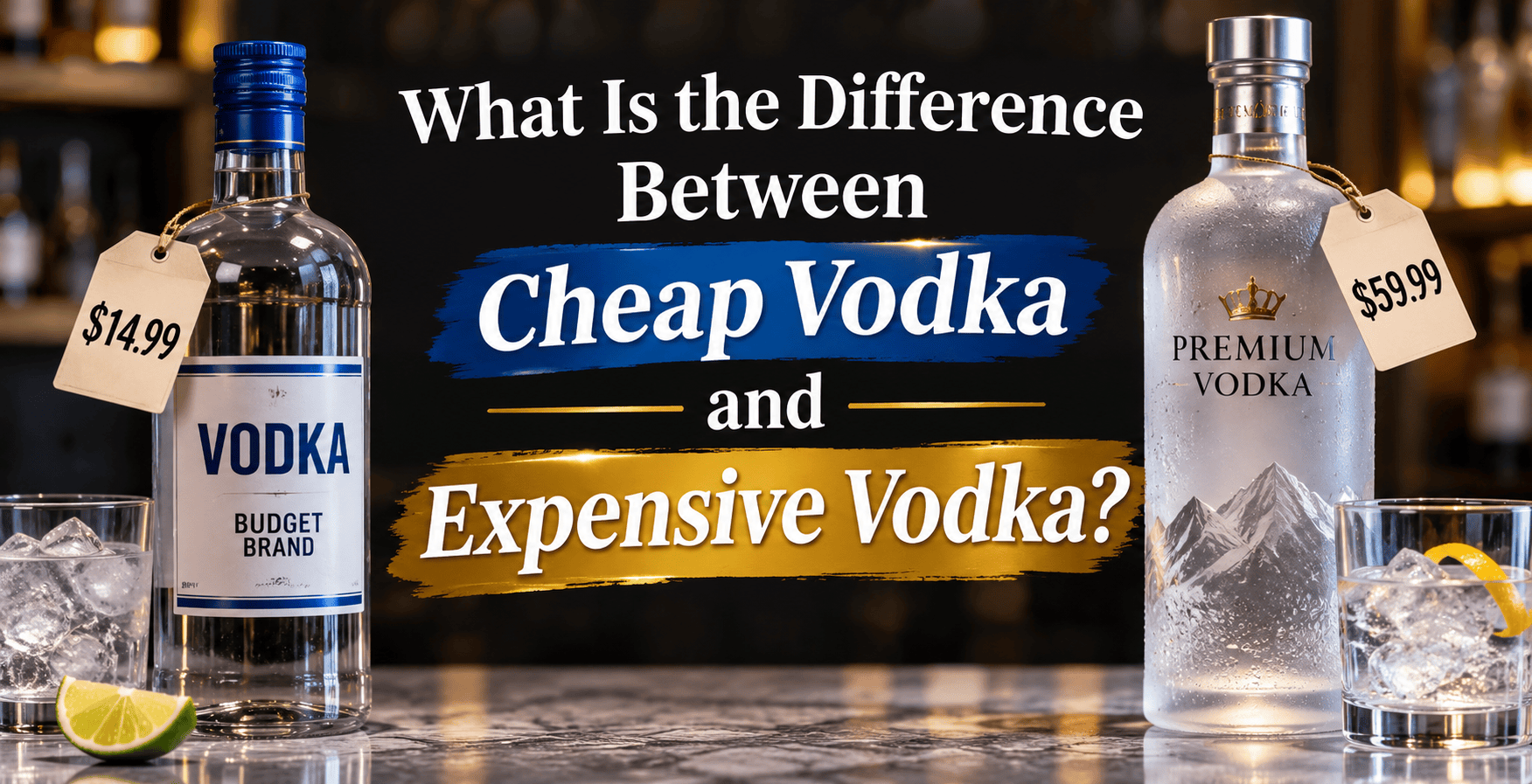
Vodka is one of the most popular spirits in the world, known for its versatility, relatively neutral flavor, and ability to blend into countless cocktails. Whether you enjoy vodka with cranberry juice, mixed into a refreshing lemonade, or served straight from the freezer, you have probably noticed that vodka prices vary dramatically.
Walk into almost any liquor store, and you will find vodka bottles selling for less than $15 sitting alongside premium brands costing $50, $100, or even more.
This raises an interesting question: What is the difference between cheap vodka and expensive vodka, and is paying more actually worth it?
The answer is more complicated than simply assuming expensive vodka tastes better. Differences in ingredients, distillation, filtration, production methods, branding, and packaging can all influence the price.
However, a higher price does not always guarantee a better drinking experience.
Understanding what separates budget vodka from premium vodka can help you make smarter purchasing decisions, choose the right vodka for cocktails, and avoid spending unnecessary money on expensive bottles.
What Makes Vodka Cheap or Expensive?
The price of vodka is influenced by several factors, including production costs, ingredients, distillation techniques, filtration, marketing, and brand reputation.
Some inexpensive vodkas are produced efficiently on a large scale using modern distillation equipment. These companies can manufacture substantial quantities while keeping production costs relatively low.
Premium vodka brands may invest more heavily in specialized ingredients, distinctive production methods, expensive packaging, and advertising.
The biggest factors influencing vodka prices include:
-
Quality and source of ingredients
-
Distillation and purification methods
-
Filtration techniques
-
Water quality and treatment
-
Production scale
-
Brand reputation
-
Bottle design and packaging
-
Marketing and advertising expenses
-
Distribution costs and taxes
While some of these factors can influence the final product, others primarily affect how vodka is presented and marketed.
That distinction is important when deciding whether expensive vodka is worth buying.
1. Ingredients: Does Expensive Vodka Use Better Ingredients?
Vodka can be produced from several agricultural ingredients, including grains, potatoes, grapes, and other fermentable materials.
Common vodka ingredients include wheat, corn, rye, barley, and potatoes.
The ingredients used to produce vodka can influence its texture, aroma, and subtle flavor characteristics.
Cheap Vodka Ingredients
Budget vodka manufacturers often use widely available agricultural ingredients and efficient production methods to reduce costs.
Corn and wheat are common ingredients because they can be sourced in large quantities.
However, inexpensive ingredients do not automatically produce inferior vodka.
A carefully manufactured vodka made from ordinary grain can taste remarkably clean and smooth.
Expensive Vodka Ingredients
Premium vodka brands sometimes emphasize specific agricultural ingredients or growing regions.
For example, a premium producer might advertise vodka made from French winter wheat, Polish rye, or carefully selected potatoes.
These ingredients may contribute subtle differences in mouthfeel and flavor, depending on how the vodka is distilled and processed.
However, because vodka is typically distilled to a very high level of purity, much of the original ingredient’s flavor is removed during production.
The bottom line: Expensive ingredients may contribute to a vodka’s character, but they do not automatically make it taste better.
2. Distillation: Is Expensive Vodka Distilled More Times?
Distillation is one of the most important steps in vodka production.
During distillation, alcohol is separated and concentrated from a fermented liquid.
The process also helps reduce unwanted compounds that can affect aroma and flavor.
How Cheap Vodka Is Distilled
Many inexpensive vodkas are produced using highly efficient industrial column stills.
Modern distillation technology can produce exceptionally pure alcohol at a relatively low cost.
This means budget vodka can be extremely clean and neutral without requiring expensive production methods.
How Expensive Vodka Is Distilled
Premium vodka brands frequently advertise multiple distillations.
You might see labels promoting vodka that has been distilled three, five, seven, or even ten times.
Although repeated distillation can help refine alcohol under certain conditions, the number of distillations alone does not determine quality.
A well-designed continuous distillation system can achieve high purity without relying on an impressive-sounding number of distillation cycles.
Furthermore, excessive purification can remove some of the subtle characteristics that distinguish one vodka from another.
Does more distillation mean better vodka?
Not necessarily. The quality of the distillation process matters more than the number printed on the bottle.
3. Filtration: Does Premium Vodka Have Better Filtration?
Filtration is another major selling point for expensive vodka.
After distillation, vodka may be filtered to remove certain unwanted compounds or improve its sensory characteristics.
Different producers use different filtration materials and techniques.
Common Vodka Filtration Methods
-
Activated charcoal filtration
-
Carbon filtration
-
Quartz sand filtration
-
Specialized mineral filtration
-
Membrane filtration
Some premium brands promote unusual filtration methods involving precious metals or other specialized materials.
However, unusual filtration techniques do not necessarily produce a noticeably better vodka.
The effectiveness of filtration depends on the compounds being removed, the filtration material, and the overall production process.
Can Cheap Vodka Be Well Filtered?
Absolutely.
Many affordable vodka brands use effective carbon filtration systems.
A properly distilled and filtered budget vodka may taste just as clean as a more expensive alternative.
For most consumers, the difference may be difficult to identify, especially when the vodka is mixed with strongly flavored ingredients.
4. Smoothness: Is Expensive Vodka Easier to Drink?
One of the most common claims associated with premium vodka is that it tastes smoother.
Smoothness generally describes how a vodka feels in the mouth and throat.
A smoother vodka may have fewer noticeable harsh aromas, a softer mouthfeel, or a more balanced sensation of alcohol.
However, smoothness is subjective.
Two people tasting the same vodka may have completely different opinions.
Why Some Vodkas Taste Harsh
Several factors can contribute to a harsh drinking experience:
-
Noticeable alcohol intensity
-
Certain residual flavor compounds
-
Differences in dilution water
-
Serving temperature
-
Individual taste sensitivity
Alcohol itself produces a warming or burning sensation, even in very high-quality vodka.
An expensive vodka containing 40% alcohol by volume can still produce a strong alcohol sensation.
Does Price Guarantee Smoothness?
No.
Some inexpensive vodkas perform surprisingly well in blind taste tests, while certain expensive brands may be perceived as sharper or more distinctive.
Serving temperature also matters.
Very cold vodka often seems smoother because chilling reduces the perception of some aromas and flavors.
This can make differences between brands less noticeable.
5. Taste: Can You Actually Taste the Difference?
Vodka is commonly described as a neutral spirit, but that does not mean every vodka tastes identical.
Subtle differences can exist in sweetness, grain character, peppery notes, bitterness, and texture.
Some vodkas have a creamy mouthfeel, while others feel lighter or drier.
However, these differences are generally less pronounced than those found in whiskey, rum, or tequila.
Cheap Vodka Taste
An inexpensive vodka may taste:
-
Clean and neutral
-
Slightly sharp
-
Lightly sweet
-
Mildly grainy
-
Dry or peppery
These characteristics vary considerably between brands.
Expensive Vodka Taste
A premium vodka may offer:
-
A softer mouthfeel
-
Subtle sweetness
-
Delicate grain notes
-
A creamy or silky texture
-
A distinctive finish
But these qualities are not exclusive to expensive vodka.
A well-made budget vodka can exhibit many of the same characteristics.
What Happens in a Blind Taste Test?
When people taste vodka without seeing the bottle or knowing the price, identifying the most expensive option can be surprisingly difficult.
Brand expectations can influence how people perceive flavor.
A recognizable premium label may create an expectation of superior quality before someone even takes a sip.
Blind tasting removes much of that influence.
The best way to determine whether expensive vodka tastes better to you is to compare similar-strength products without knowing which is which.
6. Does Expensive Vodka Cause Less of a Hangover?
One of the biggest myths surrounding premium vodka is that expensive brands prevent hangovers.
Some consumers believe that paying more for vodka means fewer headaches or less discomfort the following morning.
However, expensive vodka does not guarantee a milder hangover.
Hangovers are influenced by several factors, including:
-
Total alcohol consumption
-
Drinking speed
-
Sleep disruption
-
Dehydration
-
Individual alcohol metabolism
-
Food consumption
-
Congeners and other compounds in alcoholic beverages
Vodka generally contains fewer congeners than many darker spirits, although this does not make it hangover-free.
Two vodkas with the same alcohol content can produce similar effects when consumed in equal quantities.
Premium filtration and distillation do not eliminate the effects of ethanol on the body.
The most reliable way to avoid a hangover is not to drink alcohol. Drinking less reduces the risk, but no brand or price category guarantees protection.
7. Packaging and Branding: Are You Paying for the Bottle?
Packaging is one of the most overlooked reasons expensive vodka costs more.
Premium vodka brands frequently use elaborate bottles designed to communicate luxury and exclusivity.
These bottles may feature:
-
Thick decorative glass
-
Frosted finishes
-
Custom bottle shapes
-
Metallic labels
-
Special closures
-
Limited-edition artwork
-
Luxury gift packaging
Some high-end vodka bottles cost significantly more to manufacture than ordinary glass bottles.
Marketing expenses can also contribute substantially to the retail price.
Celebrity endorsements, sponsorships, advertising campaigns, and luxury positioning all influence how brands price their products.
This means part of the premium you pay may have little to do with the actual liquid inside the bottle.
An attractive bottle can make a memorable gift, but it does not automatically indicate superior vodka.
8. Cheap Vodka vs. Expensive Vodka: Side-by-Side Comparison
Here is a general comparison of budget and premium vodka.
| Feature | Cheap Vodka | Expensive Vodka |
|---|---|---|
| Typical 750 mL price | $10–$20 | $30–$60+ |
| Ingredients | Common grains or other agricultural sources | May emphasize selected or specialty ingredients |
| Distillation | Often efficient industrial methods | May feature specialized methods |
| Filtration | Standard or advanced filtration | Sometimes additional or distinctive filtration |
| Taste | Neutral to noticeably sharp | Often marketed as smooth or refined |
| Packaging | Simple, practical bottles | Decorative or luxury bottles |
| Cocktails | Usually excellent for mixing | Also suitable, but higher cost |
| Brand marketing | Value and affordability | Prestige, craftsmanship, exclusivity |
These price ranges are approximate and vary by location, taxes, bottle size, and retailer.
The important takeaway is that production quality and retail price are not perfectly correlated.
9. Is Cheap Vodka Good for Cocktails?
For many cocktails, inexpensive vodka is an excellent choice.
Vodka is frequently combined with ingredients that have much stronger flavors than the spirit itself.
Fruit juices, citrus, soda, ginger beer, and flavored syrups can make subtle vodka differences difficult to notice.
Cocktails That Work Well With Affordable Vodka
Vodka Cranberry
Cranberry juice provides a tart, fruity flavor that blends easily with a neutral vodka.
Screwdriver
Orange juice supplies sweetness and acidity, making this classic cocktail a practical choice for budget vodka.
Moscow Mule
Ginger beer and lime create a bold, refreshing combination that can work well with affordable vodka.
Vodka Lemonade
The sweet-and-tart flavor of lemonade makes it a versatile mixer for inexpensive vodka.
Bloody Mary
Tomato juice, Worcestershire sauce, hot sauce, and seasonings provide strong flavors that can overshadow subtle differences between vodka brands.
When Does Expensive Vodka Matter in Cocktails?
Premium vodka may be more noticeable in cocktails that contain fewer ingredients.
For example, a vodka martini places greater emphasis on the spirit’s texture and subtle flavor.
A vodka soda can also reveal differences between brands because there are fewer ingredients competing with the vodka.
However, personal preference remains more important than price.
10. Is Expensive Vodka Better for Drinking Straight?
If you enjoy vodka neat or chilled without mixers, the differences between brands may become more noticeable.
Drinking vodka straight allows you to evaluate its aroma, mouthfeel, flavor, and finish without interference from other ingredients.
Some people prefer premium vodka because they enjoy its particular texture or subtle characteristics.
Others find that affordable vodka provides an equally satisfying experience.
How to Taste Vodka Properly
If you want to compare vodka quality, try the following approach:
-
Choose two or three vodkas with the same alcohol content.
-
Pour small samples into identical glasses.
-
Taste them at the same temperature.
-
Evaluate aroma, texture, flavor, and finish.
-
Compare your preferences before revealing the brands.
A blind comparison can help separate actual taste preferences from brand expectations.
Use small tasting portions and avoid consuming the samples simply to finish them.
11. What Is the Best Price Range for Good Vodka?
You do not necessarily need to spend $50 or more to purchase a good bottle of vodka.
Many consumers find excellent options in the $15–$30 range for a standard 750 mL bottle.
This price category often includes established brands that combine efficient production with consistent quality.
Vodka Under $15
Budget vodka can work well for mixed drinks, punches, and party cocktails.
Quality varies by brand, so it is worth comparing different options.
Vodka Between $15 and $30
This range can offer an appealing balance of affordability, consistency, and taste.
It is often a practical starting point for someone looking for an everyday mixing vodka.
Vodka Between $30 and $50
Premium vodka in this category may offer distinctive ingredients, production methods, or packaging.
Some bottles may have a texture or flavor profile that you genuinely prefer.
Vodka Over $50
Luxury vodka often commands higher prices because of branding, exclusivity, elaborate packaging, or specialized production.
While some bottles may offer a distinctive experience, spending more does not guarantee a noticeable improvement.
For most mixed drinks, a well-made mid-priced vodka is usually a sensible purchase.
12. Does Expensive Vodka Have More Alcohol?
No. Vodka price does not determine alcohol strength.
Many inexpensive and expensive vodkas are bottled at 40% alcohol by volume, or 80 proof, in the United States.
Some products have higher or lower alcohol concentrations, depending on the brand and market.
A $12 bottle of vodka containing 40% alcohol has the same alcohol concentration as a $60 bottle containing 40% alcohol.
Higher prices do not automatically mean stronger alcohol.
Always check the alcohol by volume printed on the label rather than assuming strength based on price.
13. Why Do Some People Prefer Expensive Vodka?
There are several reasons someone might choose premium vodka even when cheaper alternatives are available.
Some consumers genuinely prefer the flavor or texture of a particular expensive brand.
Others appreciate the history, ingredients, or production philosophy associated with a producer.
Premium vodka can also be purchased for celebrations, gifts, or special occasions.
Brand loyalty and presentation influence purchasing decisions as well.
There is nothing inherently wrong with choosing expensive vodka if you enjoy it and can comfortably afford it.
The important thing is understanding what you are paying for.
A higher price may reflect better craftsmanship, but it can also reflect advertising, packaging, or prestige.
14. How Can You Tell if a Cheap Vodka Is Good Quality?
Rather than judging vodka exclusively by price, consider several practical indicators.
Check the Alcohol Content
Compare vodkas with similar alcohol concentrations when evaluating taste and value.
Look at the Producer
Established producers with consistent quality-control practices can offer reliable products at different price points.
Consider the Intended Use
A vodka intended for fruit cocktails does not need the same sensory characteristics as one you plan to drink neat.
Read Reviews Carefully
Look for detailed descriptions of aroma, texture, and flavor rather than relying entirely on brand reputation.
Try a Blind Comparison
Personal preference is ultimately more useful than an expensive label.
If a $15 vodka tastes just as good to you as a $45 bottle, there may be little reason to spend the extra money.
15. Common Myths About Cheap and Expensive Vodka
Several misconceptions influence how people shop for vodka.
Myth 1: Expensive Vodka Is Always Smoother
Not necessarily. Smoothness is subjective, and some affordable vodkas can be exceptionally clean.
Myth 2: More Distillation Always Means Better Vodka
The effectiveness of the distillation process matters more than the advertised number of distillations.
Myth 3: Premium Vodka Prevents Hangovers
False. Alcohol consumption itself is a major cause of hangovers, regardless of bottle price.
Myth 4: Cheap Vodka Is Always Made With Inferior Ingredients
False. Many budget brands use ordinary, suitable agricultural ingredients and modern production methods.
Myth 5: You Need Expensive Vodka for Great Cocktails
False. Affordable vodka can produce excellent cocktails, particularly when combined with flavorful mixers.
Myth 6: All Vodka Tastes Exactly the Same
Not quite. Vodka can have subtle differences in flavor, aroma, and texture, even though it is generally a neutral spirit.
Frequently Asked Questions About Cheap and Expensive Vodka
Is there really a difference between cheap vodka and expensive vodka?
Yes, differences can exist in ingredients, distillation methods, filtration, flavor, texture, packaging, and branding. However, the difference in price is not always proportional to the difference in quality.
Is $20 vodka considered good?
Many vodkas around $20 offer good quality and value. The best choice depends on the brand, local pricing, and whether you plan to mix the vodka or drink it straight.
Why does cheap vodka sometimes taste stronger?
Some inexpensive vodkas may have sharper sensory characteristics. However, perceived harshness does not necessarily mean they contain more alcohol. Serving temperature and individual taste sensitivity also influence the experience.
Can people tell the difference between cheap and expensive vodka?
Some people can detect differences between specific brands, especially when tasting vodka neat. However, identifying which vodka is more expensive can be difficult without seeing the label.
Is expensive vodka worth it for a vodka martini?
It can be if you particularly enjoy the premium vodka’s texture or flavor. Because a vodka martini contains relatively few ingredients, differences between spirits may be more noticeable.
Does cheap vodka have more impurities?
Not necessarily. Modern industrial distillation can produce highly purified alcohol at relatively low cost. Price alone is not a reliable measure of impurity levels.
Does putting cheap vodka in the freezer make it taste better?
Chilling vodka can reduce the perception of some aromas and harsh flavors, making it seem smoother. However, freezing does not remove impurities or improve the underlying quality of the vodka.
Is premium vodka healthier than cheap vodka?
No meaningful health advantage should be assumed from a premium price. Vodka contains ethanol, which carries health risks regardless of brand, production method, or cost.
What matters more when buying vodka: brand or price?
Neither should be the only deciding factor. Your intended use, personal taste, product consistency, and budget are generally more useful considerations.
Final Thoughts: Is Expensive Vodka Really Worth the Money?
The difference between cheap vodka and expensive vodka comes down to a combination of production methods, ingredients, taste, packaging, marketing, and personal preference.
Some premium vodkas offer distinctive textures and subtle flavors that certain drinkers appreciate. Others cost significantly more because of luxury branding and elaborate presentation.
Meanwhile, many affordable vodkas benefit from modern distillation and filtration techniques that produce clean, consistent spirits at reasonable prices.
If you primarily use vodka in cocktails containing fruit juice, lemonade, ginger beer, or other flavorful mixers, a good budget or mid-priced vodka will often serve you just as well as an expensive bottle.
If you prefer vodka straight or in minimalist cocktails, experimenting with different brands may help you discover whether a premium option offers something you genuinely enjoy.
Ultimately, the best vodka is not necessarily the most expensive bottle on the shelf. It is the one that suits your taste, your intended use, and your budget.
Understanding the difference between price and quality allows you to choose vodka with greater confidence rather than assuming a luxury label automatically means a better spirit.
And regardless of which vodka you choose, responsible consumption matters far more than the price printed on the bottle.


Leave a Reply