
Blog

  • Grief Does Not End When the Funeral Is Over: The Importance of Continued Support

    Grief Does Not End When the Funeral Is Over: The Importance of Continued Support

    When someone we love dies, the world seems to pause. Family and friends gather. Flowers arrive. Cards fill the mailbox. Meals are delivered. People offer hugs, prayers, and words of comfort. During those first days and weeks after a loss, grieving individuals are often surrounded by support.

    But eventually, the funeral ends.

    The visitors go home. The sympathy cards stop arriving. Life resumes for everyone else.

    For the grieving person, however, life is never quite the same again.

    One of the greatest misunderstandings about grief is the belief that it follows a predictable timeline. Society often expects people to move through their grief, find closure, and return to normal after a certain period of time. Yet anyone who has experienced a profound loss knows the truth: grief does not end when the funeral is over.

    In many ways, that is when the real journey begins.

    The Silence After the Crowd Leaves

    The days immediately following a death are often filled with activity. There are funeral arrangements to make, family members to notify, paperwork to complete, and countless decisions that must be made despite overwhelming emotional pain.

    During this time, grieving individuals are often operating on pure survival.

    Then, suddenly, everything becomes quiet.

    The funeral is over. The casseroles stop arriving. The phone stops ringing as often. People return to work, school, and their normal routines.

    The grieving person is left alone with the reality of their loss.

    The house feels emptier.

    The silence feels louder.

    The absence becomes impossible to ignore.

    This is often when grief truly begins to settle into everyday life.

    Many bereaved people describe feeling abandoned during this stage—not because their friends and family don’t care, but because the support that was so abundant at first slowly fades away while their pain remains.

    Grief Has No Expiration Date

    One of the most painful experiences for grieving individuals is feeling pressure to “move on.”

    People may ask:

    • “Are you doing better now?”
    • “Have you found closure?”
    • “It’s been a year already.”
    • “You need to focus on the future.”

    While usually well-intentioned, these comments reveal a misunderstanding of grief.

    Love does not disappear because time passes.

    A mother never stops being a mother because her child died.

    A father never stops missing his son.

    A spouse never forgets the person they built a life with.

    A sibling never stops carrying memories of the brother or sister they lost.

    The relationship continues even though the person is gone.

    Healthy grieving is not about forgetting. It is about learning how to live with the absence while still carrying the love.

    Years may pass, but grief often remains present in different ways.

    The intensity may lessen. The tears may become less frequent. The crushing weight may become more manageable.

    But the loss remains.

    And so does the love.

    The Grief That Others Don’t See

    Many grieving people become experts at hiding their pain.

    They smile when they are hurting.

    They attend social events while feeling broken inside.

    They go to work, pay bills, and fulfill responsibilities while carrying emotional wounds that few people notice.

    Because they appear functional, others assume they have healed.

    What many don’t realize is that grief often becomes an invisible burden.

    A bereaved parent may quietly cry in their car after seeing a child who reminds them of their son or daughter.

    A widow may smile through family gatherings while privately aching for the spouse who should be sitting beside her.

    A grieving father may spend Father’s Day pretending he is okay while feeling shattered inside.

    The pain becomes less visible but no less real.

    This is why continued support matters so much.

    Sometimes the people who seem strongest are the ones who need support the most.

    The Special Pain of Significant Dates

    Grief has a way of intensifying around certain dates.

    Birthdays.

    Anniversaries.

    Holidays.

    Graduations.

    Weddings.

    Mother’s Day.

    Father’s Day.

    Christmas.

    These occasions serve as painful reminders of who is missing.

    While others celebrate, grieving individuals often find themselves reflecting on memories and wondering what should have been.

    A parent may calculate how old their child would be today.

    A spouse may imagine what another anniversary together would have looked like.

    A sibling may wonder what life would have been like if their brother or sister were still here.

    These dates can trigger powerful waves of sadness even decades after a loss.

    One simple message that says, “I’m thinking about you today,” can provide tremendous comfort during these difficult moments.

    Why Remembering Matters

    One fear shared by many grieving people is that their loved one will be forgotten.

    As years pass, fewer people mention their name.

    Fewer stories are told.

    Fewer memories are shared.

    The world moves forward.

    But for those left behind, remembering matters.

    One of the greatest gifts you can give a grieving person is acknowledging their loved one.

    Mention their name.

    Share a memory.

    Talk about something you remember.

    Tell a story that makes you smile.

    Far from causing pain, these moments often bring comfort.

    Most grieving people are already thinking about their loved one every day. Hearing others remember them reminds them that their loved one’s life mattered.

    It reassures them that the person they lost continues to be remembered.

    Small Acts of Kindness Make a Big Difference

    Many people avoid reaching out because they worry they won’t know what to say.

    The truth is that perfect words are not necessary.

    Simple acts of kindness often mean the most.

    A text message.

    A phone call.

    A handwritten card.

    An invitation to lunch.

    A cup of coffee together.

    A simple question:

    “How are you really doing?”

    These gestures communicate something powerful:

    “You are not alone.”

    Grief can be incredibly isolating. Continued support helps break through that isolation.

    Even brief moments of connection can provide hope during dark seasons.

    Supporting Bereaved Parents

    The loss of a child creates a unique kind of grief.

    Parents expect to watch their children grow, build lives, and create families of their own.

    When a child dies, those hopes and dreams die as well.

    For bereaved parents, grief often becomes a lifelong companion.

    Many parents continue to think about their child every day.

    They remember birthdays.

    They imagine milestones that were never reached.

    They wonder what their child would look like today.

    They carry both love and loss everywhere they go.

    One of the greatest gifts you can offer a bereaved parent is acknowledging that their child existed and continues to matter.

    Don’t be afraid to say their child’s name.

    Don’t be afraid to ask about them.

    Don’t assume that years have erased the pain.

    Support offered years later often means more than support offered during the first weeks after the loss.

    What Continued Support Looks Like

    Continued support doesn’t require grand gestures.

    It looks like consistency.

    It looks like remembering.

    It looks like showing up.

    You might:

    • Send a text on an anniversary.
    • Call on a birthday.
    • Invite them to dinner.
    • Listen without trying to fix their pain.
    • Share a memory of their loved one.
    • Check in during holidays.
    • Offer companionship during difficult seasons.

    The goal isn’t to remove grief.

    The goal is to ensure the grieving person doesn’t carry it alone.

    For Those Who Feel Forgotten

    If you are grieving and feel as though everyone else has moved on, please know this:

    Your grief is not a problem to solve.

    Your love is not something to get over.

    There is no deadline for missing someone.

    There is no expiration date on remembering.

    There is no timetable for healing.

    The tears that come years later do not mean you are failing.

    The difficult days do not mean you are moving backward.

    The longing you feel is simply evidence of a love that continues.

    You are not weak because you still miss them.

    You are human.

    And your grief deserves compassion.

    A Message to Friends and Family

    If someone you care about is grieving, remember that your support is needed long after the funeral ends.

    The first year is difficult.

    The second year can be even harder.

    Sometimes the support that arrives years later becomes the support they remember most.

    Don’t worry about having perfect words.

    Just show up.

    Send the text.

    Make the call.

    Remember the anniversary.

    Speak their loved one’s name.

    Your kindness may arrive at exactly the moment it is needed most.

    Final Thoughts

    Grief does not end when the funeral is over.

    It doesn’t disappear when the sympathy cards stop arriving.

    It doesn’t vanish because months or years have passed.

    Grief changes, evolves, and becomes woven into the fabric of a person’s life.

    That is why continued support matters.

    A simple message.

    A remembered birthday.

    A shared memory.

    A quiet act of kindness.

    These small gestures remind grieving hearts that they are not forgotten and that neither are the people they love.

    Because while death may end a life, it never ends love.

    And for those carrying grief, knowing that others still remember can make all the difference.

    A Father’s Guide to Surviving the Loss of a Child
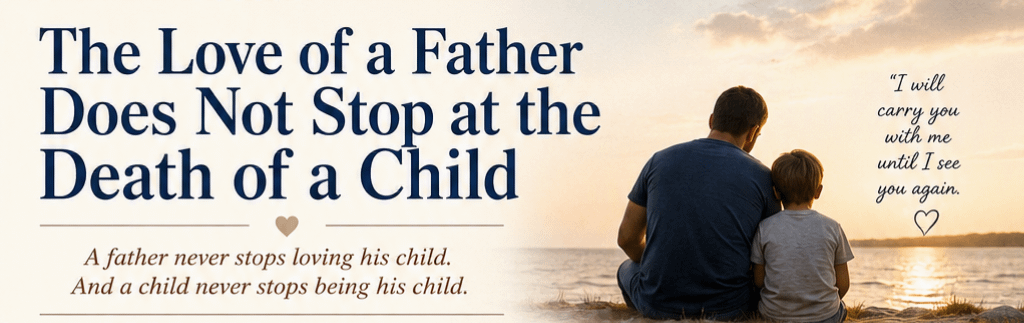
  • The Love of a Father Does Not Stop at the Death of a Child

    The Love of a Father Does Not Stop at the Death of a Child

    There are some relationships in life that death cannot break.

    The bond between a father and his child is one of them.

    When a child dies, many people struggle to understand what happens next. They see the funeral, the tears, the months and years that follow, and they assume that eventually the father learns to let go. They believe healing means moving on. They think that with enough time, the loss somehow becomes smaller.

    But every grieving father knows the truth.

    The love of a father does not stop at the death of a child.

    It does not end at the graveside. It does not disappear after the funeral flowers fade. It does not weaken because the calendar keeps turning. It remains as real and powerful as it was the day that child entered the world.

    A father never stops loving his child.

    And a child never stops being his child.

    The Day Everything Changed

    The day a child dies is often the day a father’s world is divided into two parts: before and after.

    Before, there were plans.

    There were birthdays to celebrate, milestones to witness, conversations yet to be had, and memories still waiting to be made.

    After, there is a silence that feels impossible to describe.

    The future you imagined vanishes in an instant.

    The dreams you carried for your child suddenly have nowhere to go.

    The chair at the dinner table sits empty.

    The phone stops ringing.

    The world continues moving while your own heart feels frozen in place.

    For many fathers, the most painful realization is that there is nothing they can do to fix it.

    Fathers spend much of their lives protecting their children. We teach them to ride bikes, drive cars, handle challenges, and face life’s obstacles. We want to solve their problems and shield them from harm.

    But death presents a problem no father can solve.

    And that helplessness can be crushing.

    Yet even in that devastation, one thing remains untouched.

    Love.

    Love Does Not Require Presence

    One of the hardest lessons grieving fathers learn is that love does not require physical presence.

    You do not stop loving someone because you can no longer see them.

    You do not stop loving someone because you can no longer hear their voice.

    You do not stop loving someone because they have died.

    In fact, many fathers discover that the love they feel becomes even more noticeable after loss.

    Every memory becomes precious.

    Every photograph becomes priceless.

    Every story becomes a treasure worth telling again and again.

    The relationship changes, but the love remains.

    I still think about my son every day.

    I still wonder what he would think about certain situations.

    I still imagine conversations we would have had.

    I still carry lessons he taught me.

    The physical connection may be gone, but the emotional and spiritual connection remains alive.

    That is the power of a father’s love.

    The Weight of Missing Them

    Missing a child is not something that eventually disappears.

    It changes shape.

    In the beginning, grief often feels like a tidal wave. Every moment is overwhelming. Every reminder triggers tears. Every day feels impossible.

    Over time, those waves may become less frequent, but they never completely stop.

    A birthday arrives.

    Father’s Day appears on the calendar.

    A graduation season comes around.

    A favorite song plays unexpectedly.

    A photograph appears while cleaning a drawer.

    Suddenly, the grief is there again.

    Not because healing has failed.

    Not because the father is weak.

    But because love still exists.

    The reason we miss our children so deeply is because we loved them so deeply.

    Grief is love with nowhere to go.

    The pain itself becomes evidence of the bond that remains.

    The Love That Becomes Legacy

    Many fathers find themselves asking an important question after losing a child:

    “What do I do with all this love?”

    The child is no longer physically present to receive it.

    The hugs cannot be given.

    The advice cannot be shared.

    The encouragement cannot be spoken directly.

    Yet the love still exists.

    For many grieving parents, that love transforms into legacy.

    Some create scholarships.

    Some volunteer.

    Some support charities.

    Some mentor young people.

    Some become advocates for causes related to their child’s life or death.

    Others simply try to become better human beings.

    Every act of kindness becomes a way of honoring the child they lost.

    Every person helped becomes another way their child’s influence continues in the world.

    Love that can no longer be given directly often finds new ways to serve others.

    My Son Still Inspires Me

    One of the most surprising parts of grief is realizing that your child continues to influence your life long after they are gone.

    My son taught me lessons that continue shaping me today.

    His kindness reminds me to be compassionate.

    His courage reminds me to keep going.

    His memory reminds me that life is precious.

    Some days when I feel tired, discouraged, or broken, I think about the man he believed I could become.

    I remember the love he had for me.

    I remember the pride he showed in me.

    And I find strength to take another step forward.

    Not because the pain is gone.

    But because the love remains.

    Many grieving fathers experience something similar.

    Their child becomes part of their inner compass.

    The influence never disappears.

    The lessons never leave.

    The love continues guiding them.

    The Fear of Forgetting

    One fear many bereaved fathers carry is the fear of forgetting.

    We worry about forgetting the sound of their voice.

    We worry about forgetting their laugh.

    We worry about forgetting small details that once seemed insignificant.

    The truth is that memory changes over time.

    Certain details may become harder to recall.

    But love preserves what matters most.

    You may not remember every conversation.

    You may not remember every date.

    You may not remember every moment.

    But you will always remember how they made you feel.

    You will remember the pride.

    You will remember the joy.

    You will remember the connection.

    You will remember the love.

    And that is what truly matters.

    A Father’s Heart Never Stops Being a Father’s Heart

    Society often expects fathers to be strong.

    We are taught to stay busy.

    We are taught to suppress emotion.

    We are taught to move forward quickly.

    Yet child loss teaches us something different.

    It teaches us that true strength is not pretending the pain doesn’t exist.

    True strength is carrying that pain while continuing to love.

    A father’s heart never stops being a father’s heart.

    Even after death.

    Even after years pass.

    Even when life changes.

    The role remains.

    The identity remains.

    The love remains.

    Faith and the Hope of Reunion

    For fathers who have faith, there is another source of comfort.

    Death is not viewed as the end of the story.

    It is viewed as a separation that will one day be healed.

    Scripture reminds us that this world is not our final home.

    It reminds us that God is close to the brokenhearted.

    It reminds us that those who trust in Him have hope beyond the grave.

    That hope does not remove grief.

    It does not eliminate sorrow.

    But it provides something powerful: the belief that goodbye is not forever.

    For many grieving fathers, that hope becomes an anchor during life’s darkest storms.

    Love Stronger Than Death

    Perhaps the greatest lesson a grieving father learns is this:

    Love is stronger than death.

    Death can take away future conversations.

    Death can take away physical presence.

    Death can take away plans and dreams.

    But it cannot take away love.

    Love survives.

    Love endures.

    Love remembers.

    Love honors.

    Love carries on.

    Every time a father shares a story about his child, love continues.

    Every time he helps someone in their memory, love continues.

    Every time he chooses to keep living despite the pain, love continues.

    The world may no longer see the child, but the father’s heart carries them every single day.

    Conclusion

    The death of a child is one of life’s greatest tragedies, but it cannot destroy the bond between a father and his son or daughter.

    That bond is built on years of sacrifice, devotion, memories, and unconditional love.

    It is a connection that reaches beyond what the eyes can see.

    The love of a father does not end when a child takes their last breath.

    It lives in memories.

    It lives in stories.

    It lives in acts of kindness.

    It lives in the determination to keep moving forward.

    It lives in the hope of reunion.

    And it lives forever in the heart of a father who will always love the child he lost.

    Because a father never stops being a father.

    And true love never dies.

    A Father’s Guide to Surviving the Loss of a Child

  • Grief Hits Harder on Father’s Day

    Grief Hits Harder on Father’s Day

    For most people, Father’s Day is a celebration. It is a day filled with family gatherings, phone calls, gifts, cookouts, and expressions of gratitude. Social media fills with photographs of fathers and children smiling together, sharing memories, and celebrating the bond they share.

    But for fathers who have lost a child, Father’s Day can be one of the most difficult days of the year.

    It is not simply another holiday. It is a reminder.

    A reminder of the child who should be there.

    A reminder of the memories that were made and the memories that never got the chance to happen.

    A reminder that while the world celebrates fatherhood, a grieving father is carrying a loss that many people cannot fully understand.

    The truth is that grief hits harder on Father’s Day because Father’s Day itself is about the relationship that was forever changed. It highlights the love that still exists while exposing the painful absence that remains.

    The Day Begins Before It Even Arrives

    For many grieving fathers, the pain starts long before Father’s Day itself.

    As the holiday approaches, reminders begin appearing everywhere.

    Store displays showcase Father’s Day gifts. Restaurants advertise special meals. Television commercials focus on fathers spending time with their children. Social media becomes filled with countdowns and celebrations.

    Each reminder can feel like a small emotional wound.

    What is intended to be joyful for most people can become painful for someone carrying the loss of a child.

    The anticipation itself often creates anxiety.

    Some fathers dread the day weeks in advance. They know the emotions that are coming. They know the memories that will surface. They know they will once again face the reality that their child is not here.

    That anticipation can make Father’s Day feel emotionally exhausting before it even arrives.

    A Father’s Identity Never Ends

    One of the most misunderstood aspects of child loss is the impact it has on a father’s identity.

    When a child dies, fathers do not stop being fathers.

    The title remains.

    The love remains.

    The responsibility to remember remains.

    But the daily opportunities to express that fatherhood are suddenly gone.

    Father’s Day can bring difficult questions:

    “Am I still a father?”

    “Do I deserve to celebrate Father’s Day?”

    “Should I acknowledge the day at all?”

    The answer is yes.

    A father remains a father forever.

    Death changes the relationship, but it does not erase it.

    The bond between parent and child does not end because a heartbeat stops. The love that created that relationship continues to exist.

    Many grieving fathers need permission to recognize that they still belong on Father’s Day.

    Their child may no longer be physically present, but they are still fathers.

    Always.

    Missing Their Voice

    One of the most painful parts of Father’s Day after losing a child is missing the simple things.

    It is not always the major milestones that hurt the most.

    Sometimes it is the ordinary moments.

    The phone call.

    The text message.

    The hug.

    The laugh.

    The simple words:

    “Happy Father’s Day, Dad.”

    Those words may have once seemed routine.

    Now they would mean everything.

    Many fathers find themselves staring at old text messages, listening to saved voicemails, or looking through photographs searching for pieces of the child they miss so deeply.

    The silence left behind can feel deafening.

    There is an emptiness where conversation once lived.

    And on Father’s Day, that silence often feels louder than ever.

    Grieving the Future That Was Stolen

    Losing a child means losing far more than a person.

    It means losing an entire future.

    Father’s Day often brings that reality into focus.

    A father may find himself imagining what life would look like if his child were still here.

    Would they have graduated college?

    Would they be married?

    Would they have children of their own?

    Would they be sitting across the table sharing stories and laughter?

    The human mind naturally imagines these possibilities because love naturally looks toward the future.

    When that future disappears, grief fills the space where dreams once existed.

    Many fathers find themselves mourning not only the child they lost but also the life that child never got the chance to live.

    The Hidden Grief of Fathers

    Society often gives mothers more permission to openly grieve.

    People expect mothers to cry.

    People expect mothers to talk about their pain.

    People expect mothers to struggle.

    Fathers are often treated differently.

    Many men receive messages throughout their lives that they should be strong, stay composed, and handle pain privately.

    As a result, many grieving fathers become experts at hiding their emotions.

    They continue working.

    They continue providing.

    They continue carrying responsibilities.

    But inside, they are struggling.

    Father’s Day can expose those hidden wounds.

    The emotions that have been pushed aside throughout the year often come rushing back.

    The grief that has been carefully managed suddenly demands attention.

    Many fathers find themselves overwhelmed by emotions they thought they had under control.

    This is not weakness.

    It is grief.

    And grief has its own timetable.

    When Other Families Celebrate

    One of the hardest parts of Father’s Day is watching other families celebrate.

    Most grieving fathers genuinely want others to enjoy the day.

    They are happy for fathers who get to spend time with their children.

    But that does not erase the pain.

    Seeing fathers surrounded by their children can be a painful reminder of what has been lost.

    Social media can become especially difficult.

    Photographs of family gatherings, vacations, and celebrations may trigger feelings of sadness, jealousy, anger, or loneliness.

    These emotions are normal.

    They do not mean a grieving father is selfish.

    They simply reflect the reality of profound loss.

    You can be happy for someone else while still hurting for yourself.

    Both emotions can exist at the same time.

    The Weight of Guilt

    Many grieving fathers carry guilt.

    Father’s Day often amplifies those feelings.

    They replay decisions.

    They revisit conversations.

    They wonder if they could have done something differently.

    Even when a child’s death was completely beyond their control, many fathers still ask themselves impossible questions.

    “What if I had called?”

    “What if I had noticed something?”

    “What if I had been there?”

    Guilt becomes one of grief’s cruelest companions because it constantly rewrites history.

    The truth is that most grieving fathers did the best they could with the knowledge they had at the time.

    Love does not guarantee control.

    Being a father does not mean having the power to prevent every tragedy.

    Yet many fathers continue carrying guilt long after the loss.

    Father’s Day can bring those feelings back to the surface.

    Keeping Their Child’s Memory Alive

    Many fathers discover that Father’s Day becomes easier when they intentionally honor their child.

    Rather than avoiding memories, they create space for them.

    Some visit a cemetery.

    Others release balloons, light candles, or write letters.

    Some spend time doing activities their child loved.

    Others volunteer, donate, or help someone in need in their child’s memory.

    These traditions do not erase grief.

    But they transform the day from one focused entirely on loss into one that also celebrates love.

    The goal is not to move on from the child.

    The goal is to move forward while carrying the child’s memory with you.

    The Strength to Keep Living

    One of the greatest challenges grieving fathers face is learning how to continue living after unimaginable loss.

    Father’s Day can highlight this struggle.

    Some fathers feel guilty for finding happiness.

    Others feel guilty for laughing.

    Some feel guilty for enjoying life when their child cannot.

    But healing is not betrayal.

    Finding joy does not mean forgetting.

    Building a future does not mean abandoning the past.

    Your child would not want your life to end because theirs did.

    They would want you to continue living.

    To continue loving.

    To continue growing.

    To continue finding purpose.

    That does not mean the grief disappears.

    It means learning to carry grief while still embracing life.

    A Message to Every Father Missing a Child

    If Father’s Day feels unbearable this year, know that your feelings are valid.

    If you cry, it is because you loved.

    If you ache, it is because your child mattered.

    If you feel lonely, it is because a piece of your heart is missing.

    You are not weak.

    You are grieving.

    And grief is the price we pay for love.

    Your child’s life mattered.

    Their story mattered.

    Their memory matters.

    And so does your pain.

    This Father’s Day, allow yourself to remember.

    Speak their name.

    Look at their photographs.

    Tell their stories.

    Celebrate the love that still exists.

    Because while death may have separated you physically, it could never destroy the bond between a father and his child.

    You will always be their father.

    And they will always be your child.

    No holiday, no passing year, and no amount of time can ever change that.

    A Father’s Guide to Surviving the Loss of a Child
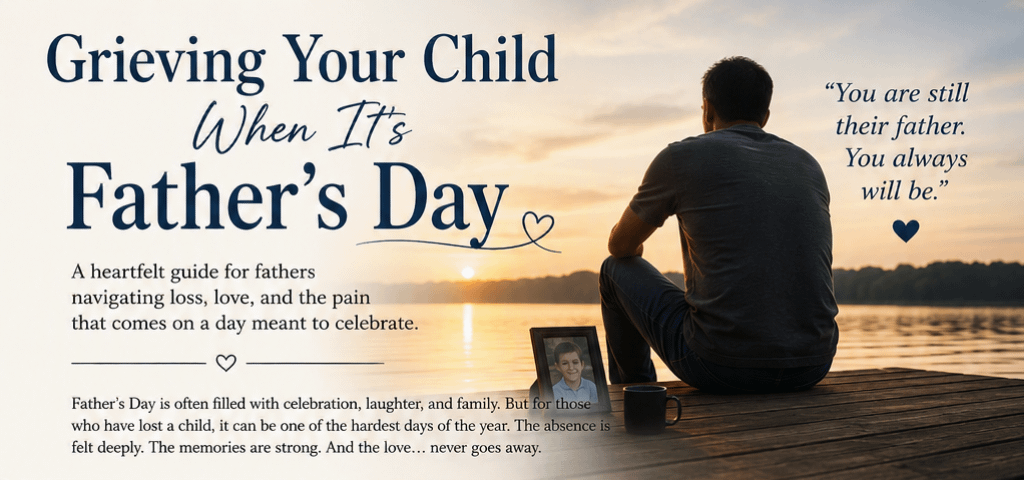
  • Grieving Your Child When It’s Father’s Day

    Grieving Your Child When It’s Father’s Day

    Father’s Day is a day many men look forward to each year. It is a celebration of fatherhood, family, love, and the special bond between a father and his children. Restaurants fill with families sharing meals, social media becomes flooded with pictures and tributes, and stores display cards that celebrate the joys of being a dad.

    But for fathers who have lost a child, Father’s Day can feel like one of the most painful days on the calendar.

    While others celebrate, grieving fathers are often reminded of what is missing. The child who should be calling, texting, visiting, or sitting beside them is gone. The day that once brought happiness can now bring a wave of sadness, loneliness, and heartache that feels impossible to escape.

    For many bereaved fathers, Father’s Day is not simply another difficult day—it is a reminder of a love that continues to exist despite the absence of the child they cherished.

    The Father’s Day No One Talks About

    Society tends to focus on Father’s Day as a happy occasion. Advertisements show smiling families. Restaurants offer special meals. Children proudly hand over homemade cards and gifts.

    What often goes unseen are the fathers quietly carrying unimaginable grief.

    The father visiting his son’s grave before anyone else wakes up.

    The father sitting alone with old photographs.

    The father staring at a phone that will never ring with his child’s voice again.

    The father who smiles through family gatherings while silently wishing one person were still there.

    These fathers often feel invisible on Father’s Day. While everyone else celebrates fatherhood, they are grieving a child who should still be part of their lives.

    Their pain may be hidden, but it is very real.

    You Are Still a Father

    One of the most painful questions grieving fathers often ask themselves is:

    “Am I still a father?”

    The answer is absolutely yes.

    Fatherhood does not end when a child dies.

    You became a father the moment your child entered your life. You loved them, protected them, taught them, worried about them, and dreamed for them. Nothing—not even death—can erase those experiences.

    Your child may no longer be physically present, but your relationship with them continues through memories, love, and the impact they had on your life.

    You are still their father.

    You always will be.

    No holiday, circumstance, or tragedy can take that away.

    The Weight of Missing Them

    What makes Father’s Day especially difficult is that it highlights the absence.

    You notice the empty chair.

    You notice the silence.

    You notice the missing hug.

    You notice the missing card.

    You notice everything that should be there but isn’t.

    Grief often magnifies what is missing. A father may spend weeks preparing himself emotionally for Father’s Day only to find that the reality is still overwhelming.

    Sometimes it is the smallest things that hurt the most.

    A memory pops up on social media.

    A Father’s Day advertisement appears on television.

    A family walks by holding hands.

    Someone asks what your plans are for Father’s Day.

    In an instant, grief can rise to the surface again.

    The pain is not a sign of weakness. It is a reflection of love.

    The deeper the love, the deeper the loss.

    Grieving the Future That Was Stolen

    When a child dies, fathers do not only lose what existed.

    They lose what was supposed to happen.

    They lose future birthdays.

    They lose future holidays.

    They lose future conversations.

    They lose future milestones.

    Many fathers imagine the life their child would have lived.

    What career would they have chosen?

    Would they have married?

    Would they have become parents themselves?

    What would they look like today?

    Father’s Day often becomes a reminder of all those unanswered questions.

    The future you imagined did not happen, and grieving that future is every bit as real as grieving the past.

    Why Fathers Often Grieve Alone

    Men are frequently taught from a young age to be strong, stay composed, and handle their emotions privately.

    When tragedy strikes, many fathers feel pressure to support everyone else while ignoring their own pain.

    They become the caretaker.

    The problem solver.

    The protector.

    The strong one.

    But underneath that strength is often a broken heart.

    Many fathers find it difficult to talk openly about their grief. Some fear appearing weak. Others worry about burdening friends and family.

    As a result, they suffer quietly.

    Father’s Day can amplify that loneliness.

    The world may recognize mothers who grieve, but grieving fathers often feel forgotten.

    The truth is that fathers grieve deeply.

    Their grief may look different, but it is no less profound.

    When Memories Bring Both Joy and Pain

    Father’s Day often becomes a day of memories.

    You remember teaching your child how to ride a bike.

    You remember family vacations.

    You remember bedtime stories.

    You remember school events, birthdays, and holidays.

    You remember the sound of their laughter.

    These memories can be both comforting and heartbreaking.

    For a moment, the memory makes you smile.

    Then the reality returns, and tears follow.

    This emotional contradiction is common among grieving parents.

    The memories hurt because they matter.

    But they also remind us of the incredible love we shared.

    Honoring Your Child on Father’s Day

    Many bereaved fathers find healing in creating meaningful ways to honor their child.

    There is no right or wrong approach.

    Some fathers visit a cemetery.

    Some release balloons.

    Some light candles.

    Some write letters to their child.

    Some spend time looking through photographs.

    Some volunteer or help others in their child’s memory.

    Others simply sit quietly and reflect.

    The goal is not to avoid grief.

    The goal is to acknowledge the love that remains.

    Your child’s life mattered.

    Their story mattered.

    Their impact continues.

    Finding ways to honor them allows their memory to remain part of your Father’s Day.

    The Gift of Self-Compassion

    One of the most important things grieving fathers can do is give themselves grace.

    You do not have to celebrate if you do not want to.

    You do not have to pretend to be okay.

    You do not have to meet anyone else’s expectations.

    If Father’s Day feels overwhelming, it is okay to step back.

    If you need time alone, take it.

    If you need to cry, cry.

    If you want to laugh while remembering your child, laugh.

    Grief contains many emotions, and all of them are valid.

    Be gentle with yourself.

    You are carrying something incredibly heavy.

    Finding Purpose After Loss

    Many fathers eventually discover that one way to cope with grief is by transforming their love into action.

    Some become advocates.

    Some mentor young people.

    Some support other grieving parents.

    Some volunteer in their communities.

    Others simply become more compassionate toward those who are hurting.

    The love you have for your child does not disappear.

    It seeks somewhere to go.

    Acts of kindness, service, and compassion can become a living legacy for the child you miss.

    Every life touched in their memory keeps a piece of them alive.

    A Message to Every Grieving Father

    If you are grieving your child this Father’s Day, know this:

    You are not forgotten.

    You are not weak.

    You are not alone.

    Your grief is a reflection of your love.

    Your child mattered.

    Your relationship mattered.

    And your role as their father still matters.

    There will always be a place in your heart where your child lives.

    There will always be memories that bring tears.

    There will always be moments when you wish things had turned out differently.

    But there will also be moments when their love gives you strength.

    Moments when their memory makes you smile.

    Moments when you realize that although death changed everything, it could never erase the bond between a father and his child.

    This Father’s Day may be painful.

    It may be lonely.

    It may be filled with tears.

    But it can also be a day of remembrance, love, and honor.

    Because even though your child is gone, your love for them remains.

    And that love will stay with you for the rest of your life.

    You are still their father.

    You always will be.

    A Father’s Guide to Surviving the Loss of a Child

  • Inspiration of the Day: Writing to Help People

    Inspiration of the Day: Writing to Help People

    There are countless ways to make a difference in the world. Some people serve through acts of kindness. Others volunteer their time, donate resources, or dedicate their lives to helping those in need. Yet one of the most powerful and often overlooked ways to impact others is through writing.

    Words have the ability to travel where we cannot. They cross borders, span generations, and reach people we may never meet. A few sentences written from the heart can inspire hope, spark courage, provide comfort, or even change the course of someone’s life. Writing to help people is more than putting words on a page—it is sharing a piece of your heart with the world.

    The Power of Shared Experience

    Every person has a story. Every life contains moments of triumph, heartbreak, joy, loss, success, and failure. Too often, people believe their experiences are insignificant or unworthy of sharing. The truth is that what seems ordinary to you may be exactly what someone else needs to hear.

    A person struggling with grief may find comfort in your story of loss and healing. Someone facing financial hardship may gain encouragement from your journey through difficult times. A person feeling alone may discover hope when they realize another human being has walked a similar path.

    When we share our experiences honestly, we create connections. We remind others that they are not alone in their struggles. We show them that challenges can be overcome and that brighter days are possible.

    Many of the most impactful writers are not experts speaking from a position of perfection. They are ordinary people sharing extraordinary lessons learned through life’s hardships. Their authenticity is what makes their words powerful.

    Writing Creates Hope

    Hope is one of the greatest gifts we can offer another person.

    There are people who wake up every day carrying burdens that no one else can see. They may be battling grief, depression, anxiety, loneliness, illness, financial stress, or broken relationships. Some are simply trying to make it through another day.

    A single article, poem, devotion, or encouraging message can become a lifeline for someone in that situation.

    Imagine a father who has lost a child searching online late at night because he cannot sleep. He stumbles across an article written by another grieving parent who understands his pain. Suddenly, he realizes he is not the only one feeling overwhelmed by sorrow.

    Imagine a woman struggling after a divorce reading words that remind her she still has value and purpose. Imagine a young person facing rejection discovering a story about resilience and refusing to give up.

    You may never know who reads your words or how deeply they affect them. But that does not diminish their impact.

    Sometimes the most important thing a person can hear is, “I understand,” or “You are not alone.”

    Turning Pain Into Purpose

    Many meaningful writers begin writing because of their own pain.

    Life has a way of teaching lessons that cannot be learned from books alone. Loss teaches us about love. Failure teaches us about perseverance. Heartbreak teaches us about resilience. Difficult seasons often reveal strengths we never knew we possessed.

    While we would never choose many of our hardships, we can choose what we do with them.

    Writing allows us to transform pain into purpose. Instead of allowing suffering to define us, we can use it to help others navigate similar challenges. The wounds we carry can become sources of wisdom, empathy, and encouragement.

    Some of the most powerful messages ever written were born from moments of grief, disappointment, fear, and uncertainty. The authors did not write because they had all the answers. They wrote because they understood the questions.

    Your struggles may have prepared you to help someone else survive theirs.

    The Ripple Effect of Encouragement

    One encouraging article can create a ripple effect that extends far beyond what the writer ever sees.

    A reader may find comfort in your words and share them with a friend. That friend may share them with a family member. Someone may read your message during one of the darkest moments of their life and choose not to give up.

    The impact of writing is often invisible.

    You may never receive a comment, email, or message telling you how much your words mattered. Yet somewhere, someone may be carrying a little more hope because of what you wrote.

    The world is full of negativity. News headlines often focus on conflict, tragedy, and division. Social media frequently amplifies criticism and outrage.

    That is why positive, encouraging, and uplifting writing matters so much.

    Your words can become a source of light in a world that desperately needs more of it.

    Writing From the Heart

    The most effective writing does not come from trying to impress people. It comes from trying to help them.

    Readers connect with honesty. They connect with vulnerability. They connect with real emotions and genuine experiences.

    You do not need perfect grammar, advanced degrees, or professional credentials to make a difference. What people often crave most is authenticity.

    Write what you know.

    Write what you have learned.

    Write what has helped you survive difficult seasons.

    Write about your faith, your struggles, your victories, and your hopes.

    People are drawn to truth because they recognize it when they see it.

    When your writing comes from a sincere desire to serve others, it naturally becomes more meaningful and impactful.

    The Healing Power of Writing

    Writing does not only help readers—it often helps writers as well.

    Many people discover that writing provides a healthy outlet for processing emotions and organizing thoughts. It allows them to reflect on experiences, understand lessons learned, and find meaning within life’s challenges.

    Writing can become a form of healing.

    As you put your thoughts on paper, you may gain new perspectives on your own journey. You may discover strengths you did not realize you possessed. You may find peace in expressing emotions that have been difficult to articulate.

    In helping others heal, you may find healing yourself.

    That is one of the beautiful gifts of writing.

    Your Story Matters

    Perhaps the greatest lie people tell themselves is that their story does not matter.

    The truth is that your story matters because you matter.

    The experiences that shaped your life may provide guidance for someone else. The lessons you learned through hardship may become stepping stones for another person’s growth. The wisdom you gained through perseverance may encourage someone to keep moving forward.

    Do not underestimate the value of your voice.

    Someone is facing a challenge today that you have already survived.

    Someone is asking questions that you once asked.

    Someone needs the encouragement that only your unique perspective can provide.

    Your story may be the answer to their prayer.

    A Legacy Written One Word at a Time

    Long after we are gone, our words can remain.

    Books, articles, letters, journals, poems, and messages often outlive the people who wrote them. They continue inspiring, teaching, and encouraging future generations.

    When you write to help people, you are creating a legacy.

    You are planting seeds that may continue growing for years to come. You are contributing something positive to the world. You are leaving behind evidence that kindness, compassion, faith, and hope still exist.

    That is a legacy worth building.

    Final Thoughts

    Writing to help people is not about gaining recognition, attracting attention, or becoming famous. It is about serving others through the power of words.

    Every day, people are searching for encouragement, guidance, comfort, and hope. Your experiences, insights, and stories may be exactly what they need.

    So write the article.

    Share the story.

    Publish the poem.

    Offer the encouragement.

    Speak from the heart.

    Because somewhere, someone is waiting for the message that only you can write.

    And when your words help even one person feel understood, encouraged, or inspired, you have already made a difference.

    Never underestimate what can happen when a heart willing to help picks up a pen and begins to write.

    Read More Of Inspiration & Motivation

  • Motivation of the Day: Never Stop Fighting to Live

    Motivation of the Day: Never Stop Fighting to Live

    Life has a way of testing us. Some battles arrive without warning. Others linger for years, wearing us down little by little. There are moments when the weight feels unbearable, when the pain seems endless, and when giving up appears easier than taking another step forward.

    But today’s message is simple:

    Never stop fighting to live.

    Living is more than breathing. It is choosing to get up one more time when life knocks you down. It is deciding to keep moving forward even when your heart is broken. It is refusing to let your struggles define your future.

    Every person faces battles. Some are visible to the world, while others are fought in silence. There are people fighting illness, grief, financial hardship, loneliness, anxiety, depression, and countless other challenges. Yet despite these hardships, countless individuals find the strength to keep going.

    Why?

    Because deep down they understand that every sunrise brings another opportunity. Another chance to heal. Another chance to grow. Another chance to experience joy.

    The Courage to Continue

    Many people think courage means fearlessness. In reality, courage is moving forward despite being afraid.

    Courage is getting out of bed when your heart feels heavy.

    Courage is facing another day after a devastating loss.

    Courage is believing that tomorrow can be better even when today hurts.

    The strongest people are not those who never struggle. They are the ones who continue fighting despite their struggles.

    When life becomes difficult, remember that every challenge you overcome becomes proof of your strength. Every obstacle teaches resilience. Every setback becomes a lesson that prepares you for what lies ahead.

    Your Story Isn’t Finished

    One of the greatest mistakes we can make is believing that our current circumstances are the final chapter of our lives.

    They are not.

    The pain you feel today is not your permanent destination.

    The disappointment you face today is not your final outcome.

    The grief you carry today does not define who you are forever.

    Life is filled with unexpected turns. Many people who once felt hopeless eventually found purpose, happiness, love, and peace again. Not because their struggles disappeared overnight, but because they kept fighting long enough to see brighter days.

    Your story is still being written.

    There are chapters ahead that you cannot yet see.

    Find Strength in Small Victories

    Sometimes survival doesn’t require giant leaps.

    Sometimes it means celebrating small victories.

    Getting through one difficult day.

    Making one healthy choice.

    Taking one walk.

    Making one phone call.

    Saying one prayer.

    Offering one smile.

    Small victories accumulate. Day after day, they create momentum. Over time, they become the foundation for remarkable transformation.

    Never underestimate the power of simply taking the next step.

    The Importance of Hope

    Hope is not pretending everything is perfect.

    Hope is believing that things can improve.

    Hope is the quiet voice that says, “Keep going.”

    Hope reminds us that storms eventually pass.

    Hope gives us the strength to endure difficult seasons.

    When you hold onto hope, you give yourself permission to believe in possibilities that you cannot yet see.

    And often, those possibilities become reality.

    Fight for the Life You Deserve

    Fight for your health.

    Fight for your dreams.

    Fight for your family.

    Fight for your future.

    Fight for your peace.

    Fight for your happiness.

    Fight for the people who love you.

    Most importantly, fight for yourself.

    You are worth the effort. You are worth the struggle. You are worth the journey.

    There may be scars along the way, but scars are proof that you survived battles that once threatened to defeat you.

    Final Thoughts

    If today feels difficult, remember this:

    You have survived every challenge that has brought you to this moment.

    You are stronger than you realize.

    You are more resilient than you know.

    And no matter how hard life becomes, never stop fighting to live.

    Because your life still has purpose.

    Your story still matters.

    Your best days may still be ahead of you.

    Keep fighting.

    Keep believing.

    Keep moving forward.

    And never stop living.

    Read More Of Inspiration & Motivation

  • Real Food Day: Celebrating the Power of Wholesome Eating

    Real Food Day: Celebrating the Power of Wholesome Eating

    Every year, Real Food Day encourages people to take a closer look at what they eat and where their food comes from. In a world filled with fast food, processed snacks, and artificial ingredients, this day serves as an important reminder that the foods we choose have a direct impact on our health, energy, and overall well-being.

    Real Food Day is not about strict diets or unrealistic eating plans. Instead, it is about embracing foods that are as close to their natural state as possible. Fresh fruits, vegetables, lean proteins, whole grains, nuts, seeds, and minimally processed ingredients form the foundation of real food living.

    What Is Real Food?

    Real food is food that comes from nature with little or no processing. It includes foods that your grandparents would likely recognize as food. Examples include:

    • Fresh fruits and vegetables
    • Eggs
    • Fish and lean meats
    • Whole grains
    • Beans and legumes
    • Nuts and seeds
    • Dairy products with minimal additives

    Real food generally contains fewer artificial ingredients, preservatives, and added sugars than highly processed foods.

    Why Real Food Matters

    The food we eat fuels every part of our lives. Choosing real food provides nutrients that help our bodies function properly and support long-term health.

    Benefits of eating more real food include:

    Better Energy

    Highly processed foods often cause spikes and crashes in blood sugar levels. Real foods provide a steadier source of energy, helping people stay focused and productive throughout the day.

    Improved Health

    A diet rich in fruits, vegetables, and whole foods can lower the risk of many chronic illnesses, including heart disease, obesity, type 2 diabetes, and certain types of cancer.

    Stronger Immune System

    Many real foods are packed with vitamins, minerals, and antioxidants that help strengthen the body’s natural defenses against illness.

    Better Mental Well-Being

    Research continues to show connections between nutrition and mental health. Eating nutrient-dense foods may help improve mood, reduce inflammation, and support brain function.

    The Challenge of Modern Eating

    Today’s food environment makes it easy to choose convenience over nutrition. Fast-food restaurants, vending machines, and packaged meals are available almost everywhere. While these options can save time, many are loaded with excess sodium, sugar, unhealthy fats, and artificial ingredients.

    Real Food Day encourages people to become more mindful consumers by reading labels, understanding ingredients, and making informed food choices whenever possible.

    Simple Ways to Celebrate Real Food Day

    You don’t have to overhaul your entire lifestyle to participate. Small changes can make a big difference.

    Cook a Homemade Meal

    Preparing a meal from scratch allows you to control the ingredients and appreciate the value of wholesome foods.

    Visit a Farmers Market

    Local farmers markets provide fresh, seasonal produce and offer an opportunity to support local agriculture.

    Add More Fruits and Vegetables

    Challenge yourself to include an extra serving of fruits or vegetables with every meal.

    Read Ingredient Labels

    Take time to examine the ingredients in your favorite foods. The fewer unrecognizable ingredients, the better.

    Drink More Water

    Replacing sugary beverages with water is one of the simplest ways to improve your overall nutrition.

    Teaching the Next Generation

    Real Food Day is also an excellent opportunity to educate children about healthy eating habits. Teaching kids where food comes from and involving them in meal preparation can create lifelong healthy habits.

    Family gardens, cooking together, and visits to local farms can help children develop a positive relationship with nutritious foods.

    A Lifestyle, Not a Diet

    One of the most important lessons of Real Food Day is that healthy eating does not have to be complicated. Real food is not a temporary trend or fad diet. It is a sustainable approach to nourishing the body and enjoying food as nature intended.

    Making small, consistent choices to eat more wholesome foods can lead to lasting improvements in health, energy, and quality of life.

    Final Thoughts

    Real Food Day reminds us that food is more than fuel—it is one of the most powerful tools we have for supporting our health and happiness. By choosing fresh, wholesome ingredients and reducing our reliance on heavily processed foods, we invest in a healthier future for ourselves and our families.

    Today, take a moment to appreciate the simple goodness of real food. Your body, mind, and future self will thank you for it.

    Read More Holidays & National Days

  • This Day in American History – June 19: Freedom, Courage, and the Meaning of Juneteenth

    This Day in American History – June 19: Freedom, Courage, and the Meaning of Juneteenth

    June 19 holds a special place in American history. It is a day that reminds us of the nation’s ongoing journey toward freedom, equality, and justice. Known today as Juneteenth, June 19 commemorates one of the most significant moments in the history of the United States—the day enslaved people in Texas finally learned they were free.

    While many important events have occurred on June 19 throughout American history, none have had the lasting impact of Juneteenth. It is a day that reflects both the struggles and the triumphs that have shaped America.

    The Birth of Juneteenth

    The story begins during the American Civil War. On January 1, 1863, President Abraham Lincoln issued the Emancipation Proclamation, declaring that enslaved people in Confederate-held territories were legally free.

    However, the proclamation could only be enforced where Union troops had control. In many areas of the South, particularly Texas, slavery continued despite the proclamation. Texas was geographically isolated and had relatively few Union troops present during the war. As a result, thousands of enslaved men, women, and children remained in bondage long after freedom had been declared.

    Everything changed on June 19, 1865.

    On that day, Union General Gordon Granger arrived in Galveston, Texas, with federal troops and announced General Order No. 3. The order informed the people of Texas that all enslaved persons were free.

    For many African Americans, it was the first time they had heard the news.

    Imagine learning that you had legally been free for more than two years but had continued living in slavery because the information had been withheld. The emotions that swept through communities that day included joy, disbelief, relief, and hope.

    The day became known as “Juneteenth,” a combination of “June” and “nineteenth.”

    Celebrating Freedom

    The first Juneteenth celebrations began in 1866. Formerly enslaved people gathered to pray, share meals, sing songs, tell stories, and celebrate their newfound freedom.

    These early celebrations were more than parties. They were declarations of dignity and humanity. Families reunited. Communities formed. Churches held special services. Children learned about the sacrifices made by those who came before them.

    As African Americans migrated throughout the country, they carried Juneteenth traditions with them. Though it was not always widely recognized by mainstream America, the holiday remained an important part of African American culture for generations.

    The Long Road to Recognition

    For many years, Juneteenth was celebrated primarily in local communities. Over time, awareness grew as historians, educators, activists, and community leaders worked to preserve its significance.

    In 1980, Texas became the first state to officially recognize Juneteenth as a state holiday.

    Over the following decades, more states followed. The movement gained momentum as Americans sought a deeper understanding of the nation’s history and the ongoing pursuit of equality.

    A historic milestone occurred on June 17, 2021, when Juneteenth became a federal holiday after legislation was signed into law by President Joe Biden.

    Today, Juneteenth is celebrated across the country with parades, educational events, cultural festivals, concerts, community service projects, and family gatherings.

    Other Notable Events on June 19

    While Juneteenth dominates the historical significance of June 19, other important events also occurred on this date.

    The Rosenbergs Executed (1953)

    On June 19, 1953, Julius Rosenberg and Ethel Rosenberg were executed after being convicted of conspiring to pass atomic secrets to the Soviet Union during the Cold War.

    The case remains one of the most controversial legal and political events in American history and continues to be debated by historians today.

    Civil Rights Momentum

    Throughout the twentieth century, June 19 increasingly became associated with the broader Civil Rights Movement. As activists fought for voting rights, equal treatment under the law, and social justice, Juneteenth served as a reminder that freedom is not simply declared—it must also be protected and expanded.

    Why Juneteenth Matters Today

    Juneteenth is not just about the past. It is about understanding how history shapes the present.

    The holiday reminds Americans that freedom and equality are ideals worth striving for. It encourages reflection on the sacrifices made by previous generations and the responsibility each generation has to build a more just society.

    For many families, Juneteenth is also a time to celebrate resilience. Despite unimaginable hardships, countless individuals persevered, built communities, raised families, and contributed to the growth of the nation.

    Their stories are woven into the fabric of American history.

    Lessons from June 19

    History teaches valuable lessons, and June 19 offers several:

    • Freedom should never be taken for granted.
    • Knowledge and truth have the power to change lives.
    • Progress often comes through perseverance and courage.
    • Communities grow stronger when they remember and learn from their history.
    • Hope can survive even the darkest circumstances.

    These lessons remain relevant today as Americans continue to navigate challenges and opportunities together.

    Conclusion

    June 19 stands as one of the most meaningful dates in American history. It marks the day when the promise of freedom finally reached thousands who had been denied it for far too long. Juneteenth is a celebration of liberation, resilience, and hope.

    As we remember the events of June 19, 1865, we honor those who endured hardship, fought for justice, and helped move the nation closer to its founding ideals. Their legacy continues to inspire future generations to value freedom, pursue equality, and work toward a better America for all.

    On this day in American history, we remember that freedom delayed is not freedom denied forever—and that hope remains one of the most powerful forces in the human spirit.

    Read More History & Culture


  • Recipe of the Day: Sizzling Garlic Chicken Calzone

    Recipe of the Day: Sizzling Garlic Chicken Calzone

    Few meals combine comfort, flavor, and satisfaction quite like a homemade calzone. Today’s Recipe of the Day, the Sizzling Garlic Chicken Calzone, takes everything you love about pizza and wraps it into a golden, crispy pocket filled with juicy chicken, melted cheese, and bold garlic flavor. It’s the perfect meal for family dinners, game nights, or whenever you’re craving something hearty and delicious.

    The beauty of a calzone is its versatility, but this garlic chicken version stands out because it delivers a rich blend of savory ingredients that create a restaurant-quality meal right in your own kitchen. Every bite offers tender chicken, gooey cheese, aromatic garlic, and a buttery crust that will have everyone asking for seconds.

    Why You’ll Love This Recipe

    The Sizzling Garlic Chicken Calzone is:

    • Easy to prepare
    • Loaded with protein
    • Perfect for meal prep
    • Family-friendly
    • Great for leftovers
    • Packed with cheesy garlic goodness

    Unlike traditional pizza, the enclosed crust helps lock in moisture and flavor, creating a juicy filling that stays hot and delicious from the first bite to the last.

    Ingredients

    For the Filling

    • 2 cups cooked chicken breast, shredded or diced
    • 3 cloves garlic, minced
    • 1 tablespoon olive oil
    • 1 teaspoon Italian seasoning
    • ½ teaspoon paprika
    • ½ teaspoon black pepper
    • ½ teaspoon salt
    • 1 cup mozzarella cheese, shredded
    • ½ cup provolone cheese, shredded
    • ¼ cup parmesan cheese, grated
    • ¼ cup diced red onion
    • ¼ cup diced bell pepper

    For the Dough

    • 1 pound pizza dough (store-bought or homemade)
    • 1 tablespoon melted butter
    • 1 teaspoon garlic powder
    • 1 teaspoon parsley flakes

    Optional Dipping Sauce

    • Warm marinara sauce
    • Garlic ranch dressing

    Instructions

    Step 1: Prepare the Filling

    Heat olive oil in a skillet over medium heat. Add the minced garlic and cook for about one minute until fragrant.

    Add the chicken, Italian seasoning, paprika, salt, and pepper. Stir well and cook for 3-4 minutes until heated through.

    Remove from heat and allow the mixture to cool slightly.

    Step 2: Add the Cheese

    In a large mixing bowl, combine the chicken mixture with mozzarella, provolone, parmesan, red onion, and bell pepper.

    Mix until all ingredients are evenly distributed.

    Step 3: Prepare the Dough

    Preheat your oven to 425°F.

    Roll the pizza dough into a large circle approximately 12 inches in diameter.

    Place the filling on one half of the dough, leaving about one inch of space around the edges.

    Step 4: Fold and Seal

    Fold the empty half of the dough over the filling.

    Press the edges firmly together and crimp with a fork to create a secure seal.

    Cut a few small slits on top to allow steam to escape.

    Step 5: Garlic Butter Finish

    Mix melted butter with garlic powder and parsley.

    Brush generously over the top of the calzone.

    Step 6: Bake

    Place the calzone on a parchment-lined baking sheet.

    Bake for 18-22 minutes or until the crust is golden brown and crispy.

    Allow it to rest for 5 minutes before slicing.

    Serving Suggestions

    This sizzling garlic chicken calzone pairs perfectly with:

    • Caesar salad
    • Garlic bread
    • Roasted vegetables
    • Fresh fruit
    • Creamy ranch dressing
    • Homemade marinara sauce

    For an extra kick, sprinkle crushed red pepper flakes over the top before serving.

    Tips for Success

    • Use rotisserie chicken to save time.
    • Don’t overfill the calzone.
    • Seal the edges tightly to prevent leaks.
    • Let the calzone rest before slicing.
    • Brush with extra garlic butter after baking for maximum flavor.

    A Meal Worth Sharing

    Food has a special way of bringing people together, and the Sizzling Garlic Chicken Calzone is a meal designed for sharing. The combination of tender chicken, rich garlic, and melted cheese wrapped inside a perfectly baked crust creates a comforting experience that’s hard to beat.

    Whether you’re feeding your family, entertaining friends, or simply treating yourself to a homemade favorite, this calzone delivers big flavor in every bite. It’s proof that simple ingredients, when combined thoughtfully, can create something truly unforgettable.

    Enjoy today’s Recipe of the Day and make your kitchen the place where great memories—and great meals—are made.

    Read More Recipes

  • Cocktail of the Day: Neptune’s Wrath

    Cocktail of the Day: Neptune’s Wrath

    Some cocktails are smooth and gentle. Others arrive with the force of a storm crashing against rocky shores. Neptune’s Wrath belongs firmly in the second category. Inspired by the mythical Roman god of the sea, this striking blue cocktail combines tropical flavors, citrus brightness, and a powerful kick that makes it worthy of its legendary name.

    Whether you’re hosting a beach-themed gathering, relaxing by the pool, or simply looking for a drink that stands out from the ordinary, Neptune’s Wrath delivers a memorable experience both in appearance and flavor.

    The Legend Behind the Drink

    In Roman mythology, Neptune ruled the oceans, commanding storms, waves, and sea creatures with absolute authority. Sailors respected and feared him, often offering prayers before embarking on dangerous voyages.

    Neptune’s Wrath captures that spirit in liquid form. Its deep ocean-blue color reflects the sea’s beauty, while its bold combination of spirits and tropical ingredients reminds drinkers that beneath calm waters lies tremendous power.

    Neptune’s Wrath Recipe

    Ingredients

    • 1 oz white rum
    • 1 oz vodka
    • 1 oz blue curaçao
    • 2 oz pineapple juice
    • 1 oz coconut cream
    • ½ oz fresh lime juice
    • Ice

    Garnish

    • Pineapple wedge
    • Lime wheel
    • Maraschino cherry
    • Optional edible glitter for a shimmering ocean effect

    Instructions

    1. Fill a cocktail shaker with ice.
    2. Add rum, vodka, blue curaçao, pineapple juice, coconut cream, and lime juice.
    3. Shake vigorously until well chilled.
    4. Strain into a hurricane or highball glass filled with fresh ice.
    5. Garnish with a pineapple wedge, lime wheel, and cherry.
    6. Serve immediately and prepare for the storm.

    What Does Neptune’s Wrath Taste Like?

    The first sip offers sweet tropical pineapple balanced by creamy coconut. The blue curaçao contributes citrus notes and vibrant color, while the lime juice adds refreshing acidity that keeps the drink from becoming overly sweet.

    The rum provides a smooth island character, while the vodka adds strength beneath the surface. The result is a cocktail that feels like a tropical vacation with an unexpected wave of power waiting just beneath the calm.

    Perfect Occasions for Neptune’s Wrath

    This cocktail shines at:

    • Summer pool parties
    • Beach gatherings
    • Tropical-themed celebrations
    • Backyard barbecues
    • Boat outings
    • Weekend happy hours

    Its dramatic appearance often becomes a conversation starter, making it a favorite among guests who enjoy colorful cocktails.

    Tips for the Best Neptune’s Wrath

    • Use freshly squeezed lime juice for maximum flavor.
    • Chill your glass beforehand for an extra-refreshing experience.
    • For a frozen version, blend all ingredients with crushed ice.
    • Add a splash of dark rum float on top for an even more dramatic “stormy sea” appearance.
    • Use premium blue curaçao to achieve a vibrant ocean-blue color.

    A Cocktail Worthy of the Sea God

    Neptune’s Wrath combines tropical sweetness, refreshing citrus, and formidable strength into one unforgettable drink. Its vivid color and bold flavor make it a standout addition to any cocktail menu.

    Like the ocean itself, it appears inviting and beautiful, but it commands respect. One glass may feel like a gentle sea breeze, while a second might reveal why this cocktail earned the name Neptune’s Wrath.

    Raise your glass to the ruler of the seas and enjoy this powerful tropical creation responsibly.

    Read More Of Drinks And Cocktails