Blog

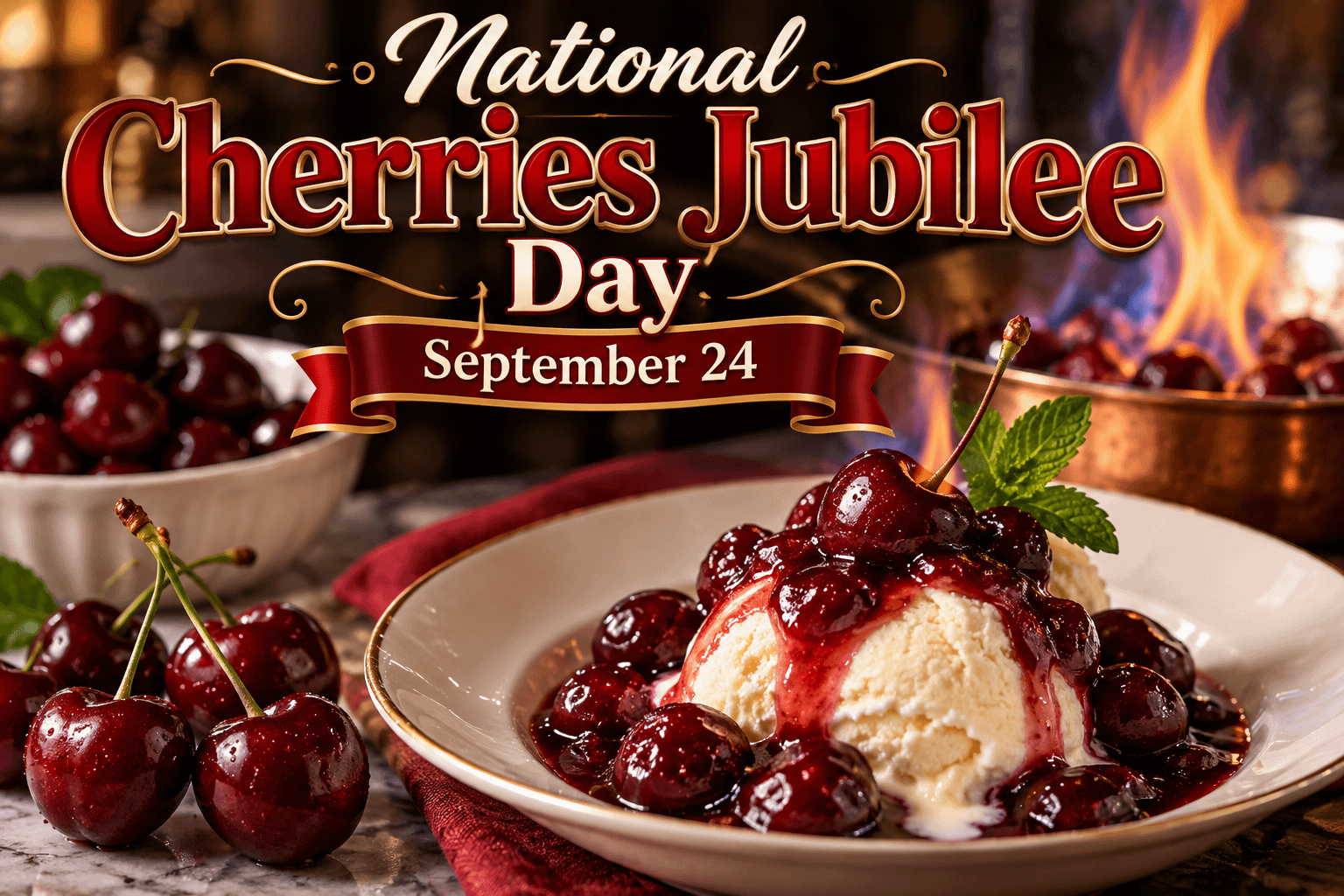
  • National Cherries Jubilee Day – September 24

    National Cherries Jubilee Day – September 24

    Every year on September 24, dessert lovers have a delicious reason to celebrate one of the most dramatic desserts ever served: Cherries Jubilee.

    National Cherries Jubilee Day honors a classic dessert that combines sweet cherries with a rich sauce, traditionally enhanced with liqueur and dramatically flambéed before being spooned over vanilla ice cream.

    It is a dessert that appeals to more than the taste buds. Cherries Jubilee brings together flavor, history, elegance, and a little tableside theater. Few desserts can transform a handful of ingredients into such an impressive finale to a meal.

    Whether you have enjoyed Cherries Jubilee at a restaurant, watched someone prepare it tableside, or have never tried it before, September 24 is the perfect opportunity to discover this timeless dessert.

    What Is Cherries Jubilee?

    Cherries Jubilee is traditionally made by cooking cherries in a sweetened sauce, adding a spirit such as brandy or kirsch, and briefly igniting the alcohol.

    The warm cherry mixture is then served over vanilla ice cream.

    The combination is wonderfully simple.

    You have the sweetness and slight tartness of the cherries, the rich fruit sauce, the subtle complexity of the spirit, and the cool creaminess of the ice cream.

    Then there is the dramatic part—the flame.

    Flambéing Cherries Jubilee creates the memorable presentation for which the dessert is famous. When prepared properly, the alcohol burns briefly before the warm cherries are served over ice cream.

    Although flambéing is traditional, it isn’t necessary to enjoy the dessert. Cherries Jubilee can easily be prepared without lighting the sauce, and alcohol-free versions can be made as well.

    The History of Cherries Jubilee

    Cherries Jubilee is generally associated with the famous French chef Auguste Escoffier, one of the most influential figures in the development of modern French cuisine.

    The dessert is commonly said to have been created in connection with one of Queen Victoria’s jubilee celebrations in the late 19th century.

    The word jubilee itself refers to a special anniversary or celebration, making it a fitting name for such a festive dessert.

    The exact details surrounding the dessert’s earliest creation are not completely certain, and historical accounts vary. What is clear is that Cherries Jubilee became associated with elegant dining and celebratory occasions.

    During the 20th century, flambé desserts became especially popular in upscale restaurants.

    Tableside preparation turned dessert into entertainment.

    A server might roll a cart beside the table, prepare the sauce, add the alcohol, ignite it, and allow guests to watch the flames dance above the pan.

    Cherries Jubilee became one of the best-known examples of this style of dining.

    Why Cherries and Ice Cream Work So Well Together

    Part of the lasting appeal of Cherries Jubilee comes from contrast.

    Warm and cold.

    Sweet and tart.

    Rich and refreshing.

    Soft fruit and creamy ice cream.

    When the warm cherry sauce hits vanilla ice cream, the ice cream begins melting around the edges. The melted vanilla combines with the cherry sauce, creating an almost creamy fruit sauce of its own.

    Vanilla ice cream is particularly effective because its mild flavor allows the cherries to remain the star.

    However, there is no rule saying you cannot experiment.

    Chocolate, cheesecake, almond, or even butter pecan ice cream can create interesting variations.

    A Classic Cherries Jubilee Recipe

    You do not need to visit a fancy restaurant to celebrate National Cherries Jubilee Day. A homemade version can be surprisingly easy.

    Ingredients

    • 2 cups pitted cherries, fresh or frozen
    • 1/3 cup granulated sugar
    • 1 tablespoon lemon juice
    • 1 teaspoon cornstarch
    • 2 tablespoons water
    • 1/4 cup kirsch or brandy
    • 1 teaspoon vanilla extract
    • Vanilla ice cream

    Directions

    Add the cherries, sugar, and lemon juice to a skillet or saucepan over medium heat.

    Cook for several minutes, stirring occasionally, until the cherries begin releasing their juices.

    Mix the cornstarch and water together in a small bowl until smooth.

    Slowly stir the mixture into the cherries.

    Continue cooking until the sauce begins to thicken.

    Remove the pan from direct heat before adding the alcohol.

    For a traditional flambé presentation, the alcohol may be carefully ignited and allowed to burn until the flame naturally extinguishes.

    Never pour alcohol directly from a bottle into a pan near an open flame. Flambéing should only be attempted by adults who are comfortable with the technique, with the pan removed from the burner and appropriate fire precautions in place.

    You can also skip ignition entirely and simply allow the sauce to simmer appropriately before serving.

    Stir in the vanilla.

    Place scoops of vanilla ice cream into serving bowls and spoon the warm cherries and sauce over the top.

    Serve immediately.

    Make an Alcohol-Free Cherries Jubilee

    You can enjoy the flavors of Cherries Jubilee without alcohol.

    Instead of brandy or kirsch, try using cherry juice.

    You can also combine cherry juice with a small splash of orange juice or lemon juice to create additional depth.

    For an easy alcohol-free version, combine:

    • Cherries
    • Sugar
    • Cherry juice
    • Lemon juice
    • Cornstarch
    • Vanilla extract

    Cook everything into a thick cherry sauce and pour it over vanilla ice cream.

    You will miss the flambé portion of the traditional presentation, but you will still have the wonderful combination of warm cherries and cold ice cream.

    Fresh, Frozen, or Canned Cherries?

    One of the advantages of Cherries Jubilee is that you can make it throughout the year.

    Fresh cherries are wonderful when they are in season. Their texture and natural flavor make them an excellent choice.

    Frozen cherries are convenient because they are often already pitted and can be kept on hand for whenever you want dessert.

    Canned cherries can work too, although you may need to adjust the amount of added sugar depending on how the cherries were packed.

    If your cherries are already sitting in a heavily sweetened syrup, adding the full amount of sugar could make the finished dessert overly sweet.

    Taste as you go.

    Creative Ways to Serve Cherries Jubilee

    Vanilla ice cream may be traditional, but Cherries Jubilee does not have to stop there.

    Try spooning the warm cherries over cheesecake. Cherry sauce and cheesecake are natural partners, and a Jubilee-inspired topping can transform a simple cheesecake into an elegant dessert.

    You could also serve it over pound cake. Thick slices of pound cake soak up the warm cherry sauce beautifully.

    For breakfast or brunch, spoon the cherries over waffles, pancakes, or French toast. Add whipped cream for an especially indulgent morning treat.

    Another possibility is a Cherries Jubilee sundae. Layer vanilla ice cream, cherry sauce, whipped cream, chopped nuts, and a fresh cherry.

    For something even more decadent, serve the cherries over a warm chocolate brownie with vanilla ice cream.

    Chocolate and cherries are a classic combination for good reason.

    Turn It Into a Milkshake

    Cherries Jubilee can even inspire a milkshake.

    Blend vanilla ice cream with milk and a spoonful of cooled cherry sauce.

    Pour the shake into a tall glass and top it with whipped cream and additional cherries.

    You could drizzle some of the cherry sauce around the inside of the glass before adding the shake for an impressive presentation.

    It gives you the recognizable flavors of Cherries Jubilee in an entirely different form.

    Why Flambé Desserts Became So Popular

    There is something fascinating about seeing food prepared with fire.

    Flambéing became associated with elegant restaurant service partly because it gave diners an experience in addition to a meal.

    Instead of disappearing into the kitchen and returning with dessert, the preparation could happen right beside the table.

    Guests could watch the entire process.

    It turned dessert into a performance.

    Other famous flambé dishes and desserts have included Bananas Foster, Crêpes Suzette, Steak Diane, and various flambéed fruit preparations.

    Cherries Jubilee remains one of the most recognizable.

    Cherries Are Worth Celebrating

    Even without the flames, cherries deserve some attention.

    Their beautiful deep-red color immediately makes desserts look inviting.

    They can range from intensely sweet to noticeably tart, depending on the variety.

    Cherries are also incredibly versatile.

    They appear in pies, cobblers, cheesecakes, preserves, sauces, smoothies, cocktails, mocktails, salads, and savory dishes.

    Yet one of their most elegant appearances remains Cherries Jubilee.

    How to Celebrate National Cherries Jubilee Day

    The most obvious way to celebrate September 24 is to make Cherries Jubilee.

    If you have never prepared it before, start with the non-flambé version. You can experience the classic warm-cherry-and-ice-cream combination without working with an open flame.

    You could also look for a restaurant that serves Cherries Jubilee or another flambé dessert.

    Another fun option is to host a dessert night.

    Prepare Cherries Jubilee and offer several choices of ice cream so everyone can create a personalized version.

    Vanilla can represent the classic recipe, while chocolate, cheesecake, almond, or other flavors allow guests to experiment.

    You could even set up a small dessert bar with toppings such as whipped cream, chocolate shavings, chopped nuts, crushed cookies, and additional cherries.

    Make It a Family Dessert Night

    National food days do not need to be complicated.

    Sometimes their greatest value is simply giving us an excuse to do something enjoyable together.

    September 24 can become a family dessert night.

    Let everyone help prepare the ingredients. Children can help scoop ice cream or choose toppings while an adult handles the hot cherry mixture.

    Then sit together and enjoy dessert.

    Years later, people may not remember that it was officially National Cherries Jubilee Day.

    They may remember laughing around the kitchen table while eating warm cherries and melting ice cream.

    Those moments are what celebrations are really about.

    A Dessert Made for Celebrating

    Perhaps the word jubilee is the perfect description for this dessert.

    A jubilee is a celebration.

    And Cherries Jubilee looks and tastes like something designed for a special occasion.

    It does not have to be reserved for an anniversary, birthday, holiday, or fancy restaurant.

    Sometimes the occasion can simply be today.

    That is part of the fun behind national food days. They give us opportunities to discover dishes we might otherwise overlook.

    September 24 Is a Sweet Day to Celebrate

    National Cherries Jubilee Day celebrates much more than cherries and ice cream.

    It celebrates a dessert with history.

    It celebrates the theatrical tradition of tableside cooking.

    It celebrates one of the best dessert combinations imaginable: warm fruit and cold ice cream.

    And perhaps most importantly, it gives us another reason to gather around the table and enjoy something delicious.

    So on September 24, scoop some vanilla ice cream into a bowl, cover it with warm cherry sauce, and experience a dessert that has been delighting people for generations.

    You can prepare the traditional flambé version carefully, make an easy non-flambé variation, or leave out the alcohol entirely.

    However you choose to enjoy it, make the day a little sweeter.

    How would you enjoy Cherries Jubilee—over classic vanilla ice cream, cheesecake, waffles, or a warm chocolate brownie?


  • History & Culture of the Day — September 24

    History & Culture of the Day — September 24

    September 24 is a date filled with moments that have influenced politics, science, entertainment, transportation, sports, and popular culture. From the creation of the United States Supreme Court to the arrival of one of the most famous aircraft carriers in American history, September 24 offers a fascinating journey through the past.

    History is more than a collection of dates. It is the story of people—their decisions, discoveries, struggles, creativity, and determination. Looking back at September 24 reminds us how events from centuries ago can continue to influence the way we live today.

    1789 — The United States Establishes Its Federal Judiciary

    One of the most important events associated with September 24 occurred in 1789, when President George Washington signed the Judiciary Act of 1789.

    The newly created United States had a Constitution, a president, and Congress, but the federal judicial system still needed to be organized. The Judiciary Act established the structure of the federal courts and provided for a Supreme Court consisting initially of a chief justice and five associate justices.

    Washington also nominated the first members of the Supreme Court on September 24, including John Jay as the first chief justice.

    The judiciary would eventually become one of the three central branches of the federal government, alongside the executive and legislative branches.

    Over the centuries, the Supreme Court has issued decisions affecting civil rights, presidential authority, freedom of speech, voting, criminal justice, business, privacy, and countless other aspects of American life.

    September 24 therefore represents an important moment in the development of the American system of government.

    1869 — Black Friday Shakes the American Economy

    September 24, 1869, became known as “Black Friday” after a dramatic collapse in the United States gold market.

    Financiers Jay Gould and James Fisk attempted to gain control over a significant portion of the nation’s gold supply. Their actions contributed to rapidly rising gold prices and widespread speculation.

    When the federal government intervened by selling gold, prices suddenly collapsed.

    Investors suffered enormous losses, and the disruption spread into other parts of the economy.

    This Black Friday should not be confused with the modern shopping day following Thanksgiving. The 1869 event was a financial crisis demonstrating how speculation and attempts to manipulate markets could have consequences far beyond Wall Street.

    1890 — The Mormon Church Moves Away From Plural Marriage

    September 24, 1890, marked an important turning point in the history of The Church of Jesus Christ of Latter-day Saints.

    Church president Wilford Woodruff issued what became known as the 1890 Manifesto, announcing his intention to submit to laws prohibiting plural marriage.

    Plural marriage had created intense conflict between the church and the United States government during the nineteenth century.

    The Manifesto became a major step toward ending the church-sanctioned practice, although the transition was more complicated and gradual than a single declaration might suggest.

    The event illustrates how religious practices, law, culture, and government authority sometimes collide—and how those conflicts can reshape communities over time.

    1906 — Devils Tower Becomes America’s First National Monument

    On September 24, 1906, President Theodore Roosevelt proclaimed Devils Tower in Wyoming the first national monument established under the Antiquities Act.

    The enormous geological formation rises dramatically above the surrounding landscape and has long held deep cultural and spiritual significance for several Indigenous peoples.

    Its designation represented a major development in America’s conservation movement.

    Theodore Roosevelt became closely associated with efforts to preserve important landscapes, wildlife habitats, forests, archaeological sites, and natural wonders.

    Today, America’s national monuments help protect places with historical, scientific, cultural, and environmental importance.

    The creation of Devils Tower National Monument demonstrated that preserving America’s heritage could mean protecting both human history and the natural world.

    1929 — Jimmy Doolittle Demonstrates Instrument Flight

    Aviation history took an important step forward on September 24, 1929.

    American aviator James “Jimmy” Doolittle completed an experimental flight using instruments to guide the aircraft rather than relying primarily on what he could see outside the cockpit.

    Instrument flying became essential to the development of modern aviation because pilots needed reliable ways to navigate through clouds, darkness, poor visibility, and difficult weather.

    Doolittle would later become famous for leading the 1942 Doolittle Raid against Japan during World War II.

    His earlier aviation experiments, however, were significant in their own right.

    Modern commercial air travel depends heavily on instruments, navigation technology, radar, communications, and sophisticated flight-control systems. The pioneering work of early aviators helped make today’s global aviation network possible.

    1941 — The Houston Colt .45s’ Future Home Begins to Take Shape

    September 24 also connects with the development of professional sports and the changing cultural landscape of American cities during the twentieth century.

    Houston’s eventual rise as a major professional sports city reflected broader changes occurring throughout the United States as baseball expanded and cities invested in increasingly ambitious stadium projects.

    That transformation would eventually produce one of the most famous stadiums of its era: the Astrodome.

    Opened in 1965, it became known as the “Eighth Wonder of the World” and helped popularize the concept of large indoor stadiums.

    The Houston Colt .45s eventually became the Houston Astros, a name inspired by the city’s growing association with America’s space program.

    Sports, technology, civic identity, and popular culture were increasingly becoming intertwined.

    1957 — President Eisenhower Sends Federal Troops to Little Rock

    One of the defining events of the American civil rights era intensified on September 24, 1957.

    President Dwight D. Eisenhower ordered federal troops from the 101st Airborne Division to Little Rock, Arkansas, after attempts to integrate Central High School were met with resistance and hostility.

    Nine Black students—later known as the Little Rock Nine—were attempting to attend the previously segregated school following the Supreme Court’s decision in Brown v. Board of Education.

    Arkansas Governor Orval Faubus had previously used the state’s National Guard to prevent the students from entering.

    The confrontation raised a fundamental question: Would federal civil-rights law actually be enforced when state officials resisted it?

    Eisenhower ultimately federalized the Arkansas National Guard and sent troops to protect the students.

    The Little Rock crisis became one of the most powerful images of the civil rights movement and demonstrated that court decisions alone could not eliminate segregation. Enforcement, courage, activism, and political action were also necessary.

    1960 — The USS Enterprise Is Launched

    On September 24, 1960, the USS Enterprise was launched.

    The ship was revolutionary.

    USS Enterprise (CVN-65) became the world’s first nuclear-powered aircraft carrier. Nuclear propulsion allowed the enormous vessel to operate for long periods without the frequent refueling required by conventionally powered ships.

    The Enterprise would serve the United States Navy for more than half a century.

    Its name also carried tremendous cultural significance.

    “Enterprise” had already been used for earlier American naval vessels, and it later became internationally famous through the fictional starship USS Enterprise in Star Trek.

    The connection between naval history and science-fiction culture helped make the name synonymous with exploration, technological ambition, and adventure.

    1964 — The Warren Commission Report Is Presented to President Johnson

    On September 24, 1964, the Warren Commission presented its report to President Lyndon B. Johnson concerning the assassination of President John F. Kennedy.

    Kennedy had been assassinated in Dallas, Texas, on November 22, 1963.

    The commission, headed by Chief Justice Earl Warren, concluded that Lee Harvey Oswald acted alone in assassinating Kennedy and that Jack Ruby acted alone when he killed Oswald.

    The report became one of the most debated government investigations in American history.

    Questions and alternative theories surrounding Kennedy’s assassination have remained part of American political culture for generations.

    Books, documentaries, films, television programs, government investigations, and public debates have continued examining what happened in Dallas.

    Few events demonstrate more clearly how history can remain culturally alive long after the official investigations have ended.

    1968 — 60 Minutes Debuts on CBS

    Television journalism changed on September 24, 1968, when 60 Minutes premiered on CBS.

    Created by producer Don Hewitt, the program developed a distinctive approach that combined investigative reporting, interviews, profiles, and feature stories.

    Its famous ticking stopwatch became one of television’s most recognizable sounds and images.

    Rather than presenting news exclusively through the traditional nightly-news format, 60 Minutes demonstrated that long-form television journalism could attract a massive audience.

    The program would eventually become one of the longest-running and most influential news programs in American television history.

    Its success helped establish investigative television journalism as an important part of American culture.

    1976 — Newspaper Heiress Patty Hearst Is Sentenced

    On September 24, 1976, Patty Hearst was sentenced to prison following her conviction for participating in a bank robbery.

    Her story had fascinated the country.

    Hearst, granddaughter of newspaper publisher William Randolph Hearst, had been kidnapped in 1974 by the Symbionese Liberation Army, a radical organization.

    She later appeared to join the group and participated in criminal activity, including a bank robbery.

    Her defense argued that she had been subjected to coercion and psychological manipulation.

    The case sparked intense national discussions about kidnapping, coercive control, trauma, personal responsibility, radical political movements, and the power of the media.

    President Jimmy Carter later commuted her sentence, and President Bill Clinton granted her a full pardon in 2001.

    Her case remains one of the strangest intersections of crime, celebrity, psychology, politics, and media culture in twentieth-century America.

    1991 — Nevermind Changes Rock Music

    September 24, 1991, became an important date in music history with the release of Nirvana’s album Nevermind.

    Led by Kurt Cobain, Nirvana helped bring the Seattle grunge movement into mainstream popular culture.

    The album’s breakout song, “Smells Like Teen Spirit,” became an anthem for a generation.

    Rock music in the late 1980s had been dominated partly by highly polished arena rock and glam metal. Nirvana’s sound and image offered something different—raw guitars, emotional lyrics, understated fashion, and an anti-celebrity attitude that ironically turned the band into global celebrities.

    Nevermind eventually became one of the most influential rock albums of its era.

    Grunge fashion also moved into mainstream culture. Flannel shirts, ripped jeans, worn sneakers, and deliberately casual styles became associated with early-1990s youth culture.

    September 24, 1991, therefore represents not merely an album release but a cultural shift.

    1991 — The Red Hot Chili Peppers Release Blood Sugar Sex Magik

    Nirvana was not the only influential rock band releasing a major album on September 24, 1991.

    The Red Hot Chili Peppers released Blood Sugar Sex Magik on the same day.

    The album included songs such as “Under the Bridge” and “Give It Away” and helped transform the band into international stars.

    Their combination of rock, funk, alternative music, and punk influences contributed to the rapidly changing sound of popular music during the early 1990s.

    Looking back, September 24, 1991, was an extraordinary day for rock music.

    Two albums released that day would help define alternative rock for years to come.

    1993 — Boy Meets World Premieres

    September 24 also holds a nostalgic place in 1990s television culture.

    On September 24, 1993, Boy Meets World premiered on ABC.

    The series followed Cory Matthews as he navigated childhood, adolescence, friendships, school, family relationships, love, and eventually adulthood.

    Characters such as Cory, Topanga, Shawn, Eric, and Mr. Feeny became familiar figures to a generation of viewers.

    Although the program was a comedy, it frequently addressed serious subjects involving friendship, family difficulties, responsibility, identity, relationships, and growing up.

    For many viewers who grew up during the 1990s, Boy Meets World became more than another sitcom. It became part of the shared cultural memory of the era.

    Jim Henson Was Born on September 24, 1936

    September 24 is also the birthday of one of the most imaginative figures in entertainment history.

    Jim Henson was born on September 24, 1936.

    Henson created the Muppets and helped bring characters including Kermit the Frog, Miss Piggy, Fozzie Bear, and many others into popular culture.

    His work also played a central role in Sesame Street, where puppetry became an extraordinarily effective tool for children’s education.

    Henson understood something powerful: entertainment could make people laugh while also teaching kindness, curiosity, friendship, creativity, and acceptance.

    His influence continues through television, movies, puppetry, children’s entertainment, and generations of performers inspired by his creativity.

    F. Scott Fitzgerald Was Born on September 24, 1896

    American author F. Scott Fitzgerald was born September 24, 1896.

    Fitzgerald became one of the literary voices most closely associated with the Jazz Age.

    His best-known novel, The Great Gatsby, explored wealth, ambition, love, class, illusion, and the pursuit of the American Dream.

    Although the novel initially experienced only modest commercial success, its reputation grew dramatically after Fitzgerald’s death.

    Today, The Great Gatsby is widely taught in American schools and remains one of the most recognizable works of twentieth-century American literature.

    Fitzgerald’s writing continues to resonate because many of the questions he explored remain relevant: What does success really mean? Can wealth create happiness? Can people recreate the past? And what happens when dreams become more powerful than reality?

    September 24 and the Power of Culture

    One of the fascinating things about examining a single date is seeing how different parts of history overlap.

    September 24 connects government with music, aviation with civil rights, literature with television, military technology with science fiction, and financial history with popular culture.

    The establishment of America’s federal judiciary shaped government.

    The Little Rock crisis helped define the struggle for civil rights.

    Jimmy Doolittle’s experiments helped transform aviation.

    USS Enterprise represented technological innovation.

    Jim Henson transformed children’s entertainment.

    F. Scott Fitzgerald influenced American literature.

    Nirvana and the Red Hot Chili Peppers helped reshape popular music.

    Boy Meets World became part of the childhood memories of millions.

    Each event belongs to a different era, yet together they demonstrate how history is constantly being created.

    Why Remembering History Matters

    It can be tempting to think of history as something finished—names, dates, and events locked permanently in the past.

    But history surrounds us.

    The courts established in the eighteenth century still influence American life. Civil-rights battles of the twentieth century continue to shape discussions about equality. Technologies pioneered by early aviators evolved into systems used on thousands of flights every day.

    Music released decades ago continues to find new listeners.

    Television programs watched by one generation are rediscovered by another.

    Books written more than a century ago still ask questions people struggle with today.

    History survives because its consequences survive.

    Culture survives because people continue sharing it.

    Final Thought

    September 24 reminds us that history is not created only during wars, elections, or political crises. It is also created in recording studios, laboratories, classrooms, courtrooms, television studios, airplanes, ships, books, and ordinary communities.

    Some moments change laws.

    Others change technology.

    Some change music or entertainment.

    And others change how people understand themselves and the world around them.

    Every generation inherits stories from those who came before it while simultaneously creating stories for those who will come next.

    That is what makes studying history and culture so fascinating.

    Which September 24 moment do you think had the greatest impact on the world we live in today?

  • This Day in American History — September 24

    This Day in American History — September 24

    September 24 has witnessed several important moments in American history, from the creation of the federal court system to a defining confrontation during the Civil Rights Movement. It is also the birthday of one of America’s most celebrated novelists.

    Looking back at September 24 shows how the United States has repeatedly wrestled with questions of law, equality, government authority, culture, and national identity.

    1789 — George Washington Signs the Judiciary Act

    One of the most consequential events associated with September 24 occurred in 1789, during the first year of government under the United States Constitution.

    President George Washington signed the Judiciary Act of 1789 into law on September 24, providing the structure for the new nation’s federal judiciary.

    The Constitution had established the judicial branch in Article III and called for a Supreme Court, but it left many important details for Congress to determine.

    The Judiciary Act helped answer those questions.

    The legislation established a three-part federal judiciary consisting of the Supreme Court, federal district courts, and federal circuit courts. The original Supreme Court consisted of a chief justice and five associate justices.

    The law also established the office of the Attorney General of the United States.

    The significance of the legislation is difficult to overstate. The Constitution may have created the judicial branch, but the Judiciary Act provided much of the framework necessary for that branch to operate.

    More than two centuries later, the federal judiciary remains one of the three major branches of the United States government.

    John Jay Becomes Washington’s Choice for Chief Justice

    September 24, 1789, was important for another reason.

    On the same day Washington signed the Judiciary Act, he nominated John Jay of New York to become the first Chief Justice of the United States. Washington also submitted nominations for the other positions on the original Supreme Court.

    Jay was already a significant figure in the founding generation. He had served as president of the Continental Congress, worked as a diplomat, and helped negotiate the Treaty of Paris that formally ended the Revolutionary War.

    The creation of the Supreme Court represented another important step in transforming the Constitution from a document describing a government into a government that could actually function.

    Why the Judiciary Act Still Matters

    It can be easy to overlook the importance of establishing courts compared with dramatic events such as wars, elections, and presidential decisions.

    Yet an independent judicial system became essential to the American constitutional experiment.

    Courts would eventually confront questions involving individual rights, presidential authority, congressional power, relations between states and the federal government, civil rights, elections, criminal justice, and the interpretation of the Constitution itself.

    The federal court system has changed considerably since 1789, but the Judiciary Act established a basic judicial framework whose influence remains visible today.

    September 24 therefore represents an important milestone in the development of American constitutional government.


    1869 — Black Friday Shakes Wall Street

    September 24 also became associated with one of America’s early financial panics.

    On September 24, 1869, financial markets were thrown into turmoil during an episode remembered as Black Friday.

    Speculators Jay Gould and James Fisk had attempted to gain control over the nation’s gold market. Their activities helped drive the price of gold upward as speculation intensified.

    When the federal government intervened by selling gold, prices collapsed.

    The sudden reversal created financial chaos, producing losses for investors and contributing to economic disruption.

    The episode became an early demonstration of how financial speculation, political influence, government policy, and market psychology could collide with devastating consequences.

    Long before the stock market crash of 1929 or the financial crisis of 2008, Black Friday of 1869 showed Americans how quickly confidence in financial markets could disappear.


    1896 — F. Scott Fitzgerald Is Born

    American literature also has an important connection to September 24.

    F. Scott Fitzgerald was born September 24, 1896, in St. Paul, Minnesota.

    Fitzgerald would eventually become one of the most recognizable American writers of the twentieth century.

    His most famous novel, The Great Gatsby, published in 1925, became one of the defining literary works associated with the Jazz Age.

    Through his writing, Fitzgerald explored wealth, ambition, romance, social class, disappointment, and the pursuit of the American Dream.

    Interestingly, Fitzgerald was named after a distant relative: Francis Scott Key, the writer whose poem became the lyrics of “The Star-Spangled Banner.”

    Fitzgerald experienced both success and struggle during his lifetime. Although his reputation declined during his later years, his literary standing increased dramatically after his death in 1940.

    Today, The Great Gatsby remains widely read and studied, making Fitzgerald’s September 24 birthday another notable entry in American cultural history.


    1906 — Devils Tower Becomes America’s First National Monument

    September 24 also played a role in the history of conservation.

    In 1906, President Theodore Roosevelt designated Devils Tower in Wyoming as the first national monument in the United States.

    The designation came under the recently enacted Antiquities Act, which gave presidents authority to protect certain historic landmarks, structures, and objects of scientific or historic interest located on federal land.

    The creation of the country’s first national monument represented an important development in America’s growing conservation movement.

    During Theodore Roosevelt’s presidency, conservation became a significant national priority. Millions of acres of land received various forms of federal protection.

    The national monument system eventually expanded across the country, protecting landscapes, archaeological sites, historic locations, and culturally important places.

    What began with Devils Tower helped establish a conservation tradition that continues today.


    1957 — Eisenhower Sends Federal Troops to Little Rock

    One of the most dramatic events to occur on September 24 came during the struggle over school desegregation.

    On September 24, 1957, President Dwight D. Eisenhower ordered members of the U.S. Army’s 101st Airborne Division into Little Rock, Arkansas, and federalized the Arkansas National Guard.

    The confrontation centered on nine Black students who became known as the Little Rock Nine.

    Three years earlier, the Supreme Court’s decision in Brown v. Board of Education had ruled that racial segregation in public schools was unconstitutional.

    Yet implementing desegregation faced intense resistance in many communities.

    Little Rock Central High School became one of the most visible battlegrounds.

    Arkansas Governor Orval Faubus had previously used the Arkansas National Guard to prevent the students from entering the school.

    When the Little Rock Nine entered Central High on September 23, a hostile crowd gathered outside. The situation became dangerous enough that authorities removed the students for their safety.

    The crisis forced President Eisenhower to confront a fundamental question:

    Would the federal government enforce federal court orders when state officials and local resistance stood in their way?

    On September 24, Eisenhower acted.

    He federalized the Arkansas National Guard and ordered federal soldiers into Little Rock.

    That evening, Eisenhower addressed the nation from the White House and explained his decision.

    The following morning, September 25, soldiers from the 101st Airborne escorted the Little Rock Nine into Central High School for their first full day of classes.

    The Importance of Little Rock

    The Little Rock crisis became one of the defining confrontations of the Civil Rights Movement.

    It demonstrated that Supreme Court decisions alone could not necessarily guarantee change.

    Court rulings sometimes required enforcement.

    Eisenhower’s decision showed that the federal government was prepared to use its authority to enforce federal law and court orders despite resistance from state officials.

    The images of Black students walking into school while surrounded by federal soldiers became some of the most recognizable photographs of the struggle for civil rights.

    The Little Rock Nine faced harassment, threats, and hostility simply for attempting to receive an education at a previously segregated school.

    Their courage helped expose the reality of segregation to Americans across the country and people around the world.


    1960 — USS Enterprise Is Launched

    Another important September 24 milestone involved American military and technological history.

    On September 24, 1960, USS Enterprise was launched.

    The ship would become famous as the world’s first nuclear-powered aircraft carrier.

    Nuclear propulsion dramatically changed what was possible for large naval vessels. Instead of relying on conventional fuel in the same manner as earlier carriers, nuclear-powered ships could operate for extended periods without needing frequent refueling.

    The Enterprise represented the increasing technological sophistication of the United States Navy during the Cold War.

    The carrier would go on to serve for more than half a century and participate in numerous operations around the world.

    Its name also carried a long naval tradition, with several American ships having previously carried the name Enterprise.


    1968 — 60 Minutes Premieres

    American television history changed on September 24 as well.

    On September 24, 1968, CBS premiered 60 Minutes.

    The program helped redefine television journalism by combining investigative reporting, interviews, profiles, and feature stories within a television newsmagazine format.

    Over the decades, 60 Minutes became one of the longest-running and most recognizable news programs in American television history.

    Its correspondents interviewed presidents, world leaders, celebrities, business executives, athletes, activists, whistleblowers, and ordinary people whose experiences became major national stories.

    The show’s longevity demonstrates how television became an increasingly important way Americans learned about politics, culture, international affairs, and social issues during the second half of the twentieth century.


    1969 — The Chicago Eight Trial Begins

    On September 24, 1969, another chapter in the political and cultural turmoil of the late 1960s began when the trial commonly known as the Chicago Eight trial got underway.

    The defendants had been charged following protests surrounding the 1968 Democratic National Convention in Chicago.

    Demonstrations against the Vietnam War had drawn thousands of protesters to the city. Violent confrontations occurred between protesters and police, producing scenes broadcast across the nation.

    The subsequent trial became almost as controversial as the protests themselves.

    The defendants included prominent activists representing different parts of the antiwar and counterculture movements.

    After defendant Bobby Seale’s case was separated from the others, the remaining defendants became widely known as the Chicago Seven.

    The trial reflected the deep political divisions affecting the United States during the Vietnam War era.

    Questions involving protest, police power, political dissent, free speech, and government authority became central to the proceedings and the larger national debate.


    2017 — NFL Protests Become a National Story

    September 24 also became part of a much more recent debate over protest, patriotism, race, and professional sports.

    On September 24, 2017, more than 200 NFL players reportedly knelt or sat during the national anthem amid a rapidly escalating national controversy surrounding player protests.

    The protests had grown from demonstrations intended to call attention to racial inequality and police treatment of Black Americans.

    Supporters viewed the demonstrations as a legitimate exercise of free expression and a way to draw attention to racial injustice.

    Critics argued that protesting during the national anthem showed disrespect toward the flag, military members, veterans, or the country.

    The disagreement became one of the most visible cultural and political debates surrounding professional sports during the period.

    Whatever one’s position, the controversy demonstrated once again how sports can become connected to much larger conversations about American identity, patriotism, race, and freedom of expression.


    September 24 and the American Story

    When these events are considered together, September 24 reveals several recurring themes in American history.

    In 1789, the young country worked to establish a functioning federal judiciary.

    In 1869, financial speculation contributed to a dramatic market panic.

    In 1896, one of America’s future literary giants was born.

    In 1906, the federal government took an important step toward protecting America’s natural and cultural heritage.

    In 1957, federal soldiers were sent to Little Rock to enforce the constitutional rights of Black students.

    In 1960, American naval technology entered a new era with USS Enterprise.

    In 1968, television journalism gained a program that would become an American institution.

    In 1969, the Chicago Eight trial reflected the enormous political divisions surrounding the Vietnam War and the protest movements of the era.

    And in 2017, protests by professional football players became part of another national debate about race, patriotism, and freedom of expression.

    History is rarely one continuous story of progress. It is made from moments when Americans disagree about what the country’s principles mean and how those principles should be applied.

    September 24 offers several powerful examples.

    A Day Connected by the Rule of Law

    Perhaps the most striking connection can be found between the events of 1789 and 1957.

    On September 24, 1789, the United States established the structure of its federal court system.

    Exactly 168 years later, on September 24, 1957, a president sent federal troops into an American city in a confrontation ultimately centered on enforcing federal court orders.

    Those events occurred in completely different Americas, but they share an important theme.

    The rule of law matters only when the institutions created to protect it are willing to uphold it.

    The founders could create courts, Congress could pass laws, judges could issue rulings, and presidents could speak about constitutional principles.

    But throughout American history, the country’s greatest tests have often come when those principles had to be applied during moments of intense disagreement.

    That is one reason studying history remains valuable.

    History is not simply about remembering names and dates. It allows us to see how earlier generations confronted questions that continue to influence American life.

    September 24 reminds us that the American story has been shaped in courtrooms, classrooms, financial markets, military institutions, television studios, literature, protest movements, and even football stadiums.

    Each generation inherits institutions and ideals from the generation before it.

    What happens next depends on what people choose to do with them.

    Which September 24 event do you believe had the greatest impact on American history?

  • Mocktail of the Day: Moonbeam

    Mocktail of the Day: Moonbeam

    Some drinks are made simply to quench your thirst. Others are created to match a mood.

    The Moonbeam Mocktail belongs to the second category.

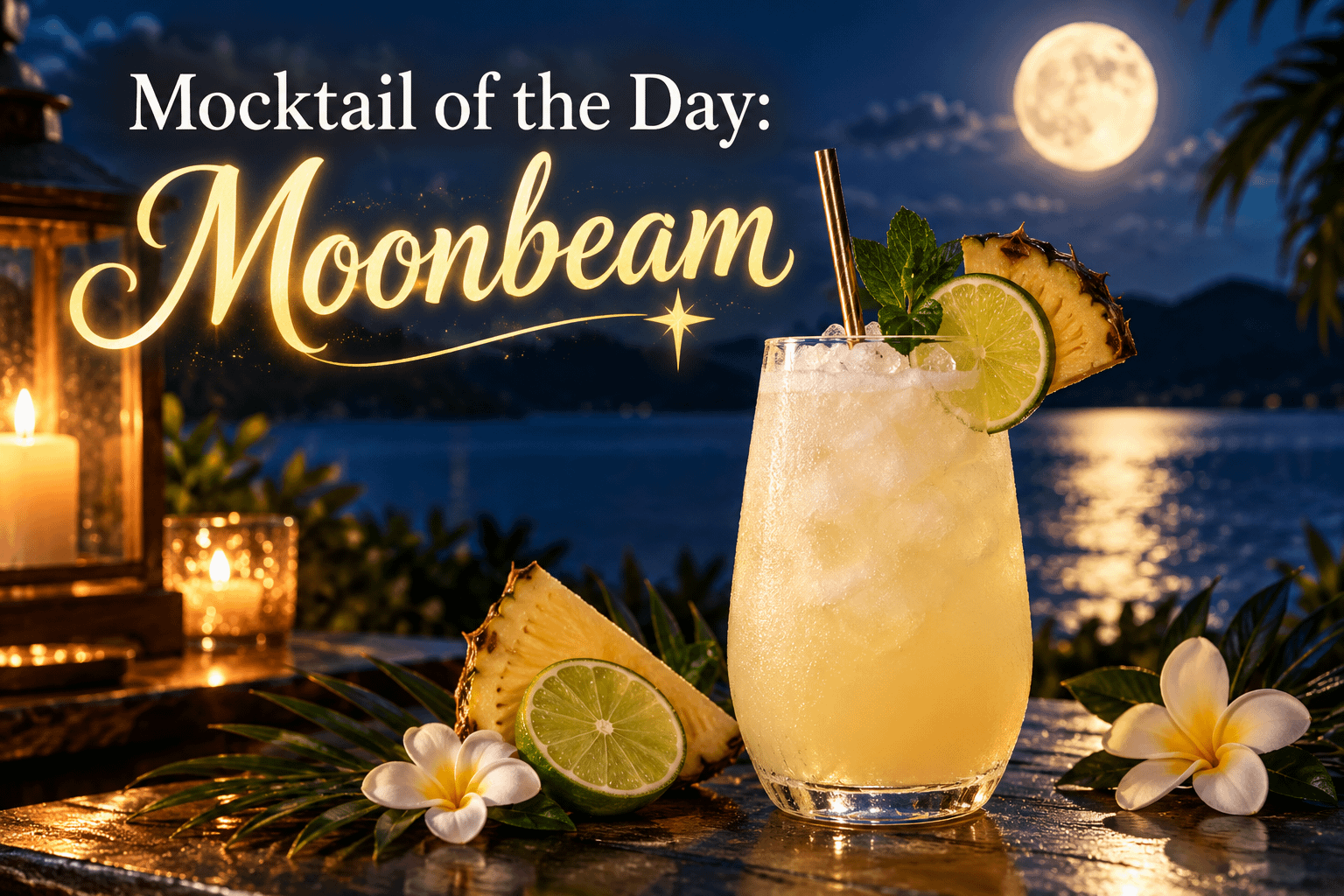
    Soft, refreshing, slightly tropical, and beautifully dreamy, Moonbeam is inspired by those quiet moments when moonlight stretches across the night sky and everything seems a little more peaceful. It combines pineapple, coconut, citrus, and sparkling water into a bright alcohol-free drink that feels special without being complicated.

    Whether you are spending a peaceful evening at home, sitting outside beneath the stars, hosting friends, celebrating something special, or simply looking for an alternative to a traditional cocktail, Moonbeam offers something refreshing for the occasion.

    And because it contains no alcohol, almost anyone looking for a festive alcohol-free beverage can enjoy it.

    What Is the Moonbeam Mocktail?

    Moonbeam is a tropical-inspired sparkling mocktail featuring pineapple juice, coconut water, fresh lime, and a touch of vanilla.

    The pineapple provides natural sweetness and tropical flavor. Coconut water keeps the drink light rather than creamy. Lime adds the acidity necessary to balance the sweetness, while vanilla gives the drink a softer finish.

    Sparkling water brings everything together with refreshing carbonation.

    The result is a drink that tastes tropical without becoming overwhelmingly sweet.

    Moonbeam is particularly suited for evenings because its flavor is gentle and refreshing. Instead of relying on heavy syrups or several complicated ingredients, it allows a few familiar flavors to work together.

    Moonbeam Mocktail Recipe

    Servings: 1
    Preparation Time: About 5 minutes
    Difficulty: Easy

    Ingredients

    • 3 ounces pineapple juice
    • 2 ounces coconut water
    • 1 ounce fresh lime juice
    • 1/2 ounce simple syrup or honey syrup, optional
    • 1/4 teaspoon vanilla extract
    • 2–3 ounces sparkling water or club soda
    • Ice
    • Lime wheel or pineapple wedge for garnish
    • Fresh mint for garnish, optional

    Instructions

    Fill a cocktail shaker about halfway with ice.

    Add the pineapple juice, coconut water, fresh lime juice, simple syrup, and vanilla extract.

    Shake vigorously for approximately 10–15 seconds.

    Fill a chilled glass with fresh ice.

    Strain the mixture into the glass.

    Slowly top with sparkling water or club soda.

    Give the drink one gentle stir so the sparkling water combines with the other ingredients without losing too much carbonation.

    Garnish with a lime wheel, pineapple wedge, or fresh mint.

    Serve immediately and enjoy.

    What Does Moonbeam Taste Like?

    The first flavor you will probably notice is pineapple.

    Its natural sweetness immediately gives Moonbeam a tropical personality, but this isn’t intended to taste like straight pineapple juice.

    The coconut water softens the pineapple while introducing a subtle tropical character. Fresh lime then cuts through the sweetness and creates the bright, refreshing edge that makes you want another sip.

    Vanilla may seem like an unusual addition, but only a tiny amount is needed.

    It creates a smooth background flavor that complements both pineapple and coconut. Too much vanilla can dominate the drink, so resist the temptation to pour freely. A small amount works best.

    Finally, sparkling water gives Moonbeam its crisp finish.

    Together, the ingredients create a mocktail that is fruity, slightly tart, gently sweet, and refreshing.

    Why Pineapple and Coconut Work So Well Together

    Pineapple and coconut are one of the classic combinations of tropical drinks.

    There is a reason.

    Pineapple brings acidity and sweetness, while coconut offers a mellow flavor that balances some of pineapple’s sharper characteristics.

    Many tropical beverages achieve this combination with coconut cream. While delicious, coconut cream creates a rich and much heavier drink.

    Moonbeam takes a different approach by using coconut water.

    This keeps the coconut influence while allowing the drink to remain light, crisp, and refreshing.

    The result is something you can slowly sip without feeling like you’re drinking dessert.

    Fresh Lime Makes a Difference

    When making a simple drink, individual ingredients matter.

    Fresh lime juice is especially important.

    Bottled lime juice can certainly work when necessary, but freshly squeezed lime usually provides a brighter aroma and cleaner citrus flavor.

    The lime is also responsible for balancing Moonbeam.

    Without enough acidity, pineapple juice and sweetener can make the drink taste overly sugary. Lime cuts through that sweetness and keeps everything refreshing.

    If your pineapple juice is already particularly sweet, you may discover that you don’t need additional simple syrup at all.

    Taste the mixture before adding it.

    A good mocktail should have balance rather than simply being sweet.

    Choosing Your Sweetness Level

    One advantage of making mocktails at home is being able to control exactly how sweet they are.

    For a sweeter Moonbeam, use the full 1/2 ounce of simple syrup.

    For something more tart and refreshing, use approximately 1/4 ounce.

    You can also leave the sweetener out completely.

    Honey syrup is another excellent choice. To make a quick honey syrup, combine equal amounts of honey and warm water and stir until completely blended. Allow it to cool before adding it to the drink.

    Honey creates a slightly richer flavor than ordinary simple syrup.

    Agave syrup can also be used.

    Whatever you choose, start small. You can always add more sweetness, but removing it once it is in the glass is much harder.

    Make Moonbeam Look as Good as It Tastes

    Mocktails should feel every bit as special as cocktails.

    Presentation is part of the experience.

    A tall clear glass allows the drink’s pale tropical color to stand out. A stemmed glass can create a more elegant appearance for parties or celebrations.

    Use plenty of fresh ice and finish with a simple garnish.

    A thin lime wheel provides a clean appearance.

    A pineapple wedge emphasizes the tropical flavors.

    Fresh mint adds color and aroma.

    For an especially beautiful presentation, serve Moonbeam beneath soft outdoor lighting during an evening gathering.

    Sometimes the simplest presentation fits the drink best.

    Turn Moonbeam Into a Frozen Mocktail

    Want something colder?

    Transform Moonbeam into a frozen drink.

    Add the pineapple juice, coconut water, lime juice, vanilla, optional sweetener, and approximately one cup of ice to a blender.

    Blend until smooth.

    Pour the mixture into a chilled glass.

    Instead of blending sparkling water into the drink, add a small splash after pouring. Carbonated beverages generally shouldn’t be blended because they can foam dramatically.

    The frozen version is especially refreshing during warm weather.

    Make a Moonbeam Mocktail Pitcher

    Moonbeam is easy to prepare for a group.

    For approximately six servings, combine:

    • 18 ounces pineapple juice
    • 12 ounces coconut water
    • 6 ounces fresh lime juice
    • Up to 3 ounces simple syrup
    • 1 1/2 teaspoons vanilla extract

    Mix everything except the sparkling water in a pitcher and refrigerate until guests arrive.

    When you’re ready to serve, pour the mixture over ice and add sparkling water to individual glasses.

    Alternatively, add sparkling water to the pitcher immediately before serving.

    Waiting until the last moment preserves the carbonation.

    Place pineapple wedges, lime wheels, and mint nearby so guests can choose their own garnish.

    A Mocktail Made for Quiet Evenings

    Not every special drink needs a celebration attached to it.

    Sometimes the occasion is simply making it through another day.

    There is something peaceful about preparing a drink, stepping outside, sitting beneath the evening sky, and allowing yourself a few minutes without worrying about everything waiting for you tomorrow.

    Moonbeam fits those moments.

    It isn’t loud.

    It isn’t complicated.

    It doesn’t require a dozen ingredients or professional bartending equipment.

    It is simply something refreshing to sip while the world gets quieter.

    Our lives can become filled with noise—phones, responsibilities, deadlines, conversations, worries, and endless things demanding our attention.

    Night can offer something different.

    Quiet.

    And sometimes quiet is exactly what we need.

    Perfect Occasions for Moonbeam

    Although Moonbeam makes a wonderful nighttime drink, you don’t have to wait for the moon to enjoy one.

    Serve it at summer cookouts, birthday celebrations, baby showers, family gatherings, pool parties, holiday celebrations, dinner parties, wedding receptions, or backyard gatherings.

    It also makes an excellent option for designated drivers and anyone who simply doesn’t want alcohol.

    Offering thoughtfully made alcohol-free drinks at gatherings means guests aren’t limited to soda or water when everyone else has something festive in their glass.

    Mocktails can be part of the celebration too.

    Make It Your Own

    A recipe should be a starting point rather than a rulebook.

    Once you’ve tried the original Moonbeam, experiment with different variations.

    Add a small splash of orange juice for additional citrus flavor.

    Muddle a few mint leaves before shaking for a refreshing herbal note.

    Add passion fruit juice for a more intense tropical character.

    Replace plain sparkling water with lime-flavored sparkling water.

    Add a splash of ginger beer if you prefer something with more bite.

    You could even add several fresh berries to the shaker and muddle them before adding the remaining ingredients.

    Each adjustment changes the personality of the drink while keeping the tropical foundation intact.

    The Beauty of a Great Mocktail

    Mocktails have become much more than substitutes for alcoholic drinks.

    They are drinks worth creating in their own right.

    The best ones combine flavor, aroma, texture, balance, and presentation just like any thoughtfully prepared beverage.

    Moonbeam demonstrates how simple that can be.

    Pineapple.

    Coconut.

    Lime.

    Vanilla.

    Bubbles.

    Nothing particularly complicated is happening individually, yet together those ingredients create something much more interesting than pouring juice into a glass.

    That’s the fun of making drinks.

    Small changes can completely transform familiar ingredients.

    Mocktail of the Day: Moonbeam

    Moonbeam is the kind of mocktail made for slowing down.

    It brings together tropical pineapple, mellow coconut water, bright lime, soft vanilla, and sparkling bubbles in a refreshing drink that is easy enough to prepare any night of the week.

    Make one for a celebration.

    Make a pitcher for friends.

    Make a frozen version on a warm afternoon.

    Or make one when the house has become quiet, the moon is shining outside, and you finally have a few moments to yourself.

    Pour it over ice.

    Add the bubbles.

    Find somewhere comfortable to sit.

    And enjoy your Moonbeam.

    Would you rather enjoy a Moonbeam beneath a bright full moon on the beach, beside a quiet lake, or relaxing in your own backyard?

  • Shot of the Day: Hell’s Demons

    Shot of the Day: Hell’s Demons

    Some shots are designed to go down smooth and disappear quietly. Hell’s Demons is not one of them.

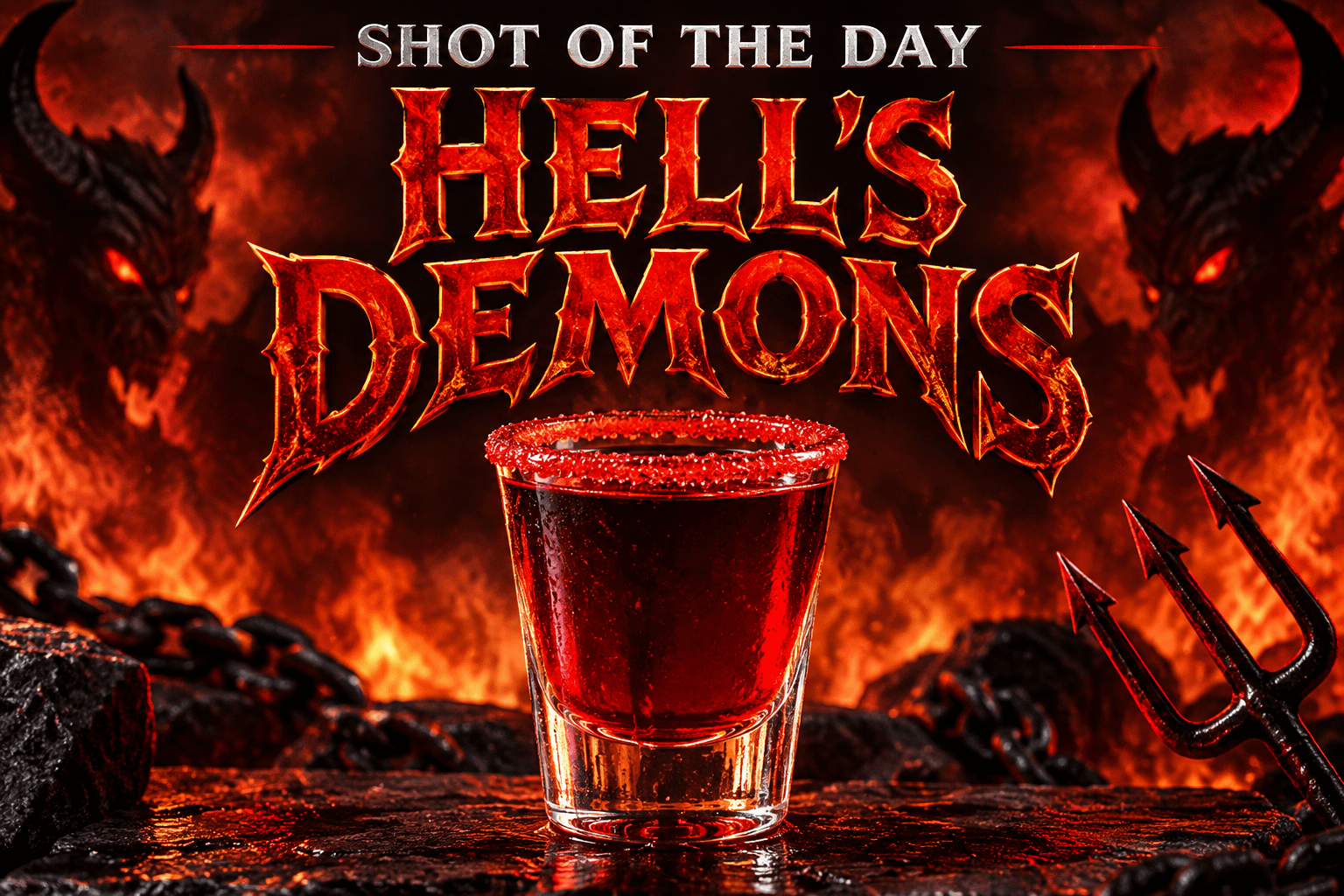
    Dark, fiery, slightly sweet, and carrying just enough heat to live up to its name, Hell’s Demons is a dramatic party shot made for anyone who likes their drinks with a little attitude. Its deep red appearance immediately sets the mood, while cinnamon whiskey brings warmth and spice to every sip.

    This is the kind of shot that belongs at Halloween parties, Friday-night gatherings, themed celebrations, or any occasion when an ordinary shot simply isn’t interesting enough.

    Hell’s Demons looks dangerous.

    It tastes dangerously good.

    And once that cinnamon heat arrives, you’ll understand exactly where the name came from.

    What Is the Hell’s Demons Shot?

    Hell’s Demons is a sweet-and-spicy whiskey shot combining cinnamon whiskey, black raspberry liqueur, cranberry juice, and grenadine.

    The cinnamon whiskey provides the fire. Black raspberry liqueur adds a darker berry sweetness and richer character. Cranberry juice contributes tartness so the drink doesn’t become overwhelmingly sweet, while grenadine intensifies the red color and gives the shot its sinister finishing touch.

    Together, the ingredients create a drink that moves between sweet, tart, fruity, and spicy.

    The first impression is berry sweetness.

    Then comes the cinnamon.

    Finally, you’re left with a warm finish that hangs around just long enough to remind you that you willingly invited Hell’s Demons to the party.

    Hell’s Demons Shot Recipe

    Serves: 1 shot
    Preparation Time: About 2 minutes

    Ingredients

    • 1/2 ounce cinnamon whiskey
    • 1/2 ounce black raspberry liqueur
    • 1/4 ounce cranberry juice
    • 1/4 ounce grenadine
    • Ice
    • Optional red sugar for the rim

    Directions

    Fill a cocktail shaker about halfway with ice.

    Pour in the cinnamon whiskey, black raspberry liqueur, cranberry juice, and grenadine.

    Shake vigorously for approximately 10 to 15 seconds. You want the ingredients thoroughly chilled before serving.

    Strain the mixture into a shot glass.

    For additional presentation, rim the glass with red sugar before pouring the drink.

    Serve immediately and enjoy responsibly.

    What Does Hell’s Demons Taste Like?

    Despite the intimidating name, Hell’s Demons isn’t about creating the strongest shot possible. The goal is flavor.

    Cinnamon whiskey provides an unmistakable spicy warmth, but the fruitier ingredients soften its sharper edges.

    Black raspberry liqueur brings deep berry notes that work especially well alongside cinnamon. Cranberry juice introduces tartness, while grenadine rounds everything out with additional sweetness.

    The result is surprisingly balanced.

    You get sweetness without drinking straight syrup.

    You get cinnamon heat without completely overwhelming the other ingredients.

    And you get enough tartness to keep everything lively.

    That makes Hell’s Demons approachable even for people who don’t normally enjoy straight whiskey shots.

    Why Cinnamon Whiskey Works So Well

    Cinnamon whiskey is the ingredient responsible for giving this shot its personality.

    Without it, Hell’s Demons would essentially become a sweet berry shot.

    Cinnamon transforms it.

    The spice creates a warming sensation that fits perfectly with the hell-inspired theme while also providing contrast against the raspberry and cranberry flavors.

    Cinnamon and berries may not be the first combination everyone thinks about when making cocktails, but they complement each other surprisingly well.

    The fruit arrives first.

    The cinnamon follows.

    That transition is what makes the drink interesting.

    The Importance of Black Raspberry Liqueur

    Black raspberry liqueur contributes more than sweetness.

    Its rich berry character gives Hell’s Demons depth and prevents the shot from tasting like cinnamon whiskey mixed with juice.

    Raspberry also pairs naturally with cranberry.

    The two create layers of fruit flavor rather than one simple sweet note.

    Because black raspberry liqueur tends to have a darker appearance, it can also deepen the color of the drink, helping produce the dark crimson appearance that makes Hell’s Demons visually distinctive.

    Cranberry Juice Brings the Bite

    With cinnamon whiskey, raspberry liqueur, and grenadine already contributing strong flavors, the recipe needs something to provide contrast.

    That’s where cranberry juice comes in.

    Cranberry’s tartness cuts through the sweetness and helps keep the shot balanced.

    Even though only a small amount is used, it makes a noticeable difference.

    If you prefer a tarter Hell’s Demons, slightly increase the cranberry juice and reduce the grenadine.

    If you enjoy sweeter shots, do the opposite.

    That’s one of the advantages of this recipe: it can easily be adjusted to match your preferences.

    Grenadine Creates the Inferno

    Grenadine has two jobs in Hell’s Demons.

    The first is sweetness.

    The second is appearance.

    Its vibrant red color reinforces the drink’s fiery theme and can create a gorgeous crimson shade when mixed with cranberry juice and black raspberry liqueur.

    Presentation matters with a themed shot.

    A drink called Hell’s Demons shouldn’t arrive looking pale and innocent.

    It needs drama.

    Grenadine delivers it.

    Give the Glass a Fiery Red Rim

    Want to take the presentation another step?

    Add a red sugar rim.

    Place a small amount of grenadine or simple syrup on a plate. Pour red decorating sugar onto another plate.

    Dip the rim of the shot glass lightly into the liquid and then into the sugar.

    The sparkling red rim creates a fiery appearance and adds a little extra sweetness with each sip.

    For Halloween, a combination of red and black decorating sugar can make the presentation even more dramatic.

    Make It Colder

    Hell’s Demons is best served extremely cold.

    Chilling helps smooth the whiskey and creates a cleaner drinking experience.

    Don’t simply combine room-temperature ingredients directly inside the shot glass.

    Shake them with ice.

    Those extra few seconds make a significant difference.

    You can also place the shot glasses in the freezer beforehand. A frosted shot glass filled with a dark crimson drink makes an especially striking presentation.

    Hell’s Demons for Halloween

    Few occasions fit this shot better than Halloween.

    The name already does half the work.

    Add some eerie decorations, dim lighting, and dramatic glassware, and Hell’s Demons can easily become a signature Halloween party drink.

    Serve several together on a black tray surrounded by Halloween decorations.

    You could even create a small sign reading:

    Enter if you dare. Hell’s Demons await.

    The theatrical presentation turns a simple drink into part of the celebration.

    Make a Batch for a Party

    If you’re serving several people, preparing each Hell’s Demons shot individually can become tedious.

    Instead, make a batch.

    For approximately eight shots, combine:

    • 4 ounces cinnamon whiskey
    • 4 ounces black raspberry liqueur
    • 2 ounces cranberry juice
    • 2 ounces grenadine

    Mix everything in a pitcher and refrigerate until very cold.

    When your guests are ready, stir the mixture and divide it among the shot glasses.

    You can also shake smaller portions with ice immediately before serving if you want every shot ice-cold.

    Turn Hell’s Demons Into a Cocktail

    Maybe you like the flavor combination but aren’t interested in taking shots.

    No problem.

    Hell’s Demons can easily become a full cocktail.

    Use:

    • 1 1/2 ounces cinnamon whiskey
    • 1 ounce black raspberry liqueur
    • 2 ounces cranberry juice
    • 1/2 ounce grenadine

    Shake everything with ice and strain it into a rocks glass filled with fresh ice.

    For a lighter version, top the drink with a little lemon-lime soda or sparkling water.

    The same sweet, spicy, berry-forward personality remains, but you can enjoy it more slowly.

    A Sweeter Version

    If cinnamon whiskey is a little too intense for your taste, increase the black raspberry liqueur slightly.

    Try equal portions of cinnamon whiskey and raspberry liqueur with a generous splash of cranberry juice and grenadine.

    You’ll still experience the cinnamon warmth, but the berry flavors will become more prominent.

    This variation works particularly well for people who prefer sweeter party shots.

    Turn Up the Fire

    Want Hell’s Demons to earn its name?

    Add a tiny splash of hot-pepper syrup or another cocktail-safe spicy ingredient.

    The important word is tiny.

    The goal isn’t to make the drink painfully hot. You simply want enough spice to intensify the cinnamon warmth.

    Start conservatively.

    You can always make the next shot hotter.

    Hell’s Demons vs. Straight Cinnamon Whiskey

    Why bother making a mixed shot when you could simply pour cinnamon whiskey into a glass?

    Because Hell’s Demons offers a more interesting drinking experience.

    Straight cinnamon whiskey delivers sweetness, cinnamon, alcohol, and heat.

    Hell’s Demons adds berry richness, cranberry tartness, additional sweetness, deeper color, and a smoother finish.

    It’s less about getting a drink into a shot glass and more about creating something people will remember.

    The Perfect Shot for a Dark-Themed Party

    Hell’s Demons doesn’t have to be reserved for Halloween.

    It fits almost any event with a darker or edgier theme.

    It could work for:

    • Costume parties
    • Horror movie nights
    • Friday the 13th celebrations
    • Bachelor or bachelorette parties
    • Adult birthday parties
    • Game nights
    • Late-night gatherings
    • Rock or heavy-metal themed parties

    Even the name makes people curious.

    Someone sees Hell’s Demons written on the drink menu and immediately wants to know what’s inside.

    That’s exactly what a memorable signature shot should do.

    Presentation Makes the Difference

    Because Hell’s Demons has such a dramatic name, don’t overlook presentation.

    Use clear shot glasses so everyone can see the dark red color.

    Chill the glasses.

    Add the optional red sugar rim.

    Serve the shots together rather than individually when possible.

    A row of crimson Hell’s Demons shots makes a much stronger impression than one lonely glass sitting on the counter.

    You don’t need complicated decorations.

    Let the color do most of the work.

    Serve Responsibly

    Hell’s Demons may taste sweet and fruity, but it still contains alcohol.

    Sweet shots can make it easy to underestimate how much alcohol you’re consuming, especially when multiple rounds are involved.

    Enjoy the drink slowly enough to know how alcohol is affecting you, drink water throughout the evening, eat beforehand, and never drive after drinking.

    The goal is to enjoy the night—not regret it the following morning.

    Why Hell’s Demons Deserves to Be Shot of the Day

    A great Shot of the Day should have more than alcohol.

    It should have personality.

    Hell’s Demons certainly has that.

    The deep crimson appearance catches your attention before you even taste it. Raspberry and cranberry bring sweetness and tartness, while cinnamon whiskey provides the fiery finish needed to make the name believable.

    It’s bold without being unnecessarily complicated.

    It’s sweet without losing its bite.

    It’s fiery without requiring an overwhelming amount of heat.

    And perhaps most importantly, it’s fun.

    Final Sip

    Some drinks whisper.

    Hell’s Demons arrives kicking down the gates.

    The combination of cinnamon whiskey, black raspberry liqueur, cranberry juice, and grenadine creates a fiery little shot packed with contrasting flavors. Sweet berries draw you in before cinnamon warmth makes its appearance and reminds you exactly what you’re drinking.

    Serve it ice-cold.

    Give it a blood-red sugar rim.

    Line up a round for your friends.

    Then raise the glasses together.

    Because when the Hell’s Demons come calling, sometimes the only thing left to do is take the shot.

    Would you dare take a shot of Hell’s Demons?

  • Cocktail of the Day: Hell and Heaven

    Cocktail of the Day: Hell and Heaven

    Some cocktails are made simply to taste good. Others are created to tell a story.

    The Hell and Heaven Cocktail belongs firmly in the second category.

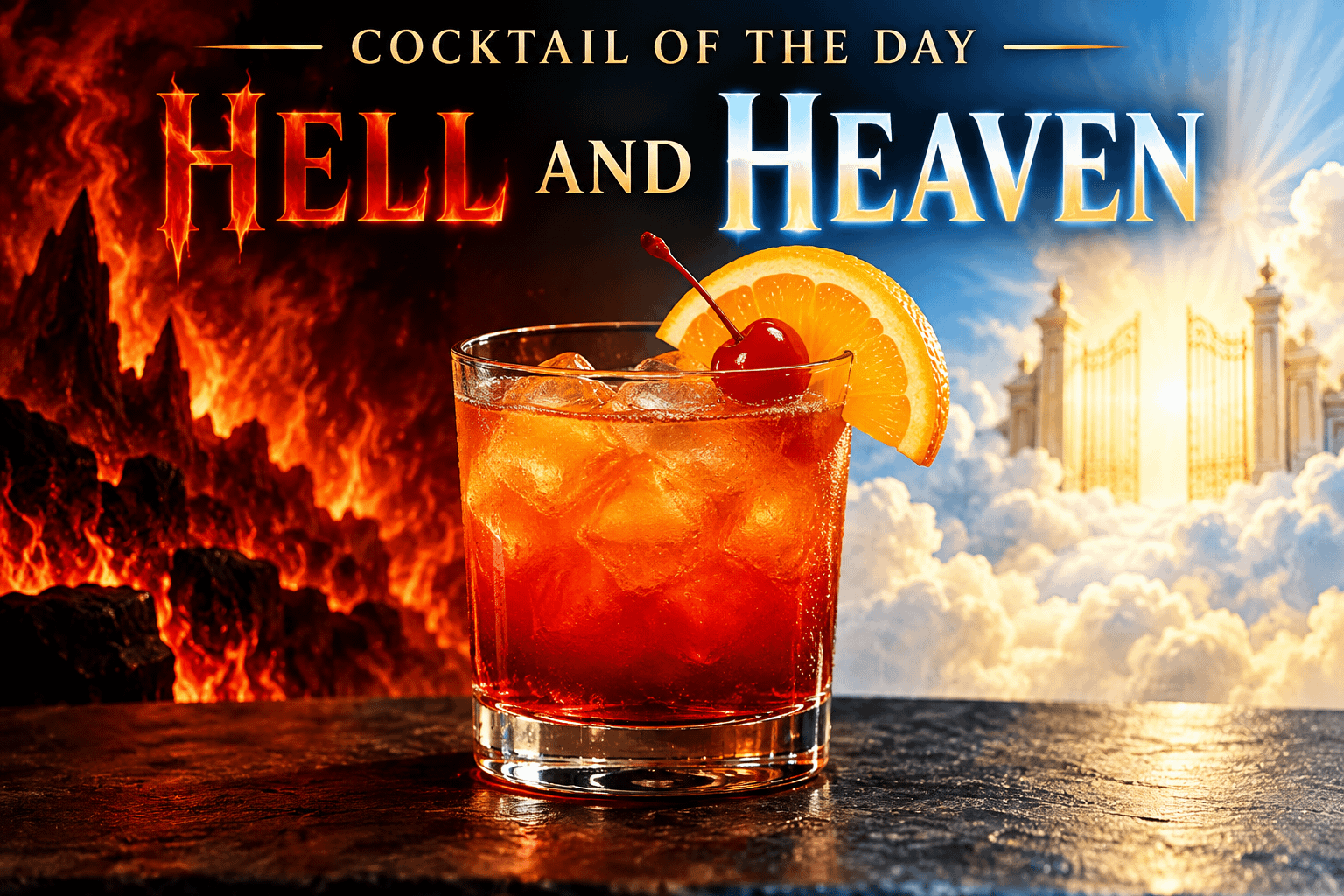
    Dark and fiery on one side, smooth and inviting on the other, this cocktail is built around contrast. Bourbon brings warmth and depth, amaretto adds a sweet almond richness, cranberry juice contributes a dramatic red color and tart edge, while pineapple juice and citrus brighten everything up. A small amount of grenadine deepens the sweetness and helps give the drink its striking, almost glowing appearance.

    It is a cocktail inspired by opposites: darkness and light, fire and sweetness, temptation and redemption.

    Welcome to today’s Cocktail of the Day: Hell and Heaven.

    A Cocktail of Two Worlds

    The name immediately creates an image.

    Hell represents fire, intensity, temptation, darkness, and danger.

    Heaven represents sweetness, peace, light, comfort, and beauty.

    Put those ideas together and you have the inspiration for a cocktail that shouldn’t be completely sweet or overwhelmingly strong. Instead, it should move between the two.

    The first sip offers sweetness and fruit. Then the bourbon begins to make itself known. Citrus cuts through the richer flavors, cranberry adds tartness, and amaretto leaves behind its distinctive nutty finish.

    It’s smooth enough to invite another sip but bold enough that you don’t forget you’re drinking a whiskey cocktail.

    That’s exactly what Hell and Heaven should be.

    Hell and Heaven Cocktail Recipe

    Serves: 1
    Prep Time: About 5 minutes

    Ingredients

    • 1½ ounces bourbon
    • ½ ounce amaretto
    • 1 ounce cranberry juice
    • 1 ounce pineapple juice
    • ½ ounce fresh lemon juice
    • ¼ ounce grenadine
    • Ice
    • Orange slice or orange peel for garnish
    • Maraschino cherry for garnish

    Instructions

    Fill a cocktail shaker about halfway with ice.

    Pour in the bourbon, amaretto, cranberry juice, pineapple juice, fresh lemon juice, and grenadine.

    Secure the lid and shake vigorously for approximately 10 to 15 seconds. The goal is not only to chill the ingredients but also to combine the fruit juices, whiskey, and amaretto into one smooth drink.

    Fill a rocks glass with fresh ice.

    Strain the cocktail over the ice.

    Garnish with an orange slice or twist of orange peel and a maraschino cherry.

    Serve immediately.

    What Does Hell and Heaven Taste Like?

    The easiest way to describe this cocktail is sweet, tart, fruity, and warming.

    Bourbon provides the foundation. Its notes can vary depending on the bottle you choose, but vanilla, oak, caramel, and spice are common characteristics.

    Then comes the amaretto.

    Amaretto has a rich almond-like flavor that pairs naturally with bourbon. The combination gives the drink a deeper character than you’d get from fruit juice and whiskey alone.

    Pineapple juice introduces tropical sweetness while cranberry provides tartness and color.

    Fresh lemon juice is especially important because the cocktail contains several sweet ingredients. Without acidity, the bourbon, amaretto, pineapple, and grenadine could become too sugary. Lemon provides the brightness necessary to bring everything back into balance.

    The result is a cocktail that begins almost playfully before revealing a darker whiskey backbone.

    Heaven first.

    Then a little hell.

    Why Bourbon Works So Well

    Bourbon might not be the first spirit people associate with tropical fruit, but it works surprisingly well here.

    The natural vanilla, caramel, and oak characteristics of bourbon provide contrast against pineapple and cranberry.

    More importantly, bourbon gives Hell and Heaven some weight.

    Without it, the recipe would lean heavily toward a fruity tropical cocktail. Bourbon transforms it into something richer and more complex.

    You don’t necessarily need an expensive bourbon.

    A reliable mixing bourbon is usually the better choice because the whiskey will be combined with several other flavors. Look for something with enough character to remain noticeable after shaking.

    If you prefer a stronger whiskey presence, increase the bourbon to 2 ounces while leaving the remaining ingredients unchanged.

    That variation brings the “Hell” side of the cocktail forward.

    The Sweetness of Heaven

    Amaretto plays the opposite role.

    Where bourbon provides heat and strength, amaretto contributes sweetness and comfort.

    Its almond-like flavor blends particularly well with cherry, cranberry, orange, pineapple, vanilla, and whiskey, making it almost perfectly suited for this recipe.

    Only half an ounce is needed.

    Too much amaretto can overpower the drink and make it excessively sweet. At the right proportion, however, it softens the bourbon without hiding it.

    That’s one of the secrets to making this cocktail work: neither side should completely win.

    The drink needs both.

    Creating the Dramatic Appearance

    Part of the appeal of a cocktail named Hell and Heaven is presentation.

    Cranberry juice and grenadine create the reddish color associated with the fiery half of the name, while pineapple juice adds a lighter golden-orange tone.

    For an even more dramatic presentation, don’t immediately add the grenadine to the shaker.

    Instead, shake the remaining ingredients and strain them into the glass. Then slowly drizzle the grenadine down the inside edge of the glass.

    Because grenadine is relatively dense, it will begin sinking toward the bottom.

    You’ll get a darker red layer underneath a lighter cocktail.

    The effect isn’t perfectly permanent—the colors will gradually mix—but that’s part of the fun.

    It can look almost like flames rising into a golden sky.

    Heaven and Hell Layered Variation

    If presentation matters more than simplicity, try making a visually layered version.

    Shake the bourbon, amaretto, pineapple juice, cranberry juice, and lemon juice with ice.

    Strain the mixture into a tall glass filled with fresh ice.

    Slowly pour the grenadine near the inside wall of the glass and allow it to sink.

    Avoid stirring before serving.

    Garnish near the top with an orange wheel and cherry.

    Serve it with the layers intact and let the person drinking it decide whether to stir everything together.

    The flavor becomes more balanced once mixed, but the initial appearance makes a memorable presentation.

    Make It More Like Hell

    Want something darker, stronger, and less sweet?

    Increase the bourbon to 2 ounces.

    Reduce the pineapple juice to ½ ounce.

    Skip or reduce the grenadine.

    You can also add a dash of aromatic bitters.

    The bitters reinforce the whiskey and introduce additional spice and complexity.

    This version moves away from a tropical-style cocktail and closer to a fruit-forward bourbon drink.

    It’s stronger, drier, and more intense.

    Definitely more Hell than Heaven.

    Make It More Like Heaven

    For the opposite approach, emphasize the cocktail’s softer side.

    Use 1 ounce bourbon instead of 1½ ounces.

    Increase the pineapple juice to 1½ ounces.

    Add another ¼ ounce of amaretto.

    The result will be sweeter, fruitier, and noticeably smoother.

    You can also serve it in a taller glass over plenty of ice and top it with a splash of club soda for a lighter drink.

    That version is refreshing and easier to sip slowly.

    A Smoky Hell and Heaven

    If you want to take the theme even further, smoke can transform the presentation.

    Prepare the cocktail normally.

    Before pouring it, briefly smoke the serving glass using a cocktail smoker if you already have one and know how to operate it safely.

    The smoke adds aroma more than flavor, but that aroma can dramatically change the experience.

    Bourbon is especially compatible with smoky aromas because of its oak-aged character.

    Add the deep red color of the drink and suddenly Hell and Heaven becomes a cocktail that looks like it belongs in a themed cocktail bar.

    Frozen Hell and Heaven

    This drink can also become a frozen cocktail.

    Add the bourbon, amaretto, cranberry juice, pineapple juice, lemon juice, grenadine, and approximately 1 to 1½ cups of ice to a blender.

    Blend until smooth.

    Pour into a chilled glass and garnish with an orange slice and cherry.

    The frozen version naturally tastes a little less spirit-forward because of the additional ice dilution, making it a fun option for warm afternoons or summer gatherings.

    Make It Spicy

    There is another way to bring out the “Hell.”

    Heat.

    Add one or two thin jalapeño slices to the shaker before shaking.

    Don’t overdo it.

    The goal isn’t to create something painfully spicy. You want just enough heat to appear after the initial sweetness.

    Pineapple and chili are natural partners, and the pepper’s heat makes the name even more appropriate.

    Sweet pineapple arrives first.

    Then the burn catches up.

    Choosing the Right Glass

    A rocks glass works beautifully for the standard version.

    Its shorter profile puts the drink’s deep red-orange appearance front and center, especially when served over one large ice cube.

    For the layered version, however, consider a Collins or highball glass.

    The taller glass gives the different colors more room to separate visually.

    A coupe can also work if you prefer serving the cocktail without ice. Shake thoroughly, double-strain into a chilled coupe, and garnish with an orange twist.

    Each presentation gives the drink a slightly different personality.

    Garnish Ideas

    The easiest garnish is an orange slice and cherry, but a cocktail with a name this dramatic gives you plenty of room to get creative.

    Try a flamed orange peel if you’re experienced with that technique, a dehydrated orange wheel, a cocktail cherry on a pick, or a combination of orange and cherry.

    You could even use two garnishes to reinforce the theme.

    A bright orange wheel represents Heaven.

    A deep red cherry represents Hell.

    Sometimes the smallest details make a cocktail feel special.

    When to Serve Hell and Heaven

    This is a versatile drink, but its dramatic name and appearance make it especially appropriate for evening gatherings.

    It would be an excellent choice for Halloween parties, themed cocktail nights, date nights, backyard gatherings, game nights, holiday parties, or simply an evening when you want to try something different.

    The red coloring makes it particularly suited to Halloween, but there’s nothing seasonal about the actual flavors.

    Bourbon makes it warming enough for cooler weather while pineapple and cranberry keep it refreshing enough for warmer months.

    Food Pairings

    Because this cocktail combines sweetness, acidity, fruit, and bourbon, it works particularly well with salty or smoky foods.

    Try serving it alongside barbecue chicken, pulled pork sliders, spicy chicken wings, bacon-wrapped appetizers, smoked cheeses, grilled burgers, barbecue ribs, or a charcuterie board.

    Spicy foods are another good match.

    The sweetness from pineapple and amaretto can help balance moderate heat from buffalo wings, jalapeño poppers, spicy barbecue sauce, or similar dishes.

    For dessert, chocolate is an interesting choice.

    Dark chocolate brownies or chocolate-covered cherries can complement the bourbon and amaretto while creating an appropriately decadent ending.

    Make a Hell and Heaven Mocktail

    You can keep the theme without the alcohol.

    Combine:

    • 1½ ounces cranberry juice
    • 1½ ounces pineapple juice
    • ½ ounce fresh lemon juice
    • ¼ ounce grenadine
    • 1 ounce orange juice
    • 2 ounces ginger ale or sparkling water

    Shake the juices and grenadine with ice, strain into a glass filled with fresh ice, and top with ginger ale or sparkling water.

    Garnish with an orange slice and cherry.

    For a more dramatic layered appearance, add the grenadine after the other ingredients.

    It won’t taste exactly like the bourbon cocktail, of course, but you’ll still have the sweet, tart, fruity character and fiery appearance that inspired the original.

    Why This Cocktail Is Memorable

    There are thousands of cocktail recipes built around whiskey and fruit juice.

    What makes a drink memorable isn’t always a rare ingredient.

    Sometimes it’s the story surrounding it.

    Hell and Heaven takes familiar flavors and gives them a personality.

    The bourbon represents warmth, fire, and darkness.

    Amaretto brings sweetness.

    Cranberry supplies the deep red color.

    Pineapple brings brightness.

    Lemon creates the tension between them.

    Grenadine pulls everything toward the dramatic red appearance suggested by the name.

    Each ingredient has a job.

    Together, they create something that feels bigger than a simple mixed drink.

    Cocktail of the Day: Hell and Heaven

    Life itself often exists somewhere between extremes.

    There are beautiful days and difficult ones. Sweet moments and bitter ones. Light and darkness. Peace and chaos.

    Maybe that’s why a name like Hell and Heaven works so well for a cocktail.

    The drink doesn’t ask you to choose between the two.

    It puts them in the same glass.

    Sweet pineapple meets tart cranberry. Smooth amaretto meets bold bourbon. Bright citrus meets deep red grenadine.

    Opposites become something surprisingly balanced.

    So fill the shaker with ice, pour in the bourbon, add the sweetness, bring in the fruit, and give everything a good shake.

    Then raise your glass to both sides of the experience—the sweetness and the fire.

    Today’s Cocktail of the Day is Hell and Heaven: a little darkness, a little light, and plenty of flavor somewhere in between.

    What side would you choose—the fiery Hell version or the sweeter Heaven version?

    Please enjoy responsibly. This recipe is intended for adults of legal drinking age.

  • Drink of the Day: Warrior Spirit

    Drink of the Day: Warrior Spirit

    Some drinks are made for relaxing. Some are made for celebrating. And then there are drinks that seem to carry an attitude before you ever take the first sip.

    Today’s Drink of the Day: Warrior Spirit belongs in that last category.

    Bold, warming, slightly smoky, and balanced with bright citrus and spicy ginger, the Warrior Spirit is a whiskey-based drink inspired by resilience, courage, and the determination to keep moving forward. It is the kind of cocktail you pour when you want something with character rather than something overly sweet.

    The name says everything.

    A warrior spirit does not mean never getting knocked down. It means finding the strength to rise again. It is the determination to face another day when yesterday took everything out of you. It is courage when life becomes uncertain, persistence when the road becomes difficult, and strength that continues even when nobody else sees the battle.

    So raise a glass to the fighters, survivors, dreamers, and everyone still standing.

    What Is a Warrior Spirit?

    The Warrior Spirit is a whiskey cocktail combining bourbon, ginger beer, lemon juice, honey, and aromatic bitters.

    The bourbon provides the strong foundation. Ginger beer adds spice and energy. Fresh lemon keeps everything bright, while honey softens the sharper edges and brings the ingredients together.

    A few dashes of bitters give the drink additional complexity.

    The result is a cocktail that begins smooth and slightly sweet before developing into citrus, whiskey warmth, and a lingering ginger kick.

    It is strong without needing to be harsh and refreshing without losing its bold personality.

    Warrior Spirit Recipe

    Serves: 1
    Preparation Time: About 5 minutes

    Ingredients

    • 2 ounces bourbon whiskey
    • 3 ounces ginger beer
    • 3/4 ounce fresh lemon juice
    • 1/2 ounce honey syrup
    • 2 dashes aromatic bitters
    • Ice
    • Lemon wheel or lemon peel for garnish
    • Fresh rosemary sprig for garnish, optional

    For the Honey Syrup

    • 1 tablespoon honey
    • 1 tablespoon warm water

    Stir the honey and warm water together until completely combined. Allow it to cool before adding it to the cocktail.

    How to Make the Warrior Spirit

    Fill a cocktail shaker with ice.

    Add the bourbon, fresh lemon juice, honey syrup, and aromatic bitters.

    Shake vigorously for approximately 10 to 15 seconds. You want the ingredients thoroughly chilled while allowing the honey, lemon, and whiskey to combine.

    Fill a rocks glass or tall cocktail glass with fresh ice.

    Strain the mixture into the glass.

    Slowly pour the ginger beer over the cocktail.

    Give everything a gentle stir.

    Garnish with a lemon wheel or peel. For an additional aromatic touch, add a sprig of fresh rosemary.

    Your Warrior Spirit is ready.

    What Does the Warrior Spirit Taste Like?

    The first flavor you are likely to notice is bourbon.

    Depending on the whiskey you choose, you may experience notes of caramel, vanilla, oak, spice, or toasted sugar.

    Then comes the brightness of lemon.

    Fresh lemon juice cuts through the richness of the bourbon and prevents the honey from making the drink excessively sweet.

    Honey provides a softer sweetness than ordinary simple syrup. Rather than dominating the cocktail, it rounds out the whiskey and citrus.

    Then the ginger beer arrives.

    That spicy ginger kick is one of the most important elements of the Warrior Spirit. It gives the drink energy and creates a warming finish that complements the bourbon.

    Finally, aromatic bitters contribute subtle layers of herbs and spice.

    Together, these ingredients produce a drink that is bold, refreshing, warming, and slightly sweet.

    Why Bourbon Works So Well

    Bourbon is the heart of the Warrior Spirit.

    There is something naturally bold about whiskey cocktails, and bourbon provides enough character to remain noticeable even alongside strong flavors such as ginger and lemon.

    You do not necessarily need an expensive bottle.

    A dependable bourbon that you already enjoy drinking is usually the best choice.

    If you prefer a smoother cocktail, select a bourbon with noticeable caramel and vanilla flavors.

    If you want the Warrior Spirit to have more bite, choose a higher-proof bourbon or one with a spicier profile.

    You can even substitute rye whiskey if you want additional peppery spice.

    The drink changes slightly, but the warrior personality remains.

    The Power of Ginger

    Ginger beer is much more than a mixer in this cocktail.

    It provides the Warrior Spirit with much of its personality.

    A mild ginger beer creates an approachable, refreshing drink. A stronger ginger beer gives you considerably more heat and spice.

    If you love bold cocktails, choose a ginger beer with a noticeable ginger burn.

    One important note: ginger beer and ginger ale are not always interchangeable.

    Ginger ale is typically lighter, sweeter, and less spicy. You can use it if that is what you have available, but the finished drink will generally be softer.

    For the full Warrior Spirit experience, ginger beer is the better choice.

    Why Fresh Lemon Matters

    Whenever a cocktail relies heavily on citrus, freshly squeezed juice can make a noticeable difference.

    Bottled lemon juice may work in a pinch, but fresh lemon provides the bright acidity that makes this drink come alive.

    The lemon serves an important purpose.

    Bourbon, honey, and ginger beer can all bring some degree of sweetness or richness. Lemon cuts through those flavors and creates balance.

    That balance is what makes the Warrior Spirit easy to enjoy despite its bold ingredients.

    Make It Smoky

    Want your Warrior Spirit to become even more dramatic?

    Add smoke.

    If you have a cocktail smoker, prepare the drink normally and briefly smoke the finished cocktail before serving.

    You can also use a smoked whiskey or add a very small amount of smoky Scotch to the bourbon.

    Do not overdo it.

    Smoke should provide another layer of aroma and flavor rather than completely overpowering the lemon, ginger, and whiskey.

    A little smoke can transform the Warrior Spirit into an excellent cool-weather or evening cocktail.

    Make It Spicier

    The ginger beer already provides heat, but spice lovers can take the Warrior Spirit further.

    Add one or two thin slices of fresh jalapeño to the shaker.

    Shake them with the bourbon, lemon juice, honey syrup, and bitters.

    Then strain the mixture as usual.

    The pepper adds heat without completely changing the drink.

    Another option is adding a tiny pinch of cayenne pepper. Be extremely conservative—a small amount goes a long way.

    Make It Sweeter

    Not everyone wants the same balance.

    If the original recipe tastes too tart or spicy for you, increase the honey syrup from 1/2 ounce to about 3/4 ounce.

    Taste and adjust.

    Cocktail recipes are starting points. The best version is ultimately the one you enjoy drinking.

    Warrior Spirit Mocktail

    You can also capture the flavors of the Warrior Spirit without alcohol.

    Ingredients

    • 3 ounces ginger beer
    • 2 ounces sparkling water
    • 3/4 ounce fresh lemon juice
    • 1/2 ounce honey syrup
    • 2 dashes nonalcoholic aromatic bitters, optional
    • Ice
    • Lemon wheel
    • Rosemary sprig

    Add the lemon juice and honey syrup to an ice-filled glass.

    Stir well.

    Pour in the ginger beer and sparkling water.

    Gently stir again.

    Garnish with lemon and rosemary.

    It will not have bourbon’s oak and caramel characteristics, but you will still get the combination of ginger, citrus, sweetness, and spice that inspired the original drink.

    Foods to Serve With the Warrior Spirit

    Because this cocktail combines whiskey, citrus, sweetness, and ginger spice, it pairs especially well with flavorful foods.

    Try it alongside barbecue chicken, smoked brisket, grilled steak, pulled pork, spicy wings, bacon cheeseburgers, loaded fries, grilled sausages, or barbecue ribs.

    It can also work surprisingly well with sweeter foods.

    Dark chocolate, pecan pie, caramel desserts, bread pudding, and chocolate brownies complement bourbon’s natural caramel and vanilla characteristics.

    For a casual gathering, put out smoked nuts, cheese, crackers, pretzels, and other salty snacks.

    When to Serve It

    The Warrior Spirit is versatile enough for many occasions.

    Serve it during a backyard barbecue, game night, weekend gathering, celebration, dinner party, or relaxing evening at home.

    Its bourbon and ginger flavors make it especially appealing as the weather starts becoming cooler.

    But there is another reason to make one.

    Sometimes you simply want to toast yourself.

    Not because everything went perfectly.

    Not because you won every battle.

    But because you survived the battles nobody else knew you were fighting.

    The Meaning Behind the Name

    Strength is often misunderstood.

    We tend to imagine strength as someone standing confidently after winning a battle.

    Real life rarely looks that clean.

    Sometimes strength is getting out of bed when your heart feels heavy.

    Sometimes it is trying again after failure.

    Sometimes it is rebuilding after losing something you thought would always be part of your life.

    Sometimes it is admitting you need help.

    Sometimes it is forgiving.

    Sometimes it is walking away.

    Sometimes it is continuing forward when you have absolutely no idea what comes next.

    That is a warrior spirit.

    You do not need armor.

    You do not need a battlefield.

    And you certainly do not need to pretend that nothing hurts.

    You only need enough courage to take the next step.

    Raise a Glass to the Warriors

    The Warrior Spirit is more than bourbon poured into a glass.

    Its bold whiskey, fiery ginger, bright lemon, and smooth honey create a drink built around contrasting flavors—strong yet smooth, spicy yet sweet.

    In some ways, that makes the name even more appropriate.

    Life contains those same contrasts.

    There are victories and losses. Joy and heartbreak. Confidence and uncertainty. Moments when we feel unstoppable and moments when simply making it through the day feels like an accomplishment.

    Yet somehow, we continue.

    Tonight’s drink is dedicated to anyone who has ever had to rebuild, begin again, overcome something difficult, or find strength they did not realize they possessed.

    Pour the bourbon.

    Add the lemon and honey.

    Top it with that fiery ginger beer.

    Raise your glass.

    Here is to courage when you are afraid, strength when you are tired, hope when the road ahead is uncertain, and the determination to keep moving forward.

    That is the Warrior Spirit.

    What battle have you survived that showed you just how strong you really are?

  • Health Tip of the Day: Take Care of Your Heart

    Health Tip of the Day: Take Care of Your Heart

    Your heart works for you every moment of every day. It beats while you are working, sleeping, laughing, worrying, exercising, relaxing, and going through the ordinary routines of life. You rarely have to think about it, yet it continues doing one of the most important jobs in your body.

    That is why today’s health tip is simple but incredibly important:

    Take care of your heart.

    Heart health isn’t something you should only start thinking about when you get older or when a doctor tells you there is a problem. The choices you make today can influence your cardiovascular health for years to come.

    You don’t have to completely transform your life overnight. Small, consistent changes in how you eat, move, sleep, manage stress, and monitor your health can make a meaningful difference.

    Your Heart Deserves Daily Attention

    Your heart is a muscle responsible for pumping blood throughout your body, supplying your organs and tissues with oxygen and nutrients.

    Cardiovascular disease remains a major health concern, but many of the factors associated with heart disease can be influenced by everyday habits.

    Smoking, physical inactivity, high blood pressure, unhealthy cholesterol levels, diabetes, excess weight, poor nutrition, and other factors can increase cardiovascular risk.

    Some risk factors, such as age and family history, cannot be changed. Others can.

    Instead of worrying about everything outside your control, focus on the things you can influence.

    Every healthy meal matters.

    Every walk matters.

    Every cigarette you don’t smoke matters.

    Every good night’s sleep matters.

    Every appointment where you check your blood pressure, cholesterol, and blood sugar matters.

    Heart health is built through thousands of seemingly small decisions.

    Get Your Body Moving

    Regular physical activity is one of the most valuable things you can do for your cardiovascular health.

    That doesn’t mean everyone needs to run several miles or spend hours in a gym.

    Walking counts.

    Gardening counts.

    Dancing counts.

    Swimming counts.

    Cycling counts.

    Taking the stairs counts.

    Even adding short periods of movement throughout your day can be a useful place to start, particularly if you have been inactive.

    For many adults, health guidelines recommend working toward at least 150 minutes of moderate-intensity aerobic activity each week, along with muscle-strengthening activity on two or more days.

    But don’t let the number discourage you.

    If you’re currently doing very little activity, start where you are. A ten-minute walk is better than remaining on the couch because you couldn’t complete a thirty-minute workout.

    Consistency is more important than perfection.

    If you have a medical condition, significant mobility limitations, chest symptoms, or concerns about beginning an exercise program, talk with a healthcare professional about what level of activity is appropriate for you.

    Eat With Your Heart in Mind

    Food doesn’t need to be divided into “good” and “bad” categories for you to improve your heart health.

    Instead, look at your overall eating pattern.

    Try including more vegetables, fruits, whole grains, beans, nuts, seeds, fish, and other nutrient-rich foods in your regular meals.

    Pay attention to foods that are high in sodium, saturated fat, added sugar, and heavily refined ingredients.

    This doesn’t mean you can never enjoy pizza, dessert, burgers, or your favorite comfort foods again.

    Heart-healthy eating should be sustainable.

    One unhealthy meal doesn’t destroy your health, just as one salad doesn’t create perfect health. What you do most of the time matters far more than what happens occasionally.

    Simple changes can add up.

    Choose water instead of a sugary beverage sometimes.

    Add vegetables to dinner.

    Choose whole grains more often.

    Try fruit when you want something sweet.

    Cook at home more frequently when possible.

    Watch portion sizes.

    Read nutrition labels, especially for sodium, saturated fat, and added sugars.

    You don’t have to create the perfect diet. Build a healthier pattern you can realistically maintain.

    Know Your Blood Pressure

    High blood pressure can quietly damage blood vessels and increase cardiovascular risk.

    One reason it deserves attention is that you may not necessarily feel different when your blood pressure is elevated.

    That’s why knowing your numbers matters.

    Have your blood pressure checked regularly and discuss the results with your healthcare provider. If you already have high blood pressure, follow the treatment plan recommended for you.

    Lifestyle changes may help, but some people also need medication.

    Taking prescribed medication consistently is part of taking care of your heart.

    Don’t stop or change blood pressure medication simply because you feel better or get a normal reading. Talk with the clinician managing your treatment first.

    Pay Attention to Cholesterol

    Cholesterol is another important part of cardiovascular health.

    Your healthcare provider may check several measurements, including LDL cholesterol, HDL cholesterol, and triglycerides.

    The significance of those numbers depends partly on your overall cardiovascular risk, medical history, age, and other factors.

    Instead of trying to interpret a single cholesterol number by yourself, discuss your results with your healthcare professional.

    Depending on your individual risk, lifestyle changes, medication, or both may be recommended.

    Knowing your numbers gives you information you can act on.

    Manage Blood Sugar

    Blood sugar and heart health are closely connected.

    Over time, diabetes can increase the risk of cardiovascular disease. If you have diabetes or prediabetes, managing your blood glucose is an important part of protecting your overall health.

    Regular physical activity, nutritious eating, weight management when appropriate, medication when prescribed, and routine medical care can all play a role.

    If you haven’t had your blood sugar checked recently and have risk factors for diabetes, ask your healthcare provider whether screening is appropriate.

    Don’t Smoke

    If you smoke, quitting is one of the most powerful things you can do for your cardiovascular and overall health.

    Quitting isn’t always easy, and needing help doesn’t mean you lack willpower. Nicotine dependence can be difficult to overcome.

    Counseling, medications, nicotine-replacement therapies, quit programs, and support from healthcare professionals can improve your chances of success.

    Even if you’ve smoked for many years, quitting can still provide important health benefits.

    It is never pointless to make a healthier choice today.

    Make Sleep a Priority

    Heart health isn’t only about diet and exercise.

    Sleep matters too.

    Adults generally need around seven or more hours of sleep each night, although individual needs can vary.

    Poor sleep can affect many aspects of health and may make other healthy behaviors more difficult. When you’re exhausted, exercising can feel harder, cravings may increase, and managing stress can become more challenging.

    Try maintaining a regular sleep schedule when possible.

    Create a calming nighttime routine.

    Reduce unnecessary screen time before bed.

    Keep your sleeping environment comfortable.

    If you regularly snore loudly, wake up gasping, experience breathing pauses during sleep, or remain extremely tired despite spending enough time in bed, discuss it with a healthcare professional. Conditions such as sleep apnea deserve medical attention.

    Don’t Ignore Stress

    Stress is part of life, but chronic stress can influence behaviors and physical responses that aren’t good for your health.

    Some people respond to stress by overeating, drinking more alcohol, smoking, sleeping poorly, or becoming physically inactive.

    Finding healthier ways to cope can benefit both your heart and your emotional well-being.

    Take a walk.

    Spend time outdoors.

    Listen to music.

    Pray or meditate.

    Talk with someone you trust.

    Write down what you’re feeling.

    Spend time with people who bring peace rather than constant conflict.

    Give yourself opportunities to rest.

    You cannot eliminate every stressful situation, but you can become more intentional about how you respond to stress.

    Maintain a Healthy Weight for You

    Weight is only one part of health, but carrying excess body weight can contribute to conditions such as high blood pressure, type 2 diabetes, and other cardiovascular risk factors.

    If weight loss is medically appropriate for you, you don’t necessarily need a dramatic transformation to begin improving your health.

    Focus first on sustainable behaviors.

    Move more.

    Improve the quality of your meals.

    Reduce unnecessary calories from beverages.

    Get adequate sleep.

    Eat more mindfully.

    Build habits you can continue for years instead of following extreme diets you can only tolerate for a few weeks.

    If you need personalized guidance, a physician or registered dietitian can help you create a realistic approach based on your individual health needs.

    Limit Alcohol

    If you drink alcohol, don’t assume that drinking more is good for your heart.

    Alcohol can contribute to increased blood pressure and other health problems, and drinking heavily carries significant risks.

    People who don’t currently drink shouldn’t start drinking for supposed heart benefits.

    If you do drink, moderation—or choosing not to drink—is the safer approach.

    Keep Up With Medical Care

    Taking care of your heart also means knowing what is happening inside your body.

    Routine healthcare can help identify risk factors before they become larger problems.

    Depending on your age, health history, and individual risk, your healthcare provider may recommend monitoring things such as:

    • Blood pressure
    • Cholesterol
    • Blood sugar
    • Weight and waist measurements
    • Kidney health
    • Medication effectiveness
    • Family history and cardiovascular risk

    Don’t avoid appointments simply because you feel fine.

    Preventive healthcare is often about finding problems before they make you feel sick.

    Know the Warning Signs of a Heart Attack

    Heart attacks don’t always look exactly like they do in movies.

    Possible warning signs can include chest pressure, squeezing, fullness, discomfort, or pain. Discomfort may also occur in the arms, shoulders, back, neck, jaw, or stomach.

    Other symptoms can include shortness of breath, sweating, nausea, lightheadedness, or unusual fatigue.

    Symptoms can vary from person to person.

    If you think you or someone else may be having a heart attack, call 911 or your local emergency number immediately. Don’t try to diagnose it yourself or wait around hoping the symptoms disappear.

    Minutes matter.

    Small Changes Can Protect Your Future

    It is easy to believe becoming healthier requires changing everything at once.

    It doesn’t.

    Start with one decision.

    Take a ten-minute walk today.

    Drink an extra glass of water.

    Add vegetables to dinner.

    Schedule the medical appointment you’ve been putting off.

    Check your blood pressure.

    Go to bed a little earlier.

    Skip a cigarette.

    Choose a healthier lunch.

    Then do something healthy again tomorrow.

    You don’t need to become perfect.

    You need to become consistent.

    Over weeks, months, and years, those small decisions become habits. Those habits can influence your blood pressure, cholesterol, blood sugar, fitness, weight, sleep, stress, and overall cardiovascular health.

    Take Care of the Heart That Carries You Through Life

    Your heart has carried you through every chapter of your life.

    It has been there through celebrations and heartbreak, peaceful seasons and stressful ones, ordinary mornings and unforgettable nights.

    You only get one.

    Treat it like something worth protecting.

    Eat a little better.

    Move a little more.

    Get enough rest.

    Manage your stress.

    Don’t smoke.

    Know your numbers.

    Take prescribed medications appropriately.

    Keep your medical appointments.

    And pay attention when your body tells you something isn’t right.

    You don’t have to completely change your life today.

    Just make one decision that your future heart will thank you for.

    What is one small thing you can do today to take better care of your heart?

  • Love Tip of the Day: Do What You Say You Will

    Love Tip of the Day: Do What You Say You Will

    Love is expressed in many ways. It can be found in affectionate words, thoughtful gifts, physical touch, quality time, encouragement, and those quiet moments when two people simply enjoy being together.

    But one of the most powerful ways to show someone you love them is much simpler:

    Do what you say you will.

    If you make a promise, keep it. If you say you are going to call, call. If you tell your partner you will take care of something, take care of it. If you say you are going to make a change, put real effort into making that change.

    Keeping your word may not sound romantic, but it creates something every healthy relationship desperately needs:

    Trust.

    And without trust, even the strongest feelings can eventually become overwhelmed by disappointment, uncertainty, and resentment.

    Your Actions Give Meaning to Your Words

    Saying “I love you” is important.

    But the meaning behind those words becomes much stronger when your actions consistently support them.

    You can tell someone they are important to you, but if you repeatedly cancel plans with them, they may eventually question how important they really are.

    You can tell someone you will always be there for them, but if you disappear whenever life becomes difficult, those words begin to lose their meaning.

    You can promise that things will change, but if nothing changes, eventually your partner may stop believing the promise.

    Words create expectations.

    Actions create evidence.

    When your actions consistently match what you say, your partner learns that your words can be trusted.

    That creates emotional security.

    The Small Promises Matter Too

    People sometimes think keeping your word only matters when it involves major promises.

    It doesn’t.

    Relationships are often strengthened—or slowly weakened—through hundreds of seemingly insignificant moments.

    “I’ll call you tonight.”

    “I’ll pick that up on my way home.”

    “I’ll make the reservation.”

    “I’ll help you with that tomorrow.”

    “I’ll be there at six.”

    “I’ll take care of it.”

    Each statement may seem small, but every time you follow through, you quietly deposit another piece of trust into the relationship.

    Your partner begins to know that when you say something, you mean it.

    The opposite is also true.

    If someone repeatedly says they will do something and doesn’t, frustration begins to build.

    One forgotten promise probably won’t destroy a healthy relationship. Everyone forgets things occasionally. Everyone gets overwhelmed. Everyone makes mistakes.

    But repeated broken promises can become a pattern.

    Eventually, the problem isn’t about the forgotten task anymore.

    The problem becomes:

    “Can I trust what you tell me?”

    Consistency Creates Security

    Healthy love should provide a sense of emotional safety.

    That doesn’t mean everything will always be perfect. Couples will disagree. Plans will change. Mistakes will happen. Difficult seasons will come.

    But consistency helps create stability during those moments.

    When your partner knows that your words usually match your behavior, they don’t have to constantly wonder where they stand.

    They don’t have to decode everything you say.

    They don’t have to wonder whether another promise will disappear tomorrow.

    They know who you are because you consistently show them.

    Reliability may not receive as much attention as romance, chemistry, or passion, but it is one of the quiet foundations of lasting love.

    There is something deeply comforting about knowing:

    “If they say they’ll be there, they’ll be there.”

    Don’t Make Promises Just to End an Argument

    One of the easiest times to make promises is during conflict.

    “I’ll never do it again.”

    “I promise I’ll change.”

    “I’ll communicate better.”

    “I’ll start helping more.”

    “I’ll make more time for us.”

    Sometimes those promises are sincere.

    But promises made during emotional moments still require action afterward.

    Don’t promise something simply because you want an argument to stop.

    Don’t tell your partner what they want to hear just to restore temporary peace.

    If you genuinely intend to change something, decide what that change actually looks like.

    Instead of repeatedly saying:

    “I’ll communicate better.”

    Ask yourself what “better” means.

    Maybe it means speaking up instead of shutting down.

    Maybe it means listening without immediately becoming defensive.

    Maybe it means checking in during the day.

    Maybe it means discussing problems instead of pretending they don’t exist.

    A promise becomes meaningful when it becomes behavior.

    When You Can’t Keep Your Word, Communicate

    Sometimes life gets in the way.

    You promised you would be somewhere, but something unexpected happened.

    You said you would finish something, but circumstances changed.

    You planned to call, but an emergency came up.

    Being reliable doesn’t mean being perfect.

    It means being responsible.

    If you realize you can’t keep a commitment, communicate as soon as possible.

    Don’t disappear.

    Don’t wait until your partner asks.

    Don’t pretend you forgot.

    Say what happened.

    Apologize when appropriate.

    Then make a reasonable effort to correct the situation.

    There is a big difference between someone who occasionally can’t keep a commitment and someone who repeatedly doesn’t care whether they keep one.

    Intent matters.

    Communication matters.

    Effort matters.

    Patterns matter.

    Don’t Promise More Than You Can Give

    Sometimes people break promises because they make too many of them.

    They want to make their partner happy, so they say yes to everything.

    Yes, I’ll do that.

    Yes, I’ll be there.

    Yes, I’ll change.

    Yes, I’ll handle it.

    But love doesn’t require you to promise everything.

    Sometimes honesty sounds like:

    “I don’t know if I can do that.”

    “I don’t want to promise something I’m not sure I can deliver.”

    “I’ll try, but I can’t guarantee it.”

    “I need some time before I can give you an answer.”

    That may not sound as impressive as making a big promise, but honesty is better than temporary reassurance followed by disappointment.

    Don’t make promises based on who you hope to be tomorrow. Make commitments based on what you’re genuinely willing and able to do.

    Trust Is Built Through Repetition

    Trust isn’t usually created through one grand romantic gesture.

    It grows through repetition.

    Showing up.

    Calling when you said you would.

    Being where you promised you would be.

    Remembering something important.

    Following through on responsibilities.

    Keeping private conversations private.

    Being honest even when honesty is uncomfortable.

    Doing the things you said you would do.

    Over time, those moments create a pattern.

    And that pattern tells your partner:

    “You can depend on me.”

    That feeling can be incredibly powerful in a relationship.

    Your Partner Shouldn’t Have to Chase You

    If you constantly need reminders to fulfill commitments, your partner may eventually feel more like your manager than your partner.

    “Did you remember?”

    “Are you still going to do that?”

    “When are you going to take care of it?”

    “You said you would do this last week.”

    Occasional reminders are normal. Everyone forgets things.

    But when one person constantly has to chase the other for follow-through, resentment can grow.

    Taking responsibility without being repeatedly reminded communicates respect.

    It says:

    “What matters to you matters enough for me to remember.”

    Apologies Need Follow-Through Too

    “I’m sorry” is powerful when it is sincere.

    But repeated apologies without changed behavior eventually lose their meaning.

    If you apologize for something and promise to work on it, let your behavior support the apology.

    You don’t have to transform overnight.

    Real change can take time.

    But there should be visible effort.

    If you apologize for not making enough time for your relationship, intentionally create time.

    If you apologize for not listening, practice listening.

    If you apologize for constantly breaking commitments, become more careful about what you promise.

    An apology acknowledges the past.

    Changed behavior helps build the future.

    Reliability Is a Form of Respect

    When you keep your word, you’re showing your partner that their time, emotions, and expectations matter.

    You’re saying:

    “I respect you enough not to tell you things I don’t mean.”

    That matters.

    Love isn’t only about how strongly you feel about someone.

    It is also about how responsibly you treat their heart.

    Someone shouldn’t have to repeatedly wonder whether your promises mean anything.

    Give your words value by backing them with action.

    Don’t Expect Perfection

    This love tip isn’t about demanding perfection from your partner.

    People forget.

    People make mistakes.

    People misunderstand each other.

    People become overwhelmed.

    Plans change.

    Healthy relationships leave room for grace.

    The important thing is to look at patterns rather than isolated moments.

    Is your partner generally dependable?

    Do they make an effort?

    Do they communicate when circumstances change?

    Do they take responsibility when they let you down?

    Do their actions usually support their words?

    Those questions matter more than expecting flawless behavior.

    Offer your partner the same grace you would hope to receive when you make a mistake.

    Be Someone Whose Word Means Something

    There is something powerful about becoming a person whose word carries weight.

    When you say something, people know you mean it.

    When you commit, you follow through.

    When you promise, you take that promise seriously.

    When you make a mistake, you own it.

    That kind of integrity strengthens every relationship in your life, but it is especially important in romantic relationships.

    Your partner should be able to trust your “yes.”

    They should also be able to trust your “no.”

    They should know that you aren’t simply saying whatever sounds good in the moment.

    You’re speaking honestly.

    Love Is More Than What You Say

    Beautiful words have their place.

    Tell your partner you love them.

    Tell them you appreciate them.

    Tell them you’re proud of them.

    Tell them they matter.

    But don’t stop there.

    Show them.

    If you say you’re going to be there, show up.

    If you promise to help, help.

    If you say you’re going to work on something, work on it.

    If you make a commitment, honor it.

    If circumstances prevent you from following through, communicate honestly instead of leaving them wondering.

    Because eventually, love is measured not only by the promises we make but by the way we live after making them.

    Love Tip of the Day

    Do what you say you will.

    Don’t make promises simply because they sound good.

    Don’t say something just because it is what your partner wants to hear.

    Make your words mean something.

    Be consistent.

    Be dependable.

    Communicate when plans change.

    Own your mistakes.

    Follow through whenever you can.

    Because every time your actions match your words, you’re telling the person you love something deeper than “I love you.”

    You’re telling them:

    “You can trust me.”

    And trust is one of the greatest gifts two people can give each other.

    When you tell the person you love that you’ll do something, can they confidently believe that you will?

  • Grief of the Day: When Memories Haunt You

    Grief of the Day: When Memories Haunt You

    There are memories that make you smile.

    There are memories that make you laugh.

    And then there are memories that haunt you.

    They arrive without warning. You can be driving down the road, sitting alone at night, walking through a store, hearing an old song, looking through photographs, or simply trying to fall asleep when suddenly you are transported back to another time.

    For a few seconds, it can feel like you are there again.

    You remember their voice.

    You remember their face.

    You remember the way they laughed.

    You remember conversations you haven’t thought about in years.

    You remember ordinary moments that once seemed insignificant but now feel priceless.

    And sometimes, you remember the moments you desperately wish you could forget.

    That is one of the cruel contradictions of grief.

    You are terrified of forgetting the person you love, yet sometimes remembering hurts more than you know how to explain.

    Memories Can Feel Like Time Travel

    Grief does strange things to time.

    Years can pass, yet a memory can make something feel like it happened yesterday.

    Your surroundings disappear for a moment, and suddenly you are back in another chapter of your life.

    You can almost hear them.

    You can almost see them walking through the door.

    You can almost imagine everything returning to the way it used to be.

    Then reality catches up.

    They’re still gone.

    That realization can break your heart all over again.

    People sometimes assume grief becomes easier simply because enough time has passed. But grief doesn’t always follow the calendar.

    A memory doesn’t care whether it has been six months, five years, ten years, or several decades.

    When something touches the deepest part of your heart, time doesn’t necessarily erase its emotional power.

    Sometimes a single memory can collapse years into seconds.

    The Memories You Never Expected to Miss

    Some of the memories that hurt the most aren’t the major milestones.

    They’re the ordinary ones.

    Sitting together watching television.

    Driving somewhere.

    Sharing a meal.

    Receiving a text message.

    Hearing them laugh from another room.

    Seeing their name appear on your phone.

    Going grocery shopping together.

    Talking about absolutely nothing important.

    Those moments didn’t seem extraordinary while they were happening.

    They were simply life.

    But after someone dies, ordinary memories become extraordinary because you finally understand something you couldn’t have known at the time:

    There would eventually be a last time.

    A last conversation.

    A last hug.

    A last meal.

    A last photograph.

    A last phone call.

    A last laugh.

    A last goodbye.

    Most of us don’t recognize those moments when they happen.

    We don’t know we’re standing inside a memory that will someday become sacred.

    When the Painful Memories Return

    Not every memory is comforting.

    Some memories are devastating.

    You may remember the hospital.

    The phone call.

    The accident.

    The diagnosis.

    The final conversation.

    The moment someone told you they were gone.

    The last time you saw them.

    The moment your entire life divided into before and after.

    These memories can replay themselves repeatedly.

    You might find yourself thinking:

    What if I had done something differently?

    What if I had called?

    What if I had noticed something?

    What if I had been there?

    What if I had said something different?

    What if I had known it was going to be the last time?

    Grief can turn memories into interrogations.

    You begin examining the past looking for something you could have changed.

    But the past cannot answer you.

    And sometimes there simply isn’t an answer capable of satisfying a grieving heart.

    The “What Ifs” Can Become Their Own Prison

    One of the hardest parts of grief is accepting that we know things today that we didn’t know then.

    Looking backward gives us information we didn’t have while we were living those moments.

    That can create enormous guilt.

    You may criticize yourself for not saying something.

    For not staying longer.

    For getting angry.

    For missing a phone call.

    For being distracted.

    For assuming there would always be tomorrow.

    But you were living life with the information you had at the time.

    You weren’t living with the knowledge that someday you would desperately wish you could return to that moment.

    Almost everyone who loses someone they deeply love can find something they wish they had done differently.

    That doesn’t mean the relationship wasn’t filled with love.

    It means you were human.

    Love was never supposed to require perfection.

    When Good Memories Hurt Too

    Sometimes the happiest memories are the ones that hurt the most.

    You see an old photograph of everyone laughing.

    You remember a vacation.

    You remember a birthday.

    You remember Christmas morning.

    You remember a ridiculous joke nobody else would understand.

    You remember a moment when life felt completely normal.

    And instead of immediately feeling grateful, your heart aches.

    Because you don’t only remember what happened.

    You remember what you lost.

    That’s why people sometimes avoid photographs, videos, old messages, favorite songs, or familiar places after someone dies.

    It isn’t because those memories don’t matter.

    Sometimes they matter so much that looking at them feels unbearable.

    You may eventually be able to revisit them with more warmth than pain.

    But you don’t have to force yourself.

    Some memories need to be approached slowly.

    The Fear of Forgetting

    There is another side to painful memories that grieving people rarely talk about.

    You may desperately want relief from remembering, while simultaneously being terrified that you will forget.

    What if I forget their voice?

    What if I forget the sound of their laugh?

    What if I forget exactly how they looked when they smiled?

    What if I forget the little things they used to say?

    What if the memories begin fading?

    That fear can be heartbreaking.

    Because when someone is no longer physically here, memories can feel like one of the last places where you can still find them.

    You protect those memories because they are part of your continuing connection with someone you love.

    And that is why grief can feel impossible.

    Remembering hurts.

    Forgetting feels worse.

    So you learn to live somewhere between the two.

    You Don’t Have to Live Inside the Worst Memory

    When someone dies tragically or unexpectedly, the circumstances surrounding their death can sometimes overshadow everything else about their life.

    The final chapter becomes louder than every chapter that came before it.

    But someone’s death is not the entirety of their story.

    Their life was bigger than their final moments.

    Remember the birthdays.

    Remember the laughter.

    Remember their personality.

    Remember the stupid jokes.

    Remember their kindness.

    Remember their dreams.

    Remember the moments when they drove you crazy.

    Remember the conversations.

    Remember the adventures.

    Remember who they were when they were alive.

    The worst moment of your life does not deserve to erase all the beautiful moments that came before it.

    When the painful memory appears, you can gently remind yourself:

    That was part of their story, but it wasn’t their entire story.

    Some Memories Will Always Hurt

    There is tremendous pressure placed on grieving people to “heal.”

    But healing doesn’t necessarily mean reaching a point where nothing hurts anymore.

    Some memories may always carry sadness.

    Some songs may always bring tears.

    Some dates may always feel heavier.

    Some places may always make your chest tighten.

    Some photographs may always stop you for a moment.

    That doesn’t mean you’ve failed to heal.

    It means someone mattered.

    You don’t have to eliminate every painful emotion to continue living.

    You can miss someone and still experience happiness.

    You can cry about yesterday and laugh today.

    You can carry sadness while creating new memories.

    You can remember the life you had while still building the life ahead of you.

    Those things can exist together.

    Let the Memories Change With You

    Memories can feel different as grief changes.

    A memory that once destroyed you might someday make you smile.

    A photograph you couldn’t look at might eventually become one of your favorites.

    A song you couldn’t listen to might someday become something you play because it makes you feel close to them.

    A place you avoided might someday become somewhere you visit intentionally.

    The memory hasn’t changed.

    You have.

    You have learned how to carry it differently.

    That transformation doesn’t happen on a schedule.

    And it doesn’t happen with every memory.

    But sometimes the sharpest edges slowly soften.

    The memory stops feeling like something chasing you and starts feeling like something walking beside you.

    Create a Safe Place for Your Memories

    When memories feel overwhelming, it can help to give them somewhere to live outside your mind.

    Write them down.

    Create a memory journal.

    Save photographs.

    Keep meaningful belongings.

    Write down funny stories.

    Record the phrases they used to say.

    Save recipes they loved.

    Create a playlist of songs that remind you of them.

    Tell stories about them.

    Speak their name.

    Share memories with people who knew them.

    The details that seem impossible to forget today may become harder to recall years from now.

    Writing them down can bring comfort.

    You are preserving pieces of a life that mattered.

    And those memories can become something future generations can know too.

    Don’t Let Anyone Tell You When to Stop Remembering

    Eventually, some people may stop mentioning the person you lost.

    They may assume enough time has passed.

    They may worry that saying their name will upset you.

    They may think bringing up memories will reopen wounds.

    But many grieving people understand something completely different.

    The wound is already there.

    Hearing their name often doesn’t create the grief.

    It acknowledges the love.

    There is something incredibly comforting about hearing another person say:

    “I remember them.”

    Because one of the deepest fears after losing someone is that the world will continue moving until eventually nobody remembers that they were here.

    Your memories push against that fear.

    They say:

    They existed.

    They mattered.

    They were loved.

    Their life left a mark on mine.

    When a Memory Hits You Today

    If a memory catches you unexpectedly today, you don’t have to fight it.

    You can stop for a moment.

    Breathe.

    Let yourself remember.

    If tears come, let them come.

    If you smile, allow yourself to smile.

    If you laugh at something they once did, don’t feel guilty.

    And if the memory is too painful, it’s okay to turn away from it for now.

    You don’t have to process every painful memory the moment it appears.

    Grief requires patience with yourself.

    Some days you can look through an entire album of photographs.

    Other days one picture is enough.

    Both are okay.

    Memories Are Evidence of Love

    Perhaps one of the hardest lessons grief teaches us is that the memories hurting us are often the same memories we would never willingly surrender.

    If someone offered to erase the pain by erasing every memory of the person you lost, would you accept?

    Most grieving hearts know the answer.

    Because beneath the pain is love.

    You hurt because those moments mattered.

    You remember because that person mattered.

    The memories haunt you because your heart still recognizes the life you shared.

    Over time, perhaps the goal isn’t to escape the memories.

    Perhaps the goal is to learn how to hold them without allowing them to destroy you.

    To remember the laughter without only remembering the loss.

    To remember their life without allowing their death to become the only thing you see.

    To recognize that memories aren’t simply reminders of what you lost.

    They are also reminders of what you had.

    You had love.

    You had moments.

    You had conversations.

    You had laughter.

    You had experiences that became part of who you are.

    Death changed the relationship, but it cannot erase the fact that those moments happened.

    When Memories Haunt You

    There will probably always be moments when the past suddenly finds you.

    A song.

    A smell.

    A photograph.

    A familiar road.

    A date on the calendar.

    A dream.

    A quiet night when the world becomes still enough for your heart to remember everything.

    Some memories will make you smile.

    Some will make you cry.

    Some may do both at the same time.

    When they come, remember this:

    You don’t have to run from every memory.

    You don’t have to live inside every memory either.

    You can visit the past without staying there.

    You can carry yesterday while still walking toward tomorrow.

    And when a memory hurts so deeply that you wonder why you can’t simply let it go, remind yourself that grief isn’t about forgetting.

    It is learning how to remember while continuing to live.

    The people we love become woven into our stories.

    Their voices may become memories.

    Their photographs may become treasures.

    Their belongings may become reminders.

    Their physical presence may be gone.

    But the love remains.

    And sometimes, what feels like being haunted by memories is really the heart refusing to forget someone who changed it forever.

    When memories haunt you, don’t only remember how the story ended. Remember how beautifully they lived within your story.

    What is one memory of someone you lost that still has the power to make you smile, even through the tears?