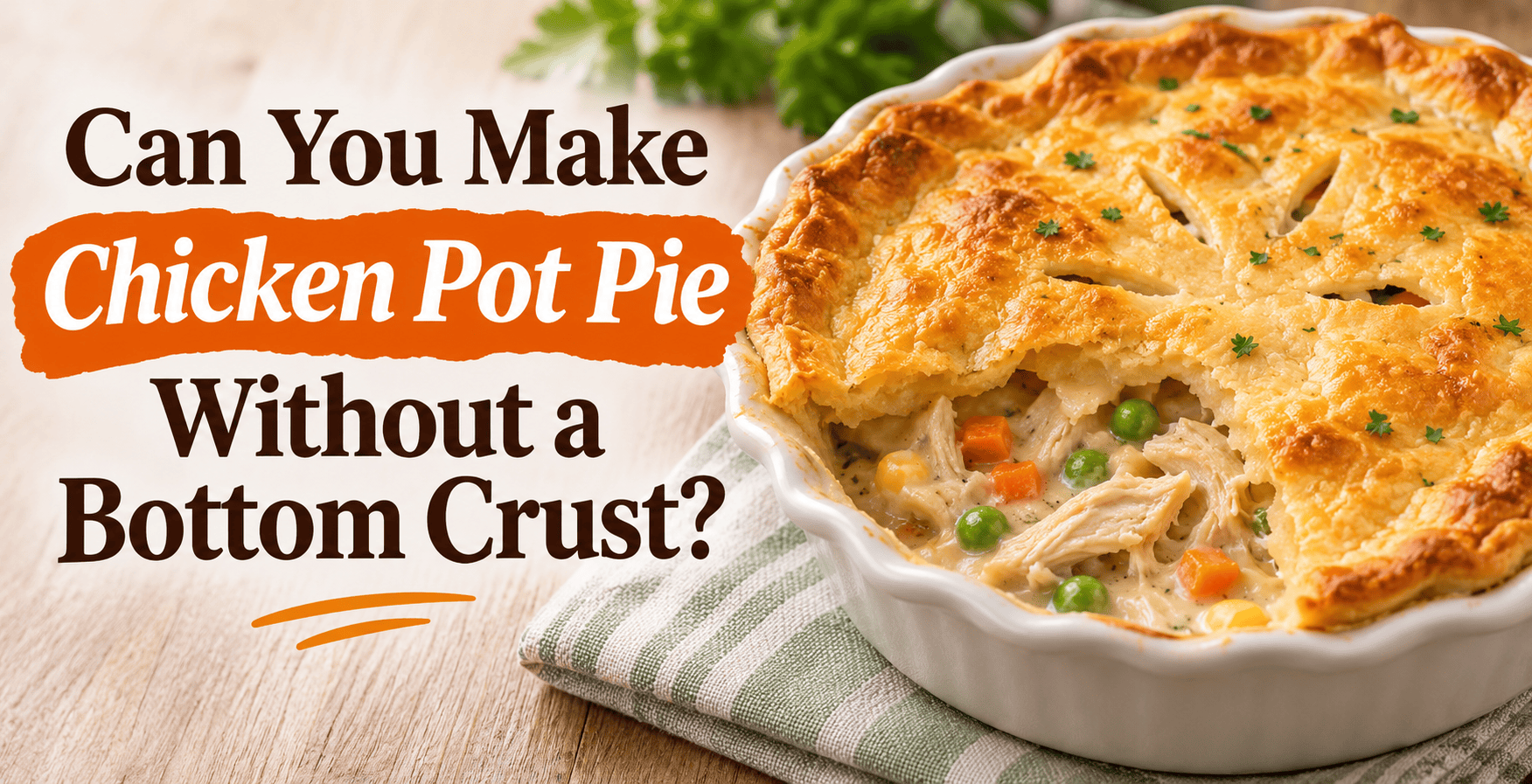
Chicken pot pie is one of the most comforting homemade meals, combining tender chicken, flavorful vegetables, and a rich, creamy filling beneath a golden, flaky crust. Traditional chicken pot pie recipes sometimes use both a bottom and top crust, but what happens when you skip the bottom layer?
The good news is that you can absolutely make chicken pot pie without a bottom crust. In fact, many home cooks prefer this method because it is easier to prepare, requires less pastry, and eliminates the problem of a soggy bottom crust.
A chicken pot pie with only a top crust still delivers everything people love about this classic comfort food. You get a buttery, golden pastry topping, a savory chicken filling, and plenty of vegetables in every serving.
Whether you want to save time, reduce the amount of pastry, or simply make an easier homemade dinner, a top-crust-only chicken pot pie is an excellent choice.
Why Make Chicken Pot Pie Without a Bottom Crust?
There are several reasons why skipping the bottom crust can actually improve your chicken pot pie.
1. No Soggy Bottom Crust
One of the biggest challenges with traditional double-crust chicken pot pie is preventing the bottom pastry from becoming soggy.
Chicken pot pie filling contains moisture from chicken broth, milk, cream, and vegetables. As the pie bakes, that moisture can soak into the bottom crust.
Without a bottom crust, there is no pastry underneath the filling to absorb excess liquid.
2. Easier Preparation
Making a double-crust chicken pot pie requires rolling out two pieces of dough, fitting the bottom crust into a pie dish, adding the filling, and sealing the top crust.
Using only a top crust eliminates several steps.
You simply prepare the filling, transfer it into a baking dish, and cover it with pastry.
3. Less Pastry
A single-crust chicken pot pie uses approximately half the pastry of a traditional double-crust version.
Although the exact nutritional difference depends on the recipe, using less pastry generally reduces the calories and fat contributed by the crust.
4. More Room for Filling
Without a bottom crust taking up space, you can enjoy a generous serving of chicken, vegetables, and creamy sauce.
This makes the dish especially appealing to anyone who prefers the savory filling over the pastry.
5. Perfect for Busy Weeknights
A top-crust-only chicken pot pie can be assembled quickly, especially when using leftover cooked chicken, rotisserie chicken, frozen vegetables, or refrigerated pie dough.
It is a practical way to prepare a satisfying homemade dinner without spending hours in the kitchen.
Easy Chicken Pot Pie Without a Bottom Crust Recipe
This homemade chicken pot pie recipe features a creamy chicken and vegetable filling topped with a flaky, golden pastry crust.
Ingredients
For the Chicken Pot Pie Filling
-
3 cups cooked chicken, shredded or diced
-
2 tablespoons unsalted butter
-
1 medium onion, finely diced
-
2 medium carrots, peeled and diced
-
2 celery stalks, diced
-
2 cloves garlic, minced
-
⅓ cup all-purpose flour
-
2 cups chicken broth
-
1 cup whole milk
-
1 cup frozen peas
-
½ cup frozen corn
-
1 teaspoon dried thyme
-
½ teaspoon dried rosemary
-
½ teaspoon salt, or to taste
-
¼ teaspoon black pepper
-
¼ teaspoon garlic powder
For the Top Crust
-
1 refrigerated pie crust or homemade single pie crust
-
1 large egg
-
1 tablespoon water
How to Make Chicken Pot Pie Without a Bottom Crust
Step 1: Preheat the Oven
Preheat your oven to 400°F (200°C).
Lightly grease a deep 9-inch pie dish or approximately 2-quart baking dish.
Make sure your baking dish is deep enough to hold the filling without overflowing during baking.
Step 2: Cook the Vegetables
Melt the butter in a large skillet or saucepan over medium heat.
Add the diced onion, carrots, and celery.
Cook for approximately 5–7 minutes, stirring occasionally, until the vegetables begin to soften.
Add the minced garlic and cook for another 30 seconds.
The vegetables should become fragrant without browning excessively.
Step 3: Make the Creamy Sauce
Sprinkle the flour over the cooked vegetables.
Stir continuously for approximately 1–2 minutes to cook away the raw flour taste.
Gradually pour in the chicken broth while whisking or stirring to prevent lumps.
Add the milk and continue stirring.
Allow the mixture to simmer gently for approximately 3–5 minutes, or until it begins to thicken.
The sauce should be creamy and thick enough to coat the back of a spoon.
Step 4: Add the Chicken and Remaining Vegetables
Stir in the cooked chicken, frozen peas, and frozen corn.
Add the thyme, rosemary, salt, black pepper, and garlic powder.
Mix everything until evenly combined.
Allow the filling to simmer for another 2–3 minutes.
Taste the sauce and adjust the seasoning if necessary.
Remove the skillet from the heat.
Step 5: Transfer the Filling to a Baking Dish
Carefully spoon the chicken mixture into your prepared pie dish.
Spread the filling evenly.
Leave a little room at the top of the dish to prevent bubbling sauce from spilling over the sides.
Step 6: Add the Top Crust
Roll out the refrigerated or homemade pie dough until it is slightly larger than the baking dish.
Carefully place the dough over the chicken filling.
Trim excess dough if necessary, leaving enough to secure the edges.
Press or crimp the pastry around the rim of the dish.
Cut 3–4 small slits in the center of the crust to allow steam to escape during baking.
Step 7: Brush With Egg Wash
In a small bowl, whisk together the egg and water.
Lightly brush the mixture over the top of the pastry.
This helps create a beautiful golden-brown finish.
Step 8: Bake Until Golden
Place the chicken pot pie on a rimmed baking sheet to catch any bubbling filling.
Bake for approximately 35–40 minutes, or until the pastry is golden brown and the filling is bubbling around the edges.
If the crust begins browning too quickly, loosely cover it with aluminum foil.
Step 9: Let the Pot Pie Rest
Remove the chicken pot pie from the oven.
Allow it to rest for approximately 10–15 minutes before serving.
This resting period helps the filling thicken slightly, making it easier to serve.
What Is the Best Crust for Chicken Pot Pie Without a Bottom Crust?
Several types of pastry work well for a top-crust-only chicken pot pie.
Traditional Pie Crust
Traditional pie dough produces a buttery, tender, flaky topping.
It is the best choice if you want your chicken pot pie to taste like a classic homemade version.
Both refrigerated and homemade pie crusts work well.
Puff Pastry
Puff pastry creates a light, airy, crispy topping with multiple flaky layers.
It is an excellent option for anyone who enjoys a more delicate pastry texture.
For best results, thaw frozen puff pastry according to package instructions before using it.
Bake according to the pastry package directions, adjusting as needed to ensure the filling is hot and the pastry is fully cooked.
Biscuit Dough
Biscuit dough provides a soft, fluffy topping rather than a traditional flaky crust.
You can arrange homemade or refrigerated biscuits over the filling before baking.
Be sure to leave some space between the biscuits so they can expand and bake thoroughly.
Crescent Roll Dough
Refrigerated crescent roll dough offers another convenient alternative.
It creates a softer, buttery topping that works especially well for quick weeknight meals.
Seal the perforations before placing the dough over the filling.
How Do You Keep the Top Crust From Getting Soggy?
Although removing the bottom crust eliminates one common problem, the top pastry can still become soggy if the filling contains too much moisture.
Fortunately, a few simple techniques help prevent this.
Thicken the filling before baking. The sauce should already have a creamy consistency before the pastry goes on top. Do not rely on the oven to thicken a watery filling.
Avoid excessive liquid. Too much chicken broth or milk can produce a thin sauce that releases excess steam during baking.
Use a properly heated oven. Baking at 400°F helps the pastry cook and brown while the filling heats through.
Cut steam vents. Small slits in the crust allow steam to escape instead of becoming trapped underneath the pastry.
Do not overfill the dish. Excess filling can bubble over the edges and make the crust difficult to cook evenly.
Allow the filling to cool slightly. Letting a very hot filling cool for several minutes before adding the dough can reduce premature softening of the pastry.
These simple steps help create a golden, flaky topping with a creamy filling underneath.
Can You Use Rotisserie Chicken for Chicken Pot Pie?
Yes. Rotisserie chicken is one of the easiest shortcuts for making homemade chicken pot pie.
Because the chicken is already cooked, you can skip the time required to prepare raw chicken.
Simply remove the meat from the bones, discard the skin if preferred, and shred or dice the chicken.
You will need approximately 3 cups of cooked chicken for this recipe.
Rotisserie chicken also adds flavor because it is typically seasoned before cooking.
However, some store-bought rotisserie chickens contain considerable sodium, so taste the filling before adding extra salt.
Can You Make Chicken Pot Pie Without a Bottom Crust Using Frozen Vegetables?
Absolutely.
Frozen vegetables are a convenient substitute for fresh vegetables.
A frozen mixture containing peas, carrots, green beans, and corn works especially well.
For this recipe, you can substitute approximately 2–2½ cups of frozen mixed vegetables for the fresh carrots, peas, and corn.
You can add most frozen vegetables directly to the sauce without thawing them first.
However, vegetables that release substantial moisture should be drained or cooked briefly before adding them to the filling.
Using frozen vegetables can reduce preparation time considerably.
Can You Make Chicken Pot Pie Without a Bottom Crust Ahead of Time?
Yes. This recipe is an excellent make-ahead dinner.
The easiest method is to prepare the chicken filling in advance and refrigerate it separately from the pastry.
Allow the filling to cool promptly, then store it in a covered container in the refrigerator for up to 3–4 days, counting from when the chicken was originally cooked.
When ready to bake, transfer the filling to a baking dish, cover it with pastry, and bake.
A cold filling may require additional baking time.
For food safety, ensure the center of the filling reaches 165°F before serving.
Keeping the pastry separate until baking helps prevent it from absorbing moisture during storage.
Can You Freeze Chicken Pot Pie Without a Bottom Crust?
Yes. Chicken pot pie filling freezes very well, making this recipe convenient for meal preparation.
For the best results, prepare the filling and allow it to cool before freezing.
Transfer the filling into a freezer-safe container or suitable baking dish.
Cover tightly to prevent freezer burn.
For the best quality, use the frozen filling within approximately 2–3 months.
When ready to prepare the pot pie, thaw the filling in the refrigerator overnight.
Transfer it to a baking dish, add the pastry topping, and bake until the crust is golden and the center reaches 165°F.
Freezing the filling separately from the pastry generally produces a better crust texture.
How Do You Make Chicken Pot Pie Filling Thicker?
A thick, creamy filling is essential for a successful chicken pot pie without a bottom crust.
If the filling seems too thin, there are several ways to fix it.
Use a Flour-Based Roux
A roux is a mixture of fat and flour that thickens sauces.
Cooking flour with butter before adding the broth and milk creates a smooth, creamy base.
This recipe uses that method.
Simmer the Sauce Longer
Allowing the sauce to simmer gently helps some of the excess liquid evaporate.
Stir frequently to prevent the sauce from sticking to the bottom of the pan.
Add a Cornstarch Slurry
If the filling still needs thickening, combine 1 tablespoon of cornstarch with 1 tablespoon of cold water.
Stir the mixture into the simmering filling.
Cook for another 1–2 minutes until thickened.
Avoid adding dry cornstarch directly to hot sauce because it can form lumps.
Avoid Overloading With Watery Vegetables
Vegetables such as mushrooms and zucchini can release additional moisture during cooking.
If using these ingredients, sauté them first to remove some of their water.
What Can You Add to Chicken Pot Pie for More Flavor?
Chicken pot pie is delicious with traditional seasonings, but additional ingredients can make the filling even more flavorful.
-
Fresh parsley: Adds a bright, fresh flavor.
-
Poultry seasoning: Provides a blend of herbs commonly used with chicken.
-
Sage: Adds an earthy, savory taste.
-
Mushrooms: Create a deeper, richer flavor when sautéed.
-
Heavy cream: Makes the sauce richer and creamier when substituted for part of the milk.
-
Parmesan cheese: Adds a savory, slightly salty flavor.
-
Dijon mustard: A small amount provides subtle tanginess.
-
Worcestershire sauce: Adds depth and savory complexity.
When experimenting with additional seasonings, start with small amounts and taste the filling before baking.
What Should You Serve With Chicken Pot Pie?
Chicken pot pie is already a satisfying meal because it contains protein, vegetables, and pastry.
However, a few simple side dishes can complement its creamy, savory flavors.
Garden Salad
A fresh salad with lettuce, tomatoes, cucumbers, and a light vinaigrette provides a refreshing contrast to the rich filling.
Roasted Green Beans
Green beans roasted with olive oil, garlic, and black pepper make a simple vegetable side dish.
Steamed Broccoli
Steamed broccoli adds color and freshness without making the meal overly heavy.
Roasted Brussels Sprouts
Brussels sprouts develop a slightly sweet, nutty flavor when roasted.
Their crisp edges pair nicely with creamy chicken pot pie.
Fresh Fruit Salad
A light fruit salad can provide a refreshing finish to a hearty dinner.
Common Mistakes to Avoid When Making Chicken Pot Pie Without a Bottom Crust
Even though this recipe is relatively easy, a few mistakes can affect the final result.
Adding Too Much Broth
Too much broth creates a watery filling.
Measure the liquid carefully and allow the sauce to thicken before assembling the pie.
Using Raw Chicken Without Adjusting the Recipe
This recipe is designed for fully cooked chicken.
If using raw chicken, cook it thoroughly before adding it to the filling.
Chicken must reach an internal temperature of 165°F.
Skipping the Steam Vents
Steam needs somewhere to escape during baking.
Without vents, pressure and moisture can build up underneath the pastry.
Baking at Too Low a Temperature
A low oven temperature may prevent the pastry from developing a crisp, golden finish.
Follow the recommended baking temperature unless your chosen pastry requires different instructions.
Serving Immediately
Freshly baked chicken pot pie contains very hot filling.
Allowing it to rest helps prevent burns and gives the sauce time to settle.
Frequently Asked Questions
Does Chicken Pot Pie Need a Bottom Crust?
No. Chicken pot pie does not require a bottom crust. A single top crust is enough to create a delicious, traditional-style dish with a creamy filling and flaky pastry topping.
Is Chicken Pot Pie Better With One Crust or Two?
It depends on personal preference. A double-crust pie provides more pastry, while a single-crust version is easier to prepare and avoids the risk of a soggy bottom crust.
Can You Put Puff Pastry Directly on Chicken Pot Pie Filling?
Yes. Puff pastry can be placed over the filling before baking. For the best texture, use properly thawed but still cool pastry and avoid placing it over an excessively watery filling.
Do You Have to Cook Chicken Pot Pie Filling Before Baking?
For this recipe, yes. The vegetables, sauce, and chicken filling are prepared before the pastry is added. This helps ensure the filling is properly thickened and heated through.
What Temperature Should You Bake Chicken Pot Pie Without a Bottom Crust?
A temperature of 400°F works well for a traditional pie crust topping. Baking time is generally around 35–40 minutes, depending on the depth of the dish and temperature of the filling.
Can You Make Chicken Pot Pie Without Milk?
Yes. You can replace the milk with additional chicken broth, although the filling will be less creamy. A suitable unsweetened dairy-free milk can also work, depending on its flavor and thickening properties.
Can You Make Individual Chicken Pot Pies Without Bottom Crusts?
Absolutely. Divide the filling among oven-safe ramekins and cover each one with a small circle of pastry. Individual pies generally bake faster than a large pie, so begin checking them earlier.
How Do You Know When Chicken Pot Pie Is Done?
The top crust should be golden brown, the filling should be bubbling around the edges, and the center should reach 165°F when checked with a food thermometer.
How Long Does Leftover Chicken Pot Pie Last?
Store leftovers in airtight containers in the refrigerator within 2 hours of cooking. Eat refrigerated leftovers within 3–4 days, counting from the original cooking date of the chicken when applicable. Reheat to 165°F.
Final Thoughts: Is Chicken Pot Pie Without a Bottom Crust Worth Making?
Chicken pot pie without a bottom crust is one of the easiest ways to enjoy this classic homemade comfort food.
By eliminating the bottom pastry, you simplify preparation, reduce the amount of crust needed, and avoid one of the most common problems associated with traditional chicken pot pie: a soggy bottom.
The creamy chicken filling remains just as flavorful, while the golden top crust provides the buttery, flaky texture that makes chicken pot pie so satisfying.
Whether you use homemade pastry, refrigerated pie dough, puff pastry, or biscuit dough, the result can be a comforting dinner that brings familiar homemade flavors to the table.
The bottom line is simple: You do not need a bottom crust to make an excellent chicken pot pie. With tender chicken, flavorful vegetables, a rich sauce, and a golden pastry topping, a single-crust chicken pot pie delivers everything you love about the classic dish with less work.
Sometimes, the simplest version of a favorite recipe is the one worth making again and again.


Leave a Reply