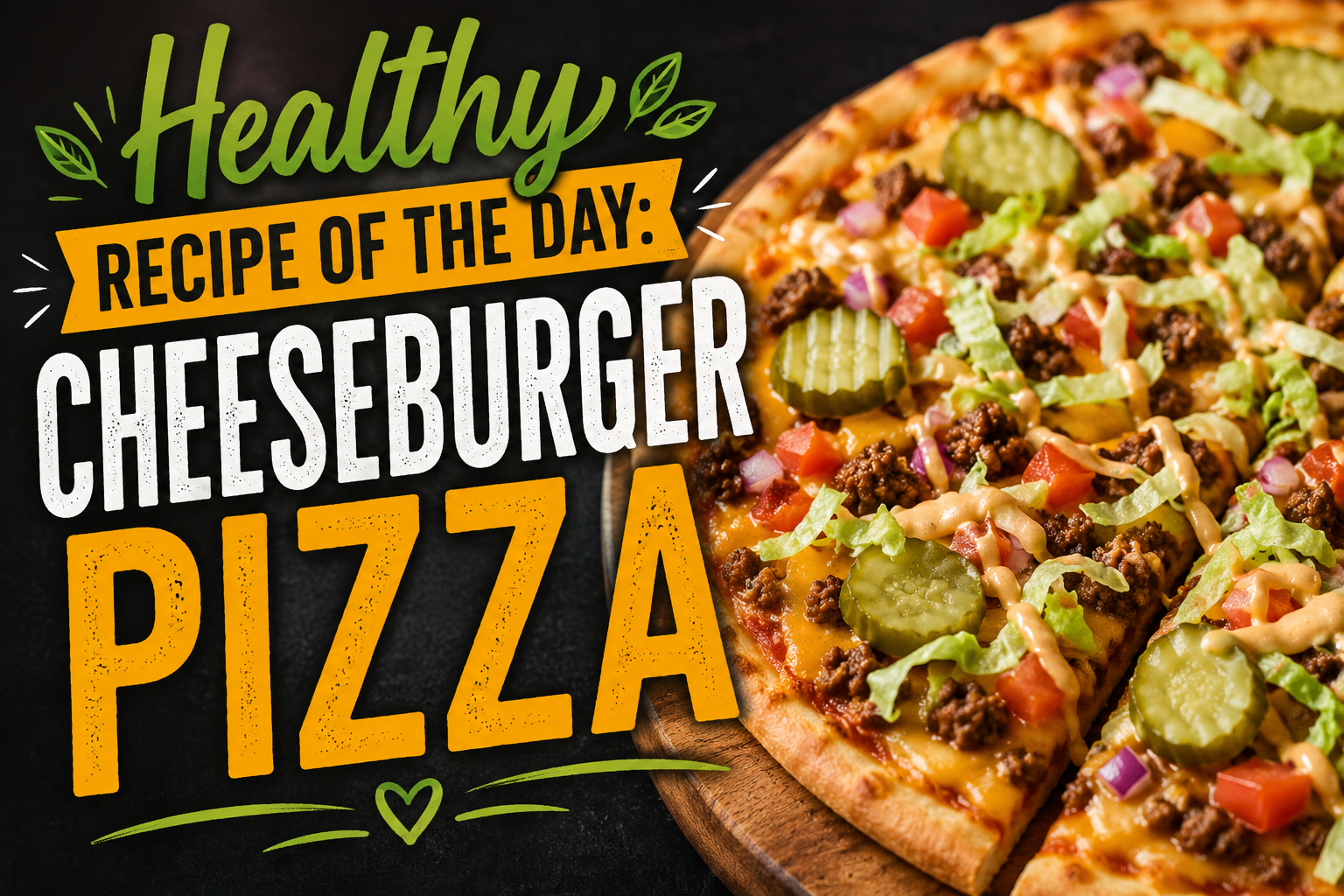
There are some nights when you want to eat healthier, but your cravings have completely different plans. Maybe you’re thinking about a hot cheeseburger loaded with melted cheese and pickles. At the same time, a crispy slice of homemade pizza sounds pretty good too.
Why choose between them?
Today’s Healthy Recipe of the Day: Cheeseburger Pizza combines two classic comfort foods into one satisfying homemade meal. You get seasoned ground beef, melted cheddar cheese, tangy pickles, onions, tomatoes, crisp lettuce, and a creamy burger-inspired sauce layered over a whole-wheat pizza crust.
The goal isn’t to turn pizza into something unrecognizable in the name of healthy eating. Instead, we’re making a few thoughtful ingredient choices that can create a more balanced meal while keeping the flavors that make cheeseburgers and pizza so enjoyable.
This is the kind of recipe that can work for a weeknight family dinner, Friday pizza night, game day, or anytime you’re craving something different.
Why Cheeseburger Pizza Works So Well
A cheeseburger and a pizza might seem like completely different meals, but they actually have several things in common.
Both usually start with a bread-based foundation. Both commonly include meat and melted cheese. And both are endlessly customizable with sauces, vegetables, seasonings, and toppings.
Combining them makes perfect sense.
The ground beef gives the pizza its classic burger flavor, cheddar replaces the mozzarella typically found on pizza, and ingredients such as pickles, mustard, onions, tomatoes, and lettuce complete the cheeseburger experience.
The result is something that tastes familiar while still feeling different enough to make dinner interesting.
Healthy Cheeseburger Pizza
Prep Time
15–20 minutes
Cook Time
15–20 minutes
Total Time
30–40 minutes
Servings
4–6
Ingredients
For the Pizza
- 1 whole-wheat pizza crust or whole-wheat pizza dough
- 1 pound 90–93% lean ground beef
- 1/2 small yellow onion, finely diced
- 1 teaspoon garlic powder
- 1/2 teaspoon onion powder
- 1/2 teaspoon smoked paprika
- 1/4 teaspoon black pepper
- 1 cup reduced-fat shredded cheddar cheese
- 1/2 cup diced tomatoes
- 1/3 cup sliced dill pickles
- 1/4 cup finely diced red onion
- 1 cup shredded lettuce
For the Cheeseburger Sauce
- 1/4 cup plain Greek yogurt
- 2 tablespoons ketchup
- 1 tablespoon yellow mustard
- 1 tablespoon finely chopped dill pickles or relish
- 1/2 teaspoon garlic powder
- Black pepper to taste
How to Make Healthy Cheeseburger Pizza
Step 1: Preheat Your Oven
Preheat the oven to 425°F, or follow the temperature recommendations provided with your pizza dough or crust.
If you’re using fresh dough, roll or stretch it onto a lightly floured surface before transferring it to a pizza pan or baking sheet.
For an extra-crispy crust, you can partially bake the dough for several minutes before adding the toppings. Follow the instructions that come with your particular dough because cooking times can vary considerably.
Step 2: Cook the Ground Beef
Place a large skillet over medium heat.
Add the lean ground beef and diced yellow onion.
Cook until the beef is completely browned and the onion has softened, breaking the beef into small crumbles with a wooden spoon or spatula.
Once the beef has cooked through, drain any excess grease.
Season with:
- Garlic powder
- Onion powder
- Smoked paprika
- Black pepper
Stir everything together and cook for another minute before removing the skillet from the heat.
The smoked paprika isn’t essential, but it adds a subtle smoky flavor that works especially well with the cheddar cheese and burger toppings.
Step 3: Make the Lighter Cheeseburger Sauce
While the beef cooks, prepare your sauce.
Combine the Greek yogurt, ketchup, yellow mustard, chopped pickles or relish, garlic powder, and a little black pepper in a small bowl.
Stir until completely combined.
Taste the sauce and adjust it according to your preferences.
Want more tanginess? Add a little additional mustard.
Want stronger pickle flavor? Add another spoonful of finely chopped pickles.
Prefer a little sweetness? A small amount of ketchup can balance the mustard.
This sauce replaces the heavier mayonnaise-based sauces often found on specialty cheeseburger pizzas.
Step 4: Build Your Pizza
Now comes the fun part.
Spread a thin layer of the cheeseburger sauce over the pizza crust.
Don’t use all of it—you’ll want to reserve some for drizzling over the finished pizza.
Next, evenly distribute the seasoned ground beef across the crust.
Sprinkle the cheddar cheese over the beef.
Add the diced tomatoes and red onions.
You have two choices with the pickles.
Add them now if you prefer warm, softer pickles.
Or wait until after baking if you want them cool and crunchy.
I prefer adding them after baking because the contrast between the hot pizza and crisp pickles makes every bite more interesting.
Step 5: Bake the Pizza
Transfer the pizza to your preheated oven.
Bake according to your crust instructions, generally around 12–18 minutes, until the crust is golden brown and the cheese has melted.
Keep an eye on it toward the end of the cooking time.
Every crust and oven cooks a little differently.
Step 6: Add the Fresh Cheeseburger Toppings
Remove the pizza from the oven and allow it to rest for approximately three to five minutes.
Now transform it into a true cheeseburger pizza.
Add:
- Shredded lettuce
- Sliced dill pickles
- Extra diced tomatoes
- Extra diced onions, if desired
Finish with a light drizzle of the remaining cheeseburger sauce.
Slice and serve immediately.
What Makes This Cheeseburger Pizza Healthier?
The word “healthy” doesn’t have to mean bland food or tiny portions.
For this recipe, the focus is on using ingredients that provide plenty of flavor while making the overall meal more balanced.
Lean Ground Beef
Traditional cheeseburger pizzas can contain relatively high amounts of saturated fat, especially when made with higher-fat ground beef.
Using 90–93% lean ground beef reduces some of that fat while still providing the beef flavor you expect from a cheeseburger.
Ground beef also provides protein, iron, zinc, and vitamin B12.
You can choose an even leaner meat if you prefer.
Whole-Wheat Pizza Crust
Replacing a traditional refined-flour crust with a whole-wheat crust is another easy adjustment.
Whole grains generally provide more fiber than refined grains.
Fiber can contribute to fullness and is an important part of a balanced eating pattern.
If you’re buying a prepared crust, compare nutrition labels because products can vary considerably in calories, sodium, fiber, and serving size.
Greek Yogurt Instead of Heavy Sauce
Specialty burger sauces are often made with mayonnaise.
There’s nothing inherently wrong with enjoying mayonnaise in moderation, but Greek yogurt offers another option when you’re looking for a lighter sauce.
Plain Greek yogurt creates the creamy texture we want while also providing protein.
Mustard, ketchup, garlic, and pickles bring the flavor.
Moderate Amount of Cheese
Cheeseburger pizza obviously needs cheese.
Instead of eliminating it, this recipe uses a reasonable amount.
A cup of shredded cheddar distributed across an entire pizza provides plenty of cheesy flavor without creating an excessively thick cheese layer.
Using a stronger-flavored cheese such as sharp cheddar can also help. Because the flavor is more pronounced, you may find that you don’t need as much.
Load It With Vegetables
Vegetables are one of the easiest ways to make homemade pizza more substantial.
This recipe already includes:
- Tomatoes
- Yellow onions
- Red onions
- Lettuce
- Pickles
But you certainly don’t have to stop there.
Consider adding mushrooms, bell peppers, spinach, jalapeños, roasted peppers, or even finely chopped broccoli.
The Secret Is Balance
One of the biggest advantages of preparing comfort food at home is control.
You decide how much meat goes onto the pizza.
You decide how much cheese to use.
You choose the crust.
You determine how much sauce gets added.
And you can pile on as many fresh vegetables as you want.
That’s one reason homemade versions of restaurant favorites can be useful when you’re trying to make more intentional food choices.
You don’t necessarily have to stop eating pizza.
You can simply change how you make it.
Cheeseburger Pizza Variations
This recipe is extremely customizable.
Once you understand the basic idea, you can create an entire variety of burger-inspired pizzas.
Turkey Cheeseburger Pizza
Swap the ground beef for lean ground turkey.
Because turkey has a milder flavor, don’t be afraid to season it generously with garlic powder, onion powder, paprika, and black pepper.
Chicken Cheeseburger Pizza
Lean ground chicken can also work.
Cook and season it exactly as you would the beef.
This creates a lighter-tasting pizza that works particularly well with lettuce, tomato, onion, and pickles.
Mushroom Cheeseburger Pizza
Sauté sliced mushrooms with the beef and onions.
Mushrooms add savory flavor and help bulk up the topping without requiring additional meat.
Spicy Cheeseburger Pizza
If you enjoy some heat, this variation is easy.
Add:
- Fresh jalapeños
- Pickled jalapeños
- Crushed red pepper
- Hot sauce
- Pepper Jack cheese
You can also stir a little hot sauce into the Greek yogurt burger sauce.
BBQ Cheeseburger Pizza
Instead of the traditional burger sauce, use a thin layer of your favorite barbecue sauce.
Top with lean ground beef, red onion, cheddar cheese, tomatoes, and a small amount of fresh cilantro after baking.
Look for a lower-sugar barbecue sauce if that fits your nutritional goals.
Bacon Cheeseburger-Inspired Pizza
Bacon and cheeseburgers are a classic combination.
If you want bacon flavor without making bacon the dominant ingredient, use a small amount of cooked and crumbled turkey bacon or traditional bacon.
A little can go a long way when it’s distributed across the entire pizza.
Veggie Cheeseburger Pizza
You don’t necessarily need meat.
Try using a plant-based ground alternative or build the pizza around vegetables such as:
- Mushrooms
- Bell peppers
- Onions
- Tomatoes
- Spinach
- Jalapeños
Top everything with cheddar cheese, pickles, lettuce, and burger sauce.
Double Pickle Cheeseburger Pizza
Pickle fans, this one’s for you.
Add chopped pickles to the sauce before baking and then cover the finished pizza with additional sliced pickles.
You can even add a small splash of pickle juice to the Greek yogurt sauce for extra tanginess.
Start with a very small amount so the sauce doesn’t become too thin.
Why Pickles Belong on Cheeseburger Pizza
People can have strong opinions about pickles.
But on cheeseburger pizza, they serve an important purpose.
Beef and cheese are rich and savory. Pickles provide acidity, saltiness, and crunch that help balance those richer ingredients.
They also instantly give the pizza a recognizable cheeseburger flavor.
If you’re skeptical, try putting pickles on only half the pizza the first time.
You might be surprised.
Fresh Toppings Make a Big Difference
Traditional pizza toppings usually go into the oven.
Cheeseburger pizza gives you the opportunity to combine baked toppings with fresh ones.
Hot beef and melted cheese paired with cool shredded lettuce, tomato, onion, and pickles create different textures and temperatures in every bite.
That’s part of what makes this pizza so much fun.
Think of it almost like eating a cheeseburger on a crispy pizza crust instead of a bun.
What Should You Serve With Cheeseburger Pizza?
Cheeseburger Pizza can easily stand alone as dinner, but adding a vegetable-focused side can round out the meal.
Try serving it with:
Garden Salad
Combine lettuce, tomatoes, cucumbers, carrots, and your favorite light dressing.
Roasted Broccoli
Season broccoli with a small amount of olive oil, garlic, and black pepper before roasting until slightly crispy.
Green Beans
Steamed or roasted green beans are simple and don’t compete with the flavors of the pizza.
Cucumber Tomato Salad
Fresh cucumbers, tomatoes, onions, and a light vinaigrette create a refreshing contrast to the warm pizza.
Fresh Fruit
Watermelon, berries, grapes, oranges, or sliced apples can provide a naturally sweet finish to the meal.
How to Make Your Pizza More Filling
If you’re trying to feel satisfied with fewer slices, consider what you’re serving alongside the pizza.
A large salad or generous serving of vegetables can add volume and variety to the meal.
Eating slowly can help, too.
Give yourself time to enjoy the pizza rather than immediately reaching for another slice.
Comfort food is often more satisfying when we actually take the time to taste it.
Tips for the Best Homemade Cheeseburger Pizza
Don’t Overload Your Crust
More toppings aren’t always better.
Too much meat, sauce, cheese, and vegetables can make the crust soggy and cause everything to slide off when you pick up a slice.
Keep the layers relatively thin and evenly distributed.
Drain the Beef
Even lean ground beef can release some fat and liquid.
Drain the meat before placing it on the pizza.
This helps prevent an oily crust.
Season Your Meat
Don’t rely entirely on the cheese and sauce for flavor.
Seasoning the ground beef itself makes a huge difference.
Garlic, onion, paprika, and black pepper provide plenty of flavor without requiring complicated ingredients.
Add Lettuce After Baking
Never bake the lettuce.
Add it immediately before serving so it remains cool and crisp.
Don’t Drown the Pizza in Sauce
Burger sauce should complement the other ingredients rather than dominate them.
Spread a thin layer underneath the beef and finish with a small drizzle after baking.
Let the Pizza Rest
It can be tempting to cut the pizza immediately after removing it from the oven.
Give it about three to five minutes.
This allows the cheese and toppings to settle and makes the pizza easier to slice.
Can You Make Cheeseburger Pizza Ahead of Time?
Parts of this recipe are excellent for meal prep.
The ground beef can be cooked and seasoned ahead of time and stored in the refrigerator.
The burger sauce can also be prepared ahead.
Chop your onions and other vegetables in advance, and dinner becomes mostly a matter of assembling and baking the pizza.
For the freshest results, wait until serving time to shred the lettuce and add fresh toppings.
How to Store Leftover Cheeseburger Pizza
Allow leftover pizza to cool before placing it in an airtight container in the refrigerator.
For food-safety purposes, refrigerate cooked leftovers promptly and generally use them within 3–4 days.
If you’ve already added lettuce to the pizza, remove as much as possible before reheating.
For future leftovers, it’s even better to keep the lettuce, pickles, tomatoes, and extra burger sauce separate.
Then you can reheat the beef-and-cheese pizza and add fresh toppings afterward.
The Best Way to Reheat It
The microwave is convenient, but it can leave pizza crust soft.
For a crispier result, reheat slices in an oven, toaster oven, or skillet until the pizza is heated through.
After reheating, add fresh lettuce, pickles, tomatoes, and sauce.
It’ll taste much closer to freshly made pizza.
Make It a Family Pizza Night
Homemade pizza night can be an easy way to get everyone involved in preparing dinner.
Set out several bowls containing different toppings and allow everyone to customize part of the pizza.
You might offer:
- Lean ground beef
- Ground turkey
- Cheddar cheese
- Tomatoes
- Mushrooms
- Onions
- Bell peppers
- Pickles
- Jalapeños
- Lettuce
- Burger sauce
Kids and adults can choose their own combinations.
It’s also a good opportunity to introduce vegetables alongside familiar cheeseburger flavors.
Portion Size Still Matters
A healthier recipe can still become a very large meal depending on portion size.
Pizza is particularly easy to keep eating because it’s sliced into convenient pieces.
Instead of thinking only about how many slices you can have, consider the entire plate.
Try pairing a couple of slices with a generous salad, roasted vegetables, or another produce-rich side.
That allows pizza to remain the star of the meal while providing more variety and balance.
Healthy Eating Doesn’t Have to Be Perfect
One reason people sometimes struggle with healthier eating is the belief that certain foods must disappear completely.
Pizza gets labeled “bad.”
Cheeseburgers get labeled “bad.”
Then eating either one can feel like you’ve somehow failed.
Food doesn’t have to work that way.
A healthy eating pattern is built over time, not determined by one meal.
Recipes like this Cheeseburger Pizza demonstrate how favorite foods can be modified to include leaner protein, whole grains, vegetables, and reasonable portions while still tasting like comfort food.
That can make healthier eating feel much more sustainable.
Why Homemade Versions Are Worth Trying
Restaurant food is convenient, and there’s certainly room to enjoy it.
But making your favorite meals at home gives you something restaurants can’t always provide: complete control.
You can reduce the cheese.
You can add more vegetables.
You can choose leaner meat.
You can select a whole-grain crust.
You can adjust the sauce.
You can decide exactly how much salt and seasoning you want.
Most importantly, you can experiment until you find a combination that works for you and your family.
Healthy Recipe of the Day Tip
Don’t automatically eliminate your favorite foods when you’re trying to eat healthier. Look for simple ways to adjust them.
Choosing leaner proteins, adding vegetables, using whole grains when appropriate, watching portion sizes, and preparing more meals at home can allow you to continue enjoying familiar comfort foods as part of an overall balanced eating pattern.
Final Thoughts
Sometimes the best healthy recipes aren’t completely new foods.
They’re new versions of foods we already love.
This Healthy Cheeseburger Pizza takes everything that makes a cheeseburger satisfying—savory beef, melted cheddar, pickles, onions, tomatoes, lettuce, and tangy burger sauce—and puts it on a crispy whole-wheat pizza crust.
The lean ground beef provides plenty of protein. The whole-wheat crust adds a whole-grain option. Greek yogurt creates a creamy burger sauce without relying entirely on mayonnaise. Fresh vegetables add flavor, texture, and color.
Most importantly, it still feels like pizza night.
You aren’t sitting there wishing you had ordered a cheeseburger.
You aren’t eating something bland simply because it’s supposed to be healthier.
You’re enjoying a hot slice of homemade Cheeseburger Pizza loaded with familiar flavors.
And that’s an important lesson about healthier cooking.
Small changes can make a big difference without taking all the enjoyment out of your food.
So the next time you’re trying to decide between burger night and pizza night, don’t choose.
Make Healthy Cheeseburger Pizza and enjoy a little bit of both.


Leave a Reply