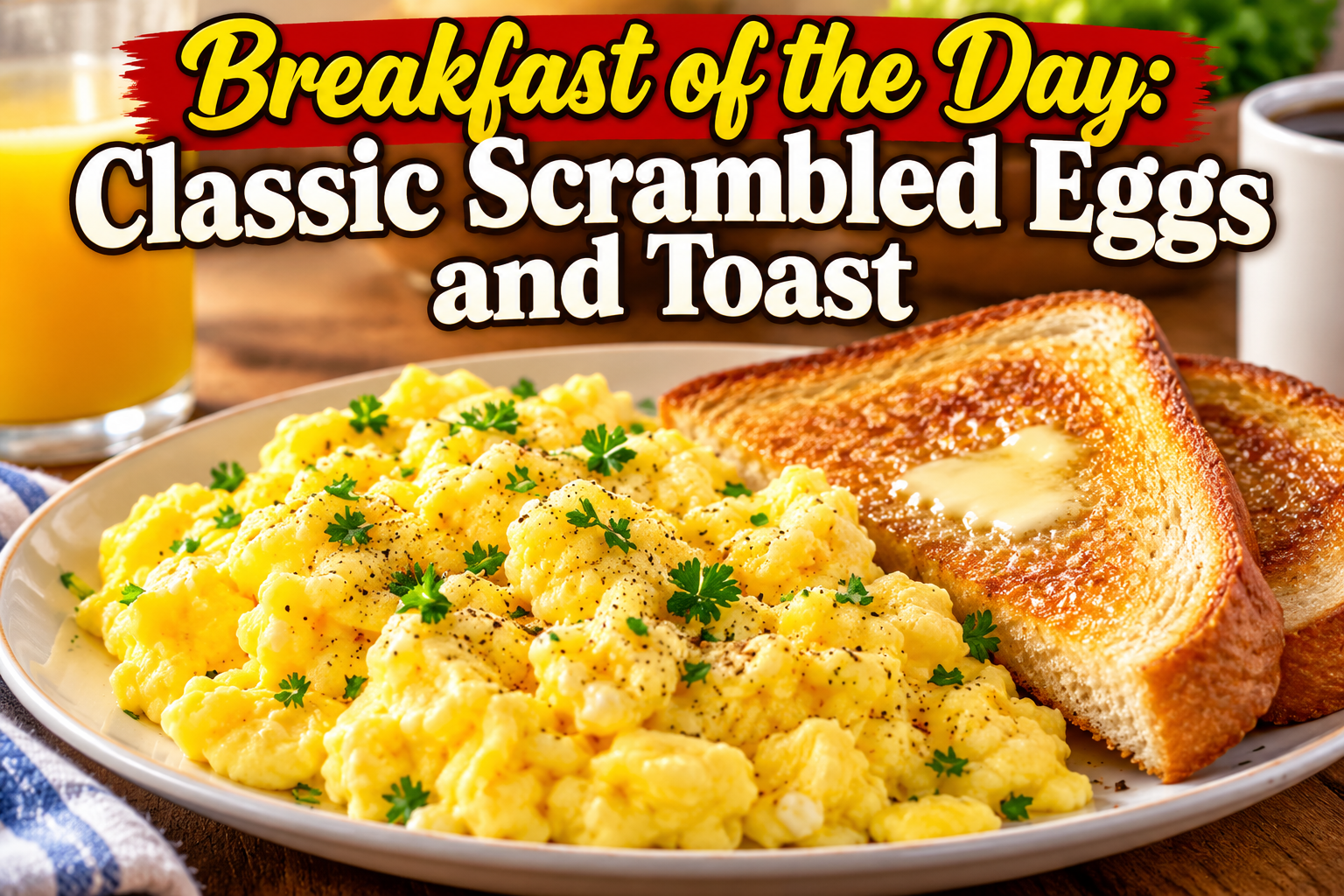
There is something comforting about starting the morning with a plate of fluffy scrambled eggs and perfectly toasted bread. Sometimes, the simplest breakfasts are the most satisfying, and classic scrambled eggs and toast is a perfect example.
Whether you are preparing breakfast before heading to work, enjoying a relaxing weekend morning, or looking for a quick meal that does not require complicated ingredients, this timeless breakfast delivers flavor, convenience, and nourishment.
Scrambled eggs and toast have remained a breakfast favorite for generations because they are affordable, versatile, and incredibly easy to prepare. With just a few ingredients and the right cooking techniques, you can transform an everyday breakfast into something truly delicious.
Today’s Breakfast of the Day celebrates this classic combination, including a simple recipe, helpful cooking tips, nutritional information, and creative ways to make it your own.
Why Classic Scrambled Eggs and Toast Is a Breakfast Favorite
Breakfast does not always need to be elaborate to be enjoyable. A plate of scrambled eggs and toast offers everything many people want in a morning meal.
Quick and easy: This breakfast takes approximately 10 minutes to prepare, making it ideal for busy mornings.
Budget-friendly: Eggs, bread, butter, and basic seasonings are affordable ingredients commonly found in most kitchens.
Protein-rich: Eggs provide high-quality protein that helps support muscle maintenance and keeps breakfast satisfying.
Customizable: You can add vegetables, cheese, herbs, or different types of bread to create endless variations.
Comforting and familiar: The combination of soft, creamy eggs and crispy toast creates a wonderful contrast of textures.
Best of all, you do not need advanced cooking skills to make this breakfast successfully.
Classic Scrambled Eggs and Toast Recipe
Recipe details
Total time
10 minutes
Servings
1
Difficulty
Easy
Calories
Approx. 350
Ingredients
-
2 large eggs
-
2 slices of bread (white, wheat, or sourdough)
-
1 tablespoon butter, divided
-
1 tablespoon milk or cream (optional)
-
1/8 teaspoon salt, or to taste
-
1/8 teaspoon black pepper
-
Fresh parsley or chives for garnish (optional)
Step-by-Step Instructions
Step 1: Prepare the eggs
Crack two large eggs into a medium-sized mixing bowl. Add the milk or cream if you prefer a slightly softer texture.
Season lightly with salt and black pepper.
Using a fork or whisk, beat the eggs until the yolks and whites are fully combined. The mixture should have an even yellow color.
Step 2: Heat the skillet
Place a nonstick skillet over medium-low heat.
Add approximately half a tablespoon of butter and allow it to melt slowly, coating the bottom of the pan.
Avoid overheating the butter because high temperatures can cause the eggs to cook too quickly.
Step 3: Cook the scrambled eggs
Pour the beaten eggs into the skillet.
Allow them to sit briefly until the edges begin to set.
Using a silicone spatula, gently push the cooked eggs from the edges toward the center of the skillet.
Continue moving the eggs slowly, allowing soft curds to form.
Step 4: Remove from heat
When the eggs are mostly set but still appear slightly glossy, remove the skillet from the heat.
The remaining warmth will finish cooking them.
For food safety, eggs should be cooked until no liquid egg remains.
Step 5: Toast the bread
While the eggs cook, place two slices of bread into a toaster.
Toast until golden brown and lightly crispy.
Spread the remaining butter evenly across the warm toast.
Step 6: Serve and enjoy
Transfer the scrambled eggs onto a plate alongside the buttered toast.
Sprinkle with fresh parsley, chopped chives, or additional black pepper if desired.
Serve immediately while everything is warm.
The Secret to Perfectly Fluffy Scrambled Eggs
Although scrambled eggs are simple, a few small cooking adjustments can make a noticeable difference.
1. Use medium-low heat
One of the most common mistakes is cooking scrambled eggs over high heat.
High temperatures can cause the proteins in eggs to tighten quickly, producing a rubbery texture.
Cooking slowly over medium-low heat gives you greater control and helps create tender eggs.
2. Whisk the eggs thoroughly
Whisking combines the yolks and whites into a consistent mixture.
It also incorporates a little air, which can help create a lighter texture.
3. Avoid overcooking
Scrambled eggs continue cooking briefly after being removed from the heat.
Taking them off the burner as they finish setting helps prevent dryness.
4. Use butter for flavor
Butter provides a rich flavor that complements eggs beautifully.
Olive oil can also work well if you prefer a different flavor or want to reduce saturated fat.
5. Serve immediately
Scrambled eggs taste best when freshly prepared.
Allowing them to sit too long can cause them to lose moisture and become less tender.
Choosing the Best Bread for Toast
The bread you choose can completely change the flavor and texture of this breakfast.
White bread: A traditional choice that creates light, crispy toast with a mild flavor.
Whole-wheat bread: Provides a heartier texture and often more fiber than white bread.
Sourdough bread: Offers a slightly tangy flavor and a pleasantly chewy interior.
Multigrain bread: Adds nuttiness and texture, especially when made with whole grains and seeds.
Rye bread: Delivers a distinctive earthy flavor that pairs particularly well with eggs.
For a balanced everyday breakfast, whole-grain bread is an excellent option because it can provide additional fiber and nutrients.
10 Delicious Ways to Upgrade Scrambled Eggs and Toast
One of the best things about this classic breakfast is how easily you can customize it.
1. Cheesy Scrambled Eggs: Stir shredded cheddar, mozzarella, or Monterey Jack into the eggs near the end of cooking.
2. Spinach Scrambled Eggs: Add a handful of fresh spinach to the skillet before pouring in the eggs.
3. Mushroom Scramble: Sauté sliced mushrooms in butter until tender, then add the beaten eggs.
4. Tomato and Basil Eggs: Mix in diced tomatoes and garnish with fresh basil for a bright, refreshing flavor.
5. Avocado Toast and Eggs: Spread mashed avocado over toasted bread and serve the scrambled eggs on top.
6. Bacon and Eggs: Add a few pieces of crispy, crumbled bacon for a smoky breakfast.
7. Southwestern Scramble: Mix in diced bell peppers, onions, salsa, and a sprinkle of pepper jack cheese.
8. Garlic Butter Toast: Spread toasted bread with garlic butter for a savory twist.
9. Mediterranean Scramble: Add crumbled feta cheese, spinach, and diced tomatoes.
10. Spicy Scrambled Eggs: Finish with hot sauce, red pepper flakes, or diced jalapeños for extra heat.
These simple additions allow you to enjoy a different version of scrambled eggs and toast throughout the week without learning an entirely new recipe.
Nutritional Benefits of Scrambled Eggs and Toast
Classic scrambled eggs and toast can provide several important nutrients.
Eggs are a source of complete protein, meaning they contain all nine essential amino acids.
They also provide vitamin B12, selenium, and choline, which supports normal brain and nervous system function.
Bread contributes carbohydrates that the body uses for energy, while whole-grain varieties can provide dietary fiber.
Estimated Nutrition Per Serving
| Nutrient | Approximate amount |
|---|---|
| Calories | 350 |
| Protein | 18 g |
| Carbohydrates | 28 g |
| Total fat | 19 g |
| Fiber | 2–4 g |
| Sodium | 550 mg |
Values are estimates for two large eggs, two slices of bread, one tablespoon of butter, and seasonings, without optional milk or toppings. Actual nutrition varies by ingredients and portion sizes.
To make the meal more balanced, consider adding fresh fruit or vegetables.
What to Serve With Scrambled Eggs and Toast
Although this breakfast is satisfying on its own, a few simple sides can make it feel more complete.
Fresh fruit: Strawberries, blueberries, bananas, or orange slices add natural sweetness and additional vitamins.
Breakfast potatoes: Crispy diced potatoes make the meal heartier.
Greek yogurt: Plain Greek yogurt adds protein and a creamy contrast.
Sliced avocado: Avocado contributes unsaturated fats and fiber.
Fresh vegetables: Sliced tomatoes, sautéed spinach, or mushrooms add color and variety.
Coffee or tea: A warm cup of coffee or tea pairs naturally with this comforting breakfast.
For a refreshing alternative, enjoy a glass of water with lemon or an unsweetened iced tea.
Common Scrambled Egg Mistakes to Avoid
Even experienced home cooks occasionally make mistakes when preparing scrambled eggs.
Using excessive heat: This can produce dry, tough eggs instead of soft curds.
Leaving the eggs unattended: Scrambled eggs cook quickly and benefit from gentle, regular movement.
Adding too much milk: Excess liquid can make the eggs watery and dilute their natural flavor.
Overcrowding the skillet: When preparing multiple servings, use a larger pan or cook in batches.
Letting the toast sit too long: Fresh toast tastes best while the outside is crispy and the center remains warm.
Paying attention to these details can help you consistently prepare a better breakfast.
Make Breakfast Easier on Busy Mornings
Classic scrambled eggs and toast is already a quick breakfast, but a little preparation can make mornings even easier.
Keep eggs, butter, and bread readily available.
If you enjoy adding vegetables, chop onions, bell peppers, or mushrooms ahead of time and store them in airtight containers in the refrigerator.
You can also prepare a small container of shredded cheese or chopped herbs for easy additions.
For the best flavor and texture, cook the eggs fresh rather than preparing them far in advance.
The entire meal can be ready in approximately 10 minutes, making it a practical option even when your morning schedule is busy.
Why Simple Breakfasts Still Matter
In a world filled with elaborate breakfast recipes and trendy morning meals, it is easy to overlook the value of something familiar.
Scrambled eggs and toast remind us that good food does not need to be complicated.
A warm breakfast can provide a pleasant moment before the responsibilities of the day begin.
Whether you enjoy your eggs with a hot cup of coffee, prepare breakfast for your family, or sit quietly at the kitchen table, this simple meal offers a little comfort and routine.
Sometimes, those everyday moments are the ones we appreciate most.
Final Thoughts
Classic scrambled eggs and toast is a timeless breakfast that proves simple ingredients can create something delicious.
With fluffy eggs, golden toast, a touch of butter, and your favorite seasonings, you can prepare a satisfying morning meal in just minutes.
Its affordability, versatility, and ease of preparation make it an excellent choice for beginners and experienced home cooks alike.
Whether you prefer your eggs plain, cheesy, loaded with vegetables, or served over avocado toast, there is always a way to make this breakfast your own.
The next time you are wondering what to make in the morning, remember that sometimes the best breakfast is also the simplest.
How do you enjoy your scrambled eggs and toast—plain and buttery, loaded with cheese, or topped with your favorite vegetables?


Leave a Reply