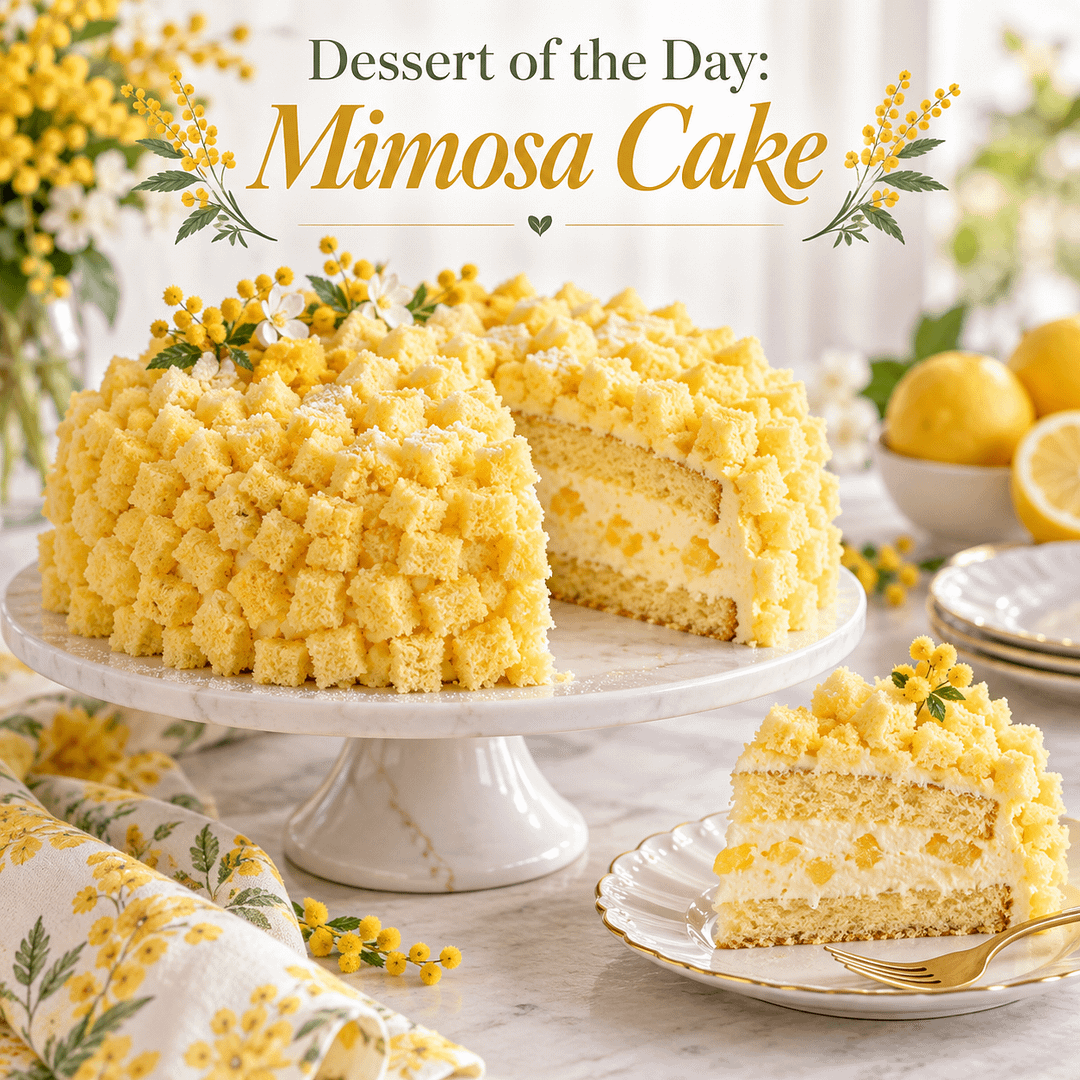
Few desserts look as cheerful, elegant, and celebratory as Mimosa Cake. With its soft sponge cake, creamy filling, delicate yellow color, and distinctive topping of tiny cake cubes that resemble mimosa blossoms, this dessert has a way of turning an ordinary day into something that feels special.
Mimosa Cake, often known as Torta Mimosa, is especially popular in Italy. Its sunny appearance immediately catches the eye, but its flavor is what makes people return for another slice. Light sponge cake is layered with a silky pastry-cream filling, often enriched with whipped cream, while cubes or crumbs of golden cake cover the outside.
The finished dessert is soft, creamy, lightly sweet, and beautiful enough for birthdays, spring celebrations, brunches, anniversaries, or simply an afternoon when you want something more memorable than an ordinary cake.
Today’s Dessert of the Day celebrates this beautiful classic.
What Is Mimosa Cake?
Despite the name, Mimosa Cake usually has nothing to do with the champagne-and-orange-juice cocktail.
Instead, the cake gets its name from the mimosa flower. The tiny yellow pieces of sponge cake covering the dessert resemble clusters of bright mimosa blossoms.
Traditional versions begin with a light Italian-style sponge cake. The cake is sliced into layers, filled with pastry cream or diplomat cream, and then covered with cream. Part of the sponge is cut into small cubes or crumbled over the outside.
The result is instantly recognizable.
From a distance, the cake almost looks covered with hundreds of tiny yellow flowers.
Inside, however, you find layers of tender cake and smooth cream.
It is an impressive dessert without relying on complicated piping, heavy frosting, or elaborate decorations.
Why Mimosa Cake Is So Special
Mimosa Cake stands apart because it manages to feel rich without becoming overwhelmingly heavy.
A traditional buttercream cake can sometimes feel dense after a large meal. Mimosa Cake is different. The airy sponge and smooth cream filling create a dessert that feels surprisingly light.
Every bite combines several textures.
You get the softness of the sponge cake, the cool creaminess of the filling, and the delicate texture of the cake pieces covering the outside.
The flavors are usually subtle rather than intensely sweet.
Vanilla, lemon, cream, and sometimes pineapple or another fruit are commonly incorporated into different versions.
That balance makes the cake perfect for people who enjoy desserts that are elegant rather than excessively sugary.
A Cake Made for Celebrations
Mimosa Cake has a naturally festive appearance.
Its bright yellow exterior makes it especially fitting for spring celebrations, Easter gatherings, Mother’s Day, bridal showers, brunches, birthdays, and afternoon teas.
In Italy, Mimosa Cake is particularly associated with International Women’s Day, celebrated on March 8. The mimosa flower became a symbol connected with the celebration, and the cake followed that tradition.
Even outside of that occasion, however, Mimosa Cake works beautifully as a celebration dessert.
Place one in the middle of the table and people will immediately ask about it.
Once it is sliced, the creamy layers make the dessert even more impressive.
Homemade Mimosa Cake Recipe
This version keeps the classic character of Mimosa Cake while making it approachable for home bakers.
Ingredients for the Sponge Cake
- 6 large eggs
- 1 cup granulated sugar
- 1 teaspoon vanilla extract
- 1 teaspoon finely grated lemon zest
- 1 cup all-purpose flour
- 1/4 cup cornstarch
- 1 teaspoon baking powder
- Pinch of salt
Ingredients for the Pastry Cream
- 2 cups whole milk
- 4 large egg yolks
- 1/2 cup granulated sugar
- 1/4 cup cornstarch
- 1 teaspoon vanilla extract
- 1 tablespoon butter
Ingredients for the Cream Filling
- Prepared pastry cream, chilled
- 1 cup heavy whipping cream
- 2 tablespoons powdered sugar
Ingredients for the Syrup
- 1/2 cup water
- 1/4 cup granulated sugar
- 1 tablespoon fresh lemon juice
- 1 teaspoon vanilla extract
Optional additions include orange zest, a small amount of pineapple juice, or a few drops of almond extract.
Step One: Make the Sponge Cake
Preheat your oven to 350°F.
Grease two 8-inch round cake pans and line the bottoms with parchment paper.
In a large mixing bowl, beat the eggs and granulated sugar together for several minutes.
This step is extremely important.
The eggs should become pale, thick, and significantly increased in volume. The air incorporated during mixing helps give sponge cake its signature light texture.
Add the vanilla and lemon zest.
In another bowl, whisk together the flour, cornstarch, baking powder, and salt.
Gradually fold the dry ingredients into the egg mixture.
Avoid stirring aggressively because you do not want to deflate all the air you worked into the eggs.
Divide the batter between the prepared pans.
Bake for approximately 22 to 27 minutes, or until the cakes are lightly golden and spring back when touched.
A toothpick inserted into the center should come out clean.
Allow the cakes to cool in their pans for several minutes before carefully transferring them to wire racks.
Let them cool completely before assembling the cake.
Step Two: Prepare the Pastry Cream
Heat the milk in a saucepan over medium heat until it is hot but not boiling.
Meanwhile, whisk the egg yolks, sugar, and cornstarch together in a separate bowl.
Gradually pour some of the hot milk into the egg mixture while whisking constantly.
This slowly raises the temperature of the eggs and prevents them from scrambling.
Pour the mixture back into the saucepan.
Cook over medium heat, whisking constantly, until the mixture becomes thick and creamy.
Remove it from the heat.
Stir in the vanilla and butter.
Transfer the pastry cream to a bowl.
Place plastic wrap directly against the surface of the cream to prevent a skin from forming.
Refrigerate until completely chilled.
Step Three: Make the Whipped Cream
Pour the heavy whipping cream into a chilled mixing bowl.
Add the powdered sugar.
Beat until medium-to-stiff peaks form.
Do not overbeat the cream or it may begin turning grainy.
Set aside a portion of the whipped cream for covering the outside of the cake.
Gently fold the remaining whipped cream into the chilled pastry cream.
This creates a lighter filling often called diplomat cream.
The combination is smooth, fluffy, and perfect for layered cakes.
Step Four: Make the Cake Syrup
Combine the water and sugar in a small saucepan.
Heat until the sugar completely dissolves.
Remove from the heat.
Add lemon juice and vanilla.
Allow the syrup to cool.
The syrup helps keep the sponge cake moist and adds subtle flavor without making the cake soggy.
Step Five: Prepare the Cake Layers
Once your cakes are completely cooled, carefully trim the tops if necessary.
Choose one cake to use primarily for the layers.
Slice it horizontally into two even layers.
Use the second cake to create the distinctive Mimosa Cake decoration.
Remove any overly browned exterior crust if desired.
Cut the soft yellow interior into small cubes approximately half an inch in size.
Don’t worry about making every cube perfect.
The slightly uneven pieces actually create a more natural flower-like appearance.
Set the cubes aside.
Step Six: Assemble the Mimosa Cake
Place your first sponge cake layer on a serving plate or cake stand.
Brush it lightly with the prepared syrup.
Spread a generous layer of the pastry-cream mixture across the cake.
Place the second sponge layer on top.
Brush it with additional syrup.
Spread cream across the top and sides of the entire cake.
The cream acts like glue for the decorative sponge pieces.
Take the cake cubes and gently press them over the top and sides.
Continue until the cake is generously covered.
When finished, the exterior should look soft, fluffy, and almost flower-like.
Refrigerate the cake for at least two to four hours before serving.
This gives the layers time to settle and allows the flavors to combine.
Adding Fruit to Mimosa Cake
Many modern versions of Mimosa Cake incorporate fruit.
Pineapple is particularly popular.
To make a pineapple Mimosa Cake, drain canned pineapple thoroughly and chop it into small pieces.
Scatter the fruit over the pastry cream between the cake layers.
You can also replace part of the cake syrup with a small amount of pineapple juice.
Other fruits can work beautifully as well.
Try strawberries for a spring version, raspberries for a slightly tart contrast, peaches during summer, or mandarin oranges for extra citrus flavor.
Just remember that very juicy fruit should be drained thoroughly so it doesn’t make the cake overly wet.
Lemon Mimosa Cake
Lemon is another perfect match for this dessert.
Add extra lemon zest to the sponge cake and pastry cream.
You can also add lemon juice to the soaking syrup.
For an even stronger lemon flavor, spread a very thin layer of lemon curd underneath the pastry cream.
The combination of lemon, vanilla, sponge cake, and whipped cream creates a refreshing dessert that tastes especially good during warmer months.
Chocolate Mimosa Cake
Although the traditional cake is yellow, adventurous bakers can create a chocolate variation.
Bake a chocolate sponge cake and reserve some of the interior for decorating the outside.
Fill the layers with vanilla diplomat cream or chocolate pastry cream.
The finished appearance will obviously be different from the traditional mimosa flower, but the basic construction remains the same.
You could even make a yellow Mimosa Cake with chocolate filling for a striking contrast when sliced.
Strawberry Mimosa Cake
Fresh strawberries transform Mimosa Cake into an incredible spring or summer dessert.
Slice fresh strawberries and place them between layers of diplomat cream.
You can also add strawberry puree to part of the cream.
Decorate the finished cake with the traditional sponge cubes and place several fresh strawberries on top.
The combination of vanilla cake, cream, and strawberries is simple but difficult to beat.
Tips for Making the Best Mimosa Cake
The biggest secret to a successful Mimosa Cake is allowing everything to cool properly.
Never spread pastry cream onto warm cake.
The heat can soften the cream and cause the layers to slide.
Your sponge cake should be completely cooled, and your pastry cream should be well chilled before assembly.
Be gentle when folding the flour into the egg mixture. Sponge cake relies heavily on incorporated air for its texture.
Don’t oversaturate the cake with syrup.
You want the sponge moist, not soggy.
When decorating, gently press the cake cubes into the cream rather than smashing them against the surface.
Finally, give the assembled cake enough refrigerator time.
Mimosa Cake becomes even better after several hours because the sponge absorbs just enough moisture from the cream and syrup.
How to Serve Mimosa Cake
Remove the cake from the refrigerator about 15 to 20 minutes before serving.
This allows the cream to soften slightly while remaining chilled.
Use a sharp knife to slice through the layers.
Wipe the knife between cuts for cleaner slices.
Mimosa Cake pairs beautifully with coffee, espresso, hot tea, iced tea, or sparkling water with lemon.
For special occasions, it also pairs naturally with sparkling wine or a brunch mimosa.
Serve each slice on its own and allow the cake’s appearance to provide most of the decoration.
You don’t need much else.
How to Store Mimosa Cake
Because Mimosa Cake contains pastry cream and whipped cream, it should always be refrigerated.
Store it in a covered cake container.
It is usually best enjoyed within two to three days.
The sponge will gradually become softer as it absorbs moisture from the cream.
Some people actually prefer the texture the following day because the flavors have had more time to blend.
Freezing the fully assembled cake is generally not ideal because whipped cream and pastry cream can change texture after thawing.
If you want to prepare ahead, bake the sponge cakes in advance and freeze them separately.
Once thawed, you can prepare the fresh filling and assemble the cake.
Why Sponge Cake Works So Well
The light texture of sponge cake is essential to Mimosa Cake.
A dense pound cake would compete too much with the creamy filling.
Sponge cake absorbs syrup and cream while maintaining enough structure to keep the dessert together.
This creates the tender texture that defines Mimosa Cake.
The decorative cake pieces also stay soft and delicate rather than becoming thick or chewy.
A Dessert That Looks More Difficult Than It Is
One of the nicest things about Mimosa Cake is that it looks sophisticated without requiring professional cake-decorating skills.
There are no complicated buttercream flowers to pipe.
You don’t need perfectly smooth frosting.
You don’t need fondant.
In fact, the slightly irregular sponge pieces are part of what makes the cake beautiful.
As long as you can bake a sponge cake, prepare cream, and assemble layers, you can create a dessert that looks like it came from a bakery window.
Perfect for Spring and Summer
There is something unmistakably sunny about Mimosa Cake.
Its pale yellow color brings to mind spring flowers, warmer afternoons, Easter tables, garden parties, and summer brunches.
The lighter filling also makes it particularly enjoyable during seasons when a heavy dessert might feel like too much.
Add berries, citrus, or pineapple, and it becomes even more refreshing.
Of course, there is no rule saying Mimosa Cake should only be enjoyed during warm weather.
A bright yellow cake in the middle of winter can be just as welcome.
Final Thoughts
Mimosa Cake is one of those desserts that proves a cake does not need elaborate decorations or intensely sweet frosting to make an impression.
Its beauty comes from simplicity.
Soft sponge cake.
Smooth vanilla cream.
A touch of lemon.
Delicate cake pieces covering the exterior.
Together, those elements create a dessert that looks festive, tastes luxurious, and still feels surprisingly light.
Whether you prepare a traditional version, add pineapple, brighten it with lemon, layer it with strawberries, or create your own variation, Mimosa Cake is a wonderful dessert to add to your baking collection.
It works for celebrations, brunches, holidays, birthdays, afternoon coffee, or any ordinary day when you want dessert to feel a little more special.
And once that first slice reveals the layers of fluffy sponge and creamy filling inside, it becomes easy to understand why this beautiful Italian cake continues to capture attention.
Would you try the classic Mimosa Cake, or would you add fruit like strawberries, pineapple, or lemon?
Leave a Reply