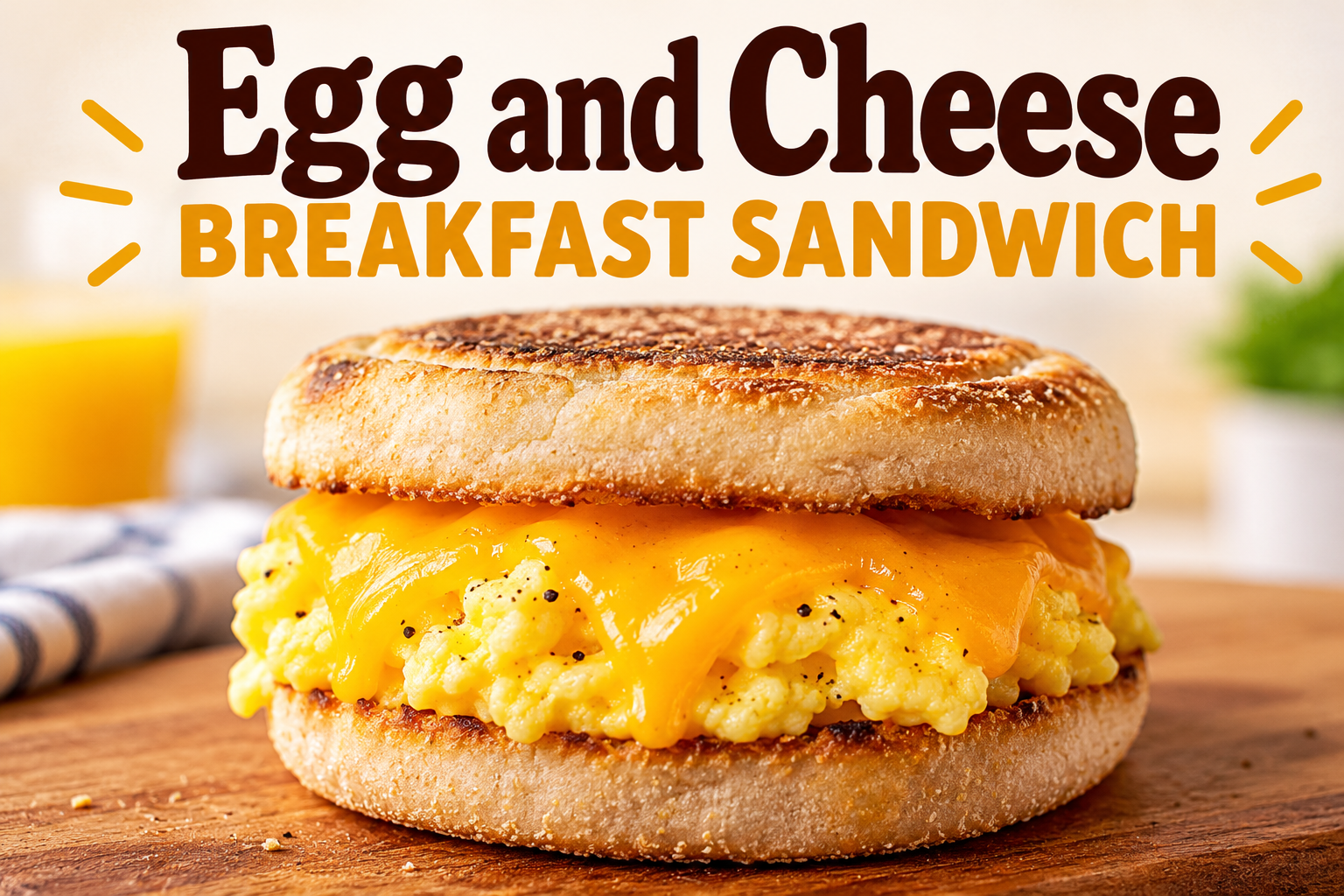
There is something comforting about starting your morning with a warm, freshly made egg and cheese breakfast sandwich. Whether you are rushing out the door, preparing breakfast for the family, or enjoying a quiet morning at home, this classic breakfast favorite delivers satisfying flavor without requiring complicated ingredients or cooking techniques.
The combination of fluffy eggs, melted cheese, and toasted bread creates a delicious balance of textures and flavors. Best of all, an egg and cheese breakfast sandwich is affordable, customizable, and ready in about 10 minutes.
While breakfast options come and go, this timeless sandwich remains a favorite because of its simplicity. With just a few everyday ingredients, you can create a homemade breakfast that rivals something you would order from your favorite café or breakfast restaurant.
In this guide, you will learn how to make the perfect egg and cheese breakfast sandwich, discover different variations, explore helpful cooking tips, and find ways to prepare these sandwiches ahead of time for busy mornings.
Why You Will Love This Egg and Cheese Breakfast Sandwich
There are plenty of reasons why this simple breakfast sandwich deserves a place in your morning routine.
Quick and easy: You can prepare this sandwich in approximately 10 minutes, making it ideal for busy weekdays.
Budget-friendly: Eggs, cheese, and bread are affordable ingredients that are commonly found in most kitchens.
Protein-packed: Eggs and cheese provide protein that can help keep you feeling satisfied throughout the morning.
Customizable: You can easily add vegetables, different cheeses, meats, or sauces to create your favorite combination.
Perfect for meal preparation: These sandwiches can be prepared ahead of time, refrigerated, or frozen for convenient breakfasts.
Family-friendly: Both children and adults can enjoy this simple breakfast classic.
Whether you prefer your eggs scrambled, fried, or folded into an omelet, there is no wrong way to enjoy this delicious sandwich.
Egg and Cheese Breakfast Sandwich Recipe
Estimated nutrition per sandwich
390
Calories
21 g
Protein
29 g
Carbs
21 g
Fat
Nutrition estimates vary depending on the bread, cheese, and other ingredients used.
Ingredients
One of the best things about this recipe is that you only need a handful of simple ingredients.
-
2 large eggs
-
1 English muffin, sliced in half
-
1 slice cheddar cheese or American cheese
-
1 teaspoon butter
-
1 tablespoon milk (optional, for scrambled eggs)
-
Salt, to taste
-
Black pepper, to taste
Optional additions
If you want to give your breakfast sandwich extra flavor, consider adding crispy bacon, breakfast sausage, sliced avocado, fresh spinach, tomato slices, sautéed mushrooms, or a dash of hot sauce.
You can also replace the English muffin with a toasted bagel, croissant, biscuit, sourdough bread, or whole-wheat toast.
How to Make an Egg and Cheese Breakfast Sandwich
Step 1: Toast the English Muffin
Begin by slicing your English muffin in half.
Place both halves in a toaster until they become golden brown and slightly crispy.
Toasting the bread helps create a sturdy foundation for the eggs and melted cheese while preventing the sandwich from becoming soggy.
For extra flavor, spread a small amount of butter over the warm muffin.
Step 2: Prepare the Eggs
Crack two large eggs into a small bowl.
Add a pinch of salt, freshly ground black pepper, and one tablespoon of milk if desired.
Whisk until the yolks and whites are completely combined.
The milk is optional, but it can help create a slightly softer texture when making scrambled eggs.
Step 3: Cook the Eggs
Heat a nonstick skillet over medium-low heat.
Add the butter and allow it to melt, coating the bottom of the pan.
Pour the whisked eggs into the skillet.
Allow them to cook briefly before gently stirring with a spatula.
Continue cooking until the eggs are softly set and no liquid egg remains.
For a sandwich-friendly shape, gently fold the cooked eggs into a square or round portion that fits your English muffin.
Avoid cooking over excessively high heat because this can make the eggs dry or rubbery.
Step 4: Add the Cheese
Place your slice of cheese directly over the warm eggs while they are still in the skillet.
Reduce the heat to low and allow the cheese to soften and melt.
You can cover the skillet with a lid for approximately 20–30 seconds to help the cheese melt evenly.
Cheddar provides a slightly sharper flavor, while American cheese creates a particularly smooth, creamy texture.
Step 5: Assemble the Sandwich
Place the bottom half of your toasted English muffin on a plate.
Carefully transfer the cooked eggs and melted cheese onto the muffin.
Add any optional toppings you enjoy.
Place the remaining English muffin half on top.
Press down gently to bring everything together.
Step 6: Serve and Enjoy
Serve your egg and cheese breakfast sandwich immediately while the bread is warm, the eggs are tender, and the cheese is melted.
Pair it with fresh fruit, yogurt, breakfast potatoes, or your favorite morning beverage for a complete breakfast.
Tips for Making the Perfect Breakfast Sandwich
Although this recipe is simple, a few small techniques can make a noticeable difference.
1. Use fresh eggs
Fresh eggs generally provide excellent flavor and texture. Whisking them thoroughly helps create an even consistency.
2. Cook eggs over medium-low heat
Gentle heat allows eggs to cook evenly without becoming tough.
3. Choose cheese that melts well
American cheese, cheddar, Monterey Jack, Swiss, and provolone are all excellent options.
4. Toast your bread
A lightly toasted English muffin adds texture and helps prevent moisture from making the bread soggy.
5. Avoid overfilling
Too many ingredients can make the sandwich difficult to eat. Choose a few toppings that complement the eggs and cheese.
6. Serve while warm
An egg and cheese breakfast sandwich tastes especially delicious when freshly assembled.
10 Delicious Egg and Cheese Breakfast Sandwich Variations
One of the greatest advantages of this recipe is how easily you can customize it.
1. Classic Bacon, Egg, and Cheese Sandwich
Add two strips of crispy bacon for a smoky, savory breakfast favorite.
2. Sausage, Egg, and Cheese Sandwich
Include a cooked breakfast sausage patty for a heartier morning meal.
3. Avocado Egg and Cheese Sandwich
Add sliced avocado for creamy texture and additional healthy fats.
4. Spinach and Egg Breakfast Sandwich
Cook a handful of fresh spinach with your eggs for added vegetables and flavor.
5. Tomato and Cheddar Breakfast Sandwich
Layer fresh tomato slices with sharp cheddar cheese for a bright, refreshing combination.
6. Mushroom and Swiss Breakfast Sandwich
Sauté mushrooms until tender and combine them with melted Swiss cheese.
7. Spicy Egg and Cheese Sandwich
Add sliced jalapeños, pepper jack cheese, or your favorite hot sauce.
8. Everything Bagel Egg Sandwich
Replace the English muffin with a toasted everything bagel for extra seasoning and texture.
9. Croissant Egg and Cheese Sandwich
Use a buttery croissant for a rich, café-style breakfast experience.
10. Mediterranean Egg Breakfast Sandwich
Add spinach, tomatoes, and feta cheese for a Mediterranean-inspired variation.
Each version starts with the same basic recipe, allowing you to create something different throughout the week.
How to Make a Healthier Egg and Cheese Breakfast Sandwich
A homemade breakfast sandwich can easily fit into a balanced eating routine.
Here are a few ways to adjust the ingredients.
Choose whole-grain bread. Whole-grain English muffins and breads can provide additional fiber.
Add vegetables. Spinach, tomatoes, bell peppers, and mushrooms contribute vitamins, minerals, and flavor.
Use less butter. A nonstick skillet can help reduce the amount of cooking fat needed.
Adjust the cheese. Use a smaller portion of cheese or choose a reduced-fat variety if you want to lower calories or saturated fat.
Increase protein. Add an extra egg white for additional protein without significantly increasing calories.
Include fresh fruit. Pair your sandwich with berries, an orange, or apple slices for a more balanced breakfast.
The goal is to create a satisfying meal that matches your personal nutritional needs.
How to Make Egg and Cheese Breakfast Sandwiches Ahead of Time
Busy mornings do not always leave enough time to prepare breakfast from scratch.
Fortunately, egg and cheese breakfast sandwiches work well for meal preparation.
Preparing multiple sandwiches
Cook several portions of eggs in a skillet or bake beaten eggs in a lightly greased baking dish until fully set.
Cut the eggs into portions that fit your bread.
Toast your English muffins and allow all cooked ingredients to cool before assembling.
Place eggs and cheese between the muffin halves.
Wrap each sandwich individually and store appropriately.
Refrigerator storage
Store prepared sandwiches in airtight containers or food-safe wrapping in the refrigerator for up to 3–4 days.
Keep the refrigerator at 40°F or below.
Freezer storage
For longer storage, wrap each cooled sandwich tightly and place it in a freezer-safe bag or container.
For best quality, enjoy frozen breakfast sandwiches within 1–2 months.
Label each sandwich with the preparation date so you can easily keep track of freshness.
Reheating instructions
For refrigerated sandwiches, remove any foil and microwave until heated throughout.
For frozen sandwiches, thaw overnight in the refrigerator when possible, then reheat.
You can also warm sandwiches in an oven or toaster oven for a crispier texture.
Reheat prepared egg sandwiches to an internal temperature of 165°F.
What to Serve With an Egg and Cheese Breakfast Sandwich
Although this sandwich makes a satisfying breakfast by itself, pairing it with a side dish can create a more complete meal.
Some excellent options include fresh strawberries, blueberries, sliced melon, hash browns, roasted breakfast potatoes, Greek yogurt, oatmeal, or a small fruit smoothie.
For beverages, coffee, tea, milk, or water all pair nicely with this breakfast favorite.
If you are preparing breakfast for guests, offer several toppings and side dishes so everyone can build their own preferred combination.
Common Mistakes to Avoid
Even simple recipes can turn out differently depending on preparation.
Overcooking the eggs: Eggs cooked too long may become dry. Use gentle heat and remove them from the skillet once fully set.
Skipping the toasted bread: Untoasted bread can absorb moisture quickly, creating a soggy sandwich.
Using too much filling: An overloaded sandwich may fall apart when eating.
Not melting the cheese: Allowing cheese to soften over warm eggs creates a smoother texture and better flavor.
Assembling too early: If you are not serving immediately, cool the cooked ingredients before wrapping and storing to reduce trapped moisture.
These simple adjustments can help you make a consistently delicious breakfast sandwich.
Frequently Asked Questions
Can I make an egg and cheese breakfast sandwich without an English muffin?
Absolutely. Bagels, biscuits, croissants, tortillas, sourdough, and sandwich bread all work well.
What is the best cheese for an egg sandwich?
American cheese melts smoothly, while cheddar provides a stronger flavor. Swiss, Monterey Jack, and provolone are also excellent choices.
Can I use fried eggs instead of scrambled eggs?
Yes. Fried eggs are a popular alternative. For a fully cooked sandwich, cook until both the whites and yolks are firm.
Can I make this sandwich vegetarian?
The basic egg and cheese sandwich contains no meat. Choose cheese made without animal-derived rennet if you follow a vegetarian diet that excludes it.
Can I freeze egg and cheese breakfast sandwiches?
Yes. Wrap cooled sandwiches individually and freeze them for convenient future breakfasts.
How can I make my sandwich more filling?
Add an extra egg, sautéed vegetables, avocado, or a protein-rich side such as Greek yogurt.
Can I make this recipe for a large family?
Certainly. Simply multiply the ingredients by the number of sandwiches needed. Baking eggs in a dish can make preparing multiple portions easier.
Why Homemade Breakfast Sandwiches Are Worth Making
Preparing breakfast at home offers several advantages.
First, you have complete control over the ingredients. You can choose your preferred bread, cheese, eggs, and toppings while adjusting portions to suit your needs.
Second, homemade sandwiches are often less expensive than purchasing breakfast from a restaurant or drive-through.
Third, making breakfast at home allows you to experiment with different flavors without needing complicated recipes.
Finally, there is something satisfying about enjoying a freshly prepared meal before beginning your day.
A warm egg and cheese breakfast sandwich proves that delicious food does not need to be expensive, complicated, or time-consuming.
Final Thoughts
The egg and cheese breakfast sandwich is a classic for good reason. It combines simple ingredients, satisfying flavor, and quick preparation into one convenient morning meal.
Whether you enjoy it on a toasted English muffin, buttery croissant, or hearty bagel, this breakfast favorite can easily become part of your regular routine.
With endless variations, easy meal-preparation options, and affordable ingredients, it is a recipe that works for busy individuals, families, and anyone who appreciates a warm homemade breakfast.
Sometimes the best meals are the simplest ones, and a perfectly cooked egg topped with melted cheese between two slices of toasted bread is proof of that.
What is your favorite way to enjoy an egg and cheese breakfast sandwich? Do you prefer yours plain and simple, or loaded with bacon, sausage, vegetables, and extra cheese?


Leave a Reply