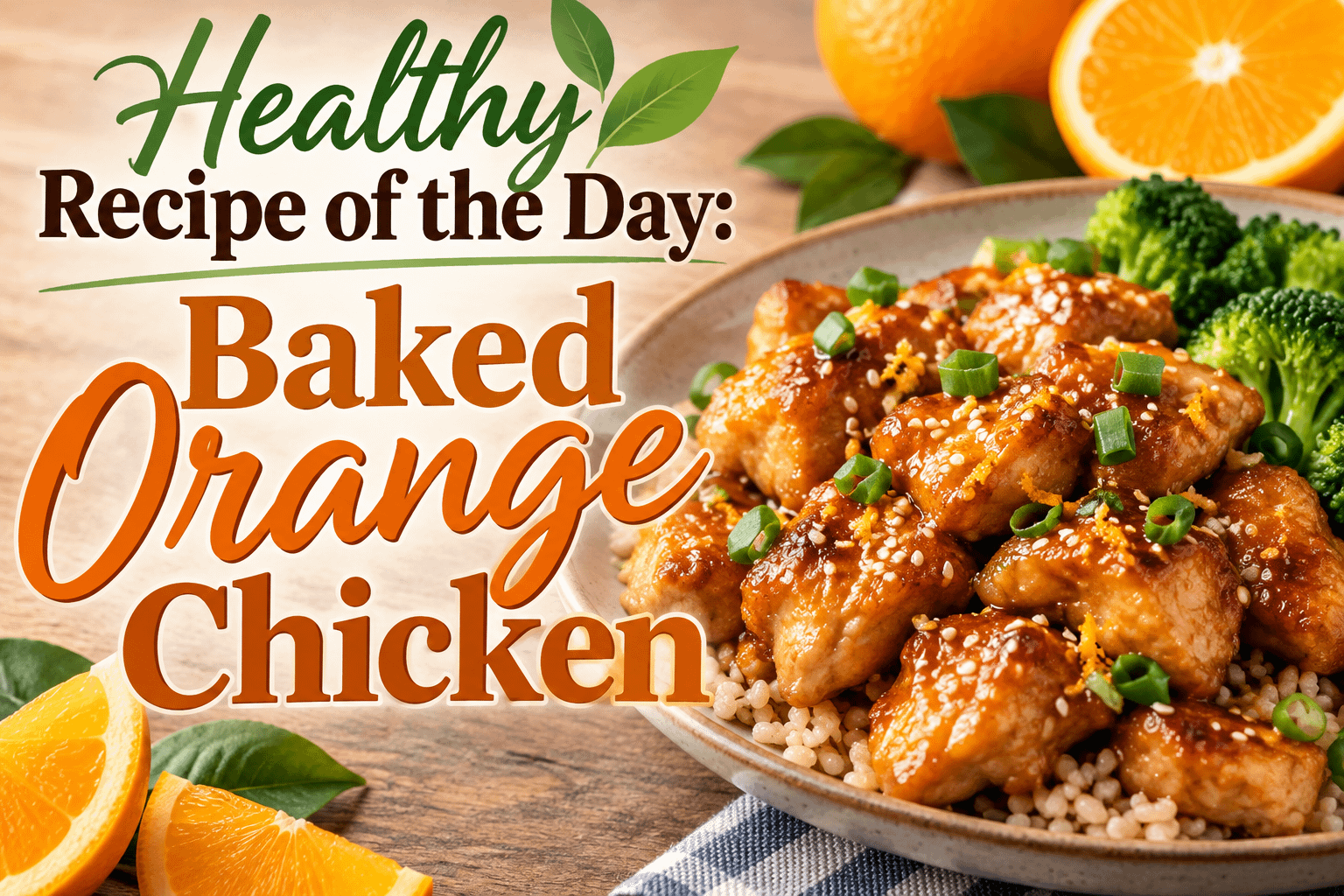
Orange chicken is one of those meals that can instantly satisfy a craving for something sweet, savory, tangy, and comforting. The traditional restaurant version is usually battered, deep-fried, and coated in a sugary orange sauce. It tastes incredible, but it can also be heavier than what you may want for an everyday meal.
That is where Baked Orange Chicken comes in.
This healthier version keeps the flavors that make orange chicken so enjoyable while replacing deep-frying with baking and using a homemade orange sauce that allows you to control the sweetness, sodium, and ingredients.
The result is tender pieces of chicken with lightly crisp edges covered in a bright, sticky orange glaze. Serve it with brown rice, quinoa, cauliflower rice, or vegetables for a satisfying dinner that feels like takeout without actually ordering takeout.
Why Bake Orange Chicken?
Deep-frying creates the crispy coating associated with traditional orange chicken, but baking can produce delicious results with considerably less added oil.
The secret is giving the chicken a light coating rather than covering it in a thick batter. A little cornstarch helps create a crisp exterior as the chicken bakes. Once the chicken is cooked, it gets tossed in the homemade orange sauce.
You still get that combination of crispy, sticky, sweet, and savory flavors without needing a pot full of frying oil.
Baking also makes preparation easier. There is no standing over hot oil or frying chicken in multiple batches. Once everything goes into the oven, you can work on the sauce and prepare your side dishes.
Ingredients
For the Chicken
- 1½ pounds boneless, skinless chicken breasts
- ¼ cup cornstarch
- ½ teaspoon garlic powder
- ½ teaspoon ground ginger
- ¼ teaspoon black pepper
- ¼ teaspoon salt
- 1 tablespoon olive or avocado oil
- Cooking spray, as needed
For the Healthy Orange Sauce
- ¾ cup fresh orange juice
- 1 tablespoon fresh orange zest
- 3 tablespoons reduced-sodium soy sauce
- 2 tablespoons honey
- 1 tablespoon rice vinegar
- 2 cloves garlic, minced
- 1 teaspoon freshly grated ginger
- ½ teaspoon sesame oil
- ¼ teaspoon crushed red pepper flakes, optional
- 1 tablespoon cornstarch
- 2 tablespoons water
Optional Garnishes
- Sliced green onions
- Sesame seeds
- Fresh orange zest
- Red pepper flakes
Directions
1. Prepare the Oven
Preheat your oven to 425°F.
Line a large baking sheet with parchment paper or lightly coat it with cooking spray.
Using a large baking sheet is important because you want the chicken pieces to have enough room around them. Crowding the chicken can cause it to steam rather than develop lightly crispy edges.
2. Cut the Chicken
Cut the chicken breasts into approximately 1-inch bite-sized pieces.
Try to keep the pieces relatively similar in size so they cook evenly.
Pat the chicken dry with paper towels before coating it. Removing excess moisture helps the cornstarch stick to the chicken and encourages better browning.
3. Coat the Chicken
In a large bowl, combine the cornstarch, garlic powder, ground ginger, black pepper, and salt.
Add the chicken pieces and toss until each piece has a thin coating.
Drizzle with the olive or avocado oil and gently toss again.
You don’t need a heavy coating. The goal is simply to give the chicken enough of an exterior layer to become lightly crisp in the oven.
4. Bake the Chicken
Arrange the chicken pieces in a single layer on the prepared baking sheet.
Make sure there is a little space between the pieces.
Bake for approximately 18–22 minutes, turning the chicken halfway through cooking.
Chicken should reach a safe internal temperature of 165°F.
For additional browning, you can broil the chicken for the final minute or two. Watch it carefully because the small pieces can brown quickly.
Make the Homemade Orange Sauce
While the chicken is baking, prepare the sauce.
Add the orange juice, orange zest, soy sauce, honey, rice vinegar, garlic, ginger, sesame oil, and optional red pepper flakes to a small saucepan.
Whisk everything together and bring the mixture to a gentle simmer over medium heat.
Allow it to simmer for approximately 3–5 minutes.
In a small bowl, combine:
1 tablespoon cornstarch + 2 tablespoons water
Whisk until completely smooth.
Slowly pour this mixture into the simmering orange sauce while whisking continuously.
Continue cooking for another 1–3 minutes until the sauce becomes thick, glossy, and slightly sticky.
Remove from heat.
Bring Everything Together
Once the chicken has finished baking, transfer it to a large bowl.
Pour the warm orange sauce over the chicken and gently toss until every piece is coated.
You can also return the coated chicken to the baking sheet and place it back in the oven for another 2–3 minutes. This helps the glaze cling to the chicken and become even stickier.
Finish with sliced green onions, sesame seeds, or additional orange zest.
Your healthy baked orange chicken is ready.
What to Serve With Baked Orange Chicken
One of the easiest ways to turn this recipe into a balanced meal is to add vegetables and a nutritious carbohydrate.
Try serving it with brown rice and steamed broccoli for a simple weeknight dinner.
For something lighter, serve the orange chicken over cauliflower rice with roasted vegetables.
Other good options include quinoa, green beans, asparagus, snap peas, carrots, bell peppers, cabbage, or a vegetable stir-fry.
You can even make a bowl with baked orange chicken, brown rice, broccoli, shredded carrots, green onions, and sesame seeds.
Making Orange Chicken Healthier
A healthier recipe doesn’t have to mean removing everything enjoyable about the original dish.
Small changes can make a substantial difference.
Bake Instead of Deep-Frying
This is the biggest change.
Traditional orange chicken commonly gets its crispy exterior from battered chicken cooked in oil. Baking eliminates the need for deep-frying while still allowing the chicken to brown.
Use Fresh Orange Juice
Fresh orange juice provides natural sweetness, acidity, and citrus flavor.
Don’t forget the zest.
Orange zest contains aromatic oils that provide a much stronger orange flavor without requiring additional sugar.
Control the Sweetness
Homemade sauce allows you to decide how sweet you want your orange chicken.
If you prefer a sweeter sauce, add a little more honey. If you like something more tart and citrus-forward, use less.
Choose Reduced-Sodium Soy Sauce
Soy sauce provides much of the savory flavor in orange chicken, but it can also contribute considerable sodium.
Using a reduced-sodium variety is an easy adjustment.
Add More Vegetables
You don’t necessarily have to change the chicken itself to improve the overall meal.
Serve a smaller portion of chicken alongside a generous serving of vegetables and a moderate portion of whole grains.
Broccoli is especially good because its florets catch the orange sauce.
Meal Prep Tip
Baked orange chicken works well for meal preparation.
Divide the chicken among containers with brown rice, quinoa, or cauliflower rice and add your favorite vegetables.
Store the meals in the refrigerator and reheat them when needed.
For the best texture, you can also store the sauce separately and add it after reheating the chicken.
Leftovers should generally be refrigerated promptly in an airtight container and used within 3–4 days.
Easy Vegetable Orange Chicken
You can turn this into an even more colorful meal by adding vegetables directly to the chicken.
Try:
- Broccoli
- Red bell peppers
- Green bell peppers
- Snow peas
- Carrots
- Zucchini
- Mushrooms
- Green beans
Roast or sauté the vegetables separately and toss them with the chicken and orange sauce immediately before serving.
You will get more vegetables in every serving while also stretching the recipe into additional portions.
Want It Spicy?
Orange chicken doesn’t have to be purely sweet.
Adding a little heat creates a great contrast with the citrus and honey.
Start with about ¼ teaspoon of crushed red pepper flakes in the sauce. If you prefer more heat, gradually increase the amount.
A little sriracha or another favorite chili sauce can also be added.
The goal isn’t necessarily to make the chicken extremely spicy. Even a small amount of heat can balance the sweetness of the orange glaze.
The Secret Is Fresh Orange Zest
If there is one ingredient you shouldn’t skip, it is the orange zest.
Orange juice provides sweetness and acidity, but zest provides the intense orange aroma that makes the sauce taste unmistakably citrusy.
Zest only the bright orange outer portion of the peel. Avoid digging deeply into the white pith underneath because it can taste bitter.
Add a little fresh zest over the finished dish for another burst of citrus.
A Better Alternative to Takeout
Sometimes healthy eating becomes easier when you don’t try to eliminate the foods you enjoy.
Instead, find ways to recreate them.
If you love orange chicken, you don’t have to swear it off. You can make a version at home using lean chicken, fresh orange juice, less added sugar, less sodium, vegetables, and a cooking method that doesn’t require deep-frying.
That’s what makes Baked Orange Chicken such a good weeknight recipe.
It isn’t trying to be plain grilled chicken pretending to be takeout.
It’s still sticky.
It’s still sweet.
It’s still savory.
It’s still packed with orange flavor.
But it is prepared in a way that can fit much more easily into a balanced meal.
Healthy Recipe of the Day
Baked Orange Chicken proves that comfort food and healthier cooking don’t have to be opposites.
Tender baked chicken, fresh citrus, garlic, ginger, honey, and a savory orange glaze come together to create a meal that’s colorful, satisfying, and easy enough for a weeknight.
Serve it with brown rice and broccoli for a classic combination, load it with extra vegetables, or keep things lighter with cauliflower rice.
Best of all, you know exactly what went into the sauce because you made it yourself.
Sometimes healthier eating isn’t about giving up your favorite foods. It’s about finding a different way to prepare them.
What is one favorite takeout meal you would love to turn into a healthier homemade recipe?
Leave a Reply