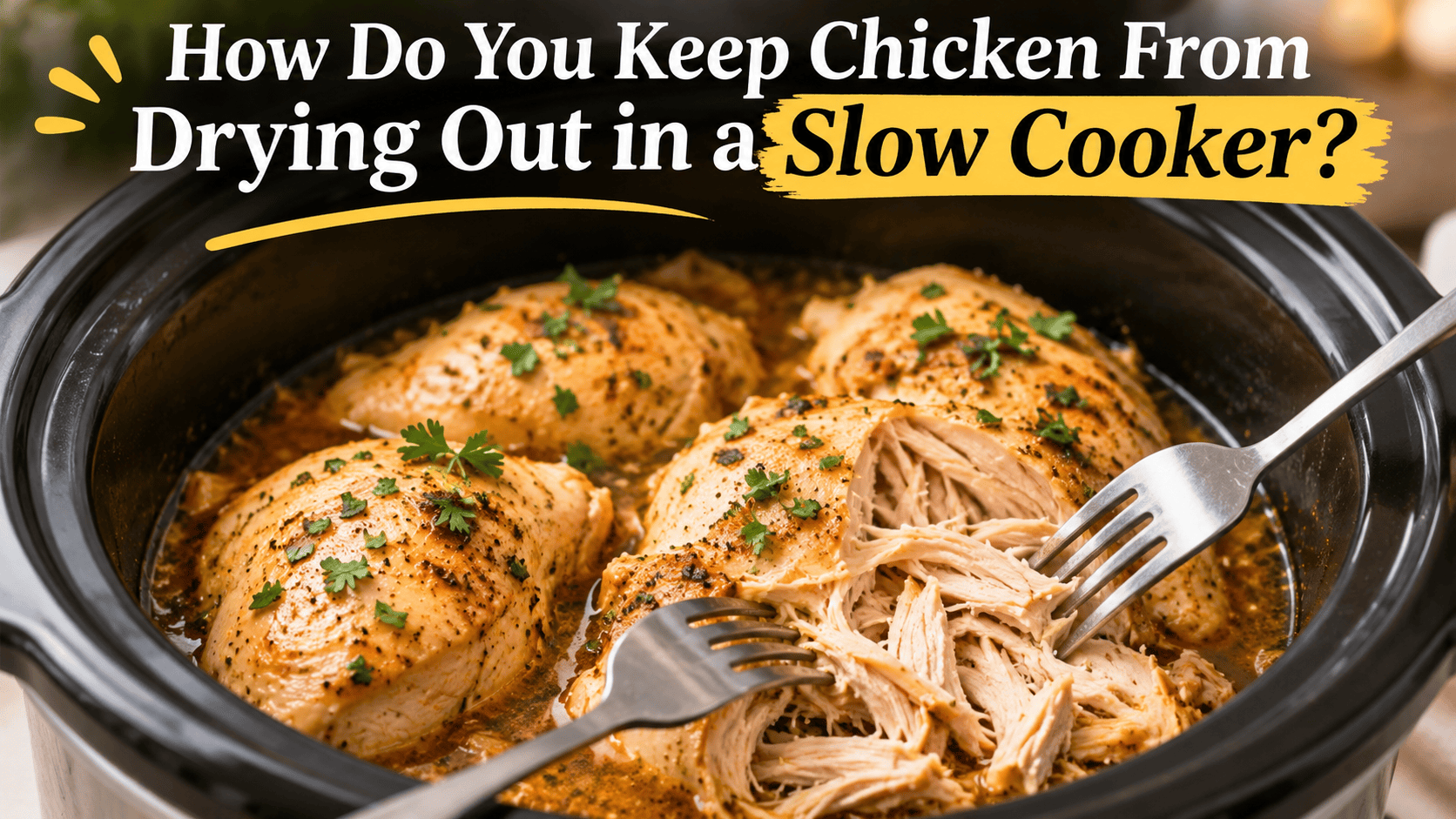
Slow cooker chicken is one of the easiest and most convenient meals to prepare, especially when you want a delicious homemade dinner without spending hours in the kitchen. However, one of the most common problems people experience is chicken that turns out dry, tough, stringy, or overcooked.
Although slow cookers are designed to cook food gently over several hours, chicken can still lose moisture when cooked too long or at the wrong temperature.
The good news is that keeping chicken tender, juicy, and flavorful in a slow cooker is easier than you might think.
The secret to keeping chicken from drying out in a slow cooker is choosing the right cut, adding enough moisture, cooking on low when appropriate, and avoiding overcooking. Using a meat thermometer and removing the chicken when it reaches a safe internal temperature of 165°F can make a significant difference.
Whether you are preparing chicken breasts, thighs, shredded chicken, or a complete slow cooker dinner, understanding a few simple cooking techniques can help you achieve tender results every time.
Why Does Chicken Dry Out in a Slow Cooker?
Many people assume that cooking chicken slowly automatically keeps it moist. Unfortunately, that is not always the case.
Chicken contains muscle fibers and proteins that change as they heat. As the meat cooks, these proteins tighten and squeeze out moisture.
When chicken cooks for too long, it can become dry even when surrounded by broth, sauce, or other liquids.
Several factors contribute to dry slow cooker chicken.
1. Cooking Chicken Too Long
Overcooking is one of the biggest reasons chicken becomes dry in a slow cooker.
Unlike tougher cuts of beef or pork that benefit from extended cooking, chicken breast contains relatively little connective tissue.
This means it does not need extremely long cooking times to become tender.
Leaving boneless chicken breasts cooking for eight hours can result in dry, stringy meat, particularly in slow cookers that run hot.
2. Using Boneless, Skinless Chicken Breasts
Chicken breasts are naturally lean.
Because they contain less fat than chicken thighs, they have a smaller margin between being perfectly cooked and becoming dry.
Chicken breasts can still turn out juicy in a slow cooker, but they require careful attention to cooking time.
3. Cooking at Too High a Temperature
Slow cookers generally have low and high settings.
Although both settings can eventually reach similar simmering temperatures, the high setting heats food more quickly.
This can cause lean chicken to reach its ideal internal temperature sooner than expected.
4. Not Using Enough Moisture
Chicken naturally releases juices while cooking, but adding a modest amount of liquid can help create a moist cooking environment.
Without enough moisture, exposed portions of chicken may become less tender, especially when cooking for extended periods.
However, adding excessive liquid does not prevent overcooking.
5. Using Chicken Pieces of Different Sizes
Chicken pieces that vary significantly in thickness may cook unevenly.
Smaller pieces can become overcooked while larger pieces are still reaching a safe temperature.
Choosing similarly sized pieces helps produce more consistent results.
10 Best Ways to Keep Chicken Moist in a Slow Cooker
1. Choose Chicken Thighs for Juicier Results
One of the easiest ways to prevent dry chicken is to use boneless or bone-in chicken thighs.
Chicken thighs contain more fat and connective tissue than chicken breasts, making them more forgiving during longer cooking times.
They are especially useful for recipes such as:
- Slow cooker barbecue chicken
- Chicken tacos
- Chicken curry
- Chicken and rice
- Shredded chicken sandwiches
- Chicken stew
- Creamy chicken dishes
If your recipe requires several hours of cooking, chicken thighs are often the better choice.
2. Cook Chicken on Low When Possible
Using the low setting generally provides more control over the cooking process.
The chicken heats more gradually, giving you a better opportunity to check its internal temperature before it becomes overcooked.
However, cooking on low does not mean chicken can remain in the slow cooker indefinitely.
Even on low, chicken breasts can become dry when cooked too long.
3. Add Chicken Broth or Another Flavorful Liquid
Adding a small amount of liquid helps maintain a moist cooking environment and creates flavorful cooking juices.
Good options include chicken broth, low-sodium stock, tomato sauce, salsa, and other recipe-appropriate liquids.
For approximately 2 pounds of boneless chicken, ½ to 1 cup of broth is often a useful starting point, depending on the recipe and slow cooker size.
Chicken releases additional liquid during cooking, so it usually does not need to be completely submerged.
Always follow the minimum liquid requirements specified by your slow cooker manufacturer.
4. Avoid Overcooking Chicken Breasts
Boneless, skinless chicken breasts cook faster than many people expect.
As a general planning guide, thawed boneless chicken breasts may take approximately:
| Slow Cooker Setting | Approximate Cooking Time |
|---|---|
| Low | 2–4 hours |
| High | 1½–3 hours |
These are estimates, not guaranteed cooking times. Actual results depend on the slow cooker, amount of chicken, thickness, and recipe.
Begin checking early and use a meat thermometer to confirm that the thickest portion reaches 165°F.
5. Use a Meat Thermometer
A reliable food thermometer is one of the most important tools for preventing dry chicken.
Chicken should reach an internal temperature of 165°F (74°C) for food safety.
Insert the thermometer into the thickest part of the meat without touching bone.
Once the chicken reaches 165°F, remove it from the heat unless your recipe specifically requires additional cooking for texture.
For chicken thighs intended for shredding, some recipes benefit from cooking beyond 165°F to soften connective tissue. The extra cooking should be intentional rather than automatic.
6. Keep the Slow Cooker Lid Closed
Opening the slow cooker repeatedly allows heat and steam to escape.
This can extend cooking time and make the cooking process less predictable.
Keep the lid closed during most of the cooking process, opening it only when necessary to check doneness or add ingredients.
7. Use a Sauce to Add Flavor and Moisture
Cooking chicken in a flavorful sauce can make the finished dish taste richer and juicier.
Popular choices include barbecue sauce, marinara sauce, salsa verde, teriyaki sauce, and creamy mushroom sauce.
While sauces cannot reverse overcooking, they can help coat the chicken and improve its texture when served.
For creamy recipes, consider adding dairy ingredients toward the end of cooking to reduce the risk of separation.
8. Avoid Cutting Chicken Into Tiny Pieces
Small pieces of chicken can overcook more quickly than whole breasts or thighs.
For recipes requiring shredded chicken, it is usually better to cook larger pieces and shred them after cooking.
If preparing a chicken stew or soup, choose reasonably uniform pieces and adjust the cooking time accordingly.
9. Shred Chicken in Its Cooking Juices
If you are making shredded chicken, do not immediately discard the liquid remaining in the slow cooker.
Those juices contain flavor and can help keep shredded meat moist.
Remove the cooked chicken, shred it with two forks, and return it to some of the warm cooking liquid.
Stir gently until the chicken absorbs and becomes coated with the juices.
This technique works especially well for tacos, burritos, sandwiches, casseroles, and meal preparation.
10. Remove Chicken When It Is Done
Many people leave chicken on the warm setting for several additional hours after cooking.
Although the warm setting is intended to hold food at a safe serving temperature, extended holding can continue to affect texture and moisture.
For the best quality, serve the chicken promptly or refrigerate it within two hours.
If holding chicken warm, make sure it remains at or above 140°F.
Is It Better to Cook Chicken on Low or High in a Slow Cooker?
For many chicken recipes, the low setting is preferable because it provides a more gradual cooking process.
However, both low and high can produce good results when the chicken is cooked for the correct amount of time.
The most important factor is not simply the setting but the internal temperature of the chicken.
For lean chicken breasts, a shorter cooking period on low often provides better results than leaving them unattended for an entire workday.
Chicken thighs are more forgiving and can tolerate longer cooking times.
If you need chicken ready quickly, the high setting may be appropriate, but begin checking its temperature earlier.
How Much Liquid Should You Put in a Slow Cooker With Chicken?
The amount of liquid depends on the recipe, the type of chicken, and the size of your slow cooker.
For a simple recipe using 2 pounds of boneless chicken, approximately ½ to 1 cup of broth is often sufficient.
You may need less additional liquid when using ingredients such as salsa, canned tomatoes, or other sauces.
For soups and stews, more liquid is necessary because it forms the base of the dish.
Remember that chicken releases natural juices during cooking.
Adding too much water can dilute flavors and create a watery finished dish.
Chicken does not need to be completely covered in liquid to cook properly in a slow cooker.
How Do You Keep Boneless Chicken Breasts Juicy in a Slow Cooker?
Boneless chicken breasts require special attention because they contain very little fat.
For the best results, choose breasts of similar thickness and arrange them in an even layer.
Add a small amount of broth or sauce, season generously, and cook on low.
Start checking their internal temperature after approximately two hours, depending on the quantity and your slow cooker.
Remove the chicken once the thickest portion reaches 165°F.
Let it rest briefly before slicing so the juices have time to redistribute.
When preparing shredded chicken, return the shredded meat to some of the cooking liquid.
These simple techniques can significantly improve the finished texture.
Easy Juicy Slow Cooker Chicken Recipe
This simple recipe produces flavorful chicken that can be served with vegetables, rice, potatoes, pasta, or salads.
Ingredients
- 2 pounds boneless, skinless chicken breasts
- ¾ cup low-sodium chicken broth
- 2 tablespoons olive oil
- 1 teaspoon garlic powder
- 1 teaspoon onion powder
- 1 teaspoon paprika
- ½ teaspoon dried thyme
- ½ teaspoon black pepper
- ½ teaspoon salt, or to taste
- 1 tablespoon lemon juice
- 1 tablespoon butter, optional
Instructions
Step 1: Prepare the Chicken
Pat the chicken breasts dry with paper towels.
Trim away excess fat and choose pieces of similar thickness.
Step 2: Season the Chicken
Combine garlic powder, onion powder, paprika, thyme, salt, and black pepper in a small bowl.
Rub the seasoning mixture evenly over the chicken.
Step 3: Prepare the Slow Cooker
Pour the chicken broth into the slow cooker.
Add the olive oil and lemon juice.
Step 4: Add the Chicken
Place the seasoned chicken breasts in the slow cooker in an even layer.
Avoid stacking them too tightly.
Add the optional butter on top for additional richness.
Step 5: Cook on Low
Cover and cook on low for approximately 2–4 hours, beginning temperature checks early.
Cooking time will vary depending on the thickness of the chicken and the slow cooker.
Step 6: Check the Temperature
Insert a meat thermometer into the thickest part of the chicken.
When it reaches 165°F, remove the chicken from the slow cooker.
Step 7: Rest and Serve
Allow the chicken to rest for approximately five minutes before slicing.
Spoon some of the warm cooking juices over the chicken before serving.
Recipe Information
- Prep Time: 10 minutes
- Estimated Cook Time: 2–4 hours
- Servings: 6
- Cooking Method: Slow Cooker
- Main Ingredient: Chicken Breast
Helpful Recipe Tip
For extra flavor, add sliced onions, minced garlic, or fresh herbs to the slow cooker.
If you prefer shredded chicken, shred the cooked breasts and mix them with some of the cooking liquid before serving.
Can You Put Raw Chicken Directly Into a Slow Cooker?
Yes. Raw, thawed chicken can be placed directly into a slow cooker.
There is no requirement to brown chicken before slow cooking, although browning can add flavor and color.
Make sure the chicken is properly refrigerated before cooking and reaches an internal temperature of 165°F.
Avoid placing frozen chicken directly into a slow cooker because it may remain in the temperature danger zone for too long while thawing.
Thaw frozen chicken safely in the refrigerator before adding it to the slow cooker.
Should Chicken Be Covered in Liquid in a Slow Cooker?
No. Chicken does not need to be completely submerged in liquid.
A slow cooker traps moisture under its lid, allowing the food to cook in a humid environment.
Chicken also releases its own juices as it heats.
A modest amount of broth or sauce is usually sufficient for many chicken recipes.
Submerging chicken completely may be appropriate for soups or certain braised dishes, but it is not necessary for basic slow cooker chicken.
Can You Overcook Chicken in a Slow Cooker?
Yes. Chicken can absolutely become overcooked in a slow cooker.
This is particularly common with boneless, skinless chicken breasts.
Even though the chicken is surrounded by steam and liquid, its muscle fibers can tighten and release moisture when exposed to heat for too long.
Signs of overcooked chicken include a dry texture, stringy fibers, excessive toughness, and meat that falls apart but feels dry in your mouth.
The best prevention is to monitor the internal temperature and avoid unnecessary cooking time.
How Do You Fix Dry Chicken From a Slow Cooker?
If your chicken has already become dry, you may not be able to restore its original texture completely.
However, several techniques can make it more enjoyable.
Add Warm Chicken Broth
Slice or shred the chicken and combine it with a small amount of warm broth.
Allow the meat to absorb and become coated with the liquid before serving.
Mix With Sauce
Barbecue sauce, gravy, salsa, or a creamy sauce can improve the texture of dry chicken.
This works especially well when the meat is shredded.
Use It in Another Recipe
Dry chicken can be repurposed into dishes where additional ingredients provide moisture.
Good options include chicken salad, enchiladas, creamy chicken pasta, chicken pot pie, and soup.
Avoid Reheating It Too Long
Repeated heating can make already dry chicken even tougher.
Reheat leftovers gently with added moisture until they reach 165°F.
Is Chicken Breast or Chicken Thigh Better for Slow Cooking?
Both chicken breasts and thighs work well in a slow cooker, but they produce different results.
| Feature | Chicken Breast | Chicken Thigh |
|---|---|---|
| Fat Content | Lower | Higher |
| Texture | Lean and firm | Rich and tender |
| Overcooking Risk | Higher | Lower |
| Best For | Sliced chicken, lighter meals | Shredded chicken, stews, curries |
| Long Cooking Times | Less forgiving | More forgiving |
If your main concern is preventing dry chicken, thighs are generally the better choice.
However, chicken breasts can still produce excellent results when cooked carefully.
Common Mistakes to Avoid When Slow Cooking Chicken
Even experienced home cooks sometimes make mistakes that affect the texture of slow cooker chicken.
Some of the most common include:
- Cooking chicken breasts for eight hours without checking their temperature.
- Using the high setting when a shorter, gentler cooking process would work better.
- Adding too little liquid for the particular recipe or slow cooker.
- Opening the lid repeatedly during cooking.
- Cooking pieces that vary significantly in thickness.
- Leaving finished chicken on warm for too long.
- Assuming chicken is safe based only on its color.
- Adding frozen chicken directly to the slow cooker.
Avoiding these mistakes can make your chicken more consistently tender, juicy, and flavorful.
Frequently Asked Questions
Why Is My Slow Cooker Chicken Dry Even With Broth?
Chicken can become dry even when surrounded by broth because the muscle fibers lose moisture as they overcook. Liquid helps with flavor and the cooking environment, but it cannot completely prevent moisture loss inside the meat.
Does Butter Keep Chicken Moist in a Slow Cooker?
Butter adds richness and flavor, but it does not prevent the chicken’s muscle fibers from losing moisture during overcooking. Proper cooking time is still essential.
Can You Cook Chicken for Eight Hours on Low?
Some recipes using bone-in chicken or thighs may tolerate longer cooking periods, but eight hours is often too long for boneless chicken breasts. Always follow a tested recipe and check the internal temperature.
Does Searing Chicken Before Slow Cooking Keep It Juicy?
Searing chicken creates additional flavor through browning, but it does not seal moisture inside the meat. Avoiding overcooking is more important for maintaining juiciness.
Should You Flip Chicken in a Slow Cooker?
Usually, no. Slow cookers circulate heat around the food, so flipping is generally unnecessary. Keeping the lid closed also helps maintain consistent cooking conditions.
How Do You Keep Shredded Chicken From Drying Out?
Shred the chicken shortly after cooking and mix it with some of the warm cooking juices. Store leftovers with a little broth or sauce to help preserve moisture.
Can You Leave Chicken in a Slow Cooker Overnight?
Cooking chicken overnight is not recommended unless you are following a tested recipe designed for that duration and your appliance can maintain safe cooking temperatures. Boneless chicken breasts are especially likely to become overcooked during very long cooking periods.
Final Thoughts: How Do You Keep Chicken From Drying Out in a Slow Cooker?
Keeping chicken juicy in a slow cooker comes down to understanding how chicken responds to heat and moisture.
Choosing chicken thighs for longer recipes, using the low setting when appropriate, adding flavorful liquid, and avoiding excessive cooking times can all improve your results.
For chicken breasts, careful timing is especially important.
The most reliable technique is to use a meat thermometer and remove the chicken when it reaches a safe internal temperature of 165°F.
If you are preparing shredded chicken, mixing the finished meat with its cooking juices can provide additional flavor and moisture.
The biggest secret to juicy slow cooker chicken is simple: cook it until it is safely done, not until the timer says you have to stop.
With the right ingredients, cooking method, and attention to temperature, you can enjoy tender, flavorful slow cooker chicken that is perfect for busy weeknights, family dinners, and easy meal preparation.


Leave a Reply