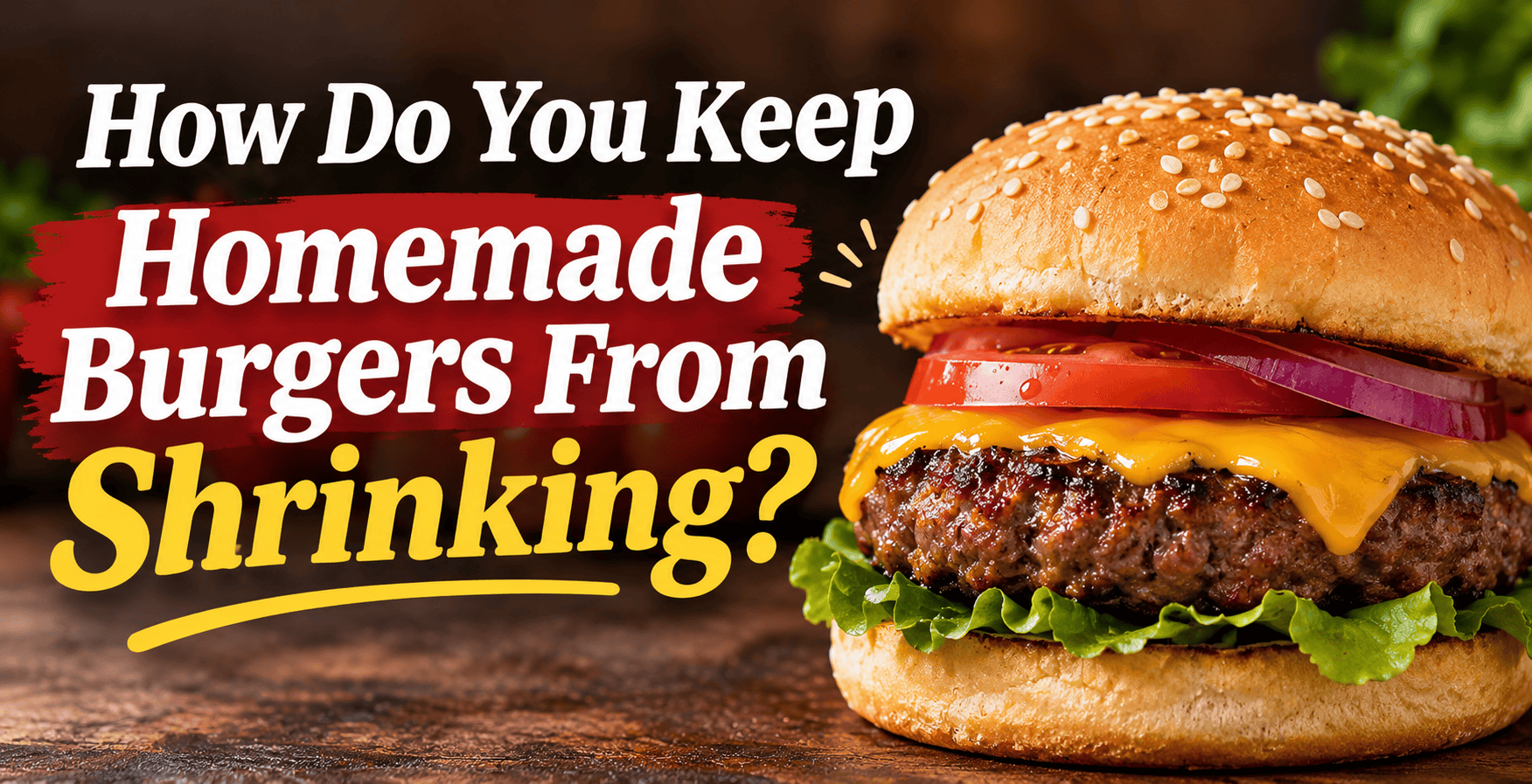
There is nothing quite like biting into a juicy, flavorful homemade burger fresh off the grill or out of a hot skillet. However, one of the most frustrating problems when making burgers at home is watching a perfectly shaped hamburger patty shrink into a smaller, thicker piece of meat while cooking.
You start with a burger patty that looks like it will fit your bun perfectly, but by the time it finishes cooking, it has lost much of its original size. Sometimes, the burger becomes noticeably smaller, develops a rounded center, or loses so much moisture that it turns dry and tough.
The good news is that burger shrinkage is completely normal, but there are several simple ways to reduce it.
The best way to keep homemade burgers from shrinking is to use ground beef with the right fat content, shape the patties slightly wider than the buns, make a shallow indentation in the center, avoid overworking the meat, and cook at a controlled temperature without pressing down on the patties.
Understanding why burgers shrink and how to prevent excessive shrinkage can make a noticeable difference in the quality of your homemade hamburgers.
Why Do Homemade Burgers Shrink When Cooking?
Before learning how to prevent burger shrinkage, it helps to understand what causes it.
Ground beef contains water, fat, and proteins. When exposed to heat, the proteins begin to change structure and contract. As those proteins tighten, they squeeze moisture and rendered fat out of the meat.
This process causes hamburger patties to become smaller during cooking.
Several factors influence how much a burger shrinks, including the fat content of the beef, cooking temperature, patty thickness, and how long the meat stays on the heat.
1. Moisture Loss
Ground beef naturally contains water.
As the meat cooks, some of that moisture escapes through evaporation and dripping juices.
The more moisture a burger loses, the more its overall weight and volume decrease.
Cooking a burger too long can increase moisture loss, resulting in a smaller and drier patty.
2. Fat Rendering
Fat contributes flavor, tenderness, and juiciness to hamburgers.
However, as ground beef heats up, some of its fat melts and escapes.
Ground beef with a higher fat percentage can lose more fat during cooking, contributing to shrinkage.
This does not mean lean beef always produces better burgers. Fat also plays an important role in creating the juicy texture most people want.
3. Protein Contraction
When beef proteins are heated, they tighten and contract.
This natural reaction pulls the meat together, making the burger smaller.
Higher cooking temperatures and prolonged cooking can increase moisture loss associated with this contraction.
4. Excessive Cooking Temperatures
Cooking burgers over extremely high heat can cause the outside to cook rapidly while the center remains undercooked.
If the burgers stay over intense heat for too long, they may lose more moisture and fat than necessary.
A properly preheated cooking surface and controlled heat help produce a flavorful crust without unnecessarily drying out the meat.
1. Choose the Right Ground Beef for Homemade Burgers
One of the most important decisions when making hamburgers is choosing the right ground beef.
Ground beef is commonly labeled according to its lean-to-fat ratio.
For example, 80/20 ground beef contains approximately 80% lean meat and 20% fat by weight.
Different ratios produce different cooking results.
| Ground Beef Ratio | Characteristics |
|---|---|
| 70/30 | Very rich and fatty, with substantial fat rendering |
| 80/20 | Juicy, flavorful, and excellent for traditional burgers |
| 85/15 | A balance of moderate fat and leaner texture |
| 90/10 | Leaner, with less fat rendering but a greater risk of dryness |
| 93/7 | Very lean and more likely to become firm when overcooked |
What Is the Best Ground Beef Ratio to Prevent Shrinking?
For most homemade hamburgers, 80/20 ground beef is an excellent choice.
It provides enough fat for flavor and juiciness while maintaining a satisfying burger texture.
Although leaner ground beef may lose less fat during cooking, it can still shrink because of moisture loss and protein contraction.
Choosing the leanest beef available is not necessarily the best solution.
If your priority is a juicy, restaurant-style burger, 80/20 ground chuck is a reliable starting point.
2. Make Burger Patties Wider Than the Buns
One of the easiest ways to compensate for burger shrinkage is to shape your patties slightly larger than the hamburger buns.
Since some shrinkage is unavoidable, starting with a wider patty helps the finished burger fit the bun.
For example, if your hamburger bun measures approximately four inches across, shape your raw burger patty to about four and a half to five inches wide.
The exact amount of shrinkage depends on the meat and cooking method, so these measurements are a useful starting point rather than a guarantee.
How Wide Should Homemade Burger Patties Be?
For traditional hamburgers, try the following guidelines:
-
Four-inch bun: Shape a patty approximately 4½ to 5 inches wide.
-
Five-inch bun: Shape a patty approximately 5½ to 6 inches wide.
-
Large burger bun: Make the raw patty roughly 10% to 20% wider than the bun.
This technique works particularly well for grilled burgers and skillet-cooked hamburgers.
Instead of trying to eliminate shrinkage completely, you are planning for it before cooking begins.
3. Make a Small Indentation in the Center of Each Patty
One of the most effective tricks for making evenly shaped homemade burgers is creating a shallow indentation in the center of each raw patty.
You may have noticed that homemade burgers sometimes puff up in the middle while cooking.
This happens because the meat contracts and changes shape as it heats.
A small indentation helps compensate for that movement.
How to Make the Burger Indentation
After shaping your hamburger patties, place them on a plate or cutting board.
Using your thumb or the back of a spoon, gently press a shallow depression into the center of each patty.
For a typical burger, make the indentation approximately half an inch deep, depending on the thickness of the meat.
Avoid pressing all the way through.
As the burger cooks, the indentation helps prevent excessive doming and encourages a flatter finished patty.
Important: The indentation primarily helps control the burger’s shape. It does not stop the normal loss of moisture or fat that causes overall shrinkage.
This technique is especially useful for thick burgers cooked on a grill or in a skillet. Thin smash burgers generally do not need it.
4. Avoid Overworking the Ground Beef
Another common mistake when making homemade hamburgers is handling the ground beef too much.
When ground beef is repeatedly squeezed, kneaded, or packed tightly, its proteins can form a denser structure.
This can make the cooked burgers feel firm or rubbery.
Overworking the meat does not necessarily cause all burger shrinkage, but it can make the effects of cooking less desirable.
How to Shape Burger Patties Properly
Start by dividing your ground beef into equal portions.
Gently gather each portion into a loose ball.
Flatten the meat into a patty using light pressure.
Smooth the edges just enough to help the burger hold together.
Avoid repeatedly squeezing or compressing the meat.
The goal is to create a patty that maintains its shape without becoming tightly packed.
A loosely formed burger generally has a more tender texture than one that has been heavily worked.
5. Do Not Press Down on Burgers While Cooking
One of the biggest mistakes people make when cooking homemade hamburgers is pressing down on the patties with a spatula.
It can be tempting to flatten the meat while it cooks, especially when the burger begins to puff up.
However, pressing a burger after it has started cooking forces juices and rendered fat out of the meat.
Those juices contribute to the burger’s flavor and moisture.
When they escape, the finished hamburger can become drier.
Why Pressing Burgers Is a Problem
Pressing down on cooking burgers can:
-
Squeeze out flavorful juices.
-
Increase moisture loss.
-
Make burgers less tender.
-
Create a drier finished texture.
-
Reduce the burger’s thickness.
Instead, place the patty on the cooking surface and allow it to cook without unnecessary pressure.
There is one important exception: smash burgers.
Smash burgers are intentionally pressed very thin immediately after the ground beef hits a hot cooking surface. This creates a large contact area and a deeply browned crust.
The key difference is that smash burgers are pressed at the beginning of cooking, rather than repeatedly squeezed after the meat has started to cook.
6. Cook Burgers at the Right Temperature
Cooking temperature plays an important role in how homemade burgers turn out.
Extremely high heat can quickly brown or burn the outside before the center reaches a safe temperature.
Low heat, on the other hand, may require longer cooking and can make it harder to develop a flavorful crust.
For most traditional hamburgers, medium-high heat provides a useful balance.
Best Temperature for Cooking Burgers on the Stove
Preheat a heavy skillet or cast-iron pan over medium-high heat.
Add the hamburger patties once the cooking surface is hot.
Allow the first side to develop a browned crust before flipping.
Adjust the heat if the exterior begins browning too quickly.
Use a food thermometer to determine when the burgers are cooked safely.
Ground beef should reach an internal temperature of 160°F (71°C).
Best Temperature for Grilling Burgers
For grilled hamburgers, a grill temperature of approximately 375°F to 450°F is a practical starting range.
Place the patties over the heat and allow them to brown.
If flare-ups occur, move the burgers to a cooler section of the grill.
Avoid leaving burgers over intense flames that char the outside before the inside is properly cooked.
Cooking times vary depending on patty thickness, grill temperature, and starting meat temperature.
A thermometer is more reliable than judging doneness by appearance alone.
7. Avoid Overcooking Homemade Hamburgers
Overcooking is one of the main reasons homemade burgers become excessively small, dry, and tough.
As burgers continue cooking, they lose additional moisture.
Even if you start with high-quality ground beef, prolonged cooking can produce disappointing results.
How Do You Know When a Burger Is Done?
The safest and most reliable method is to use an instant-read meat thermometer.
Insert the thermometer into the thickest part of the burger, ideally from the side toward the center.
For ground beef, the recommended safe internal temperature is 160°F.
Do not rely on the color of the meat or the clarity of the juices to determine safety.
A burger can appear brown before reaching a safe internal temperature, while some properly cooked burgers may retain a pinkish color.
Once the burger reaches 160°F, remove it from the heat rather than continuing to cook it unnecessarily.
8. Keep Burger Patties Evenly Shaped
Unevenly shaped patties can cook inconsistently.
If one side is much thicker than the other, the thinner section may dry out before the thicker section finishes cooking.
Making patties with a consistent thickness helps them cook more evenly.
What Is the Best Thickness for Homemade Burgers?
For a traditional hamburger, approximately ½ to ¾ inch thick is a practical starting point.
Thicker burgers can also be delicious, but they generally require more careful temperature control.
When shaping patties, try to keep the thickness consistent from edge to edge, apart from the shallow center indentation.
Avoid making the edges extremely thin.
Thin edges may become dry before the center finishes cooking.
9. Keep the Ground Beef Cold Before Cooking
Keeping ground beef properly chilled before cooking helps preserve its texture and makes the patties easier to handle.
Warm ground beef becomes softer as its fat begins to soften.
This can make it more difficult to shape consistent patties.
Cold beef generally holds together better during preparation.
Should You Refrigerate Burger Patties Before Cooking?
Yes, refrigerating shaped patties can be helpful.
After forming your burgers, place them on a tray or plate.
Cover them and refrigerate until you are ready to cook.
If you are preparing burgers ahead of time, keep the meat refrigerated at 40°F or below.
Do not leave raw ground beef at room temperature for extended periods.
As a food-safety guideline, perishable foods should not remain at room temperature for more than two hours, or one hour when temperatures exceed 90°F.
Chilling helps with handling and food safety, although it does not eliminate the natural shrinkage that occurs during cooking.
10. Use the Right Amount of Ground Beef for Each Burger
The amount of ground beef used for each patty affects the size of the finished hamburger.
If you start with a very small portion of meat, the cooked burger may look noticeably undersized compared with the bun.
Using a kitchen scale helps you make consistently sized burgers.
How Much Ground Beef Should You Use Per Burger?
| Raw Patty Weight | Burger Style |
|---|---|
| 2 ounces | Small smash burger |
| 3 ounces | Thin hamburger |
| 4 ounces | Classic quarter-pound burger |
| 5 ounces | Generous homemade burger |
| 6 ounces | Large restaurant-style burger |
| 8 ounces | Extra-large half-pound burger |
These weights refer to the raw meat.
A quarter-pound burger weighs four ounces before cooking, not necessarily after cooking.
If you want a substantial finished burger, starting with a five- or six-ounce patty may provide the size you prefer.
Remember that larger patties still lose moisture and fat during cooking.
How Do Restaurants Keep Their Burgers From Shrinking?
Restaurants use many of the same techniques that work in home kitchens.
Professional cooks understand that burgers naturally shrink, so they prepare the patties accordingly.
Common restaurant practices include choosing ground beef with a consistent fat ratio, weighing portions, shaping patties wider than the buns, and cooking on properly heated equipment.
Restaurants may also use burger presses or patty-forming equipment to create consistent shapes.
Consistency is particularly important in a commercial kitchen because customers expect their burgers to look and taste similar every time.
Do Restaurants Use Special Ingredients to Prevent Shrinking?
Some commercial burger products contain added ingredients, but a good homemade hamburger does not need fillers or special additives to control shrinkage.
Traditional burgers can be made with ground beef and simple seasonings.
Good shaping and cooking techniques are usually more useful than adding ingredients solely to prevent shrinking.
Does Adding an Egg Keep Burgers From Shrinking?
Adding an egg to ground beef is a common technique in meatloaf and certain meatball recipes.
Egg helps bind ingredients together, especially when breadcrumbs or other additions are included.
However, adding an egg does not prevent the natural shrinkage of ground beef.
In fact, adding eggs and breadcrumbs can change the texture of a traditional hamburger.
The result may resemble a meatloaf patty rather than a classic juicy burger.
For ordinary hamburgers, eggs are generally unnecessary.
Ground beef naturally holds together when shaped properly.
Does Adding Breadcrumbs Prevent Burger Shrinkage?
Breadcrumbs can absorb and retain some moisture, especially when combined with other ingredients.
However, they do not stop beef proteins from contracting during cooking.
Adding breadcrumbs also changes the structure and flavor of a hamburger.
Some people enjoy burgers made with breadcrumbs, eggs, onions, and seasonings.
These can be delicious, but they produce a different texture from traditional all-beef burgers.
If your goal is a classic hamburger, start with properly shaped ground beef rather than relying on fillers.
Should You Add Salt Before or After Shaping Burgers?
Salt is essential for bringing out the flavor of beef, but the timing matters.
When salt is mixed thoroughly into ground beef, it can change how the meat proteins interact.
This may produce a firmer, springier texture.
For tender homemade burgers, it is generally better to shape the patties first and season their surfaces shortly before cooking.
Sprinkle salt and black pepper evenly over both sides.
Avoid kneading salt deeply into the ground beef unless you intentionally want a firmer, sausage-like texture.
This technique improves tenderness rather than directly preventing all shrinkage.
How Do You Keep Burgers Flat Instead of Round?
If your burgers consistently turn into thick, rounded patties, the problem is usually related to how the meat contracts during cooking.
The outside and center of a burger do not always cook at the same rate.
As the meat changes shape, the center can rise.
To encourage flatter burgers, make the patties wider than the buns and add a shallow indentation in the center.
Also, avoid forming patties that are extremely thick in the middle.
For particularly thick burgers, use moderate heat and monitor the internal temperature carefully.
The goal is a burger that cooks evenly and maintains a relatively flat shape.
How Do You Keep Burgers From Shrinking in a Frying Pan?
Cooking hamburgers in a frying pan is convenient, especially when grilling outdoors is not an option.
However, skillet burgers can still shrink if they are overcooked or handled improperly.
For the best results, use a heavy skillet that distributes heat evenly.
Cast iron is particularly effective because it retains heat well and helps develop a flavorful crust.
Preheat the skillet over medium-high heat.
Add the patties without overcrowding the pan.
Allow each burger to brown before flipping.
Avoid pressing down with a spatula.
If the burgers begin browning too rapidly, reduce the heat slightly.
Continue cooking until the internal temperature reaches 160°F.
Starting with patties slightly wider than the buns will help compensate for the shrinkage that occurs.
How Do You Keep Burgers From Shrinking on the Grill?
Grilled hamburgers are especially popular because of their smoky flavor and browned exterior.
However, grilling can produce excessive moisture loss if the burgers are exposed to intense heat for too long.
Start with evenly shaped patties made from quality ground beef.
Make a shallow indentation in the center.
Preheat the grill and clean the grates.
Place the patties on the grill and allow them to cook without repeatedly moving or pressing them.
Flip when the first side has developed a good crust and releases reasonably easily from the grate.
Avoid excessive flare-ups caused by dripping fat.
Use a cooler grill zone when necessary to finish cooking without burning the exterior.
Remove the burgers when they reach the safe internal temperature.
Common Mistakes That Make Homemade Burgers Shrink
Even experienced home cooks sometimes make mistakes that affect the size and texture of their hamburgers.
Understanding these mistakes can help you produce better results.
Using too much heat: Excessively high temperatures can burn the outside while leaving the center undercooked, leading to additional cooking time and moisture loss.
Overcooking the meat: Leaving burgers on the heat longer than necessary causes more moisture to escape.
Making patties too small: Burgers that start the same diameter as the buns may look undersized after cooking.
Pressing burgers with a spatula: Compressing burgers during cooking squeezes out juices.
Overworking the ground beef: Excessive mixing and squeezing can create a dense texture.
Making uneven patties: Inconsistent thickness causes uneven cooking and can leave some portions dry.
Using very lean ground beef: Although lean beef contains less fat to render, it can become dry and firm when overcooked.
Correcting these mistakes can improve both the appearance and taste of your homemade hamburgers.
Step-by-Step Recipe for Homemade Burgers That Stay Juicy
If you want to put these techniques into practice, this simple homemade burger recipe is an excellent starting point.
Ingredients
Makes 4 burgers | Prep time: 10 minutes | Cooking time: approximately 8–12 minutes, depending on thickness and heat
-
1½ pounds ground chuck (80/20)
-
1 teaspoon kosher salt, or to taste
-
½ teaspoon freshly ground black pepper
-
4 hamburger buns
-
4 slices cheddar cheese, optional
-
Lettuce, tomatoes, onions, and pickles, optional
-
Your favorite hamburger condiments
Instructions
Step 1: Divide the ground beef.
Place the ground beef on a clean cutting board or in a large bowl.
Divide it into four equal portions, approximately six ounces each.
Step 2: Shape the patties.
Gently form each portion into a patty.
Make the patties approximately ½ to ¾ inch thick and slightly wider than your hamburger buns.
Avoid packing the meat too tightly.
Step 3: Create a center indentation.
Using your thumb, press a shallow indentation into the center of each patty.
This helps reduce doming during cooking.
Step 4: Refrigerate until ready.
Place the patties on a covered tray in the refrigerator while preparing your cooking equipment.
Step 5: Preheat the grill or skillet.
Heat a skillet over medium-high heat or prepare a grill for medium-high cooking.
Step 6: Season the patties.
Sprinkle both sides of each burger with kosher salt and black pepper immediately before cooking.
Step 7: Cook the burgers.
Place the patties on the hot cooking surface.
Cook until a browned crust develops, then flip.
Avoid pressing down on the meat.
Continue cooking, adjusting the heat as needed, until the burgers reach an internal temperature of 160°F.
Step 8: Add cheese if desired.
During the final stage of cooking, place a slice of cheddar cheese on each burger.
Allow the cheese to melt while the meat finishes cooking.
Step 9: Rest briefly.
Transfer the burgers to a clean plate and allow them to rest for approximately two to three minutes.
Resting can help reduce immediate juice loss when the burgers are bitten into, although it does not reverse shrinkage.
Step 10: Assemble and serve.
Place the cooked burgers on toasted buns.
Add your favorite toppings and condiments.
Serve immediately.
Frequently Asked Questions
Why Do My Burgers Shrink So Much?
Burgers shrink because heat causes proteins to contract while moisture and fat escape. Excessive cooking time, high heat, and fatty ground beef can increase the amount of shrinkage.
Can You Completely Stop Hamburger Patties From Shrinking?
No. Some shrinkage is a natural part of cooking ground beef. However, choosing the right meat, shaping patties properly, and avoiding overcooking can reduce excessive shrinkage.
Does Lean Ground Beef Shrink Less Than Regular Ground Beef?
Leaner ground beef generally releases less rendered fat, but it can still lose moisture and shrink during cooking. Leaner meat may also become drier if overcooked.
Why Do My Burgers Turn Into Balls?
Hamburger patties can become rounded because the meat contracts unevenly during cooking. A shallow indentation in the center helps reduce doming and encourages a flatter burger.
Should You Flatten Burgers Before Cooking?
Yes. Shape raw ground beef into evenly sized patties before cooking. Make them slightly wider than the buns to compensate for shrinkage.
Does Freezing Burger Patties Prevent Shrinking?
No. Freezing does not stop the proteins from contracting or prevent fat and moisture loss during cooking. Properly frozen burgers can still produce good results, but they will shrink as they cook.
How Much Do Homemade Burgers Shrink?
The amount varies depending on fat content, patty thickness, cooking method, and final internal temperature. Burgers can lose a noticeable percentage of their raw weight during cooking, but there is no single shrinkage percentage that applies to every recipe.
Should You Flip Burgers More Than Once?
Flipping a burger more than once is not necessarily harmful. Both single-flip and multiple-flip methods can produce good burgers. The important factors are avoiding unnecessary pressing, controlling the heat, and cooking to a safe internal temperature.
Is 80/20 or 85/15 Better for Burgers?
Both ratios work well. Ground beef with an 80/20 ratio generally produces a richer, juicier burger, while 85/15 offers a slightly leaner option. Neither ratio eliminates shrinkage.
Final Thoughts: How Do You Keep Homemade Burgers From Shrinking?
Making delicious homemade hamburgers does not require complicated ingredients or professional cooking equipment.
The secret is understanding how ground beef behaves when exposed to heat and using a few simple techniques to maintain the burger’s shape, moisture, and flavor.
Start with quality ground beef, preferably an 80/20 blend for traditional juicy hamburgers. Shape the patties slightly wider than the buns, create a shallow indentation in the center, and avoid overworking the meat.
During cooking, use controlled heat, avoid pressing down with a spatula, and remove the burgers once they reach a safe internal temperature.
Remember that some shrinkage is completely normal. The goal is not to prevent every bit of shrinkage but to minimize unnecessary moisture loss while keeping the meat tender and flavorful.
A great homemade burger should be juicy, flavorful, evenly cooked, and large enough to fit the bun.
With the right preparation and cooking techniques, you can make homemade hamburgers that hold their shape better and deliver the satisfying, restaurant-quality experience you want every time.
Leave a Reply