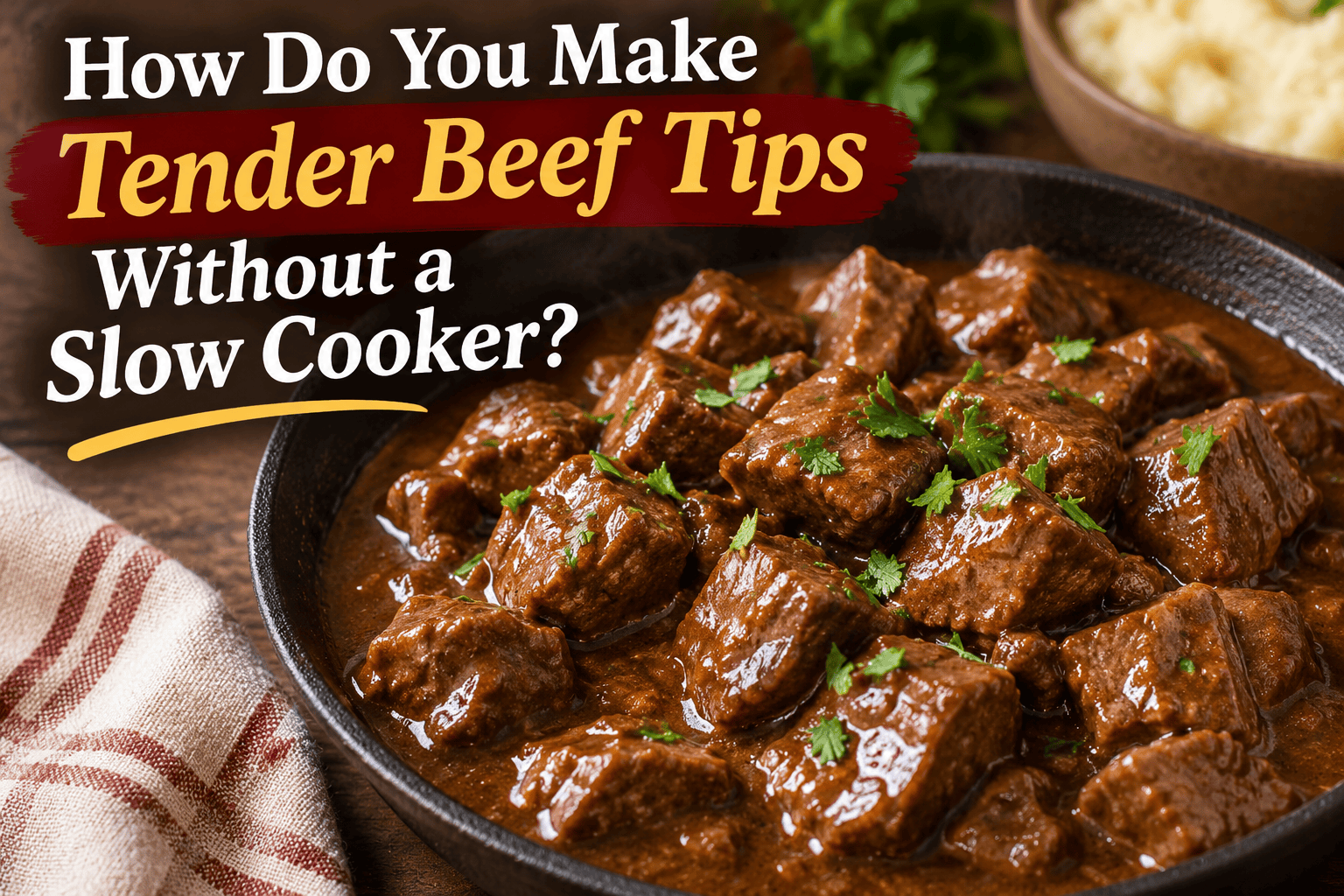
Beef tips are one of those comforting, hearty meals that can turn an ordinary dinner into something special. When cooked properly, they become incredibly tender, juicy, and full of rich beef flavor. Served over mashed potatoes, rice, or egg noodles, beef tips make a satisfying homemade meal that tastes like it has been cooking all day.
But what happens when you don’t have a slow cooker or simply don’t want to wait six to eight hours for dinner?
The good news is that you can make tender, flavorful beef tips without a slow cooker. In fact, cooking beef tips on the stovetop, in the oven, or in a pressure cooker can produce equally delicious results, sometimes in significantly less time.
The secret is choosing the right cut of beef, using the proper cooking method, and understanding how heat and moisture affect tenderness.
Whether you want classic beef tips with brown gravy or a simple skillet dinner, this guide explains how to make perfectly tender beef tips without relying on a slow cooker.
What Are Beef Tips?
Beef tips are small pieces of beef that are typically cooked in a savory sauce or gravy until tender.
Traditionally, beef tips were made from the tender ends of larger cuts of meat, such as beef tenderloin or sirloin. Today, the term can refer to several different cuts, including chuck roast, sirloin steak, and stew meat.
The type of beef you choose makes a significant difference in how you should cook it.
Some cuts are naturally tender and cook quickly, while others contain more connective tissue and require longer cooking times to become soft.
For example, sirloin tips can be cooked relatively quickly in a skillet, while chuck roast benefits from slow simmering in liquid.
Understanding this difference is one of the most important steps in making tender beef tips without a slow cooker.
What Is the Best Cut of Beef for Tender Beef Tips?
Choosing the right beef is essential because not all cuts respond to cooking methods the same way.
1. Chuck Roast
Chuck roast is one of the best choices for traditional beef tips with gravy.
It contains connective tissue and marbling that gradually break down during moist cooking, producing tender, flavorful meat.
Chuck roast works particularly well for stovetop simmering, oven braising, and pressure cooking.
2. Sirloin Steak
Sirloin is naturally more tender than chuck and requires less cooking time.
It is ideal when you want beef tips ready in approximately 20 to 30 minutes.
Sirloin works best when quickly seared and briefly simmered rather than cooked for hours.
3. Beef Stew Meat
Prepackaged stew meat is convenient, but the pieces may come from different cuts of beef.
Because of this, cooking times can vary.
Stew meat generally benefits from a longer, gentle simmer to soften tougher pieces.
4. Beef Tenderloin
Beef tenderloin produces exceptionally tender beef tips.
However, it is more expensive and doesn’t need prolonged cooking.
Tenderloin is best quickly seared and added to the sauce near the end.
Best overall choice: Use chuck roast for traditional, fall-apart tender beef tips with gravy, or sirloin for a faster weeknight dinner.
How Do You Make Tender Beef Tips on the Stovetop?
The stovetop method is one of the easiest ways to prepare tender beef tips without a slow cooker.
It allows you to brown the meat, build a flavorful gravy, and gently simmer everything in one pot.
Recipe overview
Ingredients
-
2 pounds beef chuck roast, cut into 1½-inch cubes
-
2 tablespoons olive oil
-
1 medium onion, diced
-
3 cloves garlic, minced
-
2 cups beef broth
-
1 tablespoon Worcestershire sauce
-
1 tablespoon soy sauce
-
1 teaspoon garlic powder
-
1 teaspoon onion powder
-
1 teaspoon smoked paprika
-
½ teaspoon black pepper
-
½ teaspoon salt, or to taste
-
2 tablespoons all-purpose flour
-
2 tablespoons butter
-
½ cup additional beef broth or water, if needed
-
1 teaspoon dried thyme (optional)
Step 1: Prepare the Beef
Start by cutting the chuck roast into evenly sized cubes.
Aim for pieces approximately 1½ inches thick so they cook at a similar rate.
Pat the beef dry with paper towels before seasoning.
Removing excess surface moisture helps the meat brown instead of steam.
Season the beef with salt, pepper, garlic powder, onion powder, and smoked paprika.
Step 2: Brown the Beef
Heat the olive oil in a large, heavy-bottomed skillet or Dutch oven over medium-high heat.
Once the oil is hot, add the beef in a single layer.
Avoid overcrowding the pan because too much meat at once lowers the temperature and prevents proper browning.
Cook the beef for approximately two to three minutes per side until a golden-brown crust develops.
The meat does not need to cook through at this stage.
Remove the browned beef and set it aside.
Step 3: Cook the Onions and Garlic
Reduce the heat to medium.
Add the diced onion to the same pan and cook for approximately four to five minutes until softened.
Stir occasionally to prevent burning.
Add the minced garlic and cook for another 30 seconds.
The browned bits remaining on the bottom of the pan contain concentrated flavor that will enhance the gravy.
Step 4: Build the Gravy
Add the butter and allow it to melt.
Sprinkle in the flour and stir continuously for approximately one minute.
This creates a roux that helps thicken the gravy.
Gradually pour in the beef broth while stirring to prevent lumps.
Add the Worcestershire sauce, soy sauce, and thyme.
Scrape the bottom of the pan with a wooden spoon to release the browned bits.
Step 5: Simmer the Beef Until Tender
Return the browned beef and any accumulated juices to the pan.
Bring the liquid to a gentle simmer.
Reduce the heat to low and cover the pot.
Allow the beef to simmer gently for approximately 1½ to 2 hours, checking occasionally.
Stir every 20 to 30 minutes and add additional broth if the sauce becomes too thick.
The beef is ready when a fork slides into the meat easily and the pieces are tender.
Some chuck roasts may require slightly longer cooking.
Step 6: Adjust the Gravy
Once the beef is tender, taste the gravy.
Add additional salt, pepper, or Worcestershire sauce if desired.
If the gravy is too thin, remove the lid and simmer for several minutes until it reaches your preferred consistency.
If the gravy is too thick, stir in a small amount of beef broth.
Step 7: Serve
Spoon the tender beef tips and rich brown gravy over mashed potatoes, rice, or egg noodles.
Serve immediately while hot.
The result is a comforting dinner featuring tender beef and homemade gravy without using a slow cooker.
How Do You Make Beef Tips Tender in the Oven?
Oven braising is another excellent method for making tender beef tips.
Unlike stovetop cooking, where the heat comes primarily from below, the oven surrounds the covered pot with consistent heat.
This makes it easier to maintain a gentle cooking environment.
Oven-Braised Beef Tips Instructions
-
Preheat your oven to 325°F.
-
Season and brown 2 pounds of cubed chuck roast in a Dutch oven.
-
Remove the beef and sauté onions and garlic.
-
Add 2 cups of beef broth, Worcestershire sauce, and your preferred seasonings.
-
Return the beef to the pot.
-
Cover tightly with an oven-safe lid.
-
Transfer to the oven and cook for approximately 2 to 3 hours.
-
Check for tenderness and continue cooking if necessary.
The beef should become fork-tender as its connective tissue gradually softens.
If you prefer thick gravy, you can thicken the cooking liquid afterward with a flour or cornstarch slurry.
Oven braising is especially useful when preparing larger batches of beef tips for family dinners.
Can You Make Tender Beef Tips in Just 30 Minutes?
Yes, but the type of beef matters.
If you want tender beef tips in approximately 30 minutes, choose a naturally tender cut such as sirloin.
Chuck roast and most stew meat cannot reliably become fork-tender in such a short time using ordinary stovetop cooking.
Quick Skillet Beef Tips Recipe
Ingredients:
-
1½ pounds sirloin steak, cut into bite-sized pieces
-
2 tablespoons butter
-
1 tablespoon olive oil
-
2 cloves garlic, minced
-
1 cup beef broth
-
1 tablespoon Worcestershire sauce
-
1 teaspoon onion powder
-
Salt and black pepper to taste
-
1 tablespoon cornstarch mixed with 2 tablespoons cold water
Instructions:
Heat the olive oil in a large skillet over medium-high heat.
Season the sirloin with salt, pepper, and onion powder.
Add the beef in batches and sear for approximately two minutes per side, depending on the thickness.
Remove the beef from the skillet.
Reduce the heat to medium and melt the butter.
Add the garlic and cook for 30 seconds.
Pour in the beef broth and Worcestershire sauce, scraping up any browned bits.
Bring the sauce to a gentle simmer.
Stir in the cornstarch mixture and cook until the sauce thickens.
Return the beef to the skillet and cook briefly until heated through and done to your preference.
Because sirloin is already relatively tender, prolonged simmering is unnecessary.
This method produces flavorful beef tips with gravy in approximately 20 to 30 minutes.
How Do You Make Beef Tips Tender in a Pressure Cooker?
A pressure cooker is one of the fastest ways to turn tougher cuts of beef into tender beef tips.
Pressure cooking uses high-pressure steam to raise the cooking temperature and accelerate the breakdown of connective tissue.
For chuck roast, pressure cooking can dramatically reduce the time required compared with traditional simmering.
Pressure Cooker Instructions
Brown 2 pounds of seasoned chuck roast cubes using the sauté function.
Remove the meat and cook the onions and garlic.
Add approximately 1½ to 2 cups of beef broth, Worcestershire sauce, and seasonings.
Scrape the bottom thoroughly to remove stuck-on browned bits.
Return the beef to the pot.
Secure the lid and cook on high pressure for approximately 30 to 35 minutes.
Allow 10 to 15 minutes of natural pressure release before releasing the remaining pressure according to the manufacturer’s instructions.
Check the beef for tenderness.
If it remains tough, pressure cook for an additional five to ten minutes.
Thicken the gravy afterward using the sauté function.
This method can produce tender beef tips in approximately an hour, including the time required for pressure buildup and release.
What Is the Secret to Making Beef Tips Tender?
Tender beef tips depend on several important cooking principles.
1. Match the Cooking Method to the Cut
Tougher cuts such as chuck contain collagen, a connective tissue that gradually converts into gelatin during prolonged moist cooking.
This process helps create the soft texture associated with braised beef.
Naturally tender cuts such as sirloin do not require the same treatment.
Cooking sirloin too long can make it dry and chewy.
2. Brown the Beef Before Simmering
Browning creates additional flavor through the Maillard reaction.
This chemical reaction occurs when proteins and sugars react under high heat, producing complex savory flavors.
Although browning doesn’t directly make the meat more tender, it significantly improves the finished dish.
3. Use Enough Liquid
Moisture is essential when braising tougher cuts.
Beef broth helps transfer heat and keeps the cooking environment moist.
However, the beef does not need to be completely submerged.
For traditional braising, liquid reaching roughly halfway up the meat is often sufficient.
4. Keep the Heat Low
One of the biggest mistakes when preparing beef tips is boiling them aggressively.
A rolling boil can cause muscle fibers to tighten and squeeze out moisture.
A gentle simmer is better for maintaining a tender texture while connective tissue breaks down.
5. Give Tough Cuts Enough Time
Chuck roast often needs at least 1½ to 2 hours of gentle simmering, sometimes longer.
If the beef remains tough, it may simply need additional cooking.
Continue simmering and checking periodically until it becomes fork-tender.
Why Are My Beef Tips Tough and Chewy?
Tough beef tips are usually the result of choosing the wrong cooking method, insufficient cooking time, or excessive heat.
Here are some common causes.
The Beef Hasn’t Cooked Long Enough
Chuck roast and stew meat contain connective tissue that needs time to soften.
If the beef feels rubbery after an hour of simmering, continue cooking it gently.
The Heat Is Too High
Cooking beef at a vigorous boil can produce a dry, tight texture.
Reduce the heat and maintain a gentle simmer.
You Used a Lean Cut for Long Cooking
Sirloin and tenderloin are best cooked relatively quickly.
Long simmering can cause these cuts to lose moisture and become dry.
The Beef Pieces Are Uneven
Small pieces cook faster than large ones.
Cutting the beef into similar-sized cubes helps ensure even cooking.
The Pot Ran Out of Liquid
Without sufficient liquid, beef tips may scorch or dry out.
Check the pot occasionally and add broth when necessary.
Can You Make Beef Tips Tender Without Flour?
Absolutely.
Flour is commonly used to thicken beef gravy, but it is not necessary for tenderizing the meat.
If you prefer beef tips without flour, several alternatives work well.
Cornstarch: Mix one tablespoon of cornstarch with two tablespoons of cold water. Stir it into simmering gravy until thickened.
Arrowroot powder: This starch can thicken sauces without wheat flour. Add it near the end of cooking and avoid prolonged boiling.
Reduction: Remove the lid and gently simmer the sauce until some liquid evaporates.
Natural gelatin: Long-cooked chuck roast releases gelatin into the cooking liquid, adding body and richness.
For gluten-free beef tips, use a suitable gluten-free thickener and verify that your broth, Worcestershire sauce, and soy sauce are gluten-free.
Should You Marinate Beef Tips Before Cooking?
Marinating beef tips is optional.
A marinade can enhance flavor, but it isn’t always necessary for tenderness.
For chuck roast, gentle moist cooking is more important than marinating.
For sirloin, a short marinade can add flavor before quick cooking.
A simple beef marinade might include:
-
¼ cup soy sauce
-
2 tablespoons olive oil
-
1 tablespoon Worcestershire sauce
-
2 cloves minced garlic
-
1 teaspoon black pepper
Combine the ingredients and marinate the beef in the refrigerator for approximately 30 minutes to 2 hours.
Drain and pat the meat dry before searing.
Avoid relying on acidic marinades to soften very tough cuts because excessive acidity can change the surface texture without tenderizing the center.
What Can You Add to Beef Tips for More Flavor?
Beef tips are versatile and pair well with numerous ingredients.
Mushrooms
Sautéed mushrooms add an earthy flavor that complements brown gravy.
Cremini and white button mushrooms are particularly good choices.
Caramelized Onions
Slowly cooked onions add natural sweetness and depth.
They work especially well with chuck roast.
Garlic
Fresh garlic enhances the savory character of the beef.
Add it after the onions to prevent burning.
Worcestershire Sauce
Worcestershire sauce adds tanginess and umami, making the gravy taste richer.
Beef Broth
A flavorful beef broth creates the foundation for excellent gravy.
Low-sodium broth allows better control over the final seasoning.
Fresh Herbs
Thyme, rosemary, and parsley complement beef beautifully.
Use rosemary sparingly because its flavor can become overpowering.
Tomato Paste
One tablespoon of tomato paste can deepen the color and savory flavor of the sauce.
Cook it briefly with the onions before adding the broth.
What Should You Serve With Tender Beef Tips?
Beef tips pair especially well with side dishes that absorb their rich gravy.
Some popular choices include mashed potatoes, buttered egg noodles, steamed white rice, roasted garlic potatoes, creamy polenta, and homemade biscuits.
For vegetables, consider green beans, roasted carrots, sautéed mushrooms, steamed broccoli, or Brussels sprouts.
Mashed potatoes are particularly popular because their creamy texture complements the savory gravy.
For a lighter meal, serve beef tips with cauliflower mash and roasted vegetables.
Can You Make Beef Tips Ahead of Time?
Yes. Beef tips made with chuck roast are an excellent make-ahead meal.
As the cooked beef rests in its gravy, the flavors have time to blend.
Many people find that braised beef dishes taste even better the following day.
Allow the beef tips to cool slightly, then transfer them to shallow, airtight containers and refrigerate within two hours of cooking.
Store them in the refrigerator for three to four days.
When reheating, place the beef and gravy in a saucepan over low to medium-low heat.
Add a splash of beef broth if the gravy has thickened.
Stir occasionally until the beef is heated thoroughly to 165°F.
Avoid aggressive boiling during reheating because it can dry out the meat.
Can You Freeze Cooked Beef Tips?
Yes. Cooked beef tips freeze very well, especially when stored with their gravy.
The gravy helps protect the meat from drying out during storage.
Allow the beef tips to cool and transfer them into freezer-safe containers or bags.
Leave some space for expansion.
For best quality, use frozen beef tips within approximately two to three months.
Thaw overnight in the refrigerator before reheating.
Warm gently on the stovetop, adding broth as needed.
Freezing beef tips in individual portions is also convenient for meal preparation.
Common Mistakes to Avoid When Making Beef Tips
Even a simple beef tips recipe can go wrong if a few important details are overlooked.
Overcrowding the pan: Brown the beef in batches to develop a flavorful crust.
Using the wrong cut: Choose chuck for long simmering and sirloin for quick cooking.
Skipping the browning step: Searing creates flavor that improves the finished gravy.
Cooking at a rolling boil: Keep the liquid at a gentle simmer for tougher cuts.
Adding too much flour: Excess flour can make the gravy pasty instead of smooth.
Not checking the liquid: Add broth if the sauce becomes too thick before the meat is tender.
Stopping too early: Tough chuck roast may need additional simmering rather than higher heat.
Avoiding these mistakes makes it much easier to achieve consistently tender beef tips.
Frequently Asked Questions
How Long Does It Take to Make Beef Tips Tender on the Stove?
Chuck roast beef tips generally require approximately 1½ to 2½ hours of gentle simmering, depending on the size of the pieces and the cut.
Sirloin beef tips can cook in approximately 10 to 15 minutes, excluding preparation and sauce-making time.
Can You Cook Beef Tips in a Regular Frying Pan?
Yes, especially when using sirloin.
For tougher cuts such as chuck, a deep skillet with a tight-fitting lid works better because the meat needs sufficient liquid and cooking time.
Does Boiling Beef Tips Make Them Tender?
Gentle simmering can make tough beef tips tender over time, but vigorous boiling is not recommended.
Low, steady heat produces better results.
Can You Make Beef Tips Without Beef Broth?
Yes. You can substitute water with beef bouillon, vegetable broth, or another flavorful cooking liquid.
Plain water also works, but the gravy may need additional seasoning.
How Do You Know When Beef Tips Are Done?
For braised chuck, the best indicator is tenderness.
A fork should slide into the meat easily with little resistance.
Quick-cooked sirloin should be cooked to your preferred doneness. For food safety, USDA guidance recommends cooking whole-cut beef to 145°F followed by a three-minute rest.
Can You Use Frozen Beef for Beef Tips?
Yes, but thawing the beef in the refrigerator before cooking makes it easier to cut, season, and brown evenly.
If cooking directly from frozen in a pressure cooker, follow the appliance manufacturer’s instructions and allow additional cooking time.
Why Is My Beef Gravy Too Thin?
The gravy may contain too much liquid or may not have simmered long enough to reduce.
Thicken it with a cornstarch slurry or simmer uncovered until it reaches your desired consistency.
Can You Make Beef Tips Without a Dutch Oven?
Yes. A deep skillet, heavy saucepan, covered roasting dish, or pressure cooker can all work.
The important factor is maintaining the correct cooking temperature and enough moisture.
Final Thoughts: How Do You Make Tender Beef Tips Without a Slow Cooker?
Making tender beef tips without a slow cooker is easier than many people realize.
The most important step is choosing a cooking method that matches your cut of beef.
For traditional beef tips with rich brown gravy, chuck roast simmered gently on the stovetop or braised in the oven delivers excellent results.
For a quick weeknight dinner, sirloin steak can produce tender beef tips in approximately 30 minutes.
If you’re short on time but prefer the texture of slow-cooked chuck roast, a pressure cooker offers another convenient option.
No matter which method you choose, remember the fundamentals: brown the beef for flavor, maintain the proper heat, use enough liquid, and allow tougher cuts sufficient time to become tender.
With these simple techniques, you can prepare juicy, flavorful beef tips and homemade gravy without ever turning on a slow cooker.
A delicious beef tips dinner doesn’t require expensive equipment or an entire day of cooking. It simply requires the right beef, the right method, and a little attention to detail.


Leave a Reply