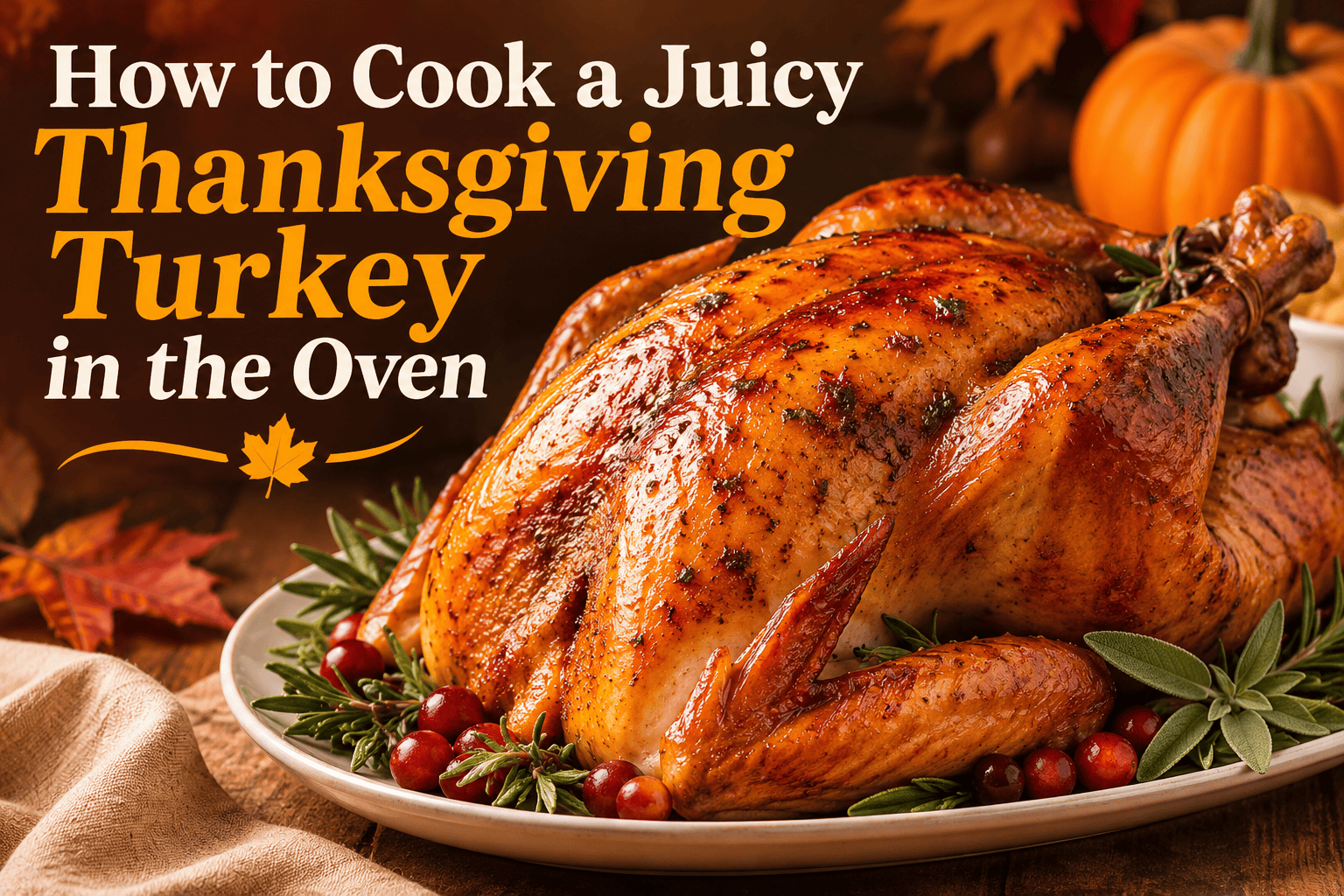
Thanksgiving dinner wouldn’t be complete without a beautifully roasted turkey sitting at the center of the table. With its golden-brown skin, tender meat, and delicious aroma filling the kitchen, a perfectly cooked Thanksgiving turkey is one of the most anticipated dishes of the holiday season.
However, cooking a whole turkey can feel intimidating, especially if you’re preparing Thanksgiving dinner for the first time. One of the biggest concerns is keeping the turkey juicy while ensuring it cooks completely. Nobody wants to serve a dry, overcooked turkey after spending hours preparing a holiday feast.
The good news is that making a juicy Thanksgiving turkey in the oven is easier than you might think. With the right preparation, seasoning, oven temperature, and cooking techniques, you can create a flavorful, tender turkey that your family and guests will love.
Whether you’re cooking for a small gathering or hosting a large Thanksgiving celebration, this step-by-step guide will help you roast a delicious turkey with crispy skin and moist, flavorful meat.
Why Oven-Roasted Turkey Is Perfect for Thanksgiving
Oven roasting is one of the most popular methods for cooking Thanksgiving turkey because it produces delicious results without requiring complicated equipment.
A properly roasted turkey offers several advantages:
-
Golden, crispy skin with rich flavor.
-
Tender, juicy white and dark meat.
-
Simple preparation using everyday ingredients.
-
Delicious pan drippings for homemade gravy.
-
Enough servings for family gatherings and leftovers.
-
A traditional centerpiece for Thanksgiving dinner.
The secret to a successful roasted turkey is understanding how to retain moisture while cooking the meat safely.
Juicy Thanksgiving Turkey Recipe
Recipe overview
Prep time: 30 minutes
Cooking time: 3–4 hours
Resting time: 30–45 minutes
Servings: 10–12
Cooking times are approximate for a fully thawed, unstuffed 12–14-pound turkey. Always use a meat thermometer to determine when the turkey is done.
Ingredients for a Juicy Thanksgiving Turkey
This traditional recipe uses butter, herbs, garlic, and aromatic vegetables to create a flavorful holiday turkey.
Main ingredients
-
1 whole turkey (12–14 pounds), completely thawed
-
1 cup unsalted butter, softened
-
2 tablespoons olive oil
-
1 tablespoon kosher salt, or to taste
-
2 teaspoons freshly ground black pepper
-
2 teaspoons garlic powder
-
2 teaspoons onion powder
-
2 teaspoons paprika
-
1 tablespoon fresh rosemary, finely chopped
-
1 tablespoon fresh thyme, finely chopped
-
1 tablespoon fresh sage, finely chopped
Aromatics for the turkey cavity
-
1 large onion, quartered
-
1 lemon, halved
-
1 whole head of garlic, cut in half
-
3 sprigs fresh rosemary
-
4 sprigs fresh thyme
-
3 sprigs fresh sage
For the roasting pan
-
2 cups low-sodium chicken or turkey broth
-
2 carrots, roughly chopped
-
2 celery stalks, roughly chopped
-
1 onion, quartered
If your turkey has been pre-brined or injected with a salt solution, reduce the added salt to prevent an overly salty finished dish.
Step 1: Completely Thaw the Turkey
Before roasting your Thanksgiving turkey, make sure it is completely thawed.
Cooking a partially frozen turkey can lead to uneven cooking, making it more difficult to achieve juicy meat throughout.
The safest and easiest method is thawing the turkey in the refrigerator.
Refrigerator thawing guide
| Turkey weight | Approximate thawing time |
|---|---|
| 8–12 pounds | 2–3 days |
| 12–16 pounds | 3–4 days |
| 16–20 pounds | 4–5 days |
| 20–24 pounds | 5–6 days |
Keep the turkey in its original packaging and place it on a tray to catch any juices.
For faster thawing, submerge the wrapped turkey in cold water, changing the water every 30 minutes. Allow approximately 30 minutes per pound and cook immediately after thawing.
Never thaw a turkey on the kitchen counter because the outside can reach unsafe temperatures while the inside remains frozen.
Step 2: Prepare the Turkey for Roasting
Once your turkey has thawed, remove it from the refrigerator and begin preparing it.
First, remove the packaging and check both cavities for the neck and giblets. Set these aside if you plan to use them for gravy or stock.
Do not wash or rinse the turkey. Rinsing raw poultry can spread harmful bacteria around your sink and countertops.
Instead, pat the turkey dry using paper towels.
Drying the skin is important because excess surface moisture can prevent the turkey from developing a beautiful golden-brown exterior.
Place the turkey breast-side up on a roasting rack inside a large roasting pan.
Step 3: Make the Garlic Herb Butter
One of the easiest ways to keep Thanksgiving turkey flavorful is by using seasoned butter.
Butter adds richness, while garlic and herbs provide the classic flavors associated with a traditional holiday meal.
In a medium mixing bowl, combine:
-
Softened butter
-
Olive oil
-
Garlic powder
-
Onion powder
-
Paprika
-
Rosemary
-
Thyme
-
Sage
-
Salt
-
Black pepper
Mix until the ingredients form a smooth, spreadable herb butter.
The butter should be soft enough to spread easily but not melted.
Step 4: Season the Turkey Under the Skin
This is one of the most important steps for preparing a flavorful Thanksgiving turkey.
Carefully slide your fingers beneath the skin covering the turkey breasts, gently separating it from the meat without tearing it.
Spread approximately half of the herb butter underneath the skin.
Massage the butter gently to distribute it evenly over the breast meat.
Next, spread the remaining herb butter over the outside of the turkey, including the breasts, thighs, legs, and wings.
Seasoning beneath the skin allows the butter and herbs to make direct contact with the meat.
Although butter adds flavor and richness, the most important factor in keeping turkey juicy is avoiding overcooking.
Step 5: Add Aromatics for Extra Flavor
Place the quartered onion, lemon halves, garlic, rosemary, thyme, and sage loosely inside the turkey cavity.
These ingredients add a wonderful aroma and contribute flavor to the turkey and pan juices.
Do not tightly pack the cavity.
Next, place the chopped carrots, celery, and onion in the bottom of the roasting pan.
Pour in the chicken or turkey broth.
The vegetables and broth help create flavorful pan drippings that can later be turned into homemade Thanksgiving gravy.
Keep the turkey elevated on the roasting rack rather than submerged in the liquid.
Step 6: Preheat the Oven to 325°F
Preheat your oven to 325°F (163°C).
This temperature is ideal for roasting a whole turkey because it allows the meat to cook steadily without exposing the exterior to excessively high heat.
Position the oven rack low enough to accommodate the turkey and roasting pan comfortably.
Place the prepared turkey in the oven with the breast facing upward.
Roast the turkey uncovered initially to encourage browning.
If the skin begins getting too dark before the turkey is fully cooked, loosely cover the breast with aluminum foil.
Avoid wrapping the turkey tightly in foil throughout cooking if you want crispy skin.
Step 7: Roast the Turkey Until Fully Cooked
The amount of time needed to cook a Thanksgiving turkey depends on its weight, oven performance, and whether the turkey is stuffed.
For the most reliable results, cook stuffing separately in a casserole dish.
Thanksgiving turkey cooking time chart
The following estimates are for fully thawed, unstuffed turkeys roasted at 325°F.
| Turkey weight | Approximate cooking time |
|---|---|
| 8–12 pounds | 2¾–3 hours |
| 12–14 pounds | 3–3¾ hours |
| 14–18 pounds | 3¾–4¼ hours |
| 18–20 pounds | 4¼–4½ hours |
| 20–24 pounds | 4½–5 hours |
These times are estimates, not guarantees.
Start checking the internal temperature before the earliest estimated finishing time.
The turkey is safely cooked when a food thermometer registers 165°F (74°C) in the thickest part of the breast, the innermost thigh, and the innermost wing, without touching bone.
If you cook stuffing inside the turkey, the center of the stuffing must also reach 165°F.
Step 8: Avoid Over-Basting the Turkey
Many traditional Thanksgiving recipes recommend basting the turkey every 20–30 minutes.
However, frequent basting is not necessary for juicy meat.
Every time you open the oven, heat escapes and the cooking process can become less consistent.
Basting also moistens the skin, which can make it harder to achieve a crispy exterior.
If you enjoy basting, do it sparingly, perhaps once or twice during roasting.
For the best results, focus on proper seasoning, controlled oven heat, and accurate temperature monitoring.
Step 9: Let the Turkey Rest Before Carving
One of the biggest mistakes people make when preparing Thanksgiving turkey is carving it immediately after removing it from the oven.
Resting is essential for achieving tender, juicy slices.
Once the turkey reaches a safe internal temperature, remove it from the oven and transfer it to a clean carving board.
Allow it to rest for approximately 30–45 minutes before carving.
During this time, the meat’s juices redistribute and the turkey becomes easier to slice.
Loosely tent the turkey with aluminum foil if needed, but avoid sealing it tightly because trapped steam can soften the crispy skin.
This resting period is also a great opportunity to finish your gravy, warm side dishes, and prepare the Thanksgiving table.
Step 10: Carve and Serve the Thanksgiving Turkey
After the turkey has rested, it’s time to carve.
Start by removing the legs and thighs at their joints.
Separate the drumsticks from the thighs if desired.
Next, remove the wings.
For the breast meat, carefully cut along one side of the breastbone and follow the rib cage to remove each breast section.
Slice the breast meat across the grain into even pieces.
Arrange the carved turkey on a large serving platter.
Garnish with fresh rosemary, thyme, parsley, or citrus slices for a beautiful holiday presentation.
Serve with warm gravy and your favorite Thanksgiving side dishes.
10 Secrets to Keeping Thanksgiving Turkey Juicy
Cooking a moist Thanksgiving turkey requires more than simply adding butter.
These ten techniques can make a noticeable difference.
1. Start with a fully thawed turkey
A completely thawed turkey cooks more evenly, reducing the risk of overcooking the outside while the center finishes.
2. Use herb butter beneath the skin
Butter placed directly against the breast meat adds rich flavor and improves the overall eating experience.
3. Consider dry brining
For even more flavorful meat, season an unenhanced turkey with salt 24–48 hours before roasting and refrigerate it uncovered.
Dry brining helps the meat retain moisture and promotes crispier skin.
Adjust or omit the salt in the herb butter if you dry brine.
4. Roast at a consistent temperature
A steady oven temperature of 325°F works well for traditional whole-turkey roasting.
5. Avoid stuffing the turkey tightly
Cooking stuffing separately makes it easier to ensure both the turkey and stuffing reach safe temperatures without overcooking the breast meat.
6. Use a roasting rack
A roasting rack allows heat to circulate around the turkey and keeps the bottom from sitting in liquid.
7. Don’t open the oven constantly
Frequent opening causes heat loss and can extend the cooking time.
8. Protect the breast if it browns too quickly
Loosely covering the breast with foil can prevent excessive browning while the darker meat finishes cooking.
9. Always use a meat thermometer
A thermometer is the most reliable way to prevent undercooking or overcooking.
10. Rest the turkey before carving
Resting allows the juices to settle, helping the turkey stay moist when sliced.
Should You Cover a Thanksgiving Turkey While Roasting?
Whether to cover a turkey is one of the most common Thanksgiving cooking questions.
For a traditional roasted turkey with golden-brown skin, roasting uncovered is a good starting point.
If the skin becomes too dark, place a loose sheet of aluminum foil over the breast.
Covering the entire turkey for the full cooking period can trap moisture against the skin and reduce crispiness.
The goal is to balance browning with proper internal cooking.
Is Butter or Olive Oil Better for Thanksgiving Turkey?
Both butter and olive oil work well when preparing Thanksgiving turkey.
Butter provides rich flavor and helps herbs and seasonings adhere to the meat.
Olive oil coats the exterior and contributes to browning.
Using a combination of softened butter and olive oil offers the benefits of both ingredients.
For this recipe, herb butter beneath the skin and over the exterior creates a delicious traditional flavor.
How to Make Gravy From Turkey Drippings
One of the best benefits of roasting Thanksgiving turkey in the oven is the flavorful liquid left behind in the roasting pan.
These drippings can be used to make homemade turkey gravy.
Ingredients
-
¼ cup turkey fat or unsalted butter
-
¼ cup all-purpose flour
-
2 cups turkey drippings and broth combined
-
Salt and black pepper to taste
Instructions
-
Pour the roasting pan drippings through a strainer into a heatproof container.
-
Allow the fat to separate from the liquid.
-
Place ¼ cup of the separated turkey fat, or butter, in a saucepan over medium heat.
-
Whisk in the flour and cook for approximately 2 minutes.
-
Gradually add 2 cups of the strained drippings and broth, whisking continuously.
-
Simmer until the gravy thickens.
-
Season with salt and black pepper.
Serve the gravy warm alongside sliced turkey, mashed potatoes, and stuffing.
Best Side Dishes to Serve With Thanksgiving Turkey
A delicious Thanksgiving turkey deserves equally wonderful side dishes.
Some of the most popular options include:
-
Creamy garlic mashed potatoes
-
Traditional herb stuffing
-
Sweet potato casserole
-
Green bean casserole
-
Homemade cranberry sauce
-
Buttery dinner rolls
-
Southern-style cornbread dressing
-
Roasted Brussels sprouts
-
Honey-glazed carrots
-
Baked macaroni and cheese
-
Creamed corn
-
Classic Thanksgiving gravy
Combining a few traditional favorites with fresh vegetable dishes creates a balanced and satisfying holiday meal.
Common Thanksgiving Turkey Mistakes to Avoid
Even experienced home cooks can make mistakes when preparing a large turkey.
Understanding these common problems can help prevent disappointing results.
Cooking the turkey while partially frozen
A frozen center can cause uneven cooking and make it difficult to determine when the turkey is done.
Using too much salt
Some store-bought turkeys already contain added salt or seasoning solutions.
Always check the packaging before seasoning.
Cooking based only on time
Oven temperatures vary, and two turkeys of the same weight may finish at different times.
Use a thermometer rather than relying exclusively on a cooking chart.
Overcooking the breast meat
Turkey breast contains less fat than dark meat and can dry out when cooked too long.
Begin checking the temperature early.
Cutting the turkey immediately
Carving too soon can cause more juices to escape onto the cutting board.
Allow the turkey to rest before slicing.
Leaving the turkey at room temperature too long
Cooked turkey should be refrigerated within two hours of coming out of the oven.
Carve leftovers into smaller portions and store them in shallow containers so they cool quickly.
How to Store Leftover Thanksgiving Turkey
Thanksgiving leftovers are almost as popular as the holiday dinner itself.
Proper storage keeps leftover turkey safe and delicious.
Remove the meat from the bones and place it in airtight containers.
Refrigerate within two hours of cooking.
Cooked turkey can be stored in the refrigerator for 3–4 days.
For longer storage, freeze the turkey in freezer-safe containers or bags. For best quality, use frozen cooked turkey within approximately 2–6 months.
When reheating leftovers, add a small amount of broth to prevent dryness and heat the turkey to an internal temperature of 165°F.
Delicious Ways to Use Leftover Thanksgiving Turkey
Leftover turkey can become the foundation for several easy meals.
Try using your leftovers in:
-
Turkey and cranberry sandwiches
-
Creamy turkey noodle soup
-
Turkey pot pie
-
Turkey and rice casserole
-
Turkey salad sandwiches
-
Turkey quesadillas
-
Turkey and vegetable soup
-
Turkey tetrazzini
-
Turkey breakfast hash
-
Hot turkey sandwiches with gravy
These recipes help stretch your Thanksgiving meal while reducing food waste.
Frequently Asked Questions About Cooking Thanksgiving Turkey
What is the best temperature to cook a Thanksgiving turkey?
For traditional oven roasting, 325°F is an excellent temperature. It allows a whole turkey to cook steadily while developing a golden exterior.
How do you keep turkey breast from drying out?
Season the breast meat beneath the skin, avoid excessive cooking, monitor the internal temperature, and allow the turkey to rest before carving.
How long does it take to cook a 12-pound turkey?
A fully thawed, unstuffed 12-pound turkey generally takes approximately 3–3¾ hours at 325°F, although some may finish sooner. Use a thermometer to verify doneness.
Should you put water in the bottom of the turkey roasting pan?
Adding a modest amount of broth or water can help prevent drippings from burning and provide a flavorful base for gravy. The turkey should remain elevated above the liquid on a roasting rack.
Should you baste a turkey every 30 minutes?
No. Frequent basting is unnecessary and can interfere with crispy skin. If desired, baste once or twice during roasting.
Can you prepare a Thanksgiving turkey the night before?
Yes. You can pat the turkey dry, season it, and refrigerate it overnight in a covered container or on a protected tray. For dry brining, the turkey may be refrigerated uncovered on a rack, away from other foods, to help dry the skin.
Keep the turkey refrigerated at 40°F or below until you’re ready to cook it.
How do you know when Thanksgiving turkey is done?
Insert a food thermometer into the thickest part of the breast, innermost thigh, and innermost wing, avoiding bone. All three areas must reach at least 165°F.
How much turkey should you buy per person?
Plan on approximately 1–1½ pounds of whole bone-in turkey per person. Choose the higher amount if you want generous servings and plenty of leftovers.
Final Thoughts: Making the Perfect Juicy Thanksgiving Turkey
Cooking a juicy Thanksgiving turkey in the oven doesn’t have to be complicated or stressful.
The most important steps are starting with a fully thawed turkey, seasoning it generously, using flavorful herb butter, roasting at a consistent temperature, and checking the internal temperature carefully.
A little patience can make a tremendous difference, especially when it comes to allowing the turkey to rest before carving.
Whether this is your first Thanksgiving dinner or you’ve been hosting family celebrations for years, a beautifully roasted turkey can become the highlight of your holiday table.
Thanksgiving is about more than preparing the perfect meal. It’s about gathering with the people who matter, sharing traditions, creating memories, and appreciating the moments spent together.
And when you bring a golden-brown, tender, juicy turkey to the table, you’re serving more than just the main course. You’re helping create a Thanksgiving dinner that everyone can enjoy and remember.
What’s your favorite secret for making a juicy Thanksgiving turkey—herb butter, brining, or a special family seasoning recipe?
Leave a Reply