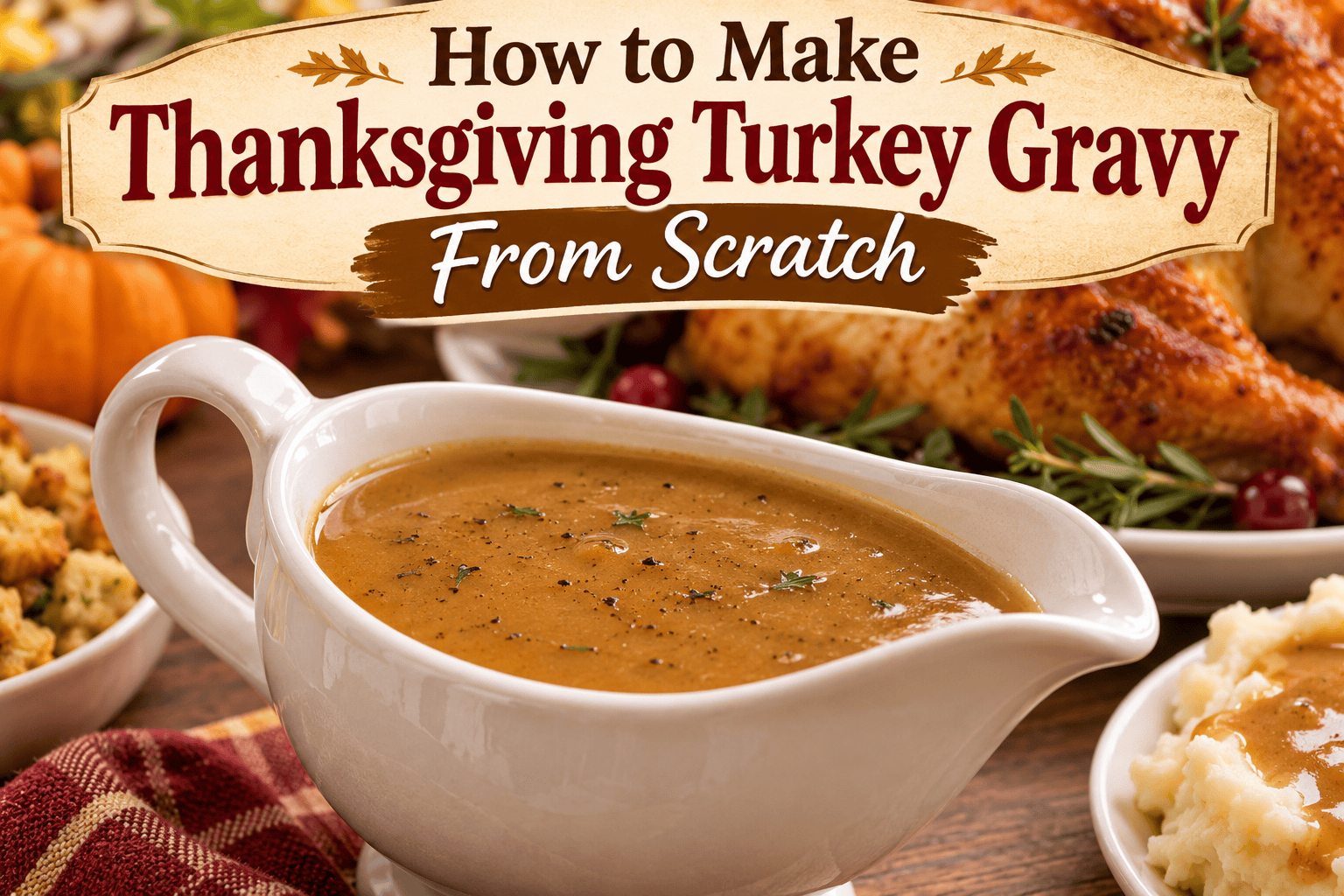
Thanksgiving dinner wouldn’t be complete without a rich, flavorful homemade turkey gravy poured over juicy roasted turkey, creamy mashed potatoes, and traditional holiday stuffing. While store-bought gravy might save a few minutes, nothing compares to the taste of Thanksgiving turkey gravy made from scratch using real turkey drippings, butter, flour, and savory seasonings.
The good news is that making homemade turkey gravy is easier than many people think. You don’t need complicated ingredients, expensive equipment, or years of cooking experience. With a few simple techniques, you can create smooth, delicious gravy that tastes like something served at a traditional family Thanksgiving dinner.
Whether you’re preparing your first Thanksgiving feast or looking to improve your holiday cooking skills, this step-by-step guide will show you how to make Thanksgiving turkey gravy from scratch, prevent lumps, adjust the thickness, and achieve the perfect flavor.
Why Homemade Thanksgiving Turkey Gravy Is Better
Homemade turkey gravy offers a depth of flavor that is difficult to reproduce with packaged mixes or canned alternatives.
When you roast a Thanksgiving turkey, the juices that collect in the roasting pan contain concentrated turkey flavor, seasonings, and browned bits from the cooking process. These drippings form the foundation of traditional homemade turkey gravy.
Making your own gravy also allows you to control the ingredients, seasoning, and consistency.
Some of the biggest advantages include:
-
Richer turkey flavor from natural roasting juices.
-
Control over salt and seasonings.
-
A smooth, creamy texture without unnecessary additives.
-
The ability to adjust the thickness.
-
Easy customization with herbs, garlic, or onions.
-
A traditional homemade taste that complements Thanksgiving dishes.
Best of all, homemade turkey gravy can be prepared in approximately 15 to 20 minutes once your turkey is finished roasting.
Easy Homemade Thanksgiving Turkey Gravy Recipe
PREP TIME
5 minutes
COOK TIME
15 minutes
YIELD
About 3 cups
This classic Thanksgiving turkey gravy recipe uses turkey drippings, butter, flour, and broth to create a smooth, savory sauce that pairs perfectly with your holiday meal.
Ingredients
-
1/4 cup turkey fat from the roasting pan, or unsalted butter
-
1/4 cup all-purpose flour
-
2 cups turkey broth or turkey stock
-
1 cup turkey pan juices, with excess fat removed
-
1/2 teaspoon freshly ground black pepper
-
1/2 teaspoon garlic powder
-
1/2 teaspoon onion powder
-
1/2 teaspoon dried thyme, optional
-
1/2 teaspoon dried sage, optional
-
Salt to taste
-
1 tablespoon unsalted butter, optional, for finishing
If you don’t have enough turkey drippings, simply replace the missing amount with additional turkey broth.
Kitchen Equipment
-
Medium saucepan
-
Whisk
-
Measuring cups
-
Fine-mesh strainer
-
Fat separator or large spoon
-
Wooden spoon
-
Heat-resistant serving bowl or gravy boat
How to Make Thanksgiving Turkey Gravy From Scratch: Step-by-Step
Step 1: Collect the Turkey Drippings
After removing your roasted Thanksgiving turkey from the oven, carefully transfer it to a cutting board or serving platter.
Allow the turkey to rest while you prepare the gravy.
Pour the liquid from the roasting pan through a fine-mesh strainer into a heat-resistant measuring cup or fat separator.
The liquid will contain flavorful turkey juices along with rendered fat.
Allow the fat to separate from the juices. If you’re using a fat separator, pour off the defatted juices and reserve the fat separately. Otherwise, let the fat rise to the surface and skim it off.
Reserve 1/4 cup of the turkey fat and up to 1 cup of the defatted pan juices.
If you don’t have enough turkey fat, add butter until you have 1/4 cup total.
Cooking tip: Don’t discard the browned bits stuck to the bottom of the roasting pan. These contain concentrated flavor and can make your gravy even more delicious. Loosen them with a little broth and add the liquid to your gravy after straining.
Step 2: Make a Butter and Flour Roux
Place a medium saucepan over medium heat.
Add the reserved turkey fat or unsalted butter.
Once the fat is hot, sprinkle in the all-purpose flour.
Whisk continuously for approximately 2 to 3 minutes until the mixture becomes smooth and lightly golden.
This mixture is called a roux.
A roux thickens the gravy while helping create its smooth consistency.
Cooking the flour for a few minutes also removes the raw flour taste.
Avoid letting the roux become too dark or burn, as this can produce a bitter flavor.
Step 3: Slowly Add the Turkey Broth
Gradually pour the turkey broth into the saucepan while whisking continuously.
Start with a small amount of broth and whisk until the mixture becomes smooth.
Continue adding the remaining broth in small portions.
Whisking as you add the liquid helps prevent flour lumps from forming.
Once all the broth has been incorporated, the mixture should begin to resemble a thin gravy.
Don’t worry if it seems too watery at this stage. The gravy will thicken as it cooks.
Step 4: Add the Turkey Drippings
Slowly stir in the reserved defatted turkey pan juices.
These juices give homemade Thanksgiving gravy its distinctive roasted turkey flavor.
Continue whisking until the liquid is completely incorporated.
Bring the mixture to a gentle simmer over medium heat.
Avoid boiling the gravy aggressively, as excessive evaporation can make it too thick or salty.
Step 5: Add the Seasonings
Stir in the black pepper, garlic powder, onion powder, thyme, and sage.
Taste the gravy before adding salt.
Turkey drippings may already contain significant amounts of salt, especially if the turkey was brined or heavily seasoned.
Add additional salt only if needed.
For a more traditional Thanksgiving flavor, thyme and sage are excellent choices because they complement roasted turkey and holiday stuffing.
Step 6: Simmer Until Thickened
Allow the gravy to simmer gently for approximately 5 to 10 minutes.
Stir frequently to prevent sticking.
As the gravy cooks, it should gradually thicken into a smooth sauce.
The ideal Thanksgiving gravy should coat the back of a spoon while remaining pourable.
If it becomes too thick, whisk in a little additional turkey broth.
If it remains too thin, allow it to simmer a little longer.
You can also use a small cornstarch slurry if additional thickening is necessary.
Step 7: Finish and Serve
Once the gravy reaches your desired consistency, remove the saucepan from the heat.
For an extra-rich finish, whisk in 1 tablespoon of unsalted butter.
This optional step adds a silky texture and a little extra richness.
Taste the gravy one final time and adjust the seasonings if necessary.
For an especially smooth consistency, pour the finished gravy through a fine-mesh strainer.
Transfer it to a warmed gravy boat and serve immediately alongside your Thanksgiving turkey.
How to Make Turkey Gravy Without Drippings
Not everyone has access to turkey drippings.
You might be cooking a boneless turkey breast, preparing your turkey in a slow cooker, or making gravy ahead of Thanksgiving dinner.
Fortunately, you can still prepare delicious homemade turkey gravy without roasting pan drippings.
Ingredients for Turkey Gravy Without Drippings
-
1/4 cup unsalted butter
-
1/4 cup all-purpose flour
-
3 cups turkey broth
-
1/2 teaspoon garlic powder
-
1/2 teaspoon onion powder
-
1/2 teaspoon dried thyme
-
1/4 teaspoon dried sage
-
Black pepper to taste
-
Salt to taste
Instructions
-
Melt the butter in a medium saucepan over medium heat.
-
Add the flour and whisk continuously for 2 to 3 minutes.
-
Slowly add the turkey broth while whisking.
-
Stir in the garlic powder, onion powder, thyme, sage, and pepper.
-
Simmer gently for 5 to 10 minutes until thickened.
-
Taste and adjust the seasoning.
-
Serve warm.
For additional flavor, sauté a tablespoon of finely chopped onion in the butter before adding the flour.
You can also use roasted turkey stock for a deeper, more traditional taste.
How to Make Thanksgiving Turkey Gravy Thicker
One of the most common Thanksgiving cooking problems is gravy that turns out too thin.
Fortunately, there are several easy ways to fix watery turkey gravy.
Simmer the Gravy Longer
The simplest method is to let the gravy simmer uncovered for several additional minutes.
As some of the liquid evaporates, the gravy becomes thicker.
Stir regularly and taste occasionally, since reducing the liquid can concentrate the salt.
Add a Cornstarch Slurry
Mix 1 tablespoon of cornstarch with 1 tablespoon of cold water until completely smooth.
Slowly whisk the mixture into the simmering gravy.
Allow it to cook for approximately 1 to 2 minutes.
The gravy should thicken as it heats.
Add more slurry only if necessary.
Use Additional Roux
If you prefer flour-based gravy, prepare a small amount of additional roux in a separate saucepan.
Cook equal amounts of butter and flour together, then gradually whisk in some of the thin gravy before combining everything.
This helps prevent raw flour lumps.
Never add dry flour directly to hot gravy because it can form clumps.
How to Fix Thanksgiving Turkey Gravy That Is Too Thick
Gravy can become too thick when it cooks too long or contains too much flour.
To correct the consistency, gradually whisk in warm turkey broth.
Start with 2 tablespoons at a time.
Continue adding broth until the gravy becomes smooth and pourable.
Remember that gravy often thickens slightly as it cools.
If you’re preparing it before dinner is ready, keeping the consistency a little thinner can help.
How to Prevent Lumpy Turkey Gravy
Smooth gravy is one of the secrets to a successful Thanksgiving meal.
Lumps usually develop when flour isn’t mixed properly with fat or when liquid is added too quickly.
Follow these simple tips:
-
Whisk the flour thoroughly into the melted butter or turkey fat.
-
Cook the roux before adding liquid.
-
Add broth gradually instead of all at once.
-
Whisk continuously while incorporating the liquid.
-
Use warm broth if possible.
-
Maintain moderate heat rather than a rapid boil.
-
Strain the finished gravy if necessary.
If your gravy develops lumps, don’t throw it away.
Simply pour it through a fine-mesh strainer into another saucepan.
You can also carefully use an immersion blender to smooth the mixture, keeping the blender head submerged to avoid splashing hot gravy.
How to Make Turkey Gravy Taste Better
Sometimes homemade gravy has the right consistency but needs more flavor.
A few small additions can transform ordinary gravy into something special.
Use Homemade Turkey Stock
Homemade turkey stock provides a deeper, richer flavor than plain water or lightly seasoned broth.
Stock made with turkey bones, vegetables, and herbs is especially flavorful.
Add Fresh Herbs
Fresh thyme, sage, rosemary, and parsley can enhance the gravy’s aroma.
Start with small amounts because some herbs, especially rosemary and sage, have strong flavors.
Include Roasted Garlic
A little roasted garlic adds sweetness and depth without overpowering the turkey flavor.
Add Sautéed Onions
Finely chopped onions cooked in butter can give gravy a more traditional homemade taste.
Use the Browned Roasting Pan Bits
The caramelized bits left behind after roasting the turkey are packed with flavor.
Deglazing the pan with broth helps release these flavorful particles.
Finish With Butter
Whisking a small amount of cold butter into the finished gravy can improve its richness and texture.
Common Mistakes to Avoid When Making Turkey Gravy
Even a simple gravy recipe can go wrong when a few important steps are overlooked.
Adding Too Much Flour
Using too much flour can create thick, pasty gravy.
For this recipe, 1/4 cup of flour with approximately 3 cups of liquid produces a moderately thick gravy.
You can adjust the consistency during cooking.
Not Cooking the Flour
Uncooked flour can leave gravy with a chalky or raw taste.
Always cook the flour in butter or turkey fat before adding broth.
Adding Too Much Salt
Turkey drippings may already be salty.
Taste your gravy before adding additional seasoning.
Using Excessively High Heat
A rapid boil can cause the gravy to reduce too quickly or stick to the bottom of the saucepan.
Gentle simmering works best.
Not Whisking Enough
Whisking is especially important when adding broth to the roux.
Continuous whisking helps produce a smooth consistency.
Throwing Away the Turkey Drippings
The roasting juices are one of the most flavorful ingredients in traditional turkey gravy.
Save them whenever possible.
Can You Make Thanksgiving Turkey Gravy Ahead of Time?
Yes. Making turkey gravy ahead of Thanksgiving dinner is one of the easiest ways to reduce holiday cooking stress.
You can prepare gravy without drippings one or two days before Thanksgiving and refrigerate it until needed.
When your turkey finishes roasting, you can reheat the gravy and stir in some freshly collected pan juices for extra flavor.
How to Make Gravy Ahead
-
Prepare the gravy using butter, flour, and turkey broth.
-
Allow it to cool promptly.
-
Transfer it to an airtight container.
-
Refrigerate within two hours of cooking.
-
Reheat gently on the stovetop before serving.
-
Add turkey drippings if available.
-
Adjust the consistency with additional broth if necessary.
Properly refrigerated homemade turkey gravy can generally be stored for 3 to 4 days.
How to Store Leftover Turkey Gravy
Leftover Thanksgiving gravy can be enjoyed with turkey sandwiches, mashed potatoes, stuffing, and other holiday leftovers.
Refrigerating Turkey Gravy
Transfer the gravy to a shallow, airtight container and refrigerate it promptly.
Store at 40°F or below for up to 3 to 4 days.
Freezing Turkey Gravy
Turkey gravy can also be frozen for longer storage.
Allow it to cool, then transfer it to freezer-safe containers, leaving room for expansion.
For best quality, use frozen gravy within approximately 2 to 3 months.
Flour-thickened gravy generally freezes well, although the texture may need a little adjustment after thawing.
Reheating Turkey Gravy
Reheat refrigerated gravy in a saucepan over medium-low heat, stirring frequently.
Add a small amount of broth if it becomes too thick.
Bring leftovers to 165°F before serving.
If reheating frozen gravy, thaw it safely in the refrigerator first or reheat it directly from frozen.
What to Serve With Homemade Thanksgiving Turkey Gravy
Homemade turkey gravy isn’t just for roasted turkey.
It complements many traditional Thanksgiving side dishes and comfort foods.
Some of the best options include:
-
Roasted Thanksgiving turkey
-
Garlic mashed potatoes
-
Traditional bread stuffing
-
Southern cornbread dressing
-
Buttery dinner rolls
-
Roasted turkey breast
-
Mashed sweet potatoes
-
Thanksgiving leftover sandwiches
-
Turkey and biscuit casserole
-
Open-faced turkey sandwiches
One of the best parts of Thanksgiving dinner is enjoying gravy with several different foods on the same plate.
The combination of turkey, mashed potatoes, stuffing, and homemade gravy is a classic holiday favorite.
Frequently Asked Questions About Thanksgiving Turkey Gravy
What Is the Secret to Good Turkey Gravy?
The secret is using flavorful turkey drippings, properly cooking the flour and fat together, and adding broth gradually while whisking.
Seasoning carefully and allowing the gravy to simmer gently also improve the final result.
What Is the Best Thickener for Turkey Gravy?
All-purpose flour is a traditional choice because it creates a rich, smooth gravy when combined with fat to make a roux.
Cornstarch is another option, particularly for thickening gravy that is already prepared.
Can I Make Turkey Gravy With Chicken Broth?
Yes. Chicken broth works well when turkey broth isn’t available.
For the most traditional flavor, add turkey drippings if you have them.
How Much Gravy Should I Make Per Person?
Plan for approximately 1/4 to 1/3 cup of gravy per person.
If your family loves gravy or you expect plenty of leftovers, consider preparing 1/2 cup per person.
A recipe that makes 3 cups will provide approximately 9 to 12 servings at the smaller portion sizes.
Why Does My Turkey Gravy Taste Like Flour?
Gravy may taste floury if the roux wasn’t cooked long enough or the finished gravy wasn’t simmered sufficiently.
Cooking the flour in fat for 2 to 3 minutes before adding liquid usually helps eliminate the raw flour taste.
Can I Make Turkey Gravy Without Butter?
Yes. You can use rendered turkey fat instead of butter.
Turkey fat adds excellent flavor and is commonly used in traditional Thanksgiving gravy.
Can You Freeze Turkey Gravy Made With Flour?
Yes. Flour-based turkey gravy generally freezes well.
After thawing and reheating, whisk thoroughly and add a little broth if the texture seems too thick.
How Do I Keep Turkey Gravy Warm Until Dinner?
Keep the gravy warm over very low heat, stirring occasionally, or use an appropriate warm-holding appliance.
For food safety, maintain a temperature of at least 140°F if holding it hot for an extended period.
If the gravy thickens while waiting, add a small amount of warm broth.
Final Thoughts: Making the Perfect Thanksgiving Turkey Gravy From Scratch
Learning how to make Thanksgiving turkey gravy from scratch is a simple cooking skill that can make your holiday dinner even more memorable.
With turkey drippings, butter, flour, broth, and a few basic seasonings, you can prepare a rich, smooth, flavorful gravy that brings together the traditional flavors of Thanksgiving.
The most important steps are making a properly cooked roux, adding the liquid gradually, whisking continuously, and adjusting the seasoning carefully.
Whether you’re preparing a large Thanksgiving feast or a smaller holiday dinner, homemade turkey gravy adds warmth, flavor, and a special homemade touch to the meal.
And once you discover how easy it is to make your own gravy, you may never want to return to packaged gravy mixes again.
What’s your favorite Thanksgiving dish to cover with homemade turkey gravy—roasted turkey, mashed potatoes, stuffing, or all three?

Leave a Reply