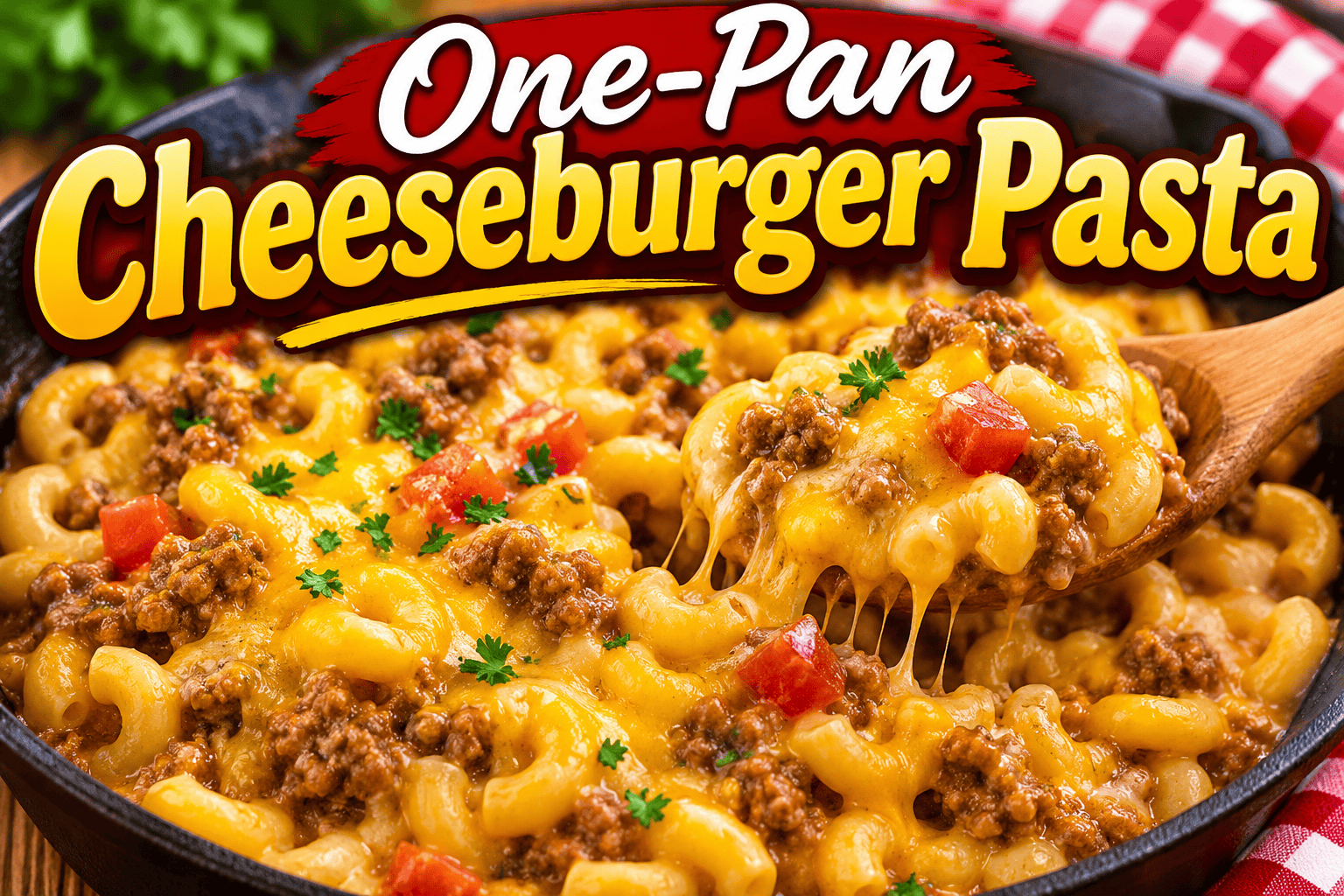
There is something comforting about a juicy cheeseburger loaded with melted cheese, savory beef, and delicious seasonings. Now imagine combining those classic cheeseburger flavors with tender pasta in one creamy, cheesy dish. That is exactly what you get with this One-Pan Cheeseburger Pasta recipe.
This easy homemade dinner combines seasoned ground beef, pasta, cheddar cheese, tomatoes, and a rich, flavorful sauce in one skillet. It delivers everything you love about a cheeseburger without needing hamburger buns, a grill, or several pots and pans.
Best of all, this one-pan cheeseburger pasta takes approximately 30 minutes to prepare, making it an excellent choice for busy weeknights, family dinners, or whenever you want something hearty and satisfying without spending hours in the kitchen.
Whether you are feeding hungry kids, preparing a quick dinner after work, or simply craving cheesy comfort food, this recipe is sure to become a regular favorite.
Why You’ll Love This One-Pan Cheeseburger Pasta
There are plenty of reasons this homemade cheeseburger pasta deserves a place in your weekly dinner rotation.
Everything cooks in one pan. You can brown the beef, cook the pasta, and create the cheesy sauce in the same skillet. That means fewer dishes and less cleanup.
Ready in about 30 minutes. This recipe is perfect for busy evenings when you need something delicious without a complicated cooking process.
Budget-friendly ingredients. Ground beef, pasta, cheese, and pantry staples create a filling dinner without requiring expensive ingredients.
Family-friendly flavors. The combination of beef, pasta, and melted cheddar cheese is especially appealing to kids and adults alike.
Easy to customize. You can add vegetables, change the cheese, adjust the seasonings, or use different types of pasta.
Perfect for leftovers. This dish reheats well with a little additional liquid, making it a convenient option for meal preparation.
One-Pan Cheeseburger Pasta Recipe
Prep Time
10 minutes
Cook Time
20 minutes
Total Time
30 minutes
Cooking Method
One-pan stovetop
Ingredients
The beauty of this easy cheeseburger pasta recipe is that it uses simple ingredients you may already have in your kitchen.
How to Make One-Pan Cheeseburger Pasta
Follow these simple steps to make a creamy, cheesy pasta dinner with minimal cleanup.
Step 1: Brown the Ground Beef
Heat a large, deep skillet or Dutch oven over medium-high heat.
Add the ground beef and cook for approximately 5–7 minutes, breaking it into small pieces with a wooden spoon or spatula.
Cook until the beef is browned and no pink remains.
If your beef releases excess grease, carefully drain it before continuing.
Step 2: Cook the Onion and Garlic
Add the diced onion to the browned ground beef.
Cook for approximately 2–3 minutes, stirring occasionally, until the onion begins to soften.
Add the minced garlic and cook for another 30 seconds, just until fragrant.
The onion and garlic help create a savory foundation that gives the finished pasta its rich, homemade flavor.
Step 3: Add the Seasonings and Sauce Ingredients
Stir in the tomato paste, Worcestershire sauce, yellow mustard, smoked paprika, salt, and black pepper.
Cook for approximately 30 seconds to blend the seasonings.
Next, pour in the diced tomatoes with their juices, beef broth, and milk.
Stir everything together until the tomato paste is evenly incorporated into the liquid.
The mustard and Worcestershire sauce are particularly important because they help recreate the familiar savory flavor of a classic cheeseburger.
Step 4: Add the Uncooked Pasta
Pour the uncooked elbow macaroni directly into the skillet.
Stir well to make sure the pasta is evenly distributed and mostly submerged in the liquid.
Bring the mixture to a gentle simmer.
Reduce the heat to medium-low and cover the skillet.
Cook for approximately 10–14 minutes, stirring every few minutes to prevent sticking.
The exact cooking time will depend on the pasta shape and brand.
If the liquid reduces before the pasta becomes tender, add a little additional broth or water, approximately 1/4 cup at a time.
Step 5: Stir in the Cheddar Cheese
Once the pasta is tender and most of the liquid has been absorbed, remove the skillet from the heat.
Gradually add the shredded cheddar cheese, stirring until it melts into the pasta and creates a creamy sauce.
Adding the cheese off the heat helps prevent the sauce from becoming grainy or separating.
For an even creamier texture, stir in an additional splash of milk if needed.
Step 6: Garnish and Serve
Allow the cheeseburger pasta to rest for 2–3 minutes so the sauce can thicken slightly.
Sprinkle with chopped parsley, green onions, diced pickles, or crumbled cooked bacon if desired.
Serve warm directly from the skillet.
The result is a hearty, cheesy pasta dinner packed with delicious cheeseburger flavor.
Tips for Making the Best Cheeseburger Pasta
Although this recipe is simple, a few cooking techniques can make a noticeable difference.
Use Freshly Shredded Cheese
Freshly shredded cheddar cheese generally melts more smoothly than packaged shredded cheese, which often contains anti-caking ingredients.
Sharp cheddar provides a stronger cheeseburger flavor, but mild or medium cheddar also works well.
Choose the Right Pasta
Elbow macaroni is a classic choice because its small shape cooks evenly and holds the creamy sauce.
Small shells, rotini, and mini penne can also work, although cooking times and liquid requirements may vary.
Avoid Overcooking the Pasta
Because the pasta cooks directly in the sauce, it is important to check it regularly.
Start testing for doneness a couple of minutes before the package’s suggested cooking time.
The pasta should be tender but still hold its shape.
Don’t Add the Cheese While Boiling
High heat can cause cheese sauces to separate or develop a grainy texture.
Always reduce the heat or remove the skillet from the burner before adding the shredded cheese.
Adjust the Sauce Consistency
If the sauce seems too thick, stir in a splash of warm milk or beef broth.
If the sauce seems too thin, allow the finished pasta to rest for a few minutes.
The pasta will continue absorbing some of the liquid as it sits.
Delicious Cheeseburger Pasta Variations
One of the best things about homemade cheeseburger pasta is how easily you can change the ingredients.
Bacon Cheeseburger Pasta
Add 4–6 slices of cooked, crumbled bacon just before serving.
The smoky bacon adds extra richness and creates a flavor similar to a bacon cheeseburger.
Spicy Cheeseburger Pasta
Add diced jalapeños, crushed red pepper flakes, or a few dashes of hot sauce.
You can also substitute pepper jack cheese for part of the cheddar.
Cheeseburger Mac and Cheese
For an extra-cheesy version, increase the cheddar to 2 1/2 cups and stir in 2 ounces of softened cream cheese.
This creates a thicker, richer sauce that tastes like a combination of macaroni and cheese and a cheeseburger.
Ground Turkey Cheeseburger Pasta
Replace the ground beef with lean ground turkey.
Because turkey has a milder flavor, you may want to add a little extra Worcestershire sauce and smoked paprika.
Loaded Cheeseburger Pasta
Add diced tomatoes, cooked bacon, pickles, and green onions as toppings.
For a classic burger-inspired finish, drizzle a small amount of burger sauce over individual servings.
Vegetable Cheeseburger Pasta
Add finely diced bell peppers, mushrooms, zucchini, or spinach.
Cook firm vegetables with the onion, and add leafy greens near the end of cooking.
This is an easy way to include additional vegetables in a family-friendly dinner.
What to Serve With Cheeseburger Pasta
Because one-pan cheeseburger pasta is already a filling meal, lighter side dishes are often the best choice.
Simple green salad: A crisp salad with lettuce, cucumbers, tomatoes, and a light vinaigrette balances the richness of the cheese sauce.
Steamed broccoli: Broccoli adds color, texture, and vegetables without competing with the main dish.
Roasted green beans: Green beans seasoned with garlic, salt, and pepper make an easy side dish.
Garlic bread: Warm garlic bread is perfect for soaking up any extra cheesy sauce.
Fresh fruit: Watermelon, grapes, strawberries, or apple slices provide a refreshing contrast to the savory pasta.
For a classic comfort-food dinner, serve cheeseburger pasta with a simple garden salad and warm garlic bread.
How to Store and Reheat Leftover Cheeseburger Pasta
This recipe is convenient for leftovers, but proper storage helps maintain its flavor and texture.
Refrigerating
Allow the pasta to cool slightly, then transfer it to shallow, airtight containers and refrigerate within two hours of cooking.
Store in the refrigerator for up to 3–4 days.
Freezing
You can freeze cheeseburger pasta for approximately 2–3 months for best quality.
Allow it to cool safely, portion it into freezer-safe containers, and label each container with the date.
Keep in mind that creamy cheese sauces and cooked pasta may change texture after freezing and thawing.
Reheating
Place leftover pasta in a skillet over medium-low heat.
Add a splash of milk or broth and stir occasionally until heated throughout.
You can also reheat individual servings in the microwave, stirring halfway through.
Reheat leftovers to an internal temperature of 165°F.
Common Mistakes to Avoid
Even an easy one-pan pasta recipe can turn out differently depending on the cooking method.
Using too little liquid: Pasta absorbs a significant amount of liquid while cooking. Keep additional broth or water nearby in case the skillet becomes dry.
Using a skillet that is too small: Choose a large, deep skillet so the ingredients have enough room to cook evenly.
Cooking over excessively high heat: Once the pasta is added, maintain a gentle simmer rather than a rapid boil.
Adding all the cheese too quickly: Stir in the cheese gradually so it melts evenly.
Skipping the resting time: Allowing the finished pasta to sit for a few minutes helps the sauce reach a creamier consistency.
Adding too much salt at the beginning: Beef broth and cheddar cheese both contain sodium, so taste the finished dish before adding additional salt.
Frequently Asked Questions About One-Pan Cheeseburger Pasta
Can I make cheeseburger pasta without milk?
Yes. You can replace the milk with additional beef broth, although the sauce will be less creamy.
For a richer dairy-free cooking liquid, you can use an unsweetened, unflavored plant-based milk that works well in savory recipes. You would also need a dairy-free cheese alternative.
Can I use a different type of ground meat?
Absolutely. Ground turkey, ground chicken, or lean ground pork can be used instead of ground beef.
The flavor and fat content will vary, so adjust the seasonings as needed and cook poultry to 165°F.
Can I make this recipe ahead of time?
Yes. Prepare the pasta according to the recipe and refrigerate it in airtight containers.
When reheating, add a little milk or broth to loosen the sauce.
What is the best cheese for cheeseburger pasta?
Sharp cheddar cheese is an excellent choice because it provides a bold, familiar cheeseburger flavor.
Colby Jack, Monterey Jack, and American cheese can also be used.
For an especially smooth sauce, try combining sharp cheddar with a small amount of American cheese.
Can I make cheeseburger pasta gluten-free?
Yes. Substitute your favorite gluten-free pasta and use gluten-free broth and Worcestershire sauce.
Different gluten-free pasta varieties absorb liquid differently, so monitor the skillet carefully and adjust the cooking time as needed.
How do I keep the pasta from sticking to the pan?
Stir the pasta every few minutes while it simmers.
Make sure there is enough liquid in the skillet and avoid cooking over excessively high heat.
A heavy-bottomed skillet or Dutch oven can also help distribute heat more evenly.
Can I double the recipe?
Yes, provided you have a sufficiently large pot or Dutch oven.
Double the ingredients and allow additional time for the mixture to return to a simmer.
The pasta may also require a little extra cooking time depending on the size of the pot.
Estimated Nutrition Information
The following values are approximate for one serving, based on six servings and using lean ground beef, whole milk, and cheddar cheese.
| Nutrient | Approximate Amount |
|---|---|
| Calories | 540–620 |
| Protein | 32–38 g |
| Carbohydrates | 40–47 g |
| Total Fat | 25–33 g |
| Fiber | 2–4 g |
| Sodium | 750–1,050 mg |
Actual nutritional values depend on the brands, ingredients, portion sizes, and substitutions used.
Why One-Pan Cheeseburger Pasta Is Perfect for Busy Families
Finding dinner recipes that are affordable, easy to prepare, and enjoyable for the entire family can sometimes feel challenging.
One-pan cheeseburger pasta solves several common dinner problems at once.
It requires minimal preparation, uses familiar ingredients, and comes together in approximately half an hour. Instead of preparing a separate meat dish, boiling pasta in another pot, and making sauce in a third pan, everything cooks together.
This method also allows the pasta to absorb the savory flavors of the beef broth, tomatoes, and seasonings as it cooks.
Another advantage is flexibility. You can adjust the recipe based on what you already have available, making it a practical choice when you want to avoid an extra trip to the grocery store.
Whether served for a weeknight dinner, a casual family gathering, or a comforting weekend meal, this dish offers plenty of flavor without unnecessary complications.
Final Thoughts: A Comforting Dinner Everyone Will Love
One-Pan Cheeseburger Pasta brings together two classic comfort foods in one easy, satisfying meal.
With seasoned ground beef, tender pasta, rich tomato flavors, and plenty of melted cheddar cheese, every bite delivers the delicious taste of a homemade cheeseburger in creamy pasta form.
The simple ingredients, quick preparation, and minimal cleanup make this recipe especially useful for busy families and anyone who appreciates homemade meals without spending hours in the kitchen.
You can keep it traditional, add crispy bacon, make it spicy, or include extra vegetables to suit your preferences.
The next time you are craving a hearty, cheesy dinner that is easy to prepare, give this One-Pan Cheeseburger Pasta a try.
Sometimes the best comfort food recipes are the ones that bring familiar flavors together in a simple, delicious way.
Leave a Reply