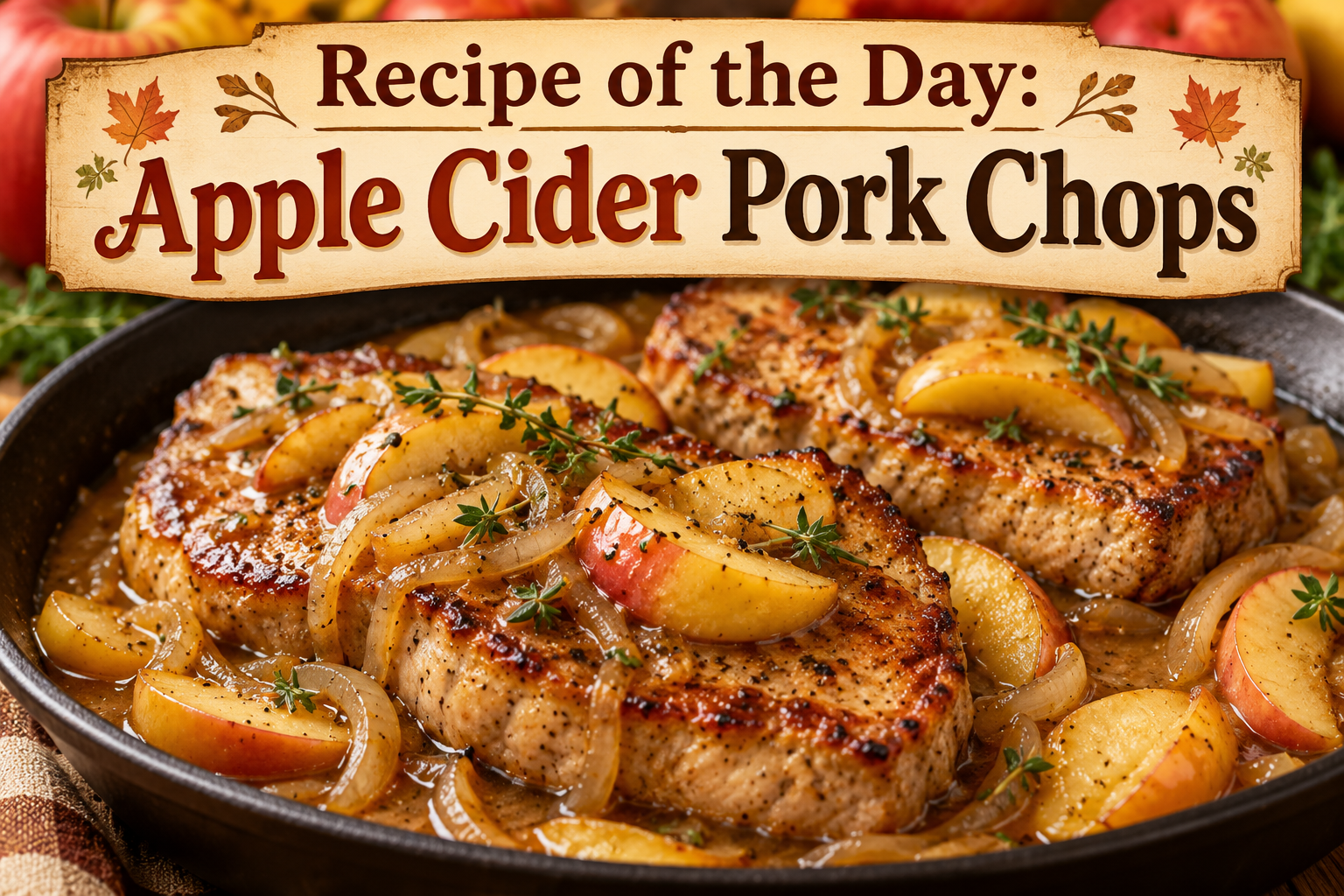
When fall arrives and the weather starts getting cooler, few things are better than a warm, comforting dinner filled with the flavors of the season. Today’s Recipe of the Day: Apple Cider Pork Chops combines juicy, golden-brown pork chops with apples, onions, herbs, and a rich apple cider pan sauce.
It is the kind of dinner that tastes like autumn.
The pork chops are first seared in a hot skillet to create a flavorful golden crust. Apples and onions are then cooked until tender before apple cider is added to create a sweet and savory sauce. A little Dijon mustard gives the sauce some tang, while thyme and garlic bring everything together.
Best of all, you can prepare the entire meal in one skillet.
Whether you’re looking for an easy weeknight dinner, a comforting Sunday meal, or something special to serve during the fall, these Apple Cider Pork Chops deserve a place on your seasonal menu.
Why You’ll Love Apple Cider Pork Chops
Pork and apples have been paired together for generations, and there is a good reason for it. Pork has a mild, savory flavor that works beautifully with the natural sweetness and acidity of apples.
Apple cider takes that combination even further.
As the cider simmers in the skillet, it reduces and becomes more concentrated. Instead of tasting like you’re pouring apple juice over pork chops, you get a savory pan sauce with a subtle apple sweetness.
The recipe is also wonderfully flexible. You can use bone-in or boneless pork chops, experiment with different varieties of apples, and adjust the herbs and seasonings to suit your preferences.
And because almost everything happens in one skillet, cleanup is relatively easy.
Apple Cider Pork Chops Recipe
Prep Time: 15 minutes
Cook Time: 25–30 minutes
Total Time: About 45 minutes
Servings: 4
Ingredients
- 4 pork chops, about 1 inch thick
- 1 tablespoon olive oil
- 1 tablespoon butter
- 1 teaspoon salt
- ½ teaspoon black pepper
- ½ teaspoon garlic powder
- 1 medium yellow onion, thinly sliced
- 2 medium apples, sliced
- 2 cloves garlic, minced
- 1 cup apple cider
- ½ cup chicken broth
- 1 tablespoon Dijon mustard
- 1 teaspoon fresh thyme leaves or ½ teaspoon dried thyme
- ½ teaspoon dried rosemary
- 1 tablespoon brown sugar, optional
- 1 tablespoon butter for finishing the sauce
- Fresh parsley or thyme for garnish, optional
What Kind of Apple Cider Should You Use?
For this recipe, use traditional nonalcoholic apple cider rather than apple cider vinegar.
Apple cider is usually less filtered than standard apple juice and has a deeper apple flavor. That makes it particularly good for cooking because the flavor becomes stronger as the liquid reduces.
If you can’t find apple cider, unsweetened apple juice can work in a pinch. However, cider will usually give you a richer fall flavor.
Don’t substitute one full cup of apple cider vinegar. Apple cider vinegar is dramatically more acidic and would completely change the recipe.
Choosing the Best Pork Chops
You can make Apple Cider Pork Chops with either bone-in or boneless chops.
I prefer thick-cut bone-in pork chops when possible because they’re flavorful and generally more forgiving during cooking.
Look for pork chops approximately 1 inch thick. Very thin chops cook quickly and can become dry before you’ve had enough time to develop a good crust.
Boneless chops are perfectly fine, but keep an eye on their internal temperature because they may cook faster.
The Best Apples for Apple Cider Pork Chops
You want an apple that will maintain some of its structure when cooked.
Good options include:
- Honeycrisp
- Granny Smith
- Pink Lady
- Braeburn
- Fuji
Honeycrisp provides a nice balance of sweetness and acidity, while Granny Smith creates a more tart contrast to the cider sauce.
You can even combine two different varieties.
For example, use one Granny Smith and one Honeycrisp apple for a combination of tart and sweet flavors.
How to Make Apple Cider Pork Chops
Step 1: Season the Pork Chops
Remove the pork chops from the refrigerator and pat them dry with paper towels.
Season both sides with salt, black pepper, and garlic powder.
Drying the surface of the pork is important because excess moisture can prevent proper browning.
Allow the seasoned pork chops to sit for several minutes while you prepare your remaining ingredients.
Step 2: Sear the Pork Chops
Heat a large skillet over medium-high heat.
Add the olive oil.
Once the oil is hot, carefully place the pork chops into the skillet. Avoid overcrowding them.
Sear the pork chops for approximately 3–4 minutes on the first side without constantly moving them around.
Flip and cook for another 2–3 minutes.
You’re looking for a beautiful golden-brown crust.
The pork chops don’t necessarily need to be completely cooked at this stage because they’ll finish cooking in the sauce later.
Transfer the chops to a plate and set aside.
Step 3: Cook the Apples and Onions
Reduce the heat to medium.
Add one tablespoon of butter to the same skillet.
Add the sliced onions and cook for approximately 3 minutes.
Next, add the sliced apples.
Continue cooking for another 3–4 minutes, stirring occasionally.
You want the apples to begin softening without turning completely mushy.
Step 4: Add the Garlic
Add the minced garlic and cook for approximately 30 seconds.
Garlic burns easily, so you don’t need to cook it for very long.
As soon as it becomes fragrant, you’re ready for the cider.
Step 5: Deglaze With Apple Cider
Pour the apple cider into the skillet.
As it begins simmering, use a wooden spoon or spatula to scrape the browned pieces from the bottom of the pan.
Don’t throw those browned bits away.
They contain a tremendous amount of flavor and will become part of your sauce.
Add the chicken broth, Dijon mustard, thyme, rosemary, and optional brown sugar.
Stir everything together.
Step 6: Return the Pork Chops
Place the pork chops back into the skillet along with any juices that accumulated on the plate.
Reduce the heat to medium-low.
Allow everything to gently simmer until the pork chops are cooked through and the sauce has reduced.
Depending on the thickness of your chops, this may take approximately 5–10 additional minutes.
According to USDA food-safety guidance, whole cuts of pork should reach an internal temperature of 145°F (63°C) followed by at least a three-minute rest.
Using an instant-read meat thermometer is one of the easiest ways to avoid overcooking pork.
Step 7: Finish the Sauce
Once the pork chops are cooked, remove them from the skillet if you want to reduce the sauce further.
Allow the cider mixture to simmer until it reaches your preferred consistency.
Turn off the heat and stir in one tablespoon of butter.
This final bit of butter gives the sauce a richer flavor and silky finish.
Taste and adjust the salt and pepper if necessary.
Step 8: Serve
Place a pork chop on each plate and spoon the warm apples, onions, and apple cider sauce over the top.
Finish with fresh thyme or parsley if desired.
Serve immediately.
The Secret Is Not Overcooking the Pork
One of the biggest mistakes people make with pork chops is cooking them for too long.
Many of us grew up eating pork chops that were cooked until they were extremely firm and dry. Modern food-safety recommendations allow pork chops to remain much juicier when cooked correctly.
A meat thermometer takes away much of the guesswork.
Start checking thick pork chops before you think they’re finished. Remember that their temperature can continue rising slightly after they’re removed from the heat.
The difference between a juicy pork chop and a dry one can come down to only a few minutes.
How to Make the Apple Cider Sauce Thicker
The easiest way to thicken this sauce is simply to let it reduce.
After removing the pork chops, simmer the cider mixture for several additional minutes. As water evaporates, the flavors become concentrated and the sauce naturally thickens.
If you want a significantly thicker, gravy-like sauce, make a small cornstarch slurry.
Mix:
- 1 teaspoon cornstarch
- 1 tablespoon cold water
Slowly stir the mixture into the simmering sauce.
You may not need all of it, so add a little at a time.
Let the sauce simmer briefly until it thickens.
What to Serve With Apple Cider Pork Chops
These pork chops pair especially well with traditional comfort-food side dishes.
Mashed Potatoes
Creamy mashed potatoes might be my favorite choice because they soak up the apple cider sauce beautifully.
Put the pork chop beside a generous scoop of mashed potatoes and spoon some of the cider sauce over both.
Roasted Potatoes
If you prefer crispy potatoes, roast baby potatoes with olive oil, garlic, salt, pepper, and rosemary.
Their savory flavor provides a nice contrast to the sweetness of the apples.
Sweet Potatoes
Sweet potatoes turn this into an especially autumn-inspired dinner.
Try roasted sweet potatoes or mashed sweet potatoes with a little butter.
Green Beans
Fresh green beans provide color and freshness without competing with the main dish.
Garlic green beans would be especially good.
Brussels Sprouts
Roasted Brussels sprouts pair beautifully with pork and apples.
Their slightly bitter flavor helps balance the sweetness of the cider sauce.
Roasted Carrots
Carrots naturally complement the sweet and savory character of the dish.
Roast them with thyme and a small amount of honey or maple syrup.
Dinner Rolls
Don’t underestimate a warm dinner roll.
You’ll want something to soak up any cider sauce left on the plate.
Make It a Complete Fall Dinner
For an especially comforting autumn meal, serve Apple Cider Pork Chops with mashed potatoes, roasted Brussels sprouts, and warm dinner rolls.
You could finish dinner with an apple-based dessert such as apple crisp, baked apples, apple bread, or homemade apple pie.
It’s a meal that feels appropriate for a chilly October evening.
Recipe Variations
Once you’ve made the basic recipe, there are several ways to change it.
Maple Apple Cider Pork Chops
Replace the optional brown sugar with one tablespoon of pure maple syrup.
The maple flavor works especially well with pork, apples, and rosemary.
Creamy Apple Cider Pork Chops
After the pork chops have finished cooking, remove them from the skillet.
Reduce the sauce slightly and stir in approximately ¼ cup of heavy cream.
Simmer gently until the sauce becomes creamy.
Avoid aggressively boiling the cream.
Bacon Apple Cider Pork Chops
Cook several pieces of chopped bacon before preparing the pork chops.
Remove the crispy bacon and use a small amount of the rendered bacon fat to sear the pork.
Sprinkle the bacon over the finished dish.
Apple, pork, cider, and smoky bacon make an incredible combination.
Spiced Apple Cider Pork Chops
For an even stronger autumn flavor, add a very small pinch of cinnamon or nutmeg.
Be conservative.
You’re making a savory pork dish, not apple pie. The spice should remain in the background.
Can You Make Apple Cider Pork Chops Ahead of Time?
You can, although pork chops are usually best immediately after cooking.
If you’re meal prepping, store the pork chops with some of the apples, onions, and sauce. The liquid helps prevent the meat from drying out when reheated.
Refrigerate leftovers promptly in an airtight container and use within a few days.
Reheat gently rather than cooking the pork aggressively a second time.
Tips for the Best Apple Cider Pork Chops
Use thick pork chops. They’re easier to keep juicy.
Pat the pork dry. A dry surface creates better browning.
Don’t move the chops constantly. Give them time to develop a crust.
Use real apple cider when possible. It provides stronger apple flavor than standard apple juice.
Choose firm apples. You want tender apple slices rather than applesauce.
Don’t burn the garlic. Add it shortly before adding the liquid.
Scrape the skillet. Those browned pieces on the bottom contain concentrated flavor.
Use a meat thermometer. This is much more reliable than cutting into the pork to see whether it’s finished.
Let the sauce reduce. A few extra minutes of simmering can dramatically improve the flavor.
Finish with butter. That final tablespoon gives the sauce a rich, smooth texture.
Why Pork and Apples Work So Well Together
Some food combinations become classics because the ingredients balance each other naturally.
Pork is savory and rich, while apples provide sweetness and acidity.
The contrast makes each ingredient more interesting.
In this recipe, the apple isn’t there simply to make the pork sweet. The onion, mustard, garlic, rosemary, thyme, chicken broth, and browned pork drippings create layers of savory flavor.
The apple cider brings everything together.
That’s what makes this dish work.
You taste pork first, followed by herbs, caramelized onions, apples, and the sweet-tart cider sauce.
A Comforting Recipe for a Cool Evening
There are certain meals that seem made for particular seasons.
Apple Cider Pork Chops belong to fall.
Imagine a cool evening, the smell of apples and herbs filling the kitchen, potatoes cooking on the stove, and pork chops gently simmering in a skillet filled with cider sauce.
It’s hearty without being overly complicated.
It’s familiar while still feeling special.
And perhaps most importantly for a Recipe of the Day, it’s something most home cooks can realistically prepare without spending hours in the kitchen.
Recipe of the Day: Apple Cider Pork Chops
If you’re looking for a new dinner to add to your fall recipe collection, give these Apple Cider Pork Chops a try.
You get tender pork chops, warm apples, caramelized onions, herbs, and a sweet and savory apple cider sauce—all from one skillet.
Serve them with mashed potatoes and vegetables for a hearty family dinner, or dress the meal up with roasted seasonal sides when you’re entertaining.
Sometimes the best recipes aren’t the ones with dozens of complicated ingredients.
They’re the ones that take familiar ingredients and bring them together in a way that makes you want another bite.
And that is exactly what Apple Cider Pork Chops do.
Would you serve your Apple Cider Pork Chops with mashed potatoes, roasted potatoes, sweet potatoes, or another favorite side dish?


Leave a Reply