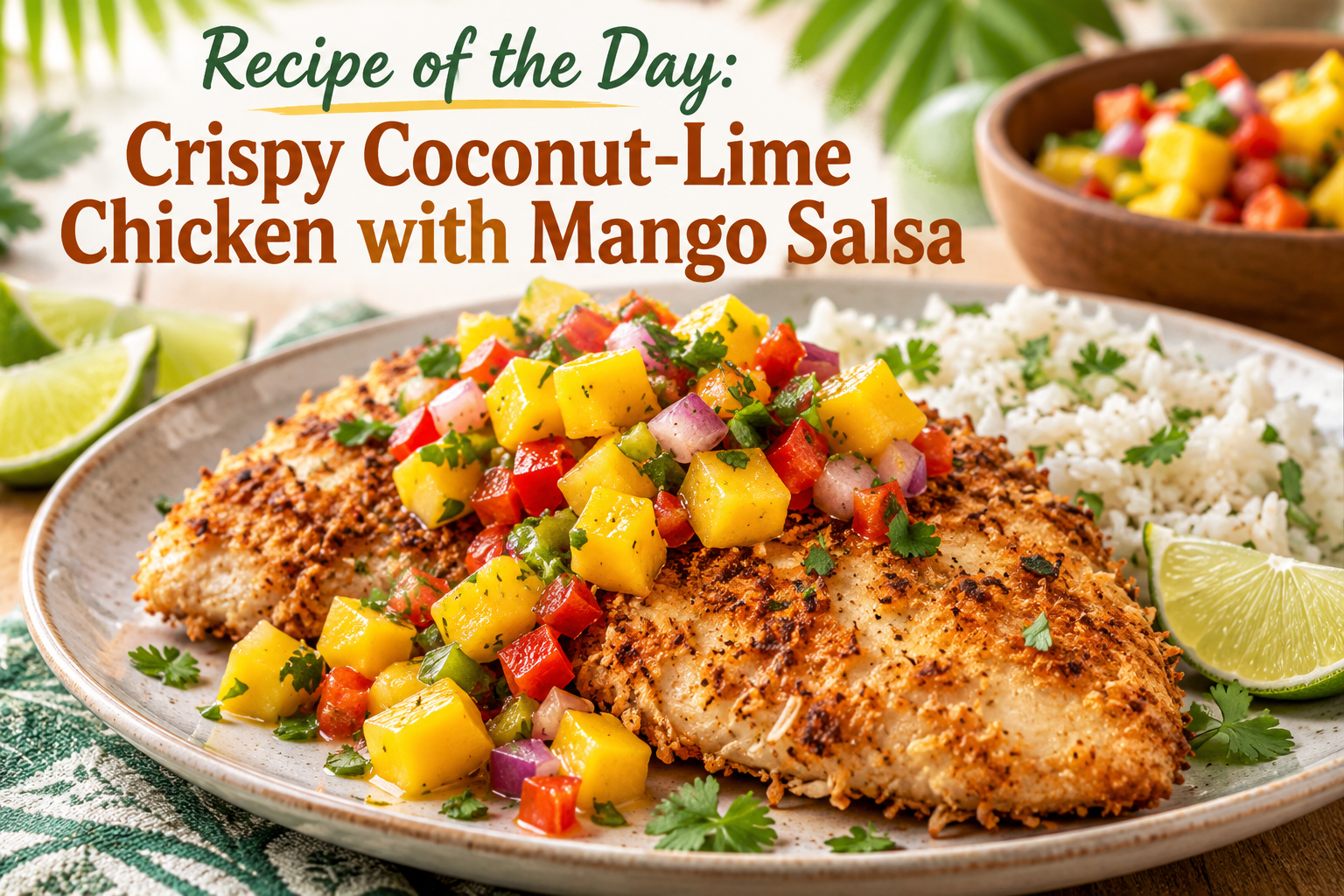
Golden coconut-crusted chicken and colorful mango salsa create a dinner that looks impressive, tastes vibrant, and remains practical enough for an ordinary weeknight. The chicken has a crunchy toasted coating seasoned with lime, garlic, and gentle spices, while the fresh salsa brings sweetness, acidity, and a touch of heat.
Each bite offers an appealing contrast: juicy chicken beneath a crisp coconut crust, ripe mango against tangy lime, and fresh cilantro alongside savory seasonings. Although the finished plate feels restaurant-worthy, everything can be prepared with familiar ingredients and straightforward techniques.
Serve this crispy coconut-lime chicken with coconut rice for a tropical-inspired meal, tuck sliced pieces into warm tortillas, or pair it with a simple salad when you want something lighter. It is an adaptable recipe that can become a relaxed family dinner, a colorful weekend meal, or an inviting centerpiece for casual entertaining.
What Makes This Coconut-Lime Chicken Special?
The best recipes bring contrasting flavors and textures into balance. This dish accomplishes that through three main elements.
First, the chicken is coated with a combination of panko breadcrumbs and shredded coconut. Panko creates a light, airy crunch, while the coconut adds texture, sweetness, and rich toasted flavor.
Second, fresh lime appears throughout the recipe. Lime zest seasons the coating without adding moisture, and lime juice brightens the mango salsa. Its acidity keeps the coconut and fruit from making the dish taste overly sweet.
Finally, the homemade mango salsa offers a cool, juicy contrast to the warm chicken. Ripe mango, red bell pepper, red onion, jalapeño, cilantro, and lime create a topping that is simultaneously sweet, tart, fresh, and lightly spicy.
The chicken is baked instead of deep-fried, making preparation and cleanup easier. A wire rack allows hot air to circulate beneath each cutlet, helping the bottom remain crisp without requiring a skillet full of oil.
Recipe Details
- Prep time: 25 minutes
- Cook time: 18–22 minutes
- Resting time: 5 minutes
- Total time: Approximately 50 minutes
- Yield: 4 servings
- Cooking method: Oven-baked
- Recommended internal temperature: 165°F in the thickest part of the chicken
Equipment You Will Need
- Large rimmed baking sheet
- Oven-safe wire rack
- Three shallow bowls or plates
- Cutting board
- Sharp knife
- Meat mallet or rolling pin
- Instant-read thermometer
- Medium mixing bowl
- Whisk or fork
- Nonstick cooking spray
The wire rack is helpful but not essential. If you do not have one, place the chicken directly on a parchment-lined baking sheet and carefully turn each piece halfway through cooking.
Ingredients
For the Mango Salsa
- 2 medium ripe mangoes, peeled and cut into ¼-inch cubes
- ½ cup finely diced red bell pepper
- ¼ cup finely diced red onion
- 1 small jalapeño, seeded and finely minced
- ¼ cup loosely packed fresh cilantro, chopped
- 2 tablespoons freshly squeezed lime juice
- 1 teaspoon finely grated lime zest
- ¼ teaspoon kosher salt
- ⅛ teaspoon freshly ground black pepper
For the Coconut-Lime Chicken
- 2 large boneless, skinless chicken breasts, approximately 1½ pounds total
- ¾ teaspoon kosher salt, divided
- ½ teaspoon freshly ground black pepper
- ½ cup all-purpose flour
- 1 teaspoon garlic powder
- ½ teaspoon smoked paprika
- 2 large eggs
- 1 tablespoon freshly squeezed lime juice
- ¾ cup unsweetened shredded coconut
- ¾ cup panko breadcrumbs
- 2 teaspoons finely grated lime zest
- 2 tablespoons neutral cooking oil or melted coconut oil
- Nonstick cooking spray
Optional Garnishes
- Fresh cilantro leaves
- Thinly sliced green onions
- Lime wedges
- Additional diced mango
- Thinly sliced jalapeño
Selecting the Best Mangoes
A properly ripened mango gives the salsa its juicy texture and natural sweetness. Gently press the fruit near the stem. It should yield slightly without feeling mushy. A hard mango will be difficult to cut and may taste sour, while an extremely soft one can become watery when mixed.
Color is not always a reliable indication of ripeness because different varieties develop different shades. Texture and aroma are better guides. A ripe mango often has a sweet, fruity fragrance near the stem.
If your mangoes are still firm, leave them at room temperature for a day or two. Placing them inside a loosely closed paper bag can help speed the ripening process.
How to Make Crispy Coconut-Lime Chicken with Mango Salsa
Step 1: Prepare the Mango Salsa
Combine the diced mango, red bell pepper, red onion, jalapeño, cilantro, lime juice, lime zest, salt, and black pepper in a medium bowl.
Fold the ingredients together gently so the mango retains its shape. Taste and adjust the seasoning as needed. Depending on the sweetness of the fruit, you may want another small squeeze of lime or pinch of salt.
Cover the bowl and refrigerate the salsa while preparing the chicken. This brief resting period allows the flavors to blend.
Step 2: Heat the Oven and Prepare the Pan
Preheat the oven to 425°F.
Place an oven-safe wire rack on a rimmed baking sheet. Coat the rack lightly with nonstick cooking spray. The elevated rack exposes more of the coating to circulating heat, producing a crispier result.
If you are baking the chicken directly on the pan, line the baking sheet with parchment paper and lightly coat it with cooking spray.
Step 3: Prepare the Chicken Cutlets
Slice each chicken breast horizontally through the center to create four thinner cutlets.
Place one cutlet between two sheets of parchment paper or plastic wrap. Use the flat side of a meat mallet or a rolling pin to gently pound it to an even ½-inch thickness. Repeat with the remaining pieces.
Uniform thickness is important because it helps every cutlet cook at approximately the same speed. Pat the chicken dry with paper towels, then season both sides with ½ teaspoon of the salt and all the black pepper.
Step 4: Arrange the Breading Station
Place three shallow bowls in a row.
In the first bowl, combine the flour, garlic powder, smoked paprika, and remaining ¼ teaspoon salt.
In the second bowl, whisk the eggs with 1 tablespoon of lime juice until completely blended.
In the third bowl, combine the shredded coconut, panko breadcrumbs, and lime zest. Drizzle the oil over the mixture and toss thoroughly. Coating the crumbs with a little oil encourages even browning in the oven.
Step 5: Bread the Chicken
Working with one cutlet at a time, dredge the chicken in the seasoned flour. Turn it until both sides are lightly coated, then shake away the excess.
Dip the floured chicken into the egg mixture, allowing any extra egg to drip back into the bowl.
Place the chicken in the coconut-panko mixture. Press the crumbs gently onto both sides and around the edges. Set the coated cutlet on the prepared rack and repeat with the remaining chicken.
Wash your hands and sanitize any utensils or surfaces that contacted raw chicken before proceeding.
Step 6: Bake Until Golden and Crisp
Lightly mist the top of each cutlet with cooking spray.
Bake for 10 minutes, then carefully turn the chicken using a thin spatula or tongs. Spray the second side lightly and continue baking for 8–12 minutes.
The exact cooking time depends on the thickness of the cutlets and your oven. The coating should appear deeply golden, and the chicken must reach an internal temperature of 165°F at its thickest point.
If the chicken reaches the proper temperature before the coating is as brown as desired, broil it for 30–60 seconds. Watch continuously because coconut can darken quickly under direct heat.
Step 7: Rest and Serve
Transfer the chicken to a clean platter and let it rest for five minutes. Resting helps preserve the juices when the cutlets are sliced.
Spoon some mango salsa over or beside the chicken immediately before serving. Garnish with cilantro and lime wedges, if desired. Keep extra salsa at the table so everyone can add their preferred amount.
Tips for the Crispiest Coconut Coating
Pat the Chicken Dry
Excess surface moisture prevents the flour from adhering properly. Thoroughly drying the cutlets creates a better foundation for the egg and crumb layers.
Maintain Even Thickness
A thick center may still be undercooked when the coating is ready, while thin edges can become dry. Pounding the cutlets to approximately ½ inch gives you more predictable results.
Use Unsweetened Coconut
Sweetened coconut can cause the coating to taste dessert-like and may brown too quickly. Unsweetened shredded coconut supplies natural richness and subtle sweetness without overwhelming the savory seasonings.
Press the Coating Firmly
Do not simply drop the chicken into the crumbs and immediately remove it. Gently pressing the coconut mixture onto every surface creates more complete coverage and helps prevent loose patches.
Add Oil to the Crumbs
A small quantity of oil improves color and texture without deep-frying. Toss until the oil is distributed rather than concentrated in a few damp spots.
Avoid Crowding the Pan
Leave space between the cutlets. Crowding traps steam, which softens the coating and interferes with browning.
Measure Temperature, Not Color
A golden exterior does not guarantee that the center is fully cooked. Use an instant-read thermometer and test the thickest section of every cutlet.
Adjusting the Heat
The jalapeño makes the salsa gently spicy, but its heat level can vary considerably.
For a mild salsa, remove the seeds and white interior membranes before mincing the pepper. You can also use only half of the jalapeño or omit it completely.
For more heat, leave some seeds in the salsa or replace the jalapeño with a minced serrano pepper. A pinch of cayenne can also be added to the coconut coating.
When serving people with different heat preferences, prepare the salsa without jalapeño and offer sliced peppers or hot sauce separately.
Ingredient Substitutions
Chicken Thighs
Boneless, skinless chicken thighs can replace the breasts. Pound them only enough to create an even thickness and expect the cooking time to vary. They still need to reach at least 165°F internally.
Regular Breadcrumbs
Traditional breadcrumbs work when panko is unavailable, although the coating will be finer and slightly less crunchy.
Gluten-Free Option
Replace the flour with a gluten-free all-purpose blend and use certified gluten-free panko or crushed rice cereal. Check every packaged seasoning for ingredients that do not meet your needs.
Pineapple Salsa
Replace one or both mangoes with finely diced fresh pineapple. Pineapple creates a more acidic, tropical salsa that pairs especially well with coconut.
Peach Salsa
Ripe peaches provide a softer texture and floral sweetness. They are an excellent seasonal substitute when fresh mangoes are unavailable.
Cilantro Alternative
If you do not enjoy cilantro, use chopped flat-leaf parsley. Fresh mint or basil can also work, although either herb will change the character of the salsa.
Air-Fryer Method
Preheat the air fryer to 390°F. Arrange the breaded cutlets in a single layer, leaving space between them. Cook for approximately 10–14 minutes, turning halfway through, until crisp and cooked to 165°F. Work in batches if necessary.
Delicious Recipe Variations
Coconut-Lime Chicken Tacos
Slice the cooked chicken into narrow strips and place them in warmed corn or flour tortillas. Add mango salsa, shredded cabbage, avocado, and a drizzle of lime crema.
Tropical Chicken Bowls
Build bowls with coconut rice, sliced chicken, mango salsa, black beans, shredded lettuce, and avocado. Finish them with lime juice and toasted coconut.
Coconut-Lime Chicken Sandwiches
Serve the chicken on toasted brioche buns with lettuce, mango salsa, and chili-lime mayonnaise. Choose thinner cutlets so the sandwiches are easy to eat.
Bite-Sized Coconut Chicken
Cut the chicken into strips or nuggets before breading. Reduce the baking time and check the pieces early because smaller portions cook faster. Serve them with mango salsa or a sweet chili dipping sauce.
Macadamia-Coconut Chicken
Replace ¼ cup of the panko with finely chopped roasted macadamia nuts. The nuts add buttery flavor and additional crunch.
What to Serve with Coconut-Lime Chicken
Coconut Rice
Cook jasmine rice with a combination of water and unsweetened coconut milk. Its creamy texture complements the crunchy coating without competing with the mango salsa.
Cilantro-Lime Rice
For something lighter, stir lime juice, lime zest, cilantro, and a pinch of salt into freshly cooked rice.
Black Beans
Simply seasoned black beans add protein and make the meal more filling. Flavor them with cumin, garlic, and lime.
Roasted Vegetables
Roasted zucchini, bell peppers, asparagus, or broccoli offer a warm and savory contrast to the fruit salsa.
Crisp Green Salad
Mixed greens with cucumber, avocado, and a lime vinaigrette make a refreshing side. Keep the dressing tart and light so the meal remains balanced.
Grilled Corn
Fresh corn develops a smoky sweetness on the grill. Finish it with lime juice, chili powder, and a light sprinkle of salt.
Preparing the Recipe Ahead
The mango salsa can be prepared up to four hours before serving. Refrigerate it in a covered container and stir gently before bringing it to the table. Preparing it too far ahead may cause the mango to soften and release excess liquid.
The chicken can be trimmed, sliced, and pounded one day in advance. Store it in an airtight container in the refrigerator. Mix the dry flour seasoning and coconut-panko coating separately, but wait to bread the chicken until shortly before baking.
Breading the cutlets too early allows moisture from the chicken and egg to soak into the crumbs, reducing their crunch.
Storing Leftovers
Allow leftover chicken to cool, then refrigerate it in a shallow airtight container within two hours. Store it for up to three or four days.
Keep the mango salsa in a separate container. It is best within two days because the fruit and vegetables gradually release liquid.
The cooked chicken may be frozen without the salsa. Arrange cooled cutlets on a parchment-lined tray and freeze until firm. Transfer them to a freezer-safe container with parchment between the layers and freeze for up to two months.
Thaw frozen chicken overnight in the refrigerator before reheating.
How to Reheat Coconut Chicken
The oven or air fryer will restore more of the original crunch than the microwave.
To use the oven, place the chicken on a wire rack over a baking sheet and heat it at 375°F for approximately 10–15 minutes, or until thoroughly hot.
In an air fryer, reheat the chicken at 350°F for approximately 4–6 minutes.
A microwave is convenient, but it will soften the coconut coating. If you use one, heat the chicken in short intervals to avoid drying it out.
Always add cold mango salsa after the chicken has been reheated.
A Colorful Dinner Worth Sharing
Crispy Coconut-Lime Chicken with Mango Salsa transforms familiar chicken breasts into something bright, crunchy, and memorable. The baked coconut-panko coating provides the satisfying texture of fried chicken without the inconvenience of deep-frying, while lime keeps every component fresh and balanced.
The mango salsa is more than a garnish. Its juicy sweetness, crisp vegetables, herbs, and acidity complete the dish, bringing contrast to the warm coconut crust. Together, the chicken and salsa create a meal that feels tropical without requiring unusual equipment or difficult techniques.
Serve it with rice and vegetables for a complete dinner, turn it into tacos for a casual gathering, or prepare colorful chicken bowls for an easy meal. However it reaches the table, this recipe delivers abundant flavor, inviting color, and plenty of possibilities for customization.
Would you serve this crispy coconut-lime chicken with rice, in tacos, or as part of a fresh tropical bowl?


Leave a Reply