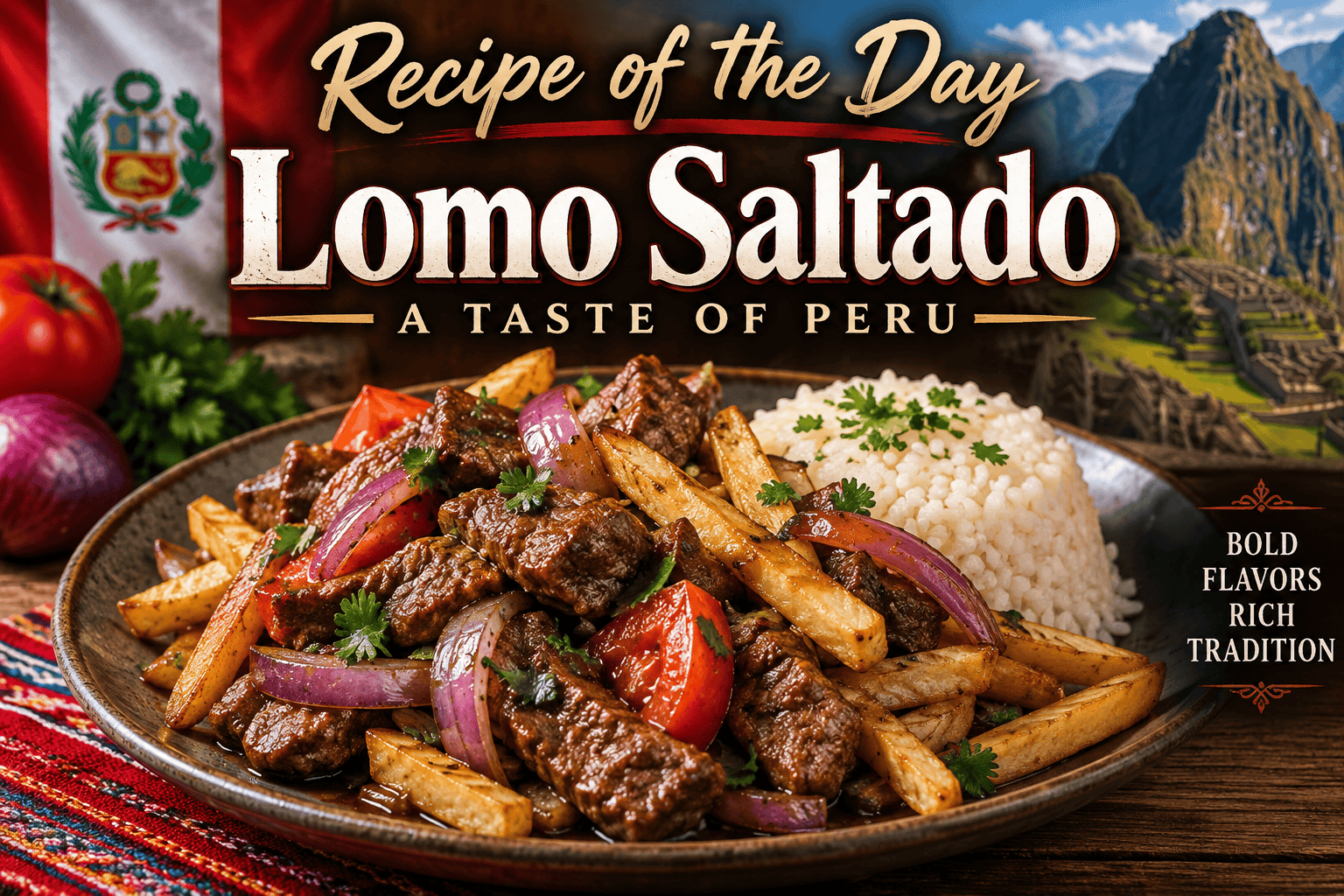
Some recipes tell the story of a culture with every bite. Lomo Saltado is one of them.
This famous Peruvian dish brings together tender strips of beef, onions, tomatoes, peppers, and a savory soy-based sauce, then serves everything alongside one of the most irresistible combinations imaginable: French fries and rice.
It may sound unusual at first. Rice and fries on the same plate? Once you taste Lomo Saltado, it makes perfect sense.
The beef is quickly seared over intense heat, the vegetables retain some of their texture, and the sauce brings together salty, tangy, savory, and slightly sweet flavors. The fries soak up some of that incredible sauce while still providing their familiar crispy comfort.
But Lomo Saltado is more than a delicious beef stir-fry. Its combination of Peruvian and Chinese culinary traditions reflects an important chapter in Peru’s food history.
If you’ve never made Lomo Saltado at home, today’s Recipe of the Day is the perfect opportunity.
What Is Lomo Saltado?
Lomo Saltado is a traditional Peruvian stir-fry typically prepared with strips of beef, onions, tomatoes, soy sauce, vinegar, and seasonings.
The word lomo refers to the beef, while saltado refers to the technique of quickly tossing or stir-frying ingredients over high heat.
One of the defining characteristics of the dish is its fusion of culinary traditions.
Chinese immigration to Peru during the 19th century contributed to the development of a Chinese-Peruvian culinary tradition commonly known as Chifa. Stir-frying in a wok, soy sauce, and other Chinese cooking techniques and ingredients became intertwined with Peruvian flavors and foods.
Lomo Saltado became one of the most recognizable examples of that cultural exchange.
Today, it is beloved throughout Peru and increasingly enjoyed around the world.
Why Lomo Saltado Is So Delicious
The magic of Lomo Saltado comes from contrast.
You have tender beef against crisp-edged fries.
Fresh tomatoes provide acidity and sweetness, while onions add both bite and natural sweetness. Soy sauce supplies salt and umami, and vinegar provides the sharpness needed to balance the richness of the meat.
Then everything meets fluffy white rice.
A good Lomo Saltado isn’t supposed to taste like beef swimming in heavy gravy. The sauce should coat the ingredients and mingle with their juices without overwhelming them.
High heat is another essential component. You want the beef to sear rather than slowly simmer.
That means this recipe moves quickly once cooking begins.
Have everything sliced, measured, and ready before you turn on the stove.
Lomo Saltado Recipe
Prep Time: 20 minutes
Cook Time: 20 minutes
Total Time: About 40 minutes
Servings: 4
Ingredients
For the Lomo Saltado:
- 1½ pounds beef sirloin or tenderloin
- 1 large red onion
- 2 medium Roma tomatoes
- 1 yellow or bell pepper
- 2 cloves garlic, minced
- 3 tablespoons soy sauce
- 1½ tablespoons red wine vinegar
- 1 tablespoon oyster sauce, optional
- 1 teaspoon ground cumin
- ½ teaspoon freshly ground black pepper
- Salt, as needed
- 2 tablespoons vegetable or avocado oil
- ¼ cup chopped fresh cilantro
For serving:
- 4 cups cooked white rice
- 1 pound French fries
- Additional cilantro for garnish
Step 1: Prepare the Beef
Slice the beef against the grain into strips approximately ½-inch thick.
Cutting against the grain shortens the muscle fibers and helps produce more tender pieces of meat.
Pat the beef dry with paper towels.
This step matters more than it might seem. Excess moisture causes beef to steam rather than sear.
Season lightly with cumin and black pepper. Because soy sauce will add plenty of salt later, don’t heavily salt the meat at this stage.
Step 2: Prepare the Vegetables
Cut the red onion into thick wedges.
Slice the tomatoes into wedges as well.
Slice the pepper into strips.
Traditional Lomo Saltado benefits from relatively large vegetable pieces because they are cooked quickly and should retain some structure.
You don’t want the onions and tomatoes completely softened into a sauce.
Set everything near the stove before cooking.
Once you begin stir-frying, there won’t be much time to stop and prepare ingredients.
Step 3: Prepare the Sauce
In a small bowl, combine:
- Soy sauce
- Red wine vinegar
- Oyster sauce, if using
Stir together and set aside.
This simple mixture becomes the foundation of the sauce.
You can adjust the balance according to your preference. Add a splash more vinegar if you enjoy extra acidity or slightly more soy sauce if you prefer a deeper savory flavor.
Step 4: Cook the French Fries
Prepare the French fries according to your preferred method.
You can deep-fry them traditionally, cook them in an air fryer, or bake them in the oven.
Whatever method you choose, aim for fries that are crispy on the outside.
Keep them warm while preparing the beef.
One decision you’ll eventually have to make is whether to mix the fries directly into the stir-fry or serve them alongside it.
Both approaches have their fans.
Mixing some fries into the Lomo Saltado allows them to absorb the delicious sauce. Serving them separately preserves more crispiness.
A great compromise is to toss about half the fries into the finished stir-fry and leave the rest crispy for serving.
Step 5: Get the Pan Very Hot
Place a wok or large heavy skillet over high heat.
Allow it to become very hot before adding the oil.
Lomo Saltado depends on intense heat.
If your pan isn’t hot enough, the beef releases moisture and begins simmering in its own juices.
Once the pan is hot, add approximately 1 tablespoon of oil.
Step 6: Sear the Beef
Add the beef in a single layer.
Don’t overcrowd the pan.
If necessary, cook the beef in two batches.
Let the beef develop a good sear before tossing or turning it.
Cook for roughly 2 to 3 minutes, depending on the thickness of the strips and your preferred level of doneness.
Remove the beef from the pan and set it aside.
It doesn’t need to be completely cooked through because it will return to the pan shortly.
Step 7: Stir-Fry the Vegetables
Add the remaining oil if necessary.
Add the onions and peppers.
Stir-fry over high heat for approximately 1 to 2 minutes.
Add the minced garlic and cook briefly.
Next, add the tomato wedges.
Cook for another minute.
The tomatoes should soften slightly and release some juice without completely breaking apart.
This is another reason high heat is important.
You want the vegetables charred around some of the edges while retaining their texture.
Step 8: Bring Everything Together
Return the beef to the pan.
Pour in the prepared soy sauce and vinegar mixture.
Toss everything together rapidly over high heat.
The beef juices, tomato juices, soy sauce, and vinegar will combine into an intensely flavorful sauce.
Cook for another minute or two, just until the beef reaches your desired doneness.
Turn off the heat and toss in the chopped cilantro.
Taste before adding additional salt.
Step 9: Add the Fries
If you want your fries incorporated into the traditional stir-fry experience, add some of them directly to the pan.
Toss very briefly.
You don’t want them sitting in the sauce for too long or they’ll lose all of their crispiness.
Alternatively, arrange the fries alongside the Lomo Saltado when serving.
Step 10: Serve With Rice
Spoon hot white rice onto each plate.
Add a generous serving of Lomo Saltado beside it.
Pile on the French fries and spoon some of the flavorful pan juices over the beef and vegetables.
Finish with fresh cilantro.
Serve immediately while everything is piping hot.
The Secret Is High Heat
One of the biggest mistakes people make when preparing Lomo Saltado is cooking everything over medium heat.
This dish needs heat.
Traditional restaurant preparation often uses extremely hot woks capable of producing flavors that are difficult to perfectly duplicate on an ordinary home stove.
But you can get surprisingly close.
Use the heaviest skillet or wok you own and let it become properly hot.
Also avoid overcrowding.
Putting too much cold beef into the pan instantly lowers its temperature. Instead of browning, the beef releases water and boils.
Working in batches takes a few extra minutes but can dramatically improve the final dish.
Don’t Overcook the Tomatoes
The tomatoes aren’t supposed to disappear.
Their texture is part of the experience.
Add them toward the end of cooking and toss them quickly.
They should become warm, slightly softened, and charred in places while still remaining recognizable wedges.
The juices they release also become part of the sauce.
Choosing the Best Beef
Tender cuts work especially well because Lomo Saltado cooks so quickly.
Good options include:
Beef tenderloin: Extremely tender and excellent for quick cooking, although it can be expensive.
Sirloin: A more economical option that still provides excellent flavor and tenderness.
New York strip: Flavorful and tender enough for high-heat cooking when properly sliced.
Ribeye: Rich and flavorful, although its higher fat content produces a somewhat different result.
Whatever cut you choose, slice it against the grain.
That simple technique can make a significant difference in tenderness.
What About Aji Amarillo?
For an even stronger Peruvian influence, consider adding ají amarillo, Peru’s famous yellow chile pepper.
Ají amarillo has a distinctive fruity heat that appears throughout Peruvian cooking.
Depending on availability, you may find fresh or frozen peppers, jarred paste, or prepared sauces.
Try adding approximately 1 teaspoon of ají amarillo paste to your sauce and adjust from there.
The goal isn’t necessarily to make Lomo Saltado extremely spicy. The pepper can add another layer of fruity chile flavor.
Why Rice and French Fries?
To someone encountering Lomo Saltado for the first time, the combination might seem excessive.
Then you eat it.
The rice absorbs the savory sauce beautifully.
The fries contribute crispy edges, fluffy potato interiors, and another way to soak up the juices from the beef.
Together, they turn a simple stir-fry into a deeply satisfying meal.
It’s one of those combinations that shouldn’t be questioned until you’ve tried it.
Easy Variations
Once you’ve mastered the basic preparation, you can experiment.
Chicken Saltado
Replace the beef with strips of boneless chicken breast or thighs.
Chicken thighs are especially forgiving because they stay juicy during high-heat cooking.
Mushroom Saltado
Use hearty mushrooms in place of some or all of the beef.
Portobello, cremini, or king oyster mushrooms work particularly well.
Extra-Spicy Lomo Saltado
Increase the ají amarillo or add another fresh chile.
Extra-Vegetable Lomo Saltado
Add bell peppers, mushrooms, or green onions.
It won’t be the most traditional version, but it’s an easy way to add additional vegetables.
Tips for the Best Homemade Lomo Saltado
A few small details can transform your results.
Prepare everything first. This dish cooks far too quickly to chop vegetables while something is already in the pan.
Dry the beef thoroughly. Moisture prevents proper browning.
Cook in batches. Give your beef enough room to sear.
Use high heat. Lomo Saltado is a stir-fry, not a stew.
Don’t overcook the vegetables. Texture is part of what makes this dish special.
Don’t drown it in sauce. You want enough sauce to coat everything and flavor the rice and fries without turning the dish soupy.
Serve immediately. Lomo Saltado is at its best straight from the wok or skillet.
What to Serve With Lomo Saltado
Because you’ve already got beef, vegetables, rice, and potatoes, Lomo Saltado is essentially a complete meal.
You don’t need much else.
A simple green salad with lime dressing can provide a refreshing contrast.
Avocado slices are another great addition.
For something especially refreshing, serve the meal with a cold Chicha Morada, the traditional Peruvian beverage made from purple corn and spices.
Leftovers and Reheating
Lomo Saltado is definitely best fresh, but leftovers can still be delicious.
Store the beef and vegetable mixture separately from the fries whenever possible.
Refrigerate leftovers in airtight containers and use within about 3 to 4 days.
Reheat the beef and vegetables quickly in a hot skillet.
The fries can be reheated separately in an air fryer or oven to restore some crispiness.
Microwaving everything together works in a hurry, but the fries will become soft.
Why You Should Try Lomo Saltado
Lomo Saltado represents exactly what makes exploring recipes from around the world so rewarding.
It isn’t simply steak and potatoes.
It isn’t simply a stir-fry.
It isn’t simply traditional Peruvian cooking or Chinese cooking.
It is a dish shaped by cultures meeting, adapting, and creating something distinctive.
And beyond its fascinating culinary history, it’s simply an incredible meal.
You get juicy seared beef, sweet onions, slightly softened tomatoes, savory soy sauce, tangy vinegar, fluffy rice, and crispy French fries—all on the same plate.
Few meals manage to feel this comforting while delivering so many different flavors and textures.
Recipe of the Day
Today’s Recipe of the Day: Lomo Saltado is an excellent choice when you’re craving something hearty but want to venture beyond your usual steak dinner.
Get your skillet as hot as you can.
Have every ingredient prepared before you begin.
Sear the beef quickly, keep those vegetables slightly crisp, and don’t forget the fries.
Then pile everything beside a generous serving of white rice and spoon those savory juices over the top.
Sometimes the best recipes are the ones that bring different culinary worlds together.
Would you mix the French fries directly into your Lomo Saltado or keep them crispy on the side?


Leave a Reply