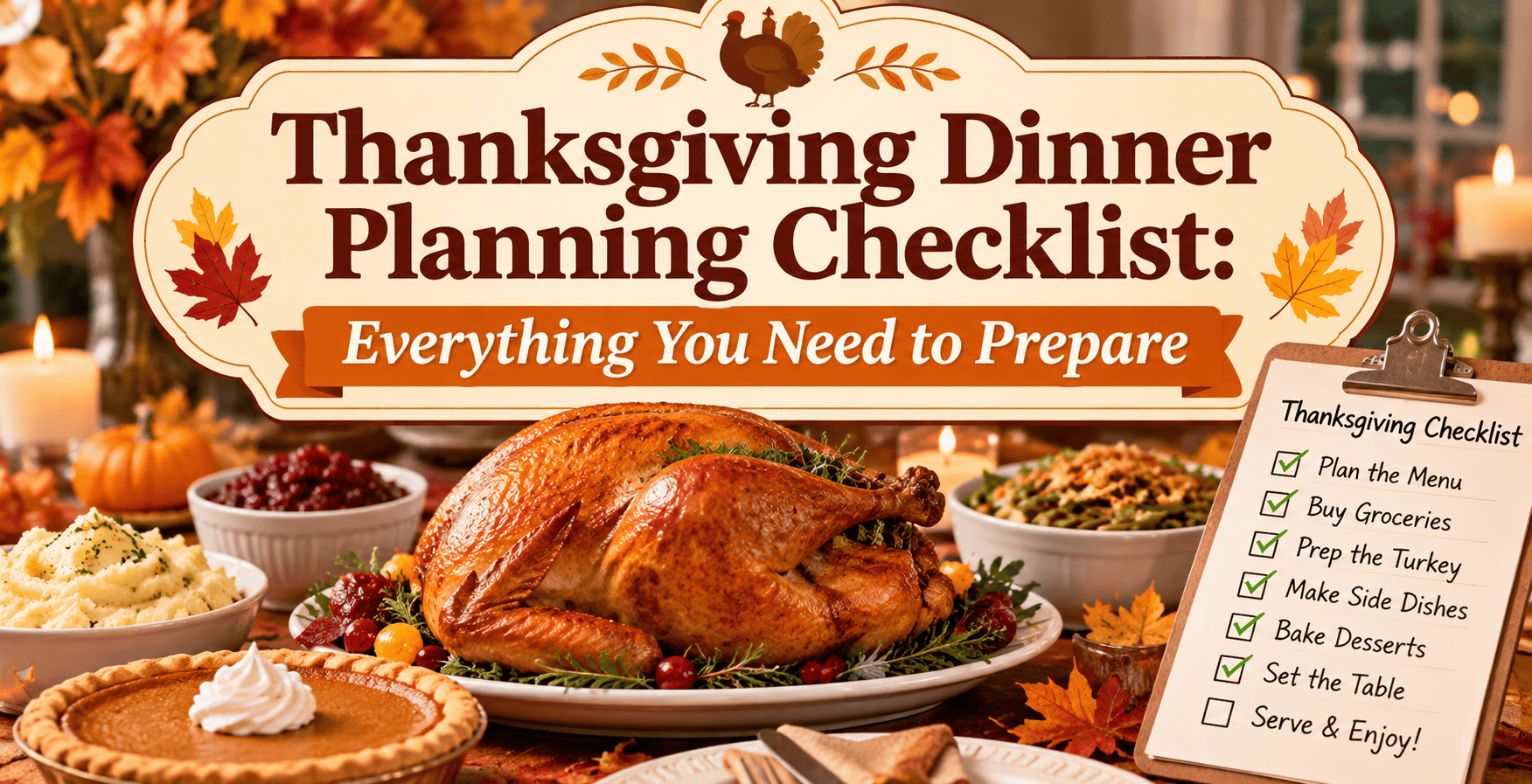
Thanksgiving is one of the most anticipated holidays of the year, bringing families and friends together to enjoy delicious food, celebrate traditions, and express gratitude. However, preparing a complete Thanksgiving dinner can quickly become overwhelming without proper organization.
Between planning the menu, buying groceries, preparing the turkey, cooking side dishes, decorating the table, and coordinating guests, there are plenty of details to manage.
The good news is that hosting Thanksgiving dinner does not have to be stressful.
With a well-organized Thanksgiving dinner planning checklist, you can prepare everything ahead of time, avoid last-minute surprises, and spend more time enjoying the holiday with the people who matter most.
Whether you are hosting Thanksgiving for the first time or have been preparing holiday meals for years, this complete guide will help you organize every step.
Why You Need a Thanksgiving Dinner Planning Checklist
Thanksgiving dinner involves more preparation than an ordinary family meal. Multiple dishes must be cooked, ingredients need to be purchased, and everything should ideally be ready around the same time.
A checklist helps you stay organized by breaking the preparation process into manageable tasks.
Planning ahead offers several benefits:
-
Reduces stress during Thanksgiving week.
-
Helps prevent forgotten ingredients.
-
Makes grocery shopping more efficient.
-
Allows you to prepare dishes in advance.
-
Helps manage cooking and oven space.
-
Keeps your Thanksgiving budget under control.
-
Ensures guests have enough food.
-
Gives you more time to enjoy Thanksgiving Day.
The secret to a successful Thanksgiving dinner is not preparing everything perfectly. It is knowing what needs to be done and when.
1. Four Weeks Before Thanksgiving: Start Planning
The best Thanksgiving dinners begin with early preparation.
Starting approximately four weeks before Thanksgiving gives you plenty of time to organize the menu, coordinate guests, and purchase important supplies.
Create Your Thanksgiving Guest List
Your first step should be determining how many people will attend.
Consider whether your Thanksgiving gathering will include immediate family, extended relatives, friends, or neighbors.
Thanksgiving guest checklist:
Knowing the number of guests helps determine how much food you need and how large a turkey to purchase.
Establish Your Thanksgiving Dinner Budget
Thanksgiving meals can become expensive, especially when hosting a large group.
Create a realistic budget covering your turkey, side dishes, desserts, drinks, decorations, and disposable supplies.
For example, a hypothetical $200 Thanksgiving budget could look like this:
| Category | Budget |
|---|---|
| Turkey or main dish | $45 |
| Side dishes | $65 |
| Desserts | $30 |
| Drinks | $20 |
| Appetizers | $15 |
| Decorations and supplies | $25 |
| Total | $200 |
Adjust these amounts based on local grocery prices, your menu, and the number of guests.
Buying pantry staples early and watching grocery store promotions can help reduce expenses.
2. Three Weeks Before Thanksgiving: Plan Your Menu
Your Thanksgiving menu is the foundation of the entire celebration.
Traditional Thanksgiving dinners usually include turkey, stuffing, mashed potatoes, vegetables, cranberry sauce, bread, and dessert.
However, you can customize your menu to match your family’s preferences and traditions.
Thanksgiving Main Dish Checklist
For turkey planning, a common guideline is approximately 1 to 1½ pounds of whole turkey per person, including bones. Choose the higher end if you want generous leftovers.
Thanksgiving Side Dish Checklist
You do not need to prepare every side dish. Choosing four to six favorites is often enough for a smaller gathering.
Thanksgiving Appetizer Checklist
Keep appetizers simple so guests can enjoy something light without filling up before dinner.
Thanksgiving Dessert Checklist
Two or three desserts generally provide a good variety for a family gathering.
Thanksgiving Drinks Checklist
If serving alcoholic beverages, plan appropriate quantities and provide plenty of nonalcoholic options.
3. Two Weeks Before Thanksgiving: Organize Your Grocery Shopping
Once your menu is finalized, create a complete grocery shopping list.
Organizing ingredients by category makes shopping easier and reduces the chance of forgetting something important.
Meat and Poultry
Fresh Produce
Dairy and Refrigerated Items
Pantry Ingredients
Baking Ingredients
Check your pantry before shopping. Many Thanksgiving ingredients may already be available in your kitchen.
4. One Week Before Thanksgiving: Prepare Your Kitchen
Thanksgiving cooking becomes much easier when your kitchen is clean, organized, and ready.
Start by checking your cooking equipment and creating enough refrigerator space for ingredients and prepared dishes.
Kitchen Preparation Checklist
If you are hosting a large dinner, consider borrowing additional serving dishes rather than purchasing everything new.
Plan Your Oven Space
One of the biggest Thanksgiving cooking challenges is having multiple dishes that require the oven.
Your turkey may occupy the oven for several hours, leaving limited time for casseroles, rolls, and desserts.
Make a cooking schedule that identifies which dishes need the oven and which can be prepared on the stovetop, in a slow cooker, or ahead of time.
5. Five Days Before Thanksgiving: Begin Food Preparation
Several Thanksgiving dishes can be prepared before the holiday.
Doing some of the work early reduces the amount of cooking required on Thanksgiving Day.
Make-Ahead Thanksgiving Checklist
Refrigerated foods should be prepared within safe storage windows. Many cooked leftovers keep for three to four days in the refrigerator, so freeze dishes prepared earlier if they will not be served within that period.
Start Thawing Your Turkey
If you purchased a frozen turkey, plan its thawing time carefully.
A turkey should be thawed in the refrigerator at 40°F or below, allowing approximately 24 hours for every four to five pounds.
| Turkey weight | Approximate refrigerator thawing time |
|---|---|
| 4–12 pounds | 1–3 days |
| 12–16 pounds | 3–4 days |
| 16–20 pounds | 4–5 days |
| 20–24 pounds | 5–6 days |
Allow extra time when possible. Once completely thawed in the refrigerator, the turkey can generally remain refrigerated for another one to two days before cooking.
Never thaw a turkey on the kitchen counter.
6. Three Days Before Thanksgiving: Finalize Your Plans
Three days before Thanksgiving is a good time to confirm that everything is coming together.
Review your guest list, menu, ingredients, and cooking schedule.
Three-Day Checklist
You can also ask guests who are bringing food to confirm their dishes.
This helps avoid having three pumpkin pies but no mashed potatoes.
7. Two Days Before Thanksgiving: Prepare Desserts and Decorations
Two days before Thanksgiving is an excellent time to complete tasks that do not require last-minute attention.
Dessert Preparation Checklist
Refrigerate pumpkin, pecan, custard, and other egg-rich pies promptly. Fruit pies may have different storage requirements depending on the recipe.
Thanksgiving Table Decoration Checklist
Simple fall decorations can make the table feel festive without adding unnecessary expenses.
Consider using small pumpkins, autumn leaves, and neutral-colored table linens.
8. The Day Before Thanksgiving: Complete Your Final Preparations
The day before Thanksgiving is one of the most important preparation days.
Your goal should be to finish as many tasks as possible so Thanksgiving Day can focus on cooking, serving, and enjoying the celebration.
Thanksgiving Eve Checklist
Keep prepared foods refrigerated at safe temperatures. If making stuffing ahead, refrigerate its wet and dry components separately and combine them just before cooking.
For safety, do not stuff a raw turkey the night before.
Prepare Your Turkey
If your turkey is fully thawed, you can prepare it for roasting.
Remove the packaging, check the cavities for the neck and giblets, and pat the turkey dry with paper towels.
Do not rinse raw turkey because splashing water can spread bacteria around the kitchen.
You may season the turkey in advance and refrigerate it, following safe food-handling practices.
9. Thanksgiving Morning: Follow Your Cooking Schedule
Thanksgiving morning is when all your planning begins to pay off.
Instead of rushing from one task to another, follow a prepared cooking timeline.
The exact schedule will depend on the size of your turkey, your recipes, and your planned dinner time.
Sample Thanksgiving Cooking Schedule
This example assumes dinner will be served at 4:00 PM and uses an approximately 12-pound unstuffed turkey. Actual roasting time can vary, so use a food thermometer rather than relying on the clock.
Thanksgiving Day Timeline
-
8:00 AM — Organize the kitchen
Prepare ingredients, check the cooking schedule, and clear work surfaces.
-
9:00 AM — Prepare the turkey
Season the turkey, preheat the oven, and arrange the roasting pan.
-
10:00 AM — Begin roasting
Start roasting the turkey, adjusting for its weight and your recipe.
-
12:00 PM — Prepare side dishes
Work on potatoes, vegetables, and casseroles.
-
1:30 PM — Check turkey temperature
Begin checking for doneness as appropriate; allow time for additional roasting.
-
2:00–3:00 PM — Finish roasting and rest turkey
Once safely cooked, let it rest while you finish other dishes.
-
3:00 PM — Finish sides and gravy
Heat casseroles, warm rolls, and complete the gravy.
-
3:30 PM — Prepare for serving
Transfer food to serving dishes and check temperatures.
-
4:00 PM — Serve Thanksgiving dinner
Gather everyone around the table and enjoy.
A turkey is safely cooked when its internal temperature reaches 165°F in the thickest part of the breast, innermost thigh, and innermost wing. Stuffing cooked inside a turkey must also reach 165°F.
Build extra time into your schedule in case the turkey or side dishes take longer than expected.
10. Thanksgiving Food Safety Checklist
Food safety is an important part of preparing a successful Thanksgiving dinner.
Raw poultry, prepared side dishes, and leftovers require proper handling to prevent foodborne illness.
Essential Food Safety Reminders
Proper food safety practices help protect everyone enjoying your Thanksgiving meal.
11. Thanksgiving Dinner Serving Checklist
Once the food is ready, make sure everything needed for serving is available.
Small details can make a big difference when guests sit down to eat.
Before Guests Sit Down
For larger gatherings, a buffet-style setup may be easier than passing every dish around the table.
Keep hot foods at 140°F or above and cold foods at 40°F or below if they will remain out for extended serving.
12. Thanksgiving Cleanup and Leftover Checklist
Thanksgiving dinner does not end when everyone finishes eating.
Planning for cleanup and leftovers can make the evening much more enjoyable.
Cleanup Checklist
Thanksgiving Leftover Checklist
Most cooked Thanksgiving leftovers should be eaten within three to four days when properly refrigerated.
Freeze portions you want to keep longer.
Leftover turkey can be used for sandwiches, soups, casseroles, pot pies, and other easy meals.
13. Common Thanksgiving Dinner Planning Mistakes to Avoid
Even experienced Thanksgiving hosts occasionally make mistakes.
Being aware of common problems can help you avoid unnecessary stress.
Buying Too Much Food
Preparing excessive amounts of food increases costs and creates unnecessary waste.
Estimate portions based on your guest count and whether you want leftovers.
Forgetting to Thaw the Turkey
A frozen turkey requires several days to thaw safely in the refrigerator.
Always check its weight and begin thawing early enough.
Preparing Too Many Complicated Recipes
Thanksgiving is not necessarily the best time to experiment with several unfamiliar dishes.
Choose a combination of familiar favorites and a few new recipes.
Not Planning Oven Space
If five dishes require the oven simultaneously, your cooking schedule can quickly fall apart.
Plan which dishes can be made ahead and reheated.
Waiting Until Thanksgiving Morning
Trying to prepare every dish on Thanksgiving Day creates unnecessary pressure.
Take advantage of make-ahead recipes whenever possible.
Forgetting About Dietary Restrictions
Ask guests about food allergies, vegetarian preferences, and other dietary needs before finalizing your menu.
This helps ensure everyone has something enjoyable to eat.
14. How to Make Thanksgiving Dinner Less Stressful
A successful Thanksgiving celebration does not require preparing every dish yourself.
There are several ways to make hosting easier.
Ask guests to contribute. Turn Thanksgiving into a potluck-style celebration by asking family members to bring desserts, appetizers, or side dishes.
Use convenient ingredients. Frozen vegetables, prepared pie crusts, and store-bought dinner rolls can save valuable time.
Keep your menu manageable. A delicious turkey, a few favorite sides, and two desserts can create a wonderful Thanksgiving meal.
Delegate responsibilities. Ask others to set the table, prepare drinks, help with cleanup, or entertain children.
Accept imperfections. Thanksgiving is about gathering together, not creating a flawless holiday presentation.
Sometimes the most memorable Thanksgiving celebrations are the simplest ones.
15. Complete Thanksgiving Dinner Planning Checklist
Use this final master checklist to keep track of your preparations from beginning to end.
Your Thanksgiving Preparation Progress
0 of 28 tasks
Four Weeks Before
Three Weeks Before
Two Weeks Before
One Week Before
Thanksgiving Week
Thanksgiving Day
Final Thoughts: Enjoy a Stress-Free Thanksgiving Dinner
Thanksgiving dinner planning does not have to feel overwhelming. With a clear checklist, an organized grocery list, and a realistic cooking schedule, you can prepare a delicious holiday meal without spending the entire day stressed in the kitchen.
The most important steps are starting early, choosing a manageable menu, preparing dishes ahead of time, and allowing enough time for cooking and serving.
Remember that Thanksgiving is about more than the food on the table. It is about gratitude, family traditions, meaningful conversations, and spending time with the people who make life special.
Whether you are hosting a large family gathering or preparing a quiet Thanksgiving dinner at home, thoughtful planning can help make the day memorable.
And while the turkey, mashed potatoes, stuffing, and pumpkin pie may be the stars of the meal, the memories created around the Thanksgiving table are what truly matter.
What is the one Thanksgiving dish your family absolutely must have on the dinner table every year?

Leave a Reply