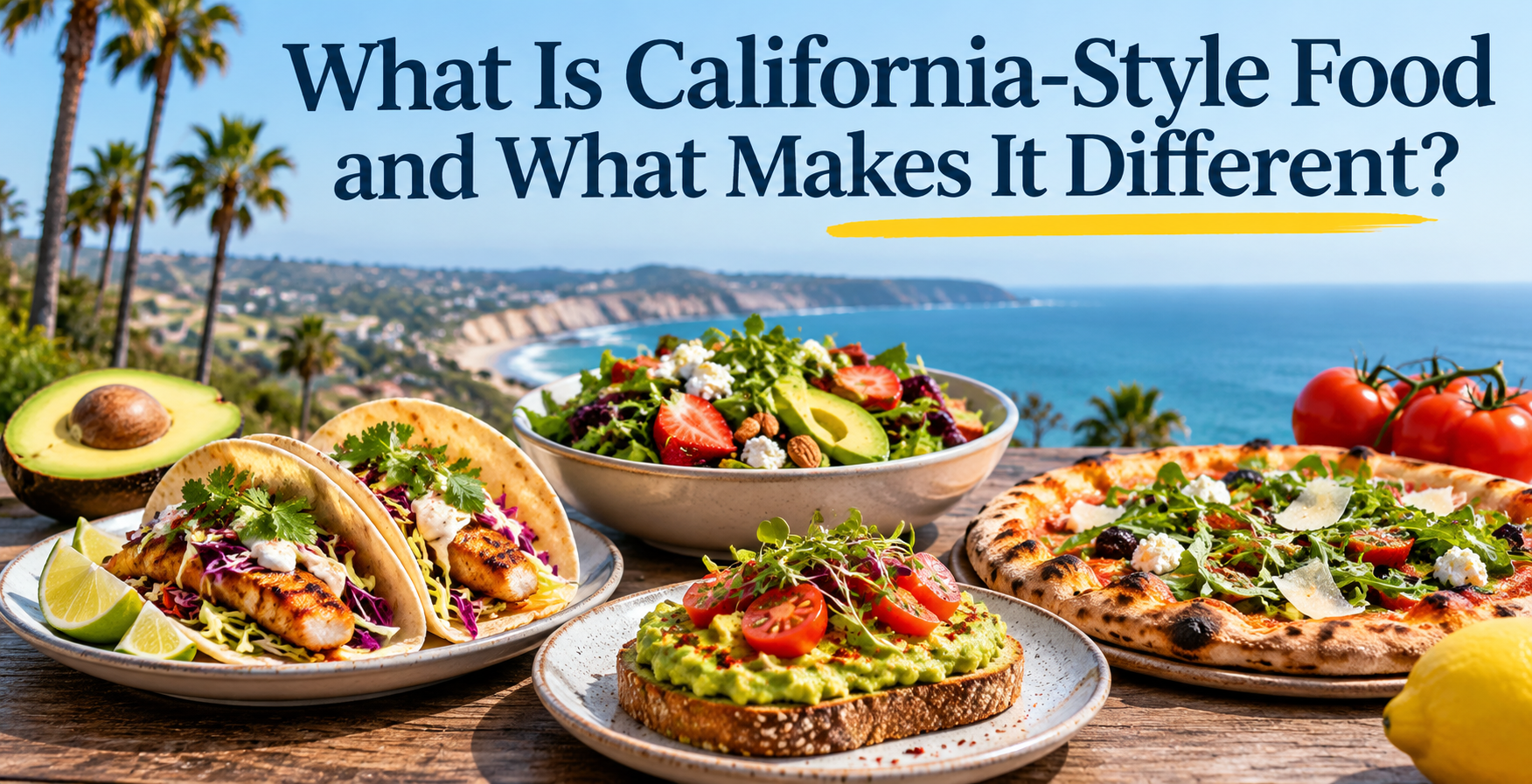
California is known for its beautiful coastline, sunny weather, diverse cultures, and some of the freshest food in America. But beyond its famous beaches and cities, California has developed a unique culinary identity that has influenced how people eat across the United States.
From fresh avocado toast and colorful salads to fish tacos, wood-fired pizzas, and farm-to-table restaurants, California-style food combines fresh ingredients, international influences, and creative cooking techniques.
Unlike traditional regional cuisines that follow generations of established recipes, California cuisine encourages experimentation, seasonal eating, and combining flavors from different cultures.
But what exactly is California-style food, and what makes it different from the food found in other parts of the country?
Understanding California cuisine means exploring its agricultural history, cultural diversity, cooking philosophy, and the dishes that have helped define the Golden State.
What Is California-Style Food?
California-style food is a type of American cuisine that emphasizes fresh, seasonal ingredients, simple preparation, creative flavor combinations, and influences from different cultures.
Rather than following one specific cooking tradition, California cuisine brings together ingredients and techniques from Mediterranean, Mexican, Asian, and traditional American cooking.
The result is a style of food that often feels lighter, fresher, and more experimental than many traditional American dishes.
California-style cooking commonly features:
-
Fresh fruits and vegetables
-
Locally grown and seasonal produce
-
Grilled seafood and lean proteins
-
Avocados, citrus fruits, and fresh herbs
-
Olive oil and simple dressings
-
Mexican and Asian flavor influences
-
Creative salads, sandwiches, and grain bowls
-
Farm-to-table ingredients
-
Freshly prepared sauces and salsas
-
Simple cooking methods that highlight natural flavors
One of the defining characteristics of California cuisine is its flexibility.
A California-style restaurant might serve grilled salmon with mango salsa, a pizza topped with goat cheese and arugula, or a rice bowl combining avocado, roasted vegetables, and Asian-inspired dressing.
All three dishes can represent California cuisine because they emphasize freshness, creativity, and a combination of culinary traditions.
How Did California-Style Cuisine Begin?
California cuisine developed over many decades, influenced by the state’s agriculture, immigration, geography, and changing attitudes toward food.
However, the modern California cuisine movement became especially influential during the 1970s and 1980s.
During this period, chefs began moving away from heavy sauces, complicated preparations, and rigid European cooking traditions.
Instead, they focused on high-quality ingredients, seasonal produce, and allowing natural flavors to stand out.
The Farm-to-Table Movement
One of the most important developments in California cuisine was the growing popularity of farm-to-table cooking.
This approach emphasizes purchasing ingredients directly from farms and local producers whenever practical.
Restaurants began building menus around whatever fruits, vegetables, and other ingredients were available during the season.
Rather than serving identical dishes throughout the year, chefs increasingly allowed seasonal availability to influence their menus.
Alice Waters, who opened Chez Panisse in Berkeley in 1971, became one of the most influential figures associated with this movement.
Her restaurant helped popularize the idea that exceptional meals could begin with carefully selected, fresh ingredients prepared simply.
This philosophy eventually influenced restaurants throughout the United States.
The Rise of Creative California Cooking
During the 1980s, California chefs also became known for experimenting with familiar dishes.
Wolfgang Puck helped popularize California-style pizza through unusual toppings and creative combinations.
Instead of limiting pizza to traditional tomato sauce, mozzarella, and pepperoni, chefs began using ingredients such as smoked salmon, goat cheese, barbecue chicken, and fresh vegetables.
These innovations reflected a broader California cooking philosophy: traditional recipes could be reimagined without losing their appeal.
What Makes California-Style Food Different From Other American Cuisines?
California cuisine differs from many other regional American food traditions because it is defined more by ingredients and cooking philosophy than by a fixed collection of recipes.
Southern cooking, for example, is strongly associated with dishes such as fried chicken, biscuits, collard greens, and cornbread.
New England cuisine is known for clam chowder, lobster rolls, and seafood traditions.
Texas cuisine is closely connected to barbecue, Tex-Mex, and beef-centered dishes.
California cuisine, however, combines multiple culinary traditions while emphasizing seasonal ingredients and creative preparation.
Here are some of its most distinctive characteristics.
1. Fresh Ingredients Are the Foundation of California Cuisine
Perhaps the most recognizable feature of California-style food is its emphasis on freshness.
California is one of America’s leading agricultural states, producing an enormous variety of fruits, vegetables, nuts, and other crops.
Its varied growing regions and relatively mild climates make many ingredients available locally during substantial portions of the year.
Common California ingredients include:
-
Avocados
-
Strawberries
-
Artichokes
-
Tomatoes
-
Almonds
-
Citrus fruits
-
Lettuce and leafy greens
-
Grapes
-
Asparagus
-
Garlic
-
Bell peppers
-
Fresh herbs
Because these ingredients are widely grown throughout the state, California cooks have long had opportunities to incorporate fresh produce into everyday meals.
A simple California-style salad might combine mixed greens, avocado, strawberries, toasted almonds, and a citrus vinaigrette.
The emphasis is on allowing the ingredients themselves to provide much of the flavor.
2. California Food Combines Different Cultural Influences
California has one of the most culturally diverse food landscapes in the United States.
Its cuisine reflects generations of contributions from Mexican, Chinese, Japanese, Filipino, Korean, Italian, and many other communities.
These traditions have shaped California cooking in ways that extend far beyond individual restaurant menus.
Mexican Influences
Mexican cuisine has deep historical roots in California, predating California’s statehood.
Tacos, burritos, tamales, enchiladas, salsas, and grilled meats are important parts of the state’s food culture.
California-style interpretations sometimes incorporate additional ingredients such as avocado, fresh cabbage, citrus dressings, and grilled seafood.
Fish tacos are particularly associated with Southern California, where Baja California culinary traditions have had a major influence.
Asian Influences
Asian cuisines have also played a major role in shaping California food.
Chinese, Japanese, Korean, Vietnamese, Filipino, and other culinary traditions contribute ingredients and techniques found throughout the state.
Common influences include ginger, soy sauce, sesame oil, rice, noodles, tofu, and stir-frying.
A California-style grain bowl might combine brown rice, grilled chicken, avocado, shredded cabbage, and sesame-ginger dressing.
Mediterranean Influences
Mediterranean cooking contributes another important layer.
Olive oil, grilled vegetables, fresh herbs, seafood, legumes, and simple sauces fit naturally into California’s emphasis on fresh ingredients.
These influences are especially visible in salads, grilled dishes, sandwiches, and vegetable-centered meals.
3. California Cuisine Often Emphasizes Lighter Cooking Methods
California-style cooking is frequently associated with meals that emphasize vegetables, grilled proteins, and fresh sauces.
Common preparation methods include grilling, roasting, steaming, sautéing, and serving some ingredients raw.
Instead of covering every dish with a heavy sauce, California cooks often use citrus juice, olive oil, herbs, or fresh salsa.
For example, a traditional comfort-food dinner might feature breaded chicken with creamy gravy and mashed potatoes.
A California-style alternative could feature grilled chicken with lemon, roasted vegetables, and avocado salad.
Neither approach is inherently better, and California food is not always low-calorie or healthier.
However, the modern California cuisine movement often emphasizes freshness, variety, and ingredient quality.
4. Avocados Are One of California’s Signature Ingredients
Few ingredients are as strongly associated with California food as the avocado.
Avocados appear in everything from breakfast dishes to sandwiches, tacos, salads, and burgers.
Their creamy texture makes them especially useful for adding richness without relying exclusively on cheese or cream-based sauces.
Popular avocado dishes include avocado toast, guacamole, California-style burgers, avocado chicken salads, and breakfast burritos.
The avocado has become an informal symbol of California’s fresh-food culture.
However, California cuisine includes far more than avocado-based dishes, and many traditional California foods do not contain avocado at all.
5. California Cuisine Encourages Creative Food Combinations
One of the most interesting things about California-style food is its willingness to experiment.
California chefs frequently combine ingredients that might traditionally belong to separate cuisines.
Examples include:
-
Barbecue chicken pizza with red onions and cilantro
-
Grilled fish tacos with cabbage slaw
-
Asian-inspired chicken salads with citrus dressing
-
Burgers topped with avocado and sprouts
-
Mediterranean grain bowls with California vegetables
-
Grilled shrimp with tropical fruit salsa
-
Wood-fired pizza with arugula and goat cheese
These combinations help explain why California cuisine is sometimes described as fusion cooking.
However, not every fusion dish is California cuisine, and California’s traditional immigrant cuisines should not be reduced to fusion food.
California’s culinary identity includes both established cultural food traditions and modern dishes that creatively combine them.
What Are the Most Popular California-Style Foods?
California cuisine includes many recognizable dishes that demonstrate its emphasis on freshness, regional influences, and creativity.
Some dishes originated in California, while others became especially popular through California restaurants and food culture.
1. California-Style Pizza
California-style pizza is known for creative toppings and an emphasis on fresh ingredients.
Unlike traditional pizza styles that follow more established topping combinations, California-style pizzas often feature vegetables, specialty cheeses, grilled meats, and unexpected sauces.
Popular examples include barbecue chicken pizza, goat cheese and vegetable pizza, and smoked salmon pizza.
2. Fish Tacos
Fish tacos are a Southern California favorite with strong Baja California roots.
They commonly feature grilled or battered fish, shredded cabbage, salsa, and a creamy sauce inside a corn or flour tortilla.
Fresh lime juice adds brightness and balances the other flavors.
3. Cobb Salad
The Cobb salad is strongly associated with Los Angeles restaurant history.
It traditionally contains lettuce, chicken, bacon, hard-boiled eggs, tomatoes, avocado, blue cheese, and dressing.
Its combination of vegetables, protein, and rich toppings makes it a classic example of California restaurant cuisine.
4. California Rolls
The California roll helped popularize sushi among many American diners.
Typically made with imitation crab or crab, avocado, cucumber, rice, and seaweed, it is one of the most recognizable American-style sushi rolls.
Its exact origins are debated, with competing claims involving chefs in North America.
Nevertheless, it became an important part of California’s Japanese American food culture.
5. Avocado Toast
Avocado toast is one of the foods most closely associated with modern California café culture.
It usually consists of toasted bread topped with mashed or sliced avocado.
Additional toppings might include eggs, tomatoes, chili flakes, lemon juice, or microgreens.
Although avocado toast was not invented in California, the state’s cafés helped make it a recognizable part of contemporary American food culture.
6. Santa Maria-Style Barbecue
California cuisine is not limited to salads and lighter dishes.
Santa Maria-style barbecue is a traditional Central Coast cooking style centered on beef grilled over red oak.
Tri-tip became particularly associated with this regional barbecue tradition.
It is commonly served with beans, salsa, bread, and salad.
Santa Maria barbecue demonstrates how California cuisine includes established regional traditions as well as modern experimental cooking.
7. California-Style Burgers
California-style burgers often feature fresh vegetables and avocado.
Common toppings include lettuce, tomato, red onion, sprouts, and sauces.
There is no single official California burger recipe, but avocado is one of its most recognizable additions.
8. Fresh Grain Bowls
Grain bowls have become popular in California’s contemporary restaurant scene.
They often combine rice, quinoa, or another grain with vegetables, protein, and a flavorful dressing.
Popular ingredients include roasted sweet potatoes, grilled chicken, avocado, kale, chickpeas, and citrus vinaigrettes.
Is California-Style Food the Same as Mediterranean Food?
California cuisine and Mediterranean cuisine share several characteristics, but they are not identical.
Both frequently emphasize vegetables, olive oil, seafood, herbs, and fresh ingredients.
However, Mediterranean cuisine refers to food traditions from countries surrounding the Mediterranean Sea, including Italy, Greece, Spain, and parts of North Africa and the eastern Mediterranean.
California cuisine incorporates Mediterranean influences alongside Mexican, Asian, American, and other culinary traditions.
For example, a Mediterranean meal might feature grilled fish with olive oil, lemon, and roasted vegetables.
A California-style version might include the same fish served with avocado salsa, cilantro, and a citrus-infused grain salad.
The difference is the broader range of influences used in California cooking.
Is California-Style Food Always Healthy?
California-style food has a reputation for being healthy, but that reputation needs some context.
Many California-inspired meals contain nutrient-rich ingredients such as vegetables, fruit, beans, whole grains, nuts, and seafood.
These foods can contribute to a balanced diet.
However, California-style food can also include cheeseburgers, pizza, fried fish tacos, rich dressings, and large portions.
A dish does not automatically become healthy simply because it contains avocado or is described as California-style.
Nutritional quality depends on the ingredients, preparation methods, portions, and overall eating pattern.
The advantage of California cuisine is that its emphasis on fresh ingredients makes it relatively easy to build meals around a variety of nutritious foods.
What Is the Difference Between Northern and Southern California Food?
California is a large state, and its food culture varies considerably by region.
Although Northern and Southern California share many culinary influences, each has distinctive traditions.
Northern California Cuisine
Northern California is especially associated with farm-to-table restaurants, artisan food producers, wine-country cooking, and seafood.
The San Francisco Bay Area is known for sourdough bread, Dungeness crab, and a diverse international restaurant scene.
Napa and Sonoma are closely associated with wine-country cuisine that emphasizes seasonal ingredients and food pairings.
Berkeley played an influential role in the development of modern California cuisine through restaurants such as Chez Panisse.
Southern California Cuisine
Southern California is especially known for its Mexican and Mexican American food traditions, beachside dining, and extensive international influences.
Popular foods include fish tacos, California burritos, street tacos, burgers, and fresh seafood.
Los Angeles is also home to influential Korean, Japanese, Chinese, Thai, Armenian, and many other culinary communities.
San Diego is particularly associated with California burritos, which commonly include carne asada, French fries, cheese, and other fillings.
These regional differences make California cuisine much more diverse than a single statewide menu might suggest.
How Is California-Style Food Different From Traditional American Food?
California-style cooking often places greater emphasis on seasonal produce and international flavor combinations than some traditional American restaurant styles.
For example, a conventional American sandwich might contain sliced turkey, cheese, lettuce, and mayonnaise.
A California-style turkey sandwich might add avocado, sprouts, tomatoes, and a lemon-herb spread on artisan bread.
Similarly, a conventional grilled chicken dinner might include mashed potatoes and gravy.
A California-style version might feature grilled chicken, quinoa, roasted vegetables, and citrus dressing.
These examples illustrate different approaches rather than strict rules.
American cuisine is highly diverse, and many restaurants outside California also emphasize fresh produce and creative cooking.
What makes California cuisine distinctive is the combination of agricultural abundance, cultural influences, and a cooking movement that helped popularize these approaches nationally.
Can You Make California-Style Food at Home?
One of the best things about California cuisine is that it does not require professional cooking skills or expensive ingredients.
Many California-inspired meals can be prepared using everyday groceries and basic kitchen equipment.
The key is to start with fresh ingredients and build flavors through simple combinations.
Easy California-Style Grilled Chicken Bowl
This simple meal demonstrates how California-style ingredients can come together in one dish.
Ingredients
-
2 boneless, skinless chicken breasts
-
2 cups cooked brown rice or quinoa
-
1 ripe avocado, sliced
-
1 cup cherry tomatoes, halved
-
1 cup mixed greens
-
1/2 cucumber, diced
-
2 tablespoons olive oil, divided
-
1 tablespoon fresh lemon juice
-
1 teaspoon garlic powder
-
1/2 teaspoon paprika
-
Salt and black pepper to taste
-
Fresh cilantro or parsley, optional
Instructions
-
Season the chicken breasts with garlic powder, paprika, salt, and pepper.
-
Heat 1 tablespoon of olive oil in a skillet or grill pan over medium heat.
-
Cook the chicken until it reaches an internal temperature of 165°F, adjusting the cooking time for thickness.
-
Allow the chicken to rest briefly before slicing.
-
Divide the cooked rice or quinoa between two bowls.
-
Add mixed greens, cherry tomatoes, cucumber, and sliced avocado.
-
Place the sliced chicken over the vegetables.
-
Mix the remaining olive oil with lemon juice and drizzle over the bowls.
-
Garnish with fresh cilantro or parsley if desired.
This dish reflects several defining features of California cuisine: fresh vegetables, grilled protein, avocado, simple seasoning, and bright citrus flavor.
What Ingredients Should You Keep in Your Kitchen for California-Style Cooking?
Creating California-inspired meals becomes easier when you keep a few versatile ingredients available.
Fresh vegetables such as tomatoes, lettuce, spinach, bell peppers, cucumbers, and zucchini can form the foundation of salads, bowls, and side dishes.
Avocados, lemons, limes, and fresh herbs add flavor and freshness.
Pantry staples such as olive oil, brown rice, quinoa, beans, nuts, and seasonings provide flexibility.
Proteins such as chicken, fish, shrimp, tofu, and eggs can be used in a wide variety of meals.
You do not need every ingredient at once.
Choosing a few seasonal vegetables, one protein, and a flavorful dressing is often enough to create a satisfying California-style meal.
Why Has California Cuisine Become So Popular Across America?
California cuisine has influenced American eating habits for several reasons.
First, its emphasis on fresh ingredients fits growing interest in seasonal produce and meals prepared with recognizable ingredients.
Second, California’s cultural diversity has helped introduce diners to a wide range of international flavors.
Third, its flexible cooking style makes it easy for restaurants and home cooks to adapt dishes to different preferences.
Finally, California’s influential restaurants, chefs, agricultural industry, and food media have helped popularize dishes and techniques far beyond the state.
Foods such as avocado toast, creative pizzas, grain bowls, and produce-focused salads are now common throughout the country.
Not all these foods originated in California, but California restaurants and culinary trends have contributed to their popularity.
Frequently Asked Questions About California-Style Food
What defines California-style cuisine?
California-style cuisine is generally defined by fresh seasonal ingredients, simple preparation, creative combinations, and influences from multiple culinary traditions.
What food is California most famous for?
California is famous for foods such as sourdough bread, fish tacos, California burritos, Cobb salad, Santa Maria-style barbecue, and creative California-style pizzas.
Does California have its own traditional cuisine?
Yes. California has longstanding regional food traditions, including Indigenous foodways, Mexican Californian cooking, San Francisco seafood dishes, and Central Coast barbecue. Modern California cuisine developed alongside these older traditions.
Why does California food use so much avocado?
Avocados are grown commercially in California, especially in Southern California. Their popularity in Mexican and Californian food traditions, along with their creamy texture and versatility, has made them a common ingredient.
What is a California-style breakfast?
A California-style breakfast might include avocado toast, breakfast burritos, vegetable omelets, fresh fruit, yogurt bowls, or eggs served with tomatoes and avocado.
What is California-style pizza?
California-style pizza is known for creative toppings, fresh ingredients, and combinations that go beyond traditional pizza recipes. Popular examples include barbecue chicken pizza and vegetable pizzas with specialty cheeses.
Is California cuisine spicy?
California cuisine can be mild or spicy depending on the dish. Mexican-inspired foods may use jalapeños, serranos, or spicy salsas, while Mediterranean-inspired dishes may emphasize herbs, citrus, and olive oil.
Is California cuisine expensive?
Not necessarily. Although some California restaurants specialize in expensive farm-to-table dining, many California-style dishes can be prepared affordably using seasonal produce, beans, rice, eggs, and other everyday ingredients.
Final Thoughts: What Makes California-Style Food Special?
California-style food is more than a collection of popular recipes. It represents a way of cooking that celebrates fresh ingredients, cultural diversity, seasonal availability, and culinary creativity.
Its identity comes from California’s agricultural resources, its long history of cultural exchange, and chefs who helped redefine American restaurant cooking.
From San Francisco sourdough and Santa Maria barbecue to Southern California fish tacos and modern avocado bowls, California food reflects the many communities and regions that make up the state.
What makes California cuisine different is not one particular ingredient or cooking technique. It is the freedom to combine traditions, highlight quality ingredients, and create meals that reflect both local agriculture and global influences.
Whether you are preparing a simple avocado sandwich, grilling fresh seafood, or experimenting with new pizza toppings, California-style cooking encourages you to enjoy food that is flavorful, fresh, and creative.
Ultimately, California cuisine is defined by a simple idea: start with good ingredients, respect their natural flavors, and do not be afraid to try something new.


Leave a Reply