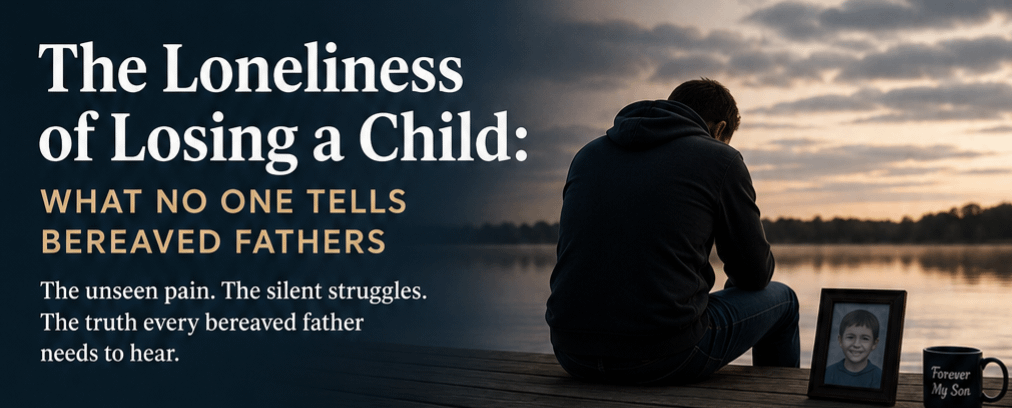
Introduction: The Loneliest Club No Father Wants to Join
There are many forms of loss in life. We lose relationships, careers, homes, dreams, and loved ones. Each loss carries its own pain. Yet there is a loss so devastating that it changes a man forever—the loss of a child.
For fathers who have buried a son or daughter, life becomes divided into two chapters: before and after.
Before the loss, life had a certain direction. There were plans, hopes, traditions, conversations, and expectations for the future. A father imagines watching his child grow older, graduate, find love, build a career, and create a family of their own.
After the loss, those dreams disappear in an instant.
The future that once seemed certain becomes filled with unanswered questions and unimaginable pain.
While many people acknowledge the tragedy of losing a child, few understand the profound loneliness that follows. It is a loneliness unlike any other. It is not simply being alone. It is feeling separated from the rest of the world by an experience so devastating that most people cannot comprehend it.
Bereaved fathers often discover that the grief itself is only part of the struggle.
The isolation that follows can be just as painful.
This is the part no one talks about.
This is what no one tells bereaved fathers.
The Day the World Changes Forever
When a child dies, everything changes.
Not gradually.
Instantly.
The phone call.
The knock at the door.
The hospital room.
The accident scene.
The diagnosis.
The final breath.
Whatever form it takes, there is a moment when a father’s world stops turning.
Nothing afterward feels normal.
Food loses its taste.
Sleep becomes difficult.
Time itself seems distorted.
Days feel endless while years seem to pass in a blur.
Many fathers describe feeling as though they are watching life happen around them rather than participating in it.
People continue going to work.
Children continue playing.
Neighbors continue mowing their lawns.
The world moves forward.
Yet the grieving father remains frozen in the moment his child was taken from him.
The disconnect between his reality and everyone else’s becomes the beginning of profound loneliness.
The Pressure to Be the Strong One
One of the greatest burdens many fathers face is the expectation that they remain strong.
Society often views fathers as protectors.
Providers.
Problem-solvers.
The ones who carry the family through difficult times.
When a child dies, that expectation does not disappear.
In fact, it often grows stronger.
Fathers frequently find themselves handling funeral arrangements, supporting grieving spouses, comforting siblings, speaking with relatives, managing finances, and taking care of practical responsibilities.
While everyone else is allowed to fall apart, many fathers feel obligated to remain standing.
The problem is that strength can become a prison.
Many fathers cry in private.
They grieve behind closed doors.
They suffer in silence because they believe their family needs them to be strong.
Over time this creates emotional isolation.
People see a composed exterior and assume the father is coping better than he really is.
Meanwhile, inside, he may be completely shattered.
The Grief No One Sees
Fathers often become invisible mourners.
The world tends to focus on the grief of mothers, and rightfully so. A mother’s pain is immense and deserves recognition.
But in doing so, society sometimes overlooks the father’s suffering.
People ask how his wife is doing.
They ask how the family is holding up.
They ask about the children.
Rarely do they ask:
“How are YOU doing?”
Many fathers feel forgotten in their own grief story.
They become supporters instead of supported.
Caregivers instead of cared for.
The result is a grief that remains largely unseen.
And unseen grief can become incredibly lonely.
The Loss of Purpose
Children give fathers purpose.
A father often structures his life around providing, protecting, teaching, and supporting his child.
His schedule changes because of them.
His priorities change because of them.
His dreams expand because of them.
When that child dies, many fathers experience an overwhelming loss of purpose.
The routines that once filled their days suddenly disappear.
The responsibilities they once carried vanish.
The future they envisioned no longer exists.
Many fathers find themselves asking:
Why am I still here?
What am I supposed to do now?
Who am I without them?
These questions are not signs of weakness.
They are natural responses to profound loss.
When part of your identity disappears, rebuilding your sense of purpose becomes one of grief’s greatest challenges.
The Empty Bedroom
One of the loneliest places in the world can be a child’s bedroom after they are gone.
Everything remains.
The clothes.
The shoes.
The trophies.
The artwork.
The photos.
The unfinished plans.
For many fathers, entering that room feels like stepping into sacred ground.
Every object tells a story.
Every item carries a memory.
Sometimes fathers avoid the room because the pain feels unbearable.
Other times they spend hours there because it is the closest they feel to their child.
The room becomes a physical reminder of love and loss existing side by side.
It is a place filled with memories.
And yet it is painfully empty.
Friends Don’t Know What To Say
One of the most surprising realities for bereaved fathers is how many relationships change after child loss.
Some friends become incredible sources of support.
Others disappear entirely.
Not because they do not care.
Because they do not know what to say.
Death makes people uncomfortable.
The death of a child makes people terrified.
Many people worry they will say the wrong thing.
So they say nothing.
The silence grows.
Calls stop.
Invitations decrease.
Conversations become awkward.
Months later, fathers often realize their social circles have become much smaller.
The tragedy did not just take their child.
In some cases, it took friendships as well.
Watching Life Move Forward Without Your Child
One of grief’s cruelest realities is watching life continue.
The world keeps moving.
Schools hold graduations.
Families celebrate birthdays.
Friends post photos of milestones.
Children grow up.
Meanwhile, your child remains forever frozen in time.
Every year that passes widens the gap between what is and what should have been.
You imagine how old your child would be today.
You wonder what they would look like.
Who they would love.
Where they would live.
Whether they would have children of their own.
Bereaved fathers often carry two timelines simultaneously.
The life everyone else sees.
And the life they imagine their child should be living.
That invisible timeline can create profound loneliness because it exists only in the father’s heart.
Holidays Become Different Forever
The holidays are often portrayed as joyful celebrations.
For grieving fathers, they can be among the hardest days of the year.
Christmas.
Thanksgiving.
Father’s Day.
Birthdays.
Graduations.
Family gatherings.
Each occasion serves as a reminder that someone important is missing.
The empty chair at the table becomes impossible to ignore.
Many fathers spend weeks preparing themselves emotionally for these dates.
They smile for family photos.
Participate in traditions.
Open gifts.
Attend celebrations.
Yet beneath the surface, they are carrying immense sadness.
The loneliness of grief often feels strongest when surrounded by people.
Because the person they most want to see is absent.
The Fear of Being Forgotten
One of the greatest fears many bereaved fathers carry is not that they will forget their child.
It is that everyone else will.
As years pass, fewer people mention their child’s name.
Fewer memories are shared.
Fewer stories are told.
Meanwhile, the father thinks about his child every day.
He remembers birthdays.
Favorite songs.
Funny moments.
Inside jokes.
Special traditions.
He remembers everything.
The silence surrounding his child’s memory can feel deeply painful.
Many fathers desperately want others to remember.
To speak their child’s name.
To acknowledge their life.
Because remembering keeps their presence alive.
Grief Can Strain Relationships
The loss of a child affects every relationship in a father’s life.
Marriage.
Friendships.
Family connections.
Work relationships.
Even relationships with surviving children.
Each person grieves differently.
One partner may want to talk constantly.
The other may become quiet.
One may seek support.
The other may withdraw.
These differences can create misunderstandings and conflict.
Many fathers feel isolated even within their closest relationships because they struggle to communicate the depth of their pain.
The loneliness of grief is not always about being physically alone.
Sometimes it is feeling emotionally disconnected from those around you.
Fathers Cry Too
Perhaps one of the most damaging myths about grief is that men should hide their emotions.
Nothing could be further from the truth.
Bereaved fathers cry.
They cry in the shower.
In their cars.
Late at night.
On birthdays.
During songs.
While looking at photos.
While remembering conversations they wish they could have one more time.
Their tears are not weakness.
They are evidence of love.
The depth of grief reflects the depth of the bond.
A father’s tears are proof that his child mattered.
That they still matter.
And that they always will.
Finding Meaning After Loss
One of the most difficult journeys a bereaved father faces is learning how to live again.
Not move on.
Live again.
The distinction matters.
Moving on suggests leaving the child behind.
Living again means carrying them forward.
Many fathers eventually find purpose in honoring their child’s memory.
Some volunteer.
Some write.
Some mentor others.
Some create scholarships.
Some support grieving families.
Some simply choose to live in a way that reflects the values their child inspired in them.
Purpose does not erase grief.
But it can give grief direction.
And direction can help fathers navigate the darkest days.
You Are Still a Father
One of the most important truths every bereaved father needs to hear is this:
You are still a father.
Death does not change that.
Your child may no longer be physically present.
But your love remains.
Your memories remain.
Your bond remains.
The world may stop recognizing your role.
But your heart never will.
You do not stop being a father because your child died.
You remain their father for the rest of your life.
And that identity deserves to be honored.
Conclusion: The Love Never Ends
The loneliness of losing a child is unlike any other loneliness.
It is the loneliness of carrying memories that few people understand.
It is the loneliness of missing someone every single day.
It is the loneliness of loving someone who can no longer be held.
But buried beneath that loneliness is something powerful.
Love.
A father’s love does not end at death.
It survives funerals.
It survives anniversaries.
It survives birthdays and holidays.
It survives years and decades.
The child may no longer walk beside him, but they continue living within him.
Every lesson remembered.
Every story shared.
Every act of kindness inspired by their memory.
Every moment spent honoring their life.
To every bereaved father reading this:
Your grief is real.
Your pain is valid.
Your child mattered.
And even if the world sometimes forgets to ask how you are doing, know that you are not walking this path alone.
There are fathers all around the world carrying the same invisible weight.
Men who understand.
Men who remember.
Men who still whisper their child’s name.
Men who continue loving a child they can no longer see.
And like you, they remain fathers forever.
A Father’s Guide to Surviving the Loss of a Child
Leave a Reply