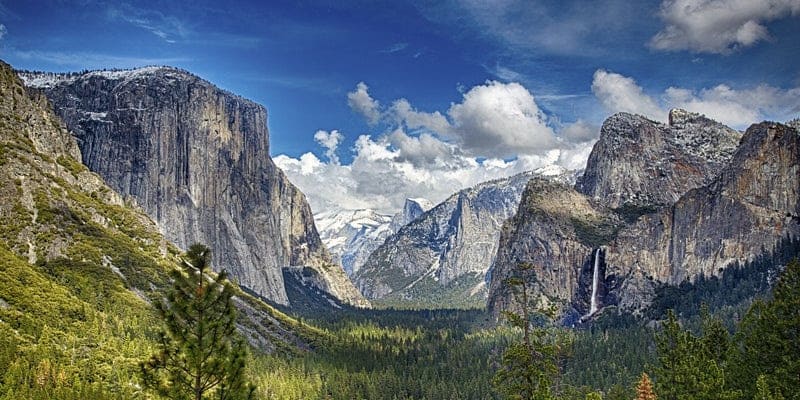
On October 1, 1890, Yosemite National Park was officially established, becoming one of the first national parks in the United States and a crown jewel of America’s natural wonders. With its towering granite cliffs, breathtaking waterfalls, and ancient giant sequoias, Yosemite represents the very spirit of conservation and the movement to protect the country’s most extraordinary landscapes.
The Birth of a National Treasure
Although Yosemite became a national park in 1890, its protection efforts began decades earlier. In 1864, President Abraham Lincoln signed the Yosemite Grant, which set aside Yosemite Valley and the Mariposa Grove of Giant Sequoias for preservation. This was the first instance of land being set aside specifically for public enjoyment and protection, paving the way for the concept of national parks.
Thanks to the passionate advocacy of conservationists like John Muir, Yosemite’s protection expanded beyond the valley floor to include vast wilderness areas, leading to its designation as the nation’s third national park—following Yellowstone (1872) and Sequoia (1890).
Natural Wonders
Yosemite’s landscape is defined by awe-inspiring natural features that draw millions of visitors each year. Among its most famous landmarks are:
El Capitan – The iconic granite monolith that towers more than 3,000 feet above the valley floor, beloved by climbers worldwide.
Half Dome – A striking granite formation that has become one of Yosemite’s enduring symbols.
Yosemite Falls – One of the tallest waterfalls in North America, cascading a total of 2,425 feet.
Mariposa Grove – Home to hundreds of giant sequoias, some of the largest and oldest living organisms on Earth.
Beyond its geological marvels, Yosemite also serves as a sanctuary for diverse wildlife, including black bears, mule deer, peregrine falcons, and rare Sierra Nevada bighorn sheep.
Legacy of Preservation
The establishment of Yosemite National Park marked a turning point in America’s approach to conservation. It inspired a growing national movement to preserve wild places, leading to the creation of the National Park Service in 1916. Yosemite remains a powerful reminder of the importance of protecting natural spaces for future generations.
Today, Yosemite is not only a symbol of natural beauty but also a place where millions of people reconnect with the wilderness each year—whether through hiking, climbing, camping, or simply standing in awe beneath its granite giants.
A Living Legacy
Yosemite’s establishment over 130 years ago continues to resonate today, underscoring the value of protecting wild lands. It serves as a timeless reminder that the beauty of nature is worth preserving, not just for its majesty but for the inspiration, peace, and wonder it brings to all who visit.
Read More Holidays & National Days
Leave a Reply