Author: Brett Murphy

  • Revelations After the Storm

    Revelations After the Storm

    Trials and tribulations
    walked beside me like old shadows,
    quiet teachers dressed in pain,
    whispering lessons I refused to hear
    until silence forced me to listen.

    Memories returned as revelations—
    not to haunt,
    but to illuminate
    the roads I once believed were endings.
    Every moment I tried to forget
    arrived carrying meaning in its hands.

    Lost causes redeemed themselves
    in unexpected dawns,
    proof that nothing truly disappears—
    it only waits
    for the right light to be understood.

    Angels were given back their wings,
    not by miracle alone,
    but by forgiveness
    slowly learned in broken hours.
    Even the fallen remembered
    how to rise.

    The darkness has left
    with the swift turning of time,
    as if night itself
    grew tired of holding sorrow.

    And then came the shining—
    a light more brilliant
    than it had ever dared to be before,
    not blinding,
    but honest.

    It revealed the path beneath my feet,
    the strength within my scars,
    the quiet courage
    that survived every storm.

    I have never seen this clearly—
    not hope,
    not myself,
    not the future waiting gently ahead.

    And for the first time in a long while,
    I am not searching for the light.

    I am standing in it

    Read More Poetry

  • National Sticky Bun Day: Celebrating One of America’s Sweetest Traditions

    National Sticky Bun Day: Celebrating One of America’s Sweetest Traditions

    Every year on February 21, kitchens, bakeries, and breakfast tables across the United States come alive with the rich aroma of butter, cinnamon, and caramelized sugar as people celebrate National Sticky Bun Day. This delicious food holiday honors a pastry that has stood the test of time — a treat that bridges breakfast and dessert while bringing comfort, nostalgia, and joy with every bite.

    More than just a sugary indulgence, sticky buns represent tradition, craftsmanship, and the simple pleasure of slowing down long enough to savor something homemade and heartfelt.

    The Origins of a Beloved Classic

    The story of sticky buns begins centuries ago in Europe, where sweet yeast breads were staples in German baking culture. Immigrants brought these recipes to America during the 1700s, particularly settling in Pennsylvania. There, the pastries evolved through local ingredients and cultural adaptation into what became known as the Pennsylvania Dutch sticky bun.

    Early bakers relied on practical methods and accessible ingredients — flour, yeast, butter, sugar, and spices. What made the recipe revolutionary was the baking technique: instead of icing added afterward, a mixture of butter and sugar was placed at the bottom of the pan before baking. When flipped after cooking, the melted topping coated the rolls in a glossy, caramel-like glaze.

    This clever method transformed a simple sweet bread into an unforgettable culinary experience.

    Over generations, sticky buns spread beyond regional roots, becoming a staple in American bakeries, diners, and home kitchens nationwide.

    The Science Behind the Stickiness

    Part of the magic of sticky buns lies in chemistry. During baking, heat transforms butter and sugar into caramel through a process called caramelization, creating deep flavors that range from buttery and nutty to slightly smoky and complex.

    Meanwhile:

    Yeast fermentation gives the dough its airy texture.

    Cinnamon releases aromatic oils that intensify warmth and sweetness.

    Nuts toast naturally in the caramel layer, adding crunch and richness.

    When the pan is inverted, gravity completes the transformation — allowing the caramel glaze to seep into every swirl while coating the outside in a luscious shine.

    It’s baking as both art and science.

    Sticky Buns vs. Cinnamon Rolls: What’s the Difference?

    Though often confused, sticky buns and cinnamon rolls are distinct pastries.

    Sticky Buns

    Baked over caramel and nuts

    Flipped after baking

    Naturally glazed from the pan

    Richer, deeper flavor profile

    Cinnamon Rolls

    Baked plain and frosted afterward

    Typically topped with cream cheese icing

    Sweeter but less caramelized

    Sticky buns lean toward indulgent comfort food, while cinnamon rolls emphasize frosting sweetness. Both are beloved — but sticky buns deliver a uniquely gooey experience.

    A Tradition Passed Through Generations

    For many families, sticky buns are tied to memory. They appear during:

    Holiday mornings and special brunches

    Snowy weekends spent indoors

    Church gatherings and community events

    Grandparents’ kitchens filled with warmth and laughter

    Recipes are often handwritten, slightly altered with each generation, and treasured as family heirlooms. The act of kneading dough, waiting for it to rise, and sharing the final result becomes a ritual that connects past and present.

    Food, after all, is one of the most powerful carriers of tradition.

    Modern Twists on a Timeless Treat

    While the classic pecan sticky bun remains iconic, modern bakers continue reinventing the pastry with creative variations:

    Maple bacon sticky buns blending sweet and savory flavors

    Apple cinnamon versions inspired by fall desserts

    Chocolate or Nutella-filled rolls for extra indulgence

    Vegan and gluten-free adaptations expanding accessibility

    Espresso-glazed buns perfect for coffee lovers

    Social media and food culture have helped revive interest in traditional baking, making sticky buns trendy again while honoring their historic roots.

    Why Food Holidays Matter

    At first glance, National Sticky Bun Day may seem like a lighthearted celebration — but food holidays serve a deeper purpose. They encourage people to pause, gather, and create shared experiences around something universally meaningful: food.

    In a busy digital world, baking or enjoying a sticky bun invites mindfulness. It asks us to slow down, savor flavors, and reconnect with sensory experiences often lost in daily routines.

    The warmth of a sticky bun fresh from the oven reminds us that joy doesn’t always come from grand events. Sometimes, it comes from simple comforts shared with others.

    How to Celebrate National Sticky Bun Day

    You don’t need professional baking skills to participate. Celebrating can be as simple or elaborate as you like:

    At Home

    Bake sticky buns from scratch

    Try a new flavor variation

    Share baking time with family or friends

    In Your Community

    Support a local bakery

    Host a brunch gathering

    Deliver homemade buns to neighbors or coworkers

    Online

    Share photos or recipes

    Swap baking tips

    Celebrate food traditions with others

    The goal isn’t perfection — it’s enjoyment.

    The Emotional Comfort of Sweet Traditions

    Sticky buns carry emotional weight because they engage more than taste. The smell of cinnamon can trigger memories. The warmth of fresh bread can create feelings of safety and belonging. The act of sharing food strengthens connection.

    In many ways, sticky buns symbolize generosity — something made slowly, meant to be shared, and enjoyed together.

    They remind us that comfort often comes wrapped in the simplest forms: flour, butter, sugar, and time.

    A Sweet Invitation to Slow Down

    National Sticky Bun Day is ultimately about celebration — not just of a pastry, but of tradition, patience, and pleasure. It’s a reminder that life’s sweetest moments are often handmade, imperfect, and shared around a table.

    So whether you bake your own batch, visit a favorite bakery, or simply enjoy one warm bite with a cup of coffee, take a moment to appreciate the joy behind the tradition.

    Because sometimes, happiness isn’t complicated at all.

    Sometimes, it’s warm, sticky, and freshly baked.

    Read More Holidays & National Days

  • Pickax: Your Voice Deserves to Be Heard

    Pickax: Your Voice Deserves to Be Heard

    In every era of communication, there comes a moment when people begin searching for something more — more authenticity, more connection, more meaning behind the words they share. The printing press democratized ideas. Radio gave voices a reach beyond geography. Social media promised universal expression.

    And yet, somewhere along the way, many users began to feel quieter online than ever before.

    Not because they lacked ideas.
    Not because they lacked creativity.
    But because the digital landscape became crowded, filtered, and increasingly difficult to navigate without already having influence.

    Today, a growing number of creators and everyday users are asking a simple question:

    Where can my voice truly matter?

    Pickax is emerging as that answer.

    The Modern Digital Paradox

    We live in the most connected period in human history. Billions of people can publish thoughts instantly, share art globally, and communicate across continents in seconds. On paper, everyone has a platform.

    In reality, visibility has become concentrated.

    Algorithms prioritize familiarity. Viral cycles reward repetition. Meaningful content often competes against speed and spectacle. Many users find themselves creating more but being seen less — speaking louder while feeling unheard.

    This paradox has reshaped how people interact online. Instead of conversation, platforms often foster performance. Instead of community, comparison.

    Pickax enters this environment with a different philosophy: that technology should elevate human voices rather than bury them beneath digital noise.

    A Platform Built Around People, Not Popularity

    At its core, Pickax is designed around a simple but powerful premise — expression should not depend solely on status or scale.

    The platform creates space for individuals at every stage of their journey:

    The new creator posting for the first time

    The entrepreneur building visibility

    The writer searching for readers

    The thinker sharing ideas outside mainstream narratives

    The everyday user who simply wants connection

    What makes this approach notable is not just functionality but intention. Pickax emphasizes participation over perfection, encouraging users to contribute rather than compete.

    In doing so, it challenges a deeply ingrained assumption of modern social media: that attention must be scarce.

    The Psychology of Being Heard

    To understand why platforms like Pickax resonate, one must look beyond technology and into human psychology.

    Being heard is a fundamental human need.

    From childhood conversations to public discourse, validation often comes from acknowledgment — someone reading, responding, or engaging with what we share. When people feel heard, they feel valued. When they feel valued, they participate more authentically.

    Traditional platforms increasingly measure success through metrics: likes, shares, follower counts. While these numbers offer feedback, they can also create distance between expression and meaning.

    Pickax shifts focus back toward interaction itself — conversations, discovery, and community-building that feel human rather than transactional.

    The result is an environment where engagement feels less like competition and more like dialogue.

    The Early-Adopter Moment

    History shows that digital ecosystems are shaped most profoundly by those who arrive early.

    The earliest users of any platform do more than create accounts; they establish culture. They define tone, expectations, and norms. They influence how future users interact.

    Pickax currently exists in that formative stage — a period filled with possibility.

    For early adopters, this represents a rare opportunity:

    To build visibility before saturation

    To form meaningful relationships while communities are still intimate

    To help shape the identity of a growing digital space

    Rather than joining an established hierarchy, users become part of the foundation itself.

    There is a sense of ownership that accompanies early participation — a feeling that one’s presence contributes to something evolving in real time.

    Authenticity in a Filtered World

    One of the defining characteristics of today’s internet is curation. Profiles are polished. Content is optimized. Identity becomes branding.

    While creativity thrives in curated spaces, authenticity can sometimes struggle to breathe.

    Pickax leans into authenticity as an advantage rather than a liability. Users are encouraged to share ideas, experiences, and perspectives without needing viral perfection.

    This shift matters because audiences increasingly crave sincerity. Across digital culture, people are gravitating toward voices that feel real — imperfect, thoughtful, and human.

    Authenticity builds trust. Trust builds community.

    And community sustains platforms long after trends fade.

    Community as the New Currency

    The next generation of digital platforms may not be defined by technology alone but by relationships.

    Community is becoming the most valuable currency online — not measured purely by size, but by engagement and loyalty. A smaller, engaged audience often holds more lasting impact than massive but passive reach.

    Pickax positions itself within this emerging philosophy by encouraging interaction that feels collaborative rather than competitive.

    Users are not merely broadcasting; they are participating.

    In such environments, creators grow alongside their audiences instead of performing for them.

    Why Voices Matter Now More Than Ever

    The world is experiencing rapid cultural, technological, and social change. Diverse perspectives are no longer optional; they are essential. Innovation depends on ideas being shared openly, and progress often begins with individuals brave enough to speak.

    Every voice carries potential:

    A story that comforts someone struggling

    An idea that sparks innovation

    A perspective that broadens understanding

    A message that inspires action

    Platforms that enable these exchanges become more than tools — they become catalysts.

    Pickax’s underlying message aligns with this moment: that expression should be accessible, meaningful, and valued.

    The Future of Digital Belonging

    As users reconsider where and how they spend their digital energy, platforms emphasizing connection and authenticity are gaining attention.

    The question is no longer simply, “Where can I post?”
    It has become, “Where do I belong?”

    Pickax represents a growing movement toward spaces where participation feels personal again — where users are not lost in endless feeds but recognized as contributors to a shared experience.

    The future of online interaction may not belong to the loudest platforms, but to the ones that make people feel seen.

    A Simple Truth

    Technology evolves constantly, but one truth remains unchanged:

    People want to matter.

    They want their words to reach someone. Their creativity to inspire someone. Their presence to be acknowledged.

    Pickax builds around that timeless desire.

    Because sometimes the most powerful innovation isn’t a new feature or algorithm — it’s creating a space where individuals feel confident enough to speak.

    And when people feel heard, they don’t just create content.

    They create community.

    Join Pickax here: https://pickax.com/?referralCode=0mvx4ds&refSource=copy

    Read More Opportunities & Growth

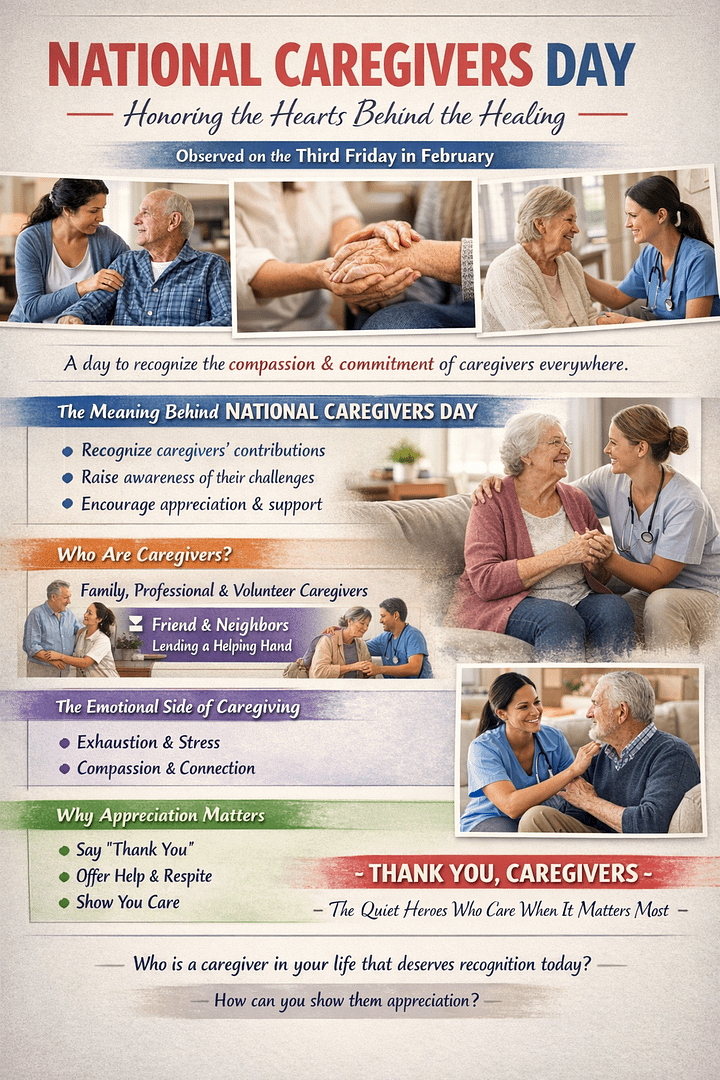
  • National Caregivers Day: Honoring the Hearts Behind the Healing

    National Caregivers Day: Honoring the Hearts Behind the Healing

    National Caregivers Day, observed each year on the third Friday of February, is a time dedicated to recognizing the compassion, sacrifice, and unwavering commitment of caregivers everywhere. Whether they are professionals working in healthcare settings or family members providing support at home, caregivers play an essential role in improving lives — often quietly and without recognition.

    This day serves as a reminder that behind every recovery, every moment of comfort, and every act of dignity preserved, there is usually a caregiver offering strength, patience, and love.

    The Meaning Behind National Caregivers Day

    Caregiving goes far beyond assisting with physical needs. It involves emotional presence, advocacy, companionship, and resilience. Caregivers help individuals facing illness, disability, aging, or recovery maintain independence and quality of life.

    National Caregivers Day was created to:

    Recognize caregivers’ contributions to families and communities

    Raise awareness about the challenges caregivers face

    Encourage appreciation and support for those providing care

    Promote resources that help caregivers maintain their own well-being

    In many ways, caregivers become the invisible backbone of healthcare systems and families alike.

    Who Are Caregivers?

    Caregivers come from all walks of life. They may include:

    Family caregivers supporting aging parents, spouses, or children with special needs

    Professional caregivers such as home health aides, nurses, and personal care assistants

    Volunteer caregivers offering companionship and community support

    Friends and neighbors stepping in during times of crisis

    Many caregivers balance jobs, families, and personal responsibilities while still providing daily care — often placing others’ needs before their own.

    The Emotional Side of Caregiving

    Caregiving can be deeply meaningful, but it also comes with emotional challenges. Caregivers frequently experience:

    Physical exhaustion

    Emotional stress

    Financial strain

    Feelings of isolation

    Compassion fatigue

    Despite these challenges, many caregivers describe their role as one of the most rewarding experiences of their lives. The bonds formed through caregiving often create profound connections rooted in empathy and trust.

    National Caregivers Day encourages communities to acknowledge both the strength and the human vulnerability behind caregiving.

    Why Appreciation Matters

    Simple recognition can make a powerful difference. Caregivers often work behind the scenes, and a sincere thank-you can validate their efforts and remind them they are not alone.

    Ways to show appreciation include:

    Writing a thank-you note or message

    Offering respite time or help with errands

    Providing meals or practical support

    Listening and checking in emotionally

    Sharing public recognition or social media tributes

    Gratitude helps caregivers feel seen — and being seen can renew energy and purpose.

    Supporting Caregivers Beyond One Day

    While National Caregivers Day shines a spotlight for 24 hours, real support should continue year-round. Communities and families can help by:

    Encouraging caregivers to prioritize self-care

    Connecting them with support groups or counseling

    Advocating for workplace flexibility

    Promoting access to healthcare and respite services

    Caregivers give so much of themselves; sustainable care requires caring for the caregiver too.

    A Day of Gratitude and Reflection

    National Caregivers Day reminds us that compassion is one of humanity’s greatest strengths. Caregivers embody patience during uncertainty, hope during hardship, and kindness during life’s most vulnerable moments.

    Their work may not always make headlines, but it changes lives every single day.

    Today is an opportunity to pause, reflect, and simply say:

    Thank you to the caregivers — the quiet heroes who care when it matters most.

    Read More Holidays & National Days
  • I Love With All My Heart

    I Love With All My Heart

    Love is often spoken about casually — in text messages, in passing conversations, in songs that drift through everyday moments. Yet the words “I love with all my heart” carry a weight far beyond romance or habit. They describe a way of living, a way of giving, and a way of seeing another person with sincerity that leaves nothing hidden.

    To love with all your heart is not simply to feel strongly. It is to choose depth over distance, honesty over comfort, and connection over emotional safety. It is love without calculation — affection that is not measured, negotiated, or withheld.

    It is love that says: I am fully here.

    The Meaning of Loving Completely

    Wholehearted love begins with presence. In a world filled with distraction and emotional guardedness, giving someone your full attention becomes one of the purest forms of care.

    Loving completely means:

    Listening not just to respond, but to understand.

    Seeing someone’s struggles without trying to fix or judge them.

    Remaining emotionally present even during difficult conversations.

    It is an active awareness of another person’s humanity — their joys, fears, imperfections, and dreams.

    When love is whole, it stops being about possession and becomes about partnership.

    The Courage Required to Love Deeply

    Loving with all your heart is brave because it involves risk. Every person carries memories of disappointment or loss, and the heart naturally learns to protect itself. Yet wholehearted love asks us to soften anyway.

    It requires courage to:

    Trust again after heartbreak.

    Express feelings without knowing how they will be received.

    Care deeply in a world that sometimes rewards emotional detachment.

    Courageous love does not ignore fear; it moves forward despite it. It recognizes that vulnerability is not a flaw but the doorway through which real connection enters.

    Love as a Daily Practice

    Many imagine love as a powerful emotion that sustains itself effortlessly. In truth, lasting love is built through consistent actions rather than dramatic moments.

    Loving with all your heart looks like ordinary devotion:

    Checking in after a long day.

    Offering patience during stress.

    Remembering small details that matter to someone else.

    Choosing kindness when misunderstandings arise.

    Grand gestures may create memories, but small acts create trust. Over time, these quiet choices become the foundation of enduring love.

    Love is less about intensity and more about reliability.

    Vulnerability: The Heart Without Armor

    To love fully is to allow yourself to be seen — not just at your best, but in uncertainty, insecurity, and imperfection.

    This openness can feel uncomfortable because it removes emotional shields. Yet vulnerability creates intimacy. When someone sees your authentic self and stays, love deepens into something steady and real.

    Wholehearted love says:

    “I trust you with the parts of me that are still healing.”

    And often, that shared honesty becomes the space where both people grow stronger.

    Loving Without Losing Yourself

    A common misunderstanding is that loving deeply means giving everything away. True wholehearted love does not erase identity; it strengthens it.

    Healthy love includes:

    Boundaries that protect emotional well-being.

    Mutual respect for individuality.

    Encouragement of personal growth.

    Space for both closeness and independence.

    When love is genuine, it expands who you are rather than asking you to shrink. You become more yourself, not less.

    The Quiet Power of Steady Love

    The strongest love is rarely dramatic. It does not always announce itself loudly or demand attention. Instead, it appears in consistency — in the person who stays through ordinary days and difficult seasons alike.

    It is found in:

    Shared silence that feels comfortable.

    Support offered without being asked.

    Forgiveness that values connection over pride.

    Steady love becomes a safe place, a reminder that someone chooses you not just during happiness but during uncertainty.

    Loving Through Imperfection

    To love with all your heart is also to accept imperfection — both yours and another person’s. Real relationships include misunderstandings, growth, and moments of doubt.

    Wholehearted love understands that people evolve. It allows room for mistakes while still holding onto respect and compassion.

    Love does not demand flawlessness; it invites effort.

    And sometimes, loving fully means learning when to heal together — and when to grow individually while still caring deeply.

    Love Beyond Romance

    Although often associated with romantic relationships, loving with all your heart extends beyond romance. It appears in friendships, family bonds, and even acts of kindness toward strangers.

    It is present when:

    A friend listens without judgment.

    A parent sacrifices quietly for a child’s future.

    Someone offers compassion to another person in pain.

    Wholehearted love is ultimately a way of moving through the world — choosing empathy over indifference.

    A Final Reflection: Living With an Open Heart

    To say “I love with all my heart” is not a promise of perfection. It is a commitment to sincerity. It means showing up honestly, loving bravely, and allowing connection to matter — even when vulnerability feels uncomfortable.

    In the end, wholehearted love becomes less about what we receive and more about who we become through giving it.

    Because a fully open heart does something extraordinary:
    it transforms ordinary moments into meaningful ones, relationships into safe spaces, and life itself into something richer and more deeply felt.

    Loving with all your heart is not simply an emotion — it is a way of being alive.

    Read More Of Love & Relationships

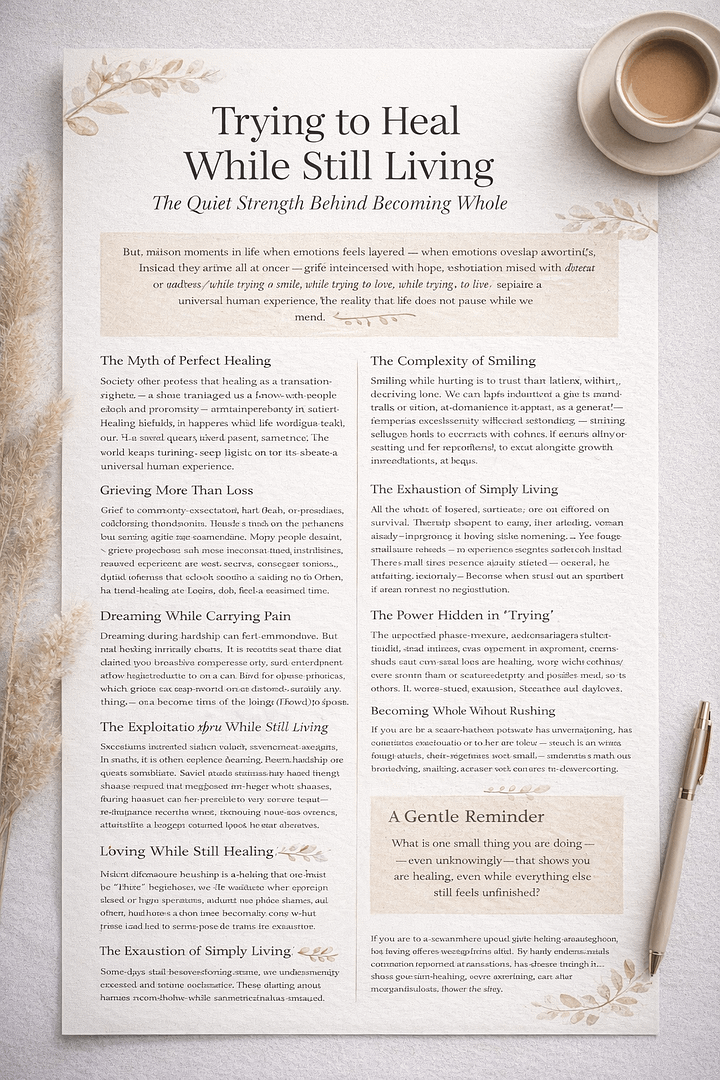
  • Trying to Heal While Still Living: The Quiet Strength Behind Becoming Whole

    Trying to Heal While Still Living: The Quiet Strength Behind Becoming Whole

    There are moments in life when emotions refuse to stand in orderly lines. Instead, they arrive all at once — grief intertwined with hope, exhaustion mixed with determination, sadness walking beside love. The words “Trying to heal while trying to grieve while trying to dream, while trying to smile, while trying to love, while trying to live” speak to a universal human experience: the reality that life does not pause while we mend.

    We are often taught to believe that healing happens after hardship ends. Yet most people discover the opposite is true. Healing unfolds in the middle of ordinary days — during conversations, responsibilities, and quiet nights when thoughts grow loud. It happens while life continues asking us to participate.

    This is not weakness. It is one of the deepest forms of strength.

    The Myth of Perfect Healing

    Society often portrays healing as a clean transformation — a clear “before” and “after.” Movies end when characters overcome adversity. Social media celebrates breakthroughs, not the long uncertainty leading up to them.

    But real healing is rarely dramatic. It is repetitive, subtle, and often invisible. Some days feel like progress; others feel like setbacks. Emotions revisit without warning. Memories resurface when least expected.

    Healing is not linear because humans are not linear. We carry experiences in layers, and each layer reveals itself when we are ready — or sometimes when we are not.

    To heal while living means accepting unfinishedness. It means understanding that growth does not require perfection; it requires persistence.

    Grieving More Than Loss

    Grief is commonly associated with death, yet many of life’s deepest griefs are quieter and less acknowledged. We grieve:

    Relationships that changed or ended

    Versions of ourselves we outgrew

    Opportunities that never came

    Expectations that reality could not fulfill

    Time we cannot reclaim

    This kind of grief can feel isolating because it often goes unseen. People may expect recovery quickly, not realizing that emotional loss reshapes identity.

    Grief asks us to let go of certainty. It teaches us that love leaves echoes — and those echoes take time to soften.

    Yet grief also reveals depth. The ability to mourn proves the ability to care deeply. Pain becomes evidence of connection, not failure.

    Dreaming While Carrying Pain

    Dreaming during hardship can feel almost rebellious. When life feels heavy, imagining a brighter future requires courage. Doubt whispers that hope may lead to disappointment again.

    But dreams are not promises; they are directions.

    They remind us that the future remains unwritten. Even small dreams — feeling peaceful again, rediscovering passion, rebuilding confidence — can become lifelines during dark seasons.

    Often, dreaming begins quietly. A new idea. A small goal. A moment of curiosity about what could still be possible.

    Hope rarely arrives as a grand announcement. More often, it appears as a gentle question: What if things can still get better?

    The Complexity of Smiling

    Smiling while hurting is sometimes misunderstood as pretending. In truth, it is often resilience in action.

    A smile during difficult times can mean:

    Choosing gratitude despite pain

    Protecting others from burdens we carry

    Recognizing moments of beauty that still exist

    Allowing joy to coexist with sadness

    Humans are capable of holding contradictory emotions simultaneously. We can laugh while grieving. We can feel hopeful while afraid. Emotional complexity is not confusion — it is maturity.

    Smiling does not deny suffering; it proves suffering has not erased our capacity for light.

    Loving While Still Healing

    One of the hardest fears during healing is the belief that we must become “whole” before we deserve love. Many people withdraw, convinced their struggles make them too complicated or too broken for connection.

    But love has never required perfection.

    Healthy love grows in honesty, not flawlessness. When we allow ourselves to love — friends, family, partners, or even ourselves — we create spaces where healing accelerates.

    Love teaches patience. It reflects back worth when self-doubt grows loud. It reminds us we are more than our hardest moments.

    Most importantly, self-love becomes the foundation. Learning to speak kindly to ourselves, to forgive our own pace, and to honor our emotional limits transforms healing from a battle into a partnership with ourselves.

    The Exhaustion of Simply Living

    Sometimes survival itself feels like a full-time job. Getting out of bed, completing tasks, maintaining routines — these actions can require immense effort during emotional struggle.

    Yet these small acts are victories.

    Living does not always look inspiring. Often it looks ordinary: making coffee, answering a text, taking a walk, finishing a day you weren’t sure you could handle.

    Each small continuation is proof of resilience.

    Life is not measured only by achievements but by endurance — by the quiet decision to keep going even when motivation feels distant.

    The Power Hidden in “Trying”

    The repeated phrase “trying” carries profound meaning. It removes the pressure of perfection and replaces it with compassion.

    Trying means:

    You have not given up.

    You are still open to change.

    You believe effort matters even without immediate results.

    In a culture that celebrates outcomes, trying honors the process. It recognizes that growth often happens invisibly long before results appear.

    Trying is hope in motion.

    Becoming Whole Without Rushing

    Healing does not mean returning to who you were before pain. Instead, it creates someone new — someone shaped by experience, empathy, and deeper understanding.

    Wholeness is not the absence of scars but the integration of them.

    Over time:

    grief becomes memory rather than weight,

    dreams feel reachable again,

    smiles come naturally,

    love feels safe,

    and living becomes less about survival and more about presence.

    You may not notice the change immediately. Healing often reveals itself only when you look back and realize something that once hurt intensely now feels softer.

    A Gentle Reminder

    If you are in a season where you are healing while grieving, dreaming while uncertain, smiling while struggling, loving while learning, and living while tired — you are not failing at life.

    You are participating in one of its most honest phases.

    Growth rarely looks graceful while it is happening. But every effort, every breath, every small step forward is shaping a stronger and more compassionate version of you.

    And one day, without realizing when it happened, trying will quietly transform into living fully again.

    Read More Of Inspiration & Motivation

  • National Hickey Day: A Playful Celebration of Love, Passion, and Human Connection

    National Hickey Day: A Playful Celebration of Love, Passion, and Human Connection

    Every year on February 19, an unusual yet widely talked-about unofficial holiday appears on social calendars — National Hickey Day. At first glance, the celebration may seem humorous or even a little awkward, but beneath the jokes and memes lies something far more meaningful: a reflection of intimacy, affection, and the ways people express closeness in romantic relationships.

    While it may never appear on government calendars or come with greeting cards lining store shelves, National Hickey Day has grown into a cultural moment that blends humor, nostalgia, romance, and honest conversations about relationships.

    Understanding the Hickey: Science Meets Symbolism

    A hickey — also known as a love bite or kiss mark — forms when suction breaks tiny capillaries beneath the skin, creating a temporary bruise. Most commonly found on the neck or shoulder, the mark fades naturally over several days.

    Scientifically simple, yet socially complex, the hickey has evolved into a symbol carrying layered meanings. For some, it represents passion and attraction. For others, it is a playful reminder of youth, spontaneity, or emotional closeness.

    The mark itself is temporary, but the moment behind it often reflects something lasting: trust and vulnerability between two people.

    Why National Hickey Day Exists

    Unlike traditional holidays rooted in history or religion, National Hickey Day emerged from internet culture and social sharing. Its popularity grew as people began celebrating quirky, relatable experiences — especially those connected to relationships and everyday life.

    The appeal comes from relatability. Nearly everyone has either:

    Experienced a hickey,

    Known someone embarrassed by one,

    Or laughed at stories involving creative cover-ups.

    The day taps into shared human experiences, turning something once considered embarrassing into a collective inside joke.

    The Psychology of Visible Affection

    Human beings naturally seek connection. Psychologists often note that physical affection plays a powerful role in bonding, emotional reassurance, and relationship satisfaction.

    Visible affection — whether holding hands, hugs, or even a hickey — can symbolize:

    Emotional security

    Attraction and desire

    Playfulness within a relationship

    Mutual comfort and trust

    For many couples, these moments are less about appearance and more about emotional closeness. The humor surrounding hickeys often masks a deeper truth: people crave connection and affirmation.

    From Teen Embarrassment to Adult Nostalgia

    For many adults, National Hickey Day sparks memories of adolescence — school days filled with scarves, high collars, or strategic makeup attempts. These experiences have become almost universal rites of passage, blending awkwardness with discovery.

    What once felt embarrassing often becomes nostalgic later in life, representing:

    First experiences with romance

    Emotional vulnerability

    Learning boundaries and communication

    The excitement of young relationships

    As people grow older, the meaning often shifts from rebellion or impulsiveness to playful intimacy shared within mature partnerships.

    Social Media and Modern Romance

    In the digital age, National Hickey Day thrives online. Social platforms fill with:

    Relationship humor

    Couple selfies

    Jokes about hiding marks

    Lighthearted debates about whether hickeys are cute or cringe

    The internet has reframed the narrative, transforming what was once private into something openly discussed with humor and acceptance. Rather than shame, the day encourages laughter and storytelling.

    This shift reflects broader cultural changes where conversations about relationships, consent, and emotional openness are more normalized than in past generations.

    Consent, Comfort, and Respect

    Despite its playful nature, National Hickey Day also provides an opportunity to emphasize healthy relationship values. Affection should always be grounded in:

    Clear consent

    Communication between partners

    Respect for personal and professional boundaries

    Awareness of comfort levels

    Not everyone enjoys visible signs of affection, and preferences vary widely. Celebrating the day responsibly means prioritizing mutual understanding over trends or expectations.

    Healthy intimacy is never about pressure — it’s about shared enjoyment and trust.

    The Humor Factor: Why We Laugh

    Part of the enduring appeal of National Hickey Day lies in humor. Hickeys exist at the intersection of romance and awkwardness — a combination people naturally find funny.

    Humor allows people to talk about intimacy without discomfort. Laughing at shared experiences reduces embarrassment and builds social connection, reminding us that relationships are rarely perfect and often wonderfully messy.

    Sometimes the laughter matters more than the mark itself.

    A Reminder of Human Connection

    In a world dominated by screens, schedules, and constant digital communication, National Hickey Day quietly points back to something deeply human: physical presence and emotional closeness.

    It reminds us that relationships are built not only through grand gestures but also through small, spontaneous moments — laughter late at night, shared vulnerability, and affection expressed without overthinking.

    These imperfect moments often become the stories people remember most.

    Celebrating National Hickey Day Your Way

    You don’t have to take the holiday literally to enjoy it. People celebrate in many ways:

    Sharing funny relationship stories

    Spending intentional time with a partner

    Reflecting on love and connection

    Posting lighthearted content online

    Simply appreciating affection in all its forms

    For some, the day is romantic. For others, it’s comedic. And for many, it’s just another reason to smile.

    Final Reflection

    National Hickey Day may be unofficial, quirky, and slightly mischievous, but its popularity reveals something universal: people cherish connection. Behind every joke is a reminder that affection, vulnerability, and closeness are essential parts of the human experience.

    The marks fade quickly — but the emotions, memories, and relationships behind them often last much longer.

    In the end, National Hickey Day isn’t really about hickeys at all.
    It’s about celebrating the moments when love leaves an impression — even if only for a little while.

    Read More Holidays & National Days

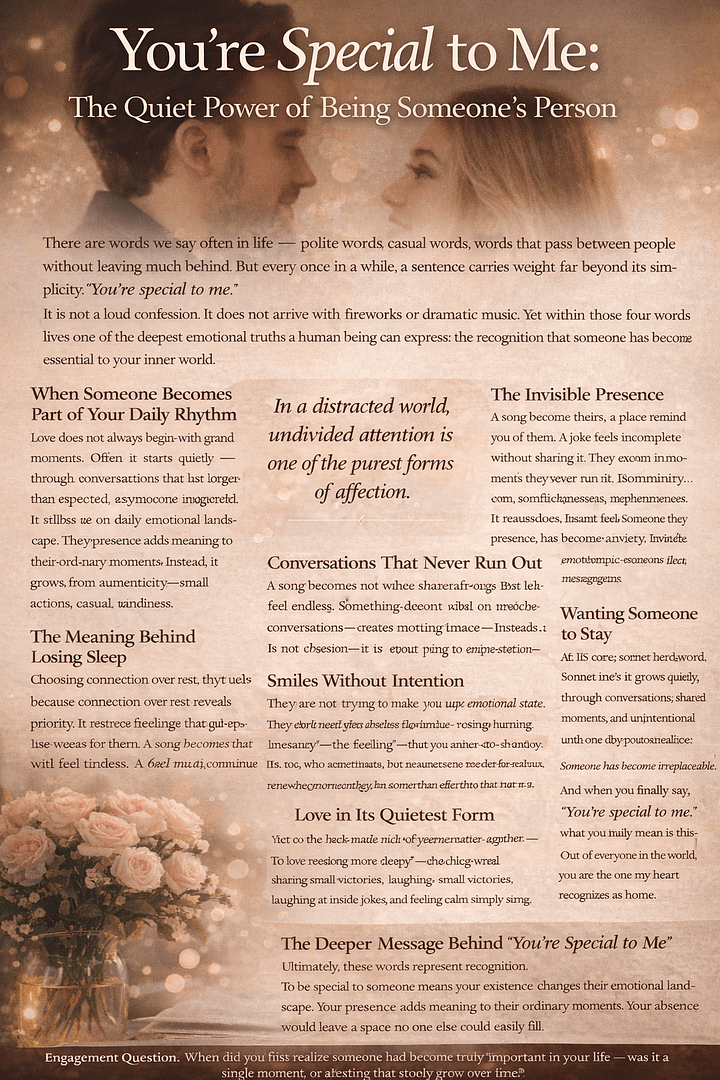
  • You’re Special to Me: The Quiet Power of Being Someone’s Person

    You’re Special to Me: The Quiet Power of Being Someone’s Person

    There are words we say often in life — polite words, casual words, words that pass between people without leaving much behind. But every once in a while, a sentence carries weight far beyond its simplicity.

    “You’re special to me.”

    It is not a loud confession. It does not arrive with fireworks or dramatic music. Yet within those four words lives one of the deepest emotional truths a human being can express: the recognition that someone has become essential to your inner world.

    In a time where relationships can feel temporary and attention is constantly divided, to feel truly special to someone — and to feel that way about another — is rare. It signals connection that goes beyond attraction, beyond convenience, and beyond circumstance.

    It signals emotional belonging.

    When Someone Becomes Part of Your Daily Rhythm

    Love does not always begin with grand moments. Often, it starts quietly — through conversations that last longer than expected, shared laughter that feels effortless, or a growing comfort that sneaks into ordinary days.

    At first, you don’t notice the shift.

    Then suddenly, they are part of your routine.

    You check your phone hoping to see their name. You replay conversations in your mind. Small events throughout the day feel incomplete until you imagine telling them about it.

    The relationship stops being an activity and becomes a rhythm — something woven naturally into how you live.

    Psychologists describe this as emotional integration: when another person becomes linked to your sense of normalcy. Their presence regulates your mood. Their absence becomes noticeable in ways you cannot easily explain.

    You are no longer simply living your day; you are living a life that includes them.

    The Meaning Behind Losing Sleep

    Losing sleep for someone — a sentiment many recognize immediately. Late-night conversations, endless messages, calls that stretch into early morning hours.

    On the surface, it sounds like sacrifice. But emotionally, it is something else entirely.

    Sleep represents necessity. Choosing connection over rest reveals priority. It shows that emotional fulfillment can feel more nourishing than physical comfort.

    When you stay awake talking to someone you care about, time stops behaving normally. Minutes feel shorter. Fatigue feels distant. You exist in a shared emotional space where presence matters more than practicality.

    These moments create intimacy not because of what is said, but because of what is shared: attention.

    In a distracted world, undivided attention is one of the purest forms of affection.

    Conversations That Never Run Out

    There is a profound difference between talking to someone and connecting with someone.

    With most people, conversation has limits. Topics fade. Silence becomes awkward. Interaction requires effort.

    But with the right person, dialogue feels endless.

    You discuss dreams, fears, memories, nonsense, future plans, and random thoughts that would feel insignificant to anyone else. Even silence feels safe — not empty, but peaceful.

    This emotional ease is often mistaken for compatibility alone, but it runs deeper. It reflects emotional safety — the feeling that you can exist without performance or pretense.

    You do not have to impress them.
    You only have to be yourself.

    And that acceptance creates a bond stronger than attraction alone.

    The Invisible Presence

    It is a powerful feeling when someone constantly crossing your mind throughout the day.

    This phenomenon is deeply human. When emotional attachment forms, the brain begins associating everyday experiences with that person. A song becomes theirs. A place reminds you of them. A joke feels incomplete without sharing it.

    They exist in moments they never physically witness.

    This is not obsession — it is emotional imprinting. The brain links feelings of comfort and happiness to a specific person, turning them into a mental refuge.

    They become a quiet companion inside your thoughts.

    And without realizing it, you begin measuring your happiness by how connected you feel to them.

    Smiles Without Intention

    Perhaps the most tender part of deep affection is how effortlessly someone can change your emotional state.

    They don’t need grand gestures or rehearsed words. A simple message can lift your mood. Their laugh can dissolve stress. Even remembering them can bring calm.

    The beauty lies in the lack of intention.

    They are not trying to make you happy — they simply do.

    This authenticity is what separates meaningful love from superficial affection. Genuine connection doesn’t rely on performance; it thrives on presence.

    It is not about trying harder.
    It is about being real.

    The Vulnerability of Caring Deeply

    Yet love carries an unavoidable shadow: fear.

    When someone becomes important enough to influence your emotions, you also become aware of how much you could lose. The thought of their absence creates anxiety because their presence has become a source of stability.

    Many people try to avoid this vulnerability. They keep emotional distance to protect themselves from pain.

    But true connection requires risk.

    To love someone is to accept uncertainty — to open your heart knowing there are no guarantees. The fear of loss is not evidence that love is fragile; it is proof that it matters.

    And strangely, that fear often strengthens appreciation. You value moments more deeply because you understand their significance.

    Wanting Someone to Stay

    At the heart of wanting someone to stay, lies a simple but powerful desire: to keep someone in your life.

    Not to possess them.
    Not to control them.
    But to continue sharing existence together.

    Human beings crave continuity — relationships that endure beyond trends, beyond phases, beyond temporary emotion.

    We long for someone who feels like home.

    Someone who knows our flaws yet stays.
    Someone who sees our insecurities yet reassures.
    Someone whose presence feels steady in an unpredictable world.

    When you find that person, the goal is no longer excitement alone; it becomes preservation — nurturing something meaningful enough to last.

    Love in Its Quietest Form

    Modern culture often portrays love as dramatic and overwhelming. But lasting connection is usually quieter.

    It looks like:

    Checking in on someone’s day.

    Sharing small victories.

    Laughing at inside jokes no one else understands.

    Feeling calm simply sitting beside them.

    Love matures when it stops needing spectacle and begins offering peace.

    The person becomes not just someone you desire, but someone you trust with your emotional truth.

    The Deeper Message Behind “You’re Special to Me”

    Ultimately, these words represent recognition.

    They say:
    “I see you.”
    “I value you.”
    “You matter in ways I cannot fully explain.”

    To be special to someone means your existence changes their emotional landscape. Your presence adds meaning to their ordinary moments. Your absence would leave a space no one else could easily fill.

    And perhaps that is why the sentiment resonates so deeply with so many people.

    Because beneath all human ambition, success, and independence lies a shared longing — to matter profoundly to another soul.

    A Closing Reflection

    Love does not always arrive loudly. Sometimes it grows quietly, through conversations, shared moments, and unintentional smiles until one day you realize:

    Someone has become irreplaceable.

    And when you finally say, “You’re special to me,” what you truly mean is this:

    Out of everyone in the world, you are the one my heart recognizes as home.

    Read More Of Love & Relationships

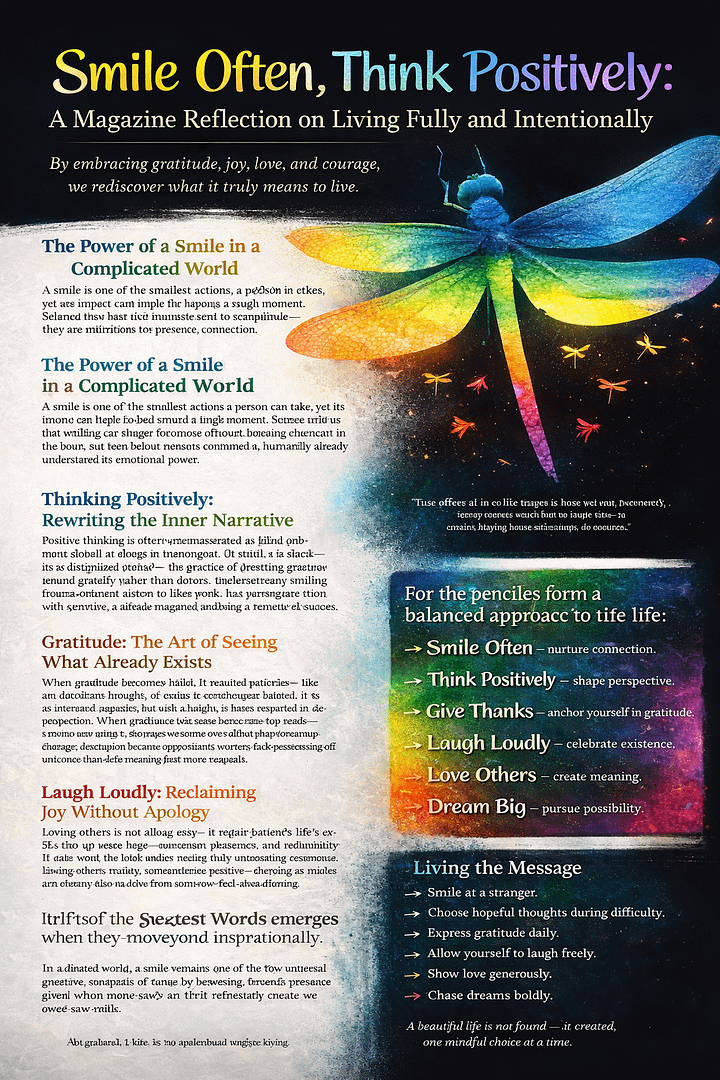
  • Smile Often, Think Positively: A Reflection on Living Fully and Intentionally

    Smile Often, Think Positively: A Reflection on Living Fully and Intentionally

    In an age defined by constant notifications, relentless schedules, and endless comparison, wisdom sometimes arrives in the simplest form — a handful of words that feel both gentle and powerful:

    Smile Often. Think Positively. Give Thanks. Laugh Loudly. Love Others. Dream Big.

    At first glance, they appear like motivational phrases meant for a poster or social media graphic. But beneath their simplicity lies something deeper: a philosophy for living well. These words are not instructions for perfection; they are invitations to presence, connection, and purpose.

    They remind us that a meaningful life is not built in grand moments alone but in everyday choices repeated consistently over time.

    The Power of a Smile in a Complicated World

    A smile is one of the smallest actions a person can take, yet its impact can ripple far beyond a single moment. Science tells us that smiling can trigger the release of mood-boosting chemicals in the brain, but long before research confirmed it, humanity already understood its emotional power.

    A smile disarms tension. It opens conversations. It signals kindness without requiring explanation.

    More importantly, smiling often changes the person offering it just as much as the one receiving it. When life feels heavy, choosing to smile becomes an act of resilience — a quiet declaration that joy still has a place here.

    In a divided world, a smile remains one of the few universal gestures capable of building instant connection.

    Thinking Positively: Rewriting the Inner Narrative

    Positive thinking is often misunderstood as blind optimism or denial of hardship. In reality, it is a disciplined mindset — the practice of directing attention toward growth rather than defeat.

    Every person carries an internal narrator, a voice interpreting life’s events. That voice can either magnify fear or encourage possibility.

    Thinking positively does not erase pain or difficulty. Instead, it reframes experience:

    Failure becomes feedback.

    Obstacles become teachers.

    Uncertainty becomes opportunity.

    The difference between despair and hope often lies not in circumstances but in perspective. When we learn to guide our thoughts intentionally, we begin shaping a life driven by possibility rather than limitation.

    Gratitude: The Art of Seeing What Already Exists

    Modern culture frequently encourages striving — more success, more possessions, more recognition. While ambition has value, it can quietly overshadow appreciation for what already surrounds us.

    Gratitude restores balance.

    To give thanks is to slow down long enough to notice life’s overlooked gifts: morning light through a window, shared laughter, supportive friendships, or simply another day to begin again.

    Research consistently shows gratitude improves emotional well-being, but its deeper value lies in perspective. Gratitude teaches us that abundance is not always measured by accumulation; sometimes it is measured by awareness.

    When gratitude becomes habit, ordinary moments begin to feel extraordinary.

    Laugh Loudly: Reclaiming Joy Without Apology

    Somewhere between childhood and adulthood, many people learn to restrain joy. Responsibilities grow, expectations increase, and laughter becomes quieter, more controlled.

    Yet laughter remains one of the purest expressions of being alive.

    To laugh loudly is to momentarily release worry, ego, and fear. It reconnects us with spontaneity and reminds us that life, despite its seriousness, was never meant to be lived without joy.

    Shared laughter strengthens relationships because it creates belonging. It tells others, “You are safe here. We can be human together.”

    In many ways, laughter is emotional oxygen — invisible yet essential.

    Loving Others: The Heart of Human Purpose

    Across cultures, philosophies, and faith traditions, one truth appears repeatedly: love gives life meaning.

    Achievements may impress, and accomplishments may endure for a time, but love is what people remember. Kindness offered during hardship, compassion shown without expectation, and presence given when someone feels alone — these acts define legacy far more than status or success.

    Loving others is not always easy. It requires patience, empathy, and vulnerability. It asks us to look beyond differences and recognize shared humanity.

    Yet love multiplies what it touches. A single act of kindness can inspire another, creating a chain reaction far beyond what we see.

    In loving others, we also learn to understand ourselves more deeply.

    Dream Big: Courage in Motion

    Dreams are the bridge between imagination and reality. They give direction to effort and meaning to perseverance.

    To dream big is not merely to wish for success; it is to believe growth is possible. It requires courage — the willingness to step beyond comfort and risk failure in pursuit of something meaningful.

    Big dreams often begin quietly: an idea scribbled in a notebook, a hope whispered internally, a vision others may not yet understand.

    But dreams shape identity. They challenge us to evolve, learn, and expand beyond who we once believed we could be.

    Even when dreams change — as they often do — the act of dreaming keeps the human spirit alive and forward-moving.

    A Philosophy Hidden in Simplicity

    Individually, each phrase offers guidance. Together, they form a balanced approach to life:

    Smile Often — nurture connection.

    Think Positively — shape perspective.

    Give Thanks — anchor yourself in gratitude.

    Laugh Loudly — celebrate existence.

    Love Others — create meaning.

    Dream Big — pursue possibility.

    These principles do not promise a life free from struggle. Instead, they offer tools for navigating struggle with grace and resilience.

    Like the delicate yet vibrant wings of a dragonfly — fleeting but brilliant — life is both fragile and extraordinary. Its beauty lies not in permanence but in presence.

    Living the Message

    The true power of these words emerges when they move beyond inspiration and become practice.

    Smile at a stranger.
    Choose hopeful thoughts during difficulty.
    Express gratitude daily.
    Allow yourself to laugh freely.
    Show love generously.
    Chase dreams boldly.

    Over time, these small choices accumulate, quietly transforming not only individual lives but entire communities.

    Because a fulfilled life is rarely the result of one dramatic decision. It is built through countless small moments lived intentionally.

    And perhaps that is the greatest lesson hidden within these simple words:

    A beautiful life is not found — it is created, one mindful choice at a time.

    Read More Of Inspiration & Motivation

  • National Drink Wine Day: A Toast to Tradition, Connection, and Celebration

    National Drink Wine Day: A Toast to Tradition, Connection, and Celebration

    Every year on February 18, people across the country pause to celebrate National Drink Wine Day, a lighthearted yet meaningful occasion dedicated to one of humanity’s oldest and most cherished beverages. While the name may sound simple, the day represents far more than raising a glass — it honors history, craftsmanship, culture, and the timeless human desire to gather, reflect, and connect.

    Wine has accompanied humanity through triumphs and trials, celebrations and quiet reflections. National Drink Wine Day invites us to slow down, appreciate the journey behind every bottle, and rediscover the beauty of shared moments.

    The Ancient Story Behind Every Glass

    Wine’s history stretches back thousands of years, making it one of the earliest examples of agriculture and culinary artistry combined. Archaeological discoveries suggest winemaking began over 8,000 years ago, evolving alongside civilization itself.

    Ancient societies embraced wine not only as a beverage but as a symbol:

    In ancient Greece, wine was linked to philosophy, storytelling, and social dialogue.

    In Rome, vineyards became economic and cultural foundations of society.

    Throughout Europe, monasteries preserved winemaking traditions during the Middle Ages.

    Across the modern world, wine reflects regional identity and heritage.

    Each bottle today carries echoes of these traditions — generations of growers, harvesters, and artisans refining techniques passed down through centuries.

    Wine as a Cultural Language

    Wine speaks a universal language. Regardless of nationality or background, sharing wine often signals welcome, celebration, or friendship. It transforms meals into experiences and gatherings into memories.

    Unlike many beverages consumed quickly or casually, wine encourages intentional enjoyment. People swirl, smell, sip, and discuss — engaging their senses and each other simultaneously.

    This ritual fosters:

    Deeper conversations

    Emotional connection

    Appreciation for craftsmanship

    A sense of occasion in everyday life

    National Drink Wine Day reminds us that sometimes connection begins with something as simple as pouring a glass.

    The Craft Behind the Bottle

    Behind every wine is a delicate balance between nature and human skill. Winemaking combines science, patience, and artistry.

    The process includes:

    Cultivating grapes — influenced by climate, soil, and seasonal conditions.

    Harvesting — often timed precisely for ideal sugar and acidity levels.

    Fermentation — where yeast transforms grape sugars into alcohol.

    Aging — in steel tanks or oak barrels, shaping flavor and texture.

    Blending and bottling — the final expression of the winemaker’s vision.

    No two vintages are ever identical. Weather patterns, harvest timing, and aging conditions ensure that each year produces a unique story captured in liquid form.

    Exploring Wine: A Journey of Discovery

    One reason wine remains endlessly fascinating is its variety. From bold reds to delicate whites and sparkling celebrations, there is a style suited for nearly every taste and occasion.

    Popular Reds

    Cabernet Sauvignon – structured and full-bodied

    Merlot – soft, approachable, and smooth

    Pinot Noir – elegant with subtle complexity

    Popular Whites

    Chardonnay – creamy or crisp depending on style

    Sauvignon Blanc – bright and refreshing

    Riesling – aromatic with balanced sweetness

    Other Favorites

    Rosé – vibrant and versatile

    Sparkling wines – celebratory and lively

    National Drink Wine Day is an invitation to step outside familiar choices and explore new regions or grape varieties.

    Wine and Food: A Perfect Partnership

    One of wine’s greatest strengths is its ability to enhance food. The right pairing elevates both flavors, creating harmony on the palate.

    Classic pairings include:

    Red wine with steak or roasted meats

    White wine with seafood or poultry

    Rosé with salads and light dishes

    Sparkling wine with desserts or appetizers

    But modern wine culture encourages experimentation. Personal taste matters more than strict rules — the best pairing is the one you enjoy most.

    The Social and Emotional Side of Wine

    Beyond flavor, wine carries emotional significance. It marks milestones and memories:

    Weddings and anniversaries

    Family reunions

    Celebrations of achievement

    Quiet evenings of reflection

    For many, a particular wine recalls a place, a person, or a season of life. National Drink Wine Day becomes less about consumption and more about gratitude — appreciating moments that might otherwise pass unnoticed.

    Mindful and Responsible Celebration

    As with any celebration involving alcohol, moderation remains essential. Wine is best appreciated slowly and responsibly, allowing its complexity and craftsmanship to shine.

    Healthy celebration tips:

    Sip rather than rush

    Pair wine with food

    Alternate with water

    Arrange safe transportation if needed

    Respect personal limits

    The spirit of the day is enjoyment, balance, and appreciation — not excess.

    Supporting Local Wineries and Communities

    National Drink Wine Day also highlights the importance of local wineries and small producers. Across the United States and around the world, family-owned vineyards sustain regional economies and preserve agricultural traditions.

    Visiting or supporting local winemakers helps:

    Preserve craftsmanship

    Strengthen local communities

    Encourage sustainable farming practices

    Keep cultural traditions alive

    Even purchasing a bottle from a small producer can contribute to a larger story of heritage and dedication.

    Creating Your Own Celebration

    You don’t need a grand event to participate. Meaningful celebrations can be simple and personal:

    Host a small tasting night with friends

    Learn about wine regions or grape varieties

    Start a wine journal to record favorites

    Enjoy a sunset with a glass in hand

    Share a toast honoring gratitude or friendship

    Sometimes the most memorable celebrations are the quietest ones.

    A Toast to Slowing Down

    In a world that often moves too quickly, National Drink Wine Day offers permission to pause. Wine encourages presence — noticing aroma, flavor, conversation, and atmosphere.

    It reminds us that joy often lives in small rituals:
    the clink of glasses, laughter across a table, or a peaceful moment at day’s end.

    So whether you celebrate with a gathering of friends or a quiet evening alone, take time to savor not just the wine, but the moment itself.

    Here’s to history, craftsmanship, connection, and the simple beauty of raising a glass to life. Cheers. 🍷

    Read More Holidays & National Days