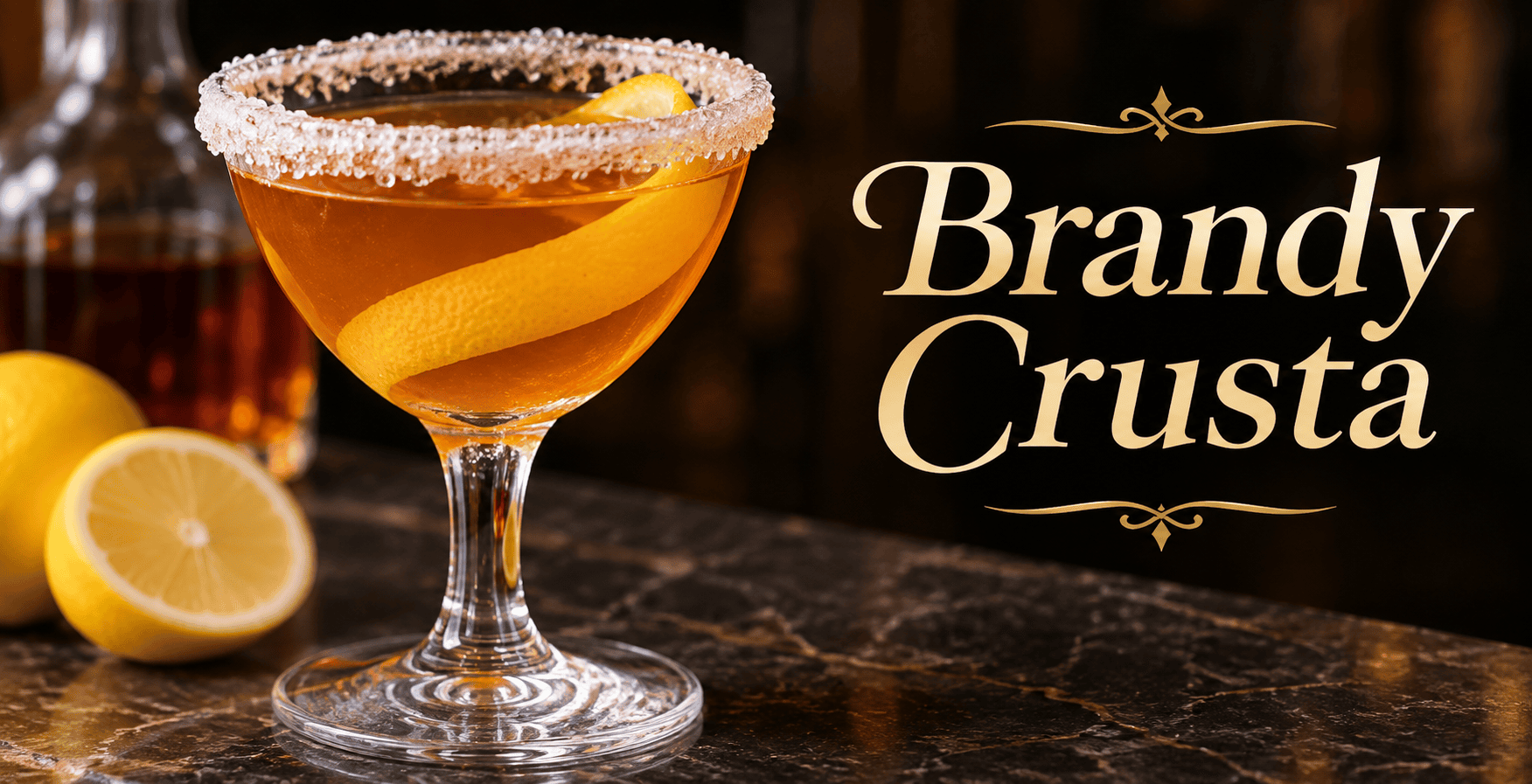
The Brandy Crusta is one of the most elegant and historically significant cocktails to emerge from New Orleans. Known for its distinctive sugar-crusted rim, aromatic lemon peel, and sophisticated combination of brandy, orange liqueur, citrus, and bitters, this timeless cocktail represents the artistry of traditional American bartending.
Long before modern cocktail bars began experimenting with elaborate garnishes and creative presentations, the Brandy Crusta was already making a statement. Its beautiful appearance, refreshing citrus flavor, and smooth brandy foundation helped establish it as an early example of the carefully balanced cocktails we enjoy today.
Whether you are exploring traditional New Orleans drinks, expanding your home bartending skills, or searching for a sophisticated cocktail for a special occasion, the Brandy Crusta deserves a place on your list.
What Is a Brandy Crusta?
A Brandy Crusta is a classic brandy-based cocktail traditionally made with brandy, orange curaçao, fresh lemon juice, maraschino liqueur, aromatic bitters, and a small amount of sugar or simple syrup.
What makes this cocktail particularly memorable is its presentation.
The rim of the glass is coated in sugar, creating a decorative crust that gives the drink its name. A long strip of lemon peel is placed inside the glass, often extending around much of its interior.
The result is a cocktail that combines visual elegance with a complex flavor profile.
Unlike overly sweet brandy drinks, the Brandy Crusta offers a carefully balanced combination of sweetness, acidity, warmth, and aromatic bitterness.
The History of the Brandy Crusta
The Brandy Crusta traces its origins to nineteenth-century New Orleans, a city famous for its distinctive cocktail traditions.
The drink is generally credited to Joseph Santini, a bartender associated with the Jewel of the South establishment in New Orleans during the 1850s.
Santini’s creation stood apart from many earlier mixed drinks because of its elaborate garnish and carefully constructed combination of ingredients.
The sugar-crusted glass and decorative lemon peel transformed an ordinary cocktail into something visually impressive.
The Brandy Crusta was documented in Jerry Thomas’s influential 1862 bartending guide, How to Mix Drinks, helping establish its place in American cocktail history.
The Brandy Crusta and the Sidecar
One of the most interesting aspects of the Brandy Crusta is its relationship to the Sidecar.
The Sidecar, which became popular in the early twentieth century, combines brandy or cognac, orange liqueur, and lemon juice.
Those same essential flavors appear in the Brandy Crusta.
Because the Brandy Crusta predates the Sidecar, cocktail historians frequently describe it as an important predecessor to the famous brandy sour.
Although the recipes are not identical, both drinks demonstrate how brandy, citrus, and orange liqueur work together to create a balanced cocktail.
What Does a Brandy Crusta Taste Like?
The Brandy Crusta delivers several complementary flavors.
The brandy provides warmth, subtle fruitiness, and a rich foundation. Orange curaçao introduces bright citrus sweetness, while maraschino liqueur adds delicate cherry and floral notes.
Fresh lemon juice supplies the acidity needed to balance the sweeter ingredients, and aromatic bitters contribute spice and complexity.
The sugar-coated rim provides an additional touch of sweetness with each sip.
Overall, the Brandy Crusta tastes smooth, citrus-forward, slightly sweet, and pleasantly complex.
Classic Brandy Crusta Recipe
This traditional-style Brandy Crusta recipe combines rich brandy, fresh citrus, and aromatic ingredients to create an elegant cocktail with a distinctive sugared rim.
Preparation Time: 5 minutes
Total Time: 5 minutes
Servings: 1 cocktail
Difficulty: Moderate
Glassware: Small stemmed cocktail glass
Ingredients
-
2 ounces brandy or cognac
-
½ ounce orange curaçao
-
¼ ounce fresh lemon juice
-
¼ ounce maraschino liqueur
-
1 teaspoon simple syrup, optional
-
2 dashes aromatic bitters
-
Superfine sugar for the rim
-
1 long, wide strip of lemon peel
-
Ice for shaking
Instructions
Step 1: Prepare the Glass
Lightly moisten the outside rim of a small stemmed cocktail glass with fresh lemon juice.
Dip the rim into a shallow dish of superfine sugar, rotating gently until evenly coated.
Step 2: Add the Lemon Peel
Cut a long, wide strip of lemon peel using a vegetable peeler or sharp knife.
Carefully curl the peel around the inside of the glass, allowing it to follow the shape of the glass.
Avoid including too much bitter white pith.
Step 3: Combine the Ingredients
Add the brandy, orange curaçao, lemon juice, maraschino liqueur, optional simple syrup, and aromatic bitters to a cocktail shaker.
Step 4: Add Ice and Shake
Fill the shaker with ice.
Shake vigorously for approximately 10–15 seconds until the mixture is thoroughly chilled.
Step 5: Strain the Cocktail
Carefully strain the mixture into the prepared glass.
Avoid disturbing the sugar crust or lemon peel garnish.
Step 6: Serve Immediately
Serve the Brandy Crusta immediately while cold.
The lemon peel releases its aromatic oils as you enjoy the cocktail, enhancing the overall drinking experience.
Choosing the Best Brandy for a Brandy Crusta
Brandy is the foundation of this cocktail, so choosing a quality spirit can make a noticeable difference.
Cognac
Cognac is an excellent choice for a traditional-style Brandy Crusta.
Produced in the Cognac region of France, this grape brandy often features notes of dried fruit, vanilla, oak, and subtle spice.
These flavors complement the citrus and aromatic ingredients without overpowering them.
A VS or VSOP cognac generally works well.
American Brandy
American brandy can also produce a delicious Brandy Crusta.
Many American brandies offer approachable fruit flavors and a slightly sweeter character.
This makes them suitable for home bartenders looking for a balanced cocktail without purchasing an expensive bottle of cognac.
Aged Brandy
An aged brandy can introduce additional complexity.
Oak aging may contribute flavors of caramel, vanilla, baking spices, and toasted wood.
These characteristics can create a richer cocktail, particularly when paired with fresh lemon juice and quality orange curaçao.
The most important consideration is balance. Choose a brandy that tastes enjoyable on its own but does not overwhelm the cocktail’s citrus ingredients.
Why the Sugared Rim Matters
The sugar-coated rim is the defining feature of the Brandy Crusta.
In fact, the word crusta refers to the crust of sugar surrounding the glass.
Unlike a simple decorative garnish, the sugared rim contributes directly to the drinking experience.
As the cocktail passes over the rim, small amounts of sugar provide sweetness that contrasts with the acidity of the lemon juice.
This interaction creates a slightly different flavor experience with each sip.
How to Make the Perfect Sugar Crust
For the best results, use superfine sugar rather than coarse granulated sugar.
Superfine sugar adheres more evenly and produces a delicate coating.
Avoid dipping the entire glass deeply into lemon juice. Too much moisture can cause the sugar to dissolve or form uneven clumps.
Instead, lightly moisten the rim and gently rotate it through a shallow dish of sugar.
Allowing the prepared glass to rest briefly before adding the cocktail can help the coating set.
A clean, even sugar crust gives the Brandy Crusta its signature appearance.
The Importance of the Lemon Peel Garnish
The lemon peel is another essential characteristic of the traditional Brandy Crusta.
Unlike cocktails that use a small citrus twist, the Brandy Crusta often features a long, wide strip of peel arranged around the inside of the glass.
This garnish contributes both visual appeal and aroma.
Lemon peel contains fragrant oils that complement the citrus notes already present in the cocktail.
As the drink is served, those oils release a fresh aroma that enhances the overall experience.
For the best results, use a fresh lemon with firm, brightly colored skin.
A vegetable peeler or sharp paring knife can help create a long strip.
Try to remove as little white pith as possible, since excessive pith may introduce unwanted bitterness.
Six Brandy Crusta Variations to Try
Although the traditional recipe is worth mastering, several variations allow you to explore different flavor combinations.
1. Bourbon Crusta
Replace the brandy with bourbon for a richer American whiskey variation.
Bourbon introduces vanilla, caramel, and oak flavors that work beautifully with orange liqueur and lemon.
The result is a slightly bolder cocktail with a familiar Southern whiskey character.
2. Rye Whiskey Crusta
Substitute rye whiskey for brandy.
Rye brings peppery spice and a drier finish, creating an interesting contrast with the sugared rim.
This variation is especially appealing to whiskey enthusiasts who prefer cocktails with a pronounced spicy character.
3. Orange Brandy Crusta
Increase the orange curaçao slightly and add a small amount of fresh orange zest.
This variation emphasizes the cocktail’s citrus character while maintaining the smooth brandy foundation.
Be careful not to add too much orange liqueur, as excessive sweetness can overwhelm the drink.
4. Spiced Brandy Crusta
Add a very small pinch of ground cinnamon or use a cinnamon-infused simple syrup.
The warm spice complements aged brandy and creates a variation suitable for autumn and winter gatherings.
5. Cherry Brandy Crusta
Increase the maraschino liqueur slightly to emphasize its delicate cherry notes.
A small cocktail cherry can also be added as an optional garnish.
This version provides a fruitier interpretation without abandoning the drink’s classic character.
6. Grapefruit Crusta
Replace a portion of the lemon juice with freshly squeezed grapefruit juice.
Grapefruit introduces a subtle bitterness and refreshing citrus complexity.
Because grapefruit is generally less acidic than lemon, retaining some lemon juice helps preserve balance.
Tips for Making the Best Brandy Crusta
Creating an excellent Brandy Crusta requires attention to a few important details.
Always use fresh lemon juice. Freshly squeezed juice provides brighter flavor and better acidity than most bottled alternatives.
Choose quality orange curaçao. A good orange liqueur should contribute natural citrus flavor rather than excessive sweetness.
Measure carefully. The Brandy Crusta contains several strongly flavored ingredients. Small changes in proportion can significantly affect the finished drink.
Chill the glass. A cold glass helps maintain the cocktail’s refreshing temperature. Chill it before preparing the sugar rim.
Do not overdo the syrup. The sugar rim and liqueurs already contribute sweetness. A balanced Brandy Crusta should not resemble a sugary dessert drink.
Serve without ice. The traditional presentation uses a chilled, stemmed glass without ice in the finished cocktail.
Take your time with the garnish. The sugar crust and lemon peel are essential parts of the presentation, not optional afterthoughts.
Common Brandy Crusta Mistakes
Even experienced home bartenders can encounter problems when preparing this classic cocktail.
Making the Drink Too Sweet
One of the most common mistakes is adding too much simple syrup.
Orange curaçao, maraschino liqueur, and the sugar-coated rim already contribute sweetness.
Start with a modest amount of syrup or omit it entirely, then adjust future batches according to preference.
Using Too Much Lemon Juice
Although fresh lemon juice is essential, excessive acidity can overpower the brandy.
The goal is a refreshing citrus balance rather than an aggressively sour drink.
Choosing an Overpowering Brandy
A heavily oaked or particularly intense brandy can dominate the cocktail.
Choose a spirit with enough character to remain noticeable without overwhelming the other ingredients.
Skipping the Sugar Rim
Without the sugar crust, the cocktail loses one of its defining features.
The sugared rim contributes to both the appearance and flavor.
Using an Oversized Glass
The Brandy Crusta was traditionally served in relatively small stemmed glassware.
A very large glass can make the cocktail appear underfilled and diminish its classic presentation.
What to Serve With a Brandy Crusta
The Brandy Crusta pairs well with foods that complement its citrus notes and rich brandy foundation.
Crab Cakes
Delicate seafood flavors work well with the cocktail’s fresh lemon character.
A lightly seasoned crab cake makes an elegant appetizer.
Southern Fried Shrimp
The cocktail’s citrus acidity helps contrast the richness of crispy fried shrimp.
Cheese and Charcuterie
Aged cheddar, creamy Brie, toasted nuts, and savory cured meats create interesting contrasts with the cocktail’s fruit and spice notes.
Lemon Tart
A lemon tart echoes the cocktail’s citrus flavors, making it a natural choice for those who enjoy bright, refreshing desserts.
Roasted Nuts
Lightly salted almonds, pecans, or cashews provide a simple snack that complements the cocktail’s brandy foundation.
When to Serve a Brandy Crusta
The Brandy Crusta is particularly suitable for occasions when presentation matters.
Its elegant appearance makes it a memorable choice for dinner parties, cocktail evenings, anniversary celebrations, and holiday gatherings.
It also fits naturally into New Orleans-themed menus.
For anyone hosting a gathering inspired by classic Southern hospitality, the Brandy Crusta provides an opportunity to introduce guests to an important piece of cocktail history.
Because it requires careful glass preparation, it is best suited to smaller gatherings where each drink can receive individual attention.
Brandy Crusta vs. Sidecar: What’s the Difference?
Although the Brandy Crusta and Sidecar share several ingredients, they are distinct cocktails.
The Brandy Crusta traditionally contains brandy, orange curaçao, lemon juice, maraschino liqueur, and aromatic bitters.
Its signature presentation includes a sugar-crusted rim and a long lemon peel garnish.
The Sidecar typically contains cognac or brandy, orange liqueur, and lemon juice.
While some Sidecar recipes include a sugared rim, the garnish is generally simpler.
The Brandy Crusta offers a more layered flavor profile because of the maraschino liqueur and bitters.
The Sidecar is usually more straightforward, emphasizing the relationship between brandy, orange liqueur, and lemon juice.
Both cocktails deserve recognition as important classics.
Frequently Asked Questions About the Brandy Crusta
Is the Brandy Crusta a New Orleans cocktail?
Yes. The Brandy Crusta is widely associated with New Orleans and is generally credited to bartender Joseph Santini during the nineteenth century.
What alcohol is used in a Brandy Crusta?
The traditional base spirit is brandy, with cognac being a popular choice. Orange curaçao and maraschino liqueur provide additional flavor.
Is a Brandy Crusta sweet or sour?
A properly balanced Brandy Crusta is both sweet and sour. Lemon juice supplies acidity, while orange liqueur, maraschino liqueur, and the sugared rim contribute sweetness.
Can I make a Brandy Crusta without maraschino liqueur?
Yes, although the flavor will differ from the traditional recipe.
You can omit the maraschino liqueur and adjust the orange curaçao slightly, but the cocktail will lose some of its characteristic complexity.
Can I use bourbon instead of brandy?
Yes. Bourbon creates a flavorful variation with notes of vanilla, caramel, and oak.
However, the finished cocktail is no longer a traditional Brandy Crusta.
What type of glass should I use?
A small stemmed cocktail glass or traditional sour-style glass works best.
The glass should have enough room to accommodate the long lemon peel and decorative sugar crust.
Can I prepare a Brandy Crusta ahead of time?
You can combine the liquid ingredients ahead of time and refrigerate them.
However, shake individual servings with ice and prepare the sugared glasses shortly before serving for the best results.
Why is it called a Brandy Crusta?
The name comes from the sugar crust applied to the rim of the glass.
This distinctive presentation is one of the cocktail’s defining characteristics.
Is the Brandy Crusta a strong cocktail?
Yes. Brandy is the primary ingredient, and the recipe also contains alcoholic liqueurs.
Although citrus and sweetness soften the flavor, it remains a spirit-forward drink.
Final Thoughts: Why the Brandy Crusta Deserves a Place in Cocktail History
The Brandy Crusta is more than a beautiful cocktail. It represents an important chapter in the development of American mixology.
From its nineteenth-century New Orleans origins to its influence on later brandy cocktails, the Brandy Crusta demonstrates how thoughtful ingredients, careful preparation, and distinctive presentation can transform a simple mixed drink into something memorable.
Its combination of rich brandy, bright lemon juice, aromatic bitters, orange curaçao, and delicate maraschino liqueur creates a sophisticated flavor that continues to appeal to cocktail enthusiasts.
The signature sugar crust and long lemon peel add the finishing touches that make this drink instantly recognizable.
Whether you are discovering traditional New Orleans cocktails for the first time or revisiting forgotten classics, the Brandy Crusta is well worth experiencing.
Sometimes the best cocktails are not the newest creations behind the bar. They are the timeless recipes that helped shape cocktail culture generations ago.
Leave a Reply